
REVIEW · OSAKA
Osaka: Kuromon Market Food Walking Tour (6 stops, 6 tastes)
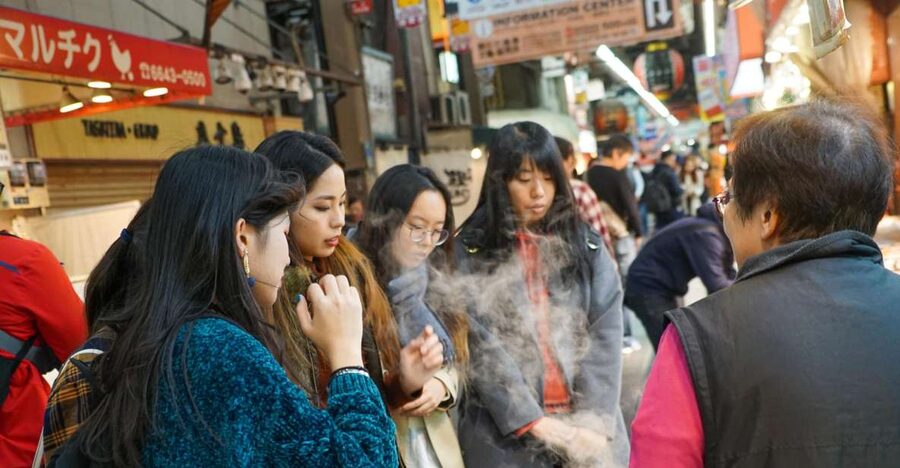
Kuromon Market is where this tour earns its keep. You get to taste Osaka specialties while moving through a working food market, then continue to kitchenware shops, a small shrine area, and the bright streets around Dotonbori. It is a useful way to get your bearings in central Osaka without spending half a day planning every bite.
I like the generous food allowance, which is enough to function as a light lunch, and the way guides such as Nina, Niko, Aiko, and Noz explain what you are eating rather than simply handing you a skewer. I also like the stop at Sennichimae Doguyasuji, where you can find knives, cookware, and tableware that make better souvenirs than another stack of postcards.
The main drawback is that Kuromon can be crowded, and not every stretch is easy for a wheelchair or stroller. Food restrictions also need careful thought: vegetarian and vegan choices may be limited, gluten-free requests cannot be accommodated, and allergy-safe substitutions are not guaranteed.
Key points to know before you book
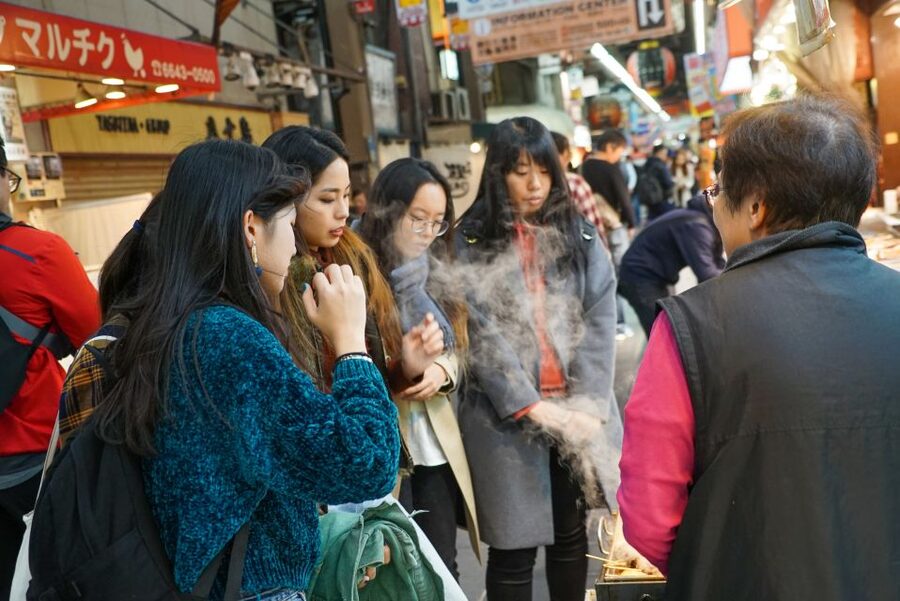
- Five or six tastings are included, with enough food to leave you satisfied.
- Kuromon Market is the main event, but the route also reaches kitchenware shops, Hozenji Yokocho, and Dotonbori.
- Guides adjust the experience when possible, helping you choose foods you may not spot or order alone.
- Tour photos are included, a handy bonus when you are busy eating and exploring.
- The two-hour length works well early in your Osaka stay, giving you ideas for later meals and shopping.
- This is a walking tour through crowded areas, so comfortable shoes and an on-time arrival matter.
Why Kuromon Market makes a good first food tour
Osaka has a long food-centered identity, and Kuromon Market gives you a compact look at that culture. Family-run shops have operated here for decades, selling seafood, prepared foods, produce, sweets, and cooking goods. The market is called the Kitchen of the Nation for good reason: it serves both ordinary shopping needs and the city’s appetite for eating out.
You will not simply walk past stalls while a guide lists names. The useful part is having someone help you decide what is worth trying. Kuromon offers far more choices than you can sensibly sample in one visit, and some foods are easier to enjoy when someone explains how they are prepared or eaten.
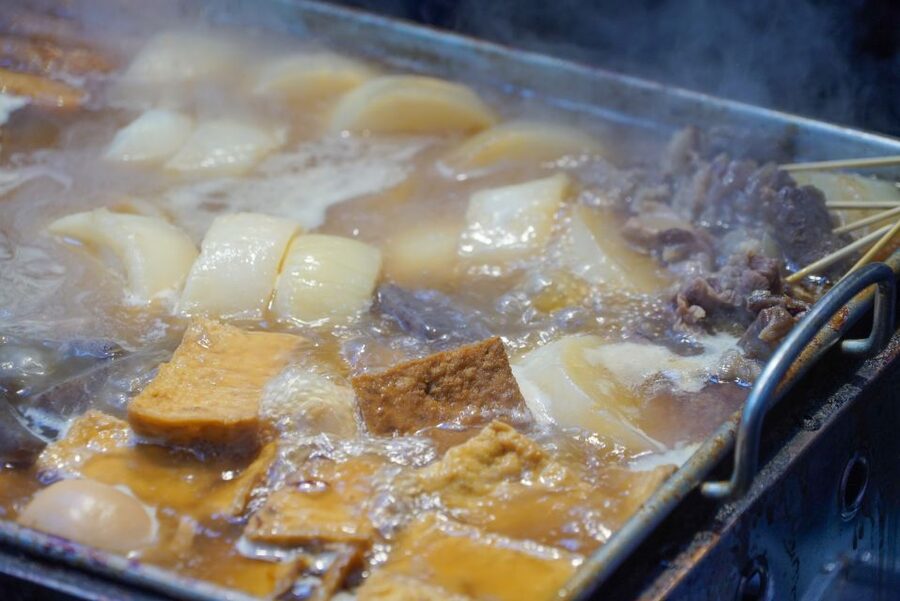
The food changes with the day and the choices made by your group. Expect five or six samples, which may include takoyaki, grilled scallops, yakitori skewers, sushi, tempura, gyoza, fresh fruit, roast chestnuts, mochi, taiyaki, ice cream, or other market items. Some past food combinations have included tuna belly sashimi, dried fruit, watermelon, strawberry mochi, sakura mochi, and red bean paste taiyaki.
That variety is a real strength. You might move from savory food to something sweet, then compare a familiar dish with a version you would not have chosen on your own. If you are cautious with unfamiliar foods, your guide can explain the options and let you decide. There is no need to try everything.
More Food Walking Tours in Japan
- Tokyo Tsukiji Fish Market Food and Culture Walking Tour
★ 5.0 · 3,184 reviews - Osaka Local Foodie Walking Tour in Dotonbori and Shinsekai
★ 5.0 · 985 reviews - Tsukiji Fish Market Small-Group Food Walking Tour
★ 5.0 · 621 reviews
The route from Nipponbashi to the market
The meeting point is in front of the SMBC ATM at Nippon-bashi 1chome, near Kintetsu Nippon-bashi Station. Use Exit 10 from Kintetsu Nippon-bashi Station and look for a guide holding a MagicalTrip sign.
Allow a little extra time to find the exact spot. The meeting point is practical, but one person found it slightly worrying to locate at first. The tour starts on time, and late arrivals cannot join, reschedule, or receive a refund, so arriving early is the sensible move.
The route begins with a short guided visit before reaching the main market. This opening section lasts about 15 minutes and helps place the food stalls in the wider setting of Osaka’s central districts. The guide may also answer questions about the neighborhood, local customs, or what to do after the tour.
You can book a private experience or a small-group option. A small group is useful here because market lanes can become tight, and a compact party can stop without blocking as much foot traffic. Several tours have also ended up feeling private when few people booked, but that depends on the date.
Kuromon Ichiba Market: the biggest food stop
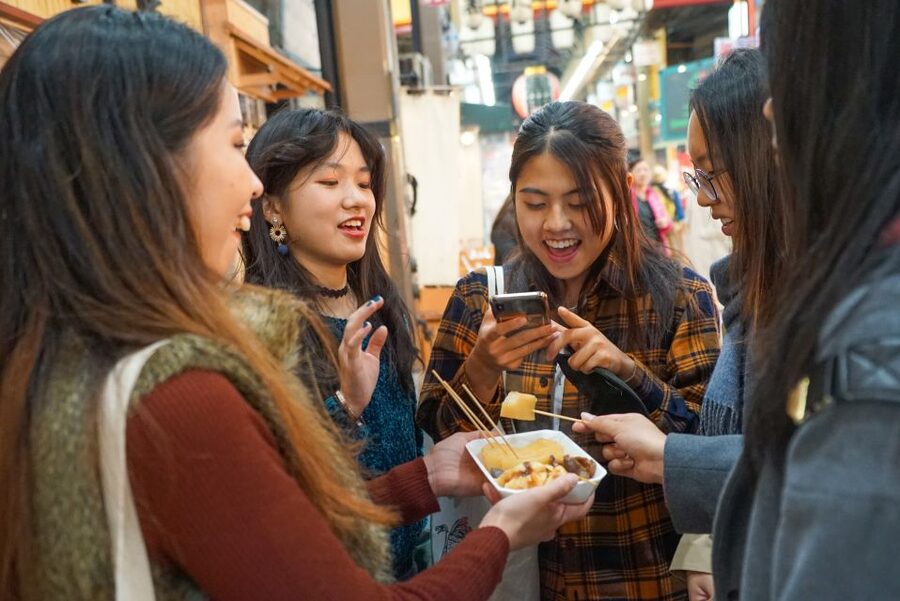
You spend about 30 minutes at Kuromon Ichiba Market, though the food sampling gives this part more weight than the clock suggests. This is the place to watch seafood being prepared, inspect sweets and snacks, and see the working side of Osaka’s food trade.
The guide’s role matters most here. A good guide can point you toward items that suit your tastes, explain unfamiliar ingredients, and organize the purchases so you are not trying to eat while standing in the middle of a narrow lane. One useful approach is to tell your guide at the start what you have already eaten in Japan and what you still want to try.
You should arrive hungry. The included food is designed to fill you up, not just provide a token bite. Additional food and drinks are not included, so carry cash if you want to buy something extra or return to a stall after the tour.
The market is not a quiet museum. You will share the space with shoppers and other people eating, and there may be moments when it is unclear where to stand. Guides sometimes take food to a quieter place nearby before the group eats, which makes the experience more comfortable.
Sennichimae Doguyasuji and better souvenirs
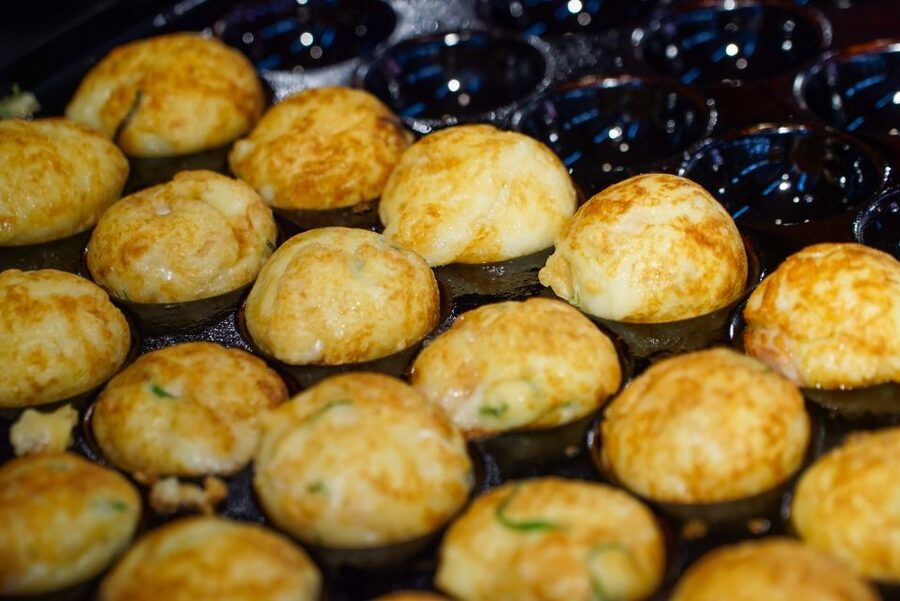
The 20-minute visit to Sennichimae Doguyasuji Shotengai gives the tour a welcome change of pace. This shopping street is associated with kitchen tools, knives, cookware, dishes, and restaurant supplies. It is one of the strongest reasons to choose this tour instead of a food walk that stays entirely among market stalls.
You can browse Japanese tableware and kitchen goods with someone who understands what you are seeing. A knife, bowl, chopstick set, or serving dish can be a useful reminder of Osaka, though you should consider luggage space before buying anything large or fragile.
This stop is also good for questions. Ask your guide about practical souvenirs, how to pack them, or which items are more decorative than useful. One guide even waited patiently while a participant searched for a knife, a small detail that shows why having a local companion can make shopping less stressful.
The time is limited, so do not expect a long shopping session. Think of it as an introduction and a chance to mark places you may want to revisit on your own.
Same streets, a different route:
- Kyoto Geisha Walking Tour: Gion District & Hidden Gems
★ 4.7 · 3,273 reviews - Kyoto: Gion Magical Night Walking Tour with Geisha Trivia
★ 4.9 · 2,393 reviews - Tokyo: Imperial Palace and Shogun Historical Walking Tour
★ 5.0 · 2,251 reviews - Kyoto: Gion Geisha District Walking Tour – Stories of Geisha
★ 4.7 · 2,187 reviews
A local restaurant and a short food pause
The itinerary includes about 10 minutes at a local restaurant. This is not presented as a full restaurant meal, since the main food allowance comes through several tastings. Instead, it adds another look at how Osaka eats beyond the market counter.
The exact food can vary, which is useful if you want some flexibility. Guides have helped groups choose based on preference, and some have adapted selections when a participant did not want a certain dish. Still, you should be realistic about dietary limits. Vegetarian and vegan requests can be accommodated with advance notice, but options may be few. Same-day changes are not accepted.
Gluten-free requests cannot be accommodated. Allergy-free meals and substitutions are also not guaranteed because the food is prepared in outside kitchens. If you have serious allergies, this is not the right setting for taking chances.
Hozenji Yokocho for a quieter contrast
The route continues to Hozenji Yokocho for about 10 minutes. This short stop offers a different feel from the market and shopping streets, with a more traditional atmosphere close to the modern center.
You may also visit the nearby Hozenji area and its shrine. The stop is brief, but it gives the tour cultural balance. You are not spending two straight hours focused on eating; you are also seeing how older religious and neighborhood spaces fit into central Osaka.
I would not book this experience expecting a long shrine visit or a detailed temple tour. The stop works as a pause in the route and as a chance to ask your guide about local customs, the area’s past, and how Osaka’s older streets sit beside its entertainment districts.
Dotonbori brings the route to a lively finish
The final 25 minutes take you to Dotonbori, one of Osaka’s best-known entertainment and dining areas. The giant signs, canal-side streets, and concentration of restaurants make this a natural finish for a food-focused walk.
The guide can help you understand what you are seeing and offer suggestions for the rest of your stay. This is especially useful if you have only just arrived in Osaka and do not yet know which neighborhoods suit your evening plans.
Dotonbori can be crowded, so the final stretch is not a calm promenade. Keep your group together and stay alert around crossings and busy sidewalks. The reward is a strong visual ending, plus a list of places you can return to after the tour.
What the two-hour timing really gives you
Two hours is short enough to fit into a busy Osaka schedule, but the route covers a surprising amount. You visit the market, kitchenware street, a local restaurant, Hozenji Yokocho, and Dotonbori, with several food stops along the way.
The pace appears designed to be active without feeling like a forced march. Guides such as Niko have allowed small groups to move at a comfortable speed, while others have spent extra time answering questions or taking photos. Still, you should expect steady walking and limited time at each stop.
The tour works especially well on your first or second day in Osaka. You will learn what foods appeal to you, see where to shop for kitchen goods, and finish near restaurants and nightlife. You can then return to Kuromon or Dotonbori later with a clearer plan.
Tour photos are included. Guides often take pictures while you are eating or browsing, which means you can stay involved instead of constantly handing your phone to someone else.
Price, food value, and group size
At $49 per person, the value depends on how much you care about guidance. You could spend less by wandering Kuromon alone, but you would need to choose the stalls, manage the language gap, and decide how to divide your appetite among dozens of options.
The price includes five or six food samples, a certified English-speaking guide, and tour photos. If those tastings add up to a satisfying lunch, the cost becomes easier to justify. Additional food and drinks cost extra, so bring cash if you want more.
I would choose this tour for the access and orientation rather than for a luxury meal. It gives you a practical introduction to Osaka’s food culture and leaves you with ideas for independent eating. Small groups are preferable in the market, and private bookings make sense for families or groups with specific interests.
Families can join, and several guides have worked well with children and teenagers. Baby-friendly pacing has also been possible on some tours. The walking, heat, crowds, and food restrictions are the main things to weigh before booking.
Weather, comfort, and access
Osaka’s weather can be severe. Summer temperatures may reach around 40°C, while winter lows can fall to about -5°C. Dress for the forecast, carry water, and remember that much of the experience takes place outdoors or in open market spaces.
Wear comfortable shoes. The route is not recommended for wheelchair users, and some locations are not suitable for wheelchairs or strollers. If you have mobility concerns, ask before booking rather than assuming the short duration makes the tour easy.
The meeting point is near a major station, but the first arrival still deserves planning. A late start is not a minor inconvenience here because the group cannot wait indefinitely and late arrivals cannot receive a refund.
Should you book this Osaka food walk?
Book it if you want a friendly introduction to Osaka food, prefer someone else to handle the first round of stall choices, and like the idea of combining eating with shopping and neighborhood sights. It is particularly useful early in your visit, when you still need help finding your way around Namba, Nipponbashi, and Dotonbori.
The strongest reasons to go are the satisfying quantity of food, the range of tastes, the kitchenware stop, and the guides’ personal help. Names such as Nina, Niko, Aiko, Noz, and Yusuke appear often among the guides associated with especially warm, well-paced tours, though your guide will depend on the date.
Skip it if you need strict allergy control, a gluten-free menu, a wheelchair-accessible route, or a quiet sit-down meal. For everyone else, $49 buys more than snacks. It buys a useful first map of Osaka’s food scene, plus enough tasting and local advice to shape the rest of your stay.
FAQ
How long does the Kuromon Market food tour last?
The tour lasts two hours. The route includes Kuromon Ichiba Market, Sennichimae Doguyasuji Shotengai, a local restaurant, Hozenji Yokocho, and Dotonbori.
How many food samples are included?
Five or six food samplings are included. The selection can include Osaka specialties and other market foods, and the tastings are intended to be filling.
Are drinks and extra food included?
No. Additional food and drinks are available for purchase, so bring cash if you want anything beyond the included samples.
Where does the tour meet?
Meet in front of the SMBC ATM at Nippon-bashi 1chome near Kintetsu Nippon-bashi Station. Use Exit 10, and look for a guide holding a MagicalTrip sign.
Is the tour available in English?
Yes. The tour includes a live English-speaking guide.
Can vegetarians or vegans join?
Vegetarian and vegan requests can be accommodated, but choices may be limited. You must inform the operator at least one day in advance, since same-day requests cannot be accepted.
Is the tour suitable for wheelchair users?
No. The tour is not recommended for wheelchair users, and some locations are not accessible to wheelchairs or strollers.
More Shopping Tours in Japan
- Tokyo: Guided Walking Tour of Tsukiji Market with Breakfast
★ 4.4 · 134 reviews - Tokyo: Tsukiji Market Walking Tour & Sushi Cooking Class
★ 4.6 · 122 reviews - Bangkok: City Highlights Temple and Market Walking Tour
★ 4.5 · 3,990 reviews - London Bridge & Borough Market Food Tour with 7 Authentic Dishes
★ 5.0 · 1,972 reviews
More Market Visits in Japan
- Tokyo: Tsukiji Fish Market Food and Walking tour
★ 5.0 · 1,724 reviews - Tokyo: Tsukiji Fish Market Guided Walking Tour
★ 4.9 · 1,397 reviews - Nishiki Market Brunch Walking Tour (7 Tastings + Brunch)
★ 5.0 · 1,355 reviews - Kyoto: Nishiki Market Brunch Walking Tour-7 Tastings+Brunch
★ 4.8 · 197 reviews
Just added around Japan
- Miyajima Half-day Trip Historical Walking Tour★ 5.0 · 284 reviews
- Hiroshima Walking Tour Why A Bomb was dropped to Hiroshima★ 5.0 · 347 reviews
- Tokyo: Asakusa & Sensoji ー Oldest Temple Walking Tour (2hrs)★ 5.0 · 213 reviews
- Asakusa Senso-ji Temple and Old Tokyo Walking Tour★ 5.0 · 560 reviews
- Asakusa Cultural Walk & Matcha Making Tour★ 5.0 · 245 reviews
- Tokyo: Tsukiji Market Walking Tour & Sushi Cooking Class★ 4.6 · 122 reviews
- Tokyo:Stroll in Old traditional culture towns~Yanaka & Nezu★ 4.9 · 186 reviews
- Tokyo: Shibuya Crossing & Hidden Streets Walking Tour★ 4.8 · 128 reviews
Food Walking Tours, compared.

Reykjavik Food Walk – Local Foodie Adventure in Iceland
Read our review →
Ho Chi Minh City Street Food Tour & Sightseeing By Motorbike
Read our review →
New Orleans Food Walking Tour of the French Quarter with Small-Group Option
Read our review →
Authentic Parisian Gourmet Food Tour with 10 Local Dishes & Wines
Read our review →


Savannah First Squares Culinary & Cultural Walking Food Tour
Read our review →Browse the lists this tour appears in