
REVIEW · TOKYO
Asakusa Cultural Walk & Matcha Making Tour
Asakusa is at its best when you connect the big sights with small local rituals. This tour does that well: you ride through the old district by rickshaw, sample sweets on Nakamise Street, learn how to pray at Sensoji, make matcha, then cook your own okonomiyaki or monja-yaki for lunch.
I like the small seven-person limit, which leaves room for questions and often makes the outing feel almost private. I also like the food focus: the matcha session and hands-on lunch give you something to do, not just something to look at. The main drawback is the crowds around Sensoji, especially in late spring and during busy periods, plus the tour cannot handle gluten-free requests.
Key points to know before booking
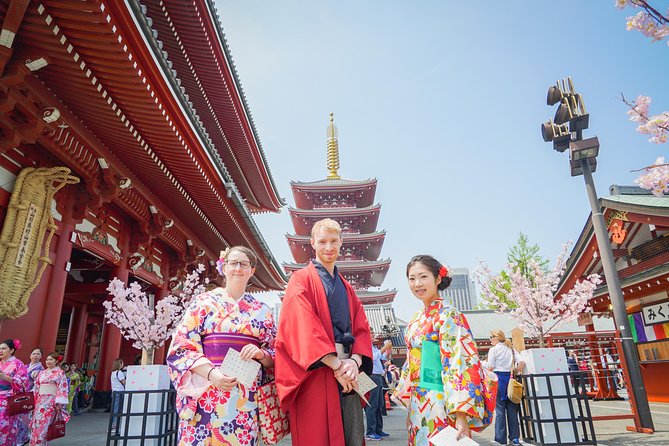
- Rickshaw ride through Asakusa: Begin with a close look at one of Tokyo’s oldest districts before setting out on foot.
- Traditional snacks on Nakamise Street: Try Japanese sweets and local treats while browsing the approach to Sensoji.
- Sensoji and Asakusa Shrine: Learn basic temple and shrine customs, including prayer, fortune-telling, and the use of incense.
- Matcha-making session: Prepare and taste matcha in a focused cultural activity rather than simply ordering a cup.
- Hands-on Japanese lunch: Cook okonomiyaki or monja-yaki at the table, with one drink included.
- Small group and guide support: The maximum is seven people, and guides such as Aoi, Mai, Hana, Yuki, and Mihori are praised for clear English, local knowledge, photos, and help with reservations.
Why this Asakusa tour works so well
At $90.86 per person, this is not the cheapest way to see Sensoji. You can walk through the temple grounds and Nakamise Shopping Street without paying an entry fee. The price makes more sense when you count the food samplings, lunch, one drink, rickshaw ride, matcha activity, guide, and tour photos.
You are also paying for the connections between those pieces. A first-time visitor may see a temple gate, a shopping street, a shrine, a bowl of matcha, and a savory pancake as separate stops. A good guide ties them together and explains what you are doing, why it matters, and how Japanese customs differ from those at home.
That is the real value here. This is not a long history lecture or a packed sightseeing marathon. It is a compact introduction to Asakusa that mixes movement, food, customs, and conversation. The stated duration is about three hours, and that length suits the plan. You get enough time for several activities without spending an entire day in one neighborhood.
The seven-person maximum matters, too. With a full group, the experience still stays fairly personal. On quieter dates, the group may be much smaller, and some bookings have felt like private tours with two guides or only two participants. You should not assume a private tour, but the low cap gives you a better chance to speak with your guide than a large bus outing would.
More Cultural Walking Tours in Japan:
- Tokyo Tsukiji Fish Market Food and Culture Walking Tour
★ 5.0 · 3,184 reviews - Kyoto Gion Cultural Walk & Geisha Show with Dining Options
★ 5.0 · 518 reviews - Nara: Half-Day UNESCO Heritage & Local Culture Walking Tour
★ 4.8 · 250 reviews
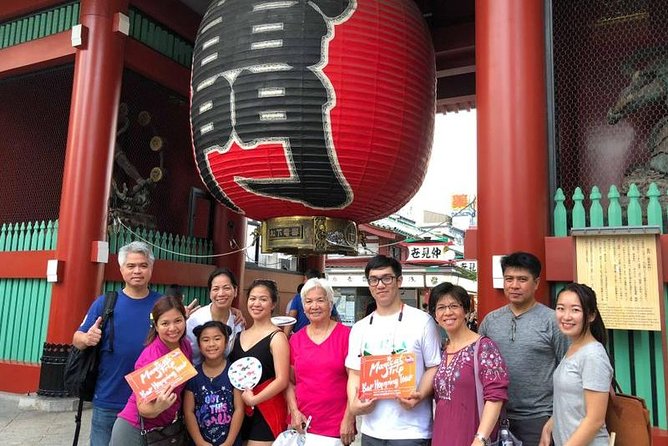
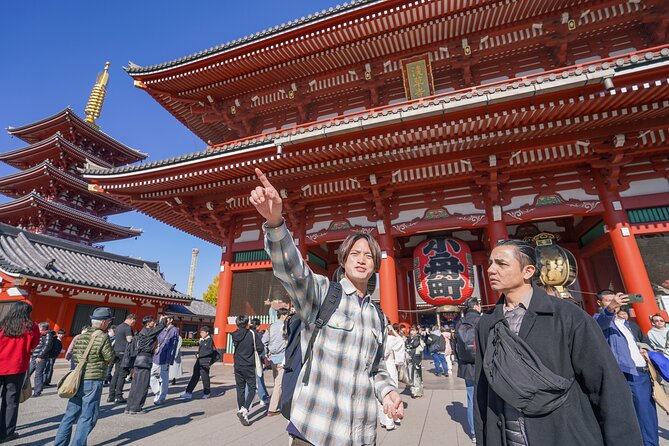
Starting at Kaminarimon with a rickshaw view
Meet at the Kaminarimon Police Box at 11:00 a.m. The meeting point is at 1-chome-3-1 Asakusa, Taito City, near public transportation. From there, the tour begins in the Kaminarimon area, one of Asakusa’s best-known entrances.
The rickshaw ride is a useful opening because it lets you take in the district before walking through its busiest lanes. You get a sense of the streets, the traditional storefronts, and the connection between the Kaminarimon gate, Sensoji, and the surrounding shopping area. The exact ride details are not specified, so treat it as an introductory part of the tour rather than a long transport segment.
This is also a good point to ask your guide what you want from the next three hours. Guides named in the experience include Aoi, Yuki, Hena, Meg, Nori, Hana, Mihori, Mai, Hiroshi, Rina, and Mami. The individual guide makes a difference, and the strongest guide experiences include clear English, cultural explanations, photos, and help with practical questions.
Nakamise Street: sweets, shops, and a gentle introduction
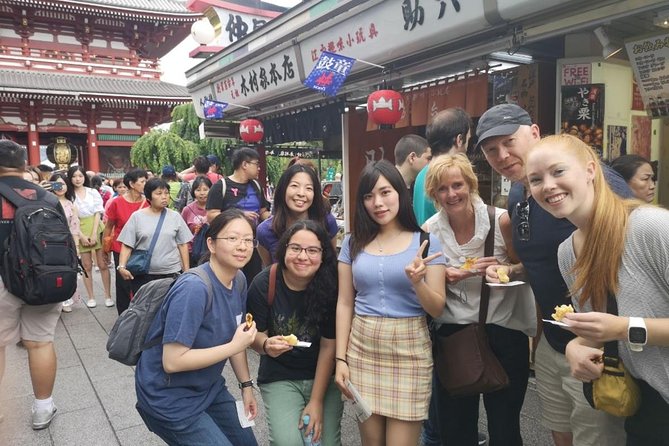
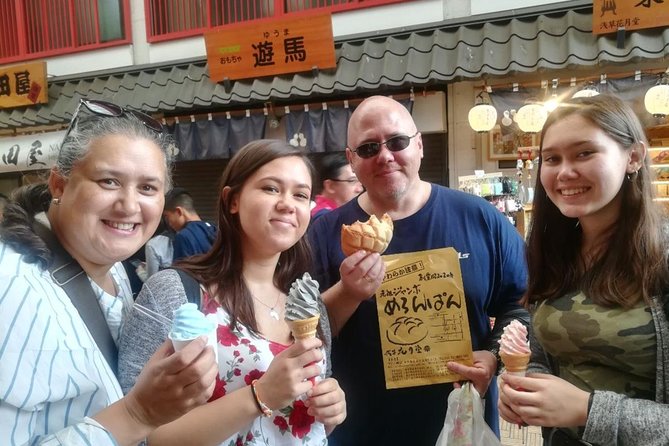
Nakamise Shopping Street leads toward Sensoji and receives about 20 minutes on the stated route. Your guide introduces traditional Japanese sweets and snacks, and you get the chance to try some rather than only look at them.
This is one of the more useful parts of the outing for first-time visitors. Japanese snack culture can be hard to read at first. Packaging, textures, and unfamiliar ingredients do not always explain themselves. A guide can tell you what you are tasting and point out foods worth buying later.
You also have some time to browse. The shops along the approach sell souvenirs and traditional goods, so this is a practical place to decide if you want small gifts or snacks for later. Do not expect an extended shopping session. The tour has several fixed activities, and the guide needs to keep the group moving.
The street can be crowded. That is part of its appeal, but it can also slow the group and make it harder to keep everyone together. Families with teenagers may appreciate the mix of shopping and food, while visitors seeking a quiet temple visit should plan for a lively public setting.
Sensoji and the basic customs you can use later
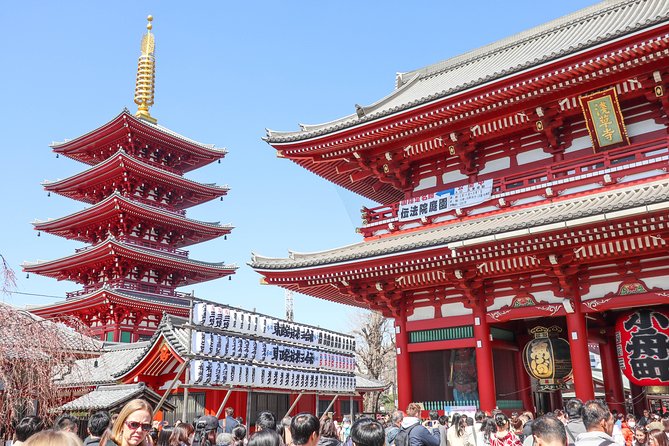
Sensoji gets about 30 minutes. This is the tour’s main historical and religious stop, and it gives you more than a quick photograph at the gate.
Your guide explains what people do at a Japanese temple. That can include praying, drawing a fortune, and using the incense burner. One practical custom described during the experience is fanning the incense smoke toward yourself because it is believed to have healing powers. You are also shown how to toss a special coin and pray.
These simple instructions are valuable. Japanese temples and shrines are open to the public, but the customs are not always obvious. A guide helps you take part respectfully instead of standing at the edge and guessing.
The temple is also the place where timing matters most. Late May can bring heavy crowds, and the popular Sensoji approach may feel packed. Your guide can explain what you are seeing, but no guide can remove the people around you. If you want calm photographs, this tour may not provide them.
One useful criticism of the experience is that some people may want more temple history. The guide can answer questions, but the scheduled time is limited and the tour gives equal weight to food and activities. If your main goal is an expert architectural study of Sensoji, choose a more specialized temple tour. If you want a readable introduction to customs, this stop does the job.
A few more walking tours around Japan worth a look
- Kyoto Geisha Walking Tour: Gion District & Hidden Gems
★ 4.7 · 3,273 reviews - Kyoto: Gion Magical Night Walking Tour with Geisha Trivia
★ 4.9 · 2,393 reviews - Tokyo: Imperial Palace and Shogun Historical Walking Tour
★ 5.0 · 2,251 reviews - Kyoto: Gion Geisha District Walking Tour – Stories of Geisha
★ 4.7 · 2,187 reviews
Asakusa Shrine: a different religious setting next door
Asakusa Shrine sits beside Sensoji and receives about 30 minutes. Visiting both places helps you notice that a Buddhist temple and a Shinto shrine are not simply the same thing with different buildings.
The tour introduces the shrine and gives your guide room to explain local customs and the role of the site. This side-by-side arrangement makes the stop efficient. You do not need another train or a long walk to compare two important parts of Japanese religious life.
The shrine stop also slows the pace after the shopping street. You have a chance to look around, ask questions, and connect the earlier temple rituals to the wider culture of Asakusa. The experience is still introductory rather than academic, but it gives you useful footing for the rest of your time in Japan.
Because the temple and shrine are public sites, admission is free. That does not mean the stop lacks value. The guide’s explanation, translation, and help with customs are what you are paying for here.
The matcha session puts you to work
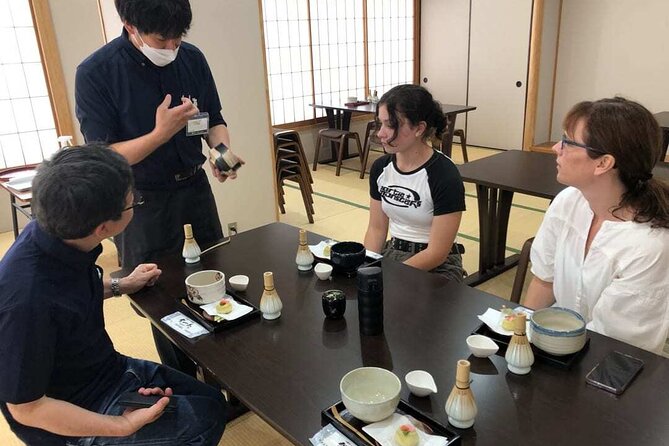
The matcha-making experience is one of the clearest reasons to choose this tour over a basic neighborhood walk. You do not simply drink green tea in a café. You learn about matcha, see how it is prepared, and take part in making and tasting it.
The exact venue and class format can vary, so you should think of this as a cultural activity rather than a formal tea-school course. Still, the session gives you a more direct understanding of the drink’s preparation and presentation. Several guides have been praised for explaining the process clearly and making the activity comfortable for beginners.
This part is especially useful if you have already seen the main Tokyo sights and want a hands-on break. It also works well for families and teenagers because it changes the rhythm of the day. Instead of walking and listening, you handle the process yourself.
The matcha stop has a personal quality that depends on the guide. Guides such as Mai, Mihori, and Hana are noted for making the session friendly and easy to follow. If your guide takes photos, you may also come away with pictures of the activity, not just standard temple shots.
Cooking okonomiyaki or monja-yaki for lunch
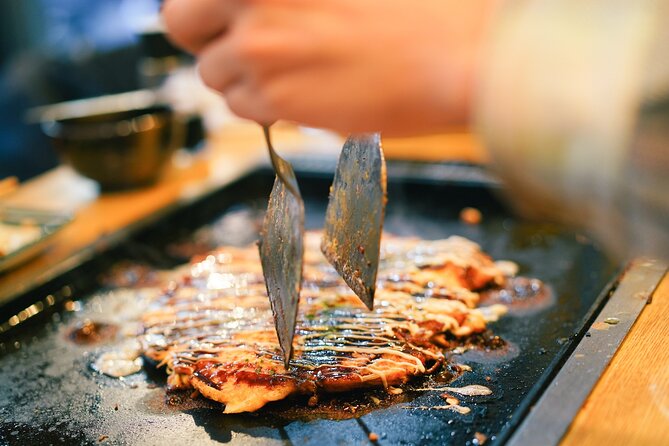
The final food stop is the tour’s most playful one. At a traditional restaurant, you make your own okonomiyaki, a savory Japanese pancake, or monja-yaki, a softer griddled dish. Lunch includes one drink, and a vegetarian menu is available.
Cooking at the table gives you a stronger memory than being handed a finished plate. You learn the basic rhythm of preparing the food, and the guide can help with ordering, translation, and technique. Some groups have had a private upstairs restaurant space, though you should not assume that arrangement on every date.
This lunch also helps explain why the tour costs more than a simple walking route. You receive a meal and an activity, not just a stop outside a restaurant. The food is part of the lesson, and you can ask questions while eating.
There are firm limits on dietary flexibility. The tour cannot accommodate gluten-free requests, is not vegan, and cannot guarantee allergy-free preparation. Food is prepared in kitchens that MagicalTrip does not operate, and substitutions may not be possible at every stop. Vegetarian food is available, but you should tell the operator about your needs and understand that the stated options are limited.
Additional food and drinks are not included. Since snacks and lunch are part of the scheduled experience, most people will not need much extra food during the three hours, but you should bring water, especially in summer.
Guide quality makes or breaks the day
The experience depends heavily on the person leading it. The best guide examples include Aoi taking photographs and answering questions, Yuki explaining Japanese culture in clear English, Hana helping with restaurant reservations and translation, and Mai making the day feel relaxed and personal.
Other strong guide experiences include Mihori explaining Sensoji and local customs, Meg offering detailed background, and Rina and Mami giving the group time to shop while guiding the food and temple stops. These details matter because the tour moves between several settings. You need someone who can switch from history to food to practical help without making the day feel rushed.
No operator can promise a particular guide unless that has been specifically arranged. Still, the certified MagicalTrip guide is central to the experience, and the small group gives you a better chance to ask for the kind of information you need.
The included tour photos are another nice touch. They can save you from asking strangers to take group pictures, though photography is a bonus rather than the main reason to book.
Timing, weather, and practical limits
The tour starts at 11:00 a.m. and ends back at the meeting point. That makes it easy to use as a morning-to-lunch plan before another Tokyo activity, though you should leave space afterward if the group runs slightly long or you want to continue exploring Asakusa.
You will spend time walking outdoors, and summer in Japan can be very hot and humid. Bring water and wear a hat to reduce the risk of heat exhaustion. Comfortable shoes are sensible because the tour links streets, shopping areas, temple grounds, and the shrine.
The experience is near public transportation, and most people can participate. The supplied details do not specify wheelchair access or the exact amount of walking, so ask before booking if you have mobility concerns.
Free cancellation is available up to 24 hours before the 11:00 a.m. start time for a full refund. Changes or cancellations inside that window are not accepted for a refund. One unusual risk is late cancellation by the operator if a food venue becomes unavailable, so keep your booking confirmation and check your plans before the day.
Who should book this three-hour Asakusa outing?
I would choose this tour for a first visit to Tokyo, especially if you want a friendly introduction rather than a formal lecture. It gives you a working knowledge of temple and shrine customs, a taste of neighborhood food, a matcha activity, and a meal you help prepare.
Families with older children and teenagers are a good match. The temple and shopping stops provide visual interest, while the matcha and okonomiyaki sessions keep the day active. Couples and solo visitors can also benefit from the small group, particularly if they want guide conversation without joining a large coach tour.
I would be more cautious if you need gluten-free, vegan, or allergy-controlled food. I would also look elsewhere if your chief interest is detailed Buddhist architecture, long shopping time, or a quiet temple visit. The experience spreads its attention across several subjects, and that variety is its strength.
Should you book it?
Book this tour if you want Asakusa explained through food, customs, and simple hands-on activities. At $90.86, the price is reasonable for a three-hour small-group outing that includes snacks, lunch, a drink, matcha making, a rickshaw segment, photos, and a certified guide.
The best reason to book is the combination. You can visit Sensoji on your own, but it is harder to arrange the temple customs, snack tasting, matcha session, and cook-your-own lunch in one smooth plan. Just accept the crowds, confirm the food limits, and bring water in warm weather.
FAQ
Where does the Asakusa tour begin?
It begins at the Kaminarimon Police Box at 1-chome-3-1 Asakusa, Taito City, Tokyo 111-0032, Japan.
What time does the tour start?
The tour starts at 11:00 a.m.
How long does the experience last?
It lasts approximately three hours.
Where does the tour end?
The activity ends back at the meeting point.
How many people can join?
The group has a maximum of seven participants.
Is lunch included?
Yes. Lunch includes okonomiyaki or monja-yaki and one drink.
Is a vegetarian menu available?
Yes, a vegetarian menu is available.
Can the tour accommodate gluten-free or vegan diets?
No. Gluten-free requests cannot be accommodated, and the included lunch is not vegan.
What food is included besides lunch?
The tour includes Japanese snacks and sweets. Additional food and drinks are not included.
What happens at Sensoji Temple?
You see the temple and learn about customs such as praying, fortune-telling, and using the incense burner.
Is matcha making included?
Yes. The matcha-making experience is included in the tour.
Can I cancel for a full refund?
Yes, if you cancel at least 24 hours before the experience start time. Cancellations made less than 24 hours in advance are not refunded.
Just added around Japan
- Miyajima Half-day Trip Historical Walking Tour★ 5.0 · 284 reviews
- Hiroshima Walking Tour Why A Bomb was dropped to Hiroshima★ 5.0 · 347 reviews
- Asakusa Senso-ji Temple and Old Tokyo Walking Tour★ 5.0 · 560 reviews
- Tokyo: Asakusa & Sensoji ー Oldest Temple Walking Tour (2hrs)★ 5.0 · 213 reviews
- Tokyo: Tsukiji Market Walking Tour & Sushi Cooking Class★ 4.6 · 122 reviews
- Tokyo:Stroll in Old traditional culture towns~Yanaka & Nezu★ 4.9 · 186 reviews
- Tokyo: Shibuya Crossing & Hidden Streets Walking Tour★ 4.8 · 128 reviews
- Tokyo: Shinjuku Bar Hopping & Night Walking Tour★ 4.6 · 137 reviews
Cultural Walking Tours, compared.
Savannah First Squares Culinary & Cultural Walking Food Tour
Read our review →
Tokyo Tsukiji Fish Market Food and Culture Walking Tour
Read our review →
New Orleans French Quarter, Voodoo and Culture Walking Tour
Read our review →
Southernmost Food & Cultural Walking Tour by Key West Food Tours
Read our review →
Valletta: Street Food and Culture Walking Tour
Read our review →
Lisbon Roots – Small group Food & Culture Walking Tour w/tastings
Read our review →
Browse the lists this tour appears in