
REVIEW · JAPAN
Hiroshima Walking Tour Why A Bomb was dropped to Hiroshima
Hiroshima is easiest to understand on foot, where a shrine, castle, sports arena, ruined dome, and memorial park form one powerful story. This 2.5-hour walk explains not only what happened on August 6, 1945, but also the events leading up to the bombing and Hiroshima’s work for peace today.
I like the small-group format, capped at 12 people in the tour description, with a maximum of 15 stated in the practical details. I also like the guides’ personal touch. Chihiro, Thomas, Katya, Emi, and Chisa are praised for clear explanations, warmth, and, in some cases, family connections to Hiroshima’s wartime story.
The main caution is that this is a walking and interpretation tour, not a full museum visit. One critical assessment found too much general Japanese history and not enough detail about the atomic bomb, so readers wanting a long, academic examination should allow extra time for the Peace Memorial Museum afterward.
Key points to know before you book
- The route links Hiroshima Castle and Peace Park: You get a useful before-and-after view of the city.
- The guides explain why the bomb was dropped: Expect background on Japan, World War II, the decision itself, and the aftermath.
- The A-Bomb Dome is a central moment: This is one of the tour’s most direct and moving stops.
- Visual aids help make the past clear: Guides have used maps and photographs during explanations.
- The walk is mostly flat: Stops are close together, though you will be outside for much of the experience.
- The museum is the natural next step: The tour ends in front of Hiroshima Peace Memorial Museum, but admission is not included.
Hiroshima’s story begins before 1945
A good Hiroshima tour must do more than point at memorials. It must explain the city before the bomb, the wartime setting, the American decision to use the weapon, and the years of rebuilding that followed.
This tour takes that approach. Guides explain aspects of Japanese history and the events leading to the bombing before moving into the human cost and the city’s later peace work. That wider frame matters. Without it, the A-Bomb Dome can become a photograph rather than part of a difficult historical story.
The strongest guides appear to keep the subject clear without turning the walk into a lecture marathon. Thomas, for example, has been praised for using short talks and breaks where the group could sit. Other guides have used photographs and maps at key points, which can help you picture a city that no longer looks anything like Hiroshima in 1945.
The tone is serious, but it is not meant to be grim from the first minute to the last. Several guides are described as friendly, calm, and able to add humor when appropriate. That balance is useful, especially for families and younger visitors. One family found that even children aged nine and eleven stayed interested, helped along by a guide who could also talk about Pokémon.
A few more walking tours around Japan worth a look
- Kyoto Geisha Walking Tour: Gion District & Hidden Gems
★ 4.7 · 3,273 reviews - Tokyo Tsukiji Fish Market Food and Culture Walking Tour
★ 5.0 · 3,184 reviews - Kyoto: Gion Magical Night Walking Tour with Geisha Trivia
★ 4.9 · 2,393 reviews
Starting at Hiroshima Gokoku Shrine
The meeting point is Hiroshima Gokoku Shrine, at 21-2 Motomachi in Naka Ward. The shrine provides a quiet opening, with traditional architecture and a sense of place before the tour moves toward the central wartime sites.
You spend about 20 minutes here, and admission is free. The stop helps introduce Hiroshima as more than the site of an atomic bombing. It is also a Japanese city with religious traditions, civic life, and centuries of development before the twentieth century.
Do not expect a long shrine tour. This is an opening stop, not the main subject. Still, it gives the guide a natural place to begin discussing the city and the setting that existed before the war.
Hiroshima Castle and the city before the bomb
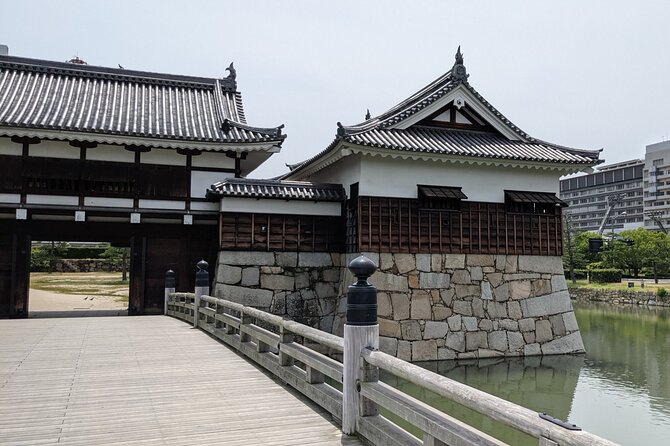
Hiroshima Castle is about a 20-minute stop. Also called Carp Castle, it was originally built in the 1590s as the home of the daimyō who ruled the Hiroshima domain.
The castle grounds are important because they shift the story away from 1945 for a moment. You see Hiroshima as a political and regional center, not only as a memorial city. That context makes the later destruction more difficult to reduce to a single event.
One practical point matters here: the tour visits the castle grounds, but does not include an interior visit. If you want to explore the castle building or its displays, plan a separate visit. The tour’s purpose is to connect the site to Hiroshima’s wider story, not to provide a full castle tour.
This stop also offers a welcome change of pace. Hiroshima’s main memorial sites can feel emotionally heavy, so beginning with the city’s older identity gives the walk a more complete shape.
Hiroshima Green Arena and time to absorb the facts
The itinerary allows about 30 minutes at Hiroshima Green Arena, officially Hiroshima Prefectural Sports Center. It is a modern multi-purpose indoor arena used for sporting events and other activities.
At first, an arena may seem unrelated to a Hiroshima peace tour. In practice, a modern civic building helps show the city as it exists now. Hiroshima is not frozen in 1945. It has schools, sports, workplaces, homes, and ordinary daily life.
This is also one of the longer scheduled stops, and guides have used seated explanations during the walk. That is useful because the subject requires concentration. Two short talks of roughly ten minutes have been used to explain why the United States dropped the bomb and what followed.
The exact focus can depend on your guide. Most of the praise goes to guides who keep the material clear and well paced. One less positive assessment felt the tour spent too much time on broad Japanese history, so you should ask questions if you want the discussion brought back to Hiroshima and the bombing.
Same streets, a different route:
- Tokyo: Imperial Palace and Shogun Historical Walking Tour
★ 5.0 · 2,251 reviews - Kyoto: Gion Geisha District Walking Tour – Stories of Geisha
★ 4.7 · 2,187 reviews - Best of Kyoto: Gion, Geisha, Pagodas & Cobblestones
★ 4.9 · 2,058 reviews - Night Walk in Gion: Kyoto’s Geisha District
★ 4.5 · 2,003 reviews
Orizuru Tower and the changing city
Orizuru Tower is a modern building beside Hiroshima Peace Memorial Park. It opened in 2016 and has 13 stories, giving the area a contemporary counterpoint to the nearby memorials.
The supplied route includes this stop, though no separate visit length is listed. The tour may use it as part of the transition into the Peace Park area rather than as a full indoor attraction. You should not assume that admission or an observation-deck visit is included, since the tour includes all listed fees and taxes but does not identify an Orizuru Tower ticket.
Its presence adds a useful idea to the walk: Hiroshima remembers, but it also rebuilds and looks ahead. That contrast is one of the most valuable parts of the route. You move from traditional shrine and castle grounds to modern civic spaces, then into places designed for remembrance.
The Atomic Bomb Dome: the emotional center
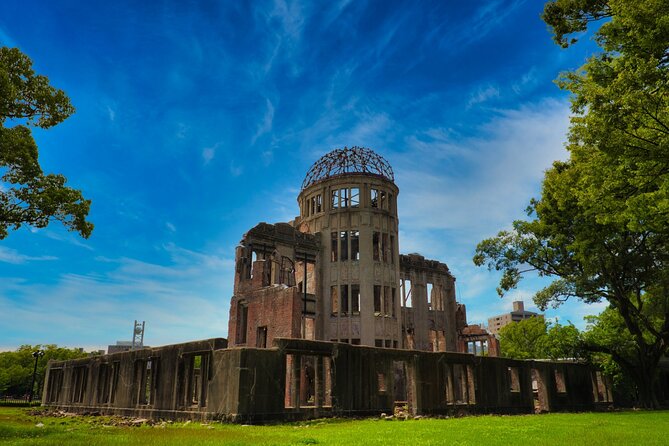
The Atomic Bomb Dome receives about 20 minutes. Originally called the Hiroshima Prefectural Industrial Promotion Hall, the building was close to the bomb’s blast center and survived in damaged form.
This is likely the moment when the tour becomes most direct. A guide can explain the building’s original purpose, its location, and why its remains were preserved. You have time for photographs, but this is not a casual photo stop. The setting calls for quiet attention.
The Dome is especially effective when paired with the guide’s maps and older photographs. You can see the gap between the prewar city and the structure in front of you. The physical remains do much of the work, but a clear explanation helps you understand what you are seeing.
The tour does not try to replace the Peace Memorial Museum. Instead, it gives you a framework before you enter. That is good planning. The Dome creates the emotional connection, while the museum can provide more objects, testimony, and detail afterward.
The Children’s Peace Monument and Sadako’s story
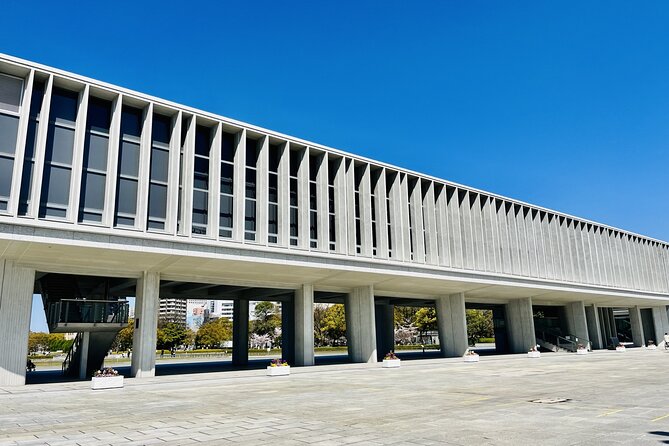
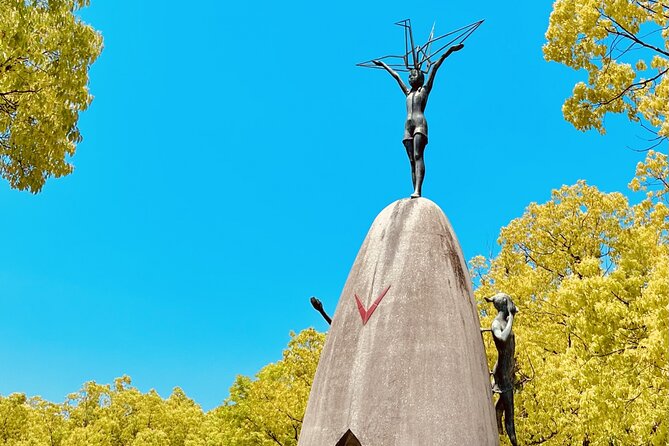
The Children’s Peace Monument is a ten-minute stop in Peace Memorial Park. It honors children who died in the bombing and is closely linked to Sadako Sasaki, whose story inspired the monument.
This is a shorter stop, but not a minor one. The monument brings the scale of the bombing down to individual lives, especially the lives of children. Guides can explain Sadako’s connection to the paper-crane tradition and the way her story became part of Hiroshima’s peace message.
You will likely have time to look closely, take photographs, and ask questions. Because the stop is brief, ask your guide if there is a particular part of the monument’s story you want clarified.
For families, this can be one of the most accessible parts of the tour. It gives younger visitors a human story rather than only dates, military decisions, and statistics. The subject remains painful, but the monument also points toward hope and remembrance.
The Victims Memorial Cenotaph and Peace Park
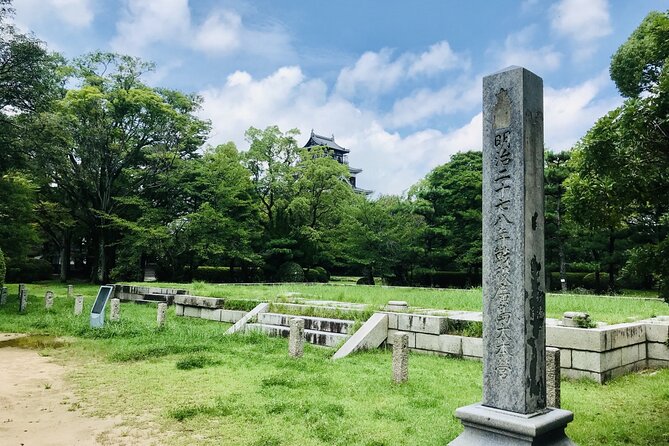
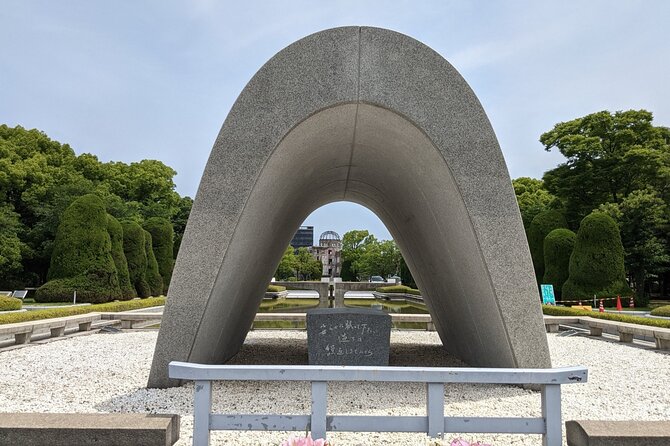
The final major stop is the Hiroshima Victims Memorial Cenotaph in Peace Memorial Park, with about 30 minutes allocated. The park is dedicated to those who died from the atomic bombing and sits near the blast center.
This is where the tour’s themes come together. You have seen Hiroshima before the war, learned about the bombing and its aftermath, and passed through places that show the city’s modern life. At the cenotaph, the focus returns to the victims and the city’s commitment to peace.
Expect a reflective stop rather than a busy sightseeing segment. Your guide may explain the meaning of the cenotaph, the layout of the park, and the way Hiroshima presents its message to the world. The tour’s strongest guides connect the site to the larger question of how a city responds to mass destruction without allowing the past to disappear.
The route ends in front of the Peace Memorial Museum at 1-2 Nakajimacho. That ending is practical and well chosen. You can enter the museum directly afterward if you have a timed reservation or available time. Museum admission is not included, so arrange it separately.
What the guides add to the experience
The guide is the deciding factor here. The route itself is strong, but the value comes from how the story is explained.
Thomas is repeatedly praised for being clear, prepared, personable, and easy to follow. His style seems especially useful for families because he can make difficult material understandable without talking down to children.
Chihiro is described as friendly and well informed, with a personal element that made the city’s story feel closer. Chisa is praised for explaining the Japanese view of the events leading to the bombing and its long effect on Hiroshima.
Katya has been praised for enthusiasm, a strong grasp of Hiroshima before and after 1945, and the ability to keep a cold January walk enjoyable. One particularly meaningful account describes a guide who was the granddaughter of a bomb survivor. That kind of family connection can add emotional depth, though you should not assume every departure will have the same guide or personal story.
The names listed for past departures include Chihiro, Thomas, Katya, Emi, and Chisa. Guides can vary, so the experience may differ in tone. Across the strongest accounts, the shared strengths are clear English, warmth, visual material, and a willingness to answer questions.
Walking comfort, timing, and group size
The tour lasts about two hours and 30 minutes. The walk is described as mostly flat, with the main sites close together. That makes it manageable for most people who can take part in an ordinary walking tour.
You should still wear comfortable shoes. The route includes several outdoor stops, and the weather will affect your experience. One guide helped make a very cold January outing pleasant, but cold, heat, or rain can still change how long you want to linger.
The tour is designed for a small group. The description gives a maximum of 12 people, while the additional information allows up to 15. Either way, this is much more intimate than a large coach tour. A smaller group makes it easier to hear explanations and ask questions, though the amount of personal attention can depend on the guide and group size.
Mobile tickets keep the arrival simple. Confirmation is provided when you book, the meeting point is the shrine, and the tour finishes at the museum. Service animals are allowed, and the experience is near public transportation.
Is $28 a fair price?
At $28 per person, the tour offers good value if you want a guided introduction to Hiroshima rather than a simple route between famous sites. You are paying for the guide’s explanations, the historical structure, and the chance to ask questions while moving through the city.
The value is strongest when you use the tour as a first look and then visit the museum afterward. The guide gives you the broad story and helps you understand the outdoor memorials. The museum can then supply more detail at your own pace.
The price is less attractive if you already know Hiroshima’s history well and prefer to read at each site. One critical assessment felt the walk could be recreated with a self-guided route and found too much general Japanese history. That is a fair warning for independent visitors.
Free cancellation is available up to 24 hours before the start time. Cancellations made less than 24 hours in advance are not refunded, and late changes are not accepted.
Who should book this Hiroshima walk?
I would choose this tour if you are visiting Hiroshima for the first time, want the history explained in plain language, or prefer learning outdoors before entering a museum. It also suits families, thanks to the short talks, flat route, visual aids, and guides who can adjust their explanations.
It is a good fit for anyone who wants more than the standard A-Bomb Dome photograph. The route places the bombing within the city’s older identity and its postwar rebuilding.
I would be more cautious if you want a highly specialized military history tour or a long discussion focused only on the decision to use the bomb. The tour covers that question, but it also includes general Japanese history, Hiroshima’s culture, and the city’s modern peace message.
Should you book it?
Book this tour if you want a thoughtful introduction to Hiroshima with a local guide, a manageable route, and time for questions. The best guides, especially Thomas, Chihiro, Katya, Emi, and Chisa, appear to bring clarity and personal warmth to difficult material.
Plan to visit the Peace Memorial Museum afterward, since the walk ends there and does not include admission. If you already have strong background knowledge, a self-guided route may be enough. For most first-time visitors, though, $28 is a sensible price for the context that turns Hiroshima’s memorials into a connected story.
FAQ
How long does the Hiroshima walking tour last?
The tour lasts approximately two hours and 30 minutes.
Where does the tour begin?
The meeting point is Hiroshima Gokoku Shrine at 21-2 Motomachi, Naka Ward, Hiroshima.
Where does the tour end?
The tour ends in front of the Hiroshima Peace Memorial Museum at 1-2 Nakajimacho.
Does the tour include the Peace Memorial Museum?
No. The tour ends at the museum, but museum admission is not included.
Does the tour visit inside Hiroshima Castle?
The route visits the grounds of Hiroshima Castle. The supplied details do not include an interior castle visit.
What sites are included?
The route includes Hiroshima Gokoku Shrine, Hiroshima Castle, Hiroshima Green Arena, Orizuru Tower, the Atomic Bomb Dome, the Children’s Peace Monument, and the Hiroshima Victims Memorial Cenotaph in Peace Memorial Park.
What is the maximum group size?
The tour description lists a maximum of 12 people. Additional information gives a maximum of 15, so the exact group size can vary.
Can I cancel for a full refund?
Yes. You can cancel up to 24 hours before the experience begins for a full refund. Cancellations or changes made less than 24 hours before the start time are not accepted for a refund.
Just added around Japan
- Miyajima Half-day Trip Historical Walking Tour★ 5.0 · 284 reviews
- Tokyo: Asakusa & Sensoji ー Oldest Temple Walking Tour (2hrs)★ 5.0 · 213 reviews
- Asakusa Senso-ji Temple and Old Tokyo Walking Tour★ 5.0 · 560 reviews
- Asakusa Cultural Walk & Matcha Making Tour★ 5.0 · 245 reviews
- Tokyo: Tsukiji Market Walking Tour & Sushi Cooking Class★ 4.6 · 122 reviews
- Tokyo:Stroll in Old traditional culture towns~Yanaka & Nezu★ 4.9 · 186 reviews
- Tokyo: Shibuya Crossing & Hidden Streets Walking Tour★ 4.8 · 128 reviews
- Tokyo: Shinjuku Bar Hopping & Night Walking Tour★ 4.6 · 137 reviews
Walking Tours, compared.

Magical London: Harry Potter Guided Walking Tour
Read our review →
Reykjavik Food Walk – Local Foodie Adventure in Iceland
Read our review →
History and Hauntings of Salem Guided Walking Tour
Read our review →
New Orleans Premier Ghost, Voodoo and Vampire Walking Tour
Read our review →
Amsterdam Anne Frank: Small-Group Walking Tour & Local Guide
Read our review →

Edinburgh Castle: Guided Walking Tour with Entry Ticket
Read our review →
Anne Frank’s Story – Guided Walking Tour through Amsterdam
Read our review →Browse the lists this tour appears in