
REVIEW · JAPAN
Miyajima Half-day Trip Historical Walking Tour
Miyajima is much more than a photogenic orange gate. This five-and-a-half-hour walk connects the Ōtorii Gate and Itsukushima Shrine with Buddhist temples, island food, deer, and the spiritual traditions that made this small island sacred. I especially like that the route includes both famous sights and quieter places such as Daishō-in Temple.
I like the six-person maximum, which gives your guide room to answer questions and adjust the pace. I also like the included Hiroshima-style lunch, with options such as oysters and momiji dumplings. The main drawback is that the day involves plenty of walking, stairs, and outdoor exposure, while the ferry costs an extra 500 yen round trip.
Key points
- Small groups of up to six: Guides such as Hiro, Hika, Eri, Yuji, Kiki, Mariko, and Meri have led this experience, depending on the date.
- A strong cultural route: You visit Itsukushima Shrine, Daishō-in Temple, Senjokaku, and scenic parts of Miyajima.
- Lunch is included: Expect Hiroshima local food, often including fresh or grilled oysters and momiji dumplings.
- Good photo opportunities: Your guide takes tour photos and helps you find the best angles around the gate and shrine.
- Ferry views are part of the day: The ride across the Seto Inland Sea provides an attractive introduction to the island.
- Weather matters: Summer can be extremely hot and humid, and rain can make the walking route slippery and tiring.
Why this Miyajima walk works better than a quick photo stop
Miyajima is easy to visit independently, but it is also easy to skim across the surface. You can photograph the torii gate, wander through the shopping street, and leave without understanding why the island matters.
This tour gives the island a clearer shape. Your guide explains Japanese spirituality, the relationship between Shinto shrines and Buddhist temples, and the meaning behind the buildings you see. That context is especially useful at Itsukushima Shrine, where the architecture and setting can seem almost too perfect to be real.
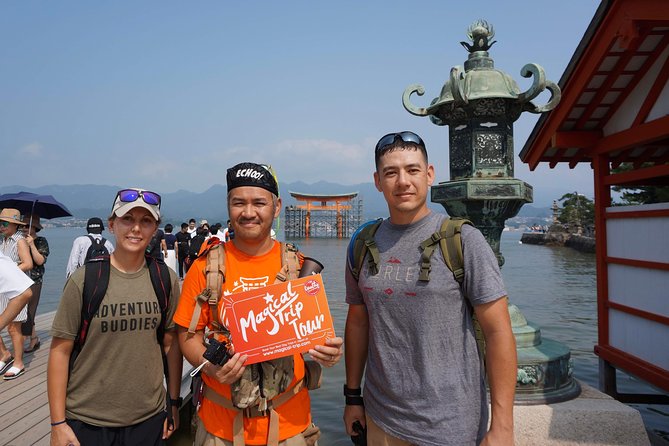
The group size is a major advantage. With no more than six people, you are not trailing behind a flag or waiting for a large crowd to gather. Guides have also been praised for taking photos, answering questions, adding local stories, and adjusting the pace. Some departures become private tours when only one or two people book.
The 4.9 out of 5 rating from 284 ratings, along with a 99 percent recommendation rate, points to a consistently strong experience. Still, one serious service problem has been reported involving a guide who did not arrive and a reservation that was not properly checked. That appears to be an isolated issue, but I would keep your booking confirmation and the operator’s contact details handy.
More History Walking Tours in Japan
- Tokyo: Imperial Palace and Shogun Historical Walking Tour
★ 5.0 · 2,251 reviews - Kyoto Gion: 2-Hour Geisha Culture & History Walking Tour
★ 5.0 · 1,186 reviews - Tokyo: Imperial Palace Japanese History Walking Tour
★ 4.9 · 987 reviews
Crossing from Miyajimaguchi to the sacred island
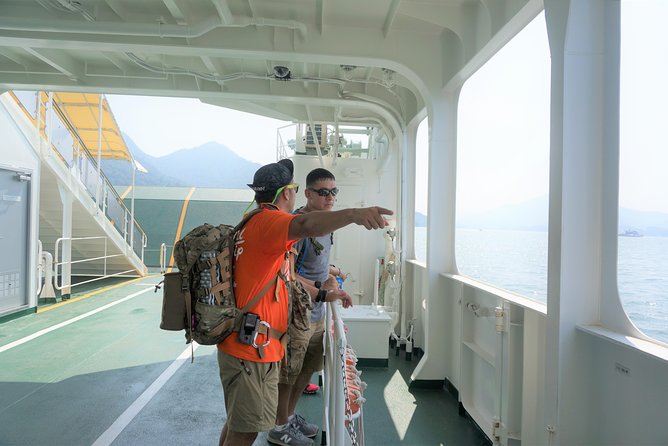
The meeting point is at 1-chōme-3-26 Miyajimaguchi in Hatsukaichi, near public transportation. From there, you board the ferry to Miyajima. The ferry fee is not included, so budget 500 yen, about 4 dollars, for the round trip.
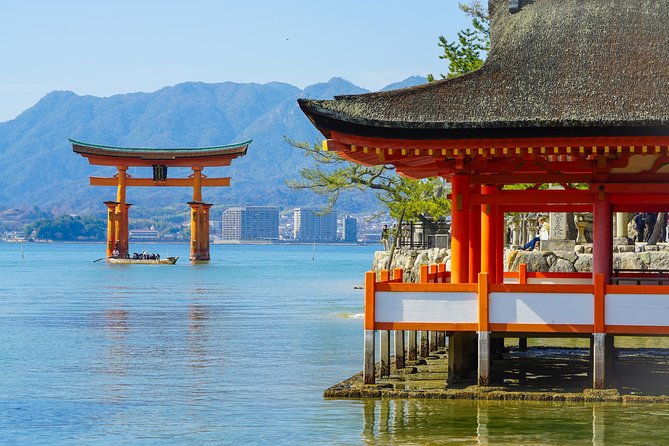
The crossing is short enough not to eat up your day, yet long enough to give you a fine first view of the Seto Inland Sea. Keep your camera ready. Depending on the weather and tide, you may see the famous Ōtorii Gate rising from the water, framed by the green hills of the island.
The ferry is also a useful transition. Hiroshima’s city streets give way to open water, island scenery, shrine roofs, and free-roaming deer. If the gate is partly hidden by the tide or weather, do not worry. The gate remains an impressive sight from the shore, and the guide can explain how its position relates to the shrine and the sea.
Walking the coast to the Ōtorii Gate
After reaching Miyajima, the tour follows the coast toward the Ōtorii Gate. This is one of the best parts of the route because you get time to look at the island rather than simply arrive at a single attraction.
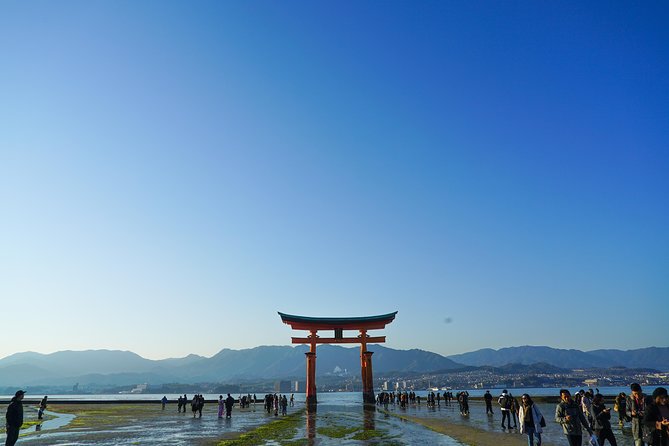
The gate is the symbol of Miyajima, but its appeal comes from its setting. It marks the approach to Itsukushima Shrine and has long been associated with entering sacred ground. At low tide, you may be able to walk close to the gate. One visitor had the rare chance to touch its weathered surface during a low tide, though you should not count on that exact experience because water levels change.
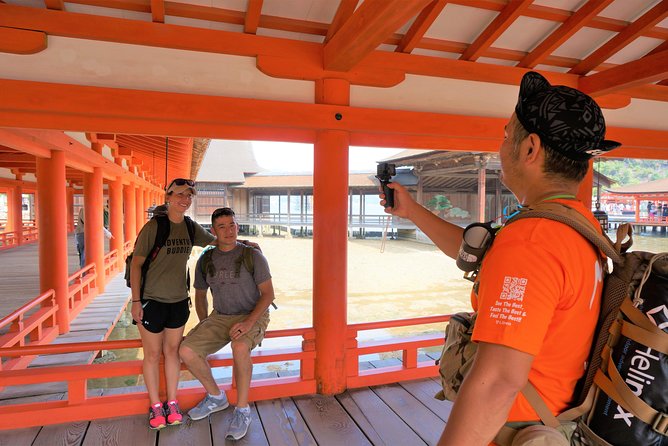
This is a good place for the guide’s photo help. The tour includes photos, and several guides have been praised for finding flattering angles and making the process easy. You still get time to take your own pictures without being rushed from one viewpoint to the next.
Itsukushima Shrine and architecture shaped by the tides
Itsukushima Shrine is the central cultural stop. Built during the Heian period, from 794 to 1192, its distinctive design responds to the movement of the tide. The buildings seem to float above the water when the conditions are right, giving the shrine a calm, otherworldly appearance.
Your guide explains the shrine’s religious meaning and points out details that are easy to miss when you are focused on taking pictures. The setting matters as much as the buildings. The sea, gate, wooden walkways, and surrounding hills all work together to create the place’s character.
The shrine is also one of the busier sections of Miyajima. A small group helps, but you will still encounter other people, particularly during popular seasons and favorable weather. Give yourself time to look beyond the main photo spot. The value here is not just seeing the shrine, but understanding why it was built in this unusual form.
Admission to the shrine and the other included sites is covered by the tour. That makes the pricing easier to assess, since you are not paying for guiding and then adding several entrance fees as you go.
Same streets, a different route:
- Kyoto Geisha Walking Tour: Gion District & Hidden Gems
★ 4.7 · 3,273 reviews - Tokyo Tsukiji Fish Market Food and Culture Walking Tour
★ 5.0 · 3,184 reviews - Kyoto: Gion Magical Night Walking Tour with Geisha Trivia
★ 4.9 · 2,393 reviews - Kyoto: Gion Geisha District Walking Tour – Stories of Geisha
★ 4.7 · 2,187 reviews
Daishō-in Temple, the quiet highlight
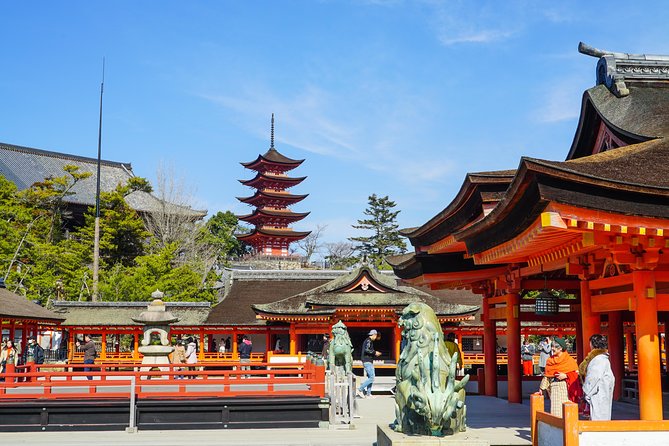
Daishō-in Temple is often the emotional high point of the walk. It is the main temple of the Omuro school of Shingon Buddhism and offers a different mood from the shrine.
Here, your guide explains Buddhist practice and the many statues around the temple. The setting is more peaceful and contemplative, with details that reward a slower look. Several guides have been singled out for making this stop especially memorable, and some people consider it their favorite place on the entire island.
You should wear proper walking shoes. The route includes stairs and hills, especially around the temple area. Eri, one of the guides frequently praised for her care, has been noted for allowing enough breaks on uphill sections. That kind of pacing matters if you are traveling with children, older family members, or anyone unused to long walks in warm weather.
Rain does not necessarily ruin Daishō-in. A damp day can make the temple feel quieter, although wet steps require care. Bring a compact umbrella or rain jacket if the forecast looks uncertain.
Momijidani Park and Senjokaku
Momijidani Park provides a more open, scenic pause. The tour allows time for photographs, and the park gives you a break from shrine buildings and shopfronts. In autumn, the name suggests the appeal of the maple trees, though the tour information does not promise peak foliage on any particular date.
Senjokaku is the common name for the main hall of Toyokuni Shrine, also known as the Terminal Shrine of Itsukushima Shrine. The building adds another layer to the island’s religious story, and your guide explains its place in the route.
These two stops are shorter, about 30 minutes each. That keeps the day moving, but do not expect a long independent exploration of either site. The guide’s explanation is the main reason they are included.
Omotesando Street and a proper taste of Miyajima
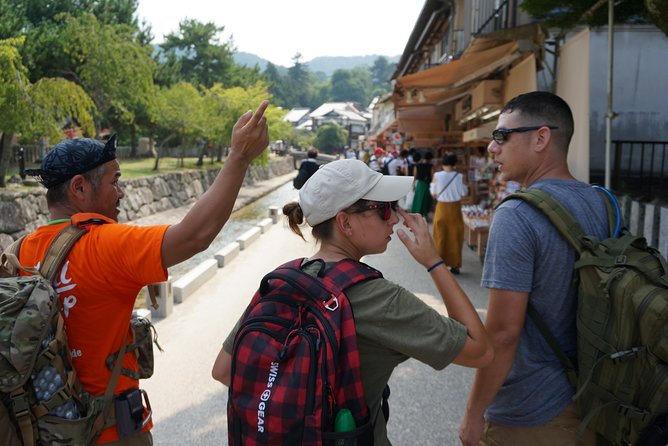
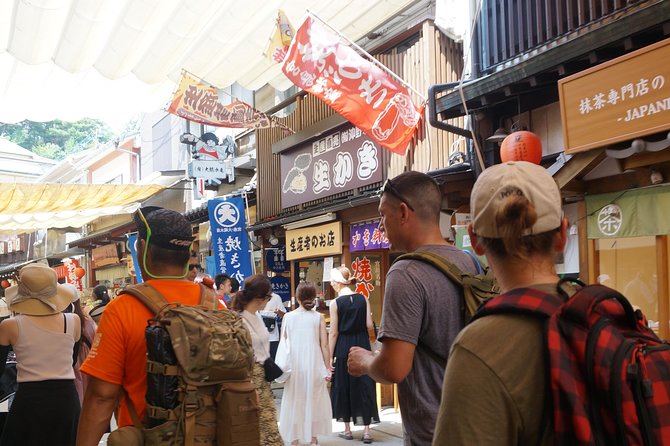
The final major stop is Miyajima Omotesando Shopping Street. This is where the tour shifts from sacred sites to everyday island food and shopping.
The street is lined with food stalls and souvenir shops. Grilled oysters are a local specialty, and they are one of the foods associated with the included Hiroshima lunch. You may also try momiji dumplings, the maple-leaf-shaped sweets associated with Miyajima. Some tours have included unagi, fried oysters, soft-serve ice cream, or a sweet stop at a favorite café, but the exact menu can vary.
The included lunch adds real value to the price. At $109.43 per person, this is not a bargain-priced walking tour, but you are paying for a certified guide, entrance fees, photos, lunch, and a carefully arranged route. The ferry is the main additional cost, along with any extra food or drinks you choose to buy.
Food restrictions require careful planning. Vegetarian and vegan options are available but limited. Gluten-free lunch is not available, and the operator cannot guarantee food free from allergens because meals come from kitchens it does not control. Tell the operator at least one day before the tour about dietary needs. Same-day requests cannot be accommodated.
What the guides add to the day
The guide makes the difference between a pleasant island walk and a useful cultural visit. The listed guides include Hiro, Hika, Eri, Yuji, Kiki, Mariko, Meri, Shun, and Tomohiro, also called Tommy. You are assigned a guide based on the departure, so you cannot necessarily choose one by name.
The strongest guide feedback centers on warmth, flexibility, local knowledge, and practical help. Hiro has been praised for his professional manner and easy conversation. Hika has led private family tours and has been described as patient and informative. Kiki has taken people to lesser-known corners as well as the major sights.
Meri has shown flexibility with meeting arrangements and added a favorite café stop. Tommy has been praised for photo help and a good recommendation for momiji manju. These details suggest a tour that can feel personal rather than scripted, especially when the group is small.
The experience also works in imperfect weather. Rainy outings have still included the full route, lunch, and plenty of explanation. On the other hand, an overcast day will not give you the bright water and clear mountain views shown in sunny photographs. Pack for conditions rather than assuming the forecast will improve.
Time, fitness, and seasonal comfort
The total duration is about five hours and 30 minutes, ending back at the meeting point. This is not a ride-around sightseeing trip. You walk between the coast, shrine, temple, park, hall, and shopping street.
Most people can participate, but you should be comfortable walking for several hours and handling stairs or hills. Take water, especially in summer. Japanese summers can be hot and humid, with possible highs around 40°C, or 110°F. A hat and light clothing are sensible, and heat protection is more important than trying to look stylish for every photograph.
Winter can also be demanding. The tour information notes possible lows around -5°C, or 20°F. Wear warm layers and shoes with good grip. Rainy weather can make the route slower, but it may also reduce the number of people around the most popular sites.
Children of all ages are welcome. Families may appreciate the food stops and deer sightings, while couples and solo visitors may value the small group and help with photos. If you have serious mobility limits, ask before booking because the route includes stairs, hills, and extended walking.
Who should book this Miyajima tour
I would choose this experience if you are visiting Miyajima for the first time and want more than the standard gate photograph. It is particularly useful if Japanese religious architecture is unfamiliar to you or if you want someone else to handle the route, site admissions, food choices, and photographs.
It is also a strong choice for solo visitors. A small group gives you company without the feel of a large coach tour. If your booking is light, you may receive a private or nearly private experience at no extra charge.
You may prefer to visit independently if you want a slow day, plan to hike extensively, or already know the island well. The fixed five-and-a-half-hour route leaves less room for a long meal, extended shopping, or a separate mountain excursion. You also need to pay the ferry fee and manage dietary concerns carefully.
The tour includes free cancellation up to 24 hours before the start time. Changes or cancellations inside that window are not accepted, so check your plans before the deadline.
Should you book it?
Book this tour if you want context, local food, and a manageable small group rather than a quick self-guided visit. The Ōtorii Gate and Itsukushima Shrine supply the famous images, but Daishō-in Temple, the ferry crossing, and the explanations about spirituality give the day its real substance.
Skip it if you prefer complete independence or cannot manage several hours of walking. For most first-time visitors to Hiroshima, though, the combination of major sights, Buddhist and Shinto traditions, included lunch, and attentive guides makes the $109.43 price reasonable. Bring water, wear comfortable shoes, and save room for an oyster or momiji dumpling.
FAQ
How long does the Miyajima walking tour last?
The tour lasts approximately five hours and 30 minutes. It begins and ends at the meeting point near Miyajimaguchi.
Where does the tour meet?
The meeting point is 1-chōme-3-26 Miyajimaguchi, Hatsukaichi, Hiroshima 739-0411, Japan.
Is the ferry to Miyajima included?
No. The ferry costs 500 yen, about 4 dollars, for a round trip and must be paid separately.
What food is included?
The tour includes a Hiroshima local lunch. Food may include fresh or grilled oysters and momiji dumplings. Additional food and drinks are available to purchase.
Can vegetarian, vegan, or gluten-free meals be provided?
Vegetarian and vegan options are available but limited. Gluten-free lunch is not available. Dietary requests and allergies must be shared at least one day before the tour, but allergy-free food cannot be guaranteed.
What is the maximum group size?
The tour has a maximum of six travelers. Some departures may be private or nearly private if only one or two people book.
More Day Trips in Japan
- Nara Half Day Trip Walking Tour (Private Option Available)
★ 5.0 · 937 reviews - Madrid: 6-Hour Day Trip to Toledo with Guided Walking Tour
★ 4.0 · 1,029 reviews - Intro to Mexico Walking Tour: Tijuana Day Trip from San Diego
★ 4.5 · 616 reviews - Madrid: Day Trip to Toledo with Walking Tour & Small Group
★ 4.2 · 111 reviews
More Half-Day Tours in Japan
- Nara: Half-Day UNESCO Heritage & Local Culture Walking Tour
★ 4.8 · 250 reviews - Discover Berlin Half-Day Walking Tour
★ 5.0 · 9,624 reviews - Rio De Janeiro: Half-Day Rocinha Favela Walking Tour
★ 4.7 · 2,272 reviews - Istanbul: Fener Balat Half-day Guided Walking Tour
★ 4.9 · 1,711 reviews
Just added around Japan
- Hiroshima Walking Tour Why A Bomb was dropped to Hiroshima★ 5.0 · 347 reviews
- Tokyo: Asakusa & Sensoji ー Oldest Temple Walking Tour (2hrs)★ 5.0 · 213 reviews
- Asakusa Senso-ji Temple and Old Tokyo Walking Tour★ 5.0 · 560 reviews
- Asakusa Cultural Walk & Matcha Making Tour★ 5.0 · 245 reviews
- Tokyo: Tsukiji Market Walking Tour & Sushi Cooking Class★ 4.6 · 122 reviews
- Tokyo:Stroll in Old traditional culture towns~Yanaka & Nezu★ 4.9 · 186 reviews
- Tokyo: Shibuya Crossing & Hidden Streets Walking Tour★ 4.8 · 128 reviews
- Tokyo: Shinjuku Bar Hopping & Night Walking Tour★ 4.6 · 137 reviews
History Walking Tours, compared.


Berlin’s Best: 2 Hour Walking Tour Third Reich and the Cold War
Read our review →
Third Reich Berlin: Hitler and WWII Walking Tour
Read our review →
New Orleans Garden District History Walking Tour
Read our review →
Cartagena: Historic Center and Getsemaní Shared Walking Tour
Read our review →
Imperial Palace and Shogun Historical Walking Tour
Read our review →Browse the lists this tour appears in