
REVIEW · LISBON
Lisbon: Food and Wine Small Group Walking Tour
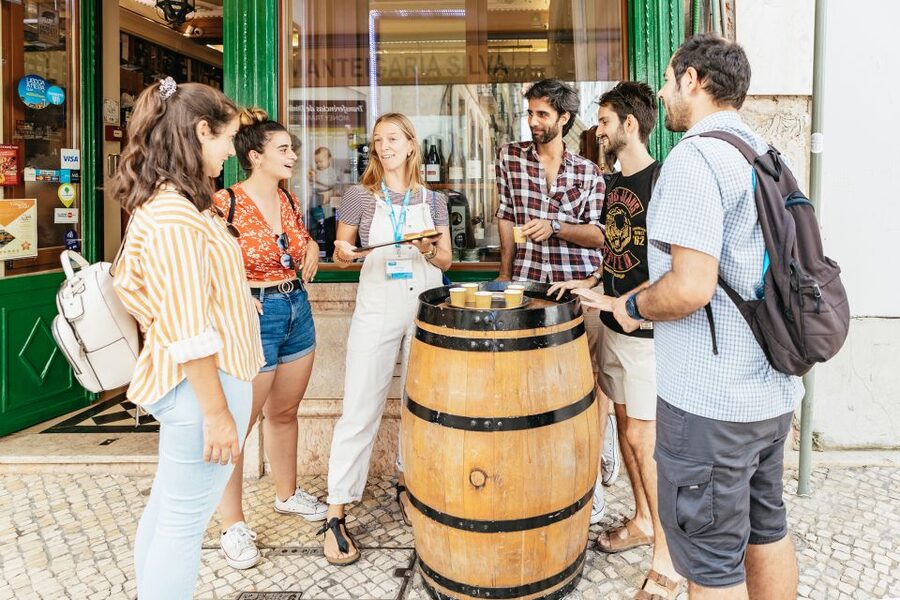
Lisbon’s food culture makes more sense when you taste it in the small cafés and taverns where locals actually eat. This three-hour walk moves through Baixa with 15 generous tastings, from codfish cake and Vinho Verde to bifana, Port, cheese, and ginjinha. I like the steady mix of food, wine, beer, and spirits, and I like that the stops are close together rather than scattered across the city.
The guides are a major part of the experience. José, Daniel, Filipa, Carlos, Martin, Pedro, and others are praised for combining Portuguese history with stories about dishes and drinks. The main drawback is the food policy: vegan, vegetarian, celiac, gluten-free, kosher, and serious allergy needs may not be accommodated, so this is best for flexible eaters.
Key points to know before booking
- Six stops and 15 tastings: This is a full sampling session, not a tour built around tiny decorative bites.
- The route stays in central Lisbon: Begin at Rossio Square and finish around Baixa or Alfama.
- Expect plenty of alcohol: Wine, Port, beer, and ginjinha are part of the experience.
- Local food comes with context: Your guide explains the background of codfish cake, bifana, chouriço, rice dishes, and Portuguese drinks.
- Groups vary in size: Some departures are intimate, while others can reach roughly 14 or 15 people.
- Come hungry and wear good shoes: The portions can be generous, and you will be walking between venues.
A first taste of Lisbon at Rossio Square
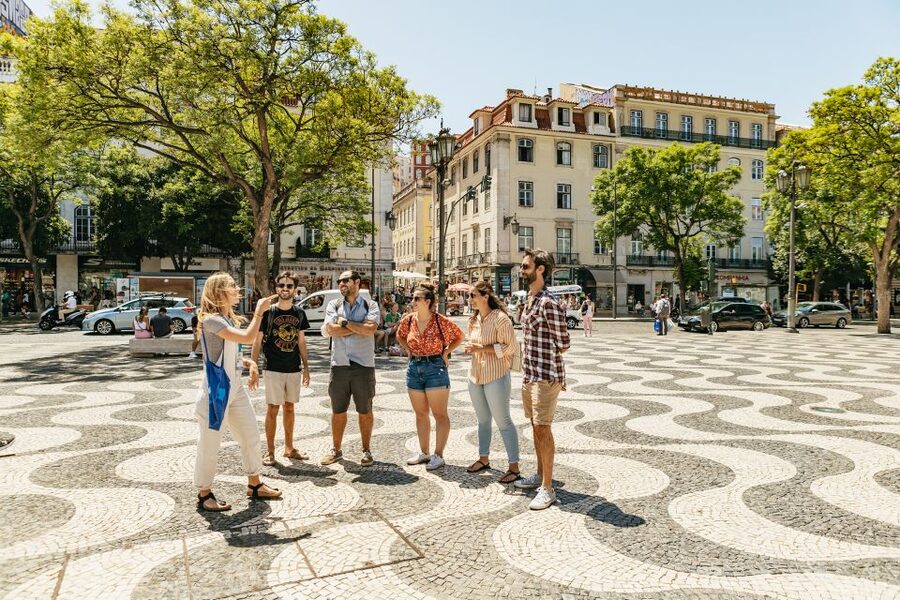
The tour begins at Praça Dom Pedro IV, better known as Rossio Square. Look for the guide near the central statue, wearing a blue badge, carrying a blue bag, or using a black backpack. The nearest Metro stop is Rossio on the green line.
Take care here: Rossio has a tall column topped by a standing figure and two fountains. If you see a statue of a man on horseback, you are in the wrong square. That small meeting-point detail matters in a busy city center.
From Rossio, the route moves into Baixa, Lisbon’s central district. You get a useful orientation as you walk, but this is not a major sightseeing tour with long stops at monuments. The city is the setting for the food, and your guide uses the streets, cafés, and taverns to explain how Portuguese eating habits developed.
I especially like this approach for a first day in Lisbon. You learn what a tasca is, see the sort of places locals use for a quick meal, and gather restaurant ideas for the rest of your stay. Guides also give practical suggestions about places to eat and visit after the tour.
More Food Walking Tours in Lisbon
- Lisbon Food Tour with 10+ Tastings of Local Delicacies & Wines
★ 5.0 · 1,339 reviews - Lisbon Private Food Tour – Taste 10+ Local Dishes & Wines
★ 5.0 · 896 reviews - Lisbon: Award-Winning Guided Walking Food Tour with Local Drinks
★ 5.0 · 374 reviews
Vinho Verde and the codfish cake
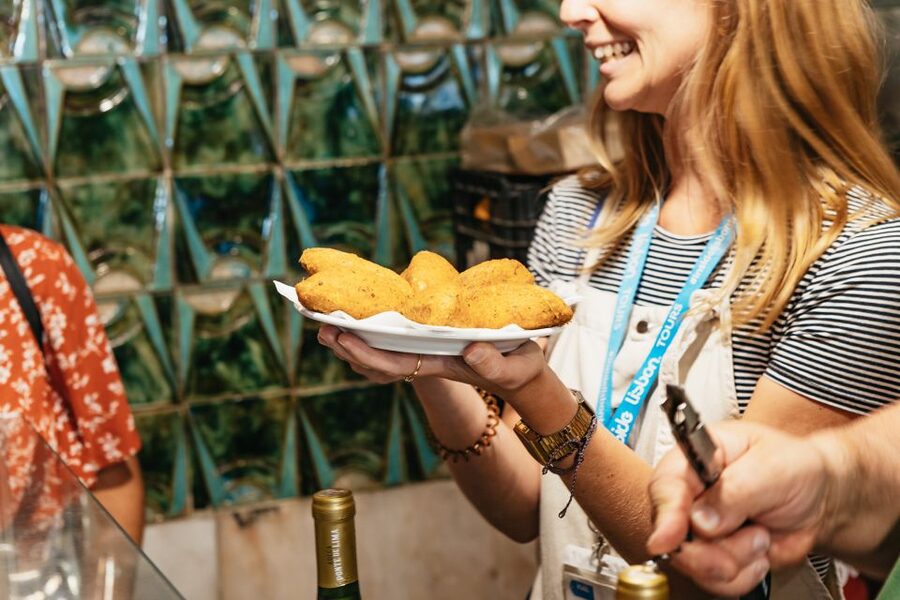
One early stop pairs a glass of Vinho Verde with a codfish cake. Vinho Verde is a Portuguese wine known for its fresh, light character, while the codfish cake is one of the country’s classic snacks.
This is a smart opening combination. The drink is refreshing, and the salty fish cake gives you an immediate introduction to two familiar Portuguese flavors. Your guide also places the food in a wider cultural setting, rather than simply handing you a plate and moving on.
The tasting is scheduled for about 20 minutes. That is enough time to eat, ask questions, and hear some background without turning the stop into a formal class. The exact serving style can vary, since the tour uses working venues rather than a single private tasting room.
Port, cheese, and Lisbon’s old cafés
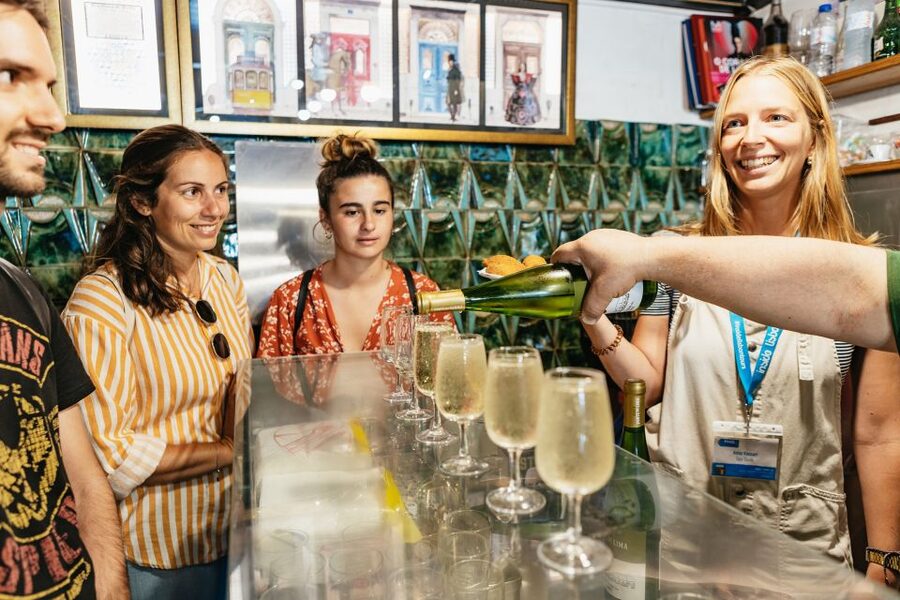
A local café follows, with wine and cheese. At another stop, Port is served with local cheese, giving you a chance to compare Portugal’s fortified wine with the table wines served elsewhere on the route.
The Port tasting is one of the tour’s most useful stops for anyone who has only seen Port on a wine list. You learn why it is different from ordinary wine and how cheese changes the experience. The portions are meant to be part of a larger meal, so you are not expected to make a full wine tasting out of one glass.
The café setting also helps. Portuguese cafés are part of daily life, not just places built for sightseeing. A stop in one gives the tour a more ordinary feel than a schedule made entirely of polished restaurants.
Ginjinha at St. Dominic’s Square
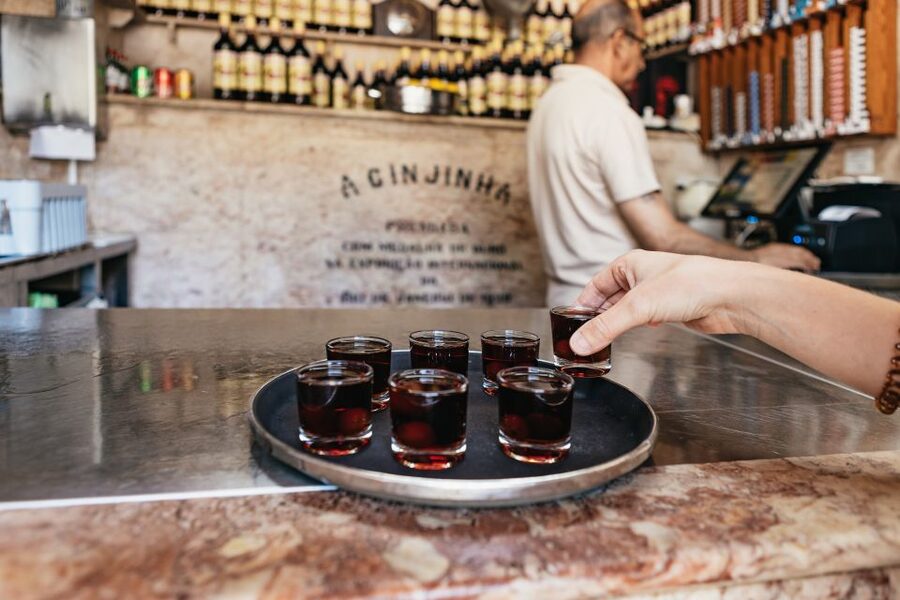
At St. Dominic’s Square, the focus turns to spirits. You taste ginjinha, Lisbon’s famous cherry liqueur, at a historic bar associated with its first commercial sale in 1840.
Ginjinha is sweet, aromatic, and usually served in a small portion. It is a distinctly local drink, so this is not just another alcohol sample added to the list. The story behind the bar helps explain why ginjinha has such a strong place in Lisbon’s identity.
This stop takes about 15 minutes. It is brief, but that suits the drink. The tour keeps moving before the alcohol begins to dominate the entire afternoon.
That said, the alcohol level deserves a clear warning. You may have wine at several stops, a beer, Port, and ginjinha within three hours. Drink slowly, eat everything offered, and do not treat the samples as optional decoration. The food helps, but this is still a drink-heavy food tour.
More Food Walking Tours in Portugal
- Porto: Delicious Food and Wine Walking Tour
★ 4.8 · 977 reviews - Faro: Old Town Guided Walking Food Tour
★ 4.9 · 94 reviews
A bifana, beer, and the tasca tradition
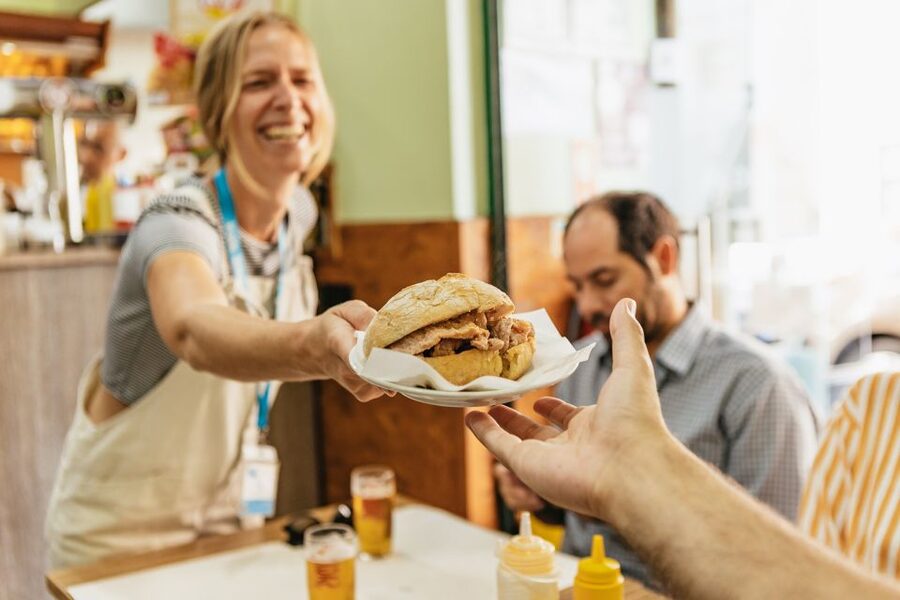
One of the most memorable stops is a traditional tasca, or tavern, for a bifana with a draft beer. A bifana is a simple Portuguese pork sandwich, and its appeal comes from being straightforward, filling, and tied to everyday eating.
The venue is described as one of Lisbon’s well-known taverns. You are not being taken to a theatrical reconstruction of a local bar. You are eating the sort of quick, casual food that makes sense in a working neighborhood.
This stop is scheduled for about 20 minutes and gives the tour a welcome change of pace after the smaller drink and cheese tastings. The cold beer also works well with the seasoned pork.
Some servings on this tour are larger than the word tasting may suggest. That is good news if you arrive hungry, but it also means you should not eat a large lunch immediately beforehand. The route may include other foods such as sardines or a beef sandwich depending on the venue and the day, so leave room.
Chouriço, bread, cheese, and red wine
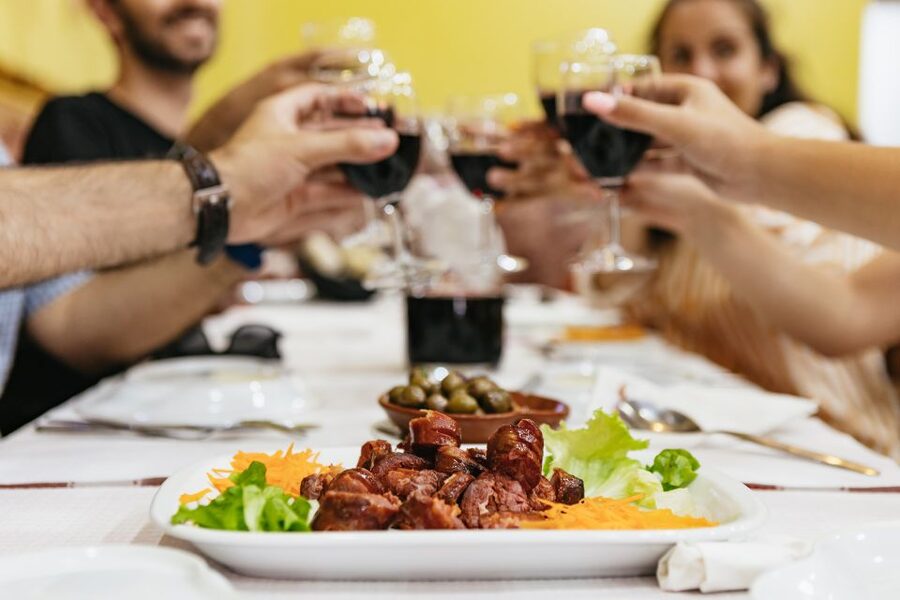
A later stop takes you to a local venue for chouriço, Portuguese bread, other local products, and red wine. Chouriço brings a smoky, savory note to the route, while the bread and cheese make the stop feel more like a shared table than a series of isolated bites.
This is where the group format works well. Several people can compare flavors, ask how foods are normally served, and hear about the role of simple preserved meats and bread in Portuguese meals. The tasting lasts about 30 minutes, so it has more breathing room than the ginjinha stop.
The wine is not treated as a separate lecture. It is selected to go with the food, which is the practical way to learn. You get an idea of how Portuguese drinks fit into a meal rather than trying to memorize technical wine terms.
The daily rice dish finishes the meal
The final food stop centers on a traditional Portuguese rice dish served with wine. The recipe changes according to the fresh ingredients available that day, so you should expect a seasonal or market-based variation rather than one fixed dish.
That uncertainty is part of the appeal. You are tasting what the kitchen is preparing, not a standardized plate shipped in for tour groups. The dish is described as comforting and soupy, making it a satisfying finish after the sandwich, cheese, sausage, and earlier snacks.
This stop takes about 30 minutes. By this point, the meal-like portions and repeated drinks should make the value of the tour clearer. You are not paying only for food. You are paying for a sequence of places, explanations, and pairings that would be difficult to reproduce on your own in one afternoon.
What the guide adds to the food
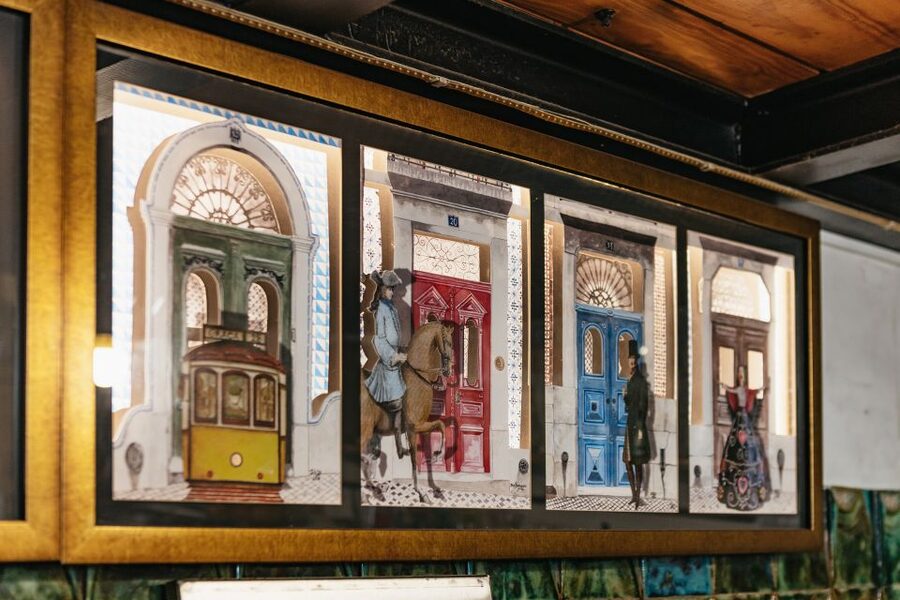
The strongest part of this tour is the human element. Guides including José, Daniel, Filipa, Martin, Pedro, Guilherme, Alex, Carlos, and Franco are described as warm, funny, and deeply familiar with Lisbon’s food traditions.
That does not mean every departure will feel identical. A guide’s personality shapes the pace, the amount of history, and how much time the group spends talking. Some guides focus heavily on Portuguese and Iberian history, while others concentrate more on restaurant advice and the stories behind individual dishes.
The best version of this tour is not a rushed march between six addresses. It is a moving conversation, with the guide connecting food to Lisbon’s neighborhoods, trade, customs, and daily life. The itinerary allows time at each venue, and the stops are close enough that the walking does not overwhelm the eating.
I also like the social side. Solo visitors can fit in easily because the food is shared and conversation comes naturally. Groups often include people from different countries, and the relaxed tavern settings make it easy to meet them. Still, remember that a small-group tour does not guarantee a tiny group. Four people is possible, but departures can reach around 14 or 15.
How much walking and time to expect
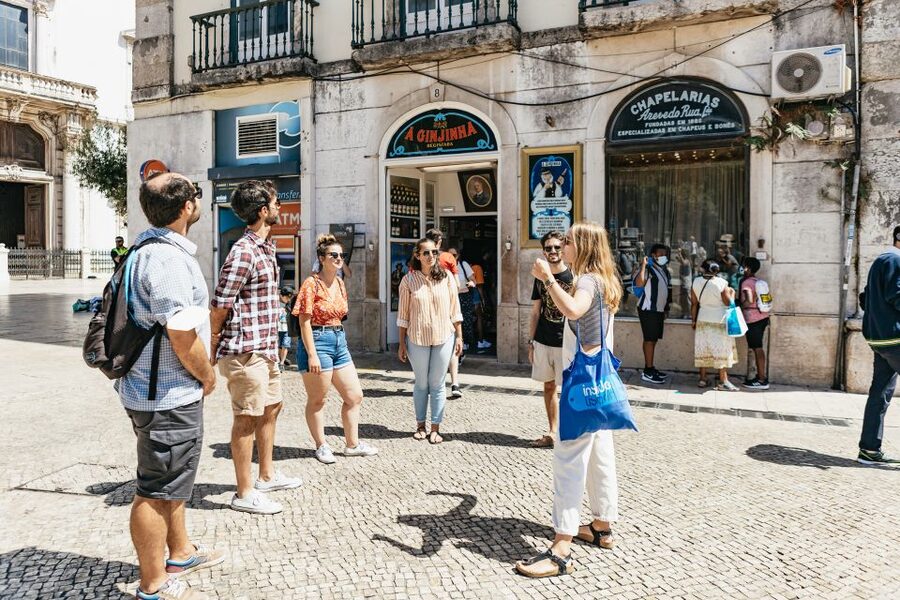
The activity lasts three hours. Most of the walking takes place in central Baixa, with stops close to one another. One person described the route as manageable even with a mild to medium walking impairment, but you should still expect city pavements, standing, and movement between venues.
Comfortable shoes are essential. Lisbon’s streets can be tiring even when the distance is not great, and a food tour is less enjoyable if your feet hurt before the second stop.
The stated ending points are around Baixa de Lisboa or Alfama. Hotel pickup and drop-off are not included, so plan your own way to Rossio Square and away from the final stop. The Metro is the simplest clear reference point at the beginning, with Rossio station nearby.
The activity is offered in English with a live guide. If you want a tour in another language, this particular option is not designed for that.
Is $72 a fair price?
At $72 per person, the tour is not the cheapest way to grab lunch in Lisbon. You can buy a bifana, a beer, and a pastry for much less. The comparison changes when you count the number of tastings, the wine and spirits, the guide, and the time saved finding suitable places.
You receive food at six stops, including 15 different tastes, plus Vinho Verde, Port, red and white wine, beer, and ginjinha. Several portions can be substantial, and the route includes venues you might not choose confidently on your first visit.
I consider the price fair for someone who values an introduction rather than a bargain meal. It is especially good value early in your stay, since the guide can point you toward places to return to. It is less compelling if you already know Lisbon’s food scene or prefer to spend $72 on one long restaurant meal.
The reserve-now, pay-later option and free cancellation up to 24 hours before the tour reduce the risk when your plans are still changing. You should still check the available start time when booking, since the schedule varies.
Who should book, and who should skip it
I would choose this tour for a first visit to Lisbon, especially if you want history with your food and do not know which local specialties to try. It also suits solo visitors, couples, and families with older children who are comfortable with alcohol-centered tastings.
It is a good match if you like casual restaurants, local taverns, generous portions, and a guide who talks about culture instead of listing dishes. It is also useful for anyone who wants restaurant suggestions for later in the trip.
I would not book it if you need a strict dietary plan. Vegan and celiac options are not available, and vegetarian, gluten-free, kosher, and allergy-friendly substitutions may not be possible at the traditional venues. A picky eater may also find the fixed menu limiting.
Because wine and spirits appear throughout the route, this is not the right choice for someone avoiding alcohol. You can ask about individual samples, but the tour is built around Portuguese food and drink together.
Should you book the Lisbon food and wine walk?
Book it if you want a lively introduction to Lisbon through everyday food, local drinks, and a personable English-speaking guide. The strongest reasons are the variety, the close-together route, the generous portions, and the chance to try dishes such as bifana, codfish cake, chouriço, and a changing rice dish in real local venues.
I would book it near the start of your visit, arrive hungry, wear comfortable shoes, and keep the rest of the evening flexible. Skip it if you need vegan or gluten-free food, dislike group dining, or want a quiet wine tasting with little walking. For flexible eaters who enjoy a social afternoon, $72 buys a useful first look at how Lisbon eats and drinks.
FAQ
How long is the Lisbon food and wine walking tour?
The tour lasts three hours, including walking between six food and drink stops.
Where does the tour meet?
Meet at Rossio Square, Praça Dom Pedro IV, near the central statue. Look for a guide with a blue badge, blue bag, or black backpack.
Which Metro station is closest to the meeting point?
Rossio Metro station on the green line is the closest stated station.
How many tastings are included?
The experience includes 15 tastings across six popular cafés, taverns, and restaurants.
What foods and drinks are included?
The tastings can include codfish cake with Vinho Verde, Port with local cheese, a bifana with draft beer, ginjinha, chouriço with bread and other local foods, red wine, and a traditional rice dish with wine.
Is the tour offered in English?
Yes. The activity includes a live English-speaking guide.
Are vegan or celiac options available?
No. Vegan and celiac options are not available, and alternatives for gluten-free, kosher, vegetarian, or other dietary requirements may not be possible.
Is hotel pickup included?
No. You must make your own way to Rossio Square, and hotel drop-off is not included.
Can I cancel the tour?
You can cancel up to 24 hours in advance for a full refund. The reserve-now, pay-later option lets you book without paying immediately.
More Small-Group Walking Tours in Lisbon
- Amsterdam Anne Frank: Small-Group Walking Tour & Local Guide
★ 4.8 · 12,789 reviews - Boston: Freedom Trail History Small Group Walking Tour
★ 5.0 · 6,450 reviews - Barcelona Tapas and Wine Experience Small-Group Walking Tour
★ 5.0 · 5,804 reviews - Reykjavík Small group Walking Tour – by CityWalk
★ 5.0 · 5,076 reviews
Just added around Lisbon
- Fado: Musical Walking Tour with Food & Live Show★ 5.0 · 121 reviews
- Eat & Walk Through Lisbon: A Local Food & Wine Experience★ 4.9 · 458 reviews
- Best of Lisbon Private Walking Tour★ 5.0 · 370 reviews
- Lisbon: Private Dark History Walking Tour with Drinks★ 4.8 · 387 reviews
- Lisbon: Award-Winning Guided Walking Food Tour with Local Drinks★ 5.0 · 374 reviews
- Lisbon: Best of City Private Walking Tour★ 4.9 · 601 reviews
- Lisbon: Belém Walking Tour with Jerónimos Monastery Ticket★ 4.9 · 637 reviews
- Lisbon: Kickstart Street Art Walking Tour★ 4.9 · 717 reviews
Food Walking Tours, compared.
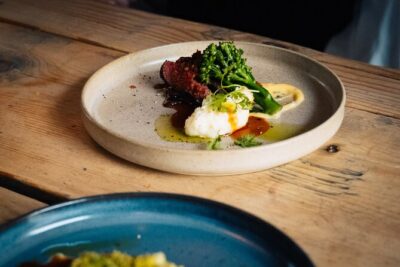
Reykjavik Food Walk – Local Foodie Adventure in Iceland
Read our review →
Ho Chi Minh City Street Food Tour & Sightseeing By Motorbike
Read our review →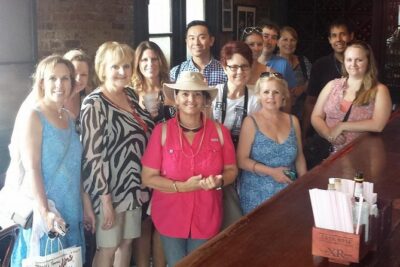
New Orleans Food Walking Tour of the French Quarter with Small-Group Option
Read our review →
Authentic Parisian Gourmet Food Tour with 10 Local Dishes & Wines
Read our review →
Savannah First Squares Culinary & Cultural Walking Food Tour
Read our review →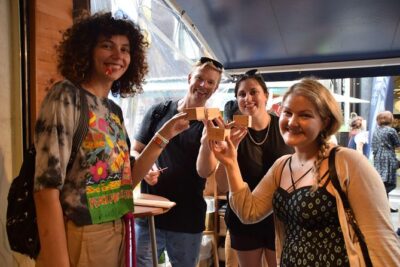
Tokyo Tsukiji Fish Market Food and Culture Walking Tour
Read our review →Browse the lists this tour appears in