
REVIEW · TOKYO
Tsukiji Fish Market Small-Group Food Walking Tour
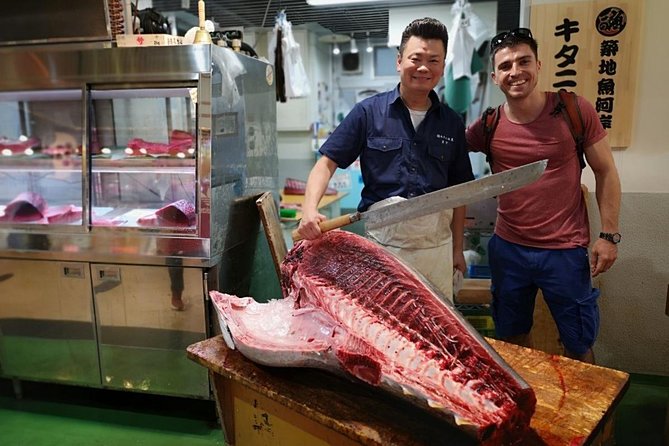
Tsukiji’s best story is no longer the giant wholesale fish auction. That operation moved to Toyosu in 2018. What remains is more useful for a curious eater: narrow lanes packed with seafood stalls, tamagoyaki shops, dried goods, seasonings, kitchen tools, and small restaurants. This three-hour walk lets you taste your way through that living market instead of simply taking photographs.
I like the small group of no more than seven people, which gives your guide room to explain unfamiliar foods and keep the group together in tight lanes. I also like the mix of food and culture. You may taste tuna nigiri, scallops, eel, crab, grilled seafood, and local snacks, then visit a Buddhist temple and Shinto shrine. The main caution is simple: do not book this expecting the old inner wholesale market. You will explore Tsukiji Outer Market and nearby seafood businesses instead.
Key points at a glance
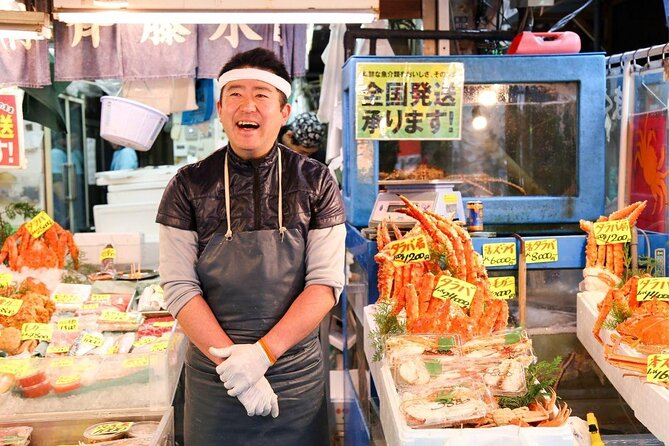
- The market has changed: The wholesale fish market moved to Toyosu, but Tsukiji Outer Market remains active with around 460 shops.
- Food is the main event: A seafood lunch is included, along with samples such as sushi, tamagoyaki, scallops, eel, crab, and dried seafood.
- The group stays small: The maximum is seven people, a useful size in narrow market lanes.
- Culture comes with lunch: The route includes a Japanese Buddhist temple, a Shinto shrine, market history, and a city view.
- The guide shapes the experience: Guides such as Kazu, Hitomi, Yuki, Mark, Tiger, Mia, and Mummy have been praised for food knowledge, humor, and local recommendations.
- Plan for heat and dietary limits: Summer can be hot and humid. Vegan choices are not available, and allergy-free food cannot be guaranteed.
Tsukiji today, and what you are really visiting
The name Tsukiji still carries an image of enormous fish auctions and workers moving massive tuna through a wholesale hall. That is now Toyosu, several kilometers away. If seeing the current wholesale market is your top reason for booking, this is the wrong tour.
Tsukiji Outer Market is not a museum left behind after the move. It is a working food district with about 460 shops selling fish, meat, fruit, vegetables, dried seafood, seasonings, cooking tools, and tableware. Some businesses serve restaurant buyers, some serve local cooks, and others welcome visitors looking for a quick bite or a food souvenir.
I think that distinction matters. Toyosu is the place for the modern wholesale operation. Tsukiji is better for walking, tasting, browsing, and seeing how Japanese food culture reaches the home kitchen. You get a much more hands-on morning here, though the streets can feel crowded and cramped.
More Food Walking Tours in Japan
- Tokyo Tsukiji Fish Market Food and Culture Walking Tour
★ 5.0 · 3,184 reviews - Osaka Local Foodie Walking Tour in Dotonbori and Shinsekai
★ 5.0 · 985 reviews - Kuromon Market Food Walking Tour in Osaka (6 stops, 6 tastes)
★ 5.0 · 550 reviews
Starting at Tsukiji Station Exit 1
The meeting point is outside Tsukiji Station at Exit 1, at 3 Chome-9 Tsukiji. Your guide waits there, and the experience uses a mobile ticket. Arrive early enough to identify the correct group, since the station area can be busy and several tours may operate nearby.
The tour lasts about three hours. That is long enough for several food stops, a sit-down meal, cultural visits, and a little orientation without taking your entire day. It ends at Shiodome Tower, near 1 Chome-6-3 Higashishinbashi, so you finish in a different part of Tokyo rather than returning to the station.
The route is near public transportation, and most people can take part. Still, you should expect to walk and stand in crowded market lanes. Comfortable shoes matter more here than polished sightseeing clothes.
Eating through Tsukiji Outer Market
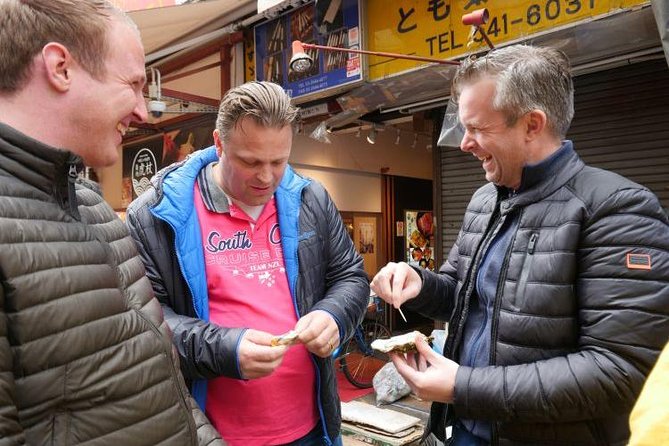
The food is the reason to book this walk, and the range is broader than a single sushi breakfast. Depending on the day and the guide’s route, you might try tuna nigiri, grilled eel, tamagoyaki, scallops on a stick, crab, takoyaki, dried seafood, and other local snacks.
Tamagoyaki is a particularly good market introduction. This Japanese rolled omelet often has a sweet flavor and a soft texture, which may surprise you if you expect a savory egg dish. It is easy to eat while walking and gives the guide a chance to explain an everyday Japanese food rather than only presenting expensive seafood.
Seafood samples can include giant crab legs, scallops, sushi, eel, and small dried fish products. One unusual possibility is dried stingray meat. You may like it, or you may decide that one taste was enough. That is part of the fun of a food market tour: you can try things you would not recognize or order on your own.
The market is not built like a food court. Some stalls have very little room to stop and eat, and signs ask people not to block the lanes. Your guide will usually keep the group moving, so do not expect to sit down at every stop. The pace is better suited to small bites and conversation than to a long, relaxed meal.
The included seafood lunch
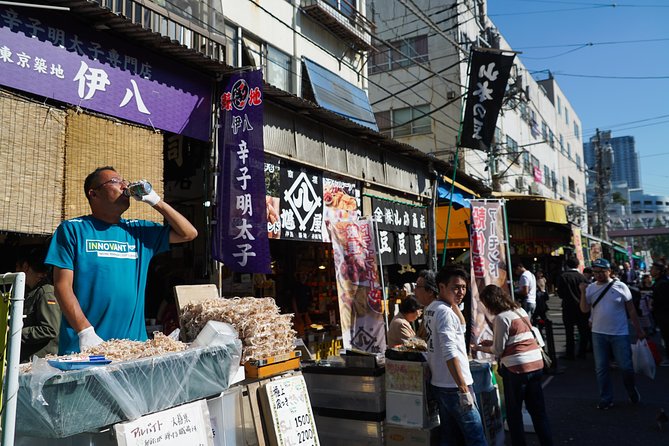
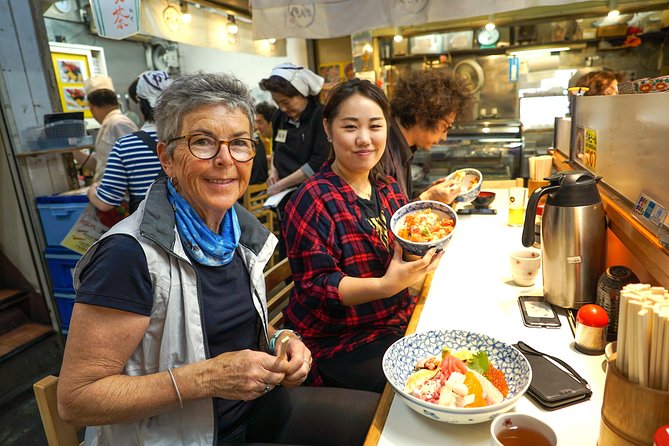
The sit-down lunch is one of the strongest parts of the experience. You finish the scattered sampling with a proper seafood meal, often in a small local restaurant. One especially appealing feature is that you may be able to choose what you want for this meal.
That choice gives the lunch more value than a fixed plate that may include items you do not want. You can use it to order something familiar, or take one more chance on a type of fish you have not tried. The meal also gives you a chance to rest after navigating the tight market lanes.
You should arrive hungry. The food stops can add up quickly, and the lunch is not merely a token snack. At the same time, the exact number and type of samples can vary. A promised two or three tastings may turn into several small bites and a couple of larger items, but individual stalls can be busy or unavailable.
One reported problem involved a long line at a takoyaki stall, which meant the group moved on. That is normal in a working market, but it is worth understanding the tradeoff. You are getting a real market morning, not a sealed package with every food stop guaranteed.
More Food Walking Tours in Tokyo:
- Reykjavik Food Walk – Local Foodie Adventure in Iceland
★ 5.0 · 18,952 reviews - Ho Chi Minh City Street Food Tour & Sightseeing By Motorbike
★ 5.0 · 9,413 reviews - New Orleans Food Walking Tour of the French Quarter with Small-Group Option
★ 5.0 · 6,118 reviews - Naples: Street Food Walking Tour with Local Guide
★ 4.9 · 4,976 reviews
A guide makes the difference
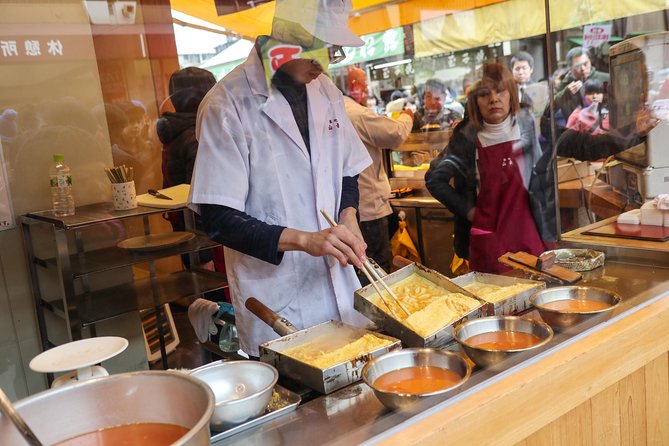
This tour rises or falls with the guide. The best guides do more than lead you from one shop to the next. They explain what you are eating, point out different types of seafood, share market history, and help you make sense of Japanese food customs.
Kazu has been singled out for his market knowledge, kindness, and care with food substitutions. Yuki has been praised for knowing where to stop and what to order. Hitomi, Mark, Tiger, Mia, and Mummy have also received strong praise for making the walk friendly, informative, and fun.
The exact guide is not guaranteed, so I would not book solely for a particular name. Still, the pattern is clear: the guide’s personality matters. A good guide can turn a crowded lane into a lesson in seafood, while a less effective one may leave you with food samples but little context.
That variation is the main reason to keep your expectations sensible. Most of the feedback is strongly positive, with a 4.9 rating from 621 reviews and 97 percent recommending the experience. Yet one poor experience described almost no explanation and only limited sampling. The company responded by apologizing and promising to address the issue. The practical lesson is to ask questions as you go. If you want to know how a fish is prepared or why a snack matters, speak up.
Temples, shrines, and a wider view of Tokyo
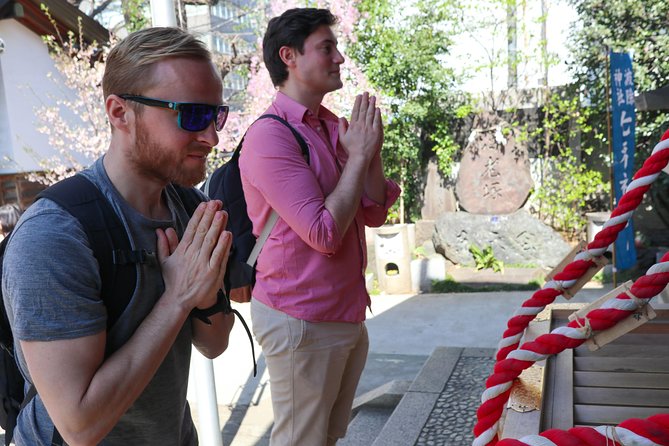
Tsukiji is not only about eating. The route includes a Japanese Buddhist temple and a Shinto shrine, adding useful context to a market that can otherwise seem like a row of food stalls.
These stops help explain the different religious traditions you see across Japan. A temple and shrine are not interchangeable, and visiting both gives you a clearer sense of how religion fits into daily life. Your guide also covers the history of the market and the buildings around it.
The tour includes a city view as well, with Tokyo Bay visible from the route. This is a welcome change of pace after the tight lanes. You move from seafood counters and shop signs to a wider view of the city, which helps place Tsukiji within central Tokyo.
Do not expect a full temple tour or a long sightseeing stop. Food remains the focus. The cultural visits work best as a well-chosen addition, not as the main reason to book.
What the small group changes
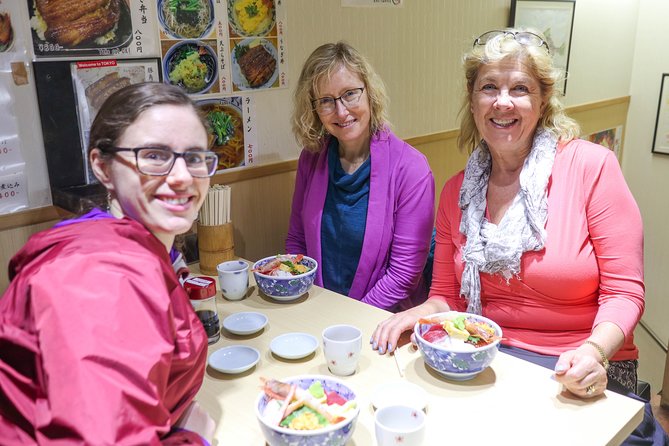
A maximum of seven people is a real advantage here. Tsukiji’s lanes are narrow, and a large tour group would make it harder to hear the guide, stop at a stall, or avoid blocking shoppers.
A small group also makes food decisions easier. You can ask about unfamiliar items, hear the answer, and keep moving without waiting for a busload of people. Some bookings may be much smaller. One couple found themselves with only one other couple, which made the outing feel almost private while still retaining the social ease of a group tour.
The experience is not private, however. If you want a completely personal route or control over every meal, book a private food walk instead. This tour offers a middle ground: more personal attention than a large group, but a lower price than a fully private guide.
Price and value at $87.37
At $87.37 per person, this is not the cheapest way to wander through Tsukiji. You could enter the market on your own for free and buy individual snacks as you go. The price makes more sense when you count the included seafood lunch, several samples, a guide, the cultural stops, and the time saved figuring out what to eat.
I see the value in the structure. You do not need to choose between dozens of stalls while worrying about tourist traps, menus, or language gaps. A guide can take you to places you might walk past and explain foods that are difficult to identify from a sign.
The value is strongest for a first visit to Tokyo, for people who like seafood, and for anyone who wants a guided introduction before exploring independently. It is weaker for repeat visitors who already know Tsukiji, people who want a cheap breakfast, or anyone mainly interested in the Toyosu wholesale market.
The food samples are part of the price, but do not treat them as an unlimited feast. The number of stops can change, and one shop may be skipped if the queue is too long. Think of the cost as payment for a guided food lesson with lunch, not simply a ticket to eat a set number of items.
Dietary limits and practical comfort
Vegan options are not available. The company also cannot guarantee allergy-free food or meet every dietary restriction because the food comes from kitchens it does not control. Substitutions may not be possible at every stop, though the guide may try to offer alternatives elsewhere.
If you have celiac disease or another serious restriction, contact the operator before booking and explain your needs clearly. One guide, Kazu, made an effort to help a guest with celiac disease, but that should not be taken as a guarantee for every food stop or every guide.
The summer warning deserves attention. Tokyo can be very hot and humid, so bring water and wear a hat. You will be outdoors, walking, waiting, and eating in a dense market district. A light breakfast is sensible, but save room for the seafood lunch.
The tour is suitable for most people, but you should be comfortable on your feet for about three hours. Crowded paths and limited places to stop mean that it is not the best match for someone who needs frequent seating or a slower pace.
Who should book this Tsukiji food walk?
I would choose this tour if you want a guided introduction to Japanese seafood and prefer tasting several small items over eating one large meal. It is especially useful on a first Tokyo visit, when a guide can help you understand the difference between fresh fish, dried seafood, prepared snacks, and everyday market ingredients.
It also suits couples, solo visitors, and small families who like a social but manageable group. The temple, shrine, and city view make it more rounded than a simple restaurant crawl.
I would skip it if your main goal is to see the wholesale fish auction. That is at Toyosu, not Tsukiji. I would also skip it if you are vegan, have severe food allergies, dislike seafood, or want a fully private itinerary.
Book at least a day ahead if your plans are firm, since the average booking is made about 40 days in advance. You receive confirmation at booking, and cancellation is free up to 24 hours before the start time. Changes or cancellations inside that window are not accepted for a refund.
Should you book it?
Book this Tsukiji tour if you want food, context, and easy guidance in one morning. The included lunch and varied tastings make the $87.37 price reasonable, while the small group keeps the experience from feeling like a procession.
Just set your expectations correctly. You are visiting the active Outer Market, not the old wholesale hall. If you accept that, arrive hungry, ask questions, and prepare for heat and tight lanes, this is a lively and useful way to meet Tokyo through its food.
FAQ
Where does the Tsukiji food tour start?
It starts at Tsukiji Station Exit 1, at 3 Chome-9 Tsukiji, Chuo City, Tokyo.
Where does the tour end?
The tour ends at Shiodome Tower, at 1 Chome-6-3 Higashishinbashi, Minato City, Tokyo.
How long does the experience last?
The tour lasts approximately three hours.
Is lunch included?
Yes. A fresh seafood lunch at the market is included, along with food samples at local shops and stalls.
Does the tour visit the old wholesale fish market?
No. The inner wholesale market moved to Toyosu in 2018. This experience focuses on Tsukiji Outer Market and nearby seafood businesses.
Are vegan or allergy-free options available?
Vegan options are not available. Allergy-free meals and all dietary restrictions cannot be guaranteed, though the operator will try to provide substitutions or alternatives when possible.
More Shopping Tours in Tokyo
- Air Raid Shelter + St. Nicholas Market Walking Tour
★ 5.0 · 1,950 reviews - Nishiki Market Brunch Walking Tour (7 Tastings + Brunch)
★ 5.0 · 1,355 reviews - Bologna Food & Market Tour with 6 Tastings, Pasta, Wines & More
★ 5.0 · 1,328 reviews - Bristol: Air Raid Shelter & St. Nicholas Market Walking Tour
★ 4.8 · 320 reviews
More Market Visits in Tokyo
- Tokyo: Tsukiji Fish Market Food and Walking tour
★ 5.0 · 1,724 reviews - Tokyo: Tsukiji Fish Market Guided Walking Tour
★ 4.9 · 1,397 reviews - Bangkok: City Highlights Temple and Market Walking Tour
★ 4.5 · 3,990 reviews - London Bridge & Borough Market Food Tour with 7 Authentic Dishes
★ 5.0 · 1,972 reviews
Just added around Tokyo
- Asakusa: A Big-picture History Walk to Know Japan★ 4.6 · 77 reviews
- Tokyo: Private Walking Tour with a Local★ 4.4 · 419 reviews
- Tokyo: Private Walking Tour with a Local Guide★ 4.9 · 469 reviews
- Tokyo: Private Custom Walking Tour with Local Guide★ 4.8 · 533 reviews
- Tokyo: Shibuya Highlights Walking Tour★ 4.8 · 601 reviews
- Tokyo Castle & Imperial PalaceーShogun Walking Tour★ 5.0 · 724 reviews
- Tokyo: Dark Side of Tokyo Shinjuku Red Light Walking Tour★ 4.7 · 862 reviews
- Tokyo Drift: GT-R Car Club R35 Liberty Walk Daikoku meeting★ 4.8 · 875 reviews
Food Walking Tours, compared.
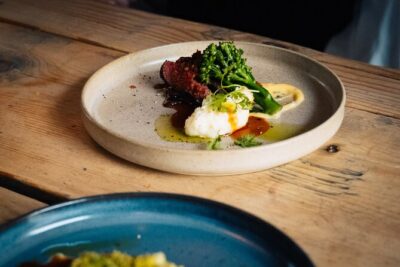
Reykjavik Food Walk – Local Foodie Adventure in Iceland
Read our review →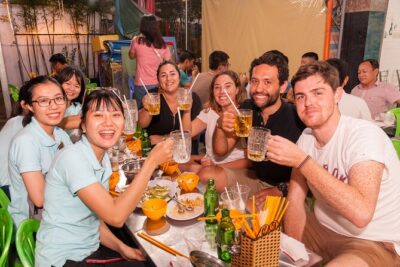
Ho Chi Minh City Street Food Tour & Sightseeing By Motorbike
Read our review →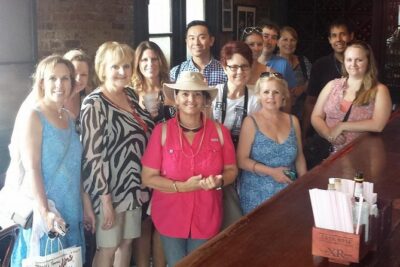
New Orleans Food Walking Tour of the French Quarter with Small-Group Option
Read our review →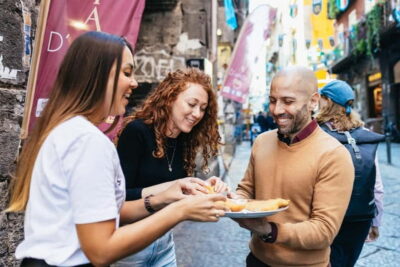
Authentic Parisian Gourmet Food Tour with 10 Local Dishes & Wines
Read our review →
Savannah First Squares Culinary & Cultural Walking Food Tour
Read our review →Browse the lists this tour appears in