
REVIEW · BANGKOK
Bangkok: City Highlights Temple and Market Walking Tour
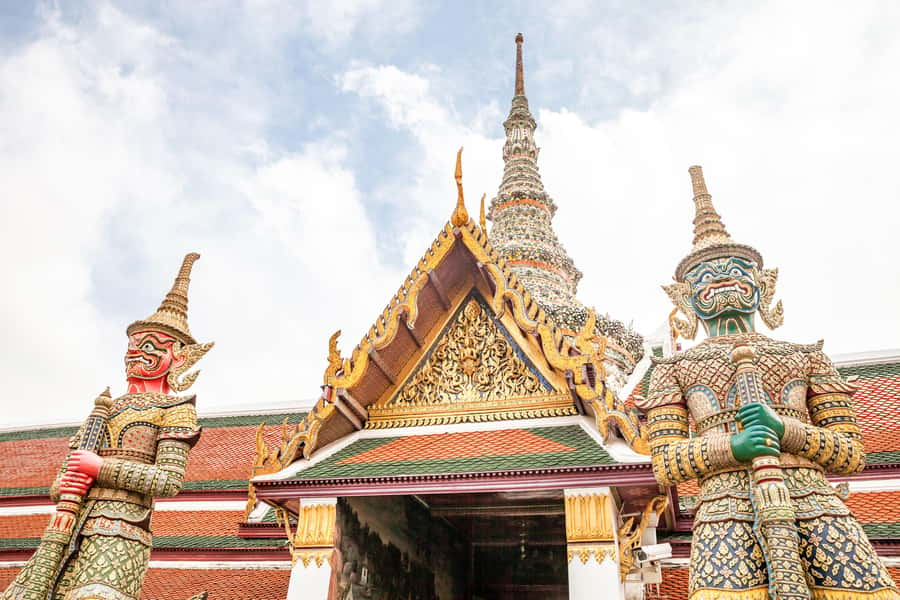
Bangkok’s royal and religious heart comes into focus on this compact walking tour. You move from River City Bangkok by local transport, pass the amulet market, then enter the Grand Palace and Temple of the Emerald Buddha, Thailand’s most important royal and Buddhist sights. The detailed mosaics and gold spires are the real show.
I like the small group of no more than 10 people, which makes it easier to hear your guide and ask questions. I also like the mix of transport, markets, temple courtyards, and river connections. Guides such as Air, Kiwi, Mina, Johnny, Peter, and Tan are praised for clear explanations and kind, practical help.
The main drawback is heat. You may walk and wait outdoors for several hours, often on hard surfaces, and the royal complex can feel crowded. Dress properly, bring patience, and choose the Wat Pho and Wat Arun option if you want the full temple circuit.
Key points to know before booking
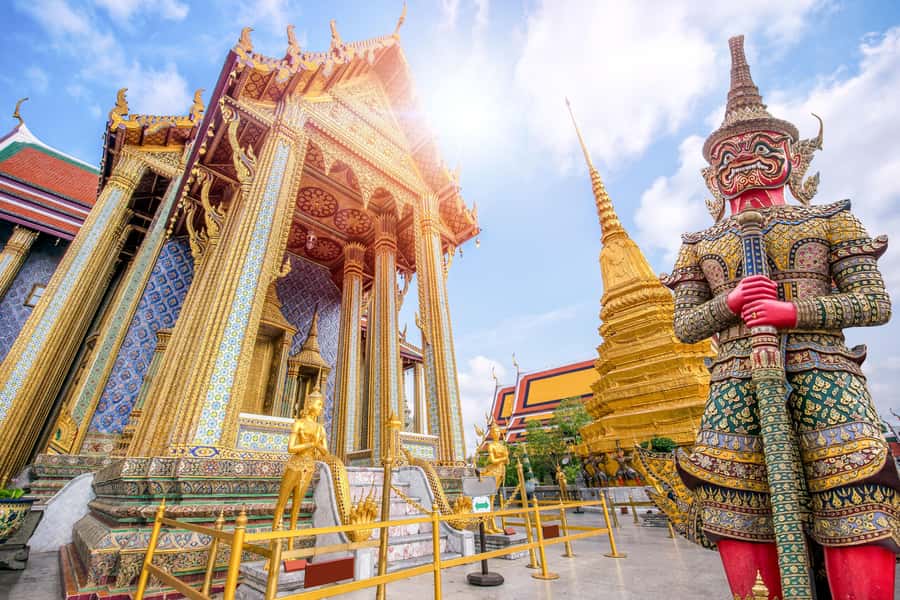
- The Grand Palace and Emerald Buddha are the core sights: Temple admission is included, and the guide explains royal ceremonies, Buddhist customs, and the seasonal robes of the Emerald Buddha.
- Wat Pho adds real depth: You see the famous Reclining Buddha and learn about Thai massage, medical education, and King Rama I’s rebuilding of the complex.
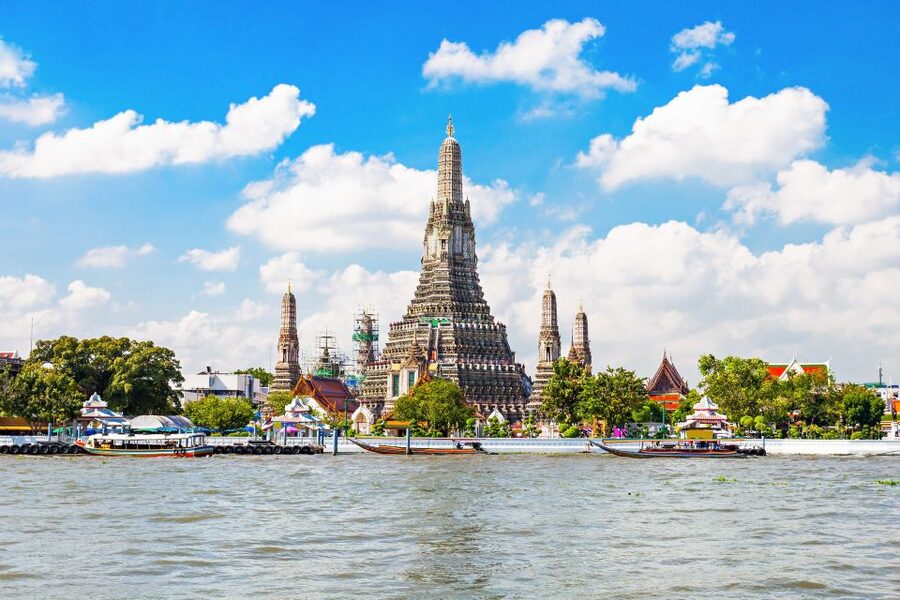
- Wat Arun completes the classic temple trio: Its tall riverside pagoda is covered in tiny pieces of colored glass and Chinese porcelain.
- Local transport is part of the experience: The route may include public transport, a river boat, and tuk-tuk travel, depending on the day and selected option.
- Small groups make the walking easier: With a maximum of 10 people, guides can offer water breaks, shade stops, directions, and help with onward travel.
- The $42 price is reasonable for the full option: It includes a licensed guide, core admission fees, and drinking water, but personal spending is extra.
Starting at River City Bangkok and following the old island
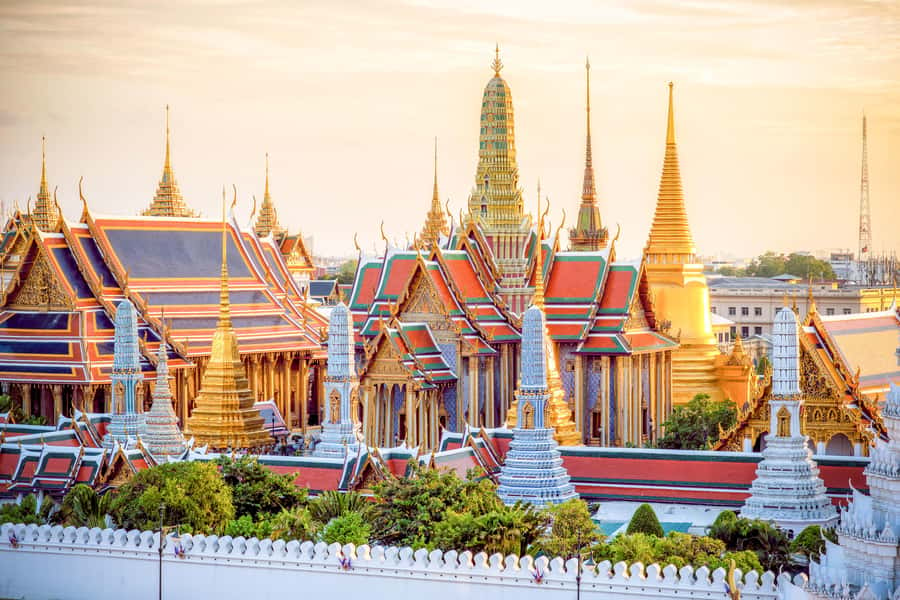
Meet your guide at the Big Country Experience office inside River City Bangkok by 9:00 AM. This is a sensible starting point because the route heads toward Rattanakosin Island, the historic center where Bangkok’s royal and temple sights are concentrated.
The first transport section takes about 30 minutes. This is not dead time. You pass through older parts of the city and go by the amulet market, a long-established community market known for Buddhist amulets and religious objects. It offers a quick look at the everyday side of Bangkok before the grand royal buildings take over.
The exact transport can vary. The basic plan lists public transport, while the experience can also include a river boat and tuk-tuk. That variety is one of the tour’s best features. You are not simply moved from one ticket gate to the next. You get a small taste of how Bangkok works, including the river that has shaped the city’s trade, neighborhoods, and daily routines.
Still, local transport means less control over timing. Boats, roads, and walking pace can affect the schedule. If you want a private vehicle and a fixed route, this is not that kind of outing. If you prefer a more local route and do not mind some movement, it adds character.
More City Highlights Walks in Thailand:
- Chiang Mai: Temple And City Walking Tour Part I
★ 4.7 · 244 reviews - Bangkok: City Highlights and Landmarks Private Walking Tour
★ 4.3 · 142 reviews - Berlin City walk Government District and Places of Democracy
★ 4.7 · 8,467 reviews
The Grand Palace and the Emerald Buddha
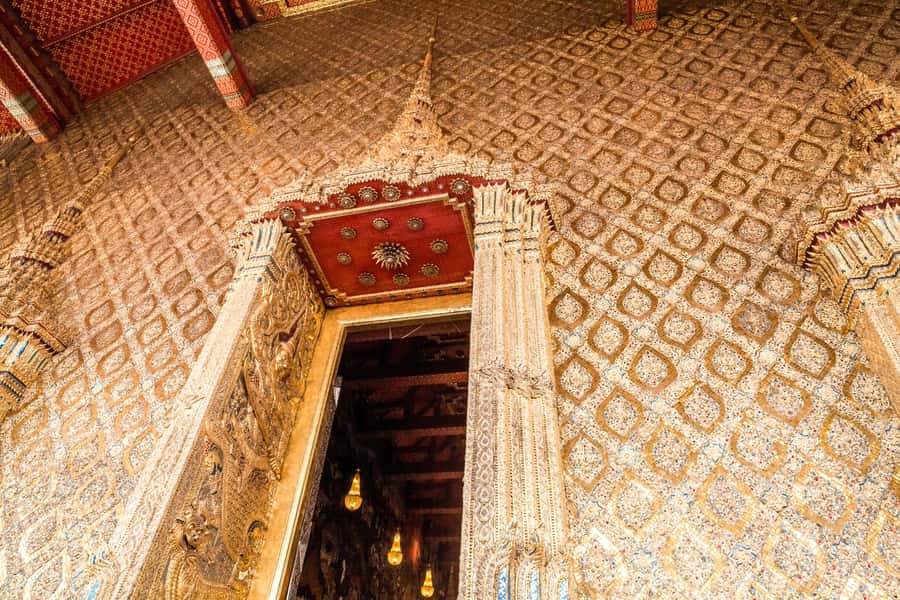
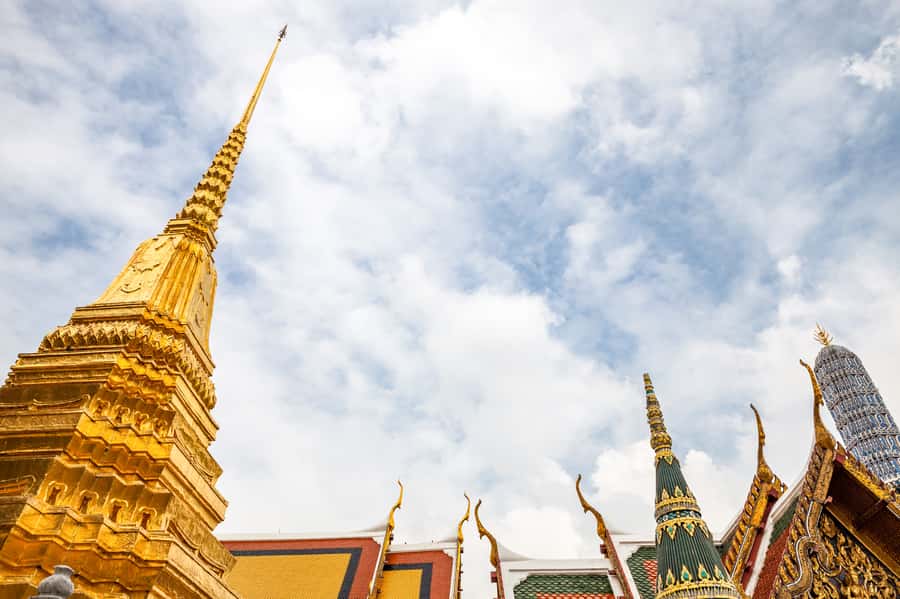
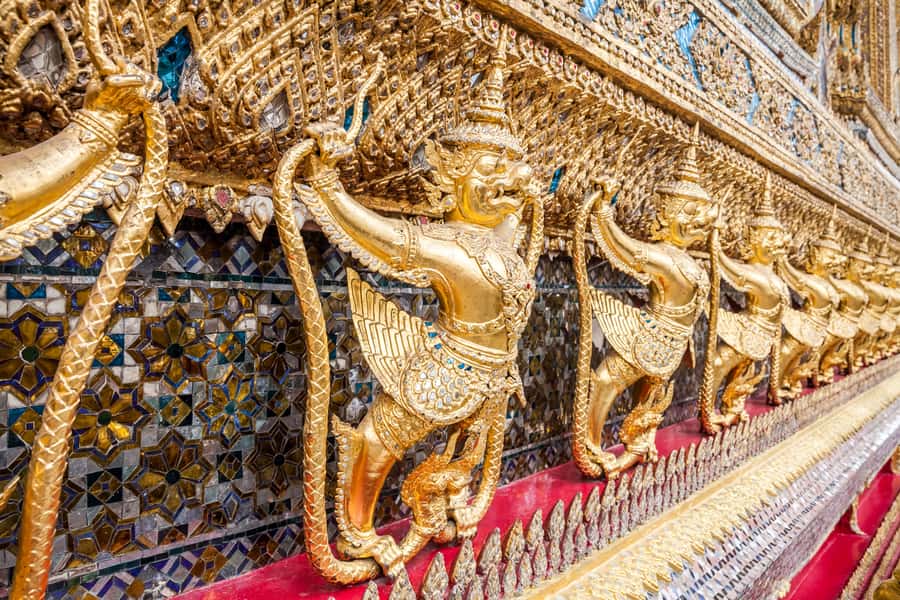
The first major stop is Wat Phra Kaew, officially Wat Phra Si Rattana Satsadaram and commonly called the Temple of the Emerald Buddha. It is regarded as Thailand’s most sacred Buddhist temple, and the setting makes that clear at once: bright painted buildings, gold-tipped roofs, glittering mosaics, and carefully decorated courtyards fill the compound.
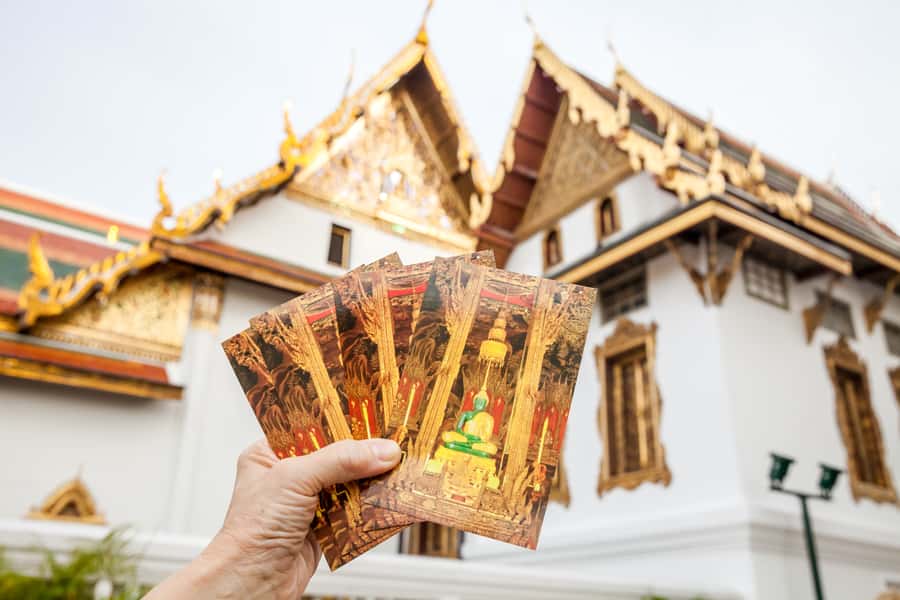
The Emerald Buddha itself is small compared with the surrounding architecture, but its importance is enormous. Your guide can explain the seasonal robes and the ritual changes made to the statue. You cannot take photographs inside the chapel, so this is a place to pay attention rather than chase the perfect picture.
One useful detail is that the statue is made of jade, despite its familiar name. The guide may also use photographs to show details you cannot record yourself. This is exactly where a good guide earns the fee. Without context, the royal imagery and mythological scenes can blur into a mass of gold and color. With explanation, the figures and stories begin to make sense.
The tour then moves through the Grand Palace, once the official residence of Thailand’s kings and still used for state functions and major royal ceremonies. The palace is not one single building to stroll through at leisure. It is a large complex of ceremonial halls, courtyards, walls, and religious structures, so your guide helps you focus on the important sections during the roughly 1.5-hour visit.
Peter, one of the guides praised in the tour details, is noted for explaining the characters and stories shown in the palace decorations. That kind of background is useful because Thai royal mythology can be difficult to follow without help. Other guides, including Mina and Kiwi, are praised for making the information lively while keeping the group together.
Expect plenty of standing and walking here. Proper clothing is not optional. You need to cover your shoulders and knees, and sleeveless shirts are not allowed. Strapless shoes are also not accepted. Shoes must come off before entering temple buildings, so wear something easy to remove and keep track of.
Photography is allowed in the Royal Palace grounds and the Emerald Buddha compound, but not inside the buildings. Respect the rules, especially in the chapel, where this is a national shrine rather than just another sightseeing stop.
Wat Pho, the Reclining Buddha, and Thai massage
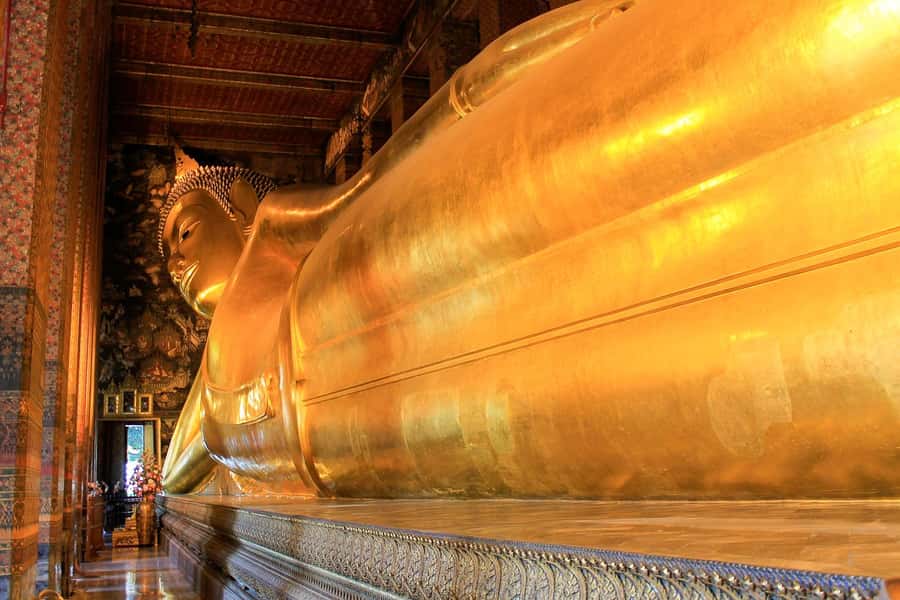
If you select the option that includes Wat Pho, you continue after the Grand Palace. Along the way, you pass Tha Thien Market, a food market known for dried and salted seafood and wholesale goods. It is not presented as a formal tasting stop, but it gives you a glimpse of the working market life around the river and temple district.
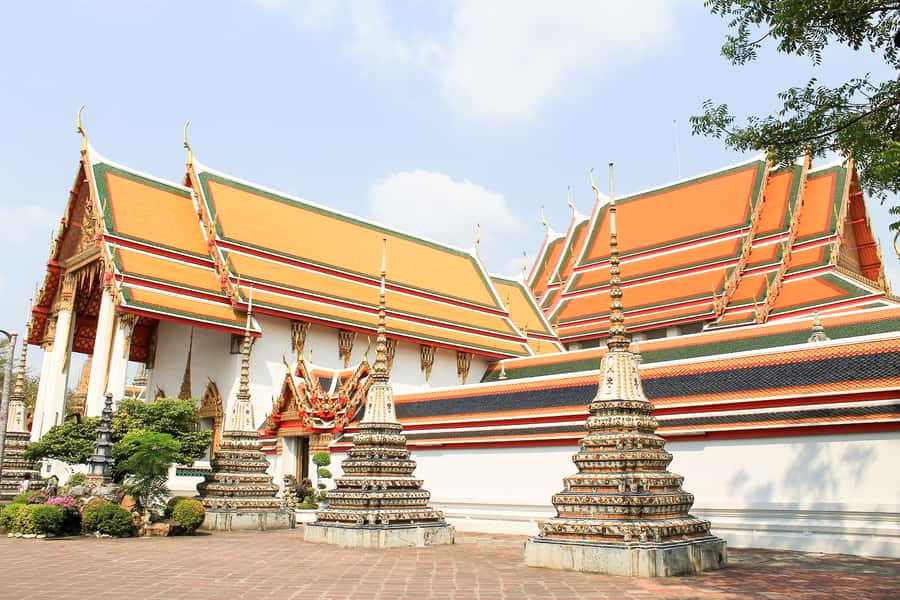
Wat Pho is the Temple of the Reclining Buddha and one of Bangkok’s most important temple complexes. The reclining figure is the obvious attraction, but the site deserves more than a quick photograph. Your guide explains how King Rama I rebuilt the complex on an earlier temple site and made it his main temple. Some of his ashes are enshrined there.
Wat Pho also has an important educational role. Marble illustrations and inscriptions were used for public instruction, and the temple became an early center for medical education. UNESCO has recognized these materials through its Memory of the World Programme. The complex is also widely regarded as the birthplace of traditional Thai massage, which continues to be taught and practiced there.
That background gives Wat Pho a different feel from the Grand Palace. The palace focuses on kingship, ceremony, and national identity. Wat Pho connects religion with education, medicine, and daily life. I would choose the full option if you want more than a royal photo stop.
The drawback is simple: adding Wat Pho makes the outing longer and more tiring. The complete experience can take up to four hours, and Bangkok heat makes even a short walk feel substantial. Guides such as Johnny and Kiwi are praised for adding regular water and toilet breaks, but you should still pace yourself.
Wat Arun and the Chao Phraya River
Wat Arun, the Temple of Dawn, is the final major landmark in the full route. Its location beside the Chao Phraya River gives it a different setting from the enclosed palace and temple compounds. The central pagoda rises about 70 meters and is decorated with small pieces of colored glass and Chinese porcelain.
Look closely at the surface. From a distance, the tower reads as a pale, elegant shape. Up close, the decoration becomes a patchwork of ceramic pieces, patterns, and color. Giant statues and the bell tower add more detail around the complex.
The river journey is one of the most memorable parts for many people because it links the sights in a practical way. It also gives you a break from walking and a new view of Bangkok’s riverfront. One guide helped a participant board the correct boat after the tour, and another kept the group moving during thunderstorms. That points to a useful strength of this kind of tour: a good guide can help you handle the city after the official sightseeing ends.
Do not assume the boat is always the same part of every departure. The supplied route lists public transport, and experiences can vary with conditions and the option you book. Check the exact inclusions when selecting your date.
More Market Visits in Thailand:
- Tokyo Tsukiji Fish Market Food and Culture Walking Tour
★ 5.0 · 3,184 reviews - London Bridge & Borough Market Food Tour with 7 Authentic Dishes
★ 5.0 · 1,972 reviews - Air Raid Shelter + St. Nicholas Market Walking Tour
★ 5.0 · 1,950 reviews - Tokyo: Tsukiji Fish Market Food and Walking tour
★ 5.0 · 1,724 reviews
Guides who make the difference
This tour depends heavily on the person leading it. The strongest guide names connected with the experience include Air, Tan, Johnny, Philips, Mina, Kiwi, Peter, Ong, Mimi, and Minna. Their styles differ, but the useful pattern is clear: good guides explain the buildings, watch the group, answer questions, and help with the next part of your day.
Kiwi is especially praised for energy, clear explanations of Buddhist customs, and practical food and transport advice. Mina is noted for interaction and for making local transport enjoyable. Johnny is described as friendly, entertaining, and attentive, with regular chances to stop for water or a restroom.
You may also get help beyond the formal route. Guides have directed people to the correct ferry, helped arrange onward taxis, and escorted participants toward later activities. That can be valuable in Bangkok, where a short distance on a map may involve a confusing mix of piers, roads, and one-way streets.
The group limit of 10 is important. A guide can explain a mural or statue without shouting, and the pace can respond to the group. It is still a shared outing, so you will not control every pause, but it should feel more personal than a large coach tour.
Is $42 good value?
At $42 per person, the price is fair if you choose the option with Wat Pho and Wat Arun. You are paying for a licensed guide, admission to the Grand Palace and Emerald Buddha Temple, drinking water, and, depending on the option, entry to Wat Pho and Wat Arun. The guide’s explanations are the part that turns the price from simple transport into a useful introduction to Bangkok.
The value is lower if you want to spend long, quiet periods taking photographs. This is a guided visit with a planned route, not a loose day pass. You move through several major sites, and the guide decides how long the group spends in each area.
Personal expenses are not included. Plan for your own food, drinks beyond the provided water, souvenirs, and any purchases at the markets. The experience does offer reserve-now, pay-later booking and cancellation up to 24 hours before departure for a full refund, which gives you some flexibility.
Who should book this temple walk?
I would recommend it for a first visit to Bangkok, especially if you want the major royal and Buddhist sights without sorting out every transfer yourself. It also suits solo visitors, couples, and small families who want a guide but do not want to join a large group.
It is a good fit if you enjoy history, architecture, religious customs, and local transport. You will get more from the day if you listen to the stories behind the murals, seasonal robes, royal ceremonies, and temple inscriptions.
I would be cautious if you have limited tolerance for heat, standing, or strict clothing rules. The route is active, and the temple compounds require respect for local customs. It is also not ideal if you need an entirely private, air-conditioned experience.
English and German tours are available. Since the quality of the day depends on the guide assigned, it is worth checking the language, selected option, start time, and included temple admissions before you pay.
Final verdict: book the full option if you have one morning
Book this tour if you want the Grand Palace, Emerald Buddha, Wat Pho, and Wat Arun in one organized morning or early afternoon, with a small group and a guide who can explain what you are seeing. The local transport and river travel add a useful sense of place, and the included admissions keep the $42 price reasonable.
Choose the Wat Pho and Wat Arun option for the fullest experience. If you are short on time or worried about the heat, the core palace visit may be enough. Either way, cover your shoulders and knees, wear easy-to-remove shoes, carry sun protection, and leave room in your schedule for the city to move at its own pace.
FAQ
Where does the tour start?
Meet your guide at the Big Country Experience office at River City Bangkok. The meeting time is listed as 9:00 AM.
Where does the tour finish?
The route lists drop-off locations near Tha Tien and Tha Tien Market. The meeting information also says the activity ends back at the meeting point, so confirm the exact end arrangement for your selected departure.
How long does the tour take?
The activity lasts between two and four hours. The exact duration depends on the option and starting time you select.
What languages are available?
Live guiding is available in English and German.
How many people are in the group?
The tour is limited to 10 participants.
Are temple admission fees included?
Admission to the Grand Palace and Emerald Buddha Temple is included. Wat Pho and Wat Arun admission fees are included when you select the options that contain those stops.
What clothing is required?
You must cover your shoulders and knees. Sleeveless shirts, bare shoulders, strapless shoes, and exposed knees are not allowed for the temple visits.
Do I need to remove my shoes?
Yes. Shoes must be removed before entering the temple buildings.
Can I take photographs?
Photography is allowed in the Royal Palace grounds and the Emerald Buddha Temple compounds. Photography is not allowed inside the buildings.
Is drinking water provided?
Yes. Drinking water is included. Restroom facilities are also available during the activity.
Can I cancel the booking?
You can cancel up to 24 hours in advance for a full refund. The activity also offers a reserve-now, pay-later option.
More Shopping Tours in Thailand
- Tokyo: Tsukiji Fish Market Guided Walking Tour
★ 4.9 · 1,397 reviews - Nishiki Market Brunch Walking Tour (7 Tastings + Brunch)
★ 5.0 · 1,355 reviews - Bologna Food & Market Tour with 6 Tastings, Pasta, Wines & More
★ 5.0 · 1,328 reviews - Tsukiji Fish Market Small-Group Food Walking Tour
★ 5.0 · 621 reviews
Just added around Thailand
- Chiang Mai: Temple And City Walking Tour Part I★ 4.7 · 244 reviews
- Chiang Mai Untouched Elephant: Nature Walk & Waterfall Trek★ 4.7 · 77 reviews
- Chiang Mai: Local Food and Markets Guided Walking Tour★ 4.3 · 175 reviews
- Bangkok: Grand Palace, Wat Pho, & Wat Arun Walking Tour★ 4.6 · 116 reviews
- Bangkok: Grand Palace and Wat Arun Guided Walking Tour★ 4.5 · 118 reviews
- Bangkok: Chinatown by Night Walking Tour★ 4.5 · 162 reviews
- Bangkok: Discover a Taste of Chinatown – 2 Hr Walking Tour★ 4.2 · 152 reviews
- Bangkok: City Highlights and Landmarks Private Walking Tour★ 4.3 · 142 reviews
City Highlights Walking Tours, compared.
Berlin City walk Government District and Places of Democracy
Read our review →
Historic Charleston Guided Sightseeing Walking Tour
Read our review →
Oxford: University and City Walking Tour with Alumni Guide
Read our review →
A History of Terror – Belfast City Centre Walking Tour
Read our review →
Montmartre Hidden Gems and Scenic Highlights Walking Tour
Read our review →Browse the lists this tour appears in