
REVIEW · TOKYO
Tokyo: Shibuya Crossing & Hidden Streets Walking Tour
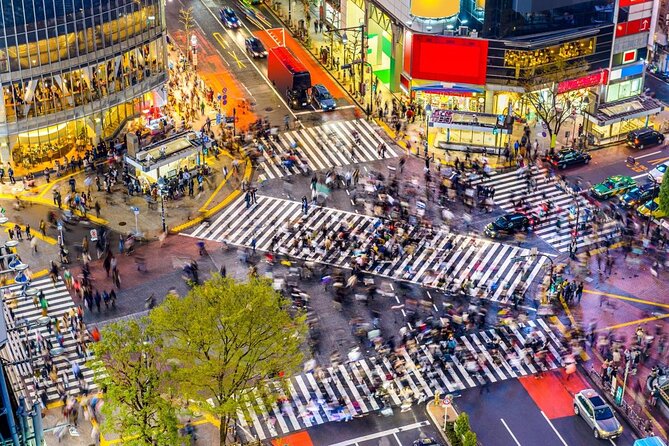
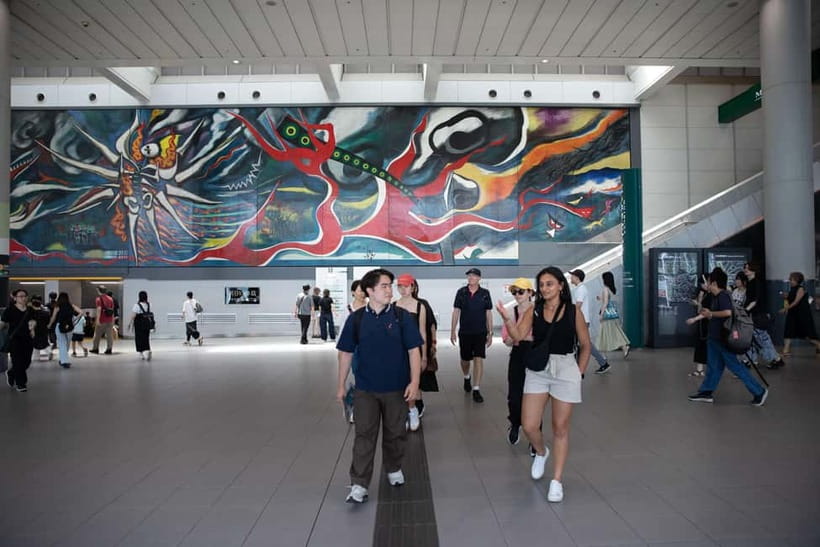
Shibuya Crossing is the obvious star, but the best part of this walk is how quickly it moves beyond the giant screens. You start with The Myth of Tomorrow, Taro Okamoto’s powerful mural, then pass through a narrow drinking alley, a rooftop park, youth shopping streets, and old nightlife lanes before finishing at Hachiko.
I like the compact two-hour route and the guides’ practical touch. Loc, Kumi, Rio, Grey, and Daichi have helped visitors with photos, food ideas, shopping tips, and questions about Japanese culture. The main drawback is the pace: seven stops in two hours means short visits, and the meeting point inside Mark City can be hard to find if you are new to Tokyo.
Key points at a glance
- A thoughtful start: Taro Okamoto’s Myth of Tomorrow adds serious historical and artistic context before the sightseeing begins.
- More than the crossing: Nonbei Yokocho, Miyashita Park, Center Gai, and Maruyama-cho show different sides of Shibuya.
- Helpful local guidance: Guides including Loc, Kumi, Rio, Grey, Zach, and Daichi explain the area and answer questions in English.
- Good for first-time visitors: The route helps you get oriented for later meals, drinks, shopping, and independent walks.
- Strong value at $22: Two hours of guiding at this price is useful, especially if you want context without giving up half a day.
- A little planning matters: Arrive early at SABON inside Mark City on the third floor. Late arrivals can be a problem.
Why this short Shibuya walk works
Shibuya can feel like a wall of sound, signs, crowds, and competing directions. It is easy to take a photograph at the crossing, buy something in a department store, and leave without understanding the district. This tour gives you a simple framework.
The route moves from art and memory to old Tokyo, new public space, youth culture, nightlife, and local symbolism. That variety is the real strength. You are not spending two hours at one landmark. Instead, you see how several different pieces fit into one district.
I also like the short length. At $22 per person, the tour is priced well for a first orientation. You get a local English-speaking guide, and the walk does not consume an entire morning or evening. If this is your first day in Tokyo, you can use what you learn to choose where to eat or shop later.
The tradeoff is depth. A stop may last only 10 minutes, while Miyashita Park gets about 20 minutes. You will hear useful background, but this is not a museum-style tour with long pauses at each location. Think of it as a sharp introduction rather than a full study of Shibuya.
A few more walking tours around Tokyo worth a look
- Tokyo Tsukiji Fish Market Food and Culture Walking Tour
★ 5.0 · 3,184 reviews - Tokyo: Imperial Palace and Shogun Historical Walking Tour
★ 5.0 · 2,251 reviews - Tokyo: Shinjuku Local Bar and Izakaya Guided Walking Tour
★ 4.9 · 1,794 reviews
Finding Mark City before the tour
The meeting point is SABON Shibuya Mark City, inside the Mark City building on the third floor. This detail matters. It is not simply a guide waiting somewhere outside Shibuya Station, and the building can be confusing when you are still learning Tokyo’s station system.
Give yourself extra time to find the correct floor. The guide will hold a sign, but you should not count on making up time after the start. The instructions specifically warn against arriving late, and this is understandable on a walking route with a fixed sequence.
The listed coordinates are 35.6586643, 139.6999525. Save the meeting details before leaving your hotel, and allow room for the station’s many exits and indoor passages. This is one of those small Tokyo tasks that rewards patience.
Myth of Tomorrow: a serious opening
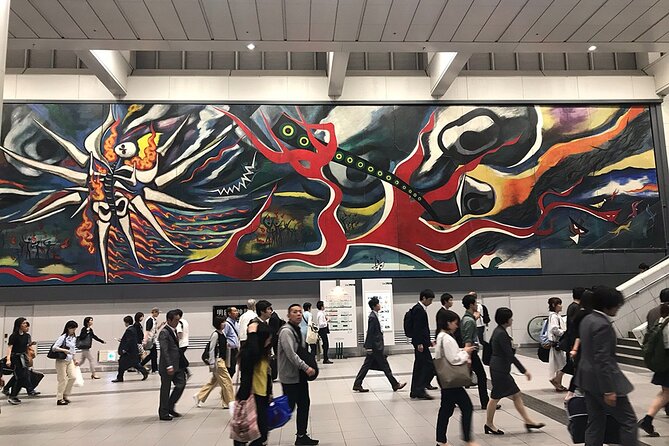
The first major sight is The Myth of Tomorrow, a mural by Taro Okamoto. It depicts the effects of nuclear destruction, but its message is not simply bleak. The work also carries an idea of endurance and hope.
Starting here gives the tour more weight than a standard photo walk. Before you reach the flashing signs of the crossing, you are asked to consider a major part of modern Japanese memory. The guide explains the work and places it within the wider story of Tokyo and Japan.
You get around 10 minutes for the visit and photo stop. That is enough for an introduction and a few pictures, though not enough for a long art discussion. I find the placement effective because it changes how you look at the rest of the route. Shibuya is not only entertainment and shopping. It also contains public art with something serious to say.
Nonbei Yokocho and the feel of older Shibuya
Nonbei Yokocho, often translated as Drunkard’s Alley, is a compact lane of small drinking establishments close to the station. It offers a sharp contrast with the wide roads, huge advertising screens, and tall buildings nearby.
You spend about 10 minutes here with the guide. The point is not to sit down for a meal or drink. It is to notice the scale of the alley, its older atmosphere, and the way a small local-style pocket survives beside one of Tokyo’s busiest transport hubs.
This is one of the stops that can be difficult to appreciate alone. You might walk past the entrance without knowing what you are looking at or why it matters. A guide can point out the contrast between older neighborhood life and the commercial district surrounding it.
The lane is narrow, so keep your group together and avoid blocking entrances. Also, treat it as an active local area rather than a stage set. The value is in seeing a working corner of Shibuya, not in expecting a large attraction.
Same streets, a different route:
- Tokyo: Tsukiji Fish Market Food and Walking tour
★ 5.0 · 1,724 reviews - Tokyo: Asakusa Walking Tour with Sensoji Temple Visit
★ 4.8 · 1,583 reviews - Tokyo: Tsukiji Fish Market Guided Walking Tour
★ 4.9 · 1,397 reviews - Tokyo Castle & Imperial PalaceーShogun Walking Tour
★ 4.7 · 1,068 reviews
Shibuya Crossing with help for the perfect photo
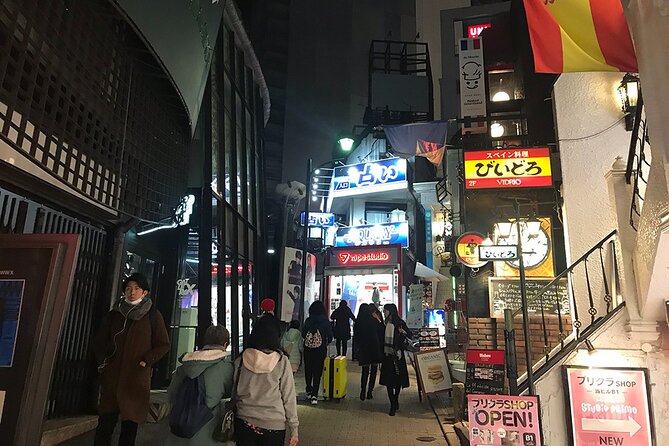
At Shibuya Crossing, the tour pauses for roughly 10 minutes. You get the classic scene: several streams of people moving through the intersection while the buildings and screens frame the moment.
A guide is useful here for more than historical facts. First-time visitors often wonder where to stand, when to take pictures, and how to cross without losing their group. Several guides, especially Loc, have also helped solo visitors with photographs. That small service can make a real difference when you are traveling alone and want a picture of yourself rather than another selfie.
Do not expect the crossing to feel quiet or orderly from the edges. Its appeal comes from the scale and movement. The guide helps you read the scene, but the experience remains public and crowded.
The short stop also keeps the tour from becoming a one-sight activity. You get the famous view, then move on to places that reveal more texture. I consider that a good choice. Shibuya Crossing is essential, but it is not enough by itself.
Miyashita Park and a new kind of public space
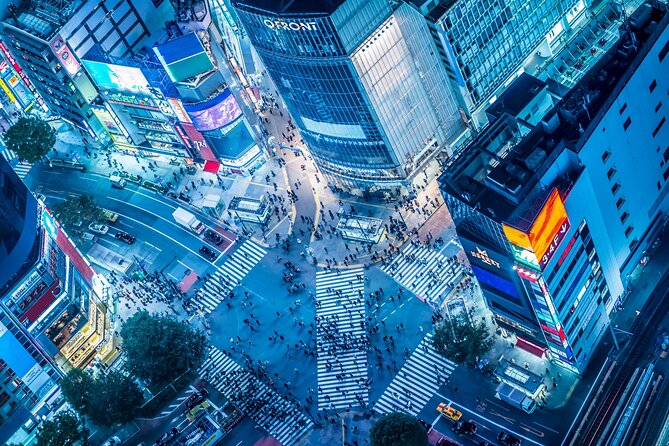
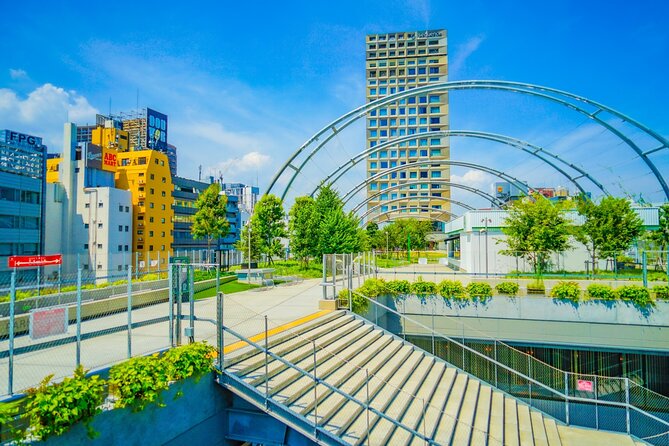
Miyashita Park receives the longest stop, about 20 minutes. This multi-level urban park combines open space with modern shops and leisure areas, offering a break from the density of the streets.
The park helps explain how Tokyo reworks limited city space. Instead of treating the district as only a grid of roads and towers, the route shows you a place designed for sitting, meeting, walking, and spending time above street level.
Your guide may also use this pause to answer questions about modern Tokyo. The park is a good point for that because it connects design, city life, shopping, and public space. It is less about one historic object and more about how the city functions now.
The limitation is that 20 minutes passes quickly. You should not plan on exploring every shop or staying for a long rest. If you want more time here, note what interests you and return after the tour.
Center Gai and the youthful side of Shibuya
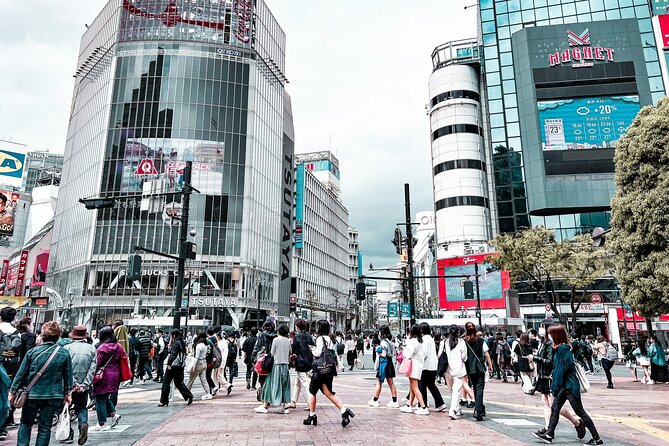
Center Gai brings you into one of Shibuya’s main youth-oriented streets. Shops, restaurants, signs, and crowds create a louder, more commercial side of the district than Nonbei Yokocho.
The guide’s role here is to explain what you are seeing rather than simply lead you through it. You can ask about Japanese youth culture, shopping areas, food, and how this part of Shibuya fits into the city. Guides such as Grey have also offered useful recommendations for vegan food and shopping.
You get about 10 minutes, so think of this as an orientation walk. The tour is not designed for browsing racks or eating at a restaurant. That is useful if you are trying to cover ground, but less useful if your main goal is shopping.
I like this stop because it shows why Shibuya has its reputation. It is lively, youthful, and full of movement, but the tour does not leave you there. You get a taste, then move toward streets with a different mood.
Maruyama-cho, old lanes and nightlife
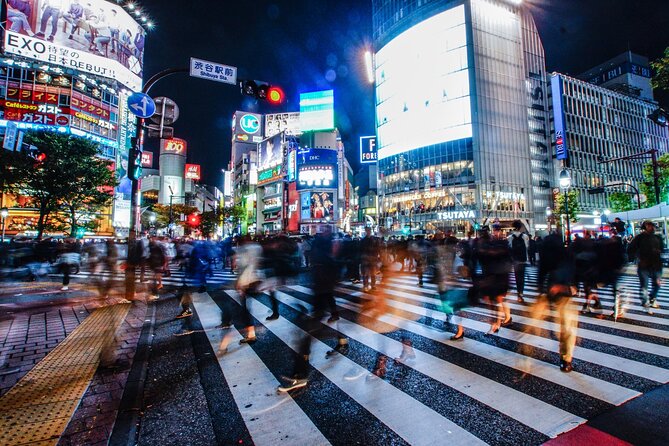
Maruyama-cho adds another change of pace. Its streets have older traces and are now linked with nightlife, restaurants, and evening activity. The area helps you see that Shibuya is not one uniform center.
The guide spends about 10 minutes showing you through the district and explaining how its earlier street character connects with its current role. This is a good place to ask for suggestions for later in the day, especially if you want to find food or drinks away from the most obvious spots.
The stop is brief, and the tour does not promise entry into nightlife venues. That is worth knowing. You are getting an introduction to the area, not a pub crawl or food tour.
Still, Maruyama-cho can be one of the more useful stops for planning the rest of your stay. After seeing it with a guide, you may feel more comfortable returning independently and choosing your own restaurant or bar.
Hachiko gives the walk a clear ending
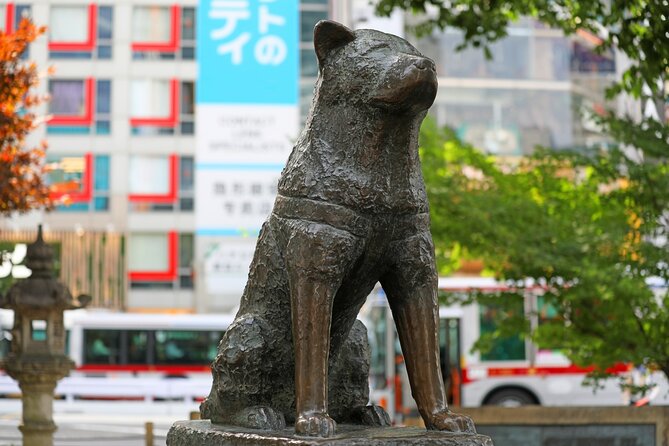
The tour ends at the Hachiko Memorial Statue, one of Shibuya’s best-known meeting points. Hachiko is remembered as a symbol of loyalty, and the statue has become part of the district’s daily life as well as its tourist identity.
Ending here makes practical sense. You finish near a major landmark that is easy to recognize, and you can continue exploring on your own. The guide can also answer final questions and point you toward nearby food and shopping areas.
Hachiko is popular and often surrounded by people waiting for friends or taking pictures. Do not expect a quiet memorial moment. Its importance comes partly from the way it has become woven into the routine of Shibuya.
As an ending, it ties together the tour’s main ideas: memory, local life, modern city culture, and the human stories that give a place meaning.
What the guides add
The strongest part of this experience is the guide. The tour has been led by several English-speaking guides, including Loc, Kumi, Rio and Ryo, Grey and Gray, Zach, Daichi, and Annette.
The feedback points to a consistent set of strengths. Loc is often praised for clear explanations, cultural context, photo help, and practical suggestions. Kumi is described as warm and engaging. Rio and Ryo have adjusted explanations for families and teenagers, answered many questions, and helped make the route accessible to first-time visitors.
Grey has given food and shopping recommendations, including vegan options. Daichi has adapted the walking speed to suit the group and answered questions patiently. These details matter because a walking tour can feel very different depending on how well the guide reads the group.
The guide also appears willing to explain Japan beyond the individual stops. You can ask about customs, food, geography, history, and daily life. That makes the tour more useful than a simple list of landmarks.
Who gets the best value from $22
At $22, the price is modest for a two-hour private-style introduction to a major Tokyo district, although the group size can vary. You receive the local guide fee, while meals and other personal spending are not listed as part of the experience.
I would especially recommend it for:
- First-time visitors who want to understand Shibuya before exploring alone.
- Solo visitors who would like help taking photographs at the crossing.
- Families with teenagers who want a short, varied route rather than an all-day sightseeing program.
- People with limited time in Tokyo.
- Anyone who wants food, shopping, and nightlife suggestions from an English-speaking local.
You might choose something else if you want a long food stop, extensive shopping time, or a slow historical walk. The route covers many places, but the stops are short and the tour keeps moving.
The 4.8 rating from 128 reviews supports the idea that the guide service is the main value. Still, ratings cannot guarantee which guide you will receive or how the group will move on your date. Go in expecting a well-organized introduction, not a custom private tour.
Practical advice before you book
Wear shoes you can walk in comfortably. The route includes station areas, city streets, narrow lanes, and busy pedestrian zones. You should also keep your belongings close in crowded areas and arrive early at the third floor of Mark City.
The tour is offered in English and lasts two hours. Starting times vary, so check the available time when you book. An earlier start can help you use the rest of the day elsewhere, while an evening start may show Shibuya with its lights and nightlife atmosphere.
You can cancel up to 24 hours before the activity for a full refund. The reserve-now, pay-later option also gives you flexibility if your Tokyo plans are still changing.
Should you book the Shibuya walking tour?
I would book this tour if you want a fast, friendly introduction to Shibuya that goes beyond the crossing. The route has a smart mix of famous sights, public art, narrow lanes, modern city design, youth culture, and practical local advice.
Book it early in your Tokyo stay if possible. You will finish with a better sense of where to eat, shop, walk, and return later. Skip it only if you already know Shibuya well or prefer to spend two hours at your own pace. For a first visit, $22 is a fair price for getting your bearings without giving up half a day.
FAQ
How long is the Shibuya walking tour?
The tour lasts two hours.
What language is the tour offered in?
The live tour is offered in English.
Where does the tour start?
It starts at SABON Shibuya Mark City, inside the Mark City building on the third floor.
Where does the tour finish?
The tour finishes at the Hachiko Memorial Statue.
What places are included?
The route includes Nonbei Yokocho, The Myth of Tomorrow, Shibuya Crossing, Miyashita Park, Center Gai, Maruyama-cho, and the Hachiko Statue.
What is included in the price?
The local guide fee is included. The price listed is $22 per person.
Can I cancel for a full refund?
Yes. You can cancel up to 24 hours in advance for a full refund.
Can I reserve now and pay later?
Yes. The reserve-now, pay-later option lets you book without paying at the time of reservation.
Just added around Tokyo
- Tokyo: Tsukiji Market Walking Tour & Sushi Cooking Class★ 4.6 · 122 reviews
- Tokyo:Stroll in Old traditional culture towns~Yanaka & Nezu★ 4.9 · 186 reviews
- Tokyo: Shinjuku Nightlife & Secret Backstreets Walking Tour★ 4.8 · 229 reviews
- Tokyo: Shinjuku Bar Hopping & Night Walking Tour★ 4.6 · 137 reviews
- Tokyo: Meiji Shrine Walking Tour — Shinto & Imperial System★ 4.9 · 266 reviews
- Tokyo: Private Custom Walking Tour with Local Guide★ 4.9 · 350 reviews
- Tokyo: Shibuya Highlights Walking Tour & Secret View Spot★ 4.9 · 196 reviews
- Tokyo: Kimono Dressing, Walking, and Photography Session★ 4.9 · 427 reviews
Walking Tours, compared.

Magical London: Harry Potter Guided Walking Tour
Read our review →
Reykjavik Food Walk – Local Foodie Adventure in Iceland
Read our review →
History and Hauntings of Salem Guided Walking Tour
Read our review →
New Orleans Premier Ghost, Voodoo and Vampire Walking Tour
Read our review →
Amsterdam Anne Frank: Small-Group Walking Tour & Local Guide
Read our review →

Edinburgh Castle: Guided Walking Tour with Entry Ticket
Read our review →
Anne Frank’s Story – Guided Walking Tour through Amsterdam
Read our review →Browse the lists this tour appears in