
REVIEW · OSAKA
Kuromon Market Food Walking Tour in Osaka (6 stops, 6 tastes)
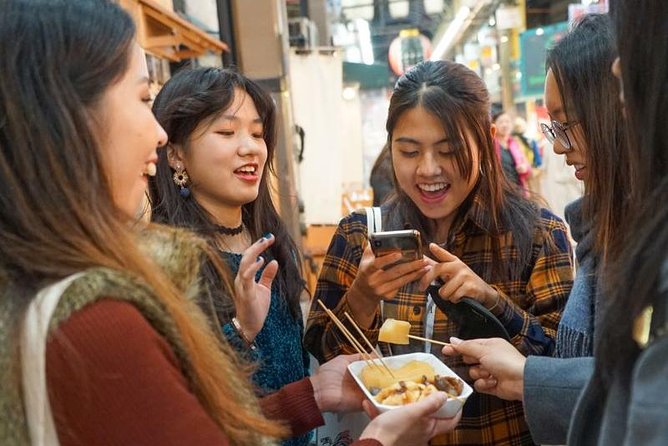
Kuromon Market is at its best when someone helps you read the stalls, choose the right bites, and keep moving through the crowd. This two-hour Osaka food walk pairs market eating with local stories, a look at Doguyasuji kitchenware street, and a stroll through the Namba area.
I like the small group limit of seven, which gives you room to ask questions and adjust the pace. I also like that guides such as Nina, Niko, Rie, Yuto, and Taku have helped participants order, understand customs, and avoid choosing food at random. The main drawback is that the amount of food may not satisfy a large appetite, and the tour’s food budget and dietary policies need careful checking before you book.
Key points at a glance
- Six tastes in Kuromon Market: Possible foods include takoyaki, sushi, yakitori, dumplings, sweets, gyoza, and oden, with the exact selection subject to change.
- A group capped at seven: This is small enough for conversation and personal help with ordering.
- Doguyasuji adds useful local color: Browse knives, tableware, cooking tools, and restaurant supplies rather than simply eating and leaving.
- Good first-day orientation: Your guide can offer ideas for the rest of your Osaka stay and explain how to handle language barriers.
- A practical route through Minami: The walk returns to its starting point after passing Namba Grand Kagetsu, Namba, and Dotonbori.
- The key caution is food quantity: One experience included a 1,200-yen food allowance, so ask exactly what is included before assuming this is a full meal.
Why Kuromon Market works well as an Osaka introduction
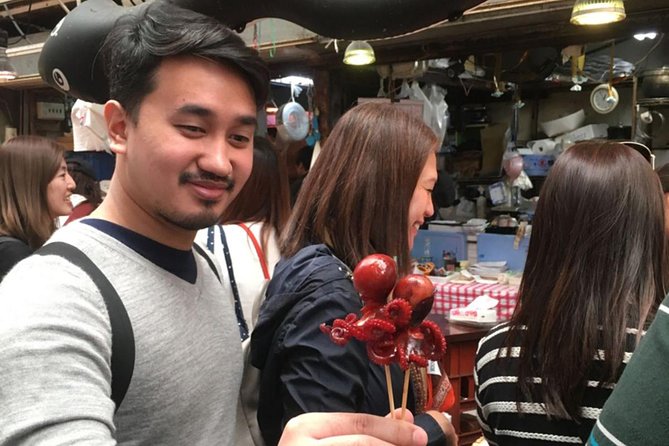
Kuromon Market is a covered shopping street in Minami, the central part of Osaka. It is known for fresh food, prepared snacks, small shops, and the constant movement of shoppers and diners. The market’s name comes from the black gate of Enmyoji Temple, a useful reminder that this is not just a modern food court.
You can walk through Kuromon on your own. That is the central question here. The signs and displays make much of the market easy to understand, and you are free to stop at any stall. A guide earns the price by helping you decide what is worth trying, explaining local habits, and handling questions in Japanese when needed.
That help matters most when you see a food you cannot identify, a menu you cannot read, or a stall with several similar choices. The tour is not simply a list of famous dishes. At its best, it gives you a working introduction to how Osaka eats and shops.
I would schedule it early in your Osaka stay. You get recommendations to use later, and you can return to Kuromon, Namba, or Dotonbori with more confidence. If you have already spent several days eating around Osaka, the tour may feel less essential.
More Food Walking Tours in Japan
- Tokyo Tsukiji Fish Market Food and Culture Walking Tour
★ 5.0 · 3,184 reviews - Osaka Local Foodie Walking Tour in Dotonbori and Shinsekai
★ 5.0 · 985 reviews - Tsukiji Fish Market Small-Group Food Walking Tour
★ 5.0 · 621 reviews
Meeting at Nippon-bashi and getting started
The meeting point is in front of the SMBC ATM at Nippon-bashi 1chome, near Kintetsu Nippon-bashi Station. Use Exit 10 from Kintetsu Nippon-bashi Station and allow extra time to find the exact spot.
The tour starts on time. If you arrive late and miss the group, you cannot join later, reschedule, or receive a refund. That rule matters in this part of Osaka, where large stations, underground passages, and busy streets can make a short walk take longer than expected.
Bring comfortable shoes and travel light. You will be on foot for about two hours, moving between food stalls, shops, and nearby streets. Osaka summers can reach 40°C, while winter temperatures may fall to -5°C, so clothing and water matter. Rain also does not necessarily stop the walk. One guide, Niko, kept a group mostly under cover during torrential rain, using market passages and narrow lanes to keep the route going.
The group maximum is seven people. Some departures may be smaller, and one family had the guide to themselves. That can make the experience feel more like a personal introduction than a standard group outing.
The six tastes inside Kuromon Market
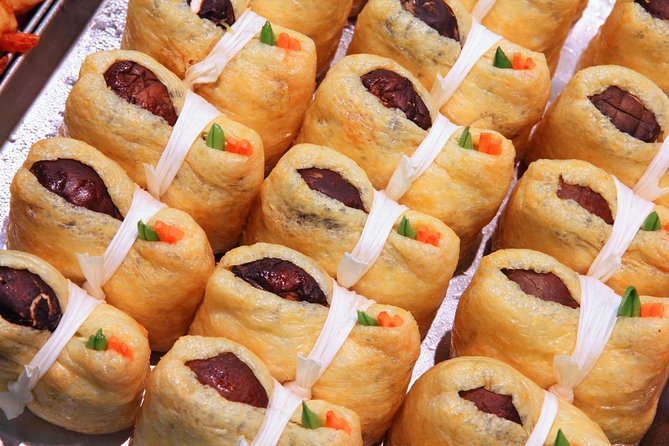
The main part of the tour is eating as you walk through Kuromon Market. The advertised format is six stops and six tastes, but the exact foods can change. Examples from the experience include fresh sushi, takoyaki, yakitori, mushroom skewers, dumplings, gyoza, oden, and Japanese sweets.
That changing menu is sensible. Market stalls may vary by season, supply, opening hours, and group preferences. You should not book expecting one guaranteed dish at one guaranteed shop. You should book expecting a sample of familiar Osaka foods and market specialties, chosen with help from the guide.
Takoyaki is an obvious Osaka introduction. These hot batter balls, usually filled with octopus and topped with sauce and other garnishes, are easy to recognize but tricky to eat straight from the grill. A guide can show you how to handle the heat and explain why the dish is tied so closely to Osaka street food.
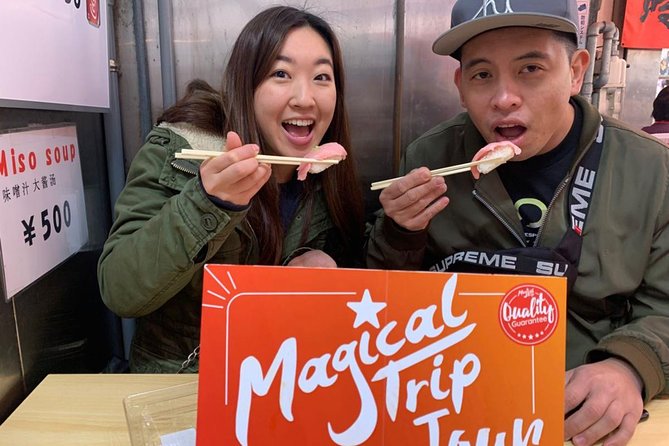
Sushi gives the walk a different texture and shows the market’s seafood side. Yakitori adds a smoky, savory bite, while dumplings or gyoza bring a crisp or chewy contrast. Oden, when available, offers a softer and more comforting taste. A mushroom skewer was singled out as especially enjoyable, a useful reminder that the best bite may not be the famous one.
The food is generally eaten in small portions as you move. That keeps the tour manageable, but it also creates the main value question. A 50.41-dollar price is reasonable if you want interpretation, ordering assistance, and a guided route. It is less attractive if you measure value only by the number of calories or the cost of the food.
One important warning comes from the food allowance. A participant reported receiving a 1,200-yen budget, enough for only two items for two people. This may not apply to every departure, but it is too important to ignore. Ask the operator what the six tastes include, whether the guide pays for the planned food, and how much extra cash you should bring.
The guide’s food is not your responsibility. You do need cash if you want additional snacks or drinks beyond what the tour provides. I would bring extra money anyway. Kuromon is exactly the sort of place where one more skewer, sweet, or drink can become part of the fun.
Doguyasuji, where Osaka shops for its kitchen
Doguyasuji Street is one of the most useful additions to the route. This shopping street is devoted to kitchenware, tableware, cooking equipment, restaurant supplies, and related goods.
You may see displays that explain the visual side of Japanese dining, from bowls and serving pieces to tools used by professional kitchens. It is a better stop than another generic shopping arcade because it shows how food culture works behind the plate.
This is also where the tour becomes useful for souvenir hunters. You might find a small kitchen item that is easier to carry than a fragile food purchase, though the tour does not promise a specific shop or product. If you are interested in cooking, Japanese table settings, or restaurant design, tell your guide early. Guides such as Aya have included the kitchenware side of the walk along with food specialties.
The drawback is time. Two hours goes quickly, and every stop for browsing reduces time for eating or conversation. If you want to inspect knives, ceramics, or cooking tools in detail, plan to return on your own after the tour.
Same streets, a different route:
- Kyoto Geisha Walking Tour: Gion District & Hidden Gems
★ 4.7 · 3,273 reviews - Kyoto: Gion Magical Night Walking Tour with Geisha Trivia
★ 4.9 · 2,393 reviews - Tokyo: Imperial Palace and Shogun Historical Walking Tour
★ 5.0 · 2,251 reviews - Kyoto: Gion Geisha District Walking Tour – Stories of Geisha
★ 4.7 · 2,187 reviews
Namba Grand Kagetsu, Namba, and Dotonbori
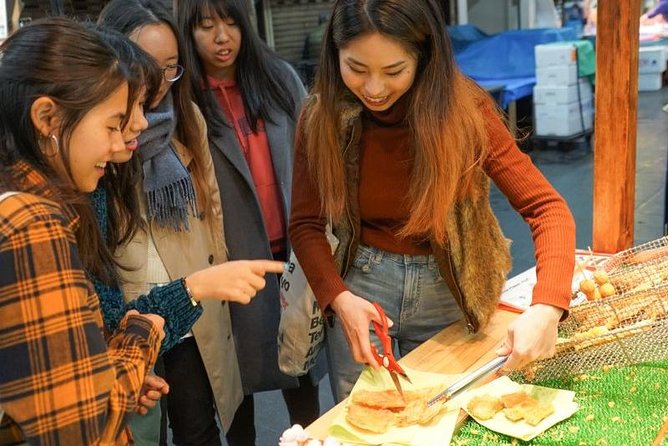
The route passes by Namba Grand Kagetsu, a comedy theater operated by Yoshimoto Kogyo. Even if you do not enter, the stop gives you a glimpse of Osaka’s comedy culture and the city’s love of fast, broad humor.
From there, the walk continues through the Namba area. Namba is a major entertainment and transport district, with restaurants, shops, and the Namba Parks complex. This part of the route helps connect Kuromon Market to the wider Minami district.
Dotonbori is also passed by rather than treated as the main food stop. Its giant three-dimensional signs, including the famous Glico sign and the Kani Douraku crab, make it one of Osaka’s most recognizable areas. It is louder and more heavily visited than Kuromon, which is why the contrast is useful.
Kuromon has a more market-centered feel. Dotonbori is built for spectacle, nightlife, and quick photos. A guide can help you understand both, but the actual food focus is Kuromon. If you want time for Dotonbori photographs or shopping, plan to return after the tour instead of expecting a long stop there.
The experience ends back at the meeting point. That makes it easy to continue into Namba or Dotonbori afterward, though you should confirm the exact timing with your guide if you have a reservation immediately after the walk.
The guides make the difference
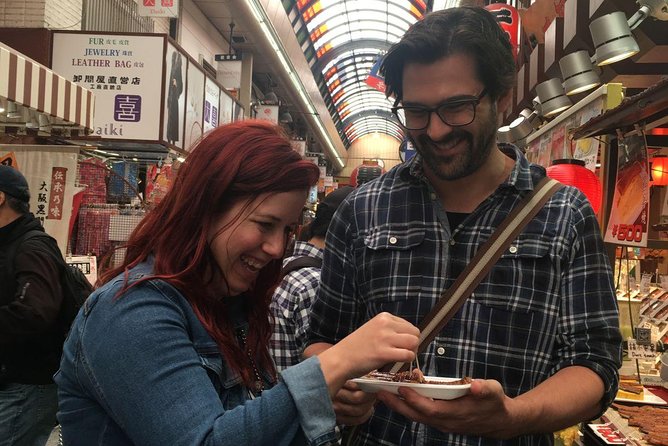
The strongest part of this experience is the guide. Nina has been praised for being warm, funny, patient with children, and able to explain food culture in clear English. Families appreciated how she handled questions and helped with customs at a shrine.
Niko has been described as energetic and flexible, adjusting the route where possible to suit the group. During heavy rain, she kept the walk moving through covered areas and helped one participant find the correct train afterward. Taku helped a solo participant communicate with shopkeepers, choose gyoza and oden, and take photographs.
Other guides named in the feedback include Rie, Megumi, Aina, Aya, Mari, Yuki, Peco, Mitch, Anne, and Yuto. Their styles may differ, so the guide you receive is part of the experience. The consistent goal is a friendly local escort who can explain food and help you order, but the quality of explanation may vary from one departure to another.
This point matters because Kuromon Market does not require a guide simply to enter. You are paying for human judgment, translation help, stories, and a smoother introduction. A quiet or underprepared guide would weaken the value considerably.
Family, solo, and dietary considerations
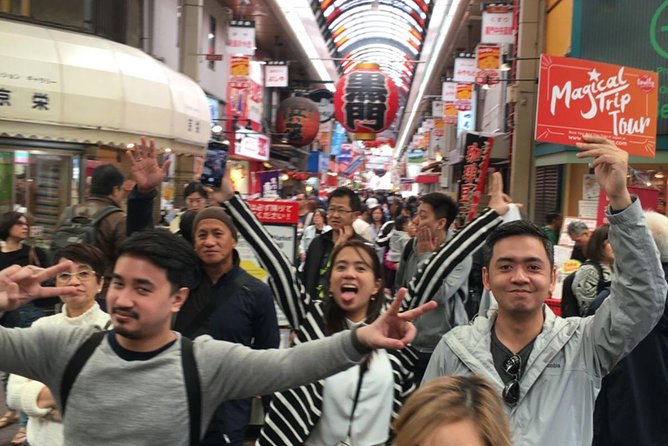
The tour suits families well. Children can try small portions, ask questions, and see food being prepared. One family traveled with an 18-month-old in a sling and found the experience suitable, while a stroller may be awkward in the market’s busy passages.
Solo participants can also benefit. A guide can help with photographs, ordering, and conversation, and a small group is less isolating than navigating every stall alone. Couples and groups of friends get the most value if they want both food and local context rather than a simple meal.
Dietary needs require caution. The information is contradictory: it says gluten-free requests cannot be accommodated, while another note says vegetarian, vegan, and gluten-free requests may be accommodated with advance notice. It also warns that Japanese restaurants may have limited options and that allergy-free meals and substitutions cannot be guaranteed.
Contact the operator at least one day before the tour with allergies or dietary requests. Do not wait until the morning of the walk. If you have a serious allergy, this is not a setting where you should rely on casual verbal assurances, since the food comes from kitchens the tour company does not operate.
Is 50.41 dollars good value?
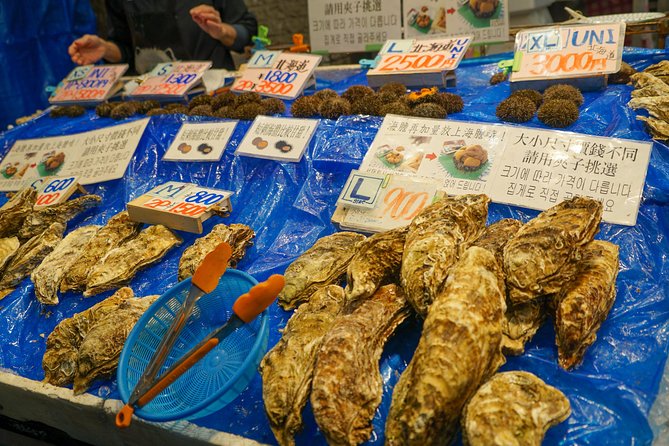
The price makes sense if you value guidance more than quantity. You are paying for a small group, a local guide, language support, six planned tastes, cultural explanation, and a route that includes both food and kitchenware shopping.
The math is less convincing if you expect a large meal. The negative experiences point to a real risk: some participants felt hungry afterward and believed they could have chosen more food on their own. Kuromon’s many stalls make self-guided eating easy, and you may spend less by selecting only the items you want.
I would see the tour as an orientation rather than lunch. Eat something light beforehand if you tend to get hungry, bring cash for extra purchases, and ask about the included food allowance. That approach prevents the most common disappointment.
The high rating, 4.9 from 551 ratings, and 98 percent recommendation figure suggest that the format works very well for most people. Still, the low ratings are useful because they identify the exact weakness: the experience depends on how much food is included and how actively the guide explains the market.
Booking, cancellation, and practical details
Confirmation is provided when you book, and mobile tickets are available. The experience is near public transportation, and all ages can participate.
Free cancellation is available up to 24 hours before the start time for a full refund. Changes or cancellations made within 24 hours are not accepted and are not refunded. The cut-off uses Osaka local time.
You should arrive early at the SMBC ATM meeting point. Wear shoes suitable for walking, prepare for the weather, and bring cash for extra food. Do not assume that the tour will provide enough food for dinner.
Who should book this Kuromon Market walk?
I would book it if you are new to Osaka, want to try several foods without guessing, or feel uneasy ordering in Japanese. It is especially useful for families, solo visitors, and anyone who wants food stories and neighborhood context along with the tasting.
I would also recommend it to anyone who wants a clear comparison between Kuromon, Namba, and Dotonbori. The guide’s suggestions can shape the rest of your stay, and Doguyasuji gives the walk more substance than a simple snack crawl.
I would skip it if you enjoy planning your own market meals, want a large lunch, or are comfortable handling every order yourself. In that case, walk through Kuromon independently and spend your budget on the foods that appeal to you.
For most first-time visitors, the best plan is to take the tour early, ask about the food allowance before booking, state dietary needs in advance, and keep extra cash on hand. With those expectations, this is a friendly and useful way to get your first taste of Osaka.
FAQ
Where does the Kuromon Market food tour meet?
Meet in front of the SMBC ATM at Nippon-bashi 1chome, near Kintetsu Nippon-bashi Station. Use Exit 10 from Kintetsu Nippon-bashi Station.
How long does the experience last?
The walking tour lasts approximately two hours and ends back at the meeting point.
What foods might be included?
The six tastes may include takoyaki, sushi, yakitori, dumplings, sweets, gyoza, or oden. The exact selection can vary.
Is the tour suitable for children?
Yes. All ages are welcome, and most participants can take part. A child in a sling worked well for one family, while a stroller may be difficult in the market.
Can the tour accommodate dietary restrictions?
You must report dietary requests or allergies at least one day before the tour. Options may be limited, and allergy-free meals or substitutions cannot be guaranteed. The supplied information is inconsistent about gluten-free requests, so confirm directly before booking.
What happens if I arrive late or need to cancel?
The tour starts on time, and late arrivals who miss the group cannot join, reschedule, or receive a refund. You can cancel for a full refund up to 24 hours before the start time.
More Shopping Tours in Japan
- London Bridge & Borough Market Food Tour with 7 Authentic Dishes
★ 5.0 · 1,972 reviews - Air Raid Shelter + St. Nicholas Market Walking Tour
★ 5.0 · 1,950 reviews - Bologna Food & Market Tour with 6 Tastings, Pasta, Wines & More
★ 5.0 · 1,328 reviews - Bristol: Air Raid Shelter & St. Nicholas Market Walking Tour
★ 4.8 · 320 reviews
More Market Visits in Japan
- Tokyo: Tsukiji Fish Market Food and Walking tour
★ 5.0 · 1,724 reviews - Tokyo: Tsukiji Fish Market Guided Walking Tour
★ 4.9 · 1,397 reviews - Nishiki Market Brunch Walking Tour (7 Tastings + Brunch)
★ 5.0 · 1,355 reviews - Bangkok: City Highlights Temple and Market Walking Tour
★ 4.5 · 3,990 reviews
Just added around Japan
- Kyoto: Meet the Geisha Maiko with Gion Walking Tour★ 4.8 · 371 reviews
- Hiroshima: Private City Highlights Walking Tour★ 4.9 · 73 reviews
- Cool Kyoto: 5-Hour Walking Tour with the Last Samurai★ 4.8 · 73 reviews
- Asakusa: A Big-picture History Walk to Know Japan★ 4.6 · 77 reviews
- Hiroshima City 4hr Private Walking Tour with Licensed Guide★ 5.0 · 437 reviews
- Tokyo: Private Walking Tour with a Local Guide★ 4.9 · 469 reviews
- Tokyo: Private Walking Tour with a Local★ 4.4 · 419 reviews
- Tokyo: Private Custom Walking Tour with Local Guide★ 4.8 · 533 reviews
Food Walking Tours, compared.
Reykjavik Food Walk – Local Foodie Adventure in Iceland
Read our review →
Ho Chi Minh City Street Food Tour & Sightseeing By Motorbike
Read our review →
New Orleans Food Walking Tour of the French Quarter with Small-Group Option
Read our review →
Authentic Parisian Gourmet Food Tour with 10 Local Dishes & Wines
Read our review →

Savannah First Squares Culinary & Cultural Walking Food Tour
Read our review →Browse the lists this tour appears in