
REVIEW · OSAKA
Osaka Local Foodie Walking Tour in Dotonbori and Shinsekai
Osaka’s best introduction may be a walk that lets you eat the city as you go. This small-group tour links Shinsekai and Dotonbori, two famous food districts, with stops for kushikatsu, okonomiyaki, takoyaki, sweets, and drinks. Along the way, you get alleyways, a shrine, old merchant streets, and the neon Glico sign.
I like the small maximum of seven people, which gives guides such as Aika, Yuma, Michiko, Kent, and Emi room to answer questions and help with photos. I also like the useful mix of food and place: you are not simply seated in one restaurant for three hours.
The main caution is value for serious food hunters. The included menu is substantial, but the tour may use only two main food venues, and several dishes are fried or served in full portions. Some people found the pace too fast between stops, while others found the food stops too slow or too limited.
Key points to know before booking
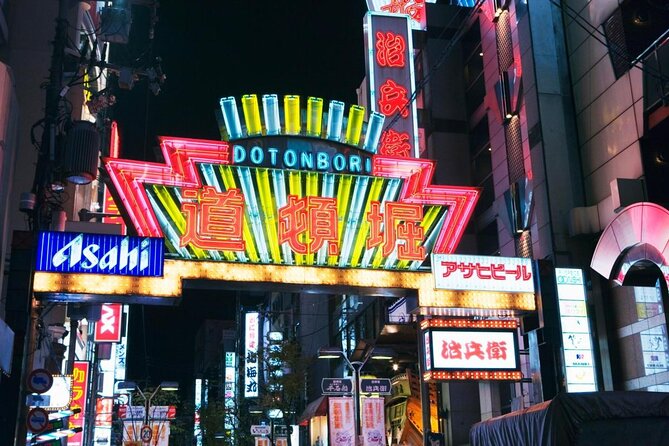
- Six kushikatsu skewers: Deep-fried meat and vegetables provide the first major tasting in Shinsekai.
- Three classic Osaka foods: The package includes kushikatsu, one portion of okonomiyaki, and one box of takoyaki.
- Three included drinks: Alcoholic and non-alcoholic choices are available.
- Seven-person maximum: A family of six may end up with a private-feeling outing if no one else joins.
- Two very different districts: Shinsekai feels old-fashioned and local, while Dotonbori is Osaka’s famous neon food-and-shopping center.
- Dietary limits matter: Gluten-free and vegan meals cannot be provided. Vegetarian requests must be made by the day before.
Why this tour works as an Osaka introduction
Osaka is often called Japan’s kitchen, and this walk gives you the city’s most familiar comfort foods in one compact outing. You are not sampling delicate kaiseki cooking or visiting a formal market class. You are eating casual local food in the neighborhoods where Osaka’s street-food image was built.
The route also helps you get oriented. Shinsekai, near Tsutenkaku Tower, has a retro feel and a strong connection to kushikatsu culture. Dotonbori is louder, brighter, and more commercial, with packed streets, enormous signs, souvenir shops, and easy photo stops.
I see this as a good first or second day activity. You get a quick lesson in Osaka food customs, learn where the main nightlife districts sit, and finish near Namba with plenty of choices for the rest of your evening.
The guide makes a real difference. Aika was praised for connecting local food with Osaka history and for suggesting more places to eat after the tour. Yuma received repeated praise for his friendly manner, English, and explanations of how the food is made. Michiko was especially good at pairing food stops with local history and daily life.
That quality is not guaranteed in exactly the same way on every departure. Some guides have more experience than others, and one account described a guide who answered questions well but offered little information while walking. If you want a food lecture every few minutes, set that expectation clearly at the start.
More Food Walking Tours in Japan
- Tokyo Tsukiji Fish Market Food and Culture Walking Tour
★ 5.0 · 3,184 reviews - Tsukiji Fish Market Small-Group Food Walking Tour
★ 5.0 · 621 reviews - Kuromon Market Food Walking Tour in Osaka (6 stops, 6 tastes)
★ 5.0 · 550 reviews
Starting near Tsutenkaku and Jan-Jan Yokocho
The meeting point is outside FamilyMart Japan in Nishinari Ward, at 1-chome 17-6 Sanno. It is near public transportation, but one person found the location difficult to reach and described it as being in an unclear area. Give yourself extra time, and do not treat the meeting point as a casual place to arrive at the last minute.
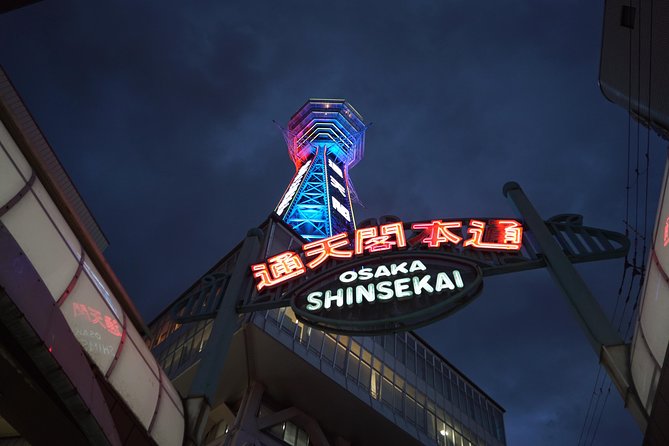
The walk begins around Tsutenkaku Tower, Shinsekai’s best-known landmark. From there, you enter Jan-Jan Yokocho, a narrow arcade with a preserved old-Osaka character. The tour allows about 30 minutes here, including a kushikatsu stop.
Kushikatsu means meat, seafood, or vegetables placed on skewers, coated, and fried. You receive six pieces, which is enough to understand the dish without turning the first stop into a long meal. Three drinks are included across the experience, with alcoholic and non-alcoholic options available.
This is one of the most useful stops for understanding Osaka’s casual food culture. The dish is simple, salty, crisp, and filling. It is also the kind of food that can seem ordinary if you already prefer lighter or more varied cooking.
The menu leans toward fried food. That is not a flaw if you want the Osaka classics, but it matters if you expect small samples of many different preparations. One less favorable experience found the food overly focused on fast-food-style dishes, so serious food lovers should know what they are buying.
Shinsekai’s retro streets and Billiken
The route continues through the Shinsekai area, including Shinsekai Market, Tsutenkaku Tower, and the Billiken statue. The scheduled visit here is about 20 minutes.
Jan-Jan Yokocho is presented as a sort of living museum of central Osaka from more than 80 years ago. That description helps explain the appeal: you are not just walking between restaurants. You are seeing an older commercial district, narrow passageways, and shops shaped by a different era of Osaka life.
The Billiken statue is a familiar Shinsekai symbol. You may also hear why the area became associated with entertainment and casual dining. The amount of explanation depends on your guide, so ask direct questions if you want more detail about the neighborhood.
At night, parts of the route can feel dark, especially around temple and shrine stops. One person found the temple visit less rewarding after sunset for that reason. If you want to study architecture or take clear photos, a daytime departure has an advantage. The itinerary also changes slightly between day and night, especially around Doguyasuji and Namba Grand Kagetsu.
Moving toward Dotonbori and Doguyasuji
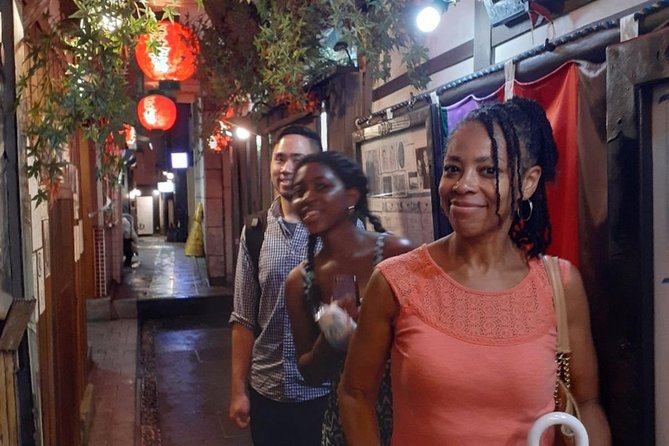
The tour then shifts toward Dotonbori and the Sennichimae Doguyasuji Shopping Street. The daytime plan includes souvenir shopping on Doguyasuji, with attention to Hōchō-ya, a knife shop. At night, the guide explains the area near Namba Grand Kagetsu and focuses on shopping nearby.
Doguyasuji is a useful stop because it shows the working side of Osaka’s food culture. You see tools, kitchen goods, and restaurant supplies rather than only snack stalls. The knife shop can appeal to cooks, though this part is more shopping orientation than food tasting.
The walking route is not especially long in distance, but the streets can be crowded. One guide was praised for leading a family through busy night streets and pointing out photo spots. Another person found the guide walked too quickly. If you walk slowly, have mobility concerns, or want time for photographs, tell the guide early.
The tour includes a small transportation charge of 190 yen. That is not a major cost, but you should include it when comparing the total price with other food walks.
Same streets, a different route:
- Kyoto Geisha Walking Tour: Gion District & Hidden Gems
★ 4.7 · 3,273 reviews - Kyoto: Gion Magical Night Walking Tour with Geisha Trivia
★ 4.9 · 2,393 reviews - Tokyo: Imperial Palace and Shogun Historical Walking Tour
★ 5.0 · 2,251 reviews - Kyoto: Gion Geisha District Walking Tour – Stories of Geisha
★ 4.7 · 2,187 reviews
Hozen-ji Temple and Ukiyo Alley
Hozen-ji Temple offers a pause from the commercial streets. You walk through the temple area and Ukiyo-koji, also called Ukiyo Alley, before continuing with snacks.
Hozen-ji is a compact urban religious site, not a grand temple complex. Its appeal is the contrast: a quiet place tucked close to Dotonbori’s bright signs and crowded lanes. The setting gives your guide a chance to explain local customs and the role of small temples in city life.
This stop is scheduled for about 25 minutes. You may receive takoyaki, sweets, or another small snack here, with approximately 500 yen set aside for that tasting. The exact order and food flow can vary. One person enjoyed the takoyaki but was too full by the time it arrived to eat much of it, which points to a practical issue: pace and portion size matter.
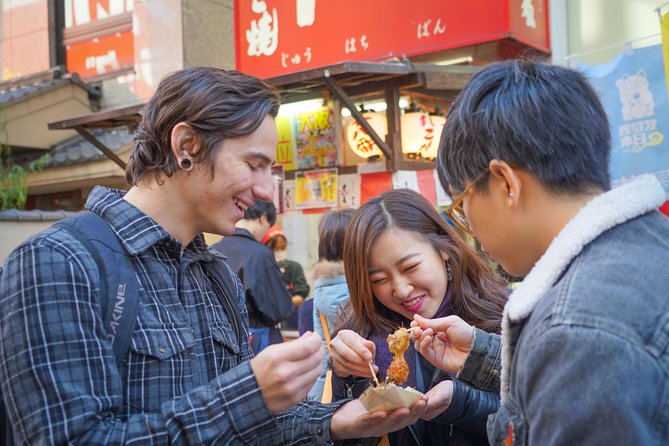
Takoyaki are round batter balls with tender octopus and other ingredients inside. They are one of Osaka’s signature foods, but they arrive hot, soft, and often topped with sauce and other garnishes. Take care with the first bite.
Some departures have included the full set of listed foods, while one account reported missing the takoyaki. If a promised tasting has not appeared by the later part of the walk, ask your guide about it rather than assuming it is coming.
The Glico sign and Dotonbori finish
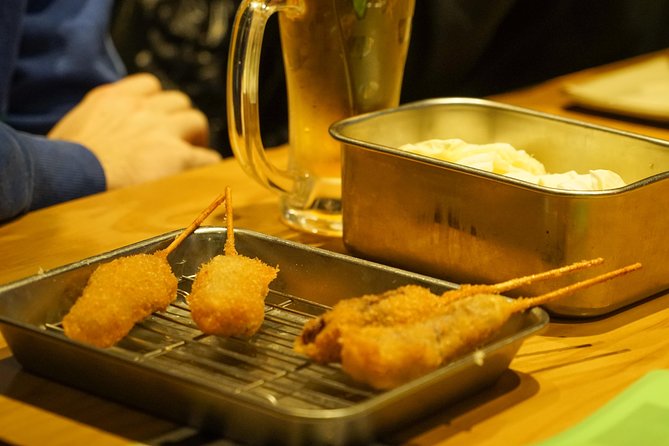
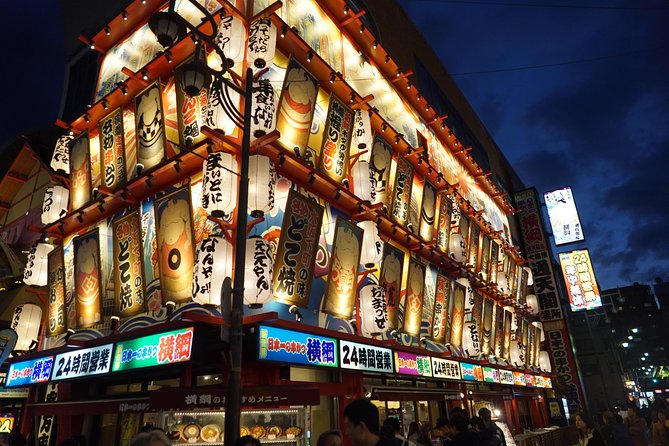
The Glico sign is one of Osaka’s easiest photo symbols, and the tour gives you time to take pictures in front of it. The stop itself is about 10 minutes, but the surrounding area is crowded and full of distractions.
This is not a quiet cultural site. Dotonbori is the place for enormous restaurant signs, souvenir shopping, bright lights, and people moving in every direction. Your guide can help with photos, and several guides received praise for taking pictures and sending them afterward.
The official endpoint is at the Glico sign, near 1-chome 10-3 Dotonbori. That is a useful finish because you can continue into Namba, return to your hotel, or choose another restaurant nearby. One guide even helped with subway directions after the tour, though that kind of extra assistance depends on the person leading your group.
The tour ends here rather than returning you to the starting point. Plan your evening from Dotonbori, not Shinsekai.
Okonomiyaki, portions, and the food value
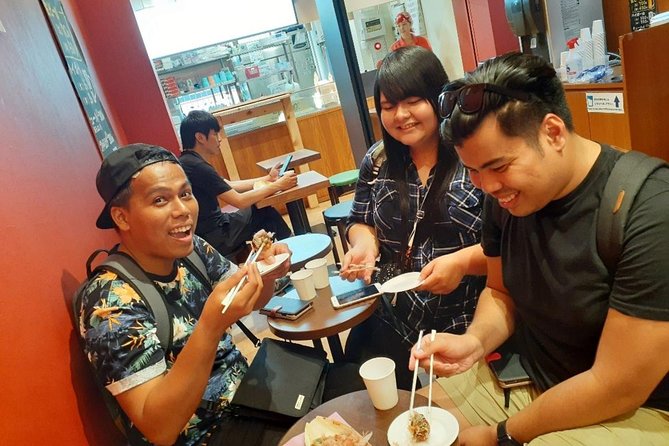
Okonomiyaki is Osaka’s savory pancake, made with ingredients mixed or layered and grilled with toppings. The name combines the ideas of as you like and grilled, so the dish can vary by restaurant and style.
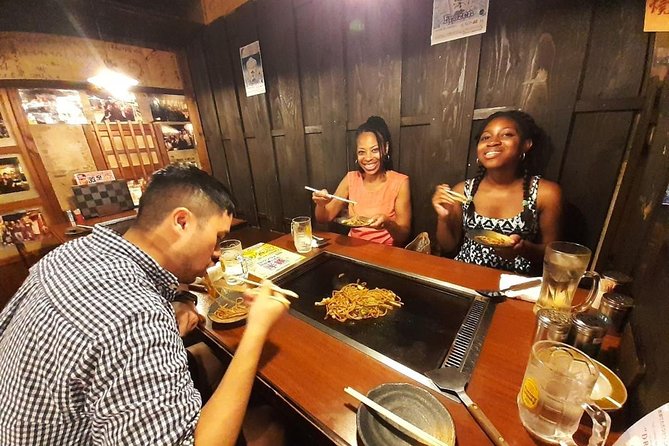
You receive one portion as part of the tour. Several people especially enjoyed cooking their own okonomiyaki, though the exact amount of hands-on cooking is not guaranteed in the tour description. One person who had already eaten okonomiyaki elsewhere found this stop better than an earlier meal, while another felt the venue was aimed more at tourists than locals.
The takoyaki comes as one box, which may be shared depending on your group. Combined with six kushikatsu skewers, okonomiyaki, snacks, and three drinks, the food is enough to replace a light meal for many people. It is not a series of tiny bites from six or seven independent stalls.
That distinction is central to the price. At $111.42 per person, you are paying for food, a guide, planning, translation, neighborhood context, and a small group. You are not simply paying for the retail cost of the dishes. If you mainly want to eat the largest possible amount for the least money, order directly at local restaurants. If you want someone to explain the route, handle the ordering, and connect the foods to Osaka, the price becomes easier to defend.
Still, I would not call this the best choice for a dedicated food professional or an experienced food-tour collector. Some people wanted more stops, smaller portions, and greater variety. The menu is strongly Osaka-focused, but also heavy on fried and filling foods.
Group size, pace, and guide quality
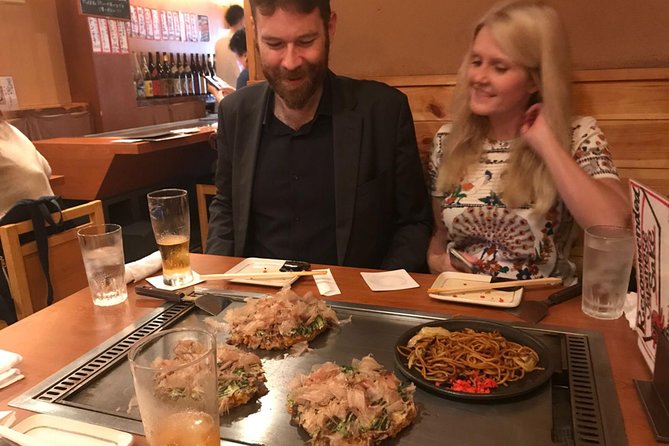
The maximum group size is seven. That is a real strength. You can hear explanations more easily than in a large bus group, and the guide has a better chance of helping with questions, photos, and food choices.
A family of six may effectively have a private tour if no additional people book. That can make the experience feel personal without the cost of a fully private booking.
The pace is the tricky part. One person found the guide too fast between stops, while another found the overall walk too slow. These comments can both be true because the route includes crowded streets, eating time, shopping, and pauses for photos.
The tour starts on time. If you arrive late and miss the group, you cannot join later, reschedule, or receive a refund. That makes careful planning important, especially because the starting point is not the final neighborhood.
Guides named in the feedback include Aika, Yuma, Kent, Michiko, Justin, Emi, Naru, Hiro, and Hide. The strongest experiences came when the guide explained daily life, food preparation, history, and local customs rather than merely leading from one restaurant to the next.
Dietary needs and weather planning
Gluten-free and vegan meals cannot be accommodated. Vegetarian food is possible only if you select that option or request it no later than the day before.
Pay close attention to the kushikatsu warning. Even vegetarian skewers may use dashi made with pork broth. If you cannot eat dashi, tell the provider in advance so another vegetarian dish can be prepared.
Allergies must also be reported at least one day ahead. The provider cannot guarantee an allergy-free meal because the food is prepared in kitchens it does not control, and same-day substitutions are not assured.
Osaka summers can reach 40°C, while winter temperatures can fall to -5°C. Wear comfortable shoes, carry water in hot weather, and dress for the season. Some places on the route allow smoking, and the venues may not be changeable.
Who should book this walk?
I would choose this tour if you are visiting Osaka for the first time, want the famous local dishes without managing every order yourself, and enjoy learning a little history while walking. It also suits repeat visitors who have seen the main sights but want a guided look at Shinsekai and Dotonbori.
It is a particularly sensible choice for families and small groups. The food is familiar enough for many ages, all ages are welcome, and the seven-person limit keeps the outing manageable.
I would hesitate if you are vegan, need strict gluten-free food, cannot tolerate pork-based dashi, or want a highly specialized food tour. I would also compare other options if your main goal is to visit many tiny stalls and taste very small portions.
Should you book the Osaka Local Foodie Walking Tour?
Book it for a friendly, compact introduction to Osaka’s famous food districts, especially if you value a local guide and a small group more than a long list of food stops. The best guides add real value by explaining daily customs, pointing out details you might miss, and helping you navigate crowded Dotonbori.
Skip it if you expect a serious tasting circuit with many independent vendors. At $111.42, the experience makes the most sense as a guided neighborhood walk with a generous meal, not as a bargain crawl. Arrive early, request dietary adjustments in advance, and tell your guide whether you want more food explanation, a slower pace, or extra time for photos.
FAQ
How long does the Osaka food tour last?
The tour lasts approximately three hours.
Where does the tour start?
It starts at FamilyMart Japan, 1-chome 17-6 Sanno, Nishinari Ward, Osaka, 557-0001.
Where does the tour end?
It ends at the Glico Sign in Dotonbori, near 1-chome 10-3 Dotonbori, Chuo Ward, Osaka, 542-0071.
What food is included?
The package includes six kushikatsu skewers, one portion of okonomiyaki, one box of takoyaki, and three drinks.
Are alcoholic drinks included?
Yes. The three included drinks can be alcoholic or non-alcoholic.
How many people can join the tour?
The maximum group size is seven travelers.
Can vegetarian food be provided?
Yes, but you must select the vegetarian option or request it by the day before. Vegetarian kushikatsu may still use pork-based dashi, so mention this restriction in advance.
Can vegan or gluten-free meals be provided?
No. Gluten-free and vegan diets cannot be accommodated on this tour.
What happens if I arrive late?
The tour starts on time. If you miss the group because you arrive late, you cannot join, reschedule, or receive a refund.
Just added around Japan
- Kyoto: Meet the Geisha Maiko with Gion Walking Tour★ 4.8 · 371 reviews
- Hiroshima: Private City Highlights Walking Tour★ 4.9 · 73 reviews
- Cool Kyoto: 5-Hour Walking Tour with the Last Samurai★ 4.8 · 73 reviews
- Asakusa: A Big-picture History Walk to Know Japan★ 4.6 · 77 reviews
- Hiroshima City 4hr Private Walking Tour with Licensed Guide★ 5.0 · 437 reviews
- Tokyo: Private Walking Tour with a Local Guide★ 4.9 · 469 reviews
- Tokyo: Private Walking Tour with a Local★ 4.4 · 419 reviews
- Tokyo: Private Custom Walking Tour with Local Guide★ 4.8 · 533 reviews
Food Walking Tours, compared.
Reykjavik Food Walk – Local Foodie Adventure in Iceland
Read our review →
Ho Chi Minh City Street Food Tour & Sightseeing By Motorbike
Read our review →
New Orleans Food Walking Tour of the French Quarter with Small-Group Option
Read our review →
Authentic Parisian Gourmet Food Tour with 10 Local Dishes & Wines
Read our review →
Savannah First Squares Culinary & Cultural Walking Food Tour
Read our review →Browse the lists this tour appears in