REVIEW · WALKING TOURS
Rio De Janeiro: Half-Day Rocinha Favela Walking Tour
Rocinha is not a sightseeing set. It is home to thousands of people, and this three-hour walking tour makes a serious effort to treat it as a living community rather than a spectacle. Local guides, including Wellington, Alberto, Daniel, and Martin, explain how the favela developed, how daily life works, and why the usual headlines tell only part of the story.
I like two things right away: you walk in a small group instead of riding through in a jeep, and the tour puts local voices at the center. Rooftop views, personal stories, and a possible capoeira visit give the outing real texture. The drawback is practical: steep stairs and narrow alleys make this a poor fit for anyone with knee, mobility, or recent-surgery concerns.
Key points to know before you go
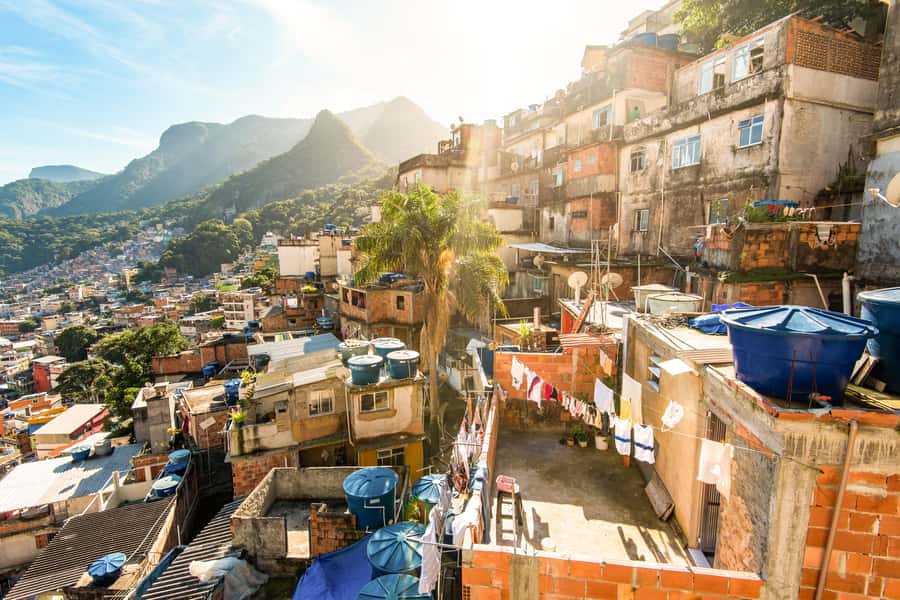
- Walk Rocinha with local guides: Guides such as Wellington, Alberto, and Daniel have strong ties to the community, and some have lived there for most or all of their lives.
- Expect a physical route: Narrow passages, steep steps, and uneven ground require comfortable shoes and steady footing.
- Meet the human side of Rocinha: The focus is daily life, local stories, culture, and social challenges, not a quick drive-by look.
- Look for a rooftop stop: Recent outings have included a bar with wide views over Rocinha and Rio, with drinks available to buy.
- Capoeira may be a highlight: Several outings have included a visit or demonstration at a local capoeira school, sometimes with music and a chance to try instruments.
- Plan your own arrival: Meet at the statue of journalist Ibrahim Sued outside the Belmond Copacabana Palace at 13:25. Hotel pickup is not included.
Why Rocinha makes a worthwhile Rio tour

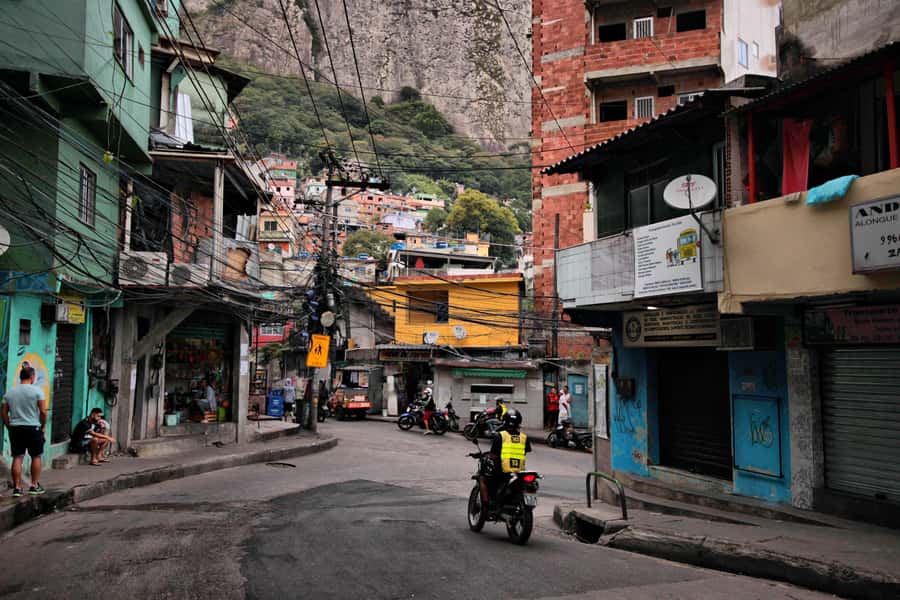
Rio is famous for beaches, Sugarloaf Mountain, and postcard views. Rocinha shows another side of the city, one shaped by tight streets, homes climbing the hills, local businesses, music, dance, and serious economic challenges.
The value of this tour is not that it lets you see poverty. That would be a shallow reason to go. Its value is that a local guide can give you context that you will not get from a passing view of the hills. You learn how people live, work, raise families, and build community in a place that outsiders often reduce to a headline.
Rocinha is described as the largest favela in Rio and the biggest favela in South America. Its scale matters. You are not walking through a tiny display village. You are entering a large urban community with its own rhythms and character.
I also appreciate the choice to walk. A vehicle can move you through quickly, but it leaves you looking from the outside. On foot, you notice the stairs, doorways, small shops, murals, sounds, and sudden openings toward the city. You also have more time to ask questions.
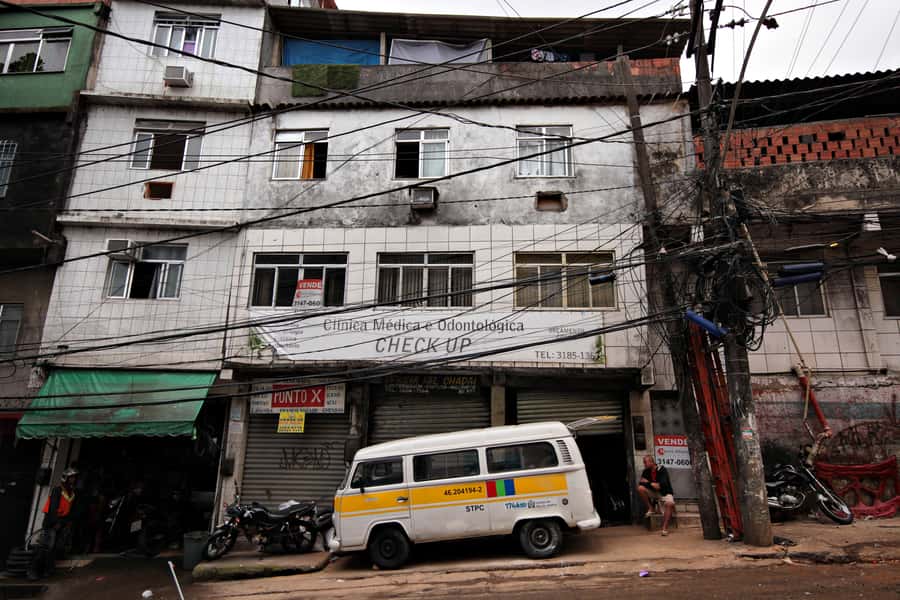
That said, the walking format asks something of you. This is not a gentle stroll along a level promenade. The route uses narrow alleys and stairs, and the pace may feel demanding in warm weather. Wear shoes with a good grip and clothing you can move in.
More Half-Day Tours in the world:
- Discover Berlin Half-Day Walking Tour
★ 5.0 · 9,624 reviews - Istanbul: Fener Balat Half-day Guided Walking Tour
★ 4.9 · 1,711 reviews - Berlin Third Reich Sites: Half-Day Walking Tour
★ 5.0 · 835 reviews
Meeting Wellington, Alberto, Daniel, and other local guides
The guide can make or break a tour like this. Rocinha is a place where local trust and awareness matter, and the strongest guides bring personal ties rather than only memorized facts.
Wellington has led many outings and is often praised for his English, friendly manner, and ability to explain difficult subjects in a clear way. He has been described as someone who makes visitors feel safe without turning the tour into a nervous lecture.
Alberto offers a different kind of connection. He has lived and grown up in Rocinha for more than 60 years, and he has sometimes shown visitors his own home while explaining the pressures of favela life. That sort of personal account can make the history feel less abstract.
Daniel has also led the route with a personal approach, including stories from his own life and introductions to people connected with the local capoeira scene. Martin, Roberto, Juan, Martinez, and other guides have also led tours in different languages.
You cannot assume you will receive a particular guide unless the booking system confirms it. Still, the regular presence of local guides is one of the main reasons to choose this outing over a vehicle tour operated entirely from outside the community.
The best approach is to arrive curious and respectful. Ask about housing, work, education, culture, and how the community functions. Avoid treating personal hardship as entertainment or photographing people without permission.
Walking through Rocinha, one step at a time
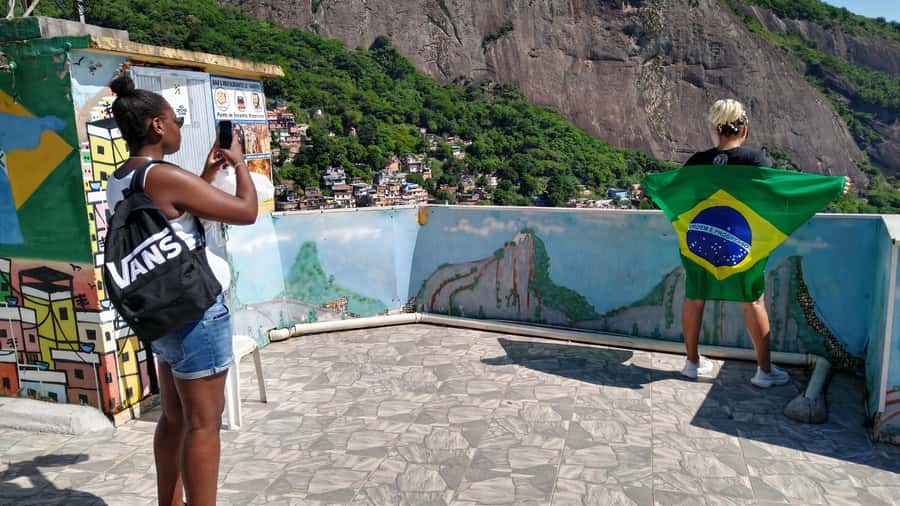
The meeting point is easy to identify if you follow the directions closely. Go to the front of the Belmond Copacabana Palace Hotel at Avenida Atlantica 1702 in Copacabana. Look for the statue of journalist Ibrahim Sued on the same sidewalk as the hotel entrance and wait beside it at 13:25.
From there, the tour takes you toward Rocinha and begins on foot. Hotel pickup is not included, so you need to arrange your own way to the meeting point. The activity lasts three hours, which is long enough to gain a useful picture of the community without taking up a full day of your Rio schedule.
The route is likely to shift according to local conditions and the guide’s judgment. That is a good thing here. A fixed sightseeing script would be less suitable than a guide who understands which streets and stops are appropriate that day.
Expect narrow lanes, steps, and changes in elevation. This is where comfortable clothing and shoes matter. Bring water, though food and drinks are not included in the price. You might find opportunities to buy a drink or local food during the outing, but those purchases are extra.
Walking also changes the tone of the experience. You are closer to ordinary routines, but you should remember that the people around you are not performers. Keep your camera ready for permitted views, but use common sense around homes, children, and private moments.
The views from above Rocinha
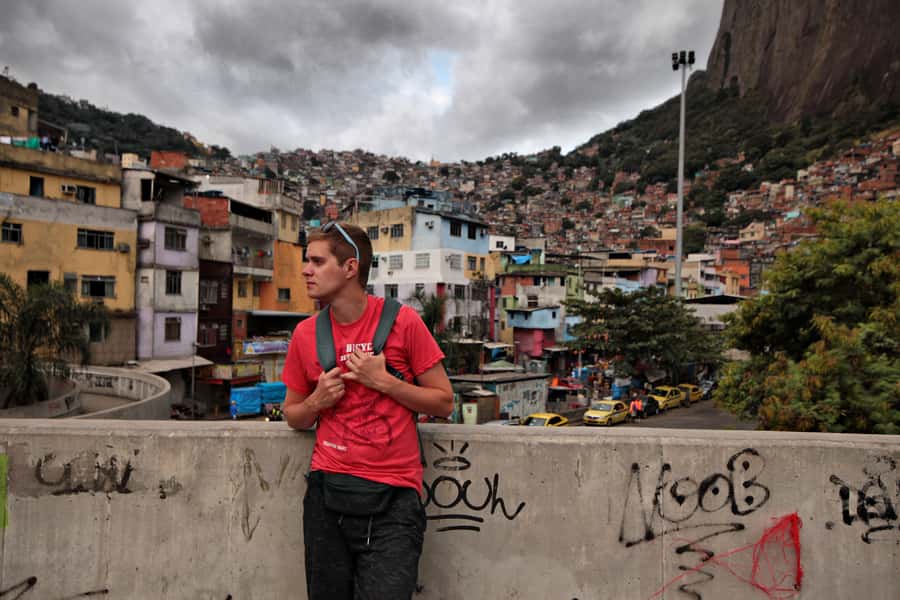
One of the strongest visual moments comes from looking back across Rocinha and toward Rio. The contrast between the packed hillside community and the polished districts nearby helps explain the city’s sharp social divisions in a way that a museum display cannot.
A rooftop bar has been part of several outings. You may have the chance to stop for a caipirinha or another drink while taking in a broad view over the favela and the surrounding city. Drinks are not included, and one account also noted an optional drone video for an additional charge of about R$200.
Treat this stop as an optional extra, not the main reason to book. The view is memorable, but the drink and video costs can increase the price of a tour that is otherwise inexpensive. If you are watching your budget, enjoy the view and skip the add-ons.
The rooftop stop also gives you a breather after the stairs. That matters. Three hours on steep ground can feel longer than three hours on a flat city walk, and a pause helps you take in what you have seen.
A few more walking tours around the world worth a look
- Magical London: Harry Potter Guided Walking Tour
★ 4.7 · 22,044 reviews - Reykjavik Food Walk – Local Foodie Adventure in Iceland
★ 5.0 · 18,952 reviews - History and Hauntings of Salem Guided Walking Tour
★ 5.0 · 14,564 reviews - New Orleans Premier Ghost, Voodoo and Vampire Walking Tour
★ 4.5 · 12,856 reviews
Capoeira, music, and community culture

Several outings have included a visit to a capoeira school or a demonstration by local performers. This can be one of the most enjoyable parts of the route, but it also has value beyond entertainment.
Capoeira combines movement, music, rhythm, and history. The activity has strong roots in Afro-Brazilian culture and is closely tied to the way Brazilian music and dance developed in working-class communities. At the school, you might see young people perform, hear about the practice, or try simple instruments.
Some guides have included a samba moment or invited visitors to join in. A capoeira teacher named Tiane has been praised for her work with children, and one stop has featured a former professional female football player who now gives back to young people in the community.
The exact format can vary. The official activity includes a local guide and walking tour, but it does not promise a capoeira show, lesson, drink, or meal. Think of these as possible additions rather than guaranteed parts of the package.
If a capoeira stop is included, bring a respectful attitude. You are seeing a cultural practice connected to the neighborhood, not attending a staged theater production made only for tourists.
Safety without pretending Rocinha is risk-free

Safety is a central concern for many people considering a favela tour. The guided format matters because local guides know the area, manage the route, and explain how to behave. Many people have felt safe with guides such as Wellington, Alberto, Daniel, and Roberto.
Still, no responsible tour can promise that a complicated urban community is risk-free. You should follow the guide’s instructions, stay with the group, avoid wandering away, and keep valuables discreet. Do not make your camera the center of attention.
The tour aims to cut through stereotypes, not replace one oversimplification with another. Rocinha is not simply dangerous, but it is also not a harmless theme park. The most useful lesson is that a large community can contain warmth, creativity, hardship, tension, work, family life, and local pride at the same time.
The guide’s local connection is particularly important when discussing areas affected by gangs, police, or economic hardship. These subjects deserve care. Listen first, ask clear questions, and avoid assuming that one person’s experience represents every favela in Rio.
What the $35 price really covers
At $35 per person, this is reasonably priced for a three-hour guided experience in Rio. You are paying for a local guide, route planning, community access, and an interpretation of a place that is difficult to understand from outside.
The price also includes a monetary contribution to the favela community. That is important because it gives the tour a stated local benefit rather than treating the neighborhood only as a backdrop.
Food, drinks, hotel pickup, and optional purchases are not included. Budget extra if you want a caipirinha, local snack, or optional drone video. The reported drone video cost of around R$200 is a separate expense, not part of the listed tour price.
The value is strongest if you want context and conversation. If you only want photographs or a quick ride through the hills, you may find the walking pace too slow. If you want to understand how Rocinha fits into Rio’s social and cultural life, the price is fair.
Free cancellation up to 24 hours before the start gives you some flexibility, and you can reserve now and pay later. Check the available start time when booking, since the meeting instruction provided for this outing is 13:25.
Who should book this walk
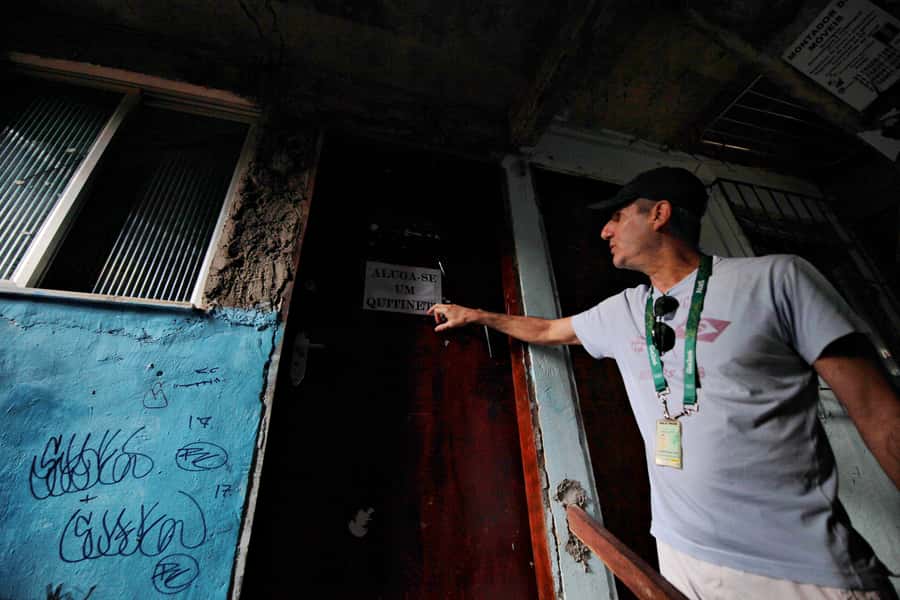
I would suggest this tour to adults and older teenagers who are open to difficult subjects and comfortable walking uphill. It suits you if you want a local perspective, enjoy asking questions, and prefer meeting people over checking off monuments.
It is especially useful if you have already seen Rio’s famous beaches and viewpoints and want to understand more about the city’s social divisions. It also suits photographers who care about context, provided they photograph with permission and restraint.
This is not a good choice for wheelchair users, people with mobility impairments, or anyone with serious knee trouble. The information also excludes children under six, people over 75, people over 70 in another restriction, and people over 130 or 140 kilograms in separate limits. Because those age and weight limits are inconsistent, confirm the current rule before booking.
Recent surgery is another reason to skip it. The stairs and uneven route are not minor details.
Practical advice for a better visit
Wear comfortable shoes with secure soles. Loose, breathable clothing will make the climb easier, and you should bring a camera only if you are ready to use it thoughtfully.
Arrive before 13:25 rather than searching for the statue at the last moment. The meeting point is outside a major hotel, but the statue detail matters because the hotel frontage can be busy.
Keep some Brazilian reais available for drinks, snacks, or optional extras. Do not assume these purchases are included in the $35 price.
Listen closely to the guide’s instructions about photography and movement. A small group is less intrusive than a large crowd, but your own behavior still shapes the experience.
Should you book the Rocinha walking tour?
Book it if you want a personal, local-led look at Rio and can handle steep steps. The strongest reasons are the guides’ community ties, the chance to hear first-hand stories, the city views, and the possible capoeira visit.
Skip it if you need a flat route, guaranteed sightseeing stops, or a polished cultural show with no difficult discussion. Also skip it if you are uncomfortable entering a residential community, even with a guide.
For most able-bodied visitors seeking a more thoughtful side of Rio, this is a good use of three hours. Go with respect, leave room for the guide’s judgment, and understand that Rocinha is a real neighborhood first and a tour destination second.
FAQ
How long does the Rocinha walking tour last?
The tour lasts three hours.
Where does the tour meet?
Meet at 13:25 beside the statue of journalist Ibrahim Sued, outside the main entrance of the Belmond Copacabana Palace Hotel at Avenida Atlantica 1702 in Copacabana.
Is hotel pickup included?
No. Hotel pickup is not included, so you need to make your own way to the meeting point.
Which languages are available?
The live guides speak English, Spanish, or Portuguese.
What should I wear?
Wear comfortable clothes and comfortable shoes. The route includes narrow alleys and stairs and can be physically demanding.
Is the tour suitable for wheelchair users or people with mobility problems?
No. The tour is not recommended for wheelchair users or people with mobility impairments, knee problems, or recent surgeries.
Are food and drinks included?
No. Food and drinks are not included. You may have opportunities to buy drinks or other items during the outing, including at a possible rooftop stop.
Just added around the world
- Fira: Guided Foodie Walking Tour with Tastings★ 4.9 · 474 reviews
- Fez: Guided Walking Tour of the Historic Medina★ 5.0 · 359 reviews
- Fez: Walking Tour in the Ancient City of Fez★ 4.8 · 73 reviews
- Feel like a local – Walking Tour in Mykonos Town 2hours★ 4.4 · 77 reviews
- Faro: Old Town Guided Walking Food Tour★ 4.9 · 94 reviews
- Fes: A Guided Walking Tour Through the Historic Medina★ 4.4 · 97 reviews
- Fez: Half-Day City Private Walking Tour with a Guide★ 4.6 · 114 reviews
- Fanal / Assobiadores – Levada Walk★ 4.6 · 93 reviews
Walking Tours, compared.
Magical London: Harry Potter Guided Walking Tour
Read our review →
Reykjavik Food Walk – Local Foodie Adventure in Iceland
Read our review →
History and Hauntings of Salem Guided Walking Tour
Read our review →
New Orleans Premier Ghost, Voodoo and Vampire Walking Tour
Read our review →
Amsterdam Anne Frank: Small-Group Walking Tour & Local Guide
Read our review →

Edinburgh Castle: Guided Walking Tour with Entry Ticket
Read our review →