
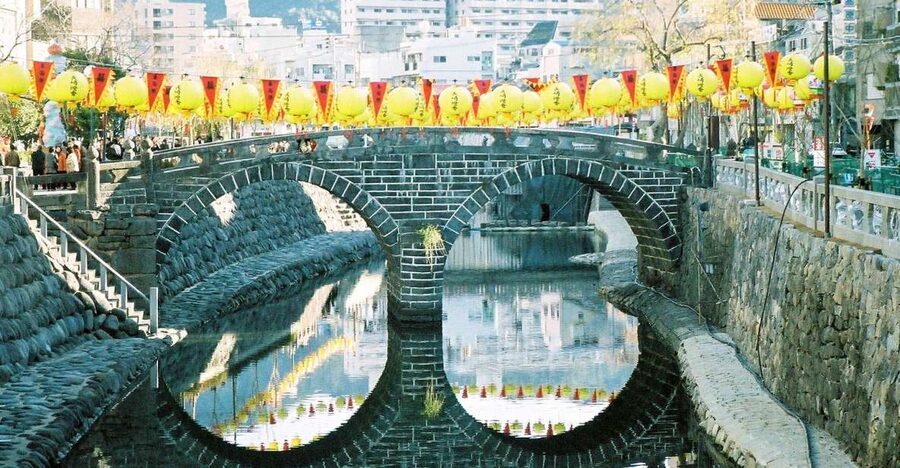
REVIEW · JAPAN
Nagasaki: Private Walking Tour with a Local
Nagasaki is a city best understood in pieces: a hillside view here, a quiet lane there, a tram ride to a major memorial, and a personal story that makes the place feel human. This private walking tour lets you build that day around your interests rather than follow a fixed script. Guides including Yuki, Senyo, Masaaki, and Suniff have adapted routes for history, food, shopping, local neighborhoods, and even an unexpected change of port.
I like the one-to-one flexibility and the practical help. Your guide can meet you at a hotel, landmark, café, or cruise terminal area, and can balance walking with public transport or taxis when needed. The main consideration is that the route is not fully planned for you. If you want a polished sightseeing circuit with set commentary, you may need to give your guide clear requests or ask for suggestions early.
Key points at a glance
- A private route with no fixed script: You decide whether the day focuses on memorial sites, city views, food, shopping, or local neighborhoods.
- Strong personal connection: Guides such as Yuki, Senyo, Masaaki, and Suniff add their own experiences to Nagasaki’s story.
- Useful for cruise passengers: A guide can meet you near the port and help you make good use of a limited day.
- Major sights can fit into three hours: The Atomic Bomb Museum, Peace Park, Nagasaki Ropeway, and Dejima have all been included in custom routes.
- Local advice is part of the value: You can ask where to eat, shop, wander, or spend the rest of your day.
- Plan for extra costs: Meals, admission fees, optional activities, and local transportation are not included.
A private introduction to Nagasaki, built around you
This is not a standard march from one famous stop to the next. You meet an English-speaking local guide, called a Lokafyer, and shape the walk around what interests you. You can arrive with a list of places, a food question, a short port stop, or no real plan.
That flexibility matters in Nagasaki. The city’s sights are spread across different areas, and your best route depends on your pace and priorities. A first-time visitor may want help getting oriented. A repeat visitor may prefer a small café, a neighborhood walk, or places that are easy to miss without local help.
Your meeting point can be arranged near the city center. The listed choices include the Statue of Dr. Sun Yat-sen, Umeya Shokichi and Toku, and the Nagasaki Atomic Bomb Museum, but pickup can also be arranged at a hotel, an iconic landmark, or a quiet café if it is in or near central Nagasaki.
I like this meeting flexibility for two reasons. First, you do not lose time crossing town to find your guide. Second, it lets you start the day in a place that already fits your plans. A cruise passenger may prefer a port-side meeting. Someone staying downtown may want to begin near the first sight.
More Private Walking Tours in Japan
- Tokyo: Private Custom Walking Tour with Local Guide
★ 4.8 · 533 reviews - Tokyo: Private Walking Tour with a Local Guide
★ 4.9 · 469 reviews - Hiroshima City 4hr Private Walking Tour with Licensed Guide
★ 5.0 · 437 reviews
Atomic Bomb Museum and Peace Park, handled with care
Nagasaki’s Atomic Bomb Museum and Peace Park are among the most important places you can visit in the city. They also require a thoughtful pace. A local guide can help you place the memorials within the wider story of Nagasaki and answer questions as you go.
Several custom tours have included both the museum and Peace Park. Senyo has been praised for explaining the significance of the atomic bombing, while Masaaki combined these sites with the Nagasaki Ropeway during a three-hour route. Luis also linked the Atomic Bomb Museum and Peace Park with a tram ride to Dejima.
The museum requires an entrance fee, and you must pay the guide’s admission too if you ask the guide to enter with you. That cost is not included, so keep it in mind when comparing the total price.
The advantage of visiting with a private guide is not simply hearing dates and facts. You can stop to ask what you do not understand, adjust the pace, and connect the sites to Nagasaki as a living city rather than treating them as isolated memorials. For some people, this will be the most meaningful part of the day. For others, it may be emotionally demanding, so tell your guide how much time and detail you want.
Dejima, trams, and the practical side of the city
Nagasaki’s past as an international port gives the city a character unlike many other places in Japan. Dejima is one possible stop, and reaching it by tram can make the outing feel like a useful city lesson rather than a simple taxi ride between attractions.
A guide can show you how to move around and explain how the different parts of the city connect. Public transportation and taxis are not included, but one guide was willing to mix them with walking to create a better-paced day. That is valuable if you want to see more than your legs can comfortably manage.
The tour is advertised as a walking experience, so comfortable shoes are essential. The duration can range from three to six hours, and that range gives you room to choose your pace. A three-hour outing works well for a short introduction or a cruise stop. A longer booking gives you more time for a museum, memorial area, scenic stop, meal, and local neighborhood.
Do not assume that a longer booking automatically means more major sights. A private day works best when you leave room for conversation and practical stops. If you want several paid attractions, ask your guide in advance how much time and admission cost each one will require.
Nagasaki Ropeway and views from above
The Nagasaki Ropeway can add a scenic break to a history-focused itinerary. In one three-hour route, it was combined with the Atomic Bomb Museum and Peace Park. That combination gives you both the city’s difficult past and a broad view of its setting.
The ropeway is an optional activity, and its cost is not included. You should also ask your guide how it fits into the day before you commit to several other stops. A scenic ride can be a fine way to change the mood, but it can also take time away from a museum or neighborhood walk if your schedule is tight.
This is where the private format earns its keep. You can decide that views matter more than another indoor attraction, or do the opposite. A fixed group tour cannot make that adjustment just for you.
Same streets, a different route:
- Kyoto Geisha Walking Tour: Gion District & Hidden Gems
★ 4.7 · 3,273 reviews - Tokyo Tsukiji Fish Market Food and Culture Walking Tour
★ 5.0 · 3,184 reviews - Kyoto: Gion Magical Night Walking Tour with Geisha Trivia
★ 4.9 · 2,393 reviews - Tokyo: Imperial Palace and Shogun Historical Walking Tour
★ 5.0 · 2,251 reviews
Food, cafés, shopping, and the parts you cannot plan well online
The strongest reason to book this experience may be the local advice. Your guide can suggest places to eat, shop, and wander, and you can ask for a lunch stop that matches your tastes and budget.
One guide took a group to a restaurant they described as a highlight of the day. Another custom outing included an authentic Japanese seafood restaurant. You should not treat these examples as guaranteed inclusions, but they show the kind of request you can make.
You can also ask for a quiet café, a courtyard, street art, or a neighborhood that does not appear on every standard sightseeing list. The tour description specifically allows room for local corners, personal stories, and everyday culture. Those details may be more useful than another round of general facts, especially if you have already seen Nagasaki’s main memorials.
Food and drinks are not included, so you pay for your own meal. That is usually a fair arrangement on a private walk because you control the choice. Tell your guide about dietary needs, preferred price range, or interest in seafood before the tour begins. The supplied details do not promise that every request can be met, so treat food advice as a benefit of the conversation, not a prepaid tasting program.
What the guides add to the experience
The guide can make or break a private tour, and the strongest reports here focus on preparation, patience, communication, and personal stories.
Yuki has created custom routes, shared places that see fewer tourists, and communicated with groups before the tour. She has also been described as flexible around requested sights and able to speak several languages. Senyo has been praised for clear explanations of Nagasaki’s atomic-bomb history and for a friendly manner. Masaaki combined major sights efficiently and offered useful help with navigating the city.
Other guides have made the day work under unusual circumstances. Jun helped a group reach its destination and return to its ship when they had no plan that morning. Yuki also adapted an outing when a cruise ship arrived at Sasebo rather than Nagasaki, arranging a day that included a World War II bunker, seafood, city touring, and cherry blossoms.
These examples show the benefit of telling your guide the real situation. Say how long you have, how much walking you want, what you have already seen, and when you must return to a ship or hotel. The more useful information you provide, the more practical the route can be.
There is one fair warning. One past guest felt the company should provide more suggested itineraries and stronger background material for guides. That is a useful point for indecisive visitors. If you do not know Nagasaki at all, ask your guide before the day for a proposed route that includes the essential sights and one or two local choices.
Is $82 a good value?
At $82 per person, this is not the cheapest way to see Nagasaki. You also pay separately for admissions, meals, drinks, local transportation, and optional activities. If you are happy following a map and using public transport on your own, a private guide may not be necessary.
The price becomes easier to justify for two or more people who value time and personal attention. You are paying for a private group, an English-speaking local, a meeting point that can suit your plans, and the ability to change the route as the day develops.
For cruise passengers, the value can be especially clear. A guide who meets you near the port and keeps an eye on your return time may save you from wasting part of the day on navigation. For a first visit, the advice on where to eat, shop, and continue afterward can also extend beyond the paid walking time.
The best value comes when you use the guide as a local problem-solver, not just as someone who points at monuments. Ask for a sensible route, explain your limits, and use the conversation to learn how to spend the rest of your time in Nagasaki.
Timing, access, and family details
You can request a specific start time, but you should check availability for the date you want. The tour lasts from three to six hours, so decide in advance if you want a short orientation or a fuller day.
The experience is wheelchair accessible, though the exact route still deserves discussion because this is a walking tour in a city with varied terrain and several possible transport connections. Ask the guide to shape the route around your mobility needs before the start.
Children younger than three join free. Children from three through twelve receive a 50 percent discount. The group remains private, so your family does not have to match another group’s pace or interests.
Cancellation is free up to 24 hours before the start for a full refund. That gives you some protection if weather, port plans, or other arrangements change.
Who should book this Nagasaki walk?
I would consider this tour a good fit for a first visit, a short port call, families who need a flexible pace, and people who prefer conversation to a rehearsed speech. It also suits repeat visitors who have already seen the main sights and want food, neighborhoods, shopping, or lesser-seen places.
It is less suitable if you want a fixed itinerary, guaranteed entry to a specific attraction, or a full meal and transport package. You will need to pay extra for those items and take an active role in shaping the day.
The private format is also useful for people who are unsure how to combine Nagasaki’s memorial sites with its city streets. You can give the guide a short wish list and let the route take shape around your time and energy.
Final verdict: book it for flexibility, not a fixed script
I would book this tour if I wanted a personal introduction to Nagasaki, had limited time, or needed help combining major sights with local food and practical city advice. The strongest guides, including Yuki, Senyo, Masaaki, and Suniff, have shown the value of preparation, local stories, and route changes made for the people in front of them.
Go in with at least a few questions. Ask for a suggested plan if you are not sure what to see. With that small amount of preparation, $82 can buy more than a walk past famous places: it can give you a usable feel for Nagasaki and a better plan for the rest of your stay.
FAQ
How long does the private Nagasaki walking tour last?
The tour lasts between three and six hours. You can check available starting times and request a specific time.
Where can the guide meet me?
The Lokafyer can meet you at a preferred location in or near central Nagasaki. This may be your hotel, an iconic landmark, a quiet café, or another agreed meeting point. Listed meeting options include the Statue of Dr. Sun Yat-sen, Umeya Shokichi and Toku, and the Nagasaki Atomic Bomb Museum.
Is the tour private?
Yes. It is a private group experience with a customized walking route and no fixed group itinerary.
Is the tour conducted in English?
Yes. The tour includes a live English-speaking guide.
Are entrance fees included?
No. Entrance fees are not included. If you want the guide to enter an attraction with you, you must also cover the guide’s admission fee.
Are meals, drinks, and transportation included?
No. Meals, drinks, local transportation, personal expenses, and optional activity costs are not included.
Is the tour suitable for children?
Children under three years old join free. Children from three to twelve receive a 50 percent discount.
Can I cancel the tour for a refund?
Yes. You can cancel up to 24 hours before the tour for a full refund.
Just added around Japan
- Miyajima Half-day Trip Historical Walking Tour★ 5.0 · 284 reviews
- Hiroshima Walking Tour Why A Bomb was dropped to Hiroshima★ 5.0 · 347 reviews
- Tokyo: Asakusa & Sensoji ー Oldest Temple Walking Tour (2hrs)★ 5.0 · 213 reviews
- Asakusa Senso-ji Temple and Old Tokyo Walking Tour★ 5.0 · 560 reviews
- Asakusa Cultural Walk & Matcha Making Tour★ 5.0 · 245 reviews
- Tokyo: Tsukiji Market Walking Tour & Sushi Cooking Class★ 4.6 · 122 reviews
- Tokyo:Stroll in Old traditional culture towns~Yanaka & Nezu★ 4.9 · 186 reviews
- Tokyo: Shibuya Crossing & Hidden Streets Walking Tour★ 4.8 · 128 reviews
Private Walking Tours, compared.
Barcelona Helicopter, Sailboat & Old Town Private Walking Tour
Read our review →
Lyon: Private Walking Tour of “Traboules” in the Old Town
Read our review →
Browse the lists this tour appears in