
REVIEW · JAPAN
Nara: Half-Day UNESCO Heritage & Local Culture Walking Tour
Nara’s magic is not just the deer. This five-hour walk links Todai-ji Temple and Kasuga Taisha Shrine with old merchant homes, a hilltop view, quiet lanes, and a local lunch. You get the famous sights, but also a better feel for how Nara works beyond the park’s postcard moments.
I like the small-group pace and the way guides such as Miyabi, Matthew, Peco, and Yuki have shaped the walk around questions and interests. I also like that lunch, temple and shrine admissions, and a packet of deer crackers are included. The main drawback is simple: you walk a lot, and summer heat or wet weather can make the five hours tiring.
Key points to know before booking
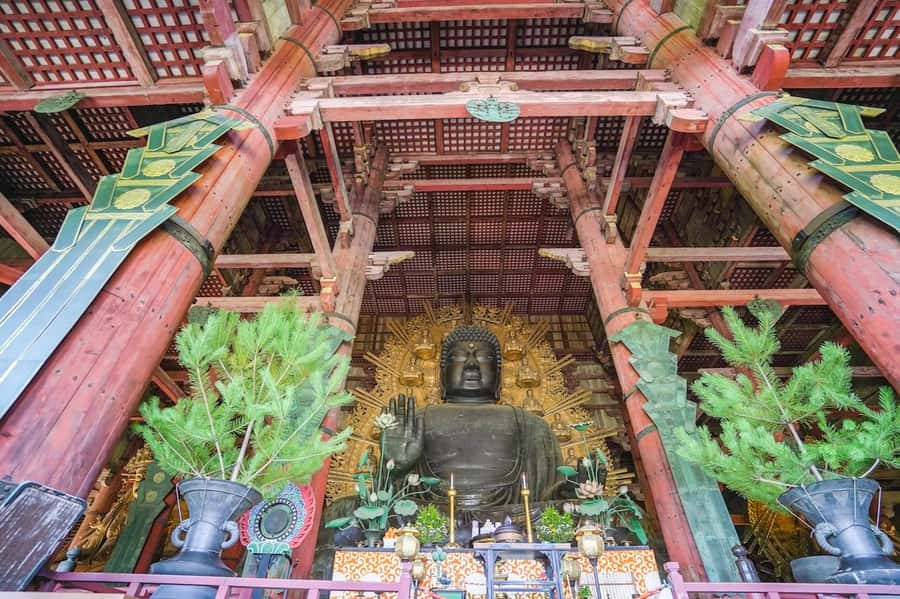
- Two UNESCO-listed religious sites: See Todai-ji’s enormous Buddha hall and Kasuga Taisha’s lantern-filled shrine grounds.
- Nara beyond the deer: Walk through Naramachi, enter a traditional merchant’s house, and follow quieter paths away from the busiest routes.
- A useful cultural lesson: Your guide explains how Buddhist temples and Shinto shrines differ, and how both fit into Japanese life.
- Lunch is part of the value: You receive a Japanese meal using local Nara vegetables and fresh meat, rather than needing to find a restaurant yourself.
- Deer crackers are included: You can feed Nara’s famous sacred deer, with guidance on how to handle the eager animals.
- Best for walkers: Comfortable shoes matter, and you should tell the local partner about health concerns before the tour.
Why this walk gives Nara more shape
A self-guided visit to Nara can easily become a deer-feeding stop followed by a quick look at Todai-ji. This tour adds order and context. You move from the old town to temple grounds, from Buddhist imagery to Shinto ritual, and then into the wooded parts of Nara Park.
That sequence matters. Nara was Japan’s first historical capital, and its religious monuments are not isolated attractions. They are tied to the city’s old streets, sacred animals, forest paths, and local food. A guide helps you notice those connections instead of simply moving from one photo stop to the next.
The 4.8 rating from 250 reviews reflects a clear pattern: guides are praised for their English, warm manner, useful stories, steady pace, and willingness to answer questions. Names frequently singled out include Matthew, Peco, Miyabi, Nobu, Eri, Yuuki, Shin, and Yuki. Guide assignments can change, but the format gives you a live English-speaking companion rather than a fixed audio script.
Small groups are especially useful here. You can ask why a Buddha is shown in a certain pose, how to pray at a shrine, or where to obtain a goshuin stamp. Several guides have also taken photos for solo participants and families, a small service that can make the day easier.
More Cultural Walking Tours in Japan:
- Tokyo Tsukiji Fish Market Food and Culture Walking Tour
★ 5.0 · 3,184 reviews - Kyoto Gion Cultural Walk & Geisha Show with Dining Options
★ 5.0 · 518 reviews - Asakusa Cultural Walk & Matcha Making Tour
★ 5.0 · 245 reviews
Starting at Kintetsu Nara Station
Meet your guide in front of the Gyoki Bosatsu statue near Exit 2 or the East Exit of Kintetsu Nara Station. This detail matters. The meeting point is not at JR Nara Station, so check your route before setting out and arrive 10 minutes early.
Look for the guide holding a Magical Trip board. The tour must begin on time, so do not count on a late arrival being absorbed into the schedule. Kintetsu Nara Station is also a practical starting point for a day trip because the walk heads directly toward the old center and Nara Park.
You may pass through a shopping arcade early in the walk. It gives you a quick look at everyday Nara, which feels less like a major metropolis and more like a historic provincial city. This is a useful transition before the grand temples arrive.
Kofuku-ji and the first look at Nara’s religious world
The first listed stop is Kofuku-ji, with about 25 minutes set aside. Even if your visit is brief, it begins the tour’s main theme: Japanese religious culture is not one single tradition.
Your guide can help you separate the roles of Buddhist temples and Shinto shrines. You will encounter Buddha images, temple buildings, shrine gates, purification customs, and different ways of praying. Without that introduction, the details can blur together, especially if this is your first visit to Japan.
The timing here is short, so do not expect an extended exploration of every building. Think of Kofuku-ji as an opening chapter that prepares you for the much longer visit to Todai-ji.
Two hours at Todai-ji and the Great Buddha
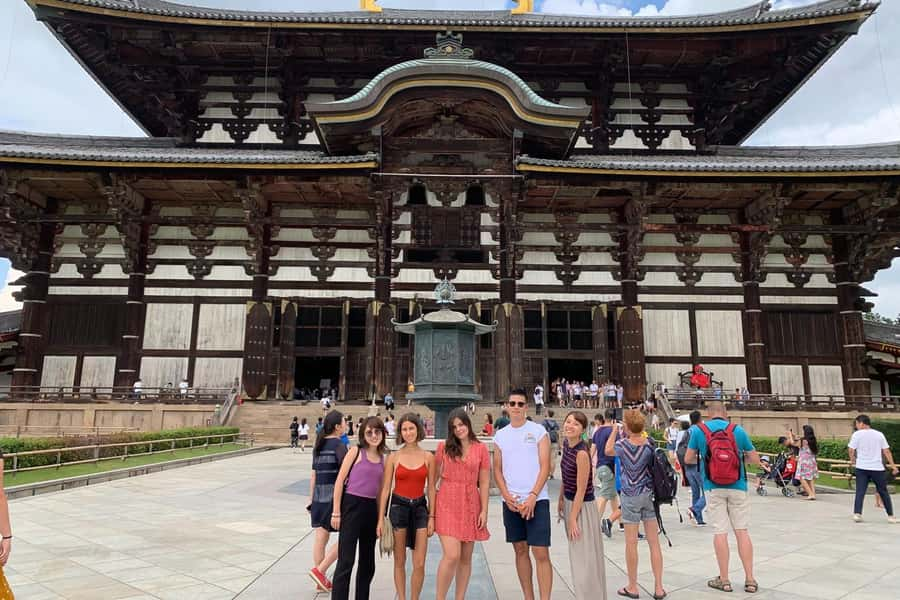
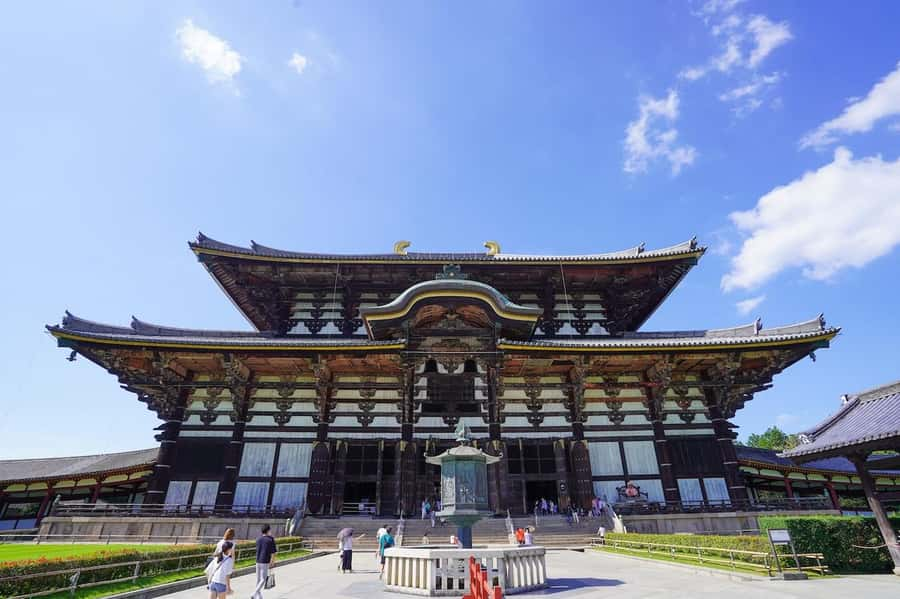
Todai-ji receives the largest share of the schedule, about two hours. That is sensible. The temple is the tour’s biggest architectural and cultural stop, and rushing through it would leave you with little more than a photograph of the Great Buddha.
You will see the huge temple hall and its great Buddha statue, while your guide explains the beliefs, construction, and symbolism behind what you are seeing. The scale can be hard to grasp from a guidebook description alone. Inside the hall, the proportions of the statue and building make the point immediately.
Two hours also gives the group room to move at a human pace. You can pause for questions, look carefully at statues and architectural details, and spend time with the parts of the complex that interest you most. Several guides have been praised for keeping the walk unhurried while still covering a lot of ground.
Todai-ji is a major attraction, so this is likely to be one of the busier sections of the day. A guide cannot remove the crowds, but a good one can explain where to focus your attention and keep the group moving without making you feel hurried.
The temple visit also gives you a useful contrast with Kasuga Taisha. Todai-ji’s immense Buddhist hall and Buddha image create a feeling of formal grandeur. Later, the shrine’s lanterns, forest setting, and Shinto traditions offer a different kind of sacred atmosphere.
More Half-Day Tours in Japan:
- Miyajima Half-day Trip Historical Walking Tour
★ 5.0 · 284 reviews - Hiroshima: Miyajima Half-day Historical Walking Tour
★ 4.7 · 100 reviews - Discover Berlin Half-Day Walking Tour
★ 5.0 · 9,624 reviews - Rio De Janeiro: Half-Day Rocinha Favela Walking Tour
★ 4.7 · 2,272 reviews
A local lunch with Nara ingredients
After Todai-ji, the tour stops for a 45-minute lunch at a local restaurant. The meal uses local Nara vegetables and fresh meat, and the portion is described as a full Japanese lunch rather than a token snack.
This is one of the stronger practical features of the tour. You do not need to spend your limited day choosing a restaurant near the park, reading menus, or guessing which dishes reflect the area. The meal also breaks up the walking at a useful point.
Past meals have been described as Japanese home-style food, with several choices available. Vegetarian meals have been accommodated when arranged in advance, but the activity is not suitable for vegans or people with gluten intolerance. If you have another dietary request, contact the local partner by the day before. Requests made on the day cannot be accepted.
Extra food and drinks cost more, so bring cash if you want additional snacks or beverages. You do not need to pay for the guide’s meal or drinks.
Nara’s quiet side at 110 Zoshicho
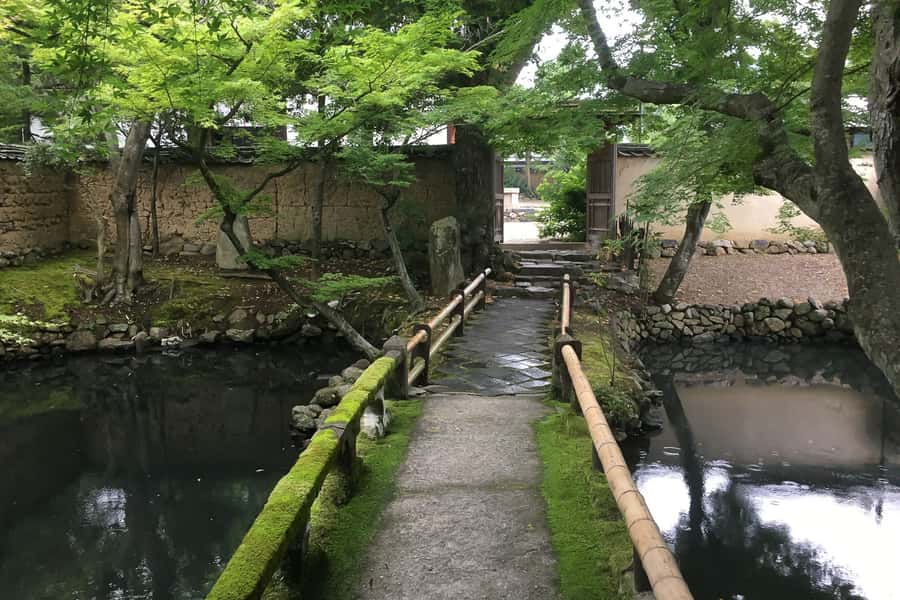
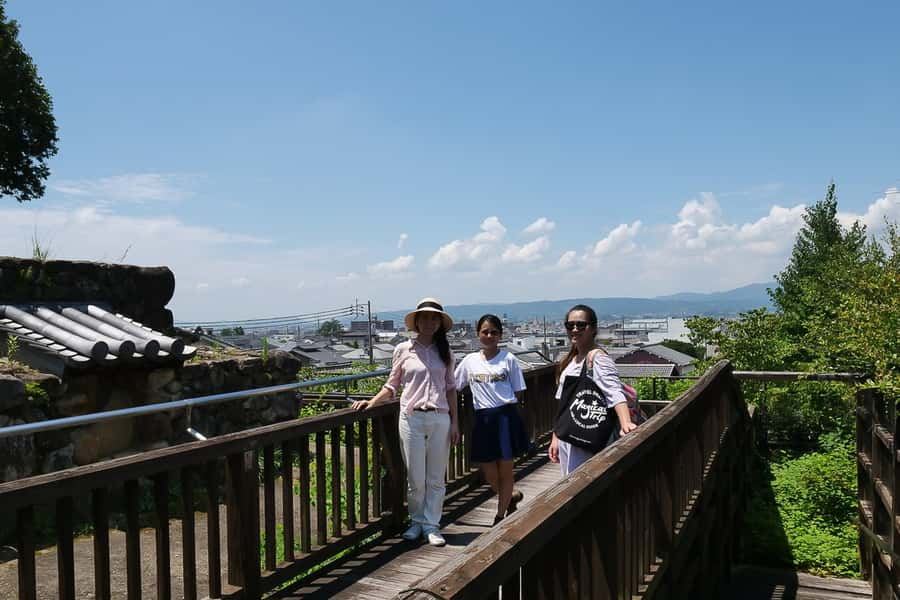
The stop at 110 Zoshicho lasts about 15 minutes and is tied to one of the tour’s less expected views. You pause to observe a mysterious pyramid-shaped structure in the quiet town, then take in Nara from a hill.
The exact appeal here is not the length of the stop but the change in mood. After the large temple complex and the activity around the park, you get a quieter outlook and a chance to see how the city sits beyond its headline monuments.
Some guides have adjusted routes to include secluded areas and lower-traffic paths. That is valuable in Nara, where the best moments can come from a calm lane or a brief view rather than another major building.
Kasuga Taisha and hundreds of lanterns
Kasuga Taisha receives about 40 minutes. This shrine is known for its lanterns, and the setting helps explain why Nara’s religious sites feel linked to the natural world around them.
Your guide explains Shinto customs and shows you how to approach the shrine respectfully. You can ask about prayer, purification, and the meaning of the lanterns rather than simply walking through the grounds without context.
The shorter time here means you will not explore every corner of the shrine precinct. Still, it is enough to appreciate the contrast with Todai-ji. At Todai-ji, the focus is an immense Buddha hall. At Kasuga Taisha, the experience depends more on ritual objects, lanterns, shrine architecture, and the wooded surroundings.
If collecting goshuin stamps is part of your Japan trip, tell your guide. One past guide helped participants find the correct place to obtain them at each site. That sort of small assistance can save you from guessing where to go.
Feeding Nara’s sacred deer
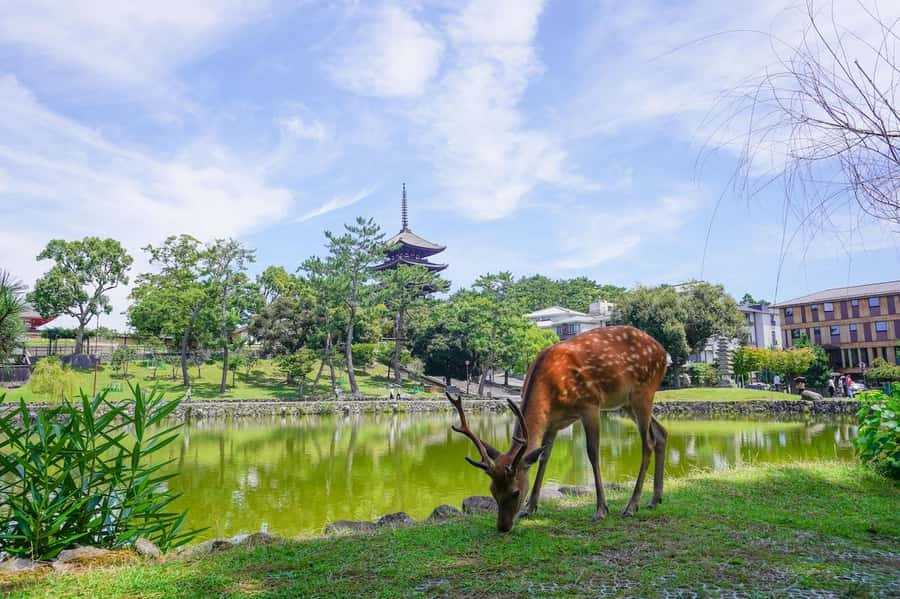
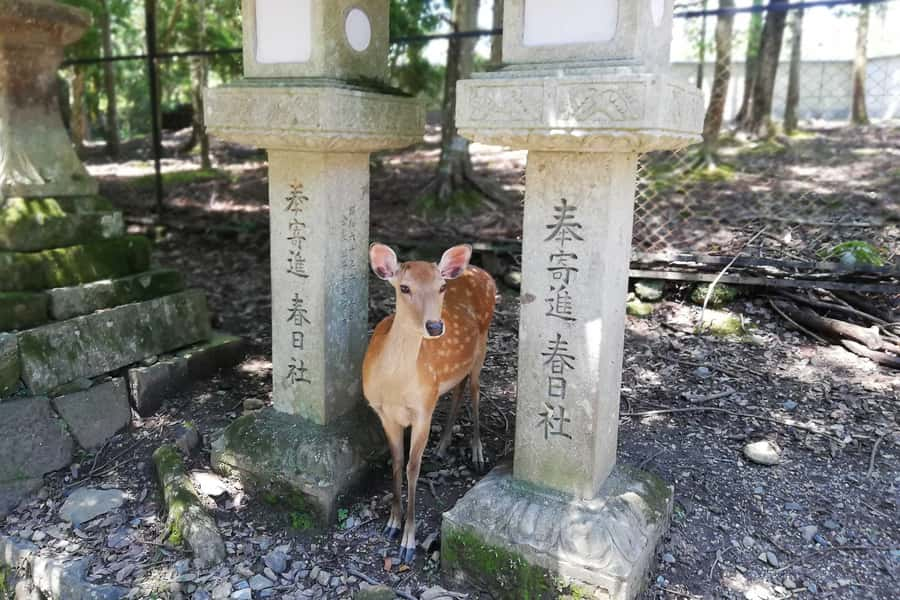
The deer encounter is the tour’s most playful section, but it also comes with a cultural explanation. For more than 1,200 years, local belief has treated the deer as sacred messengers of the gods.
One packet of crackers is included. The deer are accustomed to people and may approach quickly, so follow your guide’s instructions. You may find them polite, especially when you hold your hands out to show that the crackers are gone, but they are still eager animals.
If you plan to remain in Nara Park after the tour, buy extra crackers early. They can sell out around the park, and returning to the original shop may take time. This is a small but useful tip, especially if feeding the deer is one of your main reasons for visiting.
The deer are not the whole story, and this tour handles that well. You get the fun interaction, then return to architecture, ritual, old homes, and local food. The animals become part of Nara’s religious identity rather than the only attraction on the schedule.
Shimononegi-michi and Naramachi’s old homes
The Shimononegi-michi Pathway receives about 20 minutes. This quieter stretch helps break up the larger sights and gives you a better sense of the paths linking the religious precincts.
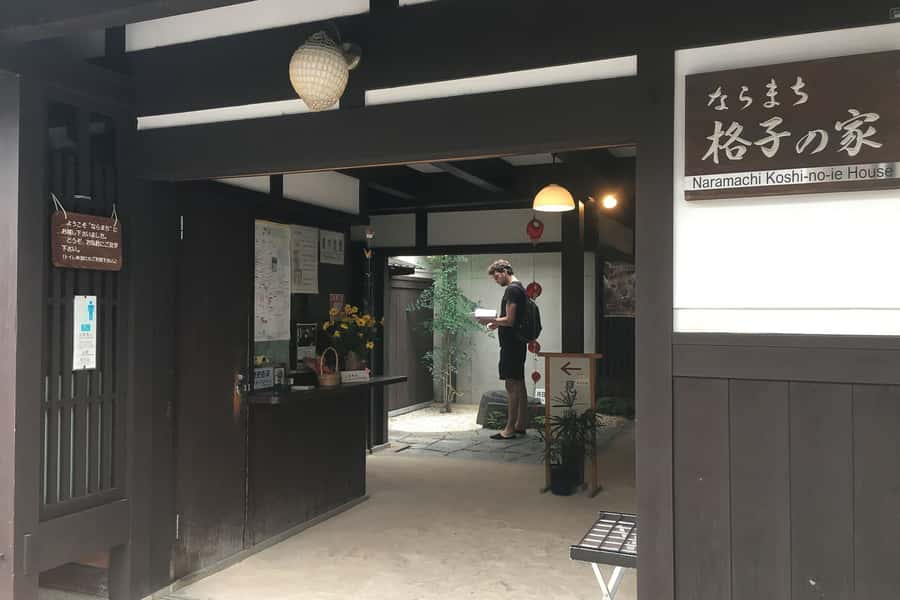
You then spend about 20 minutes at Naramachi Nigiwai-no-le. Here you enter a traditional merchant’s house and see how people in the area lived in the past. The old town is particularly useful for understanding Nara as a lived-in place, not only as a collection of monuments.
Pay attention to the buildings themselves. Guide explanations have covered details such as lattice work on merchant homes and how those features could signal the type of goods sold inside. These observations are easy to miss when you walk through Naramachi alone.
The stop is brief, so it is an introduction rather than a full architectural tour. If old houses, crafts, and neighborhood life interest you most, you may want to return to Naramachi after the organized walk ends.
How much walking should you expect?
This is a genuine walking tour, not a sightseeing loop with long vehicle transfers. You receive a few short breaks, but the route covers several major sites and connecting paths over five hours.
Wear comfortable shoes. Good weather makes the route enjoyable, while heat, rain, or health concerns can change the experience. Tell the local partner in advance if anyone in your group has a particular health issue. The guides have been praised for adjusting the pace, but the distance itself remains part of the tour.
The small-group format helps. Guides such as Matthew have been praised for keeping a pleasant pace, and participants have appreciated having time to ask questions. Still, if you dislike walking or need frequent long rests, this may not be the right way to see Nara.
Is $102 a fair price?
At $102 per person, this is not the cheapest way to see Nara. You are paying for a five-hour English-language guide, entrance fees to the temples and shrine, lunch, and deer crackers.
The value improves if you want structure. You avoid planning the route between Kofuku-ji, Todai-ji, Kasuga Taisha, Naramachi, and the quieter paths. You also receive explanations that are hard to reproduce from signs alone, plus help with customs, photos, temple stamps, and local food.
A self-guided day can cost less, particularly if you already know where to go and are comfortable arranging lunch. This tour makes more sense for a first visit, a compact day trip from Kyoto or Osaka, families, solo visitors who want company, and anyone who wants cultural background along with the major sights.
Private and small-group options are available, but the exact group setup and price can vary. If personal attention matters to you, check the option shown when you book.
Who should book this Nara tour?
I would choose this tour if you have one day in Nara and want the main religious sites without giving up the old-town side of the city. It is also a good match if you want someone to explain the difference between a temple and a shrine, help with local customs, and take a few photos.
Families can benefit from the deer crackers and the variety of stops. Solo visitors may appreciate the company and the chance to have photos taken. The tour also suits curious eaters who want a local lunch included in the plan.
I would think twice if you are vegan, gluten intolerant, uncomfortable with five hours of walking, or hoping for a slow, private exploration of every site. This is a well-packed half-day route, not a lazy stroll.
Cancellation and date changes are free up to 24 hours before the start, subject to availability for rescheduling. That gives you some flexibility, but you still need to arrive at Kintetsu Nara Station on time.
Final call: a strong first visit to Nara
Book this walk if you want Nara’s famous sights placed in cultural context. The strongest parts are the guides, the unhurried small-group rhythm, the contrast between Todai-ji and Kasuga Taisha, and the local lunch.
The deer will probably provide the easiest photographs, but the old merchant home, quiet paths, hill view, and explanations of Japanese religious life give the day more staying power. At $102, it is best value for a first-time visitor who wants a carefully arranged introduction rather than a do-it-yourself checklist.
FAQ
Where does the Nara walking tour start?
It starts in front of the Gyoki Bosatsu statue near Exit 2 or the East Exit of Kintetsu Nara Station. Do not go to JR Nara Station. The guide will hold a board with Magical Trip on it.
How long does the tour last?
The tour lasts five hours. Starting times vary, so check availability for the date you want.
What languages are available?
The live tour guide language is English.
Are entrance fees included?
Yes. Entrance fees for all temples and shrines visited are included.
Is lunch included?
Yes. Lunch is included and uses local Nara vegetables and fresh meat. Extra food and drinks cost more.
Can vegans or people with gluten intolerance join?
The activity is not suitable for vegans or people with gluten intolerance. Vegetarian meals or other dietary requests may be possible if you contact the local partner by the day before the tour.
Do I need to bring anything special?
Wear comfortable walking shoes and arrive 10 minutes early. Bring cash if you want to buy extra snacks, drinks, or more deer crackers after the included packet.
Just added around Japan
- Miyajima Half-day Trip Historical Walking Tour★ 5.0 · 284 reviews
- Hiroshima Walking Tour Why A Bomb was dropped to Hiroshima★ 5.0 · 347 reviews
- Tokyo: Asakusa & Sensoji ー Oldest Temple Walking Tour (2hrs)★ 5.0 · 213 reviews
- Asakusa Senso-ji Temple and Old Tokyo Walking Tour★ 5.0 · 560 reviews
- Asakusa Cultural Walk & Matcha Making Tour★ 5.0 · 245 reviews
- Tokyo: Tsukiji Market Walking Tour & Sushi Cooking Class★ 4.6 · 122 reviews
- Tokyo:Stroll in Old traditional culture towns~Yanaka & Nezu★ 4.9 · 186 reviews
- Tokyo: Shibuya Crossing & Hidden Streets Walking Tour★ 4.8 · 128 reviews
Cultural Walking Tours, compared.

Savannah First Squares Culinary & Cultural Walking Food Tour
Read our review →
Tokyo Tsukiji Fish Market Food and Culture Walking Tour
Read our review →
New Orleans French Quarter, Voodoo and Culture Walking Tour
Read our review →
Southernmost Food & Cultural Walking Tour by Key West Food Tours
Read our review →
Valletta: Street Food and Culture Walking Tour
Read our review →
Lisbon Roots – Small group Food & Culture Walking Tour w/tastings
Read our review →

Browse the lists this tour appears in