
REVIEW · VIENNA
Vienna Historic Center Small Group Walking Tour
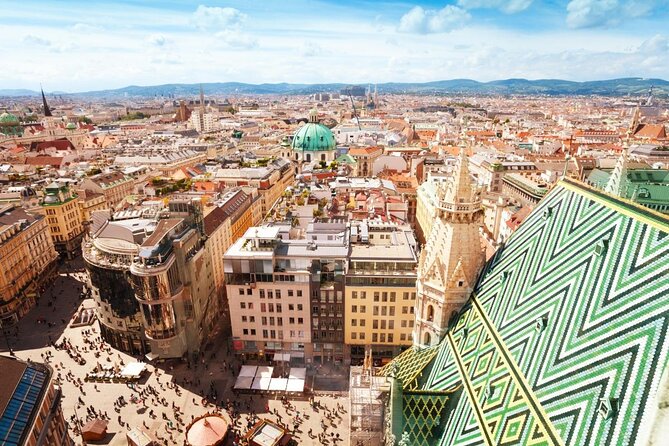
Vienna’s grand center is best understood on foot, and this tour gives you a brisk lesson in how the city fits together. In about two and a half hours, you move from Maria-Theresien-Platz past the Ringstrasse, Hofburg Palace, Volksgarten, Rathaus, and Graben, ending at St. Stephen’s Cathedral.
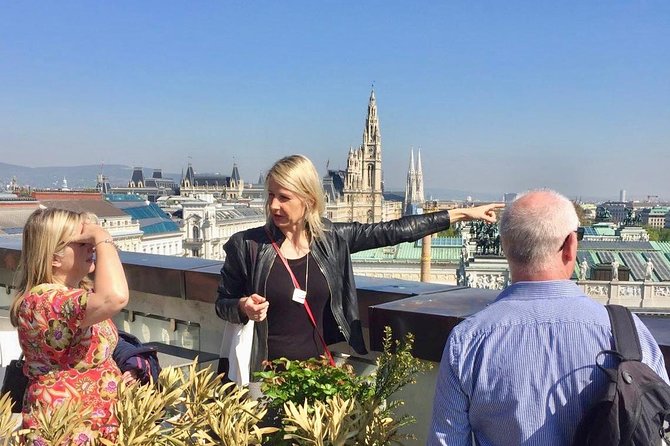
I like the small 15-person limit, which makes it easier to hear the guide and ask questions. I also like the audio devices, since you can keep looking at a palace façade instead of crowding around a guide. Guides such as Dace, Giselle, Gabriela, and Beatrice are praised for adding humor, personal insight, and practical food tips.
The main drawback is simple: this is chiefly an outdoor history walk. You see many buildings from the street, but museum admission is not included, and the route covers a lot of ground. If you want interiors, rides, or hands-on activities, this may feel too much like a moving lecture.
Key points before you book
- A full imperial route in 2.5 hours: See Maria-Theresien-Platz, Ringstrasse, Hofburg Palace, Heldenplatz, Rathaus, Volksgarten, Graben, and St. Stephen’s Cathedral.
- Small group, capped at 15: You get a better chance to hear the guide and ask questions than on a large city tour.
- Mostly outdoor sightseeing: The tour explains buildings, monuments, and public spaces but does not include museum entry.
- Strong guide-led storytelling: Dace, Giselle, Gabriela, Beatrice, and Annelie are among the guides praised for clear explanations, humor, and useful advice.
- A good first-day orientation: The route helps you decide which palaces, museums, cafés, and churches deserve more of your own time.
- Expect serious walking: Comfortable shoes are essential, and the route may reach roughly 14,000 steps.
Why this walk works well on your first day
Vienna can feel grand to the point of confusion. Palaces, museums, churches, parks, and government buildings crowd into a fairly compact center, but their connections are not always clear when you first arrive. This walk gives you a map in your head.
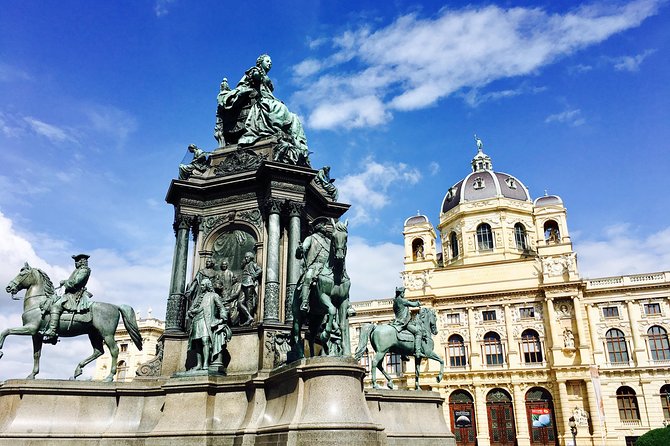
You begin at Maria-Theresien-Platz, where two enormous museums face each other across the square. The Natural History Museum and the Kunsthistorisches Museum have matching façades, and the statue of Maria Theresa presides over the space. You are not entering either museum, but the opening stop gives you a quick lesson in imperial ambition and Vienna’s love of symmetry.
From there, the route moves toward the Ringstrasse. This broad boulevard replaced Vienna’s medieval fortifications in the 19th century. Its buildings were designed in several historical styles, including Classical, Gothic, Renaissance, and Baroque forms. That mixture can look like a grand architectural sampler, but the guide helps explain why it exists and how the boulevard changed the city.
I find this opening especially useful if you are new to Vienna. You are not just checking off buildings. You are learning the difference between the old fortified city and the later imperial capital that grew around it.
More History Walking Tours in Vienna:
- Vienna: World War II Historical Walking Tour
★ 4.8 · 1,772 reviews - Vienna: Essential History Walking Tour
★ 4.9 · 633 reviews - Berlin: Third Reich & Cold War Guided Walking Tour
★ 4.9 · 8,378 reviews
Maria Theresa, Burgtor, and the Ringstrasse
The Maria Theresa monument deserves a closer look. The empress sits at the center, surrounded by figures connected with government, art, science, and military life. Mozart is among the figures represented, linking the monument to Vienna’s musical identity.
The stop is short, so you will hear an explanation rather than receive a long art lecture. That is a good fit for a walking tour. You get enough context to appreciate the monument, then keep moving before the route loses momentum.
Next comes Burgtor, the neoclassical gate built after the Napoleonic Wars. It marks the transition from the Ringstrasse into the imperial palace area. The change in mood is noticeable. The open boulevard gives way to a tighter cluster of courtyards, palace wings, churches, and official buildings.
The route also passes the Parliament Building, the neo-Gothic Rathaus, the Burgtheater, and the University of Vienna. These are exterior visits, so your experience depends on the guide’s ability to bring architecture and events to life. The audio devices help here, especially when traffic or city noise rises around the Ringstrasse.
The Hofburg and Vienna’s imperial center
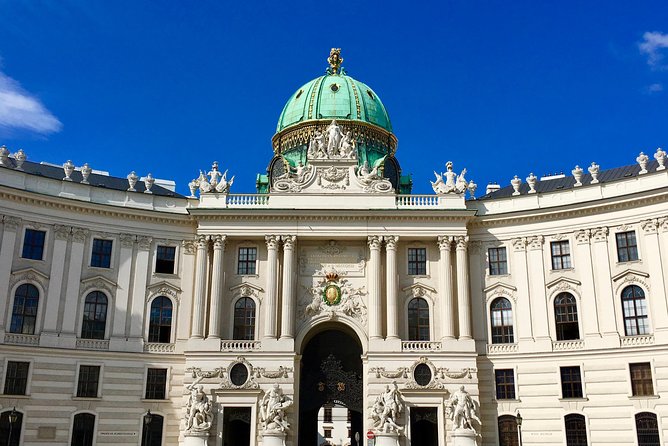
The Hofburg is the heart of the tour. This huge former residence of the Habsburgs developed over centuries, so it is not one tidy palace with a single façade. It is a collection of wings, courtyards, gates, museums, offices, and ceremonial spaces.
You will hear about emperors, empresses, court life, and the palace’s continued role in modern Austria. The route includes Heldenplatz, the broad green square beside the Hofburg, and the New Castle, whose buildings now house museums and other institutions.
The palace area also brings more difficult chapters of Austrian history into view. From the balcony of the New Castle, Adolf Hitler announced Austria’s annexation into Nazi Germany in 1938. A good guide should treat this part of the route with care, placing the event in context rather than reducing it to a dramatic sound bite.
You may also hear about the Habsburg empress Elisabeth, better known as Sisi, and visit places connected with her life. The Austrian National Library and the Baroque Winter Riding School are also part of the palace story. The riding school is associated with the famous Lipizzan horses, though this walking tour does not include a performance.
The major limitation is worth repeating: you do not receive general admission to the Hofburg museums. If you want the Imperial Apartments, Sisi Museum, Austrian National Library, or other interiors, plan a separate visit. The tour can help you choose, but it does not replace one.
Churches, cafés, and the city beyond the palace
St. Michael’s Church is one of the more atmospheric stops. It dates to 1220 and gives the walk a change of scale after the vast Hofburg buildings. You may enter some churches during the walk, though indoor access can depend on the day and local conditions.
The route also touches Vienna’s café culture. One coffee house is associated with writers, composers, architects, painters, psychoanalysts, and political figures who gathered over coffee, cake, and cigars. The tour does not promise a café meal, but guides may offer personal recommendations, and some groups have made a coffee stop at Café Demel.
That advice is useful because Vienna’s cafés are not simply places to grab a drink. They are part of the city’s social and cultural life. Still, timing matters. A 2.5-hour walk has a lot to cover, so any café visit or warm-up stop may vary by guide, weather, and group pace.
You will also pass the office of Austria’s Federal Chancellor, the Palais Ferstel, and the University of Vienna. At the university, the guide connects Vienna’s academic life with figures such as Sigmund Freud and Lise Meitner, the Jewish physicist whose work helped shape modern science.
This section gives the tour some welcome range. It is not only emperors and palace walls. You get politics, religion, science, coffee, music, and city life in the same walk.
More Small-Group Walking Tours in Vienna:
- Amsterdam Anne Frank: Small-Group Walking Tour & Local Guide
★ 4.8 · 12,789 reviews - Boston: Freedom Trail History Small Group Walking Tour
★ 5.0 · 6,450 reviews - Barcelona Tapas and Wine Experience Small-Group Walking Tour
★ 5.0 · 5,804 reviews - Reykjavík Small group Walking Tour – by CityWalk
★ 5.0 · 5,076 reviews
Volksgarten, Burgtheater, and Beethoven
Volksgarten offers a pleasant pause from the stone-heavy center. The park includes the Theseus Temple, a small version of the Hephaisteion in Athens, and has long been tied to Vienna’s music and café culture. Johann Strauss performed waltzes at the Cortisches coffee house in the park.
Nearby, the Burgtheater is one of the city’s major theatrical institutions. The guide explains its place in Vienna’s cultural life, but again, you see it from outside unless the day’s route includes a permitted indoor visit.
The walk also mentions Beethoven’s Pasqualatihaus, a former residence of Ludwig van Beethoven on the old town fortifications. This is one of those stops that will mean more if you already know a little about Beethoven, but even a casual music fan can appreciate how often Vienna’s streets intersect with famous composers.
I like these stops because they keep the tour from becoming a parade of government buildings. Vienna’s identity is tied to music and performance as much as to the Habsburg court.
Freyung, Graben, and St. Stephen’s Cathedral
Freyung is one of the older squares in the center. It feels more intimate than Heldenplatz or Maria-Theresien-Platz, and its smaller scale gives you a better sense of the medieval city beneath the imperial additions.
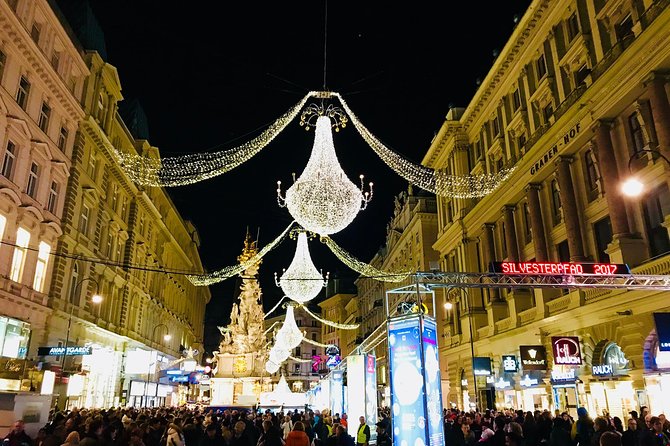
From there, the route reaches Graben and Kohlmarkt, two of Vienna’s most elegant pedestrian streets. These streets are attractive, central, and expensive, with cafés, shops, and grand façades. They are also useful landmarks for navigating on your own after the tour.
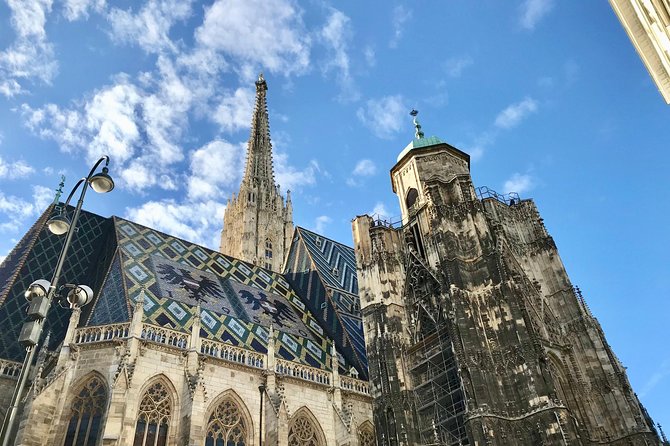
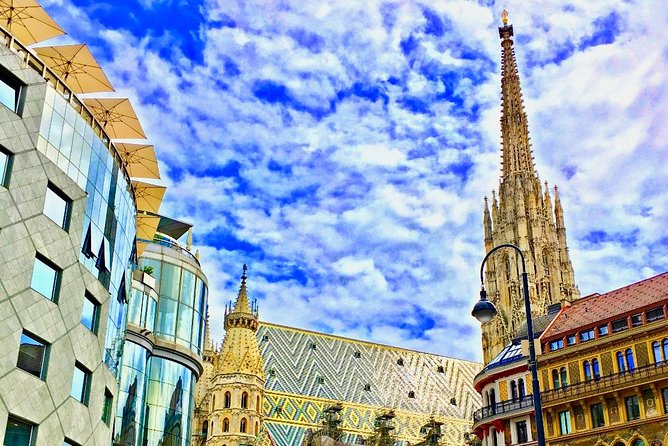
The final approach is Stephansplatz, the square at the center of Vienna’s old town. St. Stephen’s Cathedral dominates the space and serves as the natural ending point. The cathedral is the city’s best-known symbol, so finishing here gives the tour a clear climax rather than leaving you beside an ordinary street.
The tour ends at the cathedral, not back at the starting point. That is convenient if you want to continue sightseeing in the center, visit the cathedral on your own, find lunch, or walk toward another attraction. It also means you should not plan a tight return journey from Maria-Theresien-Platz.
What the guide adds to the experience
The route is good, but the guide makes or breaks this kind of tour. Dace is praised for humor, clear English, personal stories, and unexpected access to parts of buildings. Giselle is noted for strong historical explanations, lively delivery, and practical restaurant and attraction suggestions.
Gabriela is described as attentive to the group, including making warm-up stops on cold days. Beatrice is praised for enthusiasm and clear presentation, while Annelie is noted for interesting facts and anecdotes. The guide assigned to your departure can vary, so you should not book solely around one named person.
The audio devices are a real practical advantage. Vienna’s center can be noisy, and the group may spread out while crossing streets or looking at a façade. You can hear the commentary without standing shoulder to shoulder with the guide.
The teaching style is fairly traditional. You walk, stop, listen, and ask questions. One possible weakness is that the tour offers more explanation than direct participation. You are not sampling food, riding transport, entering several attractions, or taking part in a workshop.
Price, pace, and practical value
At $72.56 per person, this is not Vienna’s cheapest sightseeing option. Its value depends on what you want from a city tour.
You are paying for a certified local guide, a carefully planned route, audio equipment, a small group, and recommendations for cafés, restaurants, food, and local customs. You are not paying for museum tickets or extended interior visits. For a first-time visitor who wants orientation and context, the price can make sense, especially if the walk helps you avoid wasting time on later days.
The small group matters more than it might seem. A maximum of 15 people is large enough for a social outing but small enough for questions. It also makes it easier for the guide to keep the group together in crowded areas around Graben and Stephansplatz.
The pace is brisk. You cover many landmarks in 150 minutes, and one participant counted about 14,000 steps. That figure will vary, but it gives you the right mindset. Wear shoes you trust, leave room for pauses, and do not schedule a major timed attraction immediately afterward.
Choose a start time that fits your energy and the weather. Vienna can be cold and exposed in winter, and the tour runs mainly outdoors. Dress warmly, and remember that poor weather can lead to a changed date or a refund. You can cancel for a full refund up to 24 hours before the start time, but late changes are not accepted.
The tour requires moderate physical fitness and is not recommended if you have walking difficulties. Service animals are allowed, and the meeting point is near public transportation.
Who should book this Vienna walk?
I would choose this tour for a first visit, a short stay, or the first morning of a longer trip. It gives you the city’s basic structure quickly, then leaves you at St. Stephen’s Cathedral in a useful part of town.
It also suits history fans who enjoy political stories, dynasties, architecture, music, and personalities such as Maria Theresa, Sisi, Beethoven, Freud, and Meitner. The guide’s explanations add meaning to buildings you might otherwise photograph and pass.
You should think twice if your priority is entering museums. The tour’s outdoor format is plainly central to the experience. A person who wants the Hofburg interiors, the Art History Museum, or the Lipizzaner performance will need separate tickets and additional time.
I would also avoid placing it after a full day of sightseeing. The route is not technically complicated, but two and a half hours of standing and walking can be tiring, especially in cold weather or crowded streets.
My verdict: a useful first look at Vienna
Book this tour if you want a lively orientation to Vienna’s central landmarks and prefer a guide to explain the people and events behind the façades. The compact route, audio devices, and 15-person limit make it more useful than simply following a map.
Skip it if you expect admission to major sights or an activity-based experience. At this price, the tour earns its value through the guide’s storytelling, organization, and local advice, not through tickets.
For most first-time visitors, I would take it early in the stay, listen for the places you want to revisit, and use the final stop at St. Stephen’s Cathedral as the start of your own afternoon.
FAQ
Where does the Vienna Historic Center Walking Tour begin?
The tour begins at Maria-Theresien-Platz in central Vienna, Austria.
Where does the tour end?
It ends at Stephansplatz, the central square beside St. Stephen’s Cathedral.
How long does the tour last?
The walking tour lasts approximately 2 hours and 30 minutes.
How large is the group?
The group is limited to a maximum of 15 participants.
Is the tour offered in English?
Yes. The tour is offered in English and includes a local certified guide.
Does the tour include museum admission?
No. Museum admission is not included, and the tour does not visit the inside of any museum. Some churches and occasional indoor locations may be visited depending on the day.
Is the tour physically demanding?
You should have moderate physical fitness. The route involves substantial walking, may reach roughly 14,000 steps, and is not recommended for people with walking difficulties.
Can I cancel for a full refund?
Yes. You can cancel at least 24 hours before the experience start time for a full refund. Cancellations or changes made less than 24 hours before the start time are not accepted.
Just added around Vienna
- Vienna: City Center Guided Walking Tour★ 4.8 · 99 reviews
- Vienna: Essential History Walking Tour★ 4.9 · 633 reviews
- Historical Hitler Walking Tour of Vienna★ 5.0 · 887 reviews
- Vienna: Private Walking Tour with a Guide★ 4.7 · 962 reviews
- Vienna for Food Lovers: Cafés, Markets & Austrian Cuisine★ 5.0 · 1,063 reviews
- Vienna: Ghosts and Legends Guided Nighttime Walking Tour★ 4.4 · 1,088 reviews
- Vienna: 1.5-Hour Underground Walking Tour★ 4.9 · 1,146 reviews
- Vienna: Private Walking Tour with a Local★ 4.6 · 1,446 reviews
History Walking Tours, compared.

Berlin’s Best: 2 Hour Walking Tour Third Reich and the Cold War
Read our review →
Third Reich Berlin: Hitler and WWII Walking Tour
Read our review →
New Orleans Garden District History Walking Tour
Read our review →
Cartagena: Historic Center and Getsemaní Shared Walking Tour
Read our review →
Imperial Palace and Shogun Historical Walking Tour
Read our review →Browse the lists this tour appears in