
REVIEW · REYKJAVIK
Reykjavík Small group Walking Tour – by CityWalk
Reykjavík is easy to walk, but it is not always easy to understand. This two-hour route connects the city’s big sights with stories about settlement, politics, fishing, design, and daily life. You begin at Hallgrímskirkja and finish near the lake or Austurvöllur, with the main center laid out in front of you.
I like the small group limit of 12, which makes it easier to ask questions and hear the guide. I also like the practical timing: take it early in your stay, then use the guide’s food and activity suggestions for the rest of your visit. Guides such as Asta, Ari, Martin, Ryan, Edda, and Thomas have been praised for warmth, humor, and clear storytelling.
The main drawback is that two hours can feel short, and the quality depends on the individual guide. One poor experience described long silences and little information, while another noted that the route covered a modest distance. Harpa is also not guaranteed as a formal stop because the route can change.
Key points to know before you book
- Hallgrímskirkja is the natural starting point: You begin beneath Reykjavík’s most recognizable landmark, with time to hear about its architect, Guðjón Samúelsson.
- The route links major sights in the central core: Rainbow Street, Arnarhóll, the National Theatre, Harpa, the Old Harbour, Parliament, and City Hall all fit into the walk.
- Groups are capped at 12 people: That is small enough for questions and a more personal pace.
- Guides add local advice: Several guides have been praised for restaurant, shopping, and activity suggestions that help you plan the rest of your stay.
- Weather matters: The tour runs in all weather, so warm layers and rain protection are not optional in Reykjavík.
- Harpa is not guaranteed as a full stop: You should still end within walking distance, but the exact route may change.
Why this is a useful first look at Reykjavík
This is an orientation walk more than a deep historical tour. You will not enter a long list of museums or spend half an hour at every landmark. Instead, you move through the central streets while the guide explains why each place matters.
That format works well on a first day. Reykjavík’s center is compact, but the sights can feel disconnected when you first arrive. Hallgrímskirkja sits uphill from the old center. Parliament, City Hall, the concert hall, and the harbour each tell a different part of the city’s story. This walk ties them together.
I especially like the way the route mixes famous photo stops with less obvious context. You see the church and Harpa, but you also hear about Iceland’s first settlers at Arnarhóll, the fishing industry at the Old Harbour, and national politics at Alþingishúsið. The result is a useful framework for exploring on your own.
The 4.9 rating from 5,074 reviews and 99 percent recommendation rate suggest a very strong overall record. Still, you should understand the tradeoff: this is a guide-led introduction, not a private custom tour. Most guides appear to bring humor and plenty of information, but the experience can vary with the person leading your group.
More Small-Group Walking Tours in the world:
- Amsterdam Anne Frank: Small-Group Walking Tour & Local Guide
★ 4.8 · 12,789 reviews - Boston: Freedom Trail History Small Group Walking Tour
★ 5.0 · 6,450 reviews - Barcelona Tapas and Wine Experience Small-Group Walking Tour
★ 5.0 · 5,804 reviews
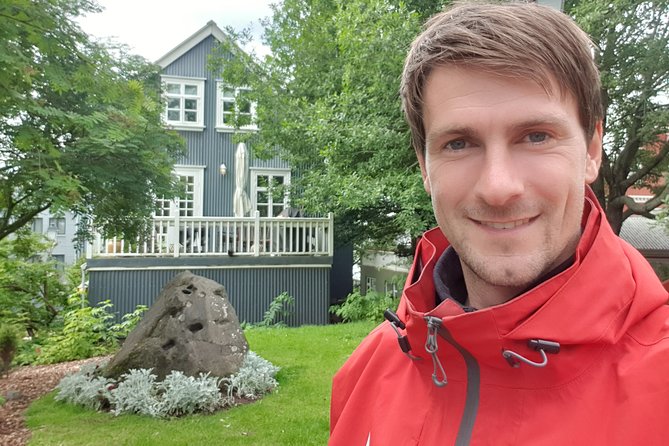
Starting beneath Hallgrímskirkja
The tour begins at Hallgrímstorg 1, in front of Hallgrímskirkja. This is an easy meeting point to recognize, and the church gives you an immediate sense of Reykjavík’s scale. It is large and dramatic without making the surrounding city feel crowded.
The church was designed by Guðjón Samúelsson, one of Iceland’s best-known architects. You spend about 15 minutes here, learning about the building and its place in Reykjavík. The admission listed for the stop is free, though the tour does not promise an interior visit or tower access.
This opening is useful because the church is more than a quick photograph. It helps you get oriented to the city center, and its position makes it a clear reference point for later walks. If you are staying nearby, you can easily return on your own.
A guide who handles this first stop well can set the tone for the entire tour. Asta, Martin, Ari, Ryan, and Thomas have all been praised for making the history easy to follow while adding humor. Thomas was noted for his background in history and clear English, while other guides were praised for warmth and practical advice.
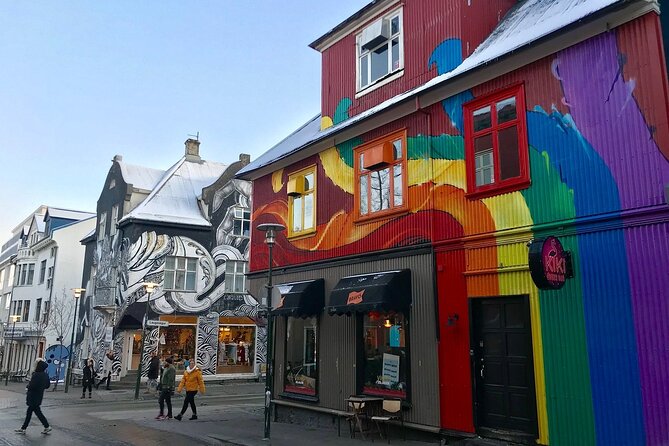
Rainbow Street and the National Theatre
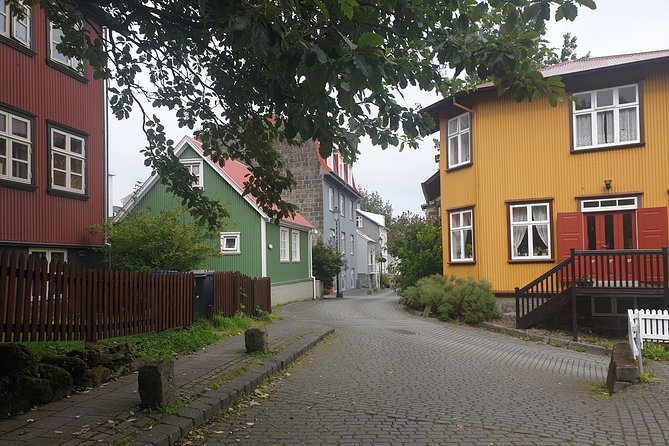
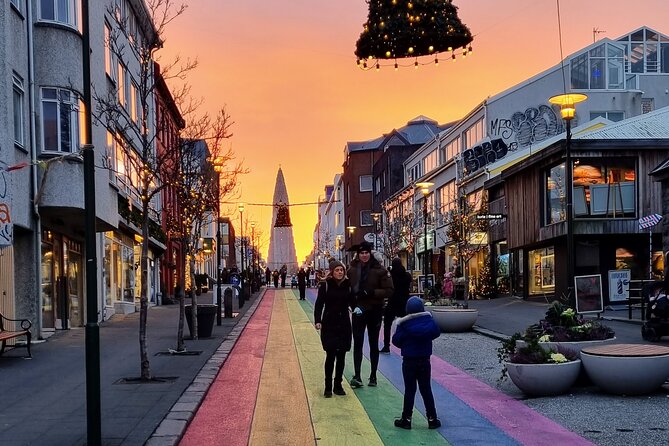
From the church, the route passes along the famous Rainbow Street. This is a natural place for photographs, but it is also a good reminder that central Reykjavík combines ordinary city life with carefully framed attractions.
You pass galleries and shops along the way. The tour does not promise extended shopping time, so think of this as a moving introduction rather than a browsing session. If a gallery or store catches your eye, make a note and return later.
The National Theatre of Iceland comes next. It was also designed by Guðjón Samúelsson, giving you a second chance to notice how his architectural ideas appear in the capital. The stop adds variety to the route, moving beyond church architecture and into Iceland’s cultural life.
This part of the walk may feel light on formal sightseeing if you expect to enter buildings. You are mainly seeing the exteriors and hearing the guide’s explanation. That is also why your guide matters so much here. Strong guides turn a passing building into a useful story. A weaker guide may make this stretch feel like simple walking between landmarks.
Arnarhóll and the first settlers
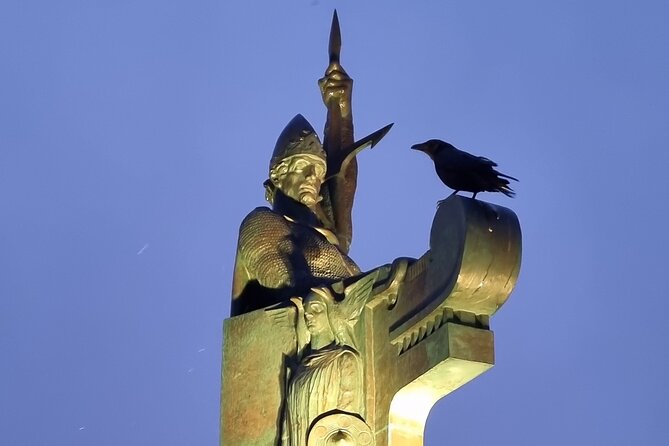
At Arnarhóll, the focus shifts to Iceland’s earliest settlement. The statue shows Ingólfur Arnarson, regarded as one of the first settlers of Iceland. You spend about 10 minutes here.
This stop gives the tour a needed historical anchor. Before hearing about modern Reykjavík, you get a basic sense of how the city connects to Iceland’s settlement story. The guide explains the statue and the first settlers, then links that early period to the country you are seeing today.
Arnarhóll is also a useful urban pause. You are no longer simply looking up at a landmark. You are considering the city as a place shaped by migration, settlement, and national identity.
The quality of this stop depends on how much context your guide adds. Several guides have been praised for combining facts with legendary tales and quirky details. That mix seems to suit the setting. You get history without a lecture that overwhelms a short city walk.
A few more walking tours around the world worth a look
- Magical London: Harry Potter Guided Walking Tour
★ 4.7 · 22,044 reviews - Reykjavik Food Walk – Local Foodie Adventure in Iceland
★ 5.0 · 18,952 reviews - History and Hauntings of Salem Guided Walking Tour
★ 5.0 · 14,564 reviews - New Orleans Premier Ghost, Voodoo and Vampire Walking Tour
★ 4.5 · 12,856 reviews
Harpa and the changing route
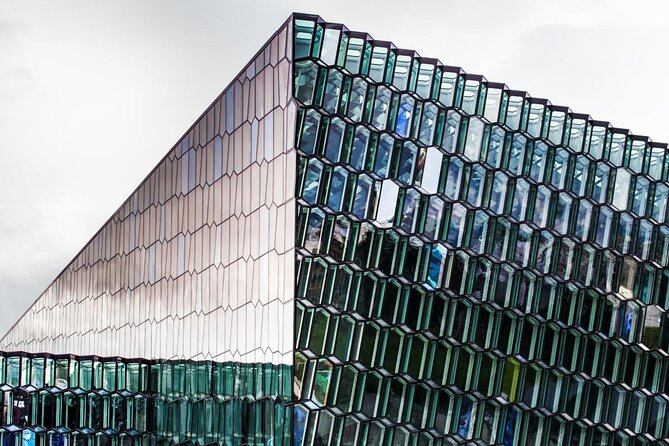
Harpa Concert Hall and Conference Centre is one of the most photogenic stops on the route. Its glass exterior was designed by Ólafur Elíasson, described here as a half-Danish, half-Icelandic architect. The building gives the walk a modern counterpoint to Hallgrímskirkja and the older central streets.
The planned time here is about 10 minutes. That is enough for exterior photographs and a short explanation, but not enough for a detailed architectural visit. The tour provider warns that the route sometimes changes, so Harpa is not guaranteed as a formal stop. The walk does finish within walking distance of Harpa, however.
That qualification matters if Harpa is your main reason for booking. You should treat it as a likely part of the route, not a fixed promise. If you want to see the building carefully, return on your own after the tour and allow more time.
Even with the route change, the location is valuable. Harpa sits close to the old waterfront and the central square, so the tour can still place you in a useful part of Reykjavík. It also helps you see how the city’s public architecture has changed from Samúelsson’s early designs to Elíasson’s modern glass structure.
The Old Harbour and Reykjavík’s working past
At the Old Harbour, the guide explains the history of the harbour and Iceland’s fishing industry. This is one of the most important context stops because Reykjavík can look like a stylish capital built for cafés, galleries, and concerts. The harbour shows the working city underneath that image.
You spend about 10 minutes here. That is a short visit, but it gives you a reason to pay attention to the waterfront later. You may pass through this area for boat trips, restaurants, or views, and the guide helps you understand why the harbour became central to Reykjavík’s growth.
I like this part of the route because it connects the capital to Iceland’s wider economy. Fishing is not just a decorative theme in a museum. It shaped the city’s jobs, trade, and relationship with the sea.
Do not expect an extensive harbour tour. The stop is an overview, not a technical history of Icelandic fishing. The benefit is that it keeps the two-hour walk moving while still giving you a useful point of reference.
Parliament House and the story of Iceland
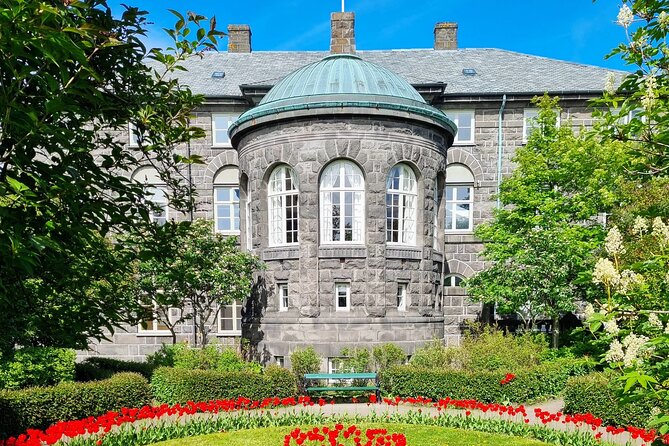
The route then reaches Parliament House, or Alþingishúsið. Here the guide discusses Icelandic history, politics, and the country’s parliamentary tradition. The stop is scheduled for about 10 minutes.
This is where the tour moves from settlement and industry into national identity. You get a basic explanation of how Iceland’s political story connects with the buildings and public spaces around the center.
The setting also helps you read Reykjavík as a capital rather than simply a small northern city. Parliament, the main square, City Hall, and the nearby streets show where civic life happens. If you have already visited the building by yourself, the guide’s explanation can give the exterior more meaning.
Again, the depth depends on the guide and on group questions. The company encourages interaction, and guides often ask if you have further questions or comments. If you want more political or historical detail, ask directly. A quiet group may receive the standard outline, while an engaged group can steer the conversation toward its own interests.
City Hall and the final stop by Tjörnin
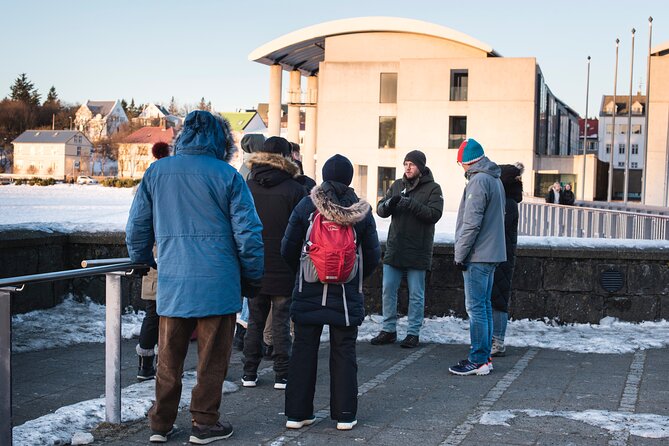
The final listed stop is Reykjavík City Hall, set beside the lake Tjörnin. You spend about 10 minutes here, and the building offers a practical indoor option in poor weather. Inside, you can see a large map of Iceland.
This is a smart ending for a walking tour. After several outdoor stops, you get a chance to warm up when conditions are cold or wet. One guide also took the group into a gallery or similar indoor space during very cold weather, showing how the route can adapt to the day.
The lake adds a calmer finish. It is a good place to take photographs and to understand the city center’s layout. The tour ends either in the main square, Austurvöllur, or near Tjörnin and City Hall.
From there, you can continue exploring on foot. You are also within walking distance of Harpa, which helps make up for the fact that Harpa may not always be a formal stop.
How the guides shape the experience
The most consistent strength is the guide. Many guides have been praised for humor, warmth, clear explanations, and useful suggestions. Names that appear repeatedly include Martin, Ryan, Asta, Edda, Ari, and David, along with guides such as Asi, Barbara, Eric, Thomas, and Vill.
Martin has been praised for mixing history with humor. Ryan has been described as especially helpful for first-time visitors who want food and activity suggestions. Asta has been noted for keeping the group engaged in poor weather, while Edda has been praised for sharing quirky details alongside Icelandic history.
That is a useful sign, but not a guarantee. One poor experience involved a guide who struggled to keep the conversation moving and relied heavily on asking for questions. The company responded by offering a future walk with another guide. The practical lesson is simple: the tour has a strong overall record, but guide style matters.
I would ask questions throughout the walk rather than waiting for a formal question period. Ask about places to eat, where to return for photographs, or what to see after the tour. The guides appear most useful when you treat the walk as a conversation rather than a speech.
Price, pace, weather, and group size
At $53.21 per person, this is not the cheapest way to walk around Reykjavík. You can see many of these streets without paying anything. The value comes from the guide’s explanations, the route planning, and the chance to get useful advice early in your visit.
The group maximum of 12 is important. A larger city walk can leave you standing at the back, especially in wind or near busy streets. A small group makes it easier to hear the guide and ask about your own interests.
The pace is generally described as comfortable, but the walking distance is debated. The official response to one complaint says the group covered more than a mile, while the guest felt the route was closer to 800 to 1,000 meters. Either way, this is not a strenuous hike. You move between central sights, with several short stops.
The tour operates in all weather. Reykjavík can be cold, rainy, and windy even when the forecast looks manageable. Wear layers, waterproof outer clothing, and sturdy shoes. One recommendation from a January outing was to bring a lopi, a traditional Icelandic wool sweater. Indoor stops may help, but you should not depend on them for warmth.
The tour is offered in English, includes a local professional guide, and does not include drinks or hotel pickup and drop-off. Service animals are allowed, public transportation is nearby, and most people can participate.
Who should book this walk
I would choose this tour if you are visiting Reykjavík for the first time, especially if you take it near the start of your trip. It gives you a map in your head, a short history of the city, and a list of places to revisit.
Families can also consider it. One review describes children enjoying the humor and the stops, and the unhurried pace should suit many family groups. The small maximum group size is helpful when children have questions or need to stay close.
You may want something else if you already know central Reykjavík well or prefer long visits inside museums and landmarks. Two hours passes quickly, and you will mostly see exteriors. Harpa is not guaranteed as a stop, and the tour does not include food, drinks, or transport.
Free cancellation is available until 24 hours before the start time. Within 24 hours, the payment is not refunded. The experience also requires a minimum number of participants, so a cancellation by the operator may lead to another date or a full refund.
Should you book CityWalk’s Reykjavík walking tour?
Book it if you want a friendly introduction, a manageable route, and local advice before setting out on your own. The strongest guides appear to make the city much easier to read, from Hallgrímskirkja and Rainbow Street to the harbour and City Hall.
I would schedule it early, dress for bad weather, and arrive ready to ask questions. Think of it as a well-planned orientation with history and humor, not a full study of Reykjavík. At $53.21, it offers fair value when the guide is engaging, and the 12-person limit improves the experience.
If your main goal is Harpa, extensive museum time, or a long architectural tour, choose a different activity or visit those places separately. For most first-time visitors who want to get their bearings quickly, this is a sensible start.
FAQ
Where does the Reykjavík walking tour start?
The tour starts at Hallgrímstorg 1, 101 Reykjavík, Iceland, in front of Hallgrímskirkja.
Where does the tour end?
It ends in the main square, Austurvöllur, or near Lake Tjörnin and Reykjavík City Hall. The ending is also within walking distance of Harpa.
How long does the tour last?
The tour lasts approximately two hours.
Is Harpa Concert Hall guaranteed to be a stop?
No. The route can change, so a formal stop at Harpa is not guaranteed. The tour ends within walking distance of Harpa.
What happens if the weather is cold or rainy?
The tour operates in all weather, so you should dress appropriately. The route may include indoor stops, including City Hall in cold weather.
How far in advance can I cancel?
You can cancel up to 24 hours before the start time for a full refund. Cancellations or changes made less than 24 hours before the start time are not accepted and are not refunded.
Just added around the world
- Fira: Guided Foodie Walking Tour with Tastings★ 4.9 · 474 reviews
- Fez: Guided Walking Tour of the Historic Medina★ 5.0 · 359 reviews
- Fez: Walking Tour in the Ancient City of Fez★ 4.8 · 73 reviews
- Faro: Old Town Guided Walking Food Tour★ 4.9 · 94 reviews
- Feel like a local – Walking Tour in Mykonos Town 2hours★ 4.4 · 77 reviews
- Fes: A Guided Walking Tour Through the Historic Medina★ 4.4 · 97 reviews
- Fez: Half-Day City Private Walking Tour with a Guide★ 4.6 · 114 reviews
- Fanal / Assobiadores – Levada Walk★ 4.6 · 93 reviews
Small-Group Walking Tours, compared.
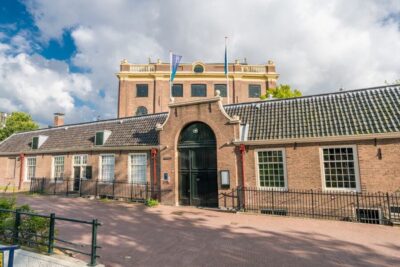
Amsterdam Anne Frank: Small-Group Walking Tour & Local Guide
Read our review →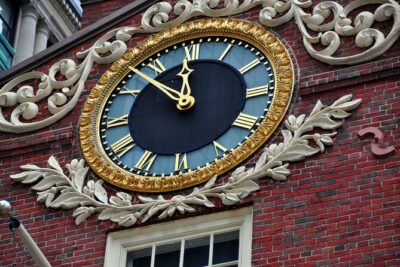
Freedom Trail History Small Group Walking Tour
Read our review →
Barcelona Tapas and Wine Experience Small-Group Walking Tour
Read our review →

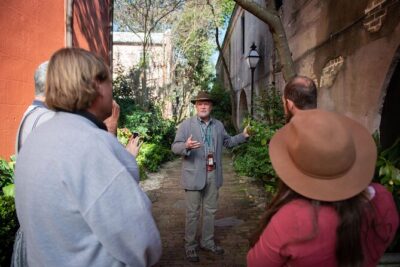
Hidden Alleyways and Historic Sites Small-Group Walking Tour
Read our review →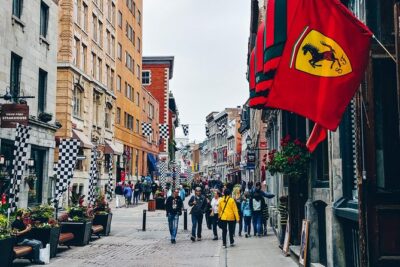
Old Montreal Small-Group Walking Tour | Max 10 | by MTL Detours
Read our review →
Vienna Historic Center Small Group Walking Tour
Read our review →Browse the lists this tour appears in