
REVIEW · VIENNA
Vienna: World War II Historical Walking Tour
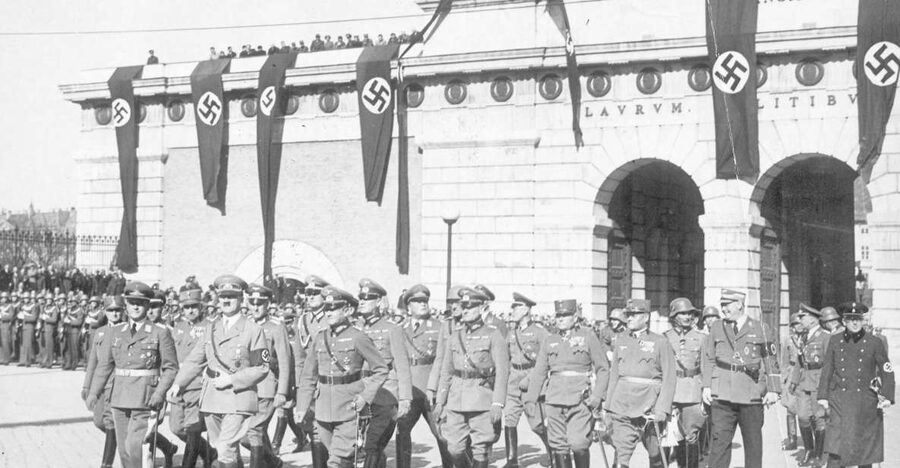
Vienna’s World War II story is not tucked away in one museum. It sits along the grand streets around the Opera House, in the Jewish Quarter, and in the awkward spaces where the city still carries the marks of Nazi rule, bombing, liberation, and occupation. This 2.5-hour walking tour connects those places with the political story behind them, including Hitler’s early years in Vienna and Austria’s annexation by Nazi Germany.
I like two things in particular. First, the route ties historical events to actual streets and buildings, so the subject feels less like a classroom lecture. Second, the guides, including Dieter, Stefan, Michael, Wolfgang, Charles, and Siggi, are praised for clear storytelling, thoughtful answers, and a balanced approach to difficult material. The main consideration is simple: you will walk roughly 4 kilometers, often outdoors, and the tour ends near a different metro stop rather than returning to the Albertina.
Key points to know before booking
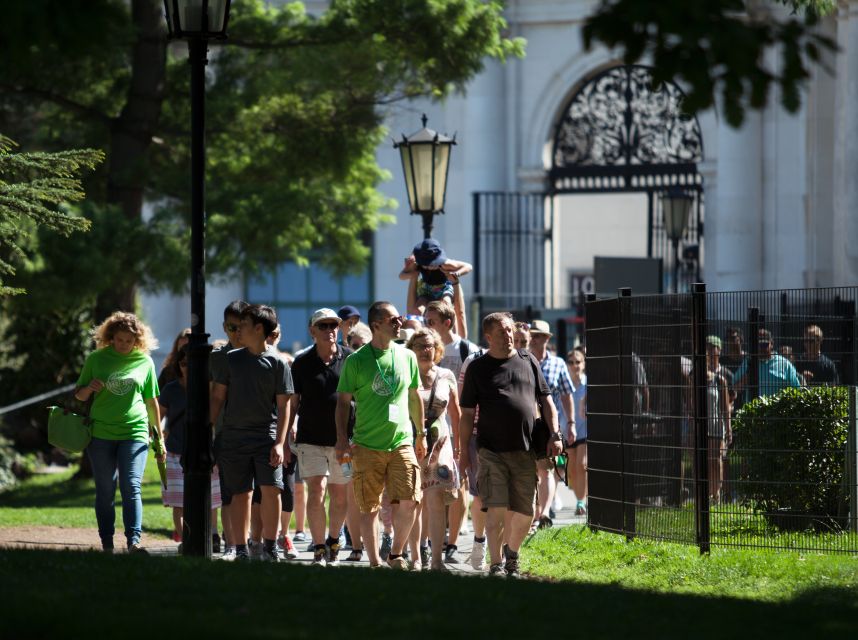
- The tour begins beside Vienna’s Opera House: Meet under the green umbrella at Albrechtsbrunnen, the fountain below the Albertina Museum.
- Hitler’s Vienna comes first: You learn how the city’s social and political climate shaped the young art student before tracing his path toward dictatorship.
- The Jewish story is central: The route includes the only synagogue in Vienna said to have survived the Nazi regime and the city’s solemn Holocaust memorial.
- Postwar Vienna gets proper attention: The tour explains the bombing damage, liberation, and unusual Allied occupation of the city.
- Audio equipment helps: Larger groups use headsets, allowing you to hear the guide while walking through city streets.
- The pace is manageable but not weightless: There are sitting pauses, shelter breaks, and toilet opportunities, but comfortable shoes remain essential.
Starting at the Albertina: Vienna before the catastrophe
You meet in front of the Albertina Museum, beside the Opera House and the Albrechtsbrunnen fountain. Look for the green umbrella. Karlsplatz/Oper is the closest subway stop, making this one of the easier history tours to fit into a first day in Vienna.
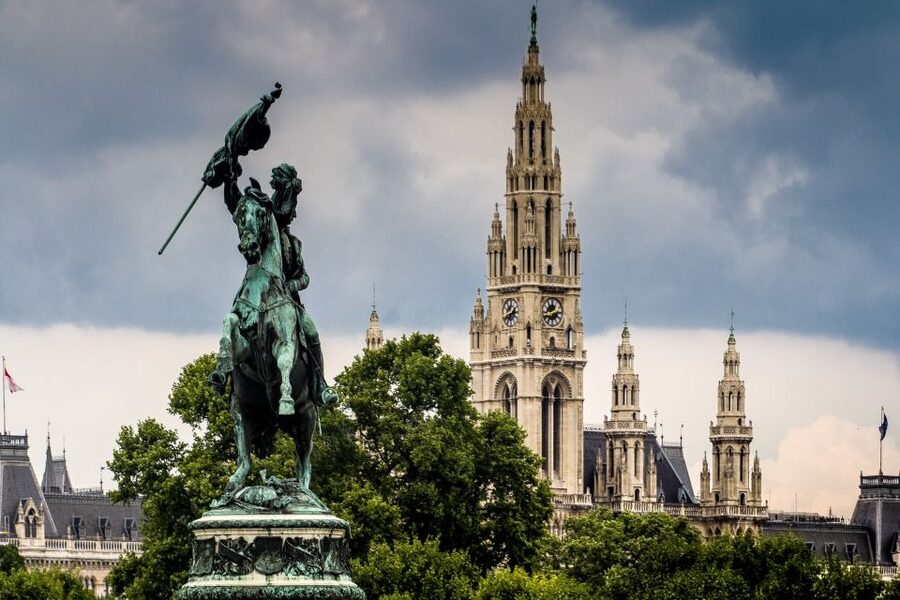
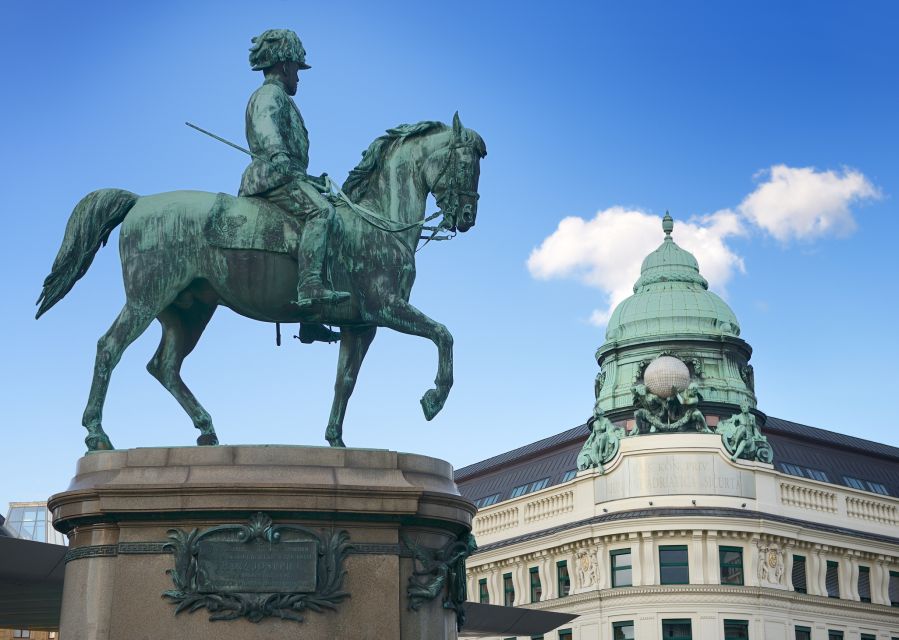
The opening location matters. You are surrounded by the polished imperial center, a part of Vienna many people first associate with music, palaces, and fine art. The guide uses that setting to explain the city in the years before the war, then shifts the focus toward the tensions that shaped modern Austrian politics.
The early part of the tour looks at Hitler’s time in Vienna and the ideas he encountered there. You will hear how the aspiring art student became a political extremist and later a dictator. A good guide does not reduce this to a tidy story about one bad man appearing from nowhere. Instead, the discussion examines the social and political climate around him and asks how prejudice, fear, rivalry, and opportunism helped create room for radical politics.
That wider frame is one of the tour’s strongest features. You are not simply shown a place connected to Hitler and handed a dramatic anecdote. You are encouraged to think about cause, responsibility, and the choices made by institutions and ordinary people.
More History Walking Tours in Vienna:
- Vienna Historic Center Small Group Walking Tour
★ 5.0 · 1,746 reviews - Vienna: Essential History Walking Tour
★ 4.9 · 633 reviews - Berlin: Third Reich & Cold War Guided Walking Tour
★ 4.9 · 8,378 reviews
Following Vienna’s Jewish story
The Jewish history of Vienna is one of the most painful parts of the walk. Before the Nazi period, the city had a large Jewish community. The tour explains how ethnic rivalry and fear took hold, and what happened as Nazi persecution turned neighbors, businesses, and public life against Jewish citizens.
The visit to the surviving synagogue gives this history a physical focus. It is described as the only synagogue in Vienna to survive the Nazi regime, making it an especially important stop. You do not need to enter an attraction for the location to matter. Seeing the building in the middle of the city helps you understand that Jewish life was not separate from Vienna. It was part of the city’s streets, work, culture, and daily routines.
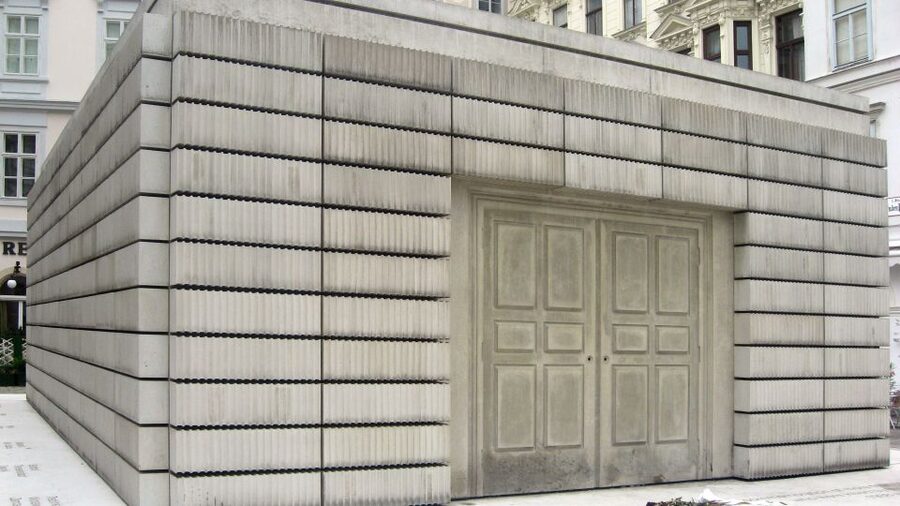
The route also reaches Vienna’s Holocaust memorial, a somber place designed for reflection rather than entertainment. Your guide provides context, but this is a moment when you should expect the tone to quiet. The memorial is not treated as just another photo stop. It gives the tour a clear moral center and keeps the human cost of the period in view.
This section will suit you if you want more than a military account of World War II. Battles and dates matter, but the tour spends time on persecution, public fear, and the destruction of a community. The subject is difficult, and the best guides handle it with care. Charles, Dieter, and other guides are specifically praised for treating complex material with sensitivity while still offering analysis rather than a string of memorized facts.
Seeing the scars left by more than 100,000 bombs
The tour then turns toward the physical impact of war. Vienna was hit by more than 100,000 bombs, and the guide points out the damage and surviving traces that are easy to miss when you are focused on the city’s grand architecture.
This is where a walking tour earns its fee. A book can tell you that Vienna was bombed. On foot, you can connect the information to the city around you and consider how wartime destruction altered streets, buildings, and public spaces. The tour is not an architectural survey, so you should not expect entry to a major museum or a detailed inspection of every damaged structure. Its value comes from connecting visible sites to the larger story.
The pace includes frequent stops rather than one long lecture. Guides have been described as balancing walking, standing, and sitting well. One guide built in warm places to pause during cold weather, while another stopped during heavy rain. That flexibility cannot be guaranteed on every departure, but it gives you a useful sense of how the walk is handled.
Headsets are another practical advantage. On a city street, a guide speaking to a group can easily become hard to hear. The microphone and earpiece system lets you keep some distance from the guide without losing the explanation. It is particularly useful for larger groups, though several people felt it would help even in smaller ones.
Understanding Anschluss, liberation, and Austrian responsibility
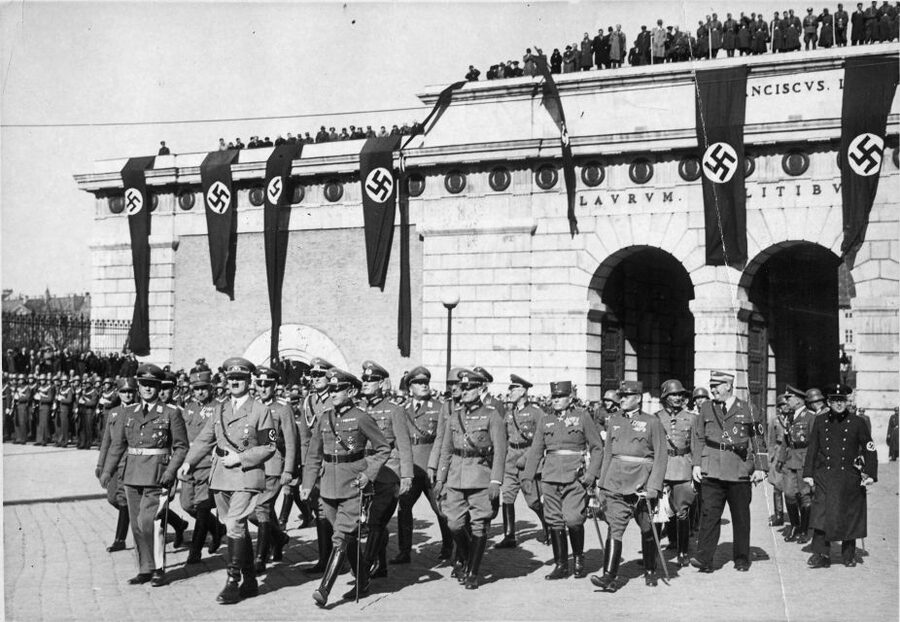
A central theme is Austria’s annexation by Nazi Germany, known as the Anschluss. The tour explains how Vienna experienced that political change and how the city’s population responded. This is important because Austria’s relationship with the Nazi period is not a simple story of a country that merely suffered under outside rule.
The guides aim for an Austrian perspective that includes both pressure and responsibility. That balance was repeatedly praised in the supplied feedback, and it is exactly what you should want from a tour on this subject. A good presentation can explain the political setting without excusing collaboration, persecution, or public participation in Nazi rule.
The route also returns to Hitler’s personal connection with Vienna, but it does not suggest that the city alone explains his later crimes. Instead, the story links his early experiences with broader political forces and then follows the consequences through annexation, war, and liberation.
You might hear personal family accounts or see printed photographs during the walk, depending on your guide. Dieter and Siggi were especially noted for adding photographs and personal stories to clarify what the city looked like during key events. These visual aids can make a major difference when you are standing in a modern street and trying to picture an earlier one.
A few more walking tours around Vienna worth a look
- Vienna: Guided Walking Tour of City Center Highlights
★ 4.7 · 4,989 reviews - Vienna: Vienna Central Cemetery Guided Walking Tour
★ 4.8 · 3,307 reviews - Vienna: Guided Walking Tour of City Highlights & Hidden Gems
★ 4.9 · 2,180 reviews - Vienna: Viennese Underworld Guided Walking Tour
★ 4.7 · 1,865 reviews
The unusual postwar story of a four-power city
Many visitors know that Austria was occupied after the war, but fewer realize how unusual Vienna’s arrangement was. The city was divided among the Allied powers, with the United States, Britain, France, and the Soviet Union managing zones together. The tour explains why Vienna became the only city where the Allied powers operated a shared zone arrangement.
This final section broadens the tour beyond the Nazi years. The war did not end the city’s political complications. Liberation, occupation, division, and the slow return to Austrian self-government shaped Vienna’s postwar identity.
The subject also gives you a different way to look at the city center. Vienna may appear unified and orderly today, but the postwar divisions were once part of daily administration and public life. The guide’s job is to make those invisible borders understandable without turning the final part into a dry political lecture.
If you already know the basic WWII timeline, this is likely where the tour adds the most value. Several participants with a strong background in the period still found the Vienna-centered interpretation useful. You may not learn every military detail, but you will gain a clearer sense of how occupation changed this particular city.
A walking route that asks for sensible preparation
The tour lasts 150 minutes and covers about 4 kilometers, according to one detailed account. That is not a demanding hike, but it is long enough for poor shoes, rain, or cold weather to become a problem.
Wear comfortable walking shoes and bring clothing suited to the forecast. Vienna can offer shelter and indoor pauses along the route, but this remains an outdoor walking tour. There are toilet and snack opportunities during the walk, though you should not treat those stops as guaranteed restaurant breaks or scheduled meal time.
Mobility needs deserve attention. The route has been described as manageable even for someone with mobility issues, thanks to regular pauses and a moderate pace. Still, the experience involves city streets, standing, and continuous movement over several hours. If you have specific mobility concerns, ask the provider before booking rather than assuming every departure will be identical.
The tour does not return to the Albertina. It finishes near a metro stop, which is useful for continuing your sightseeing but means you should note the endpoint before arranging your next activity. I would avoid booking a time-sensitive dinner, train, or museum entry immediately afterward unless you leave a generous buffer.
How the guides shape the experience
The guide makes a large difference on a subject this serious. The tour is offered in English, and the named guides include Dieter, Stefan, Michael, Wolfgang, Charles, Florian, and Siggi. Your booking may not let you choose a specific person, so expect the individual style to vary.
Dieter is praised for his depth of information, classroom skill, and ability to answer questions while keeping the walk moving. Stefan is described as a strong storyteller who adds context and thought-provoking questions. Michael is noted for connecting many parts of the story, from Hitler’s youth through annexation and liberation.
Wolfgang’s approach includes interpretation and evaluation, not only dates and names. Charles is singled out for a passionate yet sensitive presentation of difficult history. Siggi uses photographs and adapts the discussion to the group’s interests. Florian was particularly attentive to weather and the needs of the group.
These details point to a tour that allows questions. You should feel free to ask about Austria’s role, Jewish life in Vienna, the bombing campaign, or the Allied occupation. The experience is best when you treat it as a guided conversation rather than a moving audio recording.
Is $31 a fair price for two and a half hours?
At $31 per person, this is a reasonable price for a specialized walking tour lasting 150 minutes. You are paying for a live English-speaking guide, a carefully connected route, and interpretation that links Hitler’s early years with Vienna’s Jewish community, wartime damage, liberation, and postwar division.
The price does not include attraction entrances or transport. That keeps the cost clear, but it also means you should not expect an interior museum visit or a paid memorial entry to be included. The tour’s value comes from the guide and the city streets themselves.
I think the price works best if you are interested in 20th-century history and want local context rather than a general introduction to Vienna. If your main goal is palace interiors, art, or classical music, another tour will serve you better. If you have already booked several expensive museum visits, this walk offers a relatively low-cost way to understand the city around them.
You can reserve now and pay later, and cancellation is free up to 24 hours before the start time. Those terms are useful when your Vienna schedule is still moving around, but the practical details remain the same: check the starting time, arrive at the green umbrella, and plan for an outdoor walk.
Who should book this Vienna WWII walk?
I would choose this tour early in a Vienna stay if the period interests you. It gives you a framework for later visits to memorials, museums, and historic streets, and it may change what you notice as you move around the center.
It suits adults, students, teachers, and anyone who prefers history connected to real places. The tone is serious but not lifeless. Guides use stories, photographs, questions, and location-specific details to keep the discussion moving.
You should think twice if you dislike walking, need a fully indoor activity, or want a narrow military tour focused on weapons and battle plans. The emphasis is political, social, and human, with special attention to Jewish Vienna and Austria’s conduct during the Nazi period.
Should you book it?
Yes, if you want to understand how Vienna lived through Nazism, bombing, liberation, and occupation rather than simply see famous buildings. The excellent rating of 4.8 from 1,772 ratings reflects the tour’s consistent strengths: clear guides, thoughtful context, useful headsets, and a pace that includes breaks.
Book it with comfortable shoes and a serious frame of mind. The walk will not make the subject easy, but it should make Vienna’s streets more intelligible. For $31, that is a worthwhile addition to a city visit, especially near the start of your stay.
FAQ
Where does the World War II walking tour begin?
It begins in front of the Albertina Museum, beside the Opera House, at Albrechtsbrunnen, the fountain downstairs from the museum. Look for the green umbrella.
Which subway stop is closest to the meeting point?
The closest subway stop is Karlsplatz/Oper.
How long does the tour last?
The tour lasts 150 minutes, or 2.5 hours.
What language is the tour offered in?
The live guided tour is offered in English.
What places are included on the route?
The route includes a synagogue that survived the Nazi regime, Vienna’s Holocaust memorial, sites connected with Hitler’s early years, wartime damage, and locations that help explain the city’s postwar division.
Does the tour include entrance tickets?
No. Entrance fees to attractions are not included. The listed experience consists of the live guide and walking tour.
How much walking is involved?
One detailed account places the total distance at about 4 kilometers. You should expect regular walking, standing, and outdoor stops.
Does the tour return to the Albertina Museum?
No. The tour ends near a metro stop rather than returning to the starting point.
Are headsets provided?
Headsets are used, especially for larger groups, so you can hear the guide clearly while walking through city streets.
Can I cancel for a full refund?
Yes. You can cancel up to 24 hours in advance for a full refund. You can also reserve now and pay later.
Just added around Vienna
- Vienna: City Center Guided Walking Tour★ 4.8 · 99 reviews
- Vienna: Essential History Walking Tour★ 4.9 · 633 reviews
- Historical Hitler Walking Tour of Vienna★ 5.0 · 887 reviews
- Vienna: Private Walking Tour with a Guide★ 4.7 · 962 reviews
- Vienna for Food Lovers: Cafés, Markets & Austrian Cuisine★ 5.0 · 1,063 reviews
- Vienna: Ghosts and Legends Guided Nighttime Walking Tour★ 4.4 · 1,088 reviews
- Vienna: 1.5-Hour Underground Walking Tour★ 4.9 · 1,146 reviews
- Vienna: Private Walking Tour with a Local★ 4.6 · 1,446 reviews
History Walking Tours, compared.


Berlin’s Best: 2 Hour Walking Tour Third Reich and the Cold War
Read our review →
Third Reich Berlin: Hitler and WWII Walking Tour
Read our review →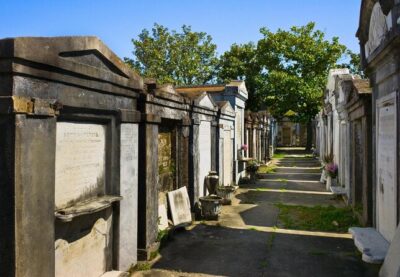
New Orleans Garden District History Walking Tour
Read our review →
Cartagena: Historic Center and Getsemaní Shared Walking Tour
Read our review →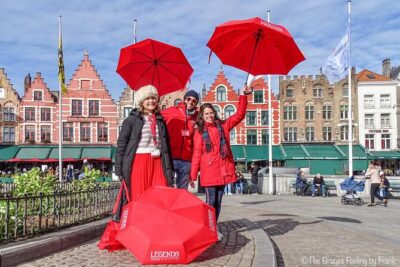
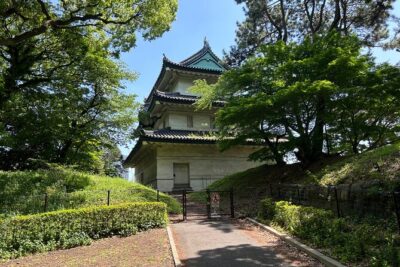
Imperial Palace and Shogun Historical Walking Tour
Read our review →Browse the lists this tour appears in