
REVIEW · BERLIN
Berlin: Third Reich & Cold War Guided Walking Tour
Berlin’s past is not locked away in a museum here. It is under your feet, on ordinary streets, and beside familiar landmarks. This two-hour walk connects the Nazi dictatorship, the destruction of war, the division of Germany, and the fall of the Berlin Wall in one clear route.
I like two things in particular: the tour links major sights instead of treating them as isolated photo stops, and the guides explain difficult events in plain language. The walk to the 200-meter Berlin Wall section and the stories of escape attempts make the Cold War feel close and human.
The main drawback is the pace. You cover about 2 kilometers and a large amount of history in two hours, often outdoors with little time to linger. In cold, wet, or hot weather, the experience depends heavily on good shoes, suitable clothing, and a guide who can keep the story moving.
Key points at a glance
- Starts at Brandenburg Gate: Begin at Berlin’s great symbol of division and reunification, beside the city’s main tourist information point.
- Covers two dark chapters together: The route explains both the Third Reich and the Cold War, showing how one period shaped the next.
- Includes the former Nazi power centers: See Hitler’s bunker site, the former SS and Gestapo headquarters, and the building linked with Göring’s ministry.
- Puts real objects beside the story: Soviet tanks at the Tiergarten war memorial and surviving sections of wall give the history physical weight.
- Ends at Checkpoint Charlie: Finish where American and Soviet tanks once faced each other during the Cold War.
- Good value at $23: For a short introduction to central Berlin’s modern history, the price is low, especially if this is your first visit.
Why this Berlin walk works so well
This is a useful first tour because Berlin’s historic center can be confusing. A grand square may represent Prussian power, Nazi propaganda, wartime destruction, Communist rule, and modern democracy all at once. Without help, you can see the monuments yet miss the connections.
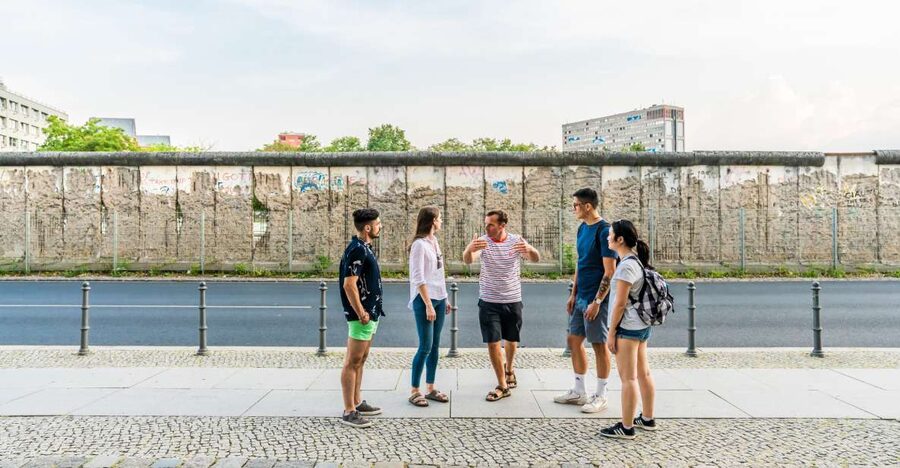
The guide’s job is to make those connections clear. Guides named in recent departures include Rohan, Maria, Maggie, Mikey, Hannah, Jasper, and Jimmy White, though your guide will depend on the date and language option. The strongest guides keep the facts accurate but also add family stories, personal views, humor, and room for questions.
That balance matters. The subject is painful, especially at the Holocaust Memorial and the former Nazi security headquarters. Yet the tour also reaches the peaceful fall of the Berlin Wall and the reunification of Germany. You get tragedy, political failure, courage, and hope without pretending that the past is simple.
At $23 per person, I see this as a sound use of two hours. You are not paying for entry to attractions, since the route is outdoors and admission is not listed. You are paying for orientation, explanation, and the ability to place Berlin’s scattered historic sites in the right order.
More History Walking Tours in Berlin
- Berlin’s Best: 2 Hour Walking Tour Third Reich and the Cold War
★ 5.0 · 5,486 reviews - Third Reich Berlin: Hitler and WWII Walking Tour
★ 5.0 · 3,301 reviews - Berlin: Third Reich, Hitler, and WWII Walking Tour
★ 4.9 · 1,757 reviews
Starting beneath Brandenburg Gate
Meet in front of the tourist information point at Brandenburg Gate, Pariser Platz 1. Look for the guide with the pink umbrella. This is a busy central meeting point, so arrive with enough time to locate the group rather than rushing in at the start.
Brandenburg Gate is the right place to begin. It was built as a royal entrance, later used in Nazi ceremonies, and then left beside the Berlin Wall in a restricted zone during the Cold War. After 1989, it became one of the clearest public symbols of German reunification.
Your guide uses the gate to set the timeline. The value here is not simply taking another photograph. You begin to see how the same monument changed meaning as Germany moved from empire to dictatorship, division, and democracy.
The nearest public transport is Brandenburger Tor station, served by S1, S2, S25, S26, and U5. Buses 100 and 245 also stop nearby. The route ends at Checkpoint Charlie, so you will not return to the starting point.
Reichstag and the fire that changed Germany

The short walk to the Reichstag brings the story into the political center of modern Germany. The building survived the Second World War, decades of division, and later restoration. Today it is the home of the German parliament.
The guide focuses on the 1933 Reichstag Fire, an event that helped Hitler’s government suppress political opposition and tighten its control. This stop is especially useful because it explains how a democracy can be weakened through emergency measures and political fear, not only through open military force.
You will mainly view the building from outside and stop for explanation and photographs. That means this tour does not include a visit to the Reichstag interior or its glass dome. If you want that experience, plan it separately.
Soviet tanks at the Tiergarten memorial
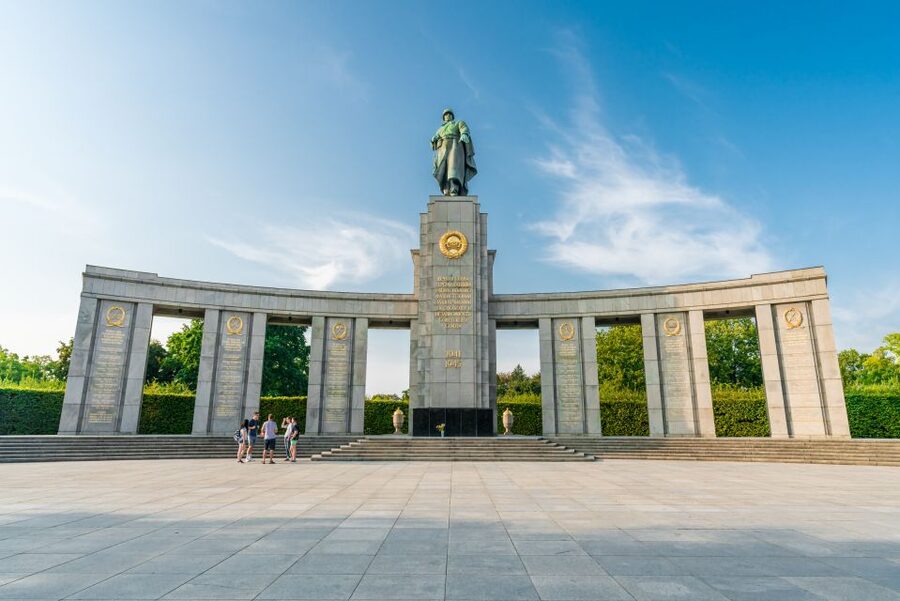
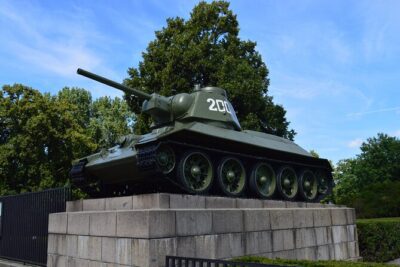
At the Soviet War Memorial in Tiergarten, the story shifts from the rise of Nazi power to the final battle for Berlin. Preserved Red Army tanks and other memorial features make the site more than a plaque and a name.
The memorial honors about 80,000 Soviet soldiers who died during the Battle of Berlin. The guide can explain the scale of the fighting and why this Soviet monument remained in West Berlin during the Cold War.
I like this stop because it gives the war a physical center. You are not just hearing dates. You are looking at military hardware placed in a public memorial, with the political tension of the divided city still part of the site’s meaning.
More History Walking Tours in Germany
- Berlin: Cold War Walking Tour on Berlin Wall Route
★ 4.8 · 437 reviews - Private Walking Tour Berlin Third Reich Hitler and World War II
★ 5.0 · 360 reviews - Berlin: Berlin Wall & East Side Gallery Walking Tour
★ 4.9 · 264 reviews - Cold War, Berlin Wall, Spies and the East Side Gallery
★ 4.8 · 254 reviews
The Holocaust Memorial and the cost of abstraction
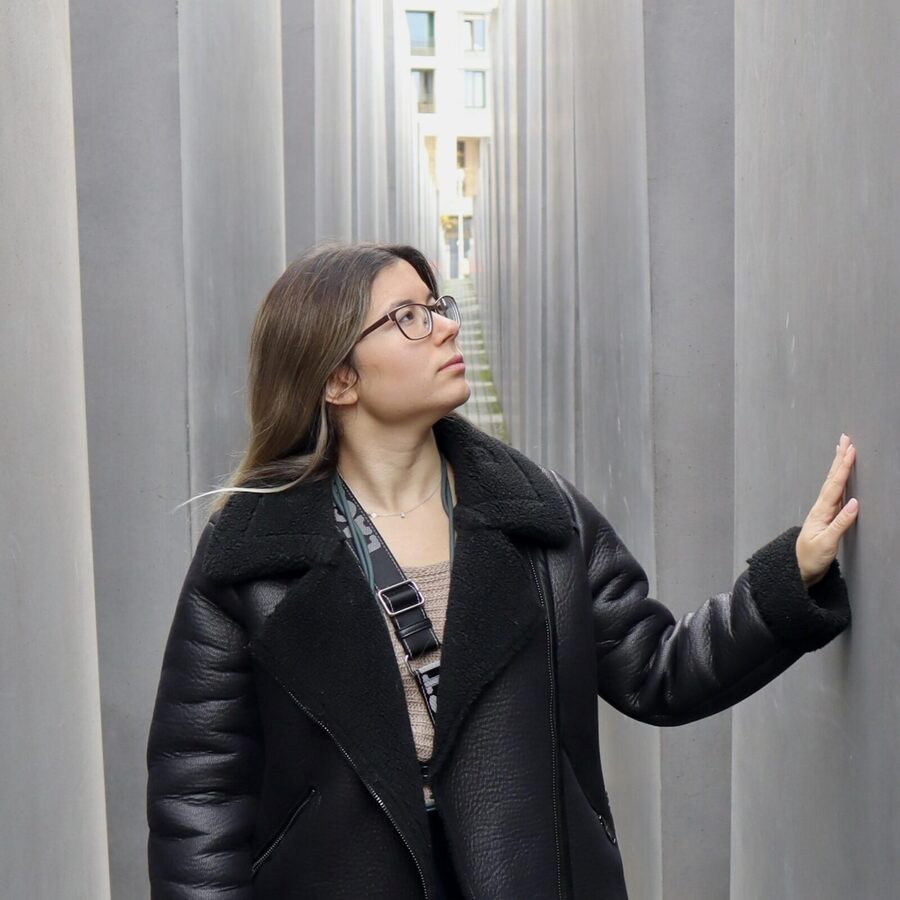
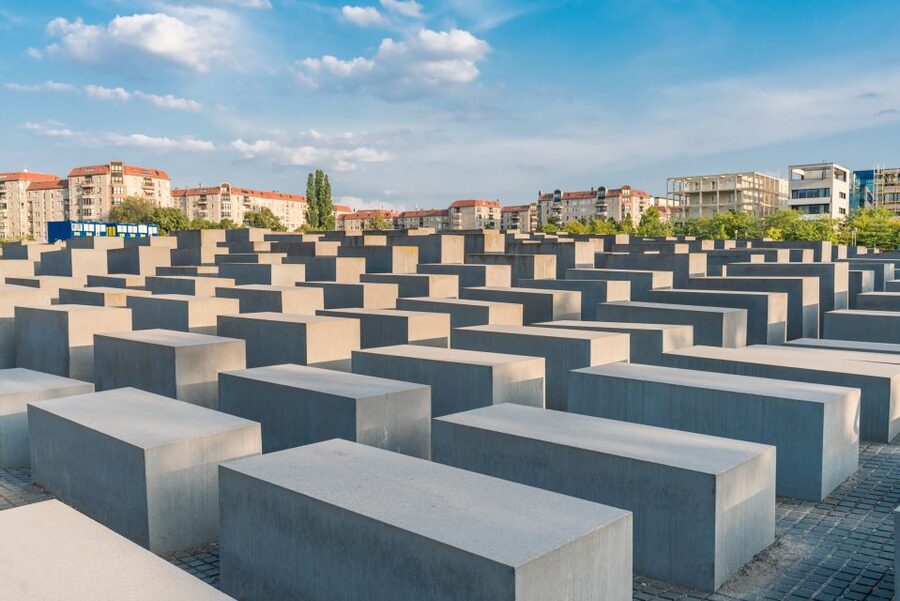
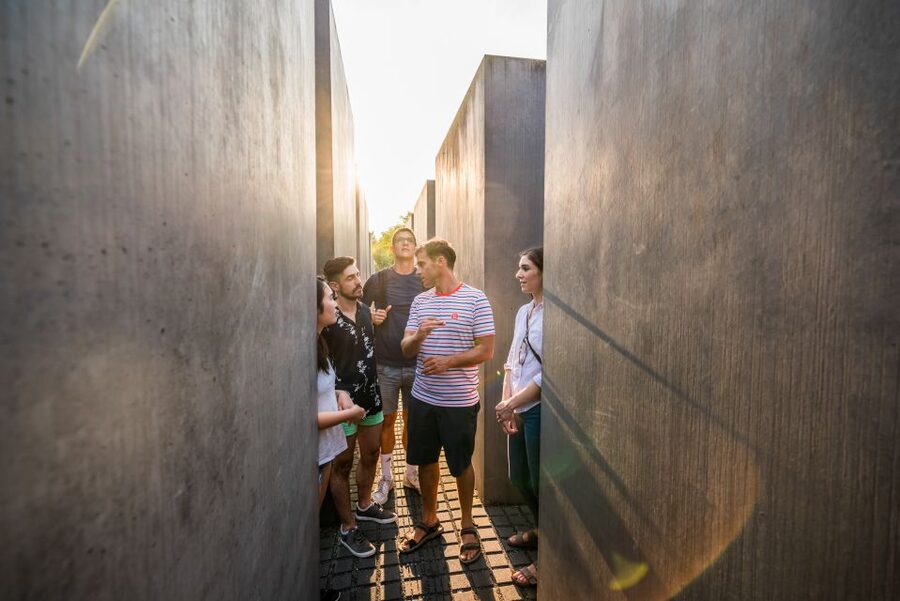
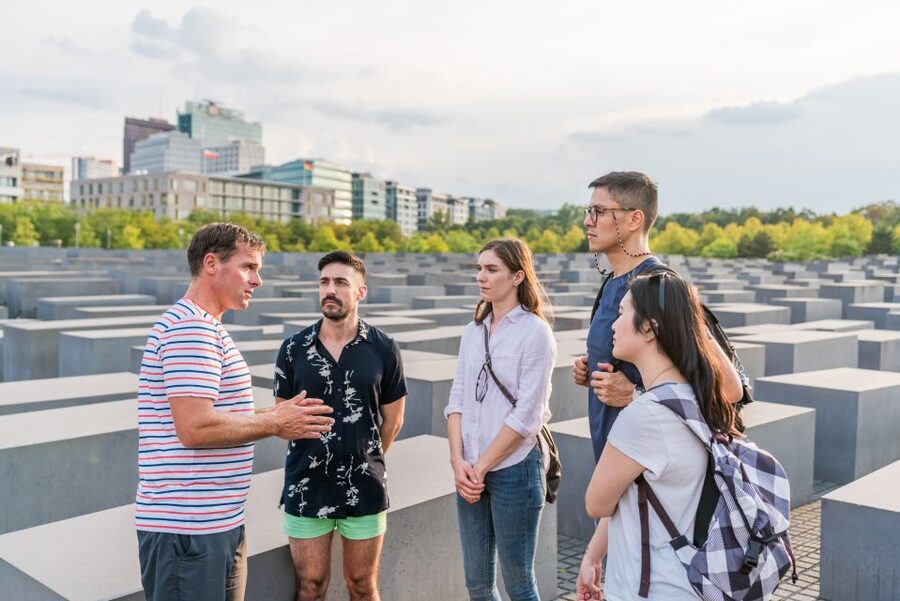
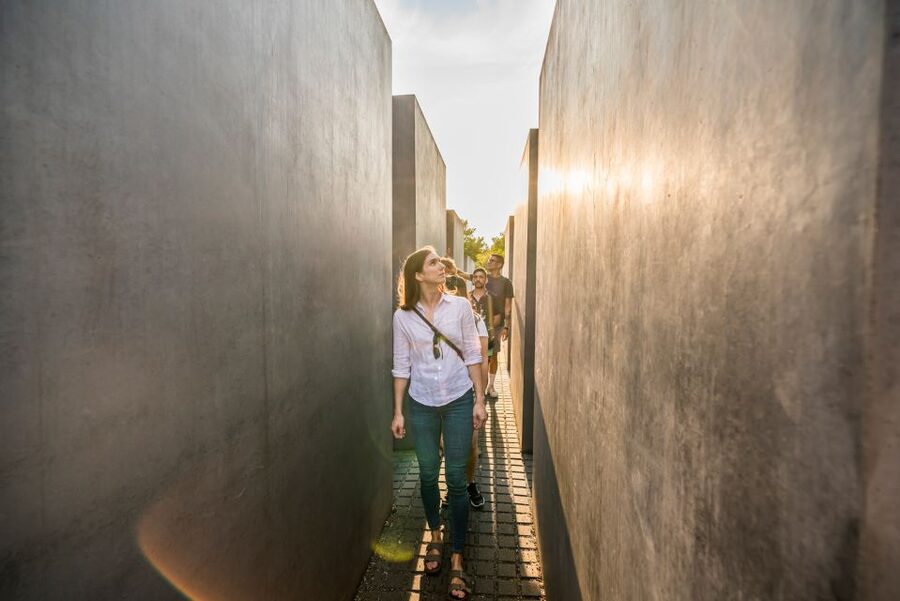
The Memorial to the Murdered Jews of Europe is one of the tour’s most serious stops. Its field of concrete blocks is visually simple, but the shifting ground and changing height of the blocks can leave you feeling disoriented as you walk among them.
Your guide connects the memorial with the murder of six million Jewish people during the Holocaust. This is a place for quiet attention, not a rushed sightseeing pose. The tour provides an introduction, but it cannot replace a longer visit to the nearby Documentation Centre, which you may wish to schedule separately if this subject is central to your trip.
The route only allows a limited stop here, so take note of the location and return later if you want more time. I would not try to squeeze a full museum visit into the walking tour itself.
Hitler’s bunker site and the problem of empty ground
The site of Hitler’s bunker is one of Berlin’s more unusual historic stops. There is no grand ruin to enter and no dramatic underground chamber open for viewing. Instead, you stand at the location where Hitler spent his final days before the collapse of Nazi Germany.
That absence is part of the lesson. The site shows how Berlin has dealt with a place tied to dictatorship, war, and mass murder without turning it into a shrine. The guide explains what happened here and how the end of the Third Reich unfolded.
You will need to use your imagination more at this stop than at the Soviet memorial or the Berlin Wall. Some people may find the plain setting anticlimactic. A good guide makes it worthwhile by explaining the final days in a clear, grounded way.
Detlev-Rohwedder-Haus and the birth of East Germany
The next stop is the Detlev-Rohwedder-Haus, formerly Hermann Göring’s Ministry of Aviation. The building later became associated with the creation of East Germany in 1949.
This is a strong example of how Berlin’s buildings changed political owners without changing location. A ministry built under the Nazi regime later belonged to the government of the German Democratic Republic. That physical continuity helps you understand why Berlin can feel like several political eras layered on the same street.
You will view the building from outside. The interest is in its changing role, not in entering a government office.
Topography of Terror and the machinery of repression
At the Topography of Terror, the tour reaches the former headquarters of the SS and Gestapo. This was one of the places where the Nazi regime organized its system of surveillance, imprisonment, and terror.
The site now includes an open-air exhibition and documentation area. The walking tour offers context and a short guided stop, but you should plan extra time if you want to study the displays. The subject is heavy, and the amount of information can be hard to absorb quickly.
I find this stop important because it moves the story beyond Hitler as a single villain. The guide can show how institutions, officials, and systems helped carry out persecution. That makes the history more useful and more disturbing.
A 200-meter remnant of the Berlin Wall
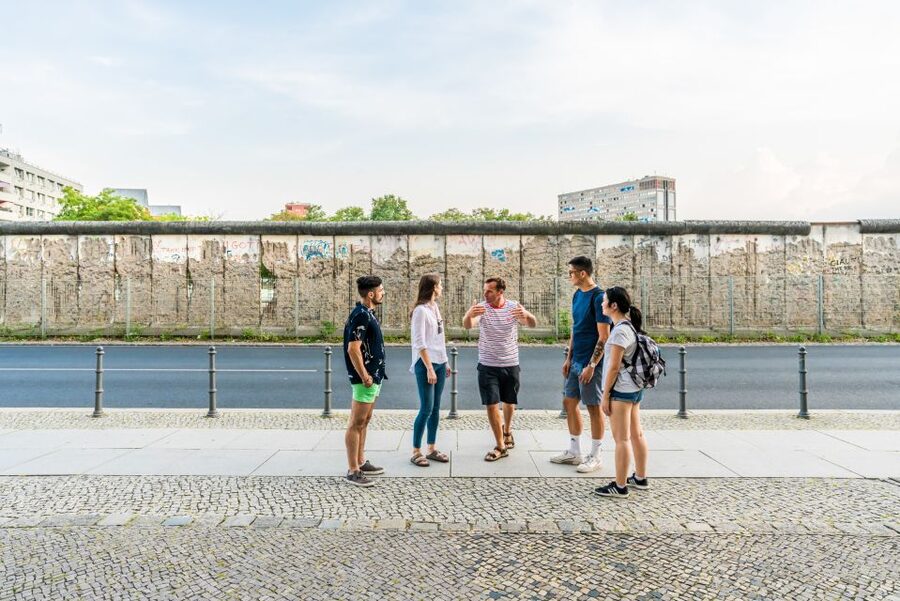
The Berlin Wall section is where the Cold War becomes easiest to picture. You walk beside about 200 meters of surviving wall, a concrete reminder that Berlin was physically split for decades.
Here you hear about people who attempted to escape from East Germany and about the risks involved. The wall was not only a political border. It cut through neighborhoods, separated families, and turned ordinary movement into a dangerous act.
The preserved section is not the only place in Berlin where you can see wall remains, but it fits the route well. By this point, you have learned how the war ended and how Germany divided. The concrete now shows the result of that division.
Allow time for photographs, but listen closely too. The most useful details are often about what the wall meant to people living beside it, not simply how tall or long it was.
Checkpoint Charlie and the road to reunification
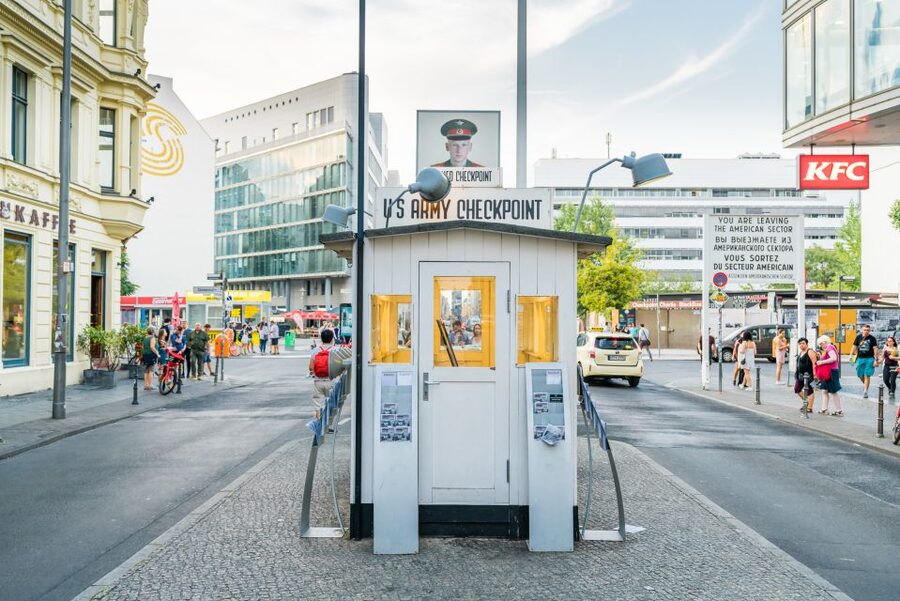
The tour finishes at Checkpoint Charlie, once the best-known crossing point between East and West Berlin. American and Soviet tanks faced one another here during a tense Cold War standoff, creating a moment when a local confrontation could have become an international crisis.
The guide also covers escape attempts and the final period before the wall fell in 1989. This gives the tour a strong ending because the route moves from Nazi dictatorship to divided Europe, then to reunification.
Checkpoint Charlie today is heavily commercialized and surrounded by shops, signs, and photo opportunities. Do not expect the checkpoint to look exactly as it did during the Cold War. The value is in knowing what happened at this intersection and why the name still carries so much weight.
From here, you are well placed to continue exploring central Berlin. Since the tour ends at the checkpoint, you can decide for yourself whether to visit another museum, stop for food, or use public transport to reach another part of the city.
Guide style, pace, and group choices
The guide can make or break this experience. The best examples from recent departures include Maria’s ability to explain difficult subjects in human terms, Mikey’s interactive storytelling, Maggie’s mix of humor and care, and Jimmy White’s willingness to answer questions and offer local suggestions after the walk.
Other guides praised for energy and clear explanations include Rohan, Ariel, Ben, Ciaran, Hannah, Jasper, and Glen. These names are not a promise about your departure, but they show the range of guide styles used on the tour.
The pace is brisk but manageable for most people who are comfortable walking about 2 kilometers. You stop often, yet the tour covers enough ground that it does not feel like a slow museum talk. It may run slightly over two hours, but you should still keep later plans flexible.
Shared group and private formats are available. The language options are German and English, though the shared and private versions may not offer the same language choices. Check carefully before booking.
The tour operates in all weather, including public holidays. Bring comfortable shoes, water, and an umbrella. In winter, warm clothing is essential. A recent departure ran in temperatures around minus 8 degrees Celsius, and another took place on slippery, snowy pavement. The walk can still work in those conditions, but you will enjoy it more if you dress for standing outdoors.
The route is wheelchair accessible. Still, because it is an outdoor walk over city streets and pavements, it is sensible to check current conditions if mobility access is a major concern.
Who should book this walk?
I would choose this tour for a first or second day in Berlin. It gives you a working map of central Berlin and helps you understand why later visits to museums and memorials matter.
It suits you best if you:
- Want the main Third Reich and Cold War sites explained in one outing
- Prefer stories and context to silent sightseeing
- Have only a short time in Berlin
- Are comfortable walking outdoors for two hours
- Want a low-cost introduction before choosing museums to visit in depth
It is less suitable if you want long, quiet time at each memorial or a full museum experience. The tour offers a strong overview, not a specialist seminar. People who already know Berlin’s twentieth-century history may prefer a narrower subject tour.
Should you book the Third Reich and Cold War walk?
At $23, I would book it if you want a clear introduction to Berlin’s modern past. The route connects Brandenburg Gate, the Reichstag, the Soviet memorial, the Holocaust Memorial, Hitler’s bunker site, Topography of Terror, the Berlin Wall, and Checkpoint Charlie without requiring you to plan the sequence yourself.
The strongest reason to go is the guide. A good guide turns distant dates into human choices and shows how the city’s political eras overlap. The main caution is simple: this is a serious outdoor walk, and two hours is not enough for every detail.
Book it early in your stay if you want help getting your bearings. Wear shoes you can walk in, dress for the forecast, and reserve extra time later for the Holocaust Memorial or Topography of Terror if you want a fuller visit. With a 4.9 rating from 8,378 ratings, the experience has a strong record, and its low price makes it an easy choice for most first-time visitors.
FAQ
How long is the Berlin Third Reich and Cold War tour?
The tour lasts two hours and covers approximately 2 kilometers on foot.
Where does the tour begin?
Meet in front of the tourist information point at Brandenburg Gate, Pariser Platz 1. The guide uses a pink umbrella.
Where does the tour finish?
The tour ends at Checkpoint Charlie.
Which languages are available?
The tour is available in English and German. Shared group and private options may not offer the same language choices, so check the selected option before booking.
Is the tour wheelchair accessible?
Yes, the activity is listed as wheelchair accessible.
Does the tour run in bad weather?
Yes. Tours operate in all weather conditions and on public holidays. Bring comfortable shoes, water, and an umbrella, and dress warmly in winter.
Can I cancel the booking?
You can cancel up to 24 hours in advance for a full refund. A reserve-now, pay-later option is also available.
Just added around Berlin
- East Berlin and the Wall: Walking Tour★ 4.9 · 407 reviews
- Cold War, Berlin Wall, Spies and the East Side Gallery★ 4.8 · 254 reviews
- Berlin: walking tour about Charité★ 4.4 · 537 reviews
- Berlin: Walking Tour of the Top 10 Sightseeing Attractions★ 4.7 · 150 reviews
- Berlin: Sightseeing Walking Tour of the Top 20 Attractions★ 4.5 · 196 reviews
- Berlin: The Time of National Socialism Walking Tour★ 5.0 · 220 reviews
- Berlin: Kreuzberg Guided Walking Evening Tour★ 4.7 · 555 reviews
- Berlin : Must-see attractions Walking Tour★ 4.8 · 83 reviews
History Walking Tours, compared.
Berlin’s Best: 2 Hour Walking Tour Third Reich and the Cold War
Read our review →
Third Reich Berlin: Hitler and WWII Walking Tour
Read our review →
New Orleans Garden District History Walking Tour
Read our review →
Cartagena: Historic Center and Getsemaní Shared Walking Tour
Read our review →
Imperial Palace and Shogun Historical Walking Tour
Read our review →
Leipzig: 1.5-Hour Historical Walking Tour in German
Read our review →Browse the lists this tour appears in