
REVIEW · BERLIN
Cold War, Berlin Wall, Spies and the East Side Gallery
The most powerful part of this Cold War Berlin tour is the way it links grand political events to ordinary people. You move from the Palace of Tears, where families said painful goodbyes, to the former death strip and the painted remains of the Berlin Wall. The story is not just about presidents and missiles. It is about choices made under fear.
I like two things here. First, the tour covers a useful sweep of former East Berlin, including Karl Marx Allee, Alexanderplatz, Friedrichshain and the East Side Gallery. Second, the guides make the history personal, often using escape stories, photographs and details about everyday life behind the Iron Curtain. Paul, Xavier, Tina, Klaus and several other guides have earned especially warm praise for clear storytelling and thoughtful answers.
The main drawback is that three hours covers a lot of ground. You use public transport between some stops, and the AB day pass costs extra. If you want long museum visits or quiet time at each memorial, this tour may feel brisk. If you want a strong first understanding of divided Berlin, the pace works well.
Key points at a glance
- The Palace of Tears begins the human story: See the former border crossing at Friedrichstrasse, where visits between East and West often ended in emotional farewells.
- Karl Marx Allee reveals socialist ambition: Walk the immense boulevard and read its monumental buildings as political statements, not just city scenery.
- The former death strip puts escape stories into context: Learn how tunnels, rooftops and other dangerous routes were used by people trying to leave East Germany.
- Alexanderplatz connects daily life with state power: Explore a major East Berlin gathering place surrounded by surviving GDR-era architecture.
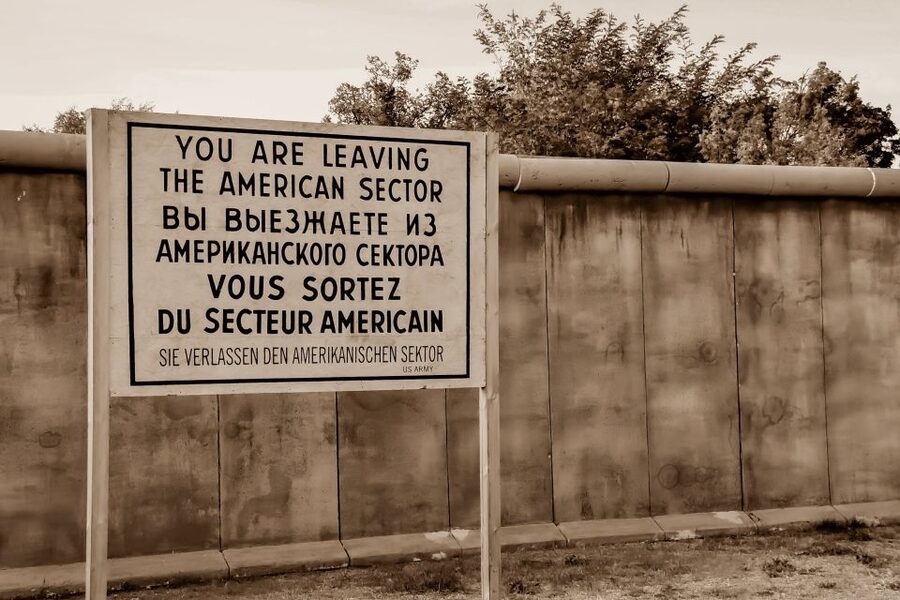
- The East Side Gallery changes the mood: Finish beside a long stretch of painted Wall, transformed from a barrier into an open-air art site.
- The $18 price is strong value: A three-hour guided route with transport between districts costs little, but you need to add the AB day pass and bring comfortable shoes.
A clear route through divided Berlin
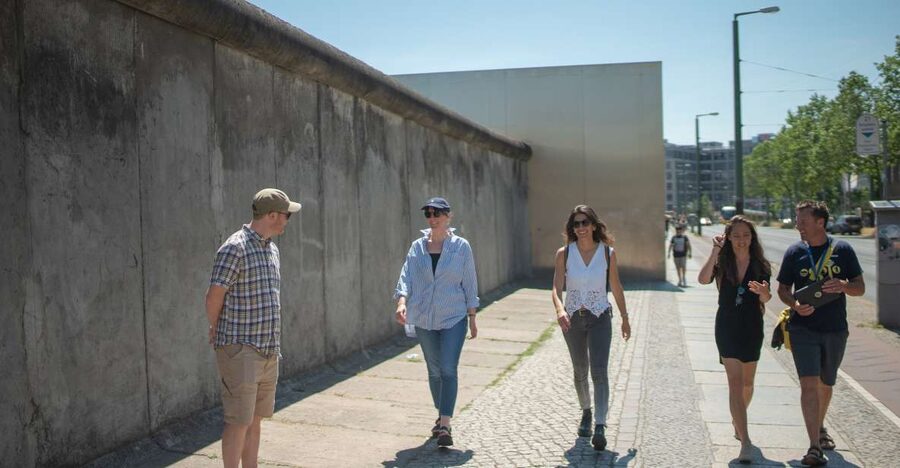
This is a three-hour tour with an English or German guide. It is offered in private or small-group formats, depending on the option you choose. The route begins outside Friedrichstrasse station, on the square beside the Palace of Tears. Look for the guide with a yellow name badge and yellow umbrella.
That meeting point matters. Friedrichstrasse was a major crossing between East and West Berlin, and the Palace of Tears gives the tour an immediate emotional focus. You do not begin with an abstract lecture about the Cold War. You begin at a place where separation happened face to face.
The route then uses Berlin’s public transport system to connect several districts. You need an AB day pass, which is not included in the $18 price. Staff can help you buy one on the day, but I would still plan for this extra cost before you arrive. Keep the ticket handy throughout the tour.
More History Walking Tours in Berlin
- Berlin: Third Reich & Cold War Guided Walking Tour
★ 4.9 · 8,378 reviews - Berlin’s Best: 2 Hour Walking Tour Third Reich and the Cold War
★ 5.0 · 5,486 reviews - Third Reich Berlin: Hitler and WWII Walking Tour
★ 5.0 · 3,301 reviews
The Palace of Tears and the cost of separation
The Tränenpalast, or Palace of Tears, was a departure hall at Friedrichstrasse station. Its name comes from the goodbyes made there, particularly when people from the West had to leave East Berlin after a visit.
The scheduled visit lasts about 20 minutes. That is enough for your guide to explain how the crossing worked and why this modest-looking building carried such heavy meaning. The stop helps you understand the human side of the border before the tour turns to streets, buildings and surviving Wall sections.
I appreciate this opening because it sets the right tone. Berlin’s Cold War story can easily become a parade of dates and slogans. Here, the focus begins with families and uncertainty. You will hear about a system that controlled movement and made an ordinary visit feel like a carefully managed political act.
Alexanderplatz and the public face of East Berlin
A short train ride brings you to Alexanderplatz, one of the best-known public spaces in the former East. The guided visit lasts about 20 minutes.
Alexanderplatz is useful because it shows how East Germany presented itself to its own population and to the outside world. Large civic spaces and GDR-era buildings were meant to project order, strength and modern socialist life. Your guide explains what daily life looked like behind that public image.
The stop also gives the tour a change of scale. At the Palace of Tears, the focus is private and emotional. At Alexanderplatz, the subject becomes public life, state power and mass gatherings. The contrast helps you see how the Cold War shaped both homes and city centers.
Do not expect a long independent break here. The tour is moving from one historical point to another, so your time is mainly spent listening and looking with the guide. That is useful if you are new to Berlin’s Cold War story, but less suitable if you want to browse shops or explore the square at your own speed.
Karl Marx Allee and the 1953 uprising
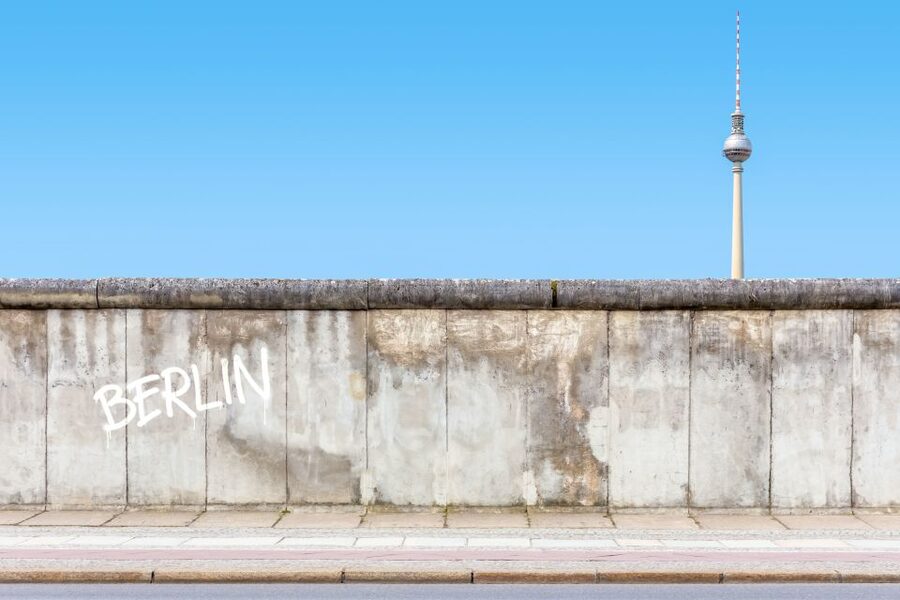
From Alexanderplatz, the route continues along Karl Marx Allee for about 20 minutes. This broad boulevard was designed as a showcase of socialist planning. Its scale is part of the message. The buildings and open spaces were intended to convey confidence, order and a better future under communism.
Your guide also explains the 1953 workers’ uprising, which began in East Berlin and challenged the East German government. The event matters because it exposed the gap between official promises and the real pressures faced by workers. It also showed how quickly the regime could use force when its authority was challenged.
I like this part of the tour because architecture becomes evidence. You are not just told that East Germany used design for propaganda. You see how a boulevard could be planned to shape public life and project political power.
The route is outdoors, and Karl Marx Allee is a long urban stretch rather than a single compact sight. Wear shoes that can handle several hours of walking. The tour continues in most weather, so a waterproof layer or warm clothing is sensible.
More History Walking Tours in Germany
- Berlin: Third Reich, Hitler, and WWII Walking Tour
★ 4.9 · 1,757 reviews - Berlin: Cold War Walking Tour on Berlin Wall Route
★ 4.8 · 437 reviews - Private Walking Tour Berlin Third Reich Hitler and World War II
★ 5.0 · 360 reviews - Berlin: Berlin Wall & East Side Gallery Walking Tour
★ 4.9 · 264 reviews
Friedrichshain and the physical border
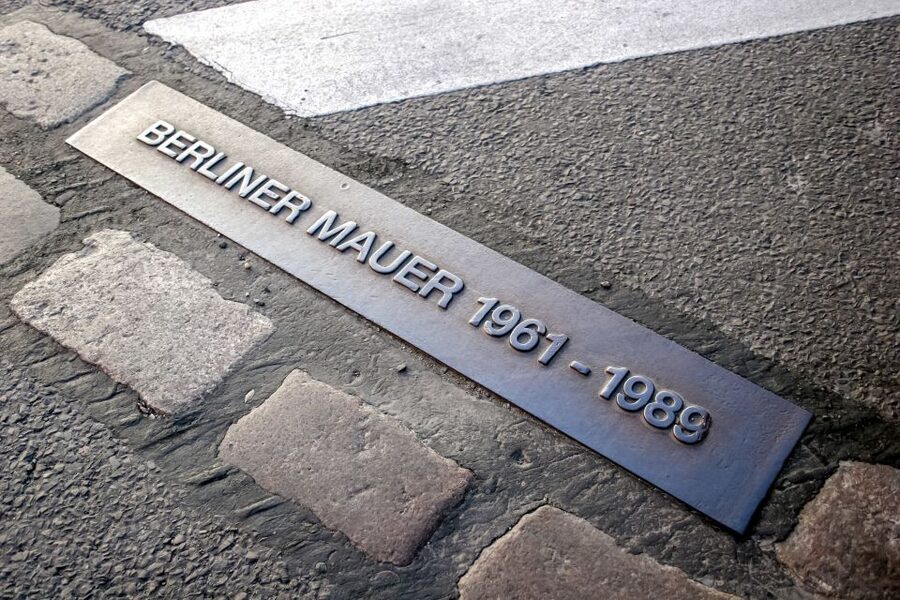
After another short train journey, you reach Friedrichshain for roughly 20 minutes of guided sightseeing. Here the discussion turns more directly to the Berlin Wall, surveillance and the dangers faced by people attempting to escape East Germany.
The tour explains the former death strip area, including the layered border system that made escape so risky. You hear about attempts through tunnels, over rooftops and across guarded areas. These accounts give the Wall a physical reality. It was not merely a line on a map or a slab of concrete used for dramatic photographs.
The strongest guides use these stories to show that escape was not a single kind of act. People made plans in secret, relied on friends and family, and faced the possibility of arrest or worse. The Stasi, East Germany’s secret police, monitored people and informants helped maintain pressure within neighborhoods, workplaces and social circles.
This section is also where the tour’s title makes sense. The focus is not only the Wall itself, but the network of fear around it: surveillance, informers, border guards and the constant need to watch what you said.
Seeing the Berlin Wall beyond the postcard
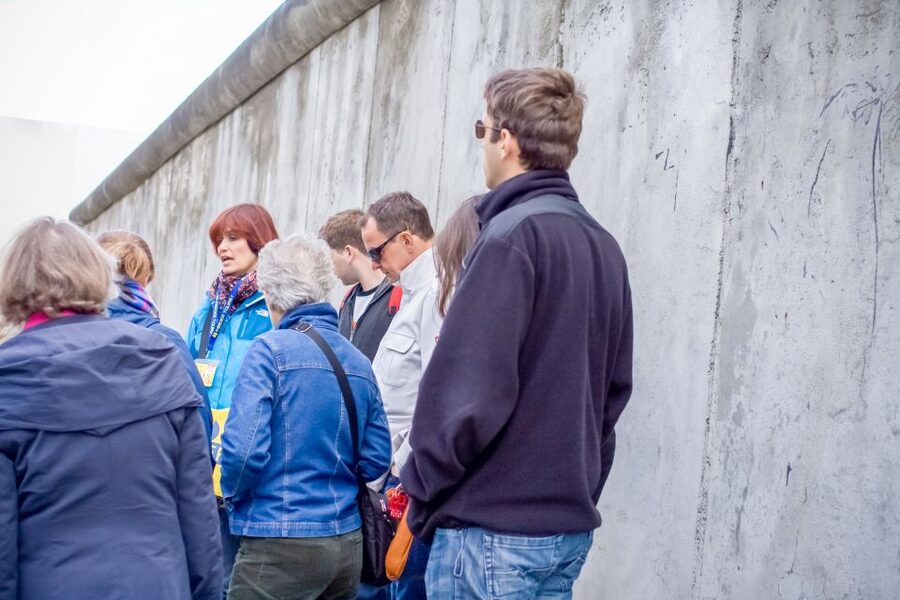
A dedicated Berlin Wall stop lasts about 16 minutes. That may sound short, but a guide can use the time well by pointing out what to look for and explaining how the border operated.
You will see remaining Wall sections and learn about the area beyond the most photographed pieces. The emphasis is on the former barrier as a working border system, not just as an object covered in paint. The guide connects the concrete, the death strip and the escape stories into one picture.
This is one reason I would take the tour before exploring Berlin’s Cold War sites alone. Without context, surviving Wall fragments can look disconnected. With a guide, a strip of pavement, a gap between buildings or a line in the ground can become part of a larger story.
The tour’s most praised guides bring photographs and personal accounts into the explanation. Paul has been singled out for turning complex events into a clear sequence. Xavier has been praised for checking on the group, answering questions and handling bad weather thoughtfully. Guides such as Tina, Klaus, Jim and Nikolai have also been noted for strong storytelling and personal connections to East German life.
East Side Gallery and a changed meaning
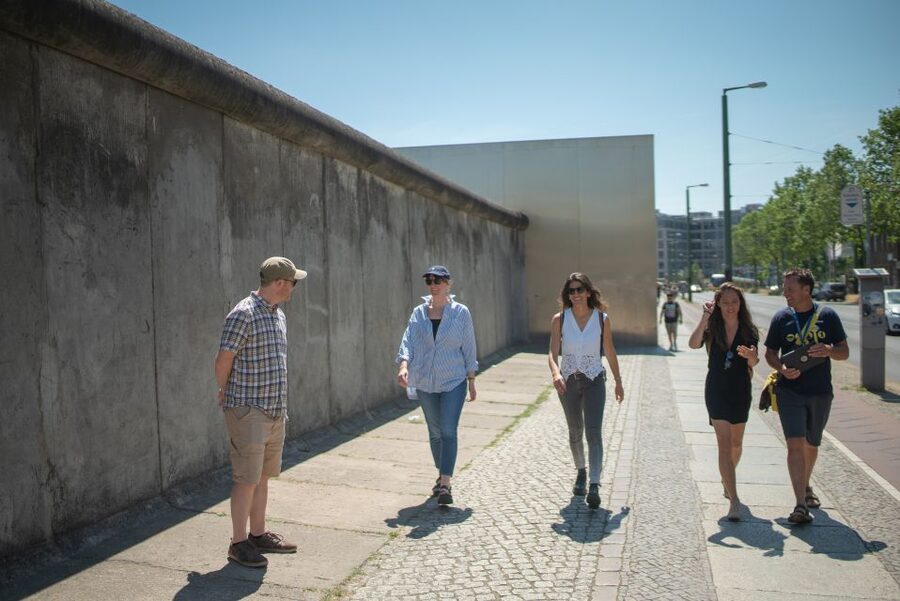
The final major stop is the East Side Gallery, where you walk along a long surviving section of the Berlin Wall covered with murals. The guided visit lasts about 20 minutes.
This is a striking change in mood. Earlier, the Wall represents confinement, separation and danger. Here, it has become a public art site. The paintings cannot erase what the Wall did, but they show how Berliners and artists later reclaimed the surface.
Your guide helps place the artwork in the larger story. The East Side Gallery is not simply a colorful backdrop for photographs. It is part of the city’s argument about memory: the same structure that once blocked movement now invites people to walk beside it and interpret it.
The stop is ideal for photographs, but do not treat it as only a photo break. Listen for the explanation of how the Wall changed from a tool of control into a symbol of political change and reunification.
The published drop-off information includes Bernauer Straße, and some options also describe a return to the Brandenburg Gate area. Check the exact option you book, since the starting and ending points can vary.
What the $18 price really gives you
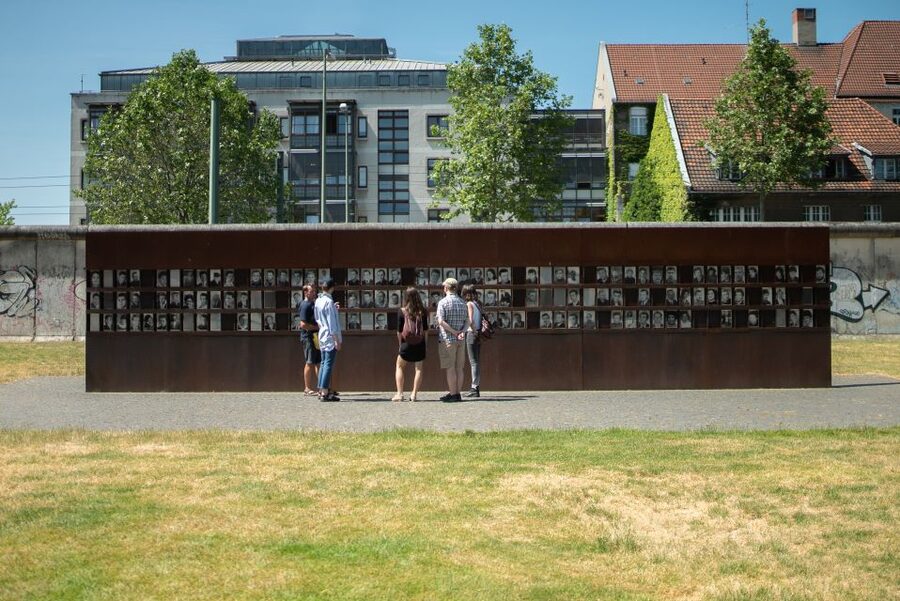
At $18 per person, this is an unusually inexpensive way to get a guided introduction to Cold War Berlin. You receive three hours with a professional guide, a planned route through several former East Berlin districts, and interpretation that would be difficult to assemble quickly on your own.
The value comes from the connections. You are not paying only to see a piece of Wall. You are paying for someone to explain how border crossings, socialist architecture, workers’ protests, surveillance and escape attempts fit together.
The price does not include the AB public transport day pass, food or drinks, or hotel pickup and drop-off. That extra transport cost is important because trains are part of the route. Still, the overall cost remains modest for a three-hour tour.
Private and small-group options are available. A private tour may suit families or groups that want to ask many questions. A small group is likely the better budget choice if you mainly want a clear route and a chance to hear the guide.
The guide makes the difference
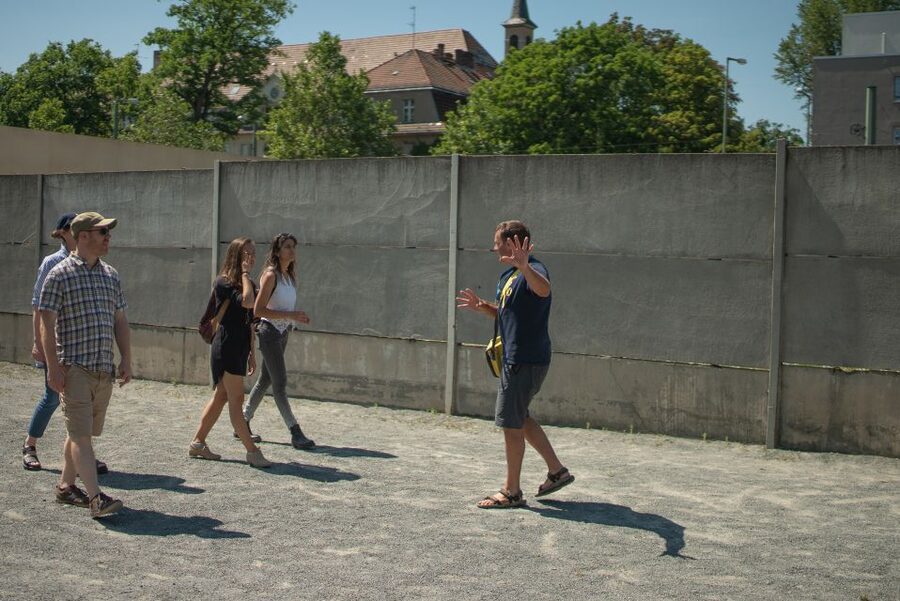
This tour depends heavily on the person leading it. The strongest experiences come from guides who can explain politics without losing the human story.
Paul has been praised for making the causes and consequences of the Cold War easy to explain, even for people arriving with little background. Xavier is known for combining facts, humor and care for the group. Tina has been praised for telling so many stories that the scheduled time can feel short. Klaus brings personal insight and background stories, while Jim has been described as passionate, approachable and especially good at using images.
Other named guides include Jamie G, Maria, Glen, Jasper, Thomas, Eran, Nikolai, Nick and Cian. The exact guide depends on the date and option, so do not book expecting one particular person unless the operator confirms it.
Across the available feedback, the most consistent strengths are storytelling, clear explanations and patient answers. The tour has a 4.8 rating from 254 reviews, with especially strong praise for guides who lived through or grew up near the East German period. One useful caution is that the experience leans more toward the Wall and daily life than toward military strategy or high-level Cold War politics. If you want more discussion of international diplomacy, say so early and ask questions.
Who will enjoy this most?
I would recommend this tour to first-time visitors who want a firm grasp of Berlin’s division in a single morning or afternoon. It also works well for families with older children and teenagers, since escape stories and real locations can make the subject easier to understand than a textbook.
It suits history fans, but you do not need much prior knowledge. One guide has been praised for taking a guest from very little background to a confident understanding of how and why the division developed. That is a good sign for anyone who feels unsure about the subject.
You should choose another format if you want extended time inside museums, a slow photography walk or a tour focused mainly on military and diplomatic events. The route is active, includes public transport and continues in poor weather. Comfortable shoes, practical clothing and a camera are sensible.
The activity is listed as wheelchair accessible, though the route includes walking and train travel. If you have specific mobility needs, confirm the transport details and meeting arrangement before booking.
Should you book it?
Book this tour if you want a compact, low-cost introduction to Berlin’s divided past and prefer stories tied to real streets and surviving places. The Palace of Tears, Karl Marx Allee, the former death strip and East Side Gallery give the tour a strong range.
I would take it early in a Berlin visit. It gives you a framework for later visits to museums and memorials, and it helps you understand why fragments of Wall, broad socialist boulevards and ordinary train stations matter.
Skip it if you dislike group pacing or want to spend long periods at each stop. For most visitors interested in the Berlin Wall, though, the mix of public transport, walking and strong personal storytelling offers very good value for $18, plus the required transport pass.
FAQ
How long does the Cold War Berlin tour last?
The tour lasts three hours.
What places does the tour visit?
The route includes the Palace of Tears, Alexanderplatz, Karl Marx Allee, Friedrichshain, a Berlin Wall site and the East Side Gallery.
Where does the tour begin?
The standard meeting point is outside Friedrichstrasse train station, on the square beside the Palace of Tears. Look for a guide with a yellow name badge and yellow umbrella.
Is public transport included in the price?
No. You need an AB public transport day pass, which is not included. On-site staff can help you purchase one on the day.
Is hotel pickup available?
Pickup is optional for some booking choices. The exact starting and ending arrangements depend on the option selected.
What languages are available?
Live guides are available in English and German.
Is the tour suitable for wheelchair users?
The activity is listed as wheelchair accessible. Because the route includes walking and public transport, confirm your specific needs when booking.
Does the tour run in bad weather?
Yes. The tour proceeds regardless of the weather, so bring weather-appropriate clothing and comfortable shoes.
Can I cancel the booking?
You can cancel up to 24 hours in advance for a full refund. A reserve-now, pay-later option is also available.
More Museum Visits in Berlin
- Acropolis monuments & Parthenon Walking Tour with Optional Acropolis Museum
★ 5.0 · 2,678 reviews - Frida Kahlo VIP [Museum Tickets Included] Walk, Markets & Churros
★ 5.0 · 982 reviews - French Quarter Walking Tour With Comp 1850 House Museum Admission
★ 5.0 · 781 reviews - Sydney Cricket Ground (SCG) and Museum Walking Tour
★ 4.9 · 616 reviews
Just added around Berlin
- East Berlin and the Wall: Walking Tour★ 4.9 · 407 reviews
- Berlin: walking tour about Charité★ 4.4 · 537 reviews
- Berlin: Walking Tour of the Top 10 Sightseeing Attractions★ 4.7 · 150 reviews
- Berlin: Sightseeing Walking Tour of the Top 20 Attractions★ 4.5 · 196 reviews
- Berlin: The Time of National Socialism Walking Tour★ 5.0 · 220 reviews
- Berlin: Kreuzberg Guided Walking Evening Tour★ 4.7 · 555 reviews
- Berlin : Must-see attractions Walking Tour★ 4.8 · 83 reviews
- Berlin: Hitler’s Berlin The Rise & Fall Guided Walking Tour★ 4.9 · 239 reviews
History Walking Tours, compared.

Berlin’s Best: 2 Hour Walking Tour Third Reich and the Cold War
Read our review →
Third Reich Berlin: Hitler and WWII Walking Tour
Read our review →
New Orleans Garden District History Walking Tour
Read our review →
Cartagena: Historic Center and Getsemaní Shared Walking Tour
Read our review →
Imperial Palace and Shogun Historical Walking Tour
Read our review →Browse the lists this tour appears in