
REVIEW · BERLIN
Berlin: Cold War Walking Tour on Berlin Wall Route
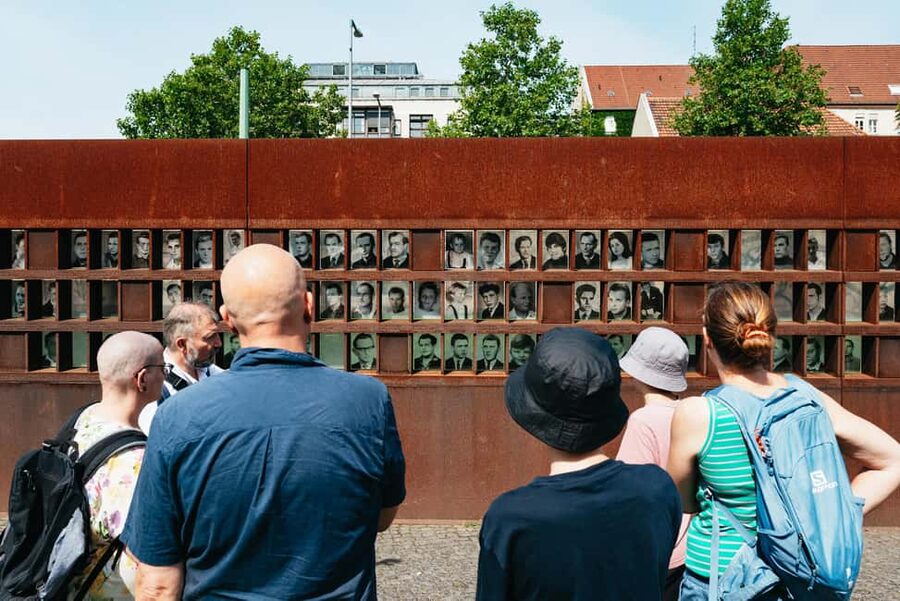
Berlin’s Cold War story becomes far more powerful when you walk the actual Wall route instead of viewing a few painted fragments in the city center. This two-hour tour links Gesundbrunnen with Prenzlauer Berg, the Berlin Wall Memorial, and a lookout over a preserved section of the former border strip. I like the clear historical structure and the human stories of people who risked everything to cross. I also like that the tour finishes in a former GDR neighborhood with cafes and bars nearby.
The main consideration is pace. Two hours is enough for a strong introduction, but not enough to explore every memorial display or pause at each site for long. The exact meeting point can vary by booking option, so check your confirmation carefully.
Key points to know before booking
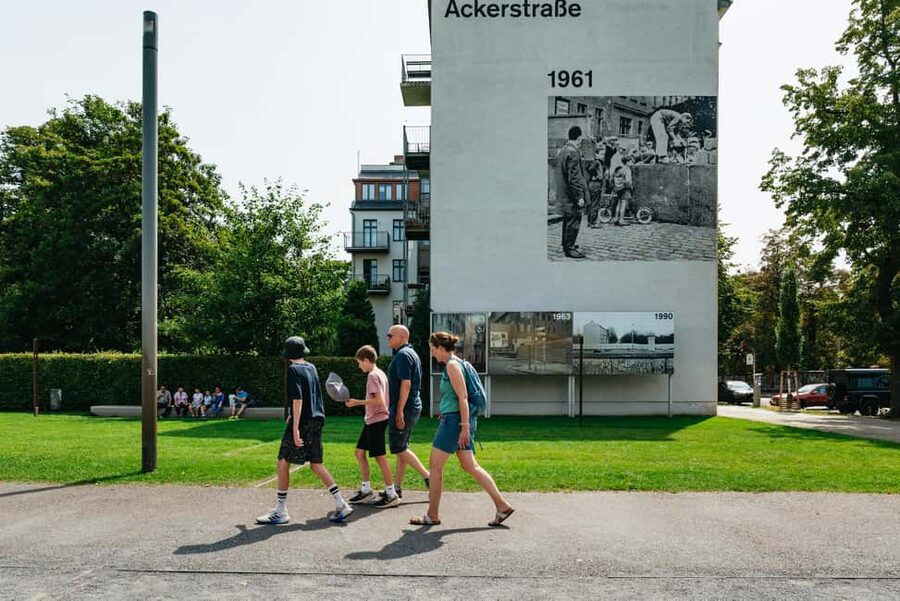
- The route follows the former Wall from Gesundbrunnen to Prenzlauer Berg, giving the tour a real sense of place rather than treating the Wall as an isolated monument.
- The Berlin Wall Memorial is the central stop, with a lookout tower and preserved border-strip area that help you understand how the barrier worked.
- The guide adds context to the locations, connecting the Wall’s construction in 1961 with the events that led to its collapse in November 1989.
- The focus includes personal courage, with stories about people who tried to escape or resist the restrictions of divided Berlin.
- You can book a German or English tour, with private and small-group formats available.
- The $26 price is reasonable for a live two-hour history walk, especially if you value explanation more than simply seeing free public sites.
Following the Berlin Wall from Gesundbrunnen
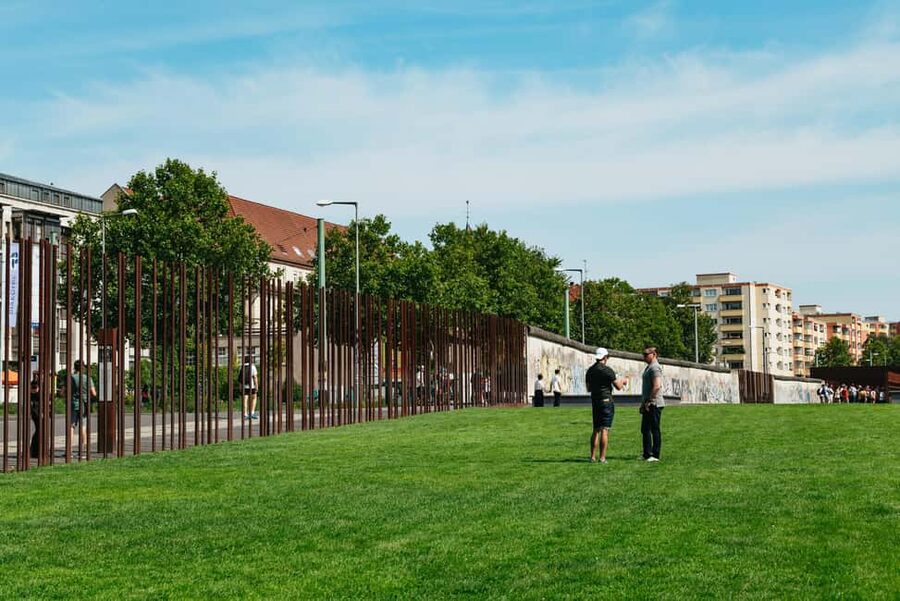
The tour begins along the former Wall route in or around Gesundbrunnen, depending on the option you choose. This matters because Berlin’s Wall story is easier to understand when you move through the city in the same direction as the old border rather than jumping between unrelated landmarks.
Your guide sets the scene for divided Berlin, beginning with the Wall’s construction in 1961. The point is not just to memorize dates. You learn how the barrier reshaped daily life, separated neighborhoods, and turned ordinary streets into guarded border zones.
I like this walking format because the city itself becomes part of the explanation. A street, railway line, open patch of ground, or remaining section of wall can show how close the border once came to normal homes and public life. You are not only looking at a historic object. You are trying to picture how the city functioned when movement between East and West was tightly controlled.
The route also gives your guide room to explain the Wall’s changing role over time. The tour covers the period from 1961 through the fall of the Wall in November 1989, so you get both the long Cold War period and the rapid events that brought it to an end.
More History Walking Tours in Berlin
- Berlin: Third Reich & Cold War Guided Walking Tour
★ 4.9 · 8,378 reviews - Berlin’s Best: 2 Hour Walking Tour Third Reich and the Cold War
★ 5.0 · 5,486 reviews - Third Reich Berlin: Hitler and WWII Walking Tour
★ 5.0 · 3,301 reviews
Seeing the Berlin Wall Memorial from above
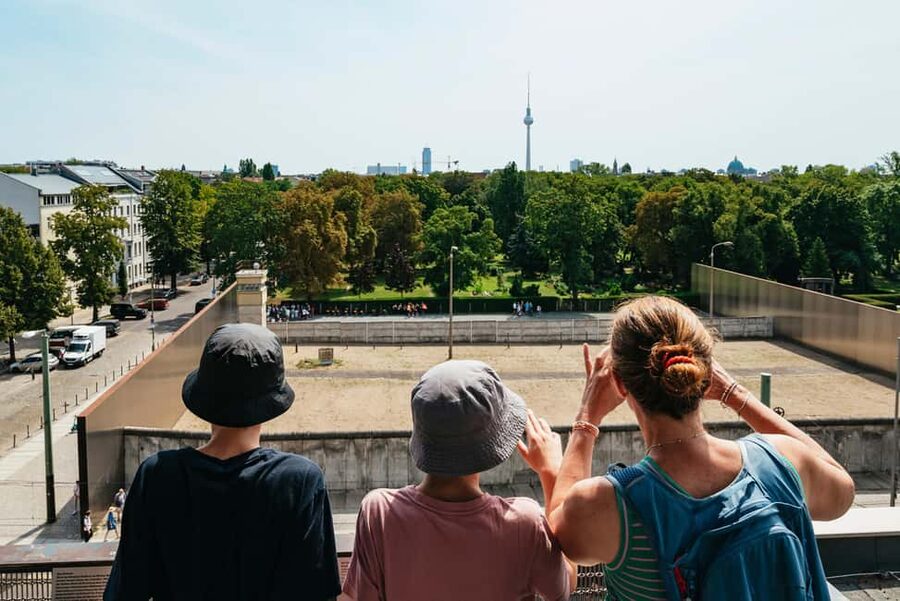
The Berlin Wall Memorial is the tour’s most important formal site. Here, you visit a preserved section of the former border area and climb a lookout tower for a wider view.
The tower is especially useful because the Wall was not just one concrete slab. From ground level, it can be hard to understand the space and planning involved in the border system. From above, you can better grasp the separation between the barriers and the open area between them.
That view gives the guide a practical way to explain the border strip. You can connect the physical space with the danger faced by anyone trying to cross. The memorial becomes more than a place for photographs. It shows how the system shaped the city and why escape attempts were so difficult.
You should allow yourself to look carefully rather than rushing through the stop. The tour is only two hours, and the guide has a route to maintain, but this is the point where the geography makes the history clearest. If you are especially interested in architecture, border design, or escape attempts, the lookout will likely be one of the most useful moments of the walk.
Stories of escape, courage, and daily risk
The strongest part of this experience is its attention to people. Your guide tells stories about those who risked their lives during the Wall era, bringing the history down from government policy to personal decisions.
That human focus helps explain why the Wall remains such an emotional subject in Berlin. A discussion of the Cold War can easily become a list of leaders, treaties, and political labels. Here, the guide connects those larger events with people who faced separation, surveillance, restricted movement, and the danger of trying to leave.
The tone includes facts and some humor, which can help keep a difficult subject approachable. That does not make the history light. It simply gives the tour a more natural rhythm than a nonstop lecture.
The quality of the guide matters a great deal on a walk like this. The strongest feedback about the experience points to clear explanations, a good pace, and flexibility. Those details are important. A guide who explains well can help first-time visitors follow a complicated subject without assuming prior knowledge. A guide who adjusts the pace can make the walk work better for a mixed group.
Still, this is a general historical tour rather than a specialist seminar. If you already know Berlin’s Cold War story in depth, you may want a longer visit to the memorial or a more narrowly focused tour. For most visitors, though, the personal accounts add the emotional connection that a self-guided walk can lack.
From 1961 to November 1989
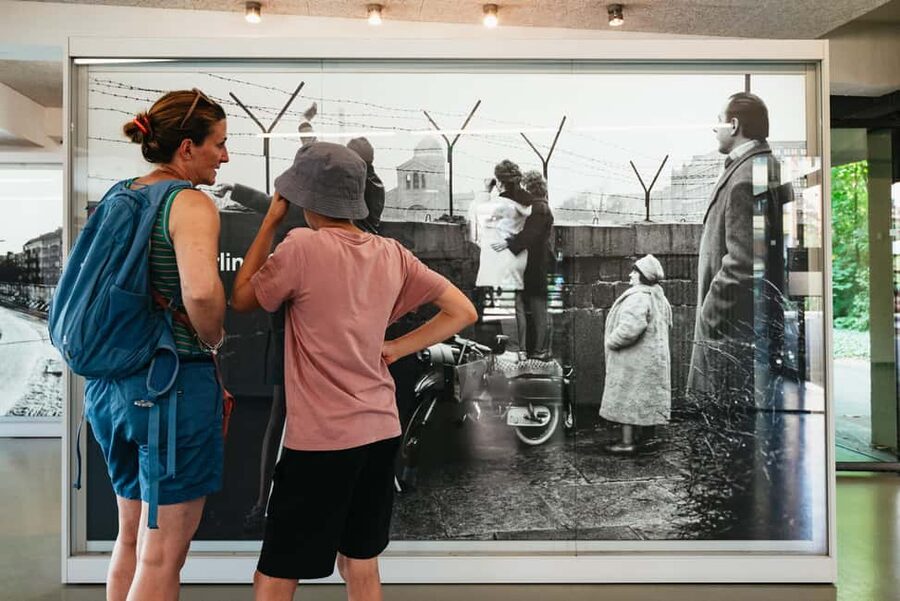
The tour’s timeline gives you a useful frame for understanding modern Berlin. It starts with the construction of the Wall in 1961 and moves toward the events of November 1989, when the border opened and reunification followed.
That span is long, but the guide’s job is to show how the sites along the route fit into it. You hear about the conditions that created the divided city, then follow how the border shaped Berlin over the following decades. The final section looks at the moments that led to the Wall’s collapse and the celebrations that followed.
I appreciate that the tour does not treat reunification as an isolated happy ending. The route shows the pressure and human cost that came before it. By the end, you have a better sense of why the fall of the Wall changed not only Berlin but also the wider course of European history.
This is also where the tour can help you read modern Berlin differently. The city’s neighborhoods, open spaces, memorials, and surviving Wall sections are easier to understand when you know what divided them. You leave with a clearer idea of how the past still shapes Berlin’s culture and street life.
More History Walking Tours in Germany
- Berlin: Third Reich, Hitler, and WWII Walking Tour
★ 4.9 · 1,757 reviews - Private Walking Tour Berlin Third Reich Hitler and World War II
★ 5.0 · 360 reviews - Berlin: Berlin Wall & East Side Gallery Walking Tour
★ 4.9 · 264 reviews - Cold War, Berlin Wall, Spies and the East Side Gallery
★ 4.8 · 254 reviews
Ending in Prenzlauer Berg
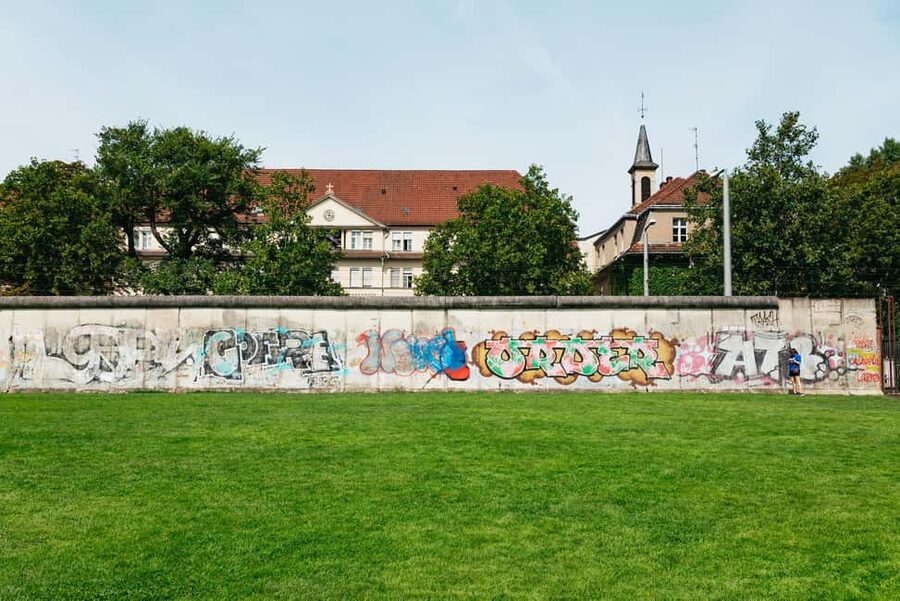
The walk is described as ending in Prenzlauer Berg, a former East German neighborhood now known for cafes and bars. That gives you a useful place to continue the afternoon or evening.
Prenzlauer Berg works well as the final setting because it links the historical subject with present-day Berlin. After spending two hours looking at division and border control, you can see a neighborhood associated with the former GDR in its current form. A cafe stop afterward gives you time to sort through what you have seen.
The booking information also says the activity ends back at the meeting point, while the route description places the finish in Prenzlauer Berg. Since the starting point may vary by option, confirm the exact start and end details before you book. This is a small but worthwhile planning check, especially if you have a timed museum visit or restaurant reservation afterward.
Is the $26 price good value?
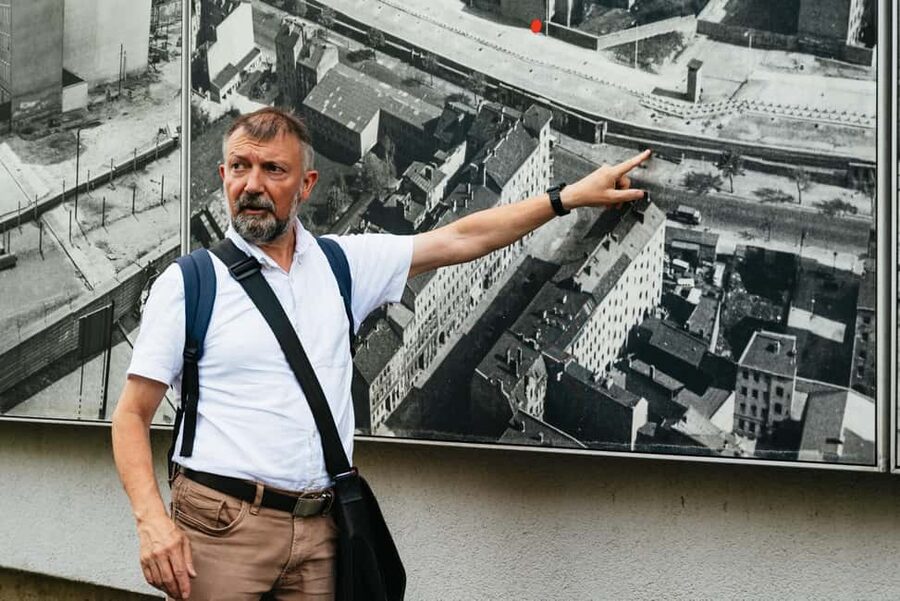
At $26 per person, this tour sits at a sensible price for a two-hour guided walk. The Berlin Wall Memorial itself is a public site, so you are mainly paying for the guide, route planning, historical explanation, and group experience.
That distinction matters. If you only want to see a remaining piece of the Wall, you can find public sections around Berlin without booking a tour. If you want to understand how the border worked, why the route mattered, and how individual stories fit into the larger history, the guide makes the fee easier to justify.
I would consider the price good value for a first visit to Berlin, especially if you have limited time. A well-paced introduction can save you from piecing together scattered memorials on your own. The value is strongest for visitors who want clear explanations and a human focus rather than a quick photo stop.
Private and small-group options are available, which may change the price or experience depending on the booking choice. A private format can be useful if you want to ask many questions or need a more flexible pace. A small group may give you some of that personal attention while keeping the cost more manageable.
The free cancellation option up to 24 hours before the tour and reserve-now, pay-later booking also make the plan easier to fit into a changing Berlin schedule. These policies do not change the historical content, but they reduce the risk of committing too early.
Who will get the most from this walk?
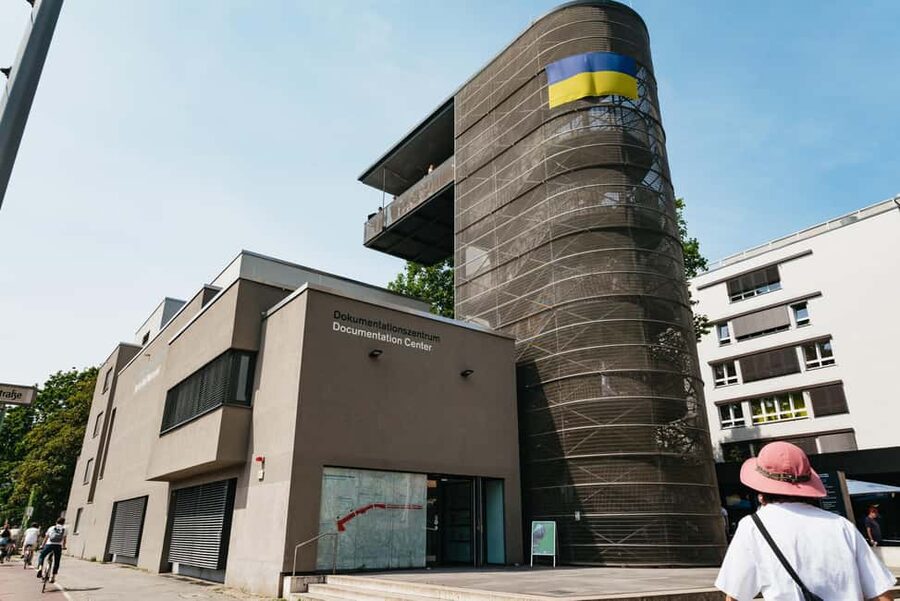
I would recommend this tour to you if you want a clear introduction to Berlin’s Cold War past without spending half a day in a museum. The route combines movement, outdoor sites, preserved border space, and storytelling, so it suits people who learn best by seeing places directly.
It is also a good choice for families and mixed-age groups, provided everyone is comfortable walking for two hours. The guide’s use of facts and light humor can make a serious topic easier to follow.
History students and repeat Berlin visitors may also appreciate the route, particularly if they choose a private or small-group format and use the time to ask questions. However, anyone seeking a highly detailed study of escape tunnels, political history, or memorial architecture may need additional visits beyond this tour.
You should also be comfortable spending the full two hours outdoors. The experience is a walking tour, not a seated presentation. Check the start time and meeting point before booking, and leave room in your schedule at the end since the route and meeting arrangement may vary by option.
What the 4.8 rating tells you
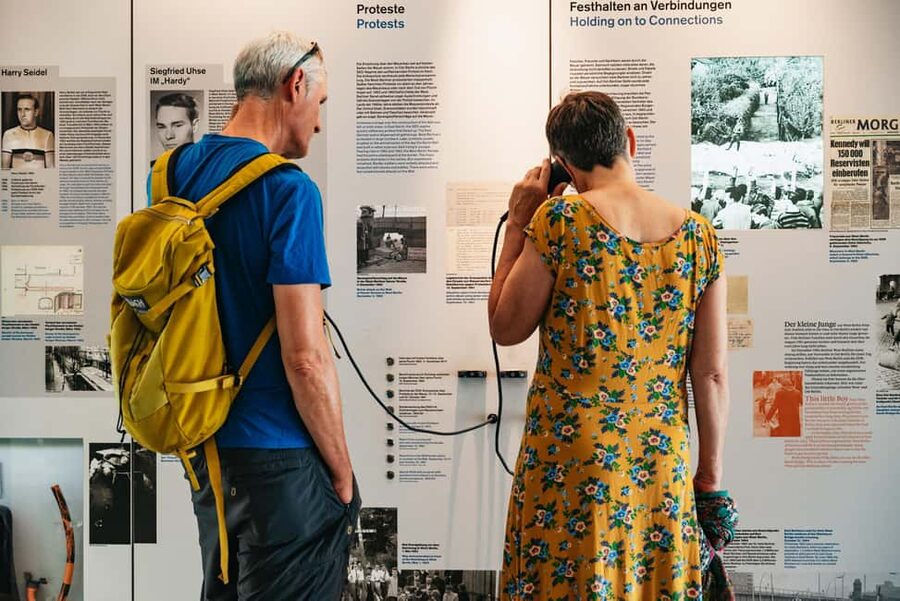
The experience has a 4.8 rating from 437 reviews, which fits the main strengths of the tour: strong explanations, a steady pace, and a guide who can adjust to the group.
The most useful praise focuses on the quality of the information and the overall experience, not simply on the sights. One especially practical point is that the public memorial is free, but the guide’s explanation and structure can make the paid tour worthwhile. That is exactly the choice you are making here.
The high rating should not lead you to expect a full study of every Wall site in Berlin. The tour remains a compact two-hour introduction. Its success depends on the guide’s delivery and on your interest in walking through the historical setting rather than checking off attractions.
Final verdict: book it for context, not just photos
Book this Berlin Wall walking tour if you want the former border to make sense. The route from Gesundbrunnen to Prenzlauer Berg, the lookout over the preserved border strip, and the personal stories give you more than a quick look at old concrete.
At $26, it is a fair choice for a first visit or a short stay. You get the most from it when you value a clear explanation, a human focus, and a guide who keeps the pace moving. Skip it only if you prefer exploring alone, already know Berlin’s Cold War story well, or want a longer specialist tour.
FAQ
How long is the Berlin Cold War walking tour?
The tour lasts two hours. Check availability for the available starting times.
What route does the tour follow?
The walk follows the original Berlin Wall route from Gesundbrunnen toward Prenzlauer Berg.
Does the tour visit the Berlin Wall Memorial?
Yes. A visit to the Berlin Wall Memorial is included, along with access to a lookout over a preserved part of the former border strip.
What languages are available?
The live guide is available in English or German.
Is this a private tour or a group tour?
Private and small-group options are available. The exact group type depends on the option you book.
What is included in the price?
The price includes the walking tour, a guide, and the visit to the Berlin Wall Memorial.
How much does the tour cost?
The listed price is $26 per person.
Can I cancel or pay later?
You can cancel up to 24 hours in advance for a full refund. You can also reserve your place and pay later, subject to the booking terms.
Just added around Berlin
- East Berlin and the Wall: Walking Tour★ 4.9 · 407 reviews
- Cold War, Berlin Wall, Spies and the East Side Gallery★ 4.8 · 254 reviews
- Berlin: walking tour about Charité★ 4.4 · 537 reviews
- Berlin: Walking Tour of the Top 10 Sightseeing Attractions★ 4.7 · 150 reviews
- Berlin: Sightseeing Walking Tour of the Top 20 Attractions★ 4.5 · 196 reviews
- Berlin: The Time of National Socialism Walking Tour★ 5.0 · 220 reviews
- Berlin: Kreuzberg Guided Walking Evening Tour★ 4.7 · 555 reviews
- Berlin : Must-see attractions Walking Tour★ 4.8 · 83 reviews
History Walking Tours, compared.

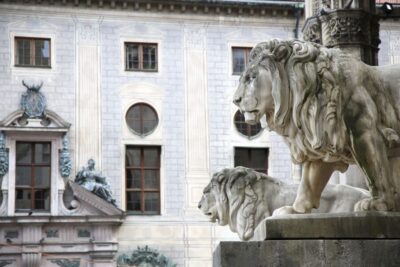
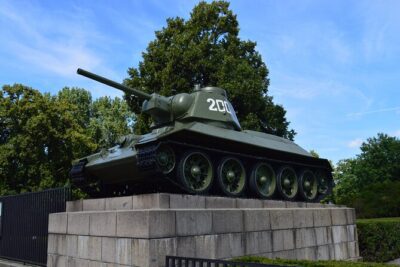
Berlin’s Best: 2 Hour Walking Tour Third Reich and the Cold War
Read our review →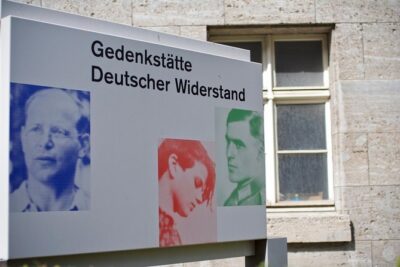
Third Reich Berlin: Hitler and WWII Walking Tour
Read our review →
New Orleans Garden District History Walking Tour
Read our review →
Cartagena: Historic Center and Getsemaní Shared Walking Tour
Read our review →
Imperial Palace and Shogun Historical Walking Tour
Read our review →Browse the lists this tour appears in