
REVIEW · BERLIN
Berlin Private Complete History All Day Walking Tour
Berlin’s most powerful sights are packed into this six-hour private walk through Mitte and nearby central districts. You move from the Brandenburg Gate and Reichstag to Hitler’s bunker site, the Berlin Wall, Checkpoint Charlie, Museum Island, and Alexanderplatz, while your guide connects the buildings to the events that shaped Germany.
I like the way the tour brings together Nazi and Cold War history rather than treating them as separate stories. I also like the private format: guides such as Rhys, Paul, Ciaran, Beth, and others can adjust the pace, answer questions, and spend more time on the subjects that matter most to you. The catch is simple: this is a serious day on foot, roughly 5.5 miles according to one guest, and $253.95 per person is a major outlay.
Key points to know
- Twenty-two central Berlin stops: You cover major landmarks from the Brandenburg Gate to Alexanderplatz in one long day.
- Private attention: Only your group takes part, so the guide can adapt the walk to your interests and walking speed.
- Strong WWII and Cold War focus: The route includes the Reichstag, Holocaust Memorial, Führerbunker site, Topography of Terror, Berlin Wall, and Checkpoint Charlie.
- Mostly an outdoor tour: Most stops are brief exterior visits, with entry into selected sites when possible.
- No vehicle is used: Pickup is on foot, and the group walks between locations.
- Best for a first full day: The route gives you a broad map of central Berlin and helps you decide where to return later.
Why this Berlin walk covers so much ground
This is not a gentle stroll with one theme. It is a full central Berlin survey, moving through Prussian grandeur, Nazi terror, wartime destruction, divided Berlin, reunification, and the rebuilt capital of today.
The route begins on Ebertstraße, near the Brandenburg Gate, and finishes at Alexanderplatz. That direction makes sense. You start with the symbols of the German state and end in the former East Berlin, where the postwar German Democratic Republic rebuilt a major city square in its own style.
The tour lasts about six hours, but the listed stop times add up to far less than that. That tells you something important: the schedule leaves room for walking, explanations, questions, photos, short pauses, and the natural delays of a city walk. It also means you should not expect a full museum visit at every stop.
Most stops last between 10 and 15 minutes. Bebelplatz receives about 20 minutes, while the Victory Column gets only a brief look from a distance. The guide’s storytelling is the main event. You are not simply being led from one photo stop to the next.
More Full-Day Tours in Berlin:
- Full-Day Milford Sound Tour with Cruise and Walks from Te Anau
★ 5.0 · 712 reviews - Edinburgh Full Day Walking Tour with Castle Included -Small Group
★ 5.0 · 676 reviews - Budapest Private Full Day City Sightseeing Tour Walking or by Car
★ 5.0 · 299 reviews
Brandenburg Gate, Reichstag, and the symbols of Germany
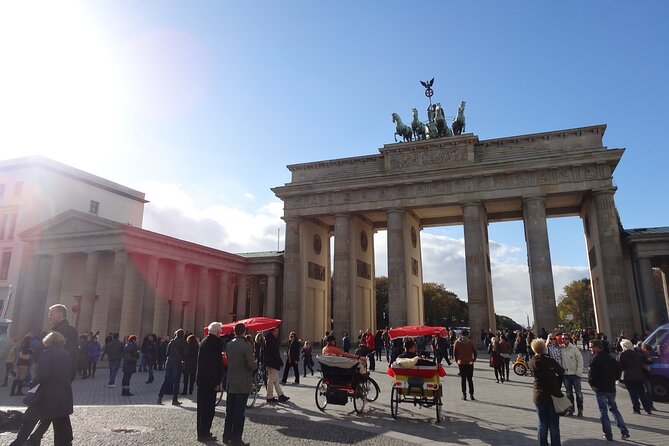
The Brandenburg Gate is a strong opening stop because its meaning changed with Berlin itself. Your guide explains why the gate was built, how it became tied to different versions of Germany, and why it mattered during the Cold War.
You have free time for photographs, and asking your guide to take one is encouraged. The gate is more than a grand neoclassical entrance. It became a symbol of division, then a symbol of reunification, so the opening explanation gives you a useful key for much of the day.
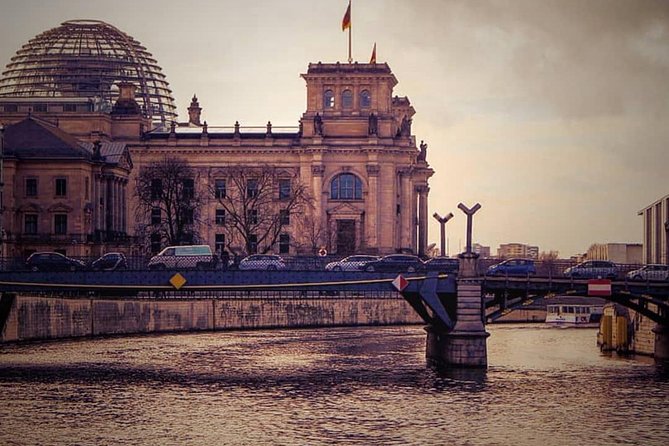
At the Reichstag Building, you look at one of Germany’s most recognizable buildings and trace its story from the Hohenzollern era through the Nazi seizure of power, the Battle of Berlin, and reunification. The stop is short, about 15 minutes, and admission is not included as a separate visit.
I like this pairing because the two buildings show different sides of German power. The Brandenburg Gate represents public ceremony and national identity. The Reichstag brings in parliamentary government, dictatorship, war, and the return of a united Germany.
The nearby Soviet Memorial in Tiergarten adds another layer. It was built in West Berlin, which is unusual given its Soviet origin and location. Your guide discusses its building materials, symbolism, and the arguments surrounding it.
Tiergarten and the Victory Column
The walk through Tiergarten offers a needed change of pace. This large park began with medieval roots and changed as Berlin grew. Your guide explains how war and political change affected the park, rather than treating it as a simple green shortcut.
The Victory Column is viewed from a distance in the middle of the park. You learn why it was built and where it originally stood. Since the stop lasts only about five minutes, this is a quick historical marker, not a climb or close architectural inspection.
That distinction matters. If you want to explore every monument at length, this route will feel fast. If you want the story behind the city’s major sites and a clear sense of how they fit together, the short stop works well.
Holocaust Memorial and the Führerbunker site
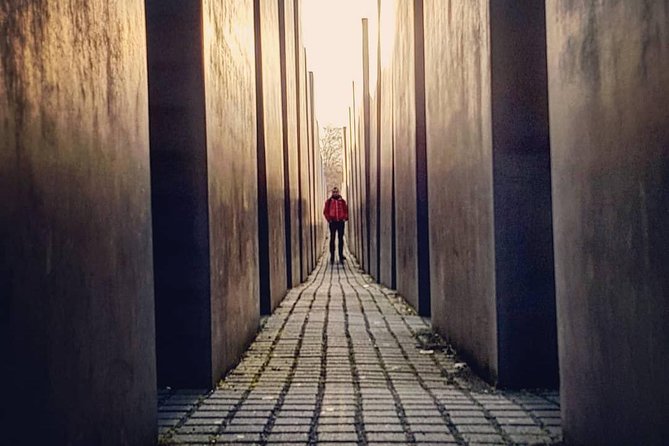
The Memorial to the Murdered Jews of Europe is one of the day’s most serious stops. The field of concrete blocks creates an unsettling space, and the guide explains its place among Berlin’s many memorials.
You should give this stop your full attention. It is not a place to rush through while taking casual photographs. The tour’s WWII focus can sometimes feel heavy, but Berlin’s memorial culture requires care, and this stop gives the historical material a human weight.
A short walk brings you to the former Führerbunker site, now an ordinary parking area. The contrast is deliberate and striking. There is no grand ruin to inspect, only the location where Adolf Hitler spent his final days and where the Nazi regime collapsed.
Calling it a parking lot may sound flippant, but the plain setting is part of the lesson. The tour explains what happened there without turning the site into a shrine. This is one of the places where a good guide matters most, since the physical remains tell you almost nothing on their own.
A few more walking tours around Berlin worth a look
- Discover Berlin Half-Day Walking Tour
★ 5.0 · 9,624 reviews - Berlin City walk Government District and Places of Democracy
★ 4.7 · 8,467 reviews - Berlin: Third Reich & Cold War Guided Walking Tour
★ 4.9 · 8,378 reviews - Berlin: Discover Berlin Walking Tour
★ 4.9 · 5,998 reviews
The man who nearly changed the war
The Johann Georg Elser sculpture introduces a less familiar story. Elser attempted to kill Hitler and came painfully close to changing the course of world events.
This 10-minute stop breaks up the better-known Nazi landmarks with an individual act of resistance. It is a useful reminder that opposition to Hitler was not limited to the figures usually taught in brief school summaries.
The route then reaches the former Aviation Ministry of Berlin. The imposing building has been in continuous use since 1936, giving it an unusual connection to the city’s most turbulent decades. Your guide explains its role and survival, linking the physical building to the government machinery of the period.
At the Topography of Terror, you enter the former headquarters of the SS, Gestapo, and SD. This is one of the day’s most direct looks at Nazi rule. The site also raises the question of what happened after the war, and how Berlin chose to present and remember the location.
The stop is listed at about 15 minutes. That is enough for an introduction, but not a full museum visit. If the exhibition interests you, plan to return on your own with more time.
The Berlin Wall and Checkpoint Charlie
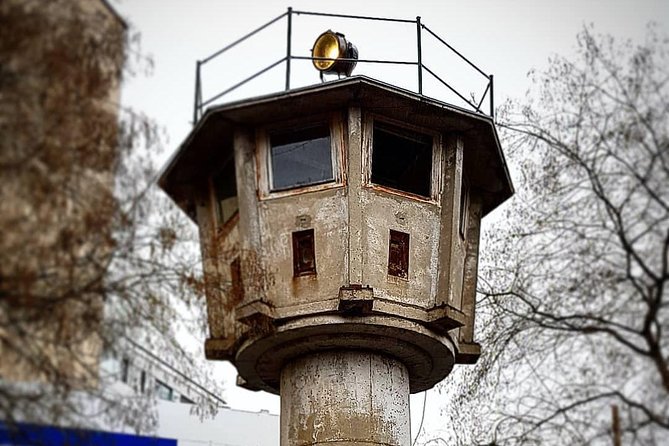
The Berlin Wall Memorial brings the story into the postwar years. You see a section of the wall and hear why, when, and how it was built. The guide also covers escape attempts and deaths connected to the border.
This section is especially useful because the wall can otherwise seem like a collection of scattered fragments. The explanation gives you the political reason for its construction and the human cost of crossing it.
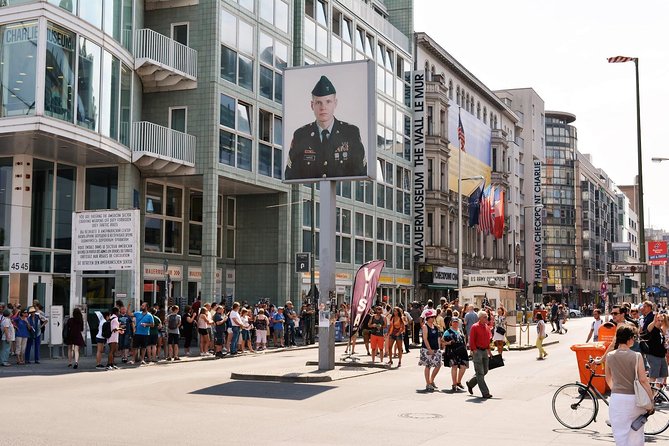
Checkpoint Charlie follows. It is the best-known of Berlin’s former crossing points and one of the city’s most famous Cold War locations. The modern setting can feel more theatrical than authentic, so historical context is essential here. Your guide helps separate the real border crossing from the later image built around it.
The route continues along Friedrichstrasse, once known as the Cabaret Mile. This links political history with Berlin’s cultural life. It is a short stroll, but it prevents the day from becoming only a procession of war memorials and government buildings.
Gendarmenmarkt and Bebelplatz
Gendarmenmarkt is one of Berlin’s finest squares, with an architectural setting that feels more polished than the war-damaged and divided sites earlier in the day. Your guide explains how the square developed and points out the buildings that make it so memorable.
Bebelplatz is more complicated. The square is surrounded by important 18th-century buildings, including St. Hedwig’s Cathedral, Humboldt University’s law faculty, and the State Opera House. It was also the site of a major Nazi book burning.
The memorial in the square is easy to miss if you do not know where to look. Your guide explains its meaning and the event it recalls. This is a good example of why a walking guide adds value: Berlin often places its most thought-provoking memorials in plain sight, without large signs or dramatic structures.
Humboldt University follows with a look at the building, the institution, and the Humboldt family. The stop gives you a glimpse of Berlin as a center of education and ideas, not only a city marked by dictatorship and war.
Neue Wache, Museum Island, and the Humboldt Forum
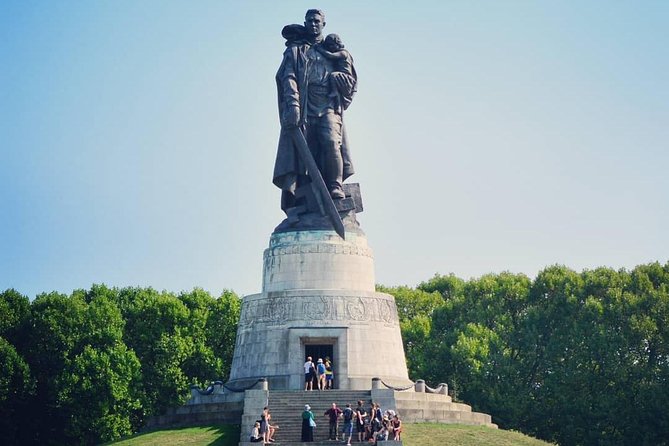
Inside Neue Wache, you encounter one of Berlin’s most moving memorial spaces. The building has changed political meaning over time and now serves as a memorial. Your guide presents it as a kind of political weather vane, showing how different governments used the same site to express their values.
The Deutsches Historisches Museum is discussed from outside. Its building is the oldest surviving structure on Unter den Linden, and the guide uses it to explain how Berlin’s museum district developed.
Museum Island is a UNESCO World Heritage site, and the route covers its museums, cathedral, and major architects. You do not get a full museum admission experience as part of this walking tour, so think of the stop as an introduction.
The Humboldt Forum adds a more recent and complicated chapter. Its history is tied to Berlin’s palace site and the modern decision to recreate a major historic facade for a new cultural institution. The guide explains why the project has attracted debate.
I like this stretch because it widens the tour beyond the 20th century. You see how royal power, education, museums, religion, colonial questions, and modern reconstruction overlap in a small part of central Berlin.
St. Mary’s Church and Alexanderplatz
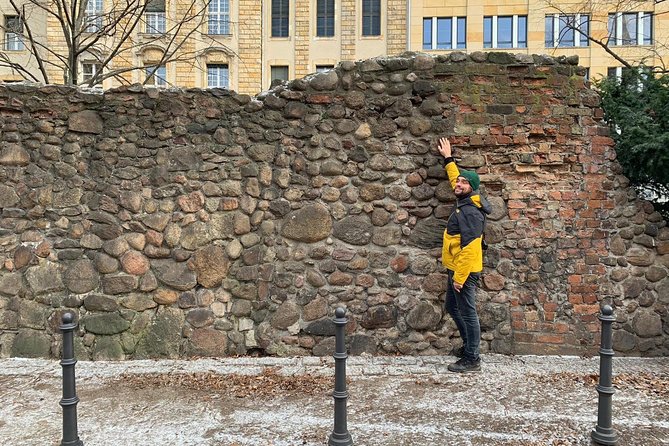
St. Mary’s Church is described as the oldest church in Berlin that has remained in continuous use. The guide goes inside if possible, but that wording matters: interior access is not guaranteed.
The church is also presented as a fortunate survivor. In a city marked by wartime destruction, survival itself becomes part of the story. The stop is brief, but it offers a quieter close to the historic center before the final walk east.
Alexanderplatz finishes the route. The square was rebuilt after the war as a major center of the German Democratic Republic. Its broad design and postwar character feel very different from the royal buildings along Unter den Linden.
Ending here gives you a useful visual contrast. You have moved from Prussian Berlin to Nazi Berlin, divided Berlin, and finally the former East German capital. Alexanderplatz is not the grandest ending, but it is an honest one.
What the private format is worth
The price is $253.95 per person. That is expensive for a walking tour, especially if you are traveling alone or as a couple. The value depends heavily on your group size and how much you want personal guidance.
For a private group, the cost buys more than a fixed script. You can ask about a family interest, pause for photographs, adjust the pace, and spend more time on WWII, the Cold War, architecture, religion, or Berlin’s cultural life. The guide can also make practical adjustments for mixed ages. One group with people aged 14 to 82 had a short break for the younger members during the day.
Guides named in the feedback include Rhys, Paul, Ciaran, Beth, Ken, Julian, Francisco, Darren, Eugen, and Kieran. The strongest praise centers on their command of historical detail, friendly manner, flexibility, and ability to keep six hours conversational rather than lecture-like.
The tour has a five-star rating from 474 reviews, with 99 percent recommending it. Those numbers do not remove the need to choose carefully, but they match the practical strengths of the format: private attention, strong historical coverage, and a guide who can respond to your questions.
Pace, food, transport, and planning
You walk between every stop. No private vehicle is used, and pickup is on foot. The start is at Ebertstraße 24, near the Brandenburg Gate, and the walk finishes at Alexanderplatz.
The distance matters. One guest reported walking 5.5 miles, and the full route includes many hours on city streets and paths. Wear comfortable shoes and treat the six-hour length seriously. The group walks at its own pace, but the number of stops means you are still covering substantial ground.
Food and drinks are not included. A lunch break may be possible, and one group specifically had lunch during the day, but you should ask your guide about timing rather than assume a meal is built into the price.
The tour is offered in English. Confirmation arrives at booking. Public transport is nearby, service animals are allowed, and the operator states that most people can take part. Pets are also allowed according to the supplied information.
Free cancellation is available up to 24 hours before the start time. Changes or cancellations made less than 24 hours before the start are not accepted for a refund.
Who should book this Berlin tour?
I would choose this for a first full day in Berlin if you want historical orientation fast and prefer conversation to a large group. It is especially useful if WWII and Cold War sites are your main interests, but the route also includes royal Berlin, religious buildings, museums, and the former East German center.
You should think twice if you dislike long walks, want substantial museum time, or prefer to explore each landmark at your own pace. Twenty-two stops in six hours requires an overview approach. You will see and understand a great deal, but you will need to return independently to places such as the Topography of Terror, Museum Island, or the Humboldt Forum if you want a longer visit.
The price makes the most sense for families or small groups who will use the guide’s flexibility. Solo visitors and couples may find it costly, though the private attention can still be worthwhile if Berlin’s history is central to the trip.
FAQ
How long does the Berlin private history tour last?
The tour lasts approximately six hours.
How many sites does the tour visit?
The route includes 22 listed stops, ending at Alexanderplatz.
Where does the tour start?
The meeting point is Ebertstraße 24, 10117 Berlin, near the Brandenburg Gate.
Where does the tour end?
The tour ends at Alexanderplatz, 10178 Berlin.
Is transportation included?
No. This is a walking tour, and no vehicles are used. Pickup takes place on foot with the guide.
Is the tour private?
Yes. Only your group participates in the private activity.
Is food included?
No. Food and drinks are not included in the tour price.
Is the tour offered in English?
Yes. The tour is offered in English.
Can I cancel for a full refund?
Yes, if you cancel at least 24 hours before the experience start time. Cancellations made less than 24 hours before the start are not refunded.
Should you book it?
Book this tour if you want Berlin’s major historic sights explained in one long, focused day, with a guide who can answer questions and adjust the pace. The private format, strong WWII and Cold War coverage, and route from the Brandenburg Gate to Alexanderplatz make it a useful way to get your bearings.
Skip it if five to six hours of walking sounds tiring or if you want to spend your day inside museums. At $253.95 per person, it is not a budget outing. For a small group that values personal history lessons and efficient sightseeing, though, it can earn its price.
Just added around Berlin
- Berlin Walking Tour★ 4.5 · 378 reviews
- East Meets West: Berlin Food Culture & Street Art★ 5.0 · 157 reviews
- Small Group Walking Tour of East Berlin with a French Guide★ 5.0 · 176 reviews
- Berlin Street Art Walking Tour – Off The Grid★ 5.0 · 270 reviews
- Berlin Highlights Private Guided Walking Tour★ 4.5 · 89 reviews
- Gruseltour Berlin Haunted Ghost Walk 90-minute at Berlin Mitte city center★ 5.0 · 75 reviews
- Private Berlin: Iconic Sights and Hidden Gems Walking Tour★ 5.0 · 292 reviews
- Explore Berlin History and Highlights Sightseeing Walking Tour★ 5.0 · 81 reviews
Walking Tours, compared.

Magical London: Harry Potter Guided Walking Tour
Read our review →
Reykjavik Food Walk – Local Foodie Adventure in Iceland
Read our review →
History and Hauntings of Salem Guided Walking Tour
Read our review →
New Orleans Premier Ghost, Voodoo and Vampire Walking Tour
Read our review →
Amsterdam Anne Frank: Small-Group Walking Tour & Local Guide
Read our review →
Edinburgh Castle: Guided Walking Tour with Entry Ticket
Read our review →
Anne Frank’s Story – Guided Walking Tour through Amsterdam
Read our review →Browse the lists this tour appears in