
REVIEW · BERLIN
Third Reich Berlin: Hitler and WWII Walking Tour
The most striking part of this tour is how ordinary modern Berlin sits on top of the final days of the Nazi regime. You walk past office blocks, parks, train stations, and grand public buildings while your guide points out where Hitler’s government planned war, where Berliners endured air raids, and where the dictatorship finally collapsed.
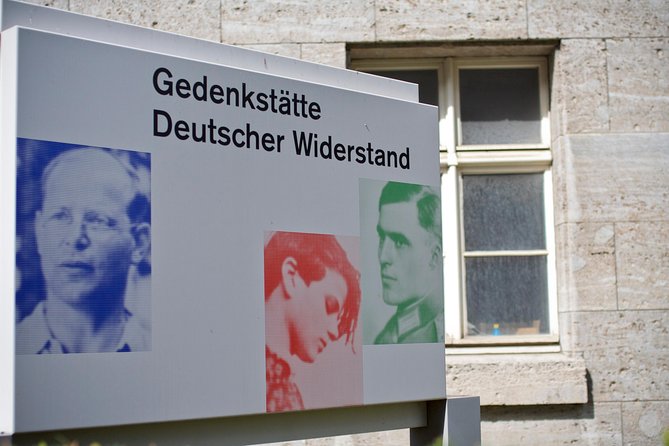
I like the route for two reasons: it connects famous sights such as the Reichstag and Brandenburg Gate with less obvious Nazi-era locations, and it treats the subject as a story about people and choices, not just a parade of dates. The tour also gives you a useful introduction to the resistance led by figures such as Henning von Tresckow, Hans Oster, and Claus von Stauffenberg.
The main drawback is simple: this is an outdoor walk of about three hours, often covering roughly 5,000 steps at a brisk pace. Cold, wet weather can make it tiring, and some locations are open spaces with little shelter.
Key points to know before you go
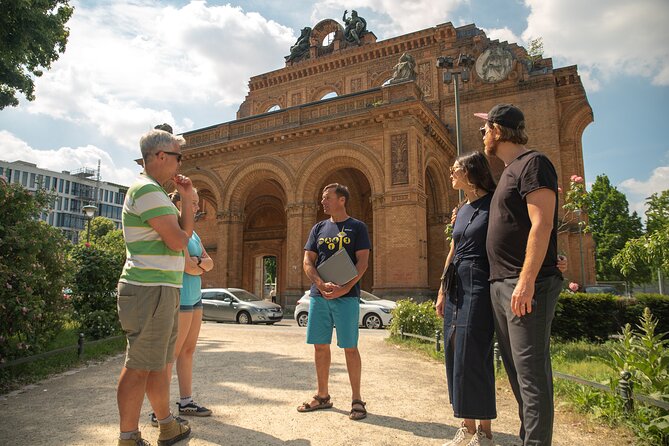
- The bunker site is empty today: You stand above the location of Hitler’s bunker and learn about his final days, death, and the destruction of the New Reich Chancellery.
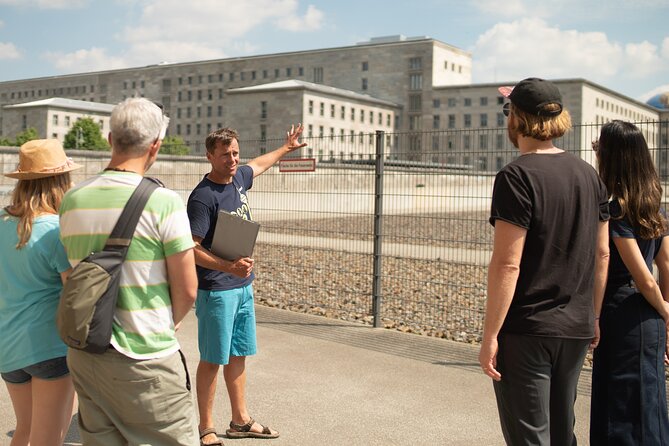
- The route links power and persecution: See the former Air Ministry, Goebbels’ propaganda headquarters, Wilhelmstrasse, and the former SS and Gestapo headquarters.
- The Holocaust is part of the central story: Stops include the Trains to Life, Trains to Death memorial and the Memorial to the Murdered Jews of Europe.
- Guides make the difference: Maria, Paul, Ru, Chris, Ciarán, Tom, Jim, Tina, and others have led this walk, with strong praise for clear explanations and lively storytelling.
- Plan for a serious walk: Comfortable shoes, warm layers, and water or coffee are sensible. The tour is not a casual stroll between nearby sights.
- You get a small-group format: The maximum group size is 25, which gives you a better chance to hear the guide and ask questions.
What this Berlin history walk is really about
This is not a tour of preserved Nazi interiors. Much of Hitler’s Berlin was destroyed in the war, demolished afterward, or absorbed into modern government buildings. The value comes from learning how the sites fit together.
Your guide explains how Hitler and the Nazi Party rose to power, how democracy was weakened, and how the regime used propaganda, fear, law, and violence to control German society. The walk then moves toward the final Battle of Berlin in 1945, when Soviet forces fought street by street to capture the capital.
That structure helps you follow the period in a clear order. You begin with the machinery of power, move through the persecution and mass murder carried out by the regime, and finish with the government’s collapse.
The subject is grim, but the best guides keep the tone serious without turning the tour into a lecture. Paul, Ru, Maria, Chris, Ciarán, Tom, Jim, and others are described as strong storytellers who explain difficult events in plain language. The guide roster changes, so you cannot count on a particular person, but the tour’s strength clearly depends on the person leading it.
More History Walking Tours in Berlin
- Berlin: Third Reich & Cold War Guided Walking Tour
★ 4.9 · 8,378 reviews - Berlin’s Best: 2 Hour Walking Tour Third Reich and the Cold War
★ 5.0 · 5,486 reviews - Berlin: Third Reich, Hitler, and WWII Walking Tour
★ 4.9 · 1,757 reviews
Starting at Friedrichstrasse Station
The meeting point is at Reichstagufer 17, near Friedrichstrasse Station. Arrive 15 minutes early. This is a useful place to begin because the station is central and close to the government quarter.
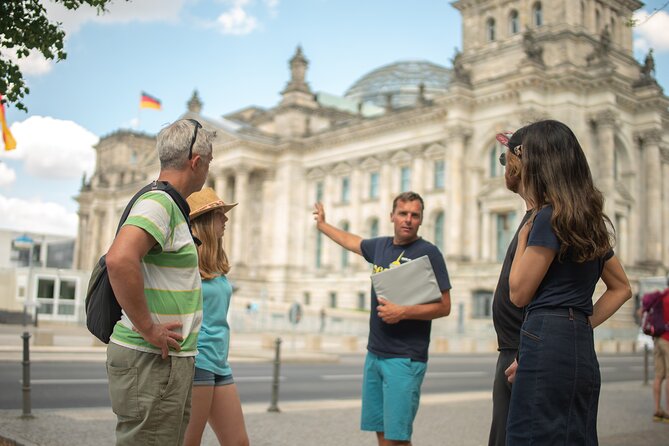
The opening section gives you a map of the walk ahead. You learn about the Reichstag fire of 1933, which the Nazis used to suspend civil liberties and weaken Germany’s democratic system. You also hear about daily life in Berlin under dictatorship, including air raids, fear, censorship, and the pressure placed on ordinary citizens.
This introduction matters because it prevents the tour from becoming a simple Hitler biography. The story is also about institutions that failed, people who cooperated, people who resisted, and the gradual destruction of public freedoms.
Trains to Life, Trains to Death
The memorial called Trains to Life, Trains to Death recalls the deportation of Berlin’s Jewish population to concentration camps. It is a brief stop, but one of the most important on the route.
You are not simply told that deportations happened. The memorial brings the process back to Berlin, showing that the Holocaust was not carried out somewhere distant and disconnected from everyday city life. People were taken from their homes, moved through the transport system, and sent toward camps and death.
The stop lasts about 10 minutes. That is enough for a focused explanation, though you should not expect a long period for private reflection. The tour keeps moving, and the wider story continues through several memorials and former government sites.
The Reichstag and the collapse of democracy
The Reichstag is one of Berlin’s great landmarks, but this tour uses it to explain two separate turning points.
In 1933, a fire inside the building gave Hitler’s government the excuse to suspend civil rights and arrest political opponents. The event helped the Nazis dismantle democratic rule. In 1945, the building became a symbolic target during the Soviet assault on Berlin, and the Soviet flag was raised above it after intense fighting.
You normally view the building from outside on this walk. Entrance to the Reichstag is not included, so do not plan on seeing the glass dome as part of the tour. Still, the exterior is enough for the guide to explain how one building came to represent both the destruction and defeat of the Nazi regime.
More History Walking Tours in Germany
- Berlin: Cold War Walking Tour on Berlin Wall Route
★ 4.8 · 437 reviews - Private Walking Tour Berlin Third Reich Hitler and World War II
★ 5.0 · 360 reviews - Berlin: Berlin Wall & East Side Gallery Walking Tour
★ 4.9 · 264 reviews - Cold War, Berlin Wall, Spies and the East Side Gallery
★ 4.8 · 254 reviews
The Soviet War Memorial in Tiergarten
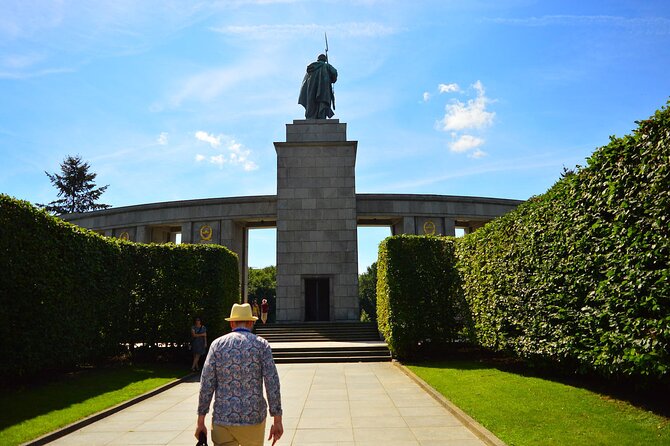
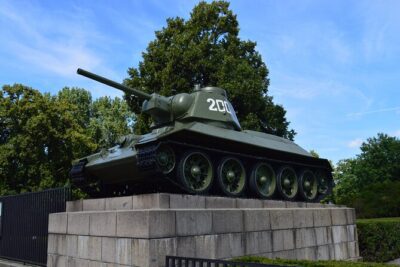
The Soviet War Memorial in Tiergarten is a military cemetery and memorial to Soviet soldiers killed in the Battle of Berlin. Its large statue of a Soviet soldier and the surrounding memorial grounds create a solemn pause in the route.
The site also opens a useful discussion about the final weeks of the war. The Soviet victory ended Nazi rule, but it came at a vast human cost. The memorial is not just a marker of military success. It reminds you that Berlin’s defeat involved enormous casualties and destruction.
The memorial’s symbolism reflects the political language of the Soviet period, including imagery of defeated Nazism. Your guide can help place the monument in both the wartime and postwar setting.
Brandenburg Gate and the use of public symbols
Brandenburg Gate is usually associated with Berlin’s reunification, but it was also used by the Nazis as a backdrop for public displays, rallies, and propaganda. During the Third Reich, the gate was connected with the regime’s image of authority and military strength.
This is a good example of how the tour reads familiar sights differently. You may have already photographed the gate, but the guide adds the layers of political meaning attached to it. The same monument has been used by different governments and movements, each trying to claim its symbolism.
The stop is short, around 10 minutes. That is enough for context, though you will not get a long guided visit at the gate.
The Academy of Arts and Albert Speer’s architectural vision
The Academy of Arts brings the role of culture and design into the story. The discussion connects the Nazi period with Albert Speer, Hitler’s chief architect and later Minister of Armaments.
Speer promoted monumental neoclassical architecture designed to express power, order, and permanence. His work shows that Nazi rule was not supported only through police power and military force. Buildings, ceremonies, art, and public space were also used to shape how the regime wanted Germany to see itself.
The Academy itself is now a contemporary arts institution. The point of the stop is not that the building is a preserved Nazi attraction, but that cultural institutions had to face their relationship with the regime after the war.
The Holocaust Memorial
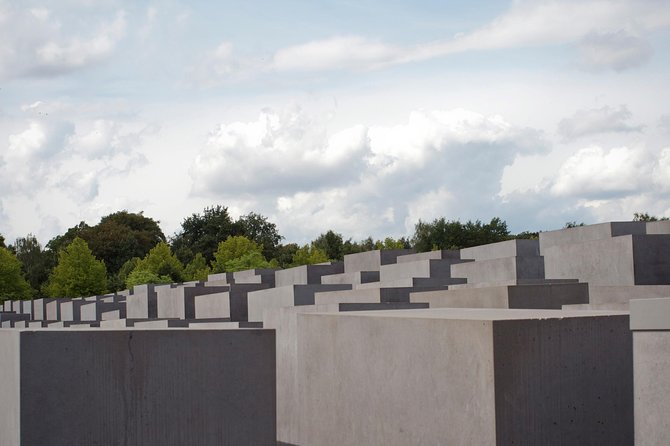
The Memorial to the Murdered Jews of Europe is one of Berlin’s most powerful modern memorials. Its 2,711 concrete slabs form a field of uneven heights and narrow paths.
You walk among the blocks, where the ground changes and the open sky can feel distant. The design gives the memorial an unsettled, disorienting quality. It does not offer a simple statue or a single written message. Instead, it creates space for thought about the scale of the Holocaust and the loss of individual lives.
The stop lasts about 10 minutes, so the guide’s explanation is necessarily brief. You may want to return later on your own for more time. The underground Information Centre is not listed as part of this walking tour, so do not assume that its interior exhibits are included.
Hitler’s bunker and the end of the regime
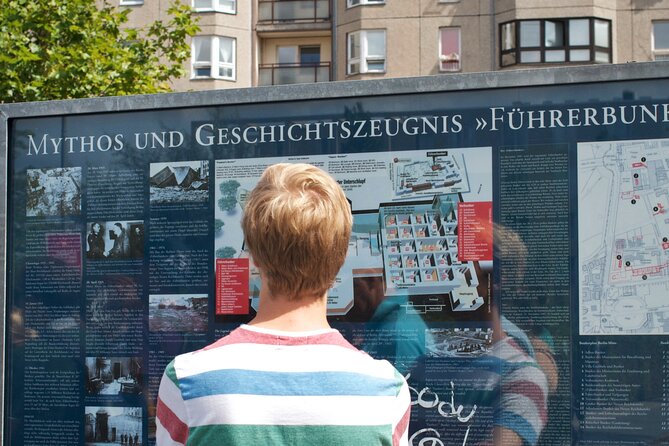
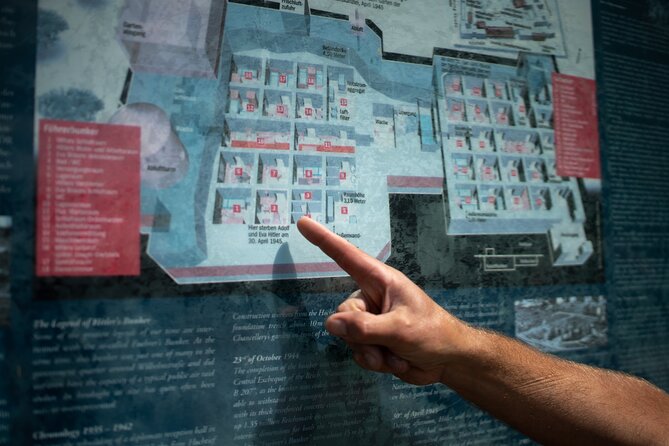
One of the tour’s most anticipated stops is also one of the least visible. Hitler’s bunker was located beneath the former New Reich Chancellery, built under Speer’s direction. Today, you stand above the site rather than entering a preserved underground room.
That absence is important. There is no grand entrance, museum display, or intact command centre to see. The guide explains what happened in the bunker during Hitler’s final days, including his death in April 1945 and the collapse of the Nazi government around him.
A guide such as Eran may reveal the bunker location only once the group reaches the relevant sign, making the moment more affecting than simply announcing it at the start. The impact comes from the contrast between the ordinary modern setting and the extraordinary events that took place below it.
You also hear about the New Reich Chancellery and the way the site was later destroyed and redeveloped. For many people, this is the point where the military and political story becomes most immediate.
Wilhelmstrasse and the Nazi government machine
Wilhelmstrasse was once the centre of government power in Nazi Berlin. The street contained offices connected with the Reich Chancellery, Foreign Ministry, Propaganda Ministry, and other departments.
Here the tour explains how decisions about war, occupation, persecution, and the treatment of Jews and other targeted groups were made through government offices. The location helps connect ideology with administration. Oppression required speeches and slogans, but it also required paperwork, orders, offices, transport, and officials.
Much of the original district has disappeared or changed. You should expect traces and explanations rather than a perfectly preserved Nazi quarter. That is one reason a guide is useful. Without context, the modern streets offer few clues about the decisions once made there.
The former Air Ministry
The former Reich Air Ministry, associated with Hermann Göring and the Luftwaffe, is one of the better surviving Nazi-era government buildings on the route. Its scale and formal design reflect the regime’s preference for architecture that projected authority.
The building housed offices connected with Germany’s air force and military administration. Your guide may connect it with the Battle of Britain and the wider war effort, while also explaining Göring’s role as one of Hitler’s leading officials.
The building has been repurposed since the war. You do not enter as part of the walk, but seeing the exterior gives you a useful sense of how Nazi power occupied the city through large ministries and administrative headquarters.
Topography of Terror and the walk’s final stop
The tour ends at Topography of Terror on Niederkirchnerstrasse, close to Checkpoint Charlie. The museum sits on the former site of the SS and Gestapo headquarters.
This is a fitting end because the museum focuses on the organizations that enforced Nazi terror, persecution, and mass murder. Photographs, documents, and personal accounts show how the SS and Gestapo operated and how state violence was organized.
The walking tour includes the exterior location and explains its importance. Admission to the museum is not listed as part of the experience, so you can return afterward if you want more time with the exhibitions.
Ending here also gives you practical freedom. You can visit Checkpoint Charlie, continue toward other central sights, or stop for food and rest after the three-hour walk.
Price, pace, and practical value
At about $24.07 per person, this is good value if you want a strong historical framework in a short visit. You are paying for three hours with a local guide, not for admission tickets or transport. The route covers a wide area that would be difficult to interpret alone, especially because many important sites have little visible signage.
The maximum group size is 25. That is not an intimate private tour, but it is small enough for the guide to manage questions and keep the group together. The quality of the experience will depend partly on where you are standing, so stay near the guide when the group gathers at a busy street or open square.
Wear comfortable shoes. The walk can cover about 5,000 steps, and several sections move at a brisk pace. Dress for the weather, especially in winter. One group completed the tour in temperatures around minus 7 degrees Celsius, but that does not mean the conditions were comfortable. Bring warm layers, and consider carrying coffee or water.
The tour is offered in English and uses a mobile ticket. Hotel pickup and drop-off are not included. Public transport is nearby, and most people can take part, but the length and outdoor format may not suit anyone who needs frequent sitting breaks.
Free cancellation is available up to 24 hours before the start time. Changes or cancellations later than that are not accepted for a refund.
Who should book this walk?
I would choose this tour if you want to understand how Berlin’s sights fit into the Nazi period and World War II. It is especially useful on a first visit, when the city’s scattered memorials and government buildings can otherwise feel disconnected.
It also suits families with older children and teenagers who can manage a serious subject and several hours on foot. One family found that a 15-year-old stayed engaged because the guide connected the history to the places around him rather than relying only on dates.
History fans will get the most from the detail about the final Battle of Berlin, Nazi leadership, resistance figures, propaganda, and the Holocaust. You do not need specialist knowledge, though. Guides such as Ciarán and Callam have been praised for explaining complex events clearly and answering questions without losing the group.
I would skip it if you want a relaxed sightseeing walk, indoor attractions, or a tour focused mainly on architecture. The subject is painful, and the pace leaves limited time for quiet reflection at each memorial.
Should you book the Third Reich Berlin walking tour?
Book it if you want a serious, affordable introduction to Nazi Berlin and the final days of World War II. The route is well chosen, the historical links are strong, and a good guide can make places such as the bunker site and Wilhelmstrasse far more meaningful than they appear on a map.
Go prepared for cold weather, steady walking, and difficult material. You cannot choose your guide in advance, but the repeated strengths associated with guides including Maria, Paul, Ru, Chris, Ciarán, Tom, Jim, and Tina are clear: strong subject knowledge, good storytelling, patience, and a willingness to answer questions.
For roughly $24, you get a useful three-hour lesson in how Berlin’s streets became the centre of a dictatorship, a world war, and its violent end. That is a fair price for a tour that helps you see the modern city with sharper eyes.
FAQ
How long is the Third Reich Berlin walking tour?
The tour lasts approximately three hours.
Where does the tour begin?
It begins at Reichstagufer 17, 10117 Berlin, near Friedrichstrasse Station.
Where does the tour end?
It ends at Topography of Terror, Niederkirchnerstrasse 8, 10963 Berlin, very close to Checkpoint Charlie.
Is the tour offered in English?
Yes. The experience is offered in English.
Does the tour enter Hitler’s bunker?
No. You stand above the former bunker location and learn about Hitler’s final days and death there. The site is not presented as an intact interior attraction.
Is admission to the Reichstag included?
No. The Reichstag is visited from outside, and admission is not included.
How many people can join the tour?
The maximum group size is 25 people.
What should I bring or wear?
Wear comfortable shoes and dress for the weather. The entire experience is outdoors and involves several hours of walking. You should arrive 15 minutes before the start time.
Just added around Berlin
- East Berlin and the Wall: Walking Tour★ 4.9 · 407 reviews
- Cold War, Berlin Wall, Spies and the East Side Gallery★ 4.8 · 254 reviews
- Berlin: walking tour about Charité★ 4.4 · 537 reviews
- Berlin: Walking Tour of the Top 10 Sightseeing Attractions★ 4.7 · 150 reviews
- Berlin: Sightseeing Walking Tour of the Top 20 Attractions★ 4.5 · 196 reviews
- Berlin: The Time of National Socialism Walking Tour★ 5.0 · 220 reviews
- Berlin: Kreuzberg Guided Walking Evening Tour★ 4.7 · 555 reviews
- Berlin : Must-see attractions Walking Tour★ 4.8 · 83 reviews
History Walking Tours, compared.

Berlin’s Best: 2 Hour Walking Tour Third Reich and the Cold War
Read our review →
New Orleans Garden District History Walking Tour
Read our review →
Cartagena: Historic Center and Getsemaní Shared Walking Tour
Read our review →
Imperial Palace and Shogun Historical Walking Tour
Read our review →
Leipzig: 1.5-Hour Historical Walking Tour in German
Read our review →Browse the lists this tour appears in