REVIEW · BERLIN
The History of Berlin: WWII PRIVATE Walking Tour With Locals
Berlin’s past is written into its streets, walls, empty spaces, and rebuilt monuments. This private walking tour connects the Holocaust Memorial, Hitler’s bunker, Brandenburg Gate, Checkpoint Charlie, and Museum Island into one long lesson about how war and dictatorship changed the city.
I like the private format for two reasons: you can ask questions without holding up a group, and your guide can adjust the route to your interests. Guides such as Sara, Seth, Boyd, and Miha have been praised for clear explanations, warm personalities, and a knack for linking small details to the larger story.
The main drawback is the amount of walking. One four-hour outing covered about 15,000 steps, and the exact route can change with your guide. If you expect every listed sight, including the Berlin Wall and all memorials, confirm the plan at the start.
Key points to know before booking

- Private route for your group: You receive the guide’s attention rather than sharing the day with strangers.
- WWII and Cold War in one walk: The tour links Nazi Berlin, wartime destruction, divided Berlin, and reunification.
- Flexible sightseeing: Ask to focus more on Hitler’s rise, Jewish Berlin, the Berlin Wall, architecture, or the Cold War.
- Four hours on foot: Wear comfortable shoes and expect a serious city walk, with time for stops and questions.
- Mostly outdoor visits: Admission to museums and indoor attractions is not included, so you generally see key places from outside.
- Strong overall record: The experience carries a 4.9 out of 5 rating from 209 ratings, with 97 percent recommending it.
A thoughtful way to meet Berlin’s difficult past
Berlin is not a city where WWII history sits neatly inside one museum. A former government building may now hold a modern parliament. A patch of ordinary pavement may mark Hitler’s bunker. A field of concrete slabs may ask you to consider the murder of Europe’s Jews.
That is why a good guide matters here. You are not simply ticking off monuments. You are trying to understand how the Nazi dictatorship took hold, how Berlin was damaged by war, and how the city lived for decades with a wall and two political systems.
This tour is built around that connection. The guide walks with you between sites, explains what happened there, and leaves room for questions. Since the outing is private, you can ask for more detail when a subject catches your attention or move along when a building is less important to you.
Guides have included Sara, Seth, Boyd, Miha, Amelia, Pablo, Betty, and Michele. The guide assigned to your date may be different, so do not assume one particular person is guaranteed. If you have a strong preference, you can ask whether a specific guide is available when booking.
The overall rating is 4.9 out of 5 from 209 ratings, and 97 percent of people recommend the experience. That is a strong record, though one poor outing shows why it is sensible to begin by confirming the plan, the pace, and the historical subjects you most want to cover.
More History Walking Tours in Berlin
- Berlin: Third Reich & Cold War Guided Walking Tour
★ 4.9 · 8,378 reviews - Berlin’s Best: 2 Hour Walking Tour Third Reich and the Cold War
★ 5.0 · 5,486 reviews - Third Reich Berlin: Hitler and WWII Walking Tour
★ 5.0 · 3,301 reviews
Starting on Oranienburger Strasse
The meeting point is Oranienburger Strasse 36, 10117 Berlin. The area is near public transportation and makes a useful starting point because it places you in a part of central Berlin with several layers of history close together.
The route may begin near the New Synagogue, whose ornate Moorish-style exterior is one of the city’s most memorable facades. Your guide can explain the building’s place in Jewish Berlin and the damage suffered during the Nazi period and the war. The focus here is not just the architecture. It is the reminder that Berlin’s Jewish life was broad, visible, and deeply rooted before the Holocaust.
From there, the walk may continue toward the Palace of Tears. This former border station handled departures between East and West Berlin. Its name comes from the painful farewells that took place there when people left East Berlin, often knowing they might not see family and friends again for a long time.
The Palace of Tears has an exhibition, but admission to attractions is not included in the tour price. Ask your guide whether the route will include time inside or whether the visit will be explained from outside. The tour’s main value is the story and setting, not a guaranteed museum entry.
Brandenburg Gate and the Holocaust Memorial
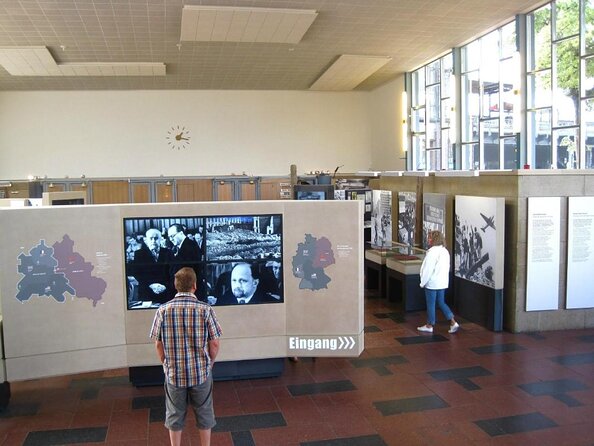
Brandenburg Gate is one of Berlin’s essential stops, but its importance goes well beyond its handsome columns and famous chariot. It has witnessed imperial ceremonies, Nazi rallies, wartime destruction, Cold War division, and reunification.
Your guide can help you read the gate as a political symbol. During the Cold War, it stood close to the wall and was inaccessible as an ordinary crossing point. Today, it is one of the clearest reminders that Berlin’s borders and public spaces have changed dramatically within living memory.
Nearby, the Memorial to the Murdered Jews of Europe offers a very different experience. Its field of gray concrete blocks is open to the public, and you walk among them rather than simply viewing a monument from a distance. The changing height and narrow paths create a sense of uncertainty and discomfort, which is part of the memorial’s power.
Give this stop time. You do not need a long speech to understand it, and your guide should allow space for silence. This is one place where a private tour helps, since you can ask difficult questions quietly and move at a pace that feels right for your group.
Hitler’s bunker and the geography of Nazi Berlin
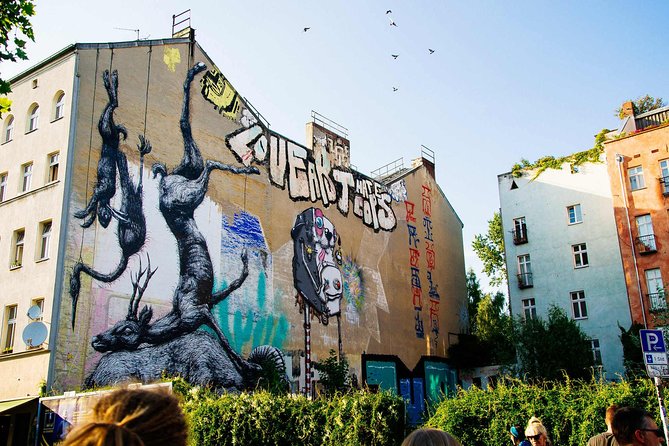
The bunker site is not a preserved underground attraction. It is marked at street level, beneath or beside ordinary modern development, and the location can be easy to miss without an informed guide.
That plain setting is important. The end of Hitler’s dictatorship did not leave behind a grand monument at this spot. Instead, the site is a lesson in how Berlin has handled a place associated with Nazi leadership without turning it into a shrine.
A guide can place the bunker within the wider story of the Nazi government, the final battle for Berlin, and the collapse of the regime. The stop also helps you understand the city’s approach to memory: some places are marked, some are preserved, and some are deliberately kept low-key.
The itinerary may also include Bebelplatz, a square surrounded by impressive buildings. It is known for the Nazi book burning of 1933 and now contains a memorial beneath the pavement. The empty underground library visible through glass is easy to overlook, so this is exactly the sort of detail you might miss without someone pointing it out.
More History Walking Tours in Germany
- Berlin: Third Reich, Hitler, and WWII Walking Tour
★ 4.9 · 1,757 reviews - Berlin: Cold War Walking Tour on Berlin Wall Route
★ 4.8 · 437 reviews - Private Walking Tour Berlin Third Reich Hitler and World War II
★ 5.0 · 360 reviews - Berlin: Berlin Wall & East Side Gallery Walking Tour
★ 4.9 · 264 reviews
Reichstag, Museum Island, and Berlin’s rebuilt center
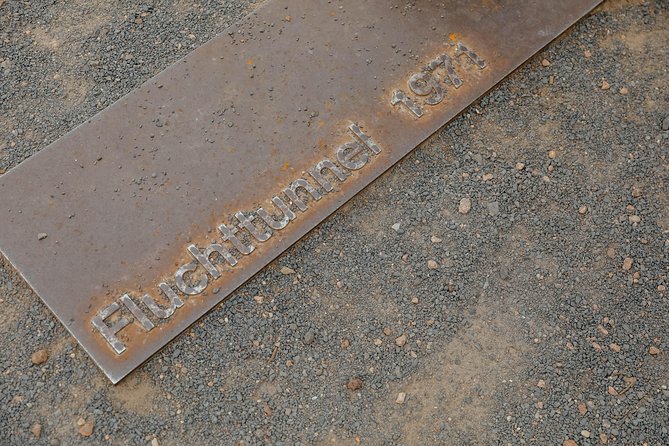
The Reichstag Building adds another layer to the walk. Opened in 1894 for the parliament of the German Empire, it later became associated with the fire of 1933, an event used by the Nazi government to tighten its grip on power.
Today, the building houses Germany’s parliament and has been restored with a modern glass dome. The tour does not include admission, and the itinerary lists the Reichstag as an exterior stop. If you want to visit the dome, treat that as a separate plan and check the current entry arrangements yourself.
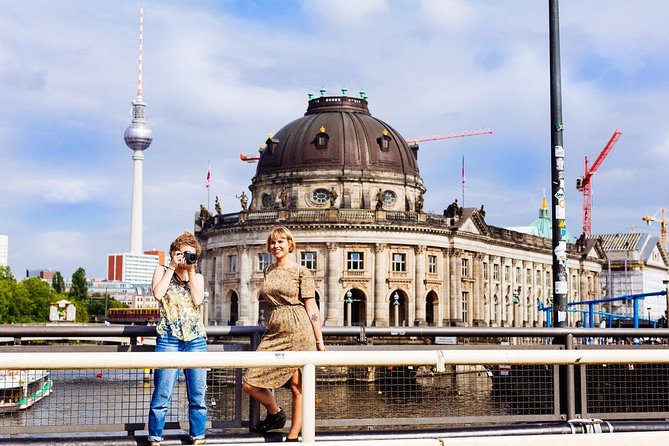
Museum Island is usually allowed about an hour on the route. The complex occupies the northern end of Spree Island and contains several of Berlin’s major museums. Its buildings show the city’s imperial ambitions, while the island’s present role reflects Berlin’s effort to preserve and reuse the historic center.
The tour does not include museum tickets. That is both a limitation and a useful boundary. Four hours is enough to understand the setting and choose what you want to see later, but it is not enough to tour the collections properly. If ancient art or nineteenth-century architecture matters to you, save a separate block of time for Museum Island.
Checkpoint Charlie and the Cold War
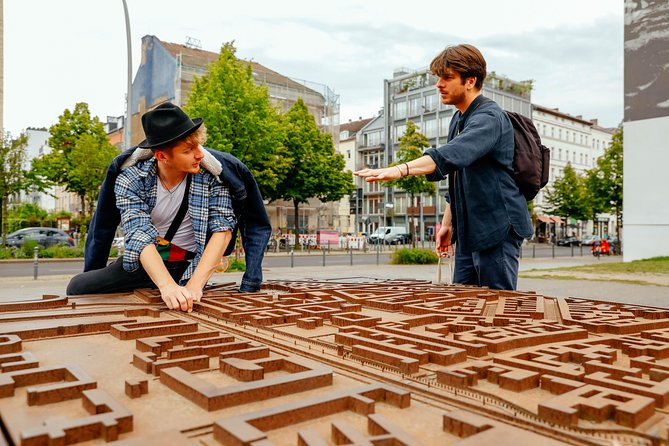
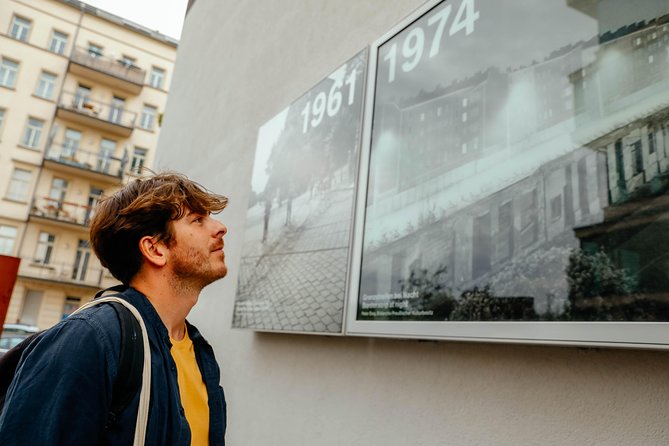
Checkpoint Charlie was the best-known crossing point between East and West Berlin during the Cold War. The checkpoint itself is now a busy central attraction, with signs, photographs, and reminders of the tense years when the city was split between rival political systems.
The stop can feel more commercial than the Holocaust Memorial or the bunker site. That is worth knowing before you arrive. Its value comes from the history of the crossing point and the stories of people who tried to escape East Germany, not simply from the current street scene.
The Palace of Tears provides one side of the division story: personal departures and family separations. Checkpoint Charlie provides another: military tension, border control, and the possibility that a local confrontation could become an international crisis.
A strong guide will connect these locations rather than treat them as isolated photo stops. You should ask about escape attempts, daily life in divided Berlin, and what changed after the wall fell. The private format gives you room to steer the discussion toward the Cold War questions that interest you most.
What the four-hour route feels like
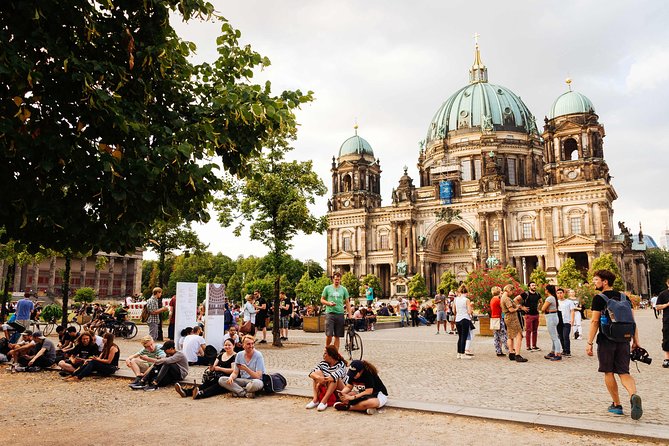
This is a walking tour first and a sightseeing tour second. The route covers central Berlin, with several long stretches between major locations. One person reported about 15,000 steps over the outing, so comfortable shoes are essential.
You will have opportunities to stop for photos, refreshments, and questions. Still, the combination of distance and serious subject matter can make the day tiring. Small children may struggle unless the guide knows in advance and adjusts the route.
The pace can be one of the tour’s strengths. Instead of rushing through a large group, you can pause at a building, skip an interior, or spend longer on a subject. Guides have also helped with coffee stops, bathroom breaks, restaurant suggestions, and practical ideas for the rest of the day.
The route is not fixed in the way a museum schedule is fixed. The provider says it can be customized, and the possible stops depend on the guide and chosen path. Ask at the beginning to see the intended route on a map. This simple step can prevent disappointment if you especially want the Berlin Wall, Brandenburg Gate, Checkpoint Charlie, or the Holocaust Memorial.
The guide makes or breaks the experience
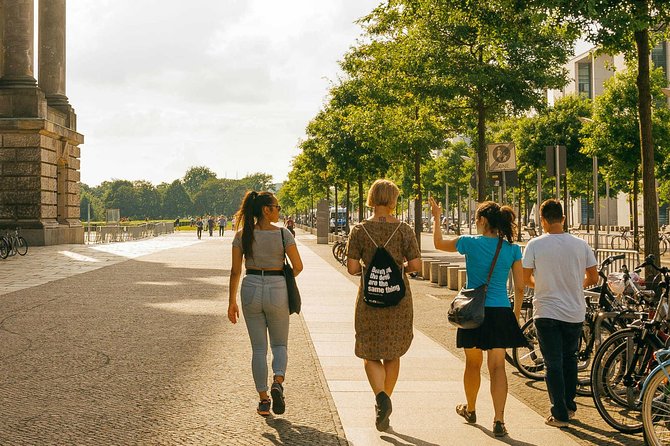
The strongest part of this experience is the human element. Sara has been praised for energy, clear answers, and tailoring the walk to the group. Seth has been described as engaging and thorough, with a talent for making the four hours pass quickly. Boyd is known for adding historical detail, pointing out less obvious places, and helping people decide what to visit afterward.
Miha has been praised for his friendly manner, city knowledge, and picture-taking advice. Amelia has adapted the walk to individual interests, while Pablo has focused on both major sights and smaller details. Betty and Michele have also received strong marks for making the subject accessible and enjoyable.
Those names should not be treated as a promise of who you will receive. The quality of a private platform depends partly on the individual guide. One very poor experience involved an unprepared guide, an unclear plan, inappropriate language, and attention diverted to personal messages. The tour was stopped after 15 minutes.
That account is unusual beside the large number of high scores, but it gives you a practical lesson. At the start, confirm the guide’s name, ask for a quick outline, and state your priorities. A professional guide should be ready to explain the route and welcome questions.
Is $143.97 per person good value?
At $143.97 per person, this is not a budget walking tour. For two people, the listed price comes to about $288 before any group discount. For a larger party, the per-person cost may feel easier to justify because the guide’s time is devoted only to your group.
You are paying for privacy, flexibility, and a local guide rather than museum admission or transportation. The tour includes a guide and carbon emissions offsetting, but hotel pickup, drop-off, and attraction tickets are not included.
I think the price makes the most sense for first-time visitors who want a clear framework for Berlin’s difficult history. It is also useful for families or friends who ask many questions and would find a large group too rigid.
If you are happy to research the sites yourself and follow a city map, you can spend less. If you want to enter several museums, the cost of this walk comes on top of admission fees. Consider it a four-hour orientation and history lesson, not an all-inclusive sightseeing package.
Free cancellation is available up to 24 hours before the start time. Changes or cancellations made inside that window are not accepted for a refund.
Who should book this walk?
Book it if you want WWII and Cold War history explained in a connected way, rather than seeing monuments one by one. It suits adults, older children who can manage a long walk, history students, and first-time visitors who want to ask plenty of questions.
It is especially useful if your interests are specific. Tell the guide if you want more time on Jewish Berlin, Nazi architecture, the bunker, the Berlin Wall, escape attempts, postwar rebuilding, or the divided city.
Think twice if you dislike walking, need guaranteed indoor access, or want a fixed route that includes every advertised landmark. The itinerary can change, and most attractions are viewed from outside. You may also prefer a museum-focused experience if your main goal is to spend hours with historical objects rather than streets and buildings.
Should you book The History of Berlin?
I would book this tour if you have four hours to spare and want Berlin’s complicated past explained by a person who can respond to your questions. The private format, flexible route, and strong record make it more useful than a standard group walk for many people.
Before paying, ask which guide is available and request a route that includes your must-see places. Wear good shoes, bring water, and keep your schedule flexible. If you do that, the tour can give you a clear foundation for exploring Berlin on your own afterward.
FAQ
How long does the tour last?
The tour lasts approximately four hours, though one recorded outing lasted four and a half hours.
Where does the tour begin?
It begins at Oranienburger Strasse 36, 10117 Berlin, Germany.
Where does the tour end?
The tour ends back at the starting point.
Is this a private tour?
Yes. Only your group participates, and the itinerary can be customized to your interests and preferences.
Are museum and attraction tickets included?
No. Admission tickets are not included. The route visits many attractions from outside, including places where an interior visit may require a separate ticket.
Which places may be included?
Possible stops include Museum Island, the Reichstag, Checkpoint Charlie, the New Synagogue, the Palace of Tears, Brandenburg Gate, the Holocaust Memorial, Hitler’s bunker site, and Bebelplatz. The exact route depends on the guide and your chosen interests.
Can I cancel for a full refund?
Yes, if you cancel at least 24 hours before the experience begins. Cancellations or changes made less than 24 hours before the start time are not refunded.
More Private Walking Tours in Berlin
- Private Walking Grand Tour of Copenhagen
★ 5.0 · 3,953 reviews - Vienna: Private Walking Tour with a Local
★ 4.6 · 1,446 reviews - Barcelona Helicopter, Sailboat & Old Town Private Walking Tour
★ 5.0 · 1,395 reviews - Private Walking Tour of Hanoi City
★ 5.0 · 1,251 reviews
More Private Walking Tours in Germany
- Private Walking Tour: World War 2 and Cold War Sites in Berlin
★ 5.0 · 230 reviews - Munich in the 3rd Reich and WW2 private walking tour
★ 5.0 · 148 reviews - Bamberg: Private Guided Walking Tour
★ 4.8 · 90 reviews - Dresden: Private Guided Walking Tour
★ 4.5 · 81 reviews
Just added around Berlin
- East Berlin and the Wall: Walking Tour★ 4.9 · 407 reviews
- Cold War, Berlin Wall, Spies and the East Side Gallery★ 4.8 · 254 reviews
- Berlin: walking tour about Charité★ 4.4 · 537 reviews
- Berlin: Walking Tour of the Top 10 Sightseeing Attractions★ 4.7 · 150 reviews
- Berlin: Sightseeing Walking Tour of the Top 20 Attractions★ 4.5 · 196 reviews
- Berlin: The Time of National Socialism Walking Tour★ 5.0 · 220 reviews
- Berlin: Kreuzberg Guided Walking Evening Tour★ 4.7 · 555 reviews
- Berlin : Must-see attractions Walking Tour★ 4.8 · 83 reviews
History Walking Tours, compared.

Berlin’s Best: 2 Hour Walking Tour Third Reich and the Cold War
Read our review →
Third Reich Berlin: Hitler and WWII Walking Tour
Read our review →
New Orleans Garden District History Walking Tour
Read our review →
Cartagena: Historic Center and Getsemaní Shared Walking Tour
Read our review →