
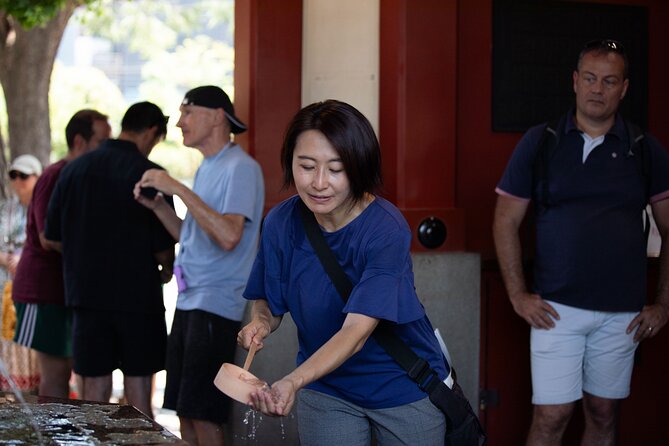
REVIEW · TOKYO
Asakusa Senso-ji Temple and Old Tokyo Walking Tour
Asakusa gives you Tokyo at its most traditional, but the crowds, side streets, and temple customs can be a lot to sort out on your first visit. This small-group walk turns that busy scene into a readable story, from the Kaminarimon gate and Nakamise stalls to the Buddhist and Shinto rituals at Senso-ji and Asakusa Shrine.
I like the maximum group size of 12, which makes it easier to hear the guide and ask questions. I also like the practical details: guides such as Aya, Glenda, Keiko, Loc, and Polina have helped visitors understand prayer customs, choose snacks, find good photo spots, and plan dinner nearby. The main consideration is that Asakusa can be crowded, and the tour is focused on an overview rather than long visits inside every stop.
Key details before you book
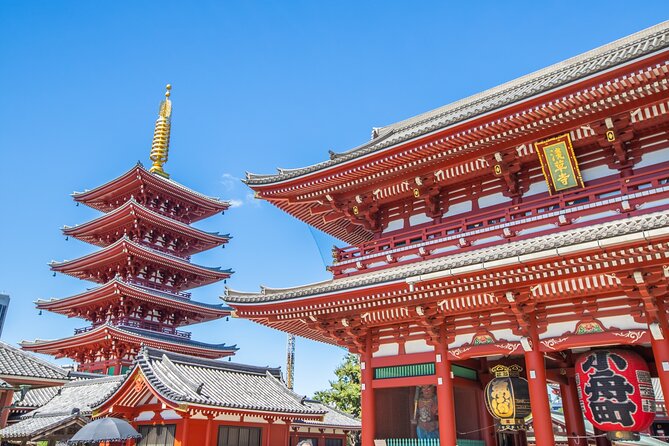
- A clear first look at old Tokyo: The route links Senso-ji, Asakusa Shrine, traditional shopping streets, Hoppy Street, and Azuma Bridge.
- Small group, up to 12 people: You should have a better chance of hearing explanations and getting answers than on a large coach tour.
- Useful temple and shrine guidance: Your guide can show you how to purify yourself, receive a fortune, and pray at Buddhist and Shinto sites.
- Practical local tips: The walk can include advice on Japanese snacks, shopping, food stalls, and nearby dinner choices.
- A useful two-hour format: The tour fits well on a first morning in Tokyo or between other plans.
- Good value at $20: Admission to the sights is free, so most of the price pays for direction, context, and a local guide.
Why this short Asakusa walk works
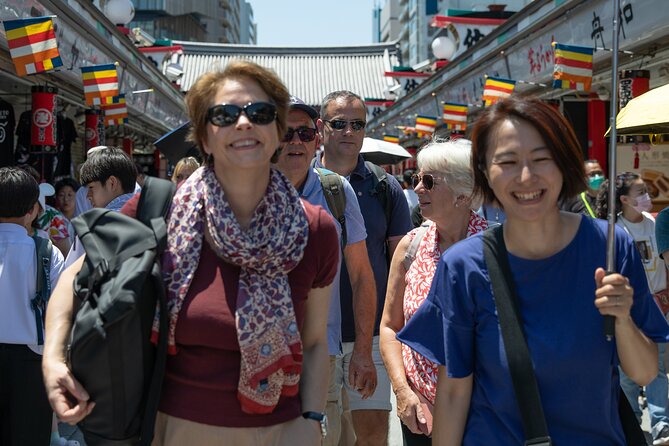
I see this tour as a strong orientation walk, not a full-day cultural program. For $20, you get an English-speaking local guide, a route through several important parts of Asakusa, and explanations that can make later visits to temples and shrines much easier.
Senso-ji is free to enter, as are the other listed stops. That means the value rests in what your guide adds: the background behind the buildings, the difference between Buddhist and Shinto customs, and the small details you might miss while moving with the crowd.
The small group matters here. Asakusa is not a quiet museum district. People stop for photos, shopkeepers call out from stalls, and the approach to Senso-ji can become packed. A group capped at 12 is still large enough to feel social, but small enough for a guide to pause, answer questions, and keep an eye on everyone.
The experience has earned a 4.8 rating from 561 reviews, with 96 percent recommending it. The strongest praise centers on guides who explain clearly, answer questions patiently, and offer useful suggestions beyond the official route.
A few more walking tours around Japan worth a look
- Kyoto Geisha Walking Tour: Gion District & Hidden Gems
★ 4.7 · 3,273 reviews - Tokyo Tsukiji Fish Market Food and Culture Walking Tour
★ 5.0 · 3,184 reviews - Kyoto: Gion Magical Night Walking Tour with Geisha Trivia
★ 4.9 · 2,393 reviews
Meeting at Tokiwado near Kaminarimon
The tour starts at Tokiwado Kaminari-okoshi Honpo, at 1-chome-3-2 Asakusa, Taito City. This places you close to the Kaminarimon area and the beginning of Nakamise Shopping Street.
Give yourself time to find the meeting point. One person specifically found the guide difficult to spot in the crowded area, although the group eventually connected. A mobile ticket is provided, and the meeting area is near public transportation, but the details supplied do not name a particular station or train line.
The start is well chosen. You begin beside one of Asakusa’s best-known entrances rather than wasting the first part of the walk on a long transfer. From here, your guide can explain how the shopping street leads toward Senso-ji and how the district developed as one of old Tokyo’s key cultural areas.
Nakamise Shopping Street and the approach to Senso-ji
Nakamise is more than a path to the temple. It is a traditional shopping street lined with stalls and shops selling snacks, souvenirs, and Japanese goods. The tour allows about 10 minutes here, enough to understand the layout and notice what you may want to return for later.
I like having this introduction before entering Senso-ji. Without context, Nakamise can feel like a wall of signs, food, and small purchases. With a guide, you can ask what makes a good edible souvenir, which snacks are worth trying, and how to separate everyday shopping from religious activity.
This part of the walk is also a reminder that Asakusa is both a sacred district and a commercial one. You are not visiting a temple isolated from city life. Shops, food, rituals, and sightseeing all meet along the same route.
Do not expect a long shopping stop. Ten minutes passes quickly, especially if you want to browse or buy food. The useful strategy is to take notes or remember favorite stalls, then return after the tour when you can shop at your own pace.
Senso-ji in a 30-minute guided visit
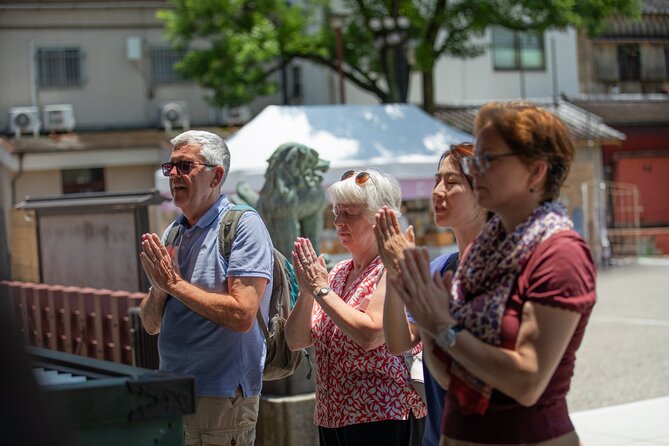
Senso-ji receives the longest listed stop, about 30 minutes. That is appropriate because it is the main reason many people come to Asakusa, and because the complex makes more sense once someone explains what you are seeing.
Your guide can provide historical background, explain the temple’s importance to Asakusa, and show you how to approach Buddhist worship. Several guides have also demonstrated purification, fortune telling, and proper prayer manners. That practical instruction is especially useful if you have never visited a Japanese Buddhist temple.
The tour can also help you look beyond the famous exterior. You may learn why certain areas matter, how the temple shaped Asakusa’s identity, and which visual details deserve your attention. One guide was praised for bringing a binder with pictures to explain the temple and related history, while another pointed out a photo position overlooking the temple grounds.
The route is not simply a photo stop. You get time to ask questions about Buddhism, customs, and Japanese history. Guides named Aya, Glenda, Keiko, Loc, Polina, and Hiroko were singled out for clear explanations, friendly conversation, or strong command of English. Your assigned guide may be someone else, but the repeated emphasis on personal attention is encouraging.
There are limits. Senso-ji is a major attraction, so it may be crowded, and 30 minutes is enough for an introduction rather than a slow, detailed examination. You will likely want to return on your own for more photos or a quieter look.
Same streets, a different route:
- Tokyo: Imperial Palace and Shogun Historical Walking Tour
★ 5.0 · 2,251 reviews - Kyoto: Gion Geisha District Walking Tour – Stories of Geisha
★ 4.7 · 2,187 reviews - Best of Kyoto: Gion, Geisha, Pagodas & Cobblestones
★ 4.9 · 2,058 reviews - Night Walk in Gion: Kyoto’s Geisha District
★ 4.5 · 2,003 reviews
Asakusa Shrine and the difference between Buddhist and Shinto customs
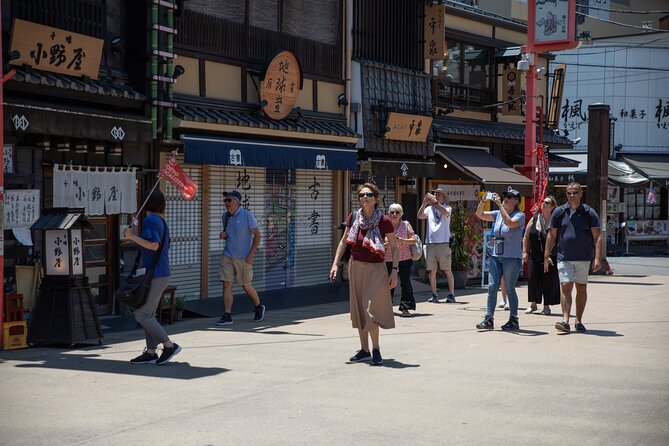
Next comes Asakusa Shrine, also called Sanja-sama, with about 15 minutes set aside. It sits beside Senso-ji and is dedicated to the three men connected with the temple’s founding.
This stop gives the tour an important contrast. Senso-ji is Buddhist, while Asakusa Shrine is Shinto. Guides can explain how to behave at each place, including purification and prayer. That distinction helps you avoid treating every Japanese religious site as if it followed the same rules.
Fifteen minutes is enough for a compact explanation and a chance to observe the setting. It also keeps the tour moving, which matters if you have other plans in Tokyo. If you want a long period of quiet reflection, this format may feel brisk, but if you want a useful introduction, the timing works well.
Hoppy Street, where the route turns toward everyday Asakusa
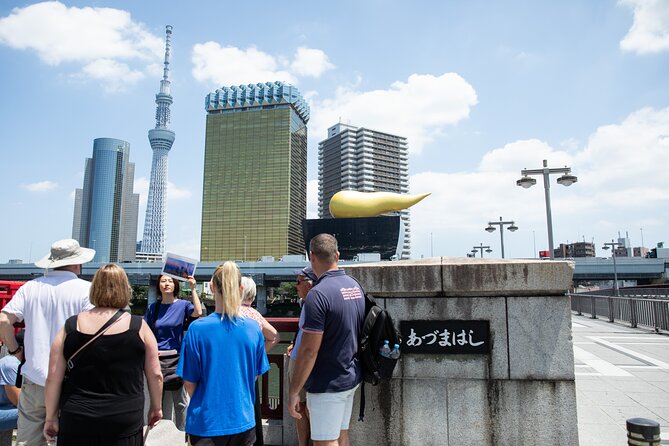
Hoppy Street brings a different side of the neighborhood. The area is known for izakayas, or Japanese pubs, and for Hoppy, a non-alcoholic beer-flavored drink. The tour allows about 10 minutes here.
I like this inclusion because it keeps the experience from becoming only a temple visit. Asakusa’s character also comes through in its food streets, casual drinking spots, and ordinary evening life. Your guide may point out places to eat or suggest food worth trying after the walk.
This is not a food tour, so food and drinks are not included. You should not expect tastings or a seated meal during the scheduled route. Think of Hoppy Street as a short introduction and a useful list of ideas for later.
One person wished there had been more time to try food during the tour, but also found it easy to return afterward. That is good advice. Keep your schedule open after the walk if you want to sample the stalls or izakayas your guide recommends.
Shin Nakamise and a modern shopping detour
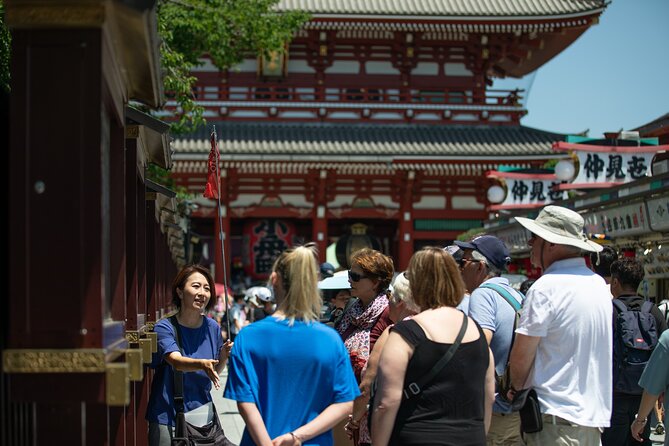
The route also extends through Shin Nakamise, a continuation of Nakamise with a more modern mix of shops and boutiques. The supplied timing does not list a separate duration for this stop, so treat it as part of the walking route rather than a long scheduled visit.
This section helps show that Asakusa is not frozen in the past. Traditional temple streets and newer retail spaces sit close together. You may find different shopping choices here than along the more souvenir-focused approach to Senso-ji.
Because the timing is not clearly stated, you should not plan a major purchase stop around it. Use the guide’s suggestions to mark places you want to revisit after the formal tour ends.
Azuma Bridge and the final Tokyo views
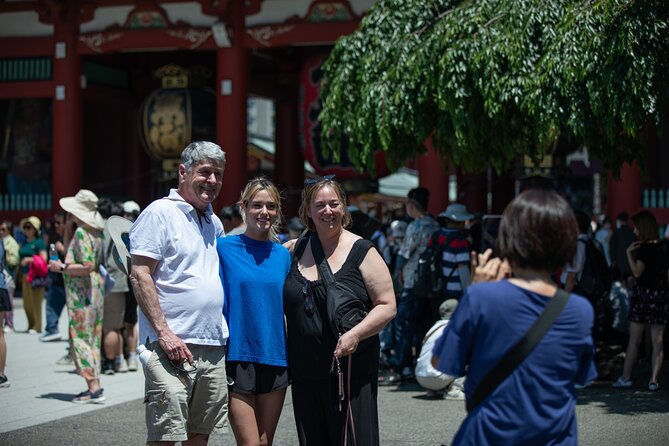
The tour finishes near Azuma Bridge, at 2-chome-1-16 Kaminarimon. The bridge crosses the Sumida River between Asakusa and Kuramae and offers views toward Tokyo Skytree and the Asahi Beer Hall.
This is a smart ending. After temple gates, shopping lanes, and narrow streets, the river opens up the view and gives you a different sense of Tokyo. It also leaves you in a useful area for continuing your day, though transportation details from the end point are not provided.
Your guide may help you frame photos here, and several guides were praised for taking pictures for people during the walk or showing good viewpoints. Keep in mind that the exact photo experience depends on the guide and the group’s pace.
The end point is near Azuma Bridge, not back at the starting location. Plan for that when arranging your day. If you want to revisit Nakamise or eat near Hoppy Street, you will need to walk back through the district.
What the guides add to the experience
The guide is the main reason to book this tour instead of walking the same route alone. The streets and temple grounds are free, and you can find basic information in a guidebook. What you gain here is a person who can explain customs in real time and respond to your questions.
The most useful guide qualities reported across the supplied feedback are patience, clear English, and a willingness to help with practical details. Aya was praised for making sure nobody had unanswered questions and for taking photos. Glenda was praised for speaking clearly, sharing visual material, and allowing time for photos. Loc was described as friendly and well informed about Japanese history and customs.
Other named guides, including Keiko, Polina, Miyu, Rio, Ayaka, Nana, and Hiroko, were praised for making the walk friendly, informative, or easy to follow. You cannot select a specific guide from the information provided, so book this for the format and route rather than expecting one particular person.
The guides also appear to tailor the conversation to the group. You can ask about Buddhism, Shinto, food, shopping, temple etiquette, and nearby dinner options. That flexibility is worth more than a memorized speech when you are trying to understand what you see.
Price, timing, and who gets the best value
At $20 per person, this is inexpensive for a guided two-hour walk in central Tokyo. Since admission to the stops is free, you are paying for the guide’s time, route planning, language support, and cultural explanation.
I think the price works best for first-time visitors, solo visitors, couples, and anyone arriving in Tokyo without a clear plan for Asakusa. One person booked it after waking early on the first morning and found that learning the basics of Japanese temples and shrines helped with the rest of the trip.
The tour also suits people with limited time. Two hours can fit before lunch, between other Tokyo plans, or at the beginning of a day in Asakusa. Some experiences described in the supplied feedback lasted about an hour, so the actual pace may vary. The advertised duration is approximately two hours, and you should allow that amount of time.
You should budget separately for snacks, drinks, shopping, and any personal expenses. Transportation to the meeting point, tips, and travel or health insurance are also not included. Tips are optional.
What to know before you go
Wear comfortable shoes. The route is on foot and covers several streets and public sites. The tour requires good weather, and if poor weather forces cancellation, you will be offered another date or a full refund.
Most people can participate, and service animals are allowed. The activity is near public transportation, but the provided details do not identify a specific accessible route or station, so contact the provider if you need precise mobility information.
You can cancel for a full refund up to 24 hours before the start time. Changes or cancellations made less than 24 hours before the start time are not accepted for a refund.
Should you book the Asakusa Senso-ji walking tour?
Book it if you want a friendly, efficient introduction to Asakusa and do not want to guess your way through temple and shrine customs. The strongest reasons are the small group, low price, clear route, and practical explanations about prayer, purification, food, shopping, and photos.
Skip it if you already know Senso-ji well, prefer exploring alone, or want a food tour with included tastings. You will have limited time at each stop, and the crowded streets can make the walk feel hurried.
For a first morning in Tokyo, I think this is a sensible buy. Use the tour to understand the district, then return afterward to shop Nakamise, try food around Hoppy Street, or take more photos near Senso-ji and Azuma Bridge.
FAQ
How long does the Asakusa walking tour last?
The advertised duration is approximately two hours. Some past experiences described a shorter walk of about one hour, so the pace may vary.
What places are included?
The route includes Nakamise Shopping Street near Kaminarimon, Senso-ji Temple, Asakusa Shrine, Hoppy Street, Shin Nakamise, and Azuma Bridge.
Is admission to Senso-ji included?
There is no separate admission charge listed for Senso-ji or the other stops. The tour includes guided commentary, but food, drinks, and personal expenses are not included.
How large is the group?
The maximum group size is 12 participants.
Is the guide English-speaking?
Yes. The experience includes an English-speaking local guide.
Where does the tour start?
It starts at Tokiwado Kaminari-okoshi Honpo, 1-chome-3-2 Asakusa, Taito City, Tokyo 111-0032, Japan.
Where does the tour finish?
The tour finishes near Azuma Bridge, at 2-chome-1-16 Kaminarimon, Taito City, Tokyo 111-0034, Japan.
Is transportation included?
No. Transportation to and from the meeting point is not included.
Can I cancel for a full refund?
Yes, if you cancel at least 24 hours before the experience start time. Poor-weather cancellations offer either a different date or a full refund.
Just added around Japan
- Miyajima Half-day Trip Historical Walking Tour★ 5.0 · 284 reviews
- Hiroshima Walking Tour Why A Bomb was dropped to Hiroshima★ 5.0 · 347 reviews
- Tokyo: Asakusa & Sensoji ー Oldest Temple Walking Tour (2hrs)★ 5.0 · 213 reviews
- Asakusa Cultural Walk & Matcha Making Tour★ 5.0 · 245 reviews
- Tokyo: Tsukiji Market Walking Tour & Sushi Cooking Class★ 4.6 · 122 reviews
- Tokyo:Stroll in Old traditional culture towns~Yanaka & Nezu★ 4.9 · 186 reviews
- Tokyo: Shibuya Crossing & Hidden Streets Walking Tour★ 4.8 · 128 reviews
- Tokyo: Shinjuku Bar Hopping & Night Walking Tour★ 4.6 · 137 reviews
Walking Tours, compared.

Magical London: Harry Potter Guided Walking Tour
Read our review →
Reykjavik Food Walk – Local Foodie Adventure in Iceland
Read our review →
History and Hauntings of Salem Guided Walking Tour
Read our review →
New Orleans Premier Ghost, Voodoo and Vampire Walking Tour
Read our review →
Amsterdam Anne Frank: Small-Group Walking Tour & Local Guide
Read our review →

Edinburgh Castle: Guided Walking Tour with Entry Ticket
Read our review →
Anne Frank’s Story – Guided Walking Tour through Amsterdam
Read our review →Browse the lists this tour appears in