
REVIEW · TOKYO
Tokyo: Tsukiji Fish Market Guided Walking Tour
Tsukiji is easiest to enjoy when someone helps you read the market. This two-hour walk takes you from Tsukiji Hongwanji Temple into the outer market, where guides such as Jim, Rie, Yayoi, and Sayaka explain the food, customs, and stalls that can be hard to sort out on your own. I like the personal scale of the tour, with no more than 10 people, and I like that you choose and pay for only the foods you want. The main catch is that tastings are not included, and some premium bites can cost more than you expect.
I especially like two things here. First, your guide does more than point at fish: you learn why ingredients matter in Japanese cooking. Second, you are not locked into a fixed menu, which makes it easier to skip seafood, avoid foods that do not suit you, or spend more on one special bite. Bring cash, arrive ready to walk, and leave room for small plates.
Key points at a glance
- Tsukiji Hongwanji comes first: Begin with about 15 minutes at the ornate temple before entering the market.
- The food is your choice: Pick from items such as tamago, oysters, sushi, wagyu beef, eel, sweets, and other market foods.
- Guides make the maze manageable: A local guide can lead you to selected stalls and help explain ordering and payments.
- The tour stays small: Groups are limited to 10 people, allowing more room for questions and personal suggestions.
- Bring cash for tastings: Food and drinks are extra, and some prized seafood or beef can be costly.
- You get more than a food crawl: The walk covers market traditions, Japanese ingredients, temple customs, and local food culture.
Why a guide helps at Tsukiji Outer Market
Tsukiji is not simply one fish hall with a neat row of counters. The current visitor experience centers on the outer market, a maze of food shops and stalls selling seafood, vegetables, dried goods, spices, sweets, and prepared bites. With so much choice packed into a small area, it is easy to spend your whole visit looking without knowing what to buy.
That is where this tour earns its keep. Your guide points out selected places, explains what you are seeing, and helps you decide what to try. Several guides, including Rie, Jim, Yayoi, and Haydn, are praised for taking people to favorite stalls and explaining foods in clear, practical terms.
You may also get help with ordering and payment. That matters when a stall has limited English or when you are choosing between several portions. The tour is not a formal restaurant meal, so you can decide at each stop. If you dislike seafood, you can focus on beef, sweets, eggs, or other foods. If you want to try unusual seafood, your guide can explain what it is before you buy.
This flexibility is one of the strongest features. A set tasting menu can be wasteful if you have allergies, strong dislikes, or a small appetite. Here, you control the bill and the amount you eat, though that also means you need to budget beyond the $22 tour price.
More Market Visits in Tokyo:
- Tokyo Tsukiji Fish Market Food and Culture Walking Tour
★ 5.0 · 3,184 reviews - Tokyo: Tsukiji Fish Market Food and Walking tour
★ 5.0 · 1,724 reviews - Tsukiji Fish Market Small-Group Food Walking Tour
★ 5.0 · 621 reviews
Starting at Tsukiji Hongwanji Temple
You meet the guide at the Starbucks in front of Tsukiji Station, with the guide waiting near the bench. From there, the group walks about five minutes to Tsukiji Hongwanji.
The temple visit lasts around 15 minutes. It is a smart opening because it gives you a cultural frame before the food begins. The building is known for its detailed carvings and calm interior, a sharp contrast to the narrow market lanes outside. Your guide explains the temple and its place in local culture before leading you onward.
Several guides also include nearby religious sites or extra temple details when time allows, but the stated route specifically includes Tsukiji Hongwanji. Keep your expectations focused: this is a short introduction, not a long temple tour. The market takes most of the two-hour outing.
I like this order. You first learn something about the setting, then see how food and tradition connect in daily life. It also prevents the tour from feeling like a simple procession from snack to snack.
Entering the outer market
After another five-minute walk, you reach Tsukiji Outer Market. The planned market time totals about 100 minutes, split into two sections of roughly 50 minutes each. In practice, this gives your guide room to show several types of stalls rather than rushing you through one long food stop.
The market sells far more than raw fish. You might see fresh seafood, fruit, vegetables, dried fish, shrimp, scallops, nuts, spices, sweets, and cooking ingredients. The guide explains how these products are used and what makes certain items special in Japanese food culture.
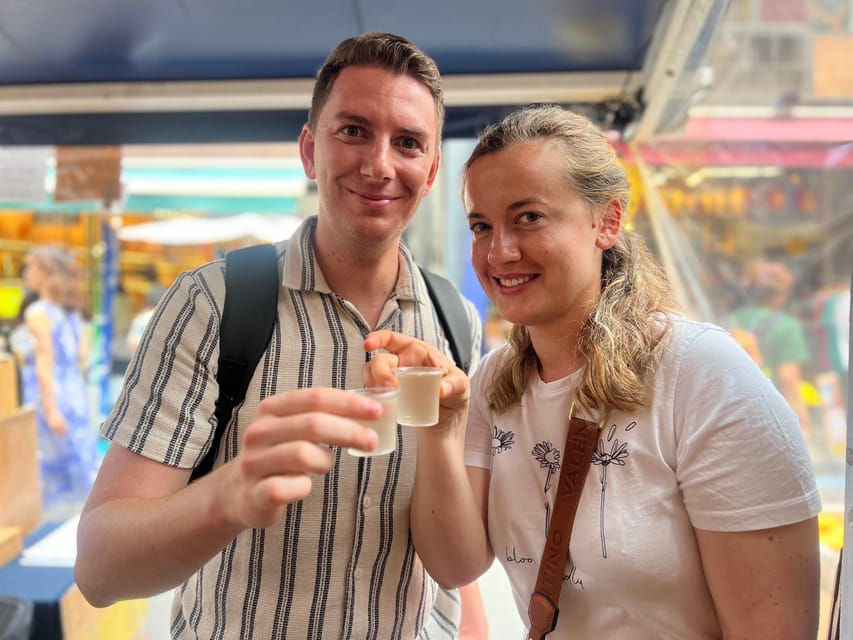
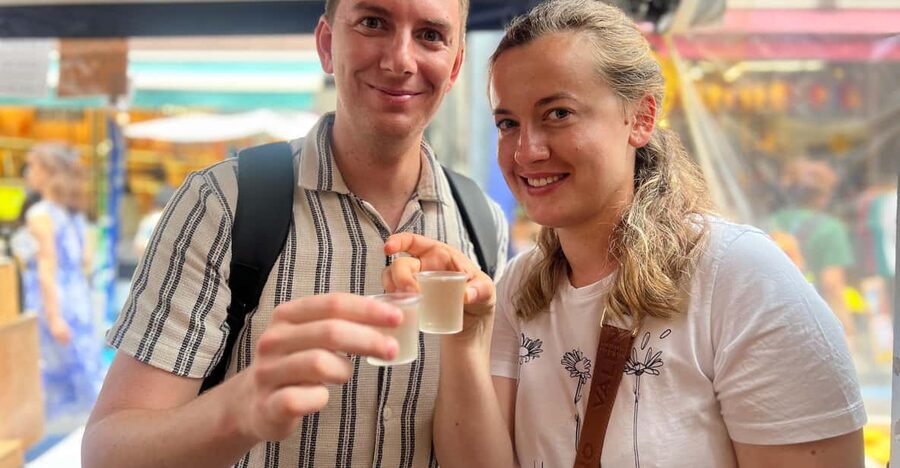
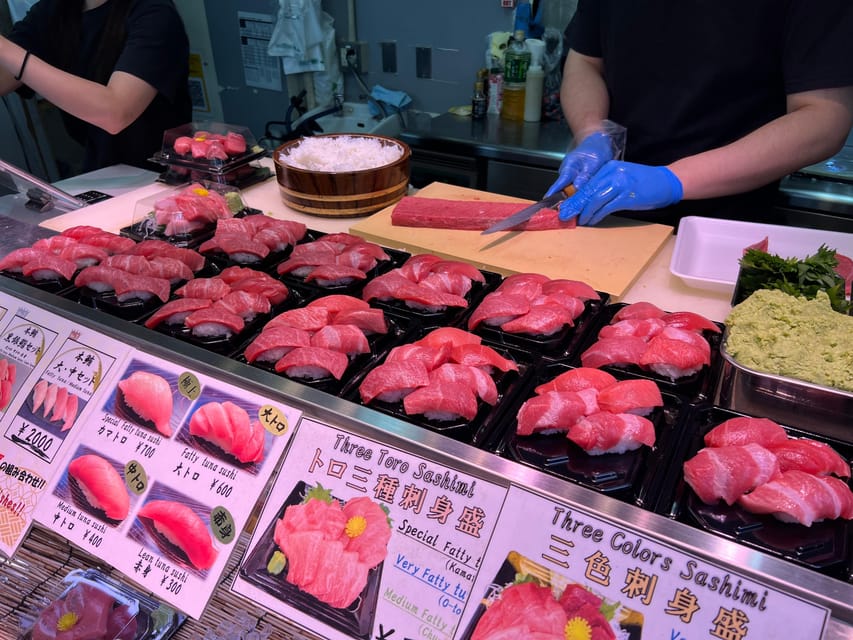
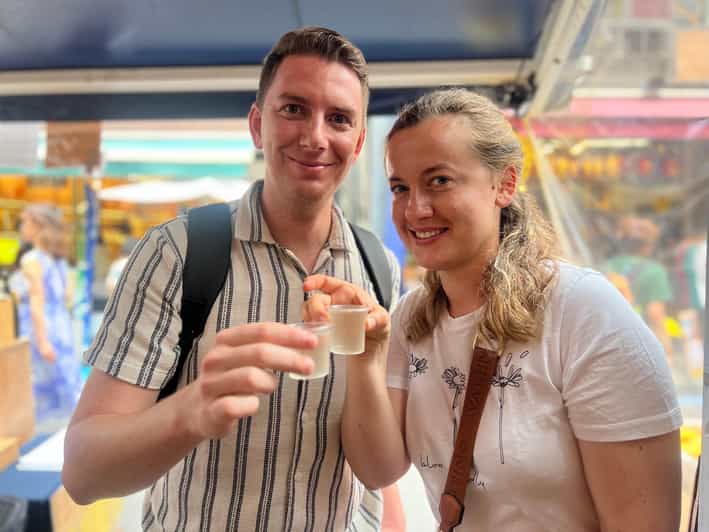
The range of tastings can be broad. Foods mentioned during the tour include tamago, oysters, sushi, wagyu beef, tuna, unagi eel, sea urchin, sashimi, fried eel, sweets, matcha items, and sake. You should not assume every item appears at every departure, since stalls and available foods can vary, but the tour clearly aims for variety.
The most useful part may be the explanation around each bite. Your guide can tell you what you are ordering, how it fits into Japanese cooking, and which ingredients are worth noticing. A piece of dried seafood becomes more meaningful when you understand how it is used at home. A tamago sample gives you a taste of a familiar Japanese market staple. Wagyu or fatty tuna can be a special splurge, but the guide helps you decide if it is worth adding.
Choosing food without a fixed menu
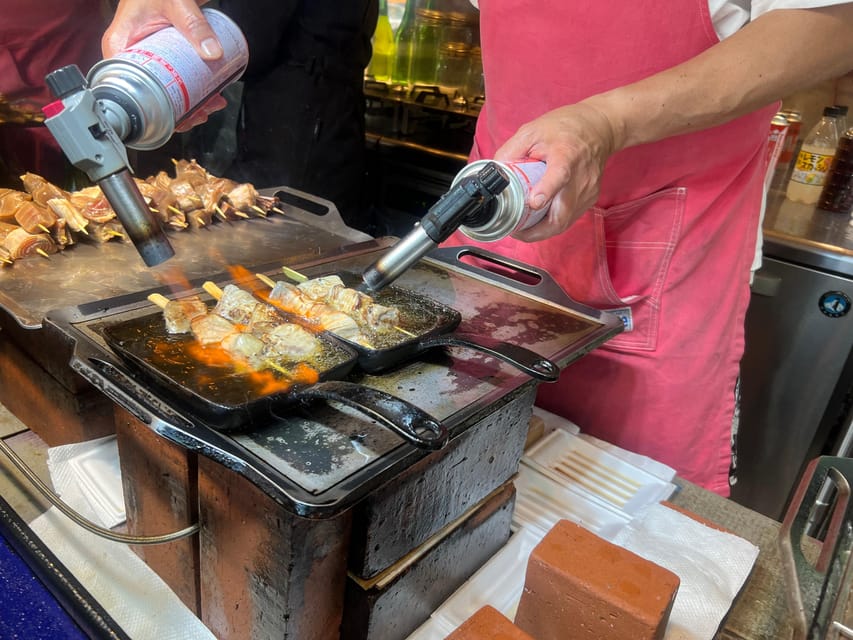
Food is not included in the $22 price. This is important enough to plan around. You pay directly for what you order at each stall, so bring cash and expect the total to rise if you want several premium foods.
The upside is freedom. You can try one bite at a time, share small portions with the group, or skip anything that does not appeal to you. One practical advantage is that the arrangement can work better for dietary preferences than a set menu. You are not automatically served every item.
The downside is less price certainty. A few tastings may be modest, while wagyu, sea urchin, fatty tuna, or other prized foods can add up quickly. You might also feel tempted to keep buying once the guide shows you more choices. Set a rough food budget before you start, especially if you want to take dried seafood, shrimp, or scallops home.
Some free samples may appear along the way, but do not plan the tour around them. The core promise is access, guidance, and explanation, not an all-you-can-eat meal. I would treat the $22 as the fee for a well-planned introduction, then bring extra money for the parts you personally find appealing.
More Shopping Tours in Tokyo:
- Bangkok: City Highlights Temple and Market Walking Tour
★ 4.5 · 3,990 reviews - London Bridge & Borough Market Food Tour with 7 Authentic Dishes
★ 5.0 · 1,972 reviews - Air Raid Shelter + St. Nicholas Market Walking Tour
★ 5.0 · 1,950 reviews - Nishiki Market Brunch Walking Tour (7 Tastings + Brunch)
★ 5.0 · 1,355 reviews
What guides add to the experience
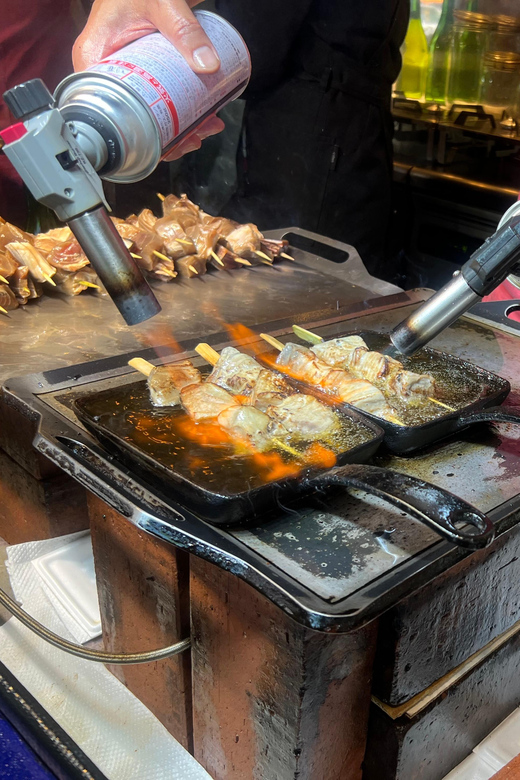
The guide quality matters more here than on a simple sightseeing walk. You are moving through working food stalls, making quick choices, and asking questions about ingredients that may be unfamiliar.
Jim is praised for explaining food, culture, history, and the links between Japanese cooking and daily life. Rie is often described as friendly, patient, and good at showing favorite market stops. Yayoi is associated with strong food recommendations and an energetic approach. Sayaka is noted for helping the group move through crowded areas and for making optional ordering easier.
Other named guides include Haydn, Nicolas, Minori, Miko, Shino, Joe, and Kiwa. The exact guide depends on the date and departure, so you should not book expecting one particular person unless the booking process confirms it. The common thread is an English-language walk with a guide who can explain the market from a more useful angle than a map can.
Guides have also helped with small practical matters, such as finding water at a convenience store or helping arrange a taxi after the tour. Those extras are not guaranteed, but they show why a human guide can be useful beyond the formal route.
The pace, group size, and physical effort
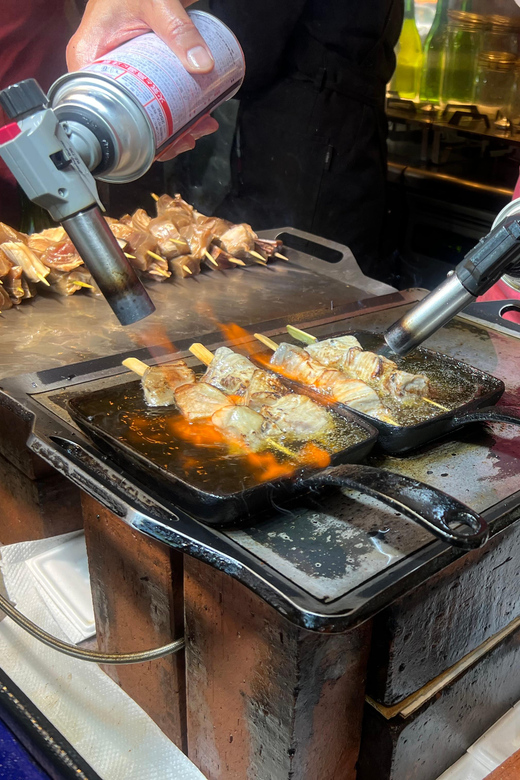
The tour lasts two hours and is conducted on foot. You walk roughly five minutes to the temple, five minutes onward to the market, and then spend most of the time moving between stalls. You should be comfortable standing, walking, and stopping in crowded lanes.
The group limit is 10 people. That is small enough for questions and personal food choices without making the outing private. It also helps the guide keep everyone together in a crowded market. Still, you are in a busy public food area, not a quiet museum, so the pace may pause around popular stalls.
Morning departures are part of the experience described in the tour information and comments. The market can be very busy even on a weekday morning. Wear comfortable shoes, keep your belongings close, and avoid bringing more than you need. You will have a better time if you can focus on the food and the guide instead of managing a large bag.
Is $22 good value?
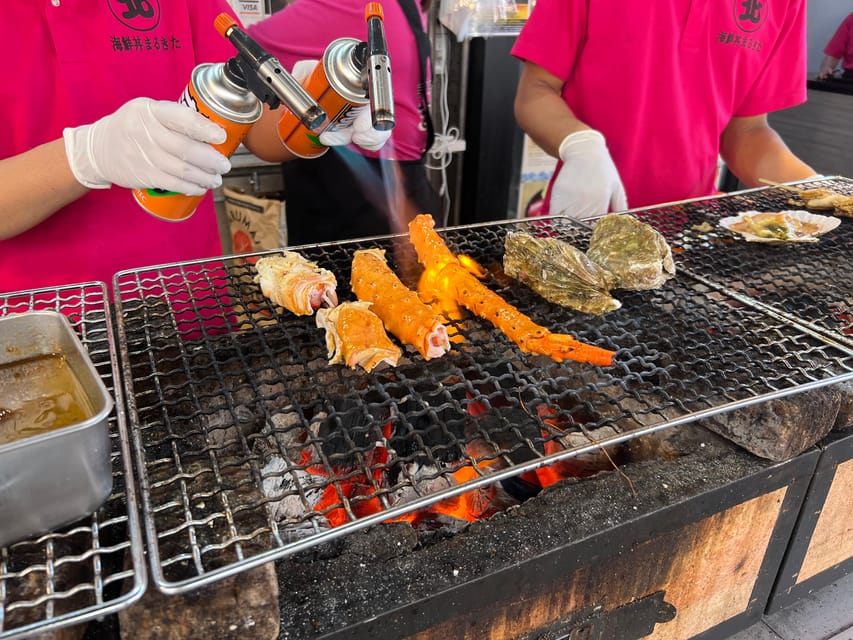
For $22 per person, the price is reasonable if you want structure and cultural explanation. Entry to the market and Hongwanji Temple is free, so you are paying mainly for the guide, route planning, English-language help, and the convenience of being led to selected stalls.
If you already know Tsukiji well and enjoy wandering without help, you could see the area without paying for a tour. The market itself does not require an admission ticket. But first-time visitors may lose time deciding where to go, miss stalls that are difficult to spot, or struggle to understand what they are buying.
The value becomes stronger for people who want to taste several foods but do not want to order blindly. It is also useful for solo visitors who would rather share a few small plates with a group, couples who want local context, and families who need to make separate food choices.
Remember that the final cost is $22 plus anything you eat or drink. The price is not a food package. Think of it as a guided market orientation with optional purchases.
Who should book this walk?

I would choose this tour if you are visiting Tsukiji for the first time, enjoy trying foods in small portions, or want to understand Japanese ingredients beyond sushi. It is a good early-trip activity because the guide can point out foods, customs, and market areas you may want to revisit later.
It also suits cautious eaters. You can ask questions, watch someone explain a dish, and decide for yourself. Even people who dislike seafood can find alternatives such as beef, tamago, sweets, and other non-fish items, though the market’s central character is still strongly tied to seafood.
You may prefer to skip it if you want a quiet temple visit, a full sit-down meal, or a guaranteed tasting menu. You should also think twice if you dislike crowds, walking, or paying separately at several stalls. This is an active food walk, not a polished restaurant tour.
Practical tips for a smoother visit
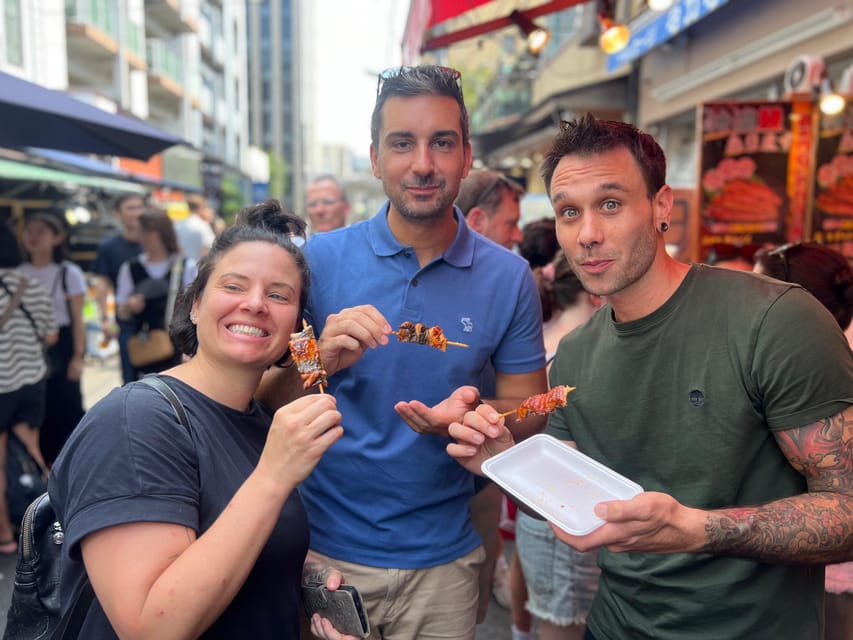
Meet at the Starbucks in front of Tsukiji Station and look near the bench for the guide. Allow enough time to find the station exit without arriving breathless.
Bring cash. It is specifically required, and you will need it for food and drinks. Since tastings are optional, carry enough for the items you most want, rather than assuming every stop is covered.
Wear comfortable shoes and keep your schedule flexible after the tour. The market portion can be engaging enough that you may want to buy dried goods or return to a favorite stall. If you have food allergies or strong preferences, tell the guide early and ask before ordering.
Cancellation is free up to 24 hours before the activity, and you can reserve while paying later. Starting times depend on availability. The tour is conducted in English.
Final verdict: book it for guidance, not free food
Book this walk if you want a friendly introduction to Tsukiji with useful explanations and the freedom to choose your own bites. The best reason to go is not simply access to the market. It is having someone like Jim, Rie, Yayoi, or Sayaka help you understand what you are seeing, avoid confusion, and find foods you might otherwise overlook.
At $22, the tour offers good value for first-time visitors, especially when the group stays at 10 people or fewer. Just budget separately for food, bring cash, and remember that premium seafood and wagyu can raise the final cost. If you want to wander alone and set your own pace, save the fee. If you want context, confidence, and a more flavorful route through Tsukiji, this is a sound choice.
FAQ
How long is the Tsukiji Fish Market walking tour?
The tour lasts two hours.
What language is the tour conducted in?
The live tour guide speaks English.
Where do I meet the guide?
You meet at the Starbucks Coffee in front of Tsukiji Station. The guide waits near the bench at Starbucks.
What places are included in the route?
The route includes Tsukiji Hongwanji Temple and Tsukiji Outer Market.
Is food included in the tour price?
No. Food and drinks are not included. You choose and pay for any tastings at the market stalls.
How much does the tour cost?
The listed price is $22 per person.
How large is the group?
The tour is a small-group experience limited to 10 participants.
Do I need to bring cash?
Yes. Cash is listed as an item to bring, and you need it for optional food and drink purchases.
Are entry fees included?
Entry to Tsukiji Fish Market and Hongwanji Temple is free. The guided walking tour is included in the booking.
Can I cancel for a full refund?
Yes. You can cancel up to 24 hours in advance for a full refund.
Just added around Tokyo
- Asakusa: A Big-picture History Walk to Know Japan★ 4.6 · 77 reviews
- Tokyo: Private Walking Tour with a Local Guide★ 4.9 · 469 reviews
- Tokyo: Private Walking Tour with a Local★ 4.4 · 419 reviews
- Tokyo: Private Custom Walking Tour with Local Guide★ 4.8 · 533 reviews
- Tokyo: Shibuya Highlights Walking Tour★ 4.8 · 601 reviews
- Tsukiji Fish Market Small-Group Food Walking Tour★ 5.0 · 621 reviews
- Tokyo Castle & Imperial PalaceーShogun Walking Tour★ 5.0 · 724 reviews
- Tokyo: Dark Side of Tokyo Shinjuku Red Light Walking Tour★ 4.7 · 862 reviews
Markets, compared.
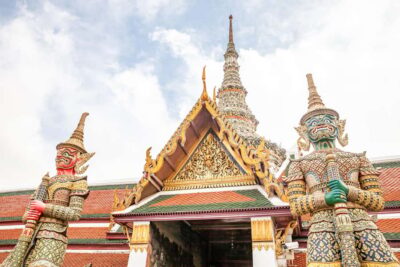
City Highlights Temple and Market Walking Tour
Read our review →
Tokyo Tsukiji Fish Market Food and Culture Walking Tour
Read our review →
London Bridge & Borough Market Food Tour with 7 Authentic Dishes
Read our review →
Air Raid Shelter + St. Nicholas Market Walking Tour
Read our review →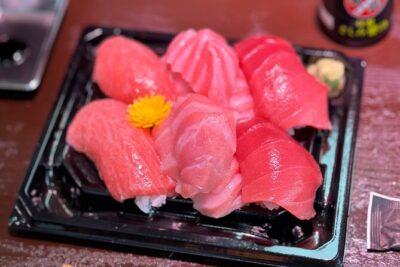
Nishiki Market Brunch Walking Tour (7 Tastings + Brunch)
Read our review →
Bologna Food & Market Tour with 6 Tastings, Pasta, Wines & More
Read our review →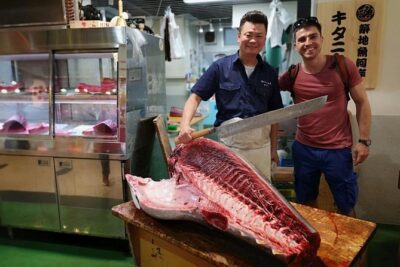
Tsukiji Fish Market Small-Group Food Walking Tour
Read our review →Browse the lists this tour appears in