
REVIEW · OSAKA
Osaka: Dark Side of Osaka Night Walking Tour
Osaka’s bright tourist face is only half the story. This two-hour evening walk takes you through Shinsekai, Nishinari, and Tobita Shinchi, where old entertainment streets, working-class neighborhoods, and Japan’s largest red-light district reveal a less polished side of city life.
I like the way the tour connects streets to social history instead of simply pointing at old buildings. I also like the small, human details, such as the meaning of a painted torii on a wall, and the chance to ask questions as you walk. The main drawback is clear: some subjects and scenes may feel confronting, so this is not a suitable outing for children or anyone looking for a light sightseeing stroll.
Key points at a glance
- Shinsekai’s unusual origins: See a district planned in 1912 with design ideas inspired by Paris and New York’s Coney Island.
- A frank look at Osaka: Learn about Nishinari’s working-class past and the social issues behind its changing image.
- Tobita Shinchi after dark: Visit Osaka’s largest and most famous red-light district, with a guide to explain its discreet customs and architecture.
- Retro food streets: Walk through Jyanjyan Yokocho near Tsutenkaku Tower, a narrow lane lined with old-style eateries, bars, and shops.
- Guides who add context: English-speaking guides including Jay, Rico, and Matt are praised for warmth, local knowledge, and careful handling of sensitive topics.
- Good value at $25: For two hours of guided walking in places you may not understand from a guidebook, the price is reasonable.
Why this Osaka walk feels different
Many Osaka sightseeing routes focus on food, shopping, neon signs, and famous landmarks. This one uses the streets as a way to discuss class, work, entertainment, poverty, prejudice, and changing urban life. That makes it more serious than a standard night tour, but also more useful if you want to understand the city beyond its cheerful public image.
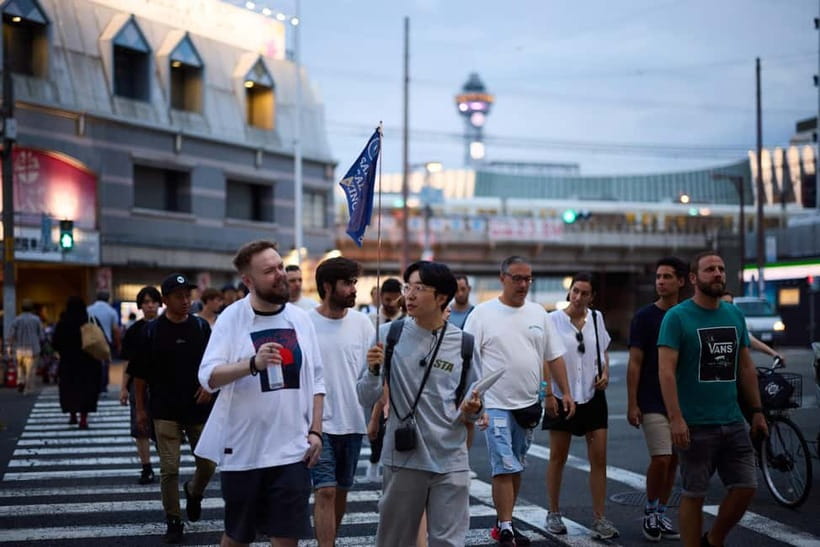
You begin beneath the giant penguin at MEGA Don Quijote Shinsekai. Look for the guide holding a GetYourGuide sign. From there, the walk moves through several nearby districts and finishes at Tsutenkaku, so you are not spending the evening riding between scattered attractions.
The tour is in English, and the guide is central to the experience. Jay, Rico, and Matt are among the guides praised for clear explanations and a friendly manner. One guide, Matt, is noted for speaking quickly, which may be fine if you are comfortable with English but could make the social history harder to follow if you prefer a slower pace.
More Night Walking Tours in Japan
- Kyoto: Gion Magical Night Walking Tour with Geisha Trivia
★ 4.9 · 2,393 reviews - Night Walk in Gion: Kyoto’s Geisha District
★ 4.5 · 2,003 reviews - Osaka Bar Hopping Night Walking Tour in Namba (3 bars, 6 tastes)
★ 5.0 · 958 reviews
Shinsekai, Osaka’s old New World
The first major stop is Shinsekai, whose name means New World. The district was created in 1912 as a modern entertainment area, with an unusual plan based partly on Western models. The southern section drew inspiration from Paris, while the northern section looked toward New York’s Coney Island.
That history gives Shinsekai a strange character. It was designed as a forward-looking district, yet much of what you see today feels nostalgic and old-fashioned. Its faded grandeur is part of the appeal. You get brightly lit signs, narrow lanes, traditional eateries, and the famous Tsutenkaku Tower, all packed into a setting that feels unlike the more polished parts of Osaka.
I like this opening because it gives you a useful frame. Shinsekai is not simply an old neighborhood with amusing signs. It was once a statement about modern city life and international influence. The guide helps explain how that vision changed over time and why the area still attracts people who want a more unusual view of Osaka.
You should expect to walk rather than stop for long at each point. The first part of the experience lasts about 30 minutes, enough time to get your bearings and hear the background without turning the tour into a lecture.
Nishinari and the working-class city
The route continues into Nishinari, a southern Osaka district with a strong connection to day laborers and working-class residents. Its past is a key reason this tour feels different from ordinary sightseeing. The neighborhood has also changed in recent years, drawing budget visitors and urban explorers interested in its rough-edged character.
The word getto is used in the tour description, but the area should not be reduced to a simple label. Nishinari is a place where economic hardship, local life, old businesses, and new interest from outsiders overlap. A good guide can help you see the people and circumstances behind the reputation rather than treating the district as a spectacle.
That approach matters. Walking through a poorer neighborhood can easily become uncomfortable if the focus is only on what looks strange to an outsider. The strongest part of this experience is its effort to explain why the area developed as it did and how Osaka’s social divisions have shaped daily life.
Plan for around 30 minutes in this part of the walk. The route is still accessible by foot, but you should wear comfortable shoes and be ready for changing weather. This is not a museum visit with a quiet indoor setting. You are learning while moving through active streets.
Jyanjyan Yokocho and old Osaka atmosphere
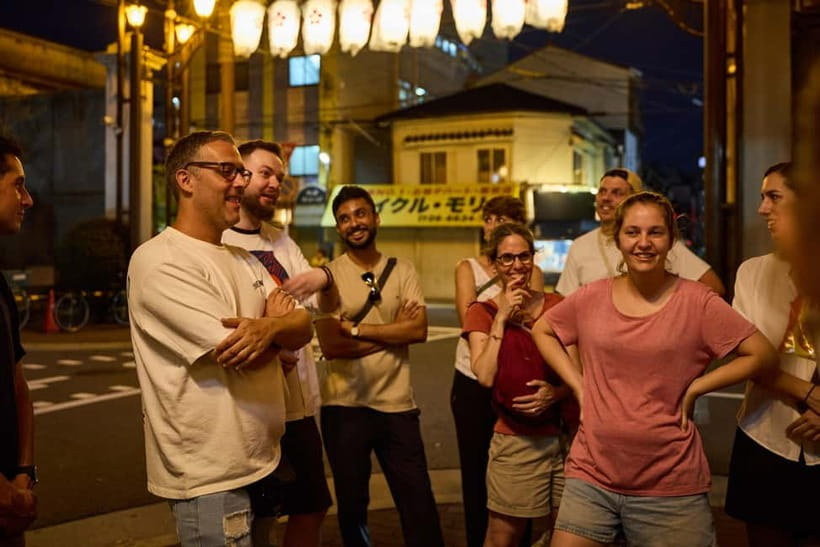
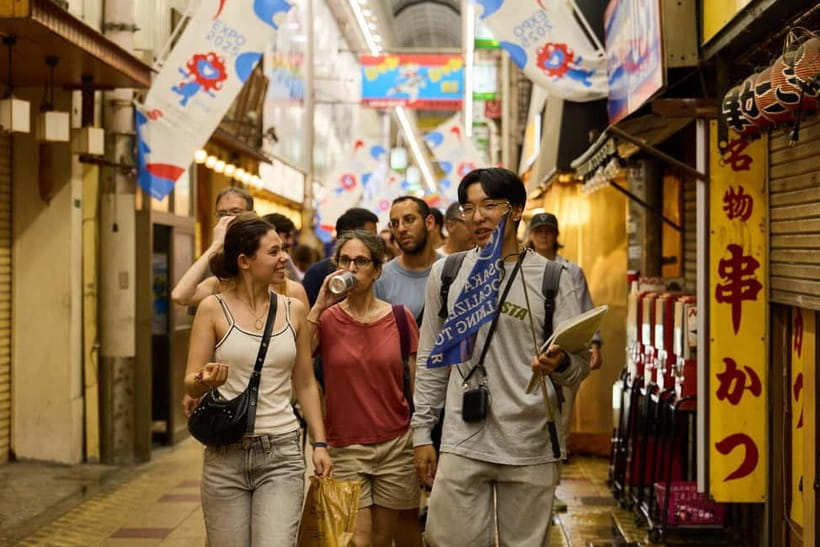
Jyanjyan Yokocho is one of the more approachable stops. This narrow shopping and dining lane sits near Tsutenkaku Tower and keeps an old Osaka mood through its small restaurants, bars, and shops. The street offers a welcome change in tone after the heavier social history of Nishinari.
The lane is associated with mid-20th-century Japan, and its compact layout makes it easy to notice small details. You may see signs, shopfronts, and local food businesses that feel far removed from Osaka’s large department stores and major shopping arcades.
Food and drinks are not included, so you should not expect a formal tasting. Still, the guide may point out places worth considering after the walk. One guide is specifically praised for sharing restaurant advice, and another tour group ended in Shinsekai to try local food. Treat those suggestions as an added benefit rather than part of the paid package.
This stop lasts about 10 minutes according to the planned route. That is enough for an introduction, but not enough to explore every shop. If you want to eat here, save that for after the tour and check opening times yourself.
Same streets, a different route:
- Kyoto Geisha Walking Tour: Gion District & Hidden Gems
★ 4.7 · 3,273 reviews - Tokyo Tsukiji Fish Market Food and Culture Walking Tour
★ 5.0 · 3,184 reviews - Tokyo: Imperial Palace and Shogun Historical Walking Tour
★ 5.0 · 2,251 reviews - Kyoto: Gion Geisha District Walking Tour – Stories of Geisha
★ 4.7 · 2,187 reviews
Tobita Shinchi and Osaka’s red-light history
The most sensitive section is Tobita Shinchi, Osaka’s most famous and largest red-light district. The area has operated for more than a century and is known for a particular architectural style and a tightly regulated atmosphere.
This is not a stop for cheap jokes or casual gawking. The value comes from having a guide explain how the district works within Japan’s urban culture and why its traditions remain discreet. You see a part of Osaka that is rarely included on a standard city route, but you also need to approach it with restraint.
The guide’s tone matters here. Several guides, including Jay, Rico, and Matt, are praised for handling difficult subjects with care and respect. That is important because Tobita Shinchi involves real people and complicated social conditions, not just unusual scenery. You should listen, avoid treating the area as an amusement park, and follow local customs.
The planned visit lasts about 20 minutes. That is long enough to understand the setting without making the stop feel intrusive. You may find the content confronting, particularly if you are sensitive to discussions of sex work, poverty, or social exclusion. The tour is not suitable for children under 18.
Tsutenkaku Tower and the finish in Shinsekai
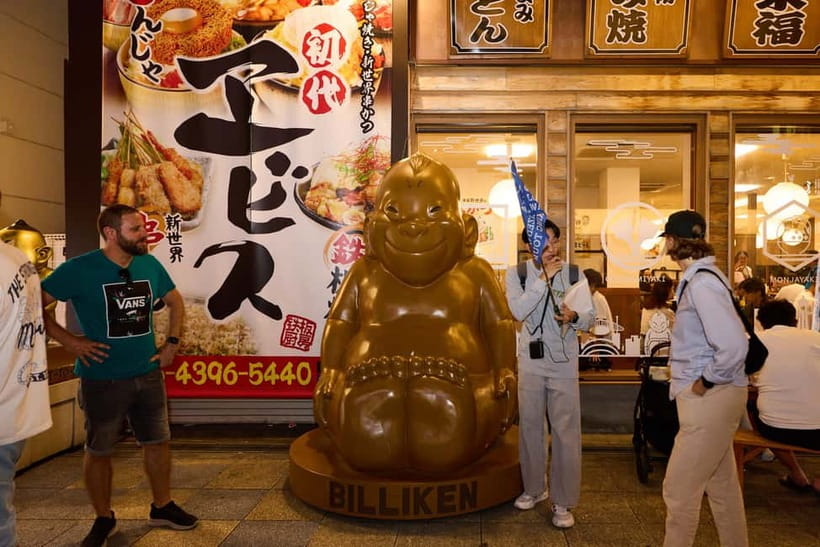
The walk finishes at Tsutenkaku Tower, one of Shinsekai’s best-known landmarks. The tower gives the route a clear endpoint and returns you to the district where the evening began.
Tsutenkaku helps tie the tour together. You have seen the area’s Western-inspired planning, its old entertainment culture, its working-class connections, and its red-light district. The tower is not simply a photo stop. It is part of Shinsekai’s identity and a useful point from which to continue exploring on your own.
The final section lasts about 20 minutes. Since the tour ends at Tsutenkaku rather than returning you to your hotel, think about what you want to do next. You can remain in Shinsekai for food, walk toward other parts of southern Osaka, or make your own way back by public transport.
The guides make or break the experience
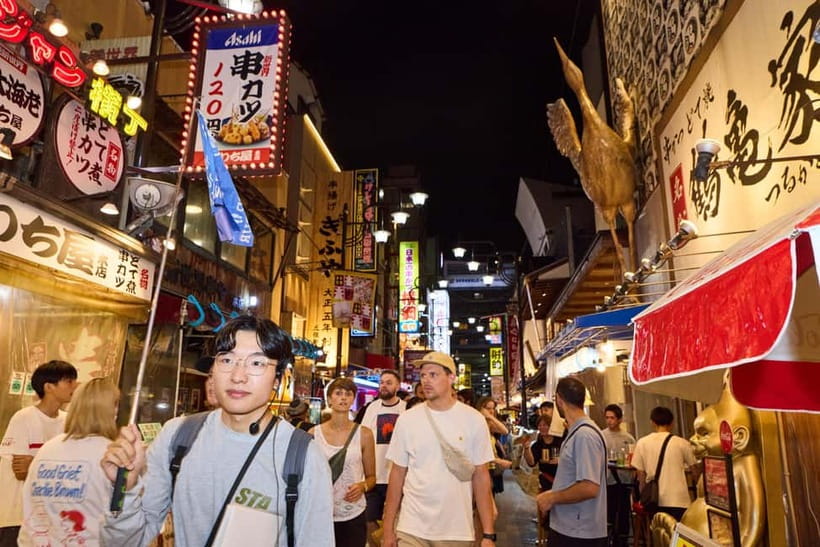
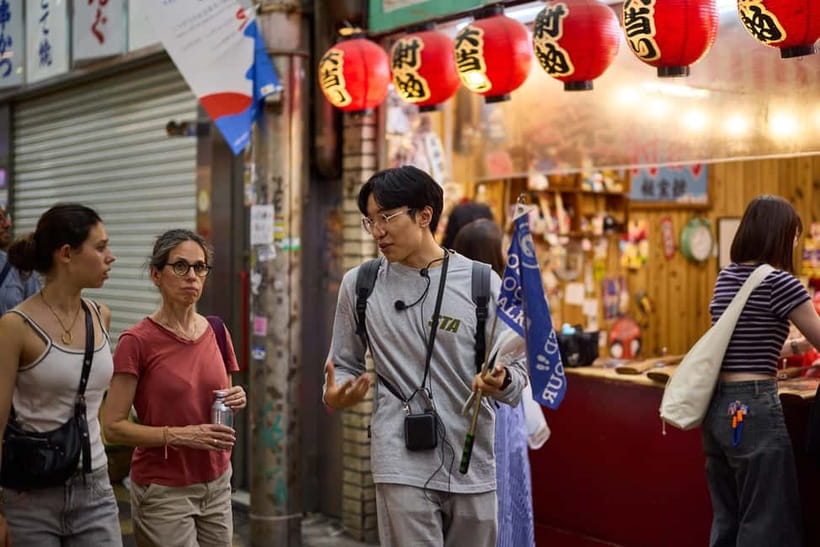
The tour is only as good as the person explaining it. The strongest guide style here is calm, direct, and respectful. Jay is praised for being warm, engaging, and attentive to questions. Rico is noted for detailed explanations, personal observations, and practical food suggestions. Matt is praised for his understanding of Osaka’s modern history and his respectful treatment of difficult subjects.
These names do not guarantee who will lead your particular departure, so book this for the subject matter rather than for one specific guide. Still, the repeated praise for several guides suggests that the experience has a solid teaching element.
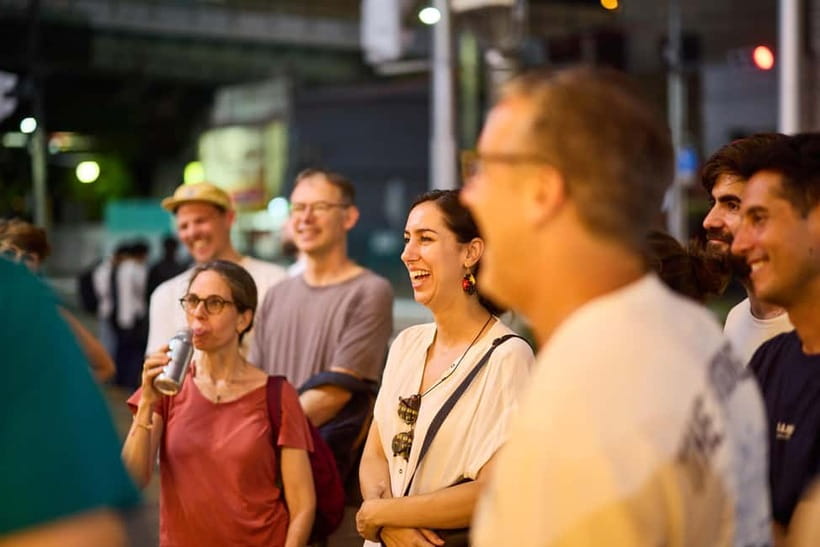
You should feel free to ask questions. The route covers topics that are difficult to understand from signs alone, and the guide can explain how historical conditions connect with present-day Osaka. The tour also appears to work well for small groups. One recent group had six people, which is a comfortable size for asking questions without losing the walking rhythm.
English ability matters. The tour is offered in English only. If you are not a strong English listener, fast speech or unfamiliar social terms may make parts of the explanation harder to follow.
Is $25 a fair price?
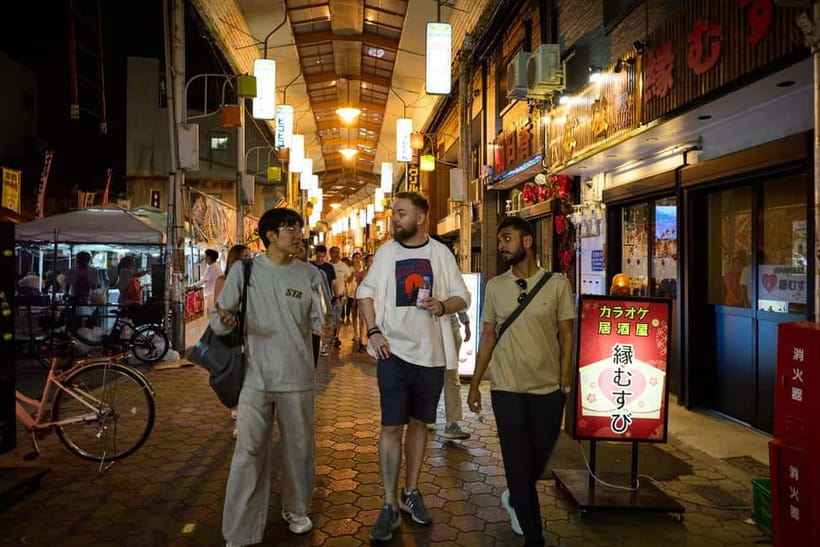
At $25 per person, this is a reasonable buy if you value interpretation. You are paying for two hours with a live English-speaking guide through districts where the history is easy to miss. The price includes the walking tour and the guide, but not food, drinks, hotel transport, or admission to additional attractions.
The value is less convincing if you only want photographs. You can walk through Shinsekai and see Tsutenkaku without booking a tour. The part you cannot easily reproduce is the explanation of Nishinari, Tobita Shinchi, and the social forces behind the neighborhoods.
I would also count the restaurant advice and local pointers as useful extras. They may help you make better use of the rest of your evening, although no specific meal is included.
Practical details before you book

The meeting point is beneath the giant penguin at MEGA Don Quijote Shinsekai. The guide will hold a GetYourGuide sign, so arrive with enough time to locate the meeting spot in the busy area.
Wear comfortable walking shoes. The tour lasts two hours and moves through several districts, with stops ranging from about 10 to 30 minutes. Be prepared for rain, heat, or other weather conditions, since the experience takes place outdoors.
Smoking is not allowed, and alcoholic drinks are not allowed in the vehicle. The activity itself is a walking tour, so the vehicle rule may be relevant only to particular arrangements around the experience. Hotel pickup and drop-off are not included.
Wheelchair users should not book this activity because it is listed as unsuitable for wheelchair access. The tour is also for people aged 18 and over. You should respect local customs and regulations, especially in Tobita Shinchi, where privacy and discretion matter.
Free cancellation is available up to 24 hours before the start for a full refund. You can also reserve now and pay later, which helps if your Osaka schedule is still changing.
Who should take this tour?
I would choose this walk if you have already seen Osaka’s main sights or if you want social history rather than a standard landmark tour. It suits adults who are curious about class, labor, urban change, and the less comfortable parts of Japanese society.
It is also a good choice if you prefer a guide who can answer questions. The experience is not just a route through old streets. The explanations are the reason to pay for it.
I would skip it if you are traveling with children, dislike sensitive subjects, need wheelchair access, or want a relaxed food-and-neon evening. The tone can be serious, and some sights may challenge your assumptions about Japan.
Final verdict: should you book it?
Book this tour if you want to understand Osaka as a living city rather than a collection of famous attractions. The strongest feature is the social context, especially in Nishinari and Tobita Shinchi. Shinsekai and Jyanjyan Yokocho add color and nostalgia, while Tsutenkaku gives the walk a familiar landmark at the end.
At $25, it offers good value for an adult audience that wants a thoughtful, unusual evening. Go with an open mind, comfortable shoes, and respect for the people who live and work in these districts. If that sounds like your kind of Osaka, this is one of the more distinctive short walking tours available.
FAQ
How long is the Osaka Dark Side night walking tour?
The tour lasts two hours.
Where does the tour begin?
It begins under the giant penguin at MEGA Don Quijote Shinsekai. The guide will be holding a GetYourGuide sign.
Where does the tour finish?
The walk finishes at Tsutenkaku Tower.
What language is the tour offered in?
The tour is offered in English with a live English-speaking guide.
Is food included?
No. Food and drinks are not included, though the guide may share restaurant recommendations.
Is the tour suitable for children?
No. The experience is not suitable for children under 18 because it covers sensitive subjects and visits a red-light district.
Is the tour suitable for wheelchair users?
No. The activity is listed as unsuitable for wheelchair users.
Just added around Japan
- Miyajima Half-day Trip Historical Walking Tour★ 5.0 · 284 reviews
- Hiroshima Walking Tour Why A Bomb was dropped to Hiroshima★ 5.0 · 347 reviews
- Tokyo: Asakusa & Sensoji ー Oldest Temple Walking Tour (2hrs)★ 5.0 · 213 reviews
- Asakusa Senso-ji Temple and Old Tokyo Walking Tour★ 5.0 · 560 reviews
- Asakusa Cultural Walk & Matcha Making Tour★ 5.0 · 245 reviews
- Tokyo: Tsukiji Market Walking Tour & Sushi Cooking Class★ 4.6 · 122 reviews
- Tokyo:Stroll in Old traditional culture towns~Yanaka & Nezu★ 4.9 · 186 reviews
- Tokyo: Shibuya Crossing & Hidden Streets Walking Tour★ 4.8 · 128 reviews
Night Walking Tours, compared.

Private Street Food Evening Walking Tour in Ho Chi Minh City
Read our review →
Albaicín and Sacromonte Guided Sunset Walking Tour
Read our review →
Savannah’s Ghost City “Dead of Night” Walking Night Tour
Read our review →
Gion Magical Night Walking Tour with Geisha Trivia
Read our review →

Madrid by Night Small Group Tour: Stories, Sights and Tapas Bites
Read our review →
Paranormal Night Walking Tour & Secret Backstreets
Read our review →
Munich Ghosts and Spirits Evening Walking Tour
Read our review →Browse the lists this tour appears in