
REVIEW · JAPAN
Hiroshima: Peace Walking Tour of World Heritage Sites
Hiroshima’s most important sights are easy to visit on your own, but the personal stories and local context are much harder to find without help. This five-hour walk brings the Peace Memorial Museum, park, Atomic Bomb Dome, Orizuru Tower, and a small shrine into one clear, carefully paced experience.
I like the way the tour moves from grief toward hope, especially through the paper-crane activity and the view from Orizuru Tower. I also like that lunch is included, usually featuring Hiroshima’s famous okonomiyaki. The main drawback is the museum itself: it can be crowded and emotionally heavy, so you may need a quiet break or extra time afterward.
Key points to know before booking
- The Peace Memorial Museum receives a guided hour: Your guide helps place difficult exhibits and personal stories into context.
- Local guides add a human voice: Guides such as Yasue, Yuji, Fumiko, Yuki, and Etsko have been praised for clear English, warmth, and personal connections to Hiroshima.
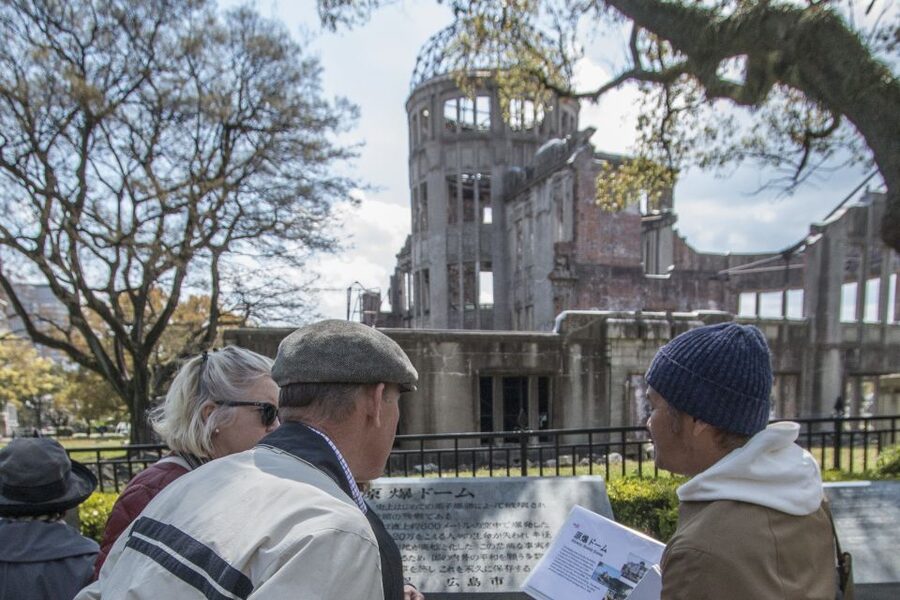
- The tour includes more than the museum: Shirakami-sha Shrine, Peace Memorial Park, the Atomic Bomb Dome, and Orizuru Tower create a fuller picture of the city.
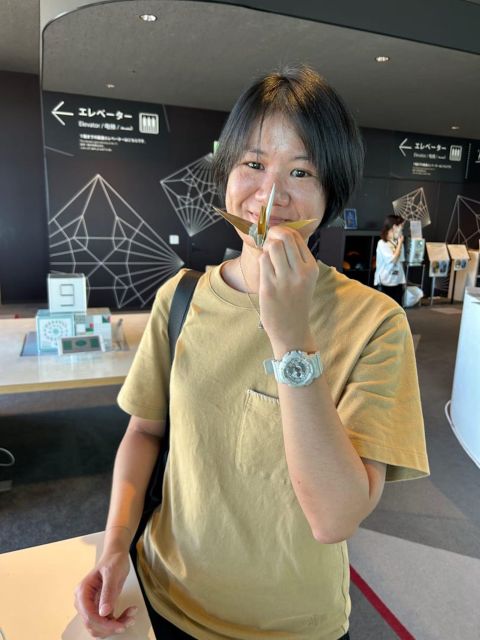
- Origami gives the day a moment of action: You fold a paper crane and make a wish for peace.
- Lunch is part of the $92 price: An okonomiyaki meal helps balance the serious morning with a relaxed local meal.
- Small groups make a difference: Private and small-group options are available, and the format allows questions and quiet moments.
Why a guided Hiroshima peace tour can be worth it
Hiroshima is not a place to rush through with a camera and a checklist. The key sites lie close together, but their meaning is not always obvious. A guide can explain why a tree, shrine, bridge, or surviving building matters, and can help you read the city as more than a memorial.
This experience costs $92 per person and lasts 270 minutes. That is not the cheapest way to see central Hiroshima, but the price includes entry to both the Peace Memorial Museum and Orizuru Tower, lunch, a five-hour English-speaking guide, and tour photos. If you planned to pay for those admissions and arrange lunch separately, the difference becomes smaller.
The strongest value is the time saved. You do not need to work out the best order for the sites, find the museum entrance, or decide how to move from the museum to the Atomic Bomb Dome. Your guide also gives you a person to ask about difficult subjects, including questions the museum displays may leave unanswered.
The tour has earned a 4.9 rating from 190 bookings, with repeated praise for guides including Kaz, Yuji, Yasue, Yuki, Etsko, Fumiko, and Naoya. Individual guides vary, but the consistent theme is clear English, strong preparation, and sensitivity around an emotional subject.
A few more walking tours around Japan worth a look
- Kyoto Geisha Walking Tour: Gion District & Hidden Gems
★ 4.7 · 3,273 reviews - Tokyo Tsukiji Fish Market Food and Culture Walking Tour
★ 5.0 · 3,184 reviews - Kyoto: Gion Magical Night Walking Tour with Geisha Trivia
★ 4.9 · 2,393 reviews
Starting at Montbell and Shirakami-sha Shrine
You meet in front of the Montbell store near Kamiya-cho-nishi Station. The station is only a one-minute walk away, but arrive early. You are expected at the meeting point 10 minutes before departure, and an arrival more than 15 minutes late means you cannot join the tour or receive a refund.
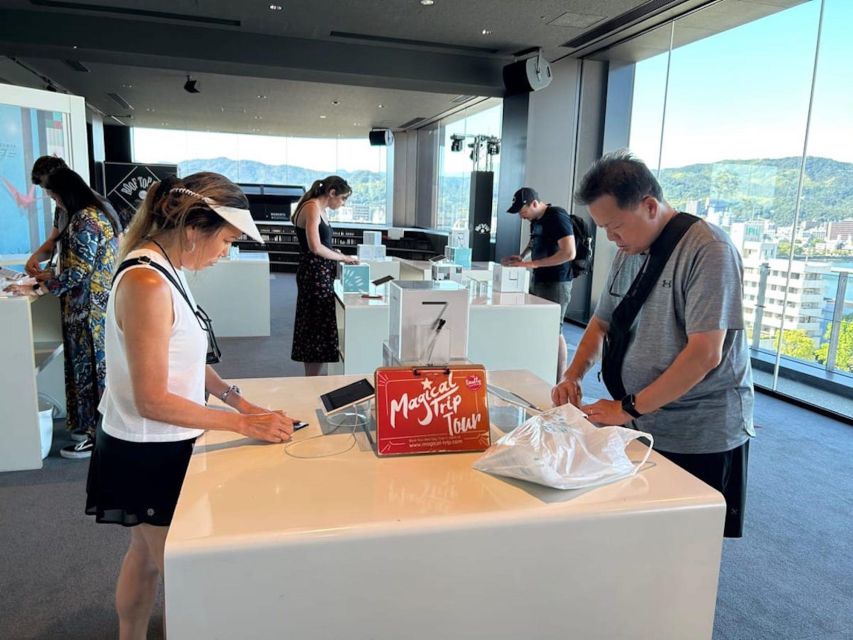
Look for the guide holding an orange sign marked Magical Trip Tour. This is a useful detail in a busy city center, especially if you are arriving after a train ride or navigating Hiroshima for the first time.
The first stop is Shirakami-sha Shrine, with about 25 minutes for a visit. This small stop gives the day a cultural opening before the heavy material begins. You can learn basic shrine etiquette, including how to enter respectfully. One guide, Kippei, was especially attentive to this part, showing the proper protocol and arranging a blessing.
I like this beginning because it reminds you that Hiroshima is a living Japanese city, not only a site of wartime memory. The shrine also gives you a gentler first stop before the Peace Memorial Museum.
One serious hour inside the Peace Memorial Museum
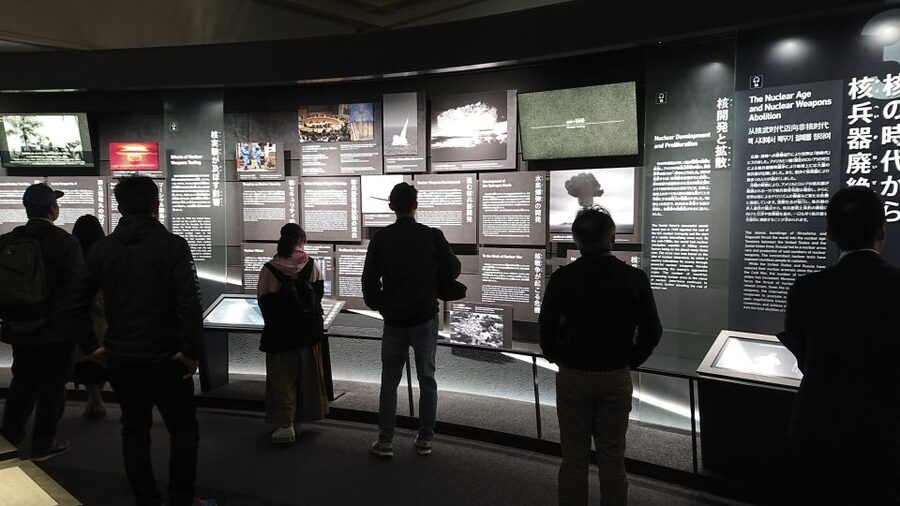
The Peace Memorial Museum is the emotional center of the tour. Your guide leads you through the museum for about an hour, explaining the atomic bombing and its effect on Hiroshima’s people.
Expect difficult material. The exhibits include personal belongings, photographs, and accounts of people who lived through the bombing. The museum does not offer a light sightseeing experience, and you should not plan a busy activity immediately afterward if you need time to think.
A guide matters here. The displays can be crowded, and it is easy to move past an object without understanding the human story connected to it. Guides such as Etsko, Eri, Yuji, and Yasue have been praised for adding local perspective and answering questions with care.
You are not forced to treat the museum like a race. Kippei, for example, allowed time to move at an individual pace and recognized when a visitor needed a break. That sort of attention is valuable because people respond differently to the exhibits.
The one clear limitation is crowding. A spring visit may feel especially busy, and you might not have as long as you want at every display. The tour gives you a useful introduction, but if you want to study every section closely, return on your own afterward. One guide helped a visitor re-enter the museum after the guided portion, though you should not assume that arrangement will always be available.
Walking through Peace Memorial Park
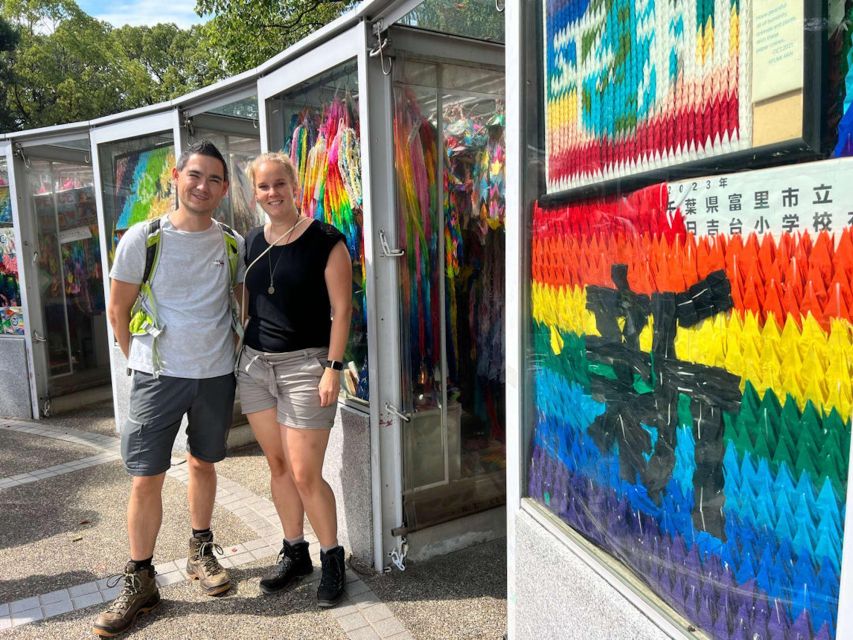
After the museum, the tour continues through Peace Memorial Park. This is where the events you have just learned about connect with the city around you.
The park is not simply a green area between attractions. It contains memorials and places tied to the bombing, recovery, and Hiroshima’s continuing peace message. Your guide explains what you are seeing and points out details you could easily miss on an independent walk.
The walking portion also gives you a chance to process the museum. Several guides have been praised for knowing when to speak and when to allow silence. That balance is important. A nonstop lecture would make the day tiring, while no explanation would leave the park’s memorials disconnected from one another.
The tour’s central idea is not only what happened in August 1945. It also asks how Hiroshima rebuilt itself and how the city presents peace today. That shift from destruction to recovery gives the visit a wider frame.
Same streets, a different route:
- Tokyo: Imperial Palace and Shogun Historical Walking Tour
★ 5.0 · 2,251 reviews - Kyoto: Gion Geisha District Walking Tour – Stories of Geisha
★ 4.7 · 2,187 reviews - Best of Kyoto: Gion, Geisha, Pagodas & Cobblestones
★ 4.9 · 2,058 reviews - Night Walk in Gion: Kyoto’s Geisha District
★ 4.5 · 2,003 reviews
The Atomic Bomb Dome, a powerful final memorial stop
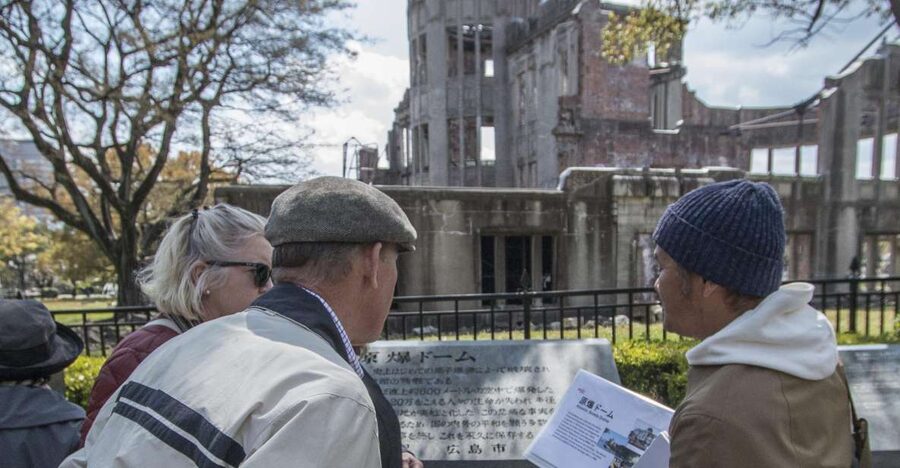
The Atomic Bomb Dome is a UNESCO World Heritage Site and one of Hiroshima’s most recognizable landmarks. Your guide takes you to the building and explains its connection to the bombing and the city’s recovery.
The Dome is powerful because it is a physical structure rather than a display behind glass. Its damaged frame makes the past visible from the outside, while modern Hiroshima continues around it. Your guide can connect the building to the nearby park and museum, helping you understand why it remains preserved.
Allow time to look closely rather than simply take a photograph. The site is accessible on a city walk, but the explanation gives it greater weight. Guides such as Naoya have taken visitors to related locations and explained the stories connected with them, adding detail beyond the main memorials.
This is also a good point to think about the difference between seeing Hiroshima alone and seeing it with a local guide. On your own, you can reach the Dome easily. With a guide, you get a clearer sense of how it fits into Hiroshima’s public memory.
Orizuru Tower, paper cranes, and a change of mood
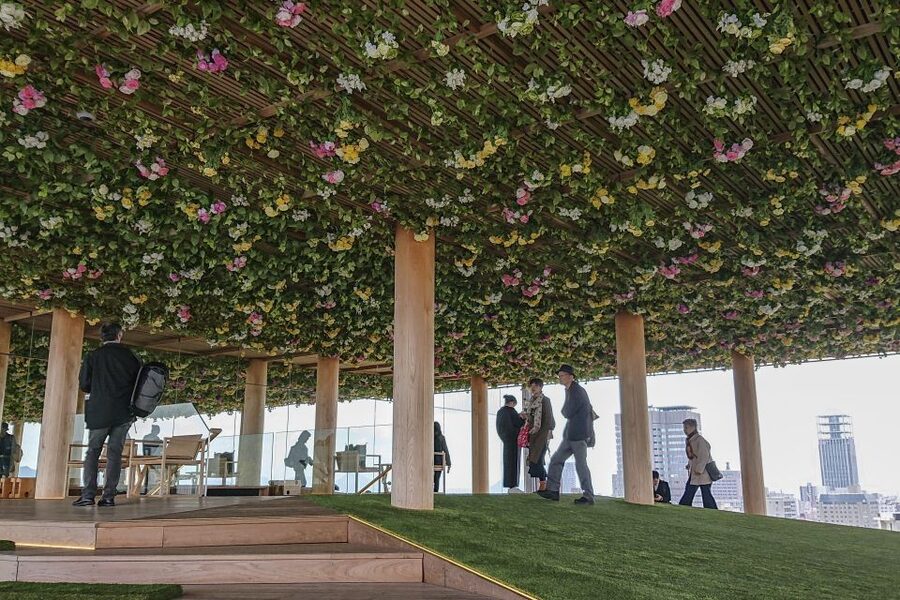
Orizuru Tower provides the tour’s clearest move from sorrow toward hope. You take an elevator to the observatory area, where the city opens up below you. The view lets you see Hiroshima as a functioning, rebuilt city rather than only as the setting of a historic tragedy.
The tower is tied to the orizuru, or folded paper crane, a symbol of peace. During the visit, you learn how to fold one and make a wish for peace. This is not a complicated craft lesson, but it gives your hands something to do after a difficult museum visit.
The tower also creates a personal moment. One visitor described watching a paper crane spiral down to join millions of others held in the building’s glass wall. You may find the activity simple, but its meaning grows from the setting and from the stories you have heard earlier.
The observatory has another practical benefit. The included admission allows a return visit for sunset, according to the tour information. Check the day’s operating arrangements before counting on this, but it can make the $92 price more attractive if you want to come back for another view.
Lunch and Hiroshima-style okonomiyaki
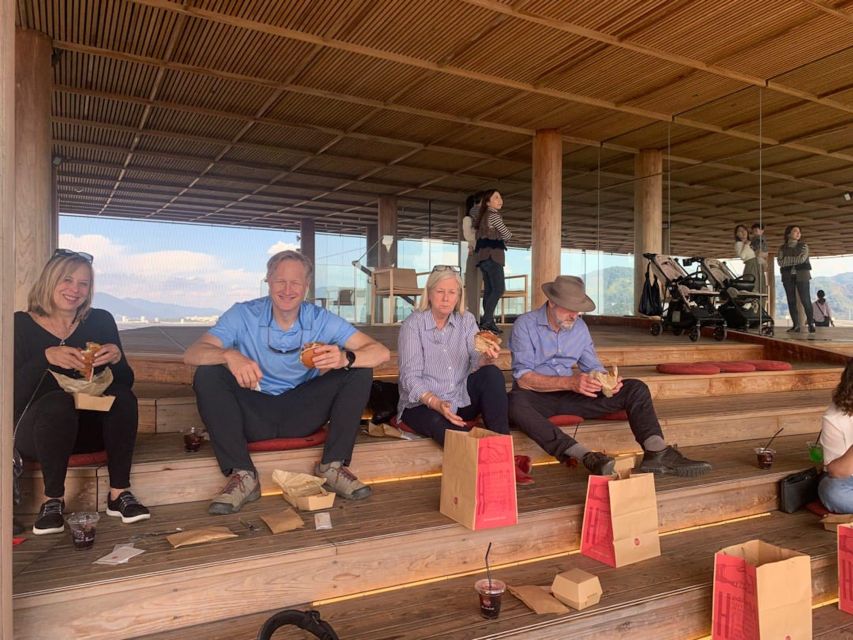
Lunch follows the Orizuru Tower visit and is included in the tour price. The meal commonly features Hiroshima’s well-known okonomiyaki, a savory layered pancake-style dish.
This is a smart place for lunch. You have spent the morning with serious material, and a shared meal gives the group time to relax and ask the guide about Hiroshima today. Several guides have joined the meal, turning it into an informal conversation rather than a quick stop at a counter.
Food choices are the main limitation. Vegetarian options are limited because many Japanese restaurants are not fully equipped to provide vegetarian menus. Gluten intolerance is listed as unsuitable for this tour, and the operator cannot guarantee allergy-free meals or accommodate every dietary restriction.
If you have an allergy or dietary request, tell the operator at least one day before the tour. Requests made on the day cannot be accommodated. Also note that one diner would have preferred a choice of okonomiyaki flavors after eating the dish the day before, so this may not be the best booking for someone seeking a highly customizable meal.
Still, the lunch adds real value. You get a local specialty without having to find a restaurant during a tightly planned day, and the meal gives the experience a more human finish.
The guides make the biggest difference
The route is strong, but the guide shapes the experience. The most praised guides have been warm, patient, and willing to answer questions rather than simply recite dates.
Yasue has been described as especially passionate about Hiroshima’s message of peace. Yuji has received praise for excellent English and a relaxed style. Fumiko has been noted for taking group photos and emailing them afterward. Etsko has shared local insights and helped visitors through difficult moments in the museum.
Some guides have family connections to the bombing. One guide explained that her grandmother was affected, while another offered the memorable reassurance that Hiroshima is grateful for the tears shed while learning its story. These personal links can make the tour feel more direct, but every guide will have a different style and background.
You should expect an English-language tour, but accents and speaking styles can vary. The available feedback points to generally clear communication, with one note that a guide’s English was not perfect but still polite and understandable.
Timing, walking, and group size
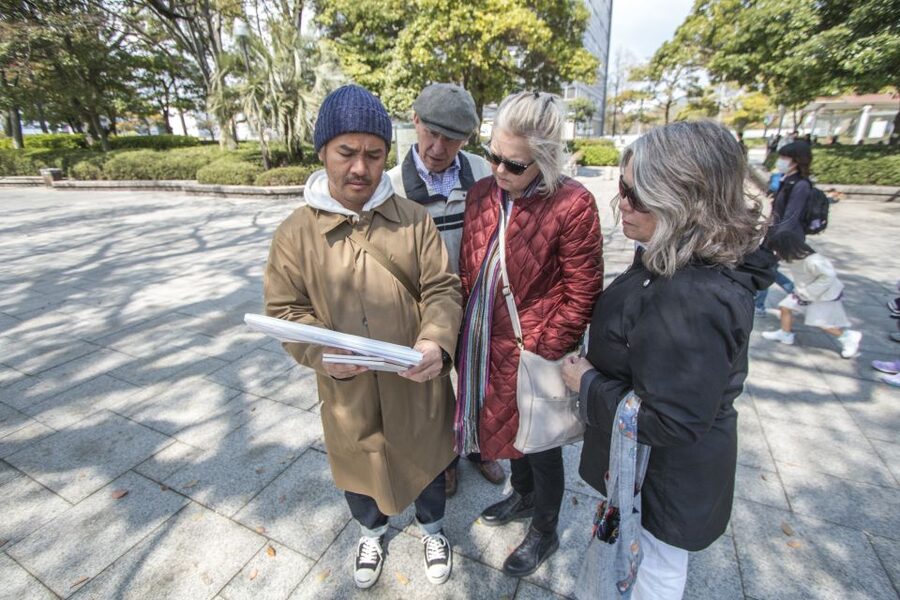
The activity lasts 270 minutes, or four and a half hours, though it is also described as a five-hour tour. The listed visits total roughly four hours, with time needed for walking, transitions, the shrine, and lunch. Plan for a half-day commitment rather than trying to squeeze in another fixed booking nearby.
You will walk between central Hiroshima sites. The route is practical, but the day includes a museum visit, park walking, city streets, a tower, and lunch. Wear comfortable shoes and carry water, especially in warm weather. Extra food and drinks are not included, though they are available for purchase.
Private and small-group formats are available. A group of six was described as a comfortable size, and a small group gives you more room to ask questions or pause at a memorial. A private tour may suit families or anyone who wants more control over pace, though the price and availability may differ.
The meeting point is easy to reach near Kamiya-cho-nishi Station. The strict late-arrival policy is the main logistical point to remember. Hiroshima’s trams and streets can take longer than expected, so arrive early rather than aiming for the last possible connection.
Who should book this Hiroshima tour?
I would choose this tour if you have only one day in Hiroshima, want help with the museum, or prefer a local voice for a difficult subject. It also suits families with older children and teenagers who may connect more easily with a guide’s stories than with museum labels alone.
It is a good fit if you want culture as well as wartime history. The shrine, origami, city view, and lunch prevent the day from becoming one long museum visit.
You might skip it if you prefer to explore slowly and independently, especially if you want several hours inside the museum. You should also think twice if you need strict vegetarian, gluten-free, or allergy-safe dining arrangements.
Should you book the Peace Walking Tour?
Book it if you want an organized half-day that covers Hiroshima’s essential peace sites and adds local explanation, lunch, and a small hands-on activity. The $92 price is reasonable for the admissions, meal, guide, photos, and time saved.
The best reason to book is not simply convenience. It is the chance to move through a difficult subject with someone who can answer questions, notice when you need a pause, and connect the memorials with Hiroshima’s life today. Just arrive early, prepare for an emotional museum visit, and tell the operator about food needs the day before.
FAQ
How long does the Hiroshima Peace Walking Tour last?
The tour lasts 270 minutes, or about four and a half hours. It is also described as a five-hour experience, allowing for walking and transitions between stops.
What is included in the price?
The $92 price includes entry to the Hiroshima Peace Memorial Museum and Orizuru Tower, lunch, an English-speaking local guide, and tour photos.
Where does the tour begin?
The meeting point is in front of the Montbell store near Kamiya-cho-nishi Station. The store is about a one-minute walk from the station.
How can I identify the guide?
Your guide will hold an orange sign marked Magical Trip Tour.
What sites does the tour visit?
The route includes Shirakami-sha Shrine, the Hiroshima Peace Memorial Museum, Hiroshima Peace Memorial Park, the Atomic Bomb Dome, and Hiroshima Orizuru Tower.
Is the Atomic Bomb Dome included?
Yes. The Atomic Bomb Dome is visited with the guide and is a UNESCO World Heritage Site.
Is lunch included?
Yes. Lunch is included, and the meal commonly features Hiroshima-style okonomiyaki.
Can I request a vegetarian or allergy-friendly meal?
Vegetarian options are limited. Tell the operator about dietary requests or allergies at least one day before the tour, but allergy-free meals and all dietary restrictions cannot be guaranteed.
Is the tour offered in English?
Yes. The tour has a live English-speaking guide.
What happens if I arrive late?
You should arrive 10 minutes before the scheduled start. If you arrive more than 15 minutes late from the meeting time, you cannot join the tour and will not receive a refund or rescheduling.
Can I cancel the booking?
You can cancel up to 24 hours in advance for a full refund. The tour also offers a reserve-now, pay-later option.
Just added around Japan
- Miyajima Half-day Trip Historical Walking Tour★ 5.0 · 284 reviews
- Hiroshima Walking Tour Why A Bomb was dropped to Hiroshima★ 5.0 · 347 reviews
- Tokyo: Asakusa & Sensoji ー Oldest Temple Walking Tour (2hrs)★ 5.0 · 213 reviews
- Asakusa Senso-ji Temple and Old Tokyo Walking Tour★ 5.0 · 560 reviews
- Asakusa Cultural Walk & Matcha Making Tour★ 5.0 · 245 reviews
- Tokyo: Tsukiji Market Walking Tour & Sushi Cooking Class★ 4.6 · 122 reviews
- Tokyo:Stroll in Old traditional culture towns~Yanaka & Nezu★ 4.9 · 186 reviews
- Tokyo: Shibuya Crossing & Hidden Streets Walking Tour★ 4.8 · 128 reviews
Walking Tours, compared.

Magical London: Harry Potter Guided Walking Tour
Read our review →
Reykjavik Food Walk – Local Foodie Adventure in Iceland
Read our review →
History and Hauntings of Salem Guided Walking Tour
Read our review →
New Orleans Premier Ghost, Voodoo and Vampire Walking Tour
Read our review →
Amsterdam Anne Frank: Small-Group Walking Tour & Local Guide
Read our review →

Edinburgh Castle: Guided Walking Tour with Entry Ticket
Read our review →
Anne Frank’s Story – Guided Walking Tour through Amsterdam
Read our review →Browse the lists this tour appears in