
REVIEW · BERLIN
Berlin: Historic Center Walking Tour with a Real Berliner
Berlin’s story unfolds neatly on this two-hour walk through Mitte, from a small trading settlement to the capital of Prussia, a divided Cold War city, and modern Germany. I like the route because it connects famous sights instead of treating them as isolated photo stops, and because guides such as Carlo bring in more than the usual World War II talking points.
I also like the small group limit of 10 people. It should be easier to hear, ask questions, and keep up with the guide than on a large city walk. The main drawback is the short running time: you see many major places, but most are viewed from outside, and two hours leaves little room for lengthy visits or museum interiors.
Key points to know
- A clear introduction to Berlin: The route gives you a useful timeline from medieval Berlin through Prussian rule, monarchy, division, and reunification.
- A strong first-day activity: Starting in Mitte helps you get your bearings and understand how the main sights fit together.
- A local guide-led walk: Guides identified in the feedback include Carlo, Carlos, and Karlo, with English, German, and Italian offered.
- Nine central landmarks in two hours: You pass Nikolaiviertel, Museum Island, Humboldt Forum, Berlin Cathedral, Unter den Linden, State Opera, and Brandenburg Gate.
- Small groups and wheelchair access: The group is limited to 10 people, and the activity is listed as wheelchair accessible.
- Come prepared for the weather: The walk runs in all weather and on public holidays, so comfortable shoes and suitable clothing matter.
A useful first look at Berlin’s story
This is a history walk with a practical purpose. You are not simply ticking off the Television Tower, Cathedral, and Brandenburg Gate. You are following Berlin’s growth through the old center, along the Spree, across Museum Island, and down Unter den Linden.
That order helps. Berlin can feel scattered at first, with grand imperial buildings beside modern reconstructions and reminders of a divided city. A guide can explain how those pieces fit together while you are standing in front of them.
The experience begins outside the main entrance of the St. Nicholas’ Church Museum in Nikolaiviertel. Look for the guide carrying the Get Your Guide, You in Berlin flag. From there, the walk moves through the historic center and finishes at Brandenburg Gate.
Guides named Carlo, Carlos, and Karlo receive especially warm praise for their clear explanations, friendly manner, and willingness to answer questions. One guide continued with a solo booking instead of canceling, and another helped a participant find the bus back to the hotel after the walk. Those details suggest a personal approach, though the exact guide depends on the date and language you choose.
More History Walking Tours in Berlin
- Berlin: Third Reich & Cold War Guided Walking Tour
★ 4.9 · 8,378 reviews - Berlin’s Best: 2 Hour Walking Tour Third Reich and the Cold War
★ 5.0 · 5,486 reviews - Third Reich Berlin: Hitler and WWII Walking Tour
★ 5.0 · 3,301 reviews
Starting in Nikolaiviertel, Berlin’s old center
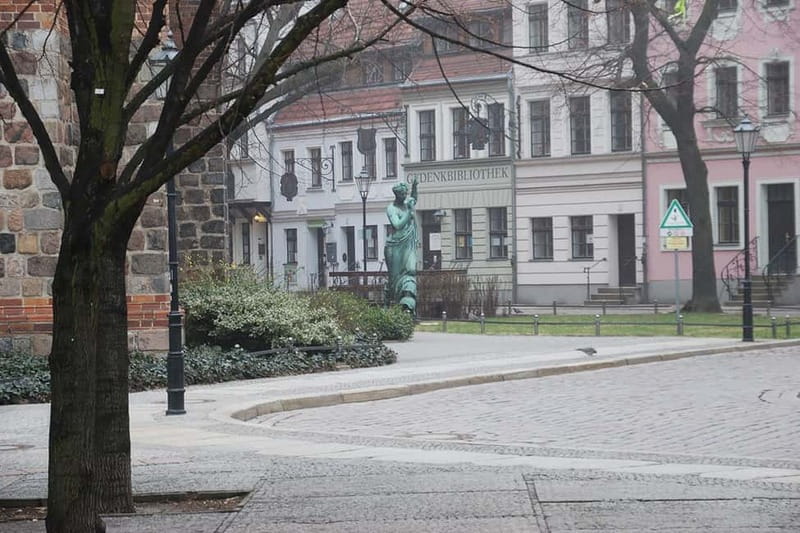
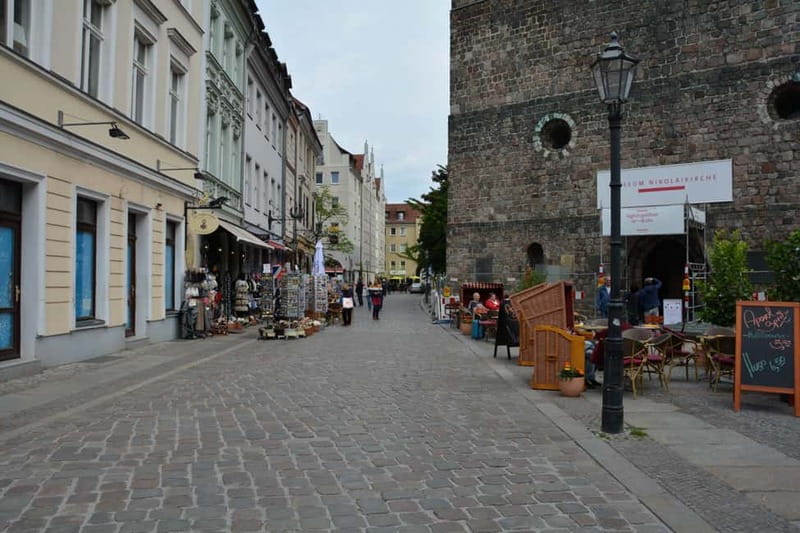
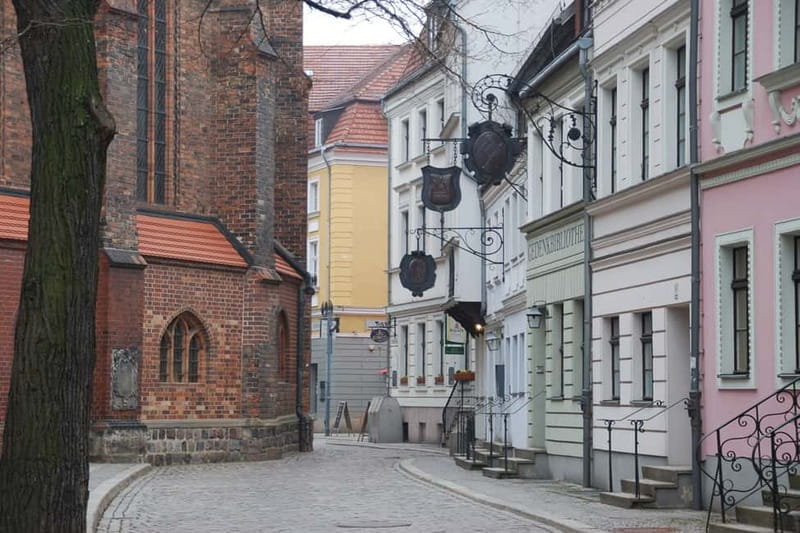
Nikolaiviertel is a sensible meeting point because it brings you close to Berlin’s earliest urban story. The area centers on St. Nicholas’ Church, the oldest church in Berlin, now presented as the Nikolaikirche Museum.
The tour begins with a guided walk through the quarter. You will hear about Berlin’s origins and its development from a small trading village into a major political and cultural capital. This opening gives the rest of the route some shape: later royal buildings make more sense once you understand that Berlin was not always the grand seat of power you see today.
Do not expect a long museum visit here. The experience is a walking tour, and the church museum is the meeting point rather than a listed interior stop. If you want to explore St. Nicholas’ Church inside, plan separate time before or after the tour.
Nikolaiviertel also makes a good starting place for visitors arriving in Berlin without much local orientation. The route soon takes you toward several major sights, so you begin learning the city’s layout as well as its past.
From the Television Tower to the Spree
The walk includes a view of Berlin’s Television Tower, the city’s highest building. Its tall sphere and antenna are hard to miss, and it gives you an immediate visual marker for the old East Berlin center.
The tower is important beyond its height. It belongs to the cityscape shaped by East Germany, while the nearby historic buildings and royal monuments reflect much older periods. Seeing them in the same stretch of city helps you read Berlin as a place built in layers.
The route then follows the Spree toward Museum Island. This is a good moment to notice the contrast between open river views and the formal architecture ahead. The guide can explain how the river and the old center relate to Berlin’s early growth, while also pointing out the political power concentrated around the historic core.
Because this is a two-hour walk, the focus is on explanation and views rather than sitting beside the river or stopping for food. Bring water if you need it. Food and drinks are not included.
Museum Island and the rebuilt Humboldt Forum
Museum Island is one of Berlin’s essential areas, and the tour gives you a compact introduction to its major buildings. You will see Berlin Cathedral, the Old Museum, and the Humboldt Forum, with time to hear how this section of the city changed over the centuries.
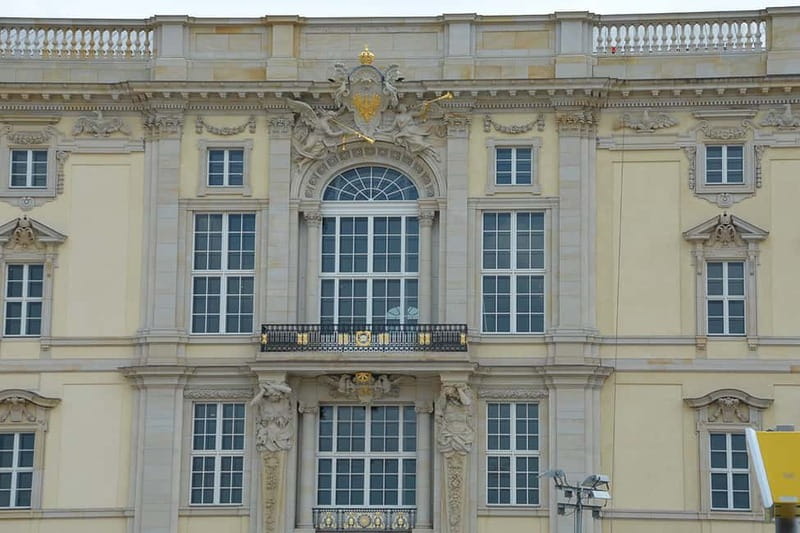
The Humboldt Forum occupies the reconstructed Berlin City Palace site. Its exterior recalls the palace associated with Prussian rulers, while its modern role is tied to museums and cultural collections. This is one of the best places on the walk to see Berlin’s habit of placing old forms beside new uses.
The guide’s explanation matters here. Without context, the reconstructed palace can look like a grand old building that simply survived. In fact, its story is tied to monarchy, war, East Germany, postwar redevelopment, and the decision to rebuild a historic facade in a changed political era.
You will also see Berlin Cathedral and the Old Museum from the outside. These are impressive architectural stops, but the tour does not include admission or a dedicated interior visit. If you want to see the cathedral or the museums properly, treat this walk as an introduction and return later.
Museum Island can attract crowds, and the walk may feel less relaxed during busy periods. The small group limit helps, but you should still expect an active city street setting rather than a quiet private tour.
More History Walking Tours in Germany
- Berlin: Third Reich, Hitler, and WWII Walking Tour
★ 4.9 · 1,757 reviews - Berlin: Cold War Walking Tour on Berlin Wall Route
★ 4.8 · 437 reviews - Private Walking Tour Berlin Third Reich Hitler and World War II
★ 5.0 · 360 reviews - Berlin: Berlin Wall & East Side Gallery Walking Tour
★ 4.9 · 264 reviews
Across Palace Bridge into the royal center
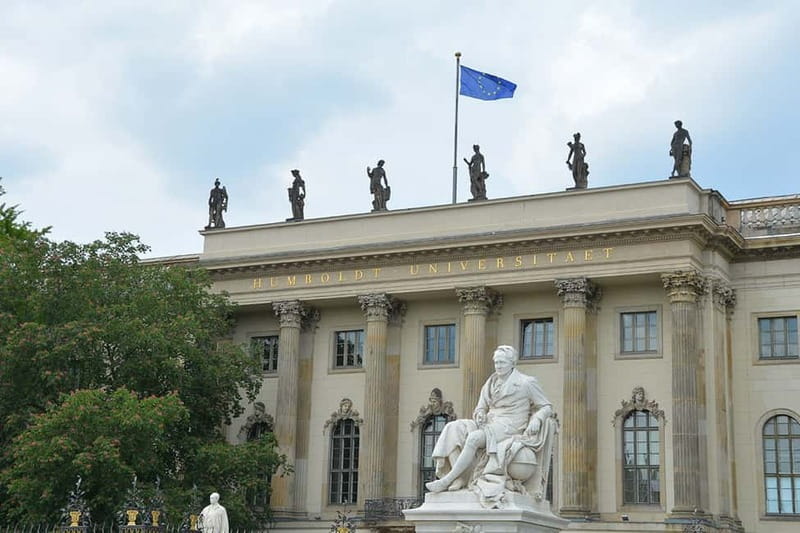
Crossing Palace Bridge takes you into the part of Berlin shaped most clearly by kings and emperors. The bridge links the Museum Island area with the historic center around the former palace and Unter den Linden.
Here, the guide connects buildings to the political history of Prussia and the German Empire. This is where the tour moves beyond Berlin’s medieval beginnings and shows how the city became a seat of royal power.
The buildings are best understood as a group. A palace, an opera house, a university, a cathedral, and formal avenues all point to a capital designed to project authority. You will see impressive facades, but the useful part is learning what each building represented and how the city changed around them.
I would pay attention to the guide’s timeline here. Berlin’s story can become a jumble of Prussian kings, imperial Germany, Nazi rule, war, division, and reunification. A good explanation keeps those periods separate and shows how one era affected the next.
Unter den Linden and Frederick the Great
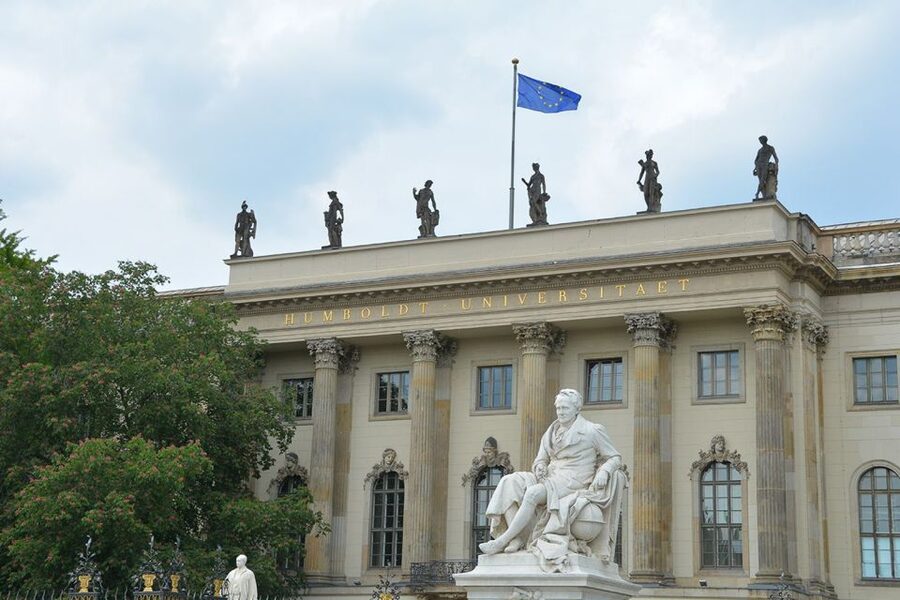
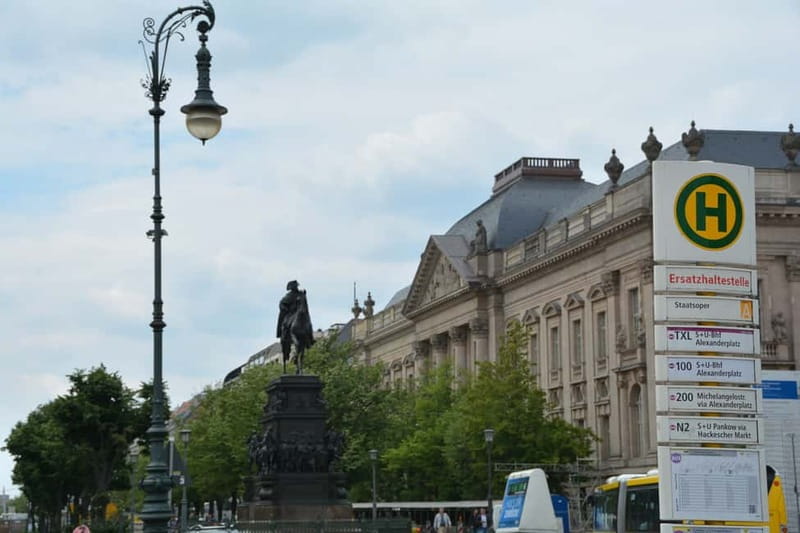
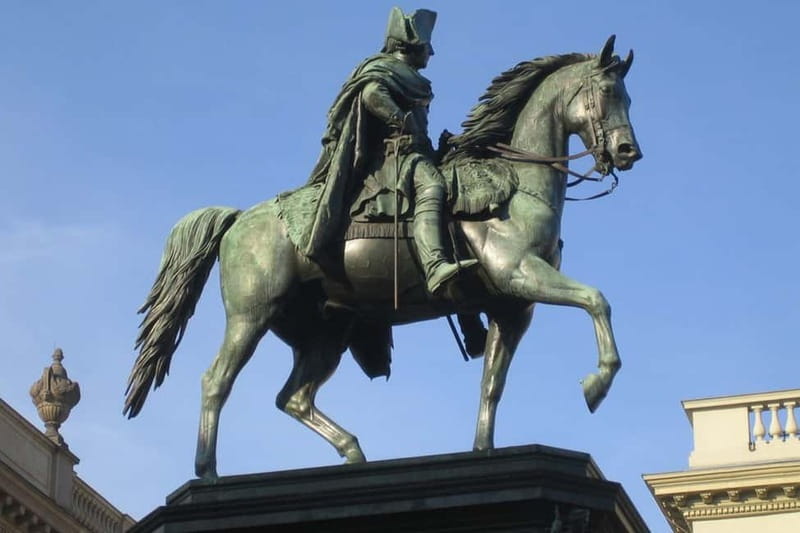
Unter den Linden is Berlin’s oldest boulevard and one of the clearest expressions of the city’s royal past. The route includes the equestrian statue of Frederick the Great, the State Opera, Humboldt University, and St. Hedwig’s Cathedral.
Frederick the Great’s statue is a useful point for discussing Prussia’s rise and the rulers who shaped Berlin’s public image. The monument also gives you a tangible connection to the people behind the grand plans. You are not just looking at a mounted figure; you are looking at a statement about power, military success, and royal leadership.
The State Opera adds another part of Berlin’s identity. The boulevard was designed not only for government but also for culture, ceremony, and public display. Humboldt University brings education into the picture, while St. Hedwig’s Cathedral reflects the religious diversity and history of the capital.
You will pass these sights on foot rather than enter them. That is both a strength and a limit. You cover a lot of ground and see how the buildings relate, but you will need another visit for performances, museum galleries, or extended architectural exploration.
The route is generally easy to follow, and the activity is listed as wheelchair accessible. Still, it remains a city walk in all weather. Comfortable shoes are essential, and you should dress for rain, cold, or heat on the day you go.
Brandenburg Gate and the meaning of reunification
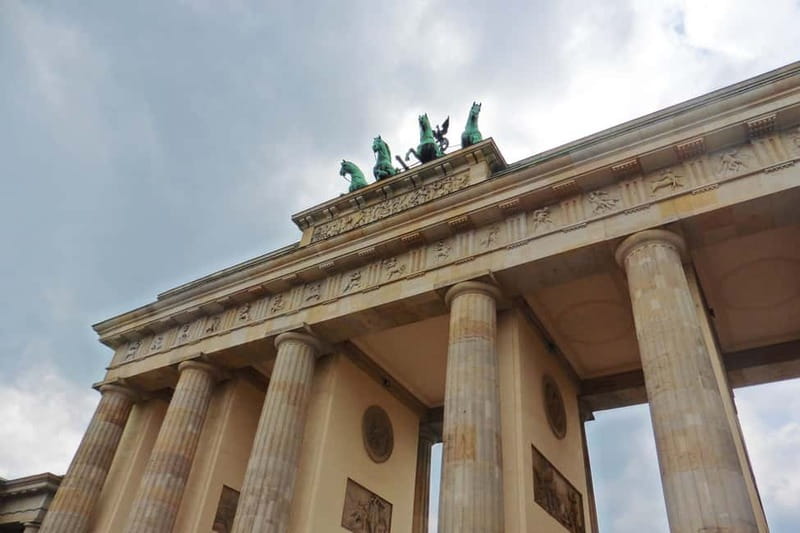
Brandenburg Gate is the final stop and the emotional center of the route. It is one of Berlin’s most famous symbols, but its meaning changed sharply across different periods.
The guide explains the gate before, during, and after Berlin’s division. That context is valuable because the monument was not always a cheerful symbol of an open city. During the Cold War, it sat beside the Berlin Wall in a restricted zone. After the wall fell, it became closely linked with reunification, and it was a focal point for the celebrations and political symbolism of 1990.
Finishing here gives the walk a strong sense of direction. You have moved from Berlin’s earliest center through royal power, cultural institutions, and the divided twentieth century to the reunited capital.
The tour ends at Brandenburg Gate, not at a restaurant, hotel, or transit stop. That is convenient for continuing to nearby sights, but hotel pickup and drop-off are not included. Plan your onward route before the walk ends if you are unfamiliar with the city.
How much value do you get for $43?
At $43 per person, this is not Berlin’s cheapest possible introduction. Its value rests on the guide and the route rather than on admissions, food, or transport. You are paying for two hours of focused explanation across the historic center, with a small group capped at 10 people.
That price can make sense on your first day in Berlin. A strong orientation walk may save you time later because you will know which places deserve a return visit. The route also covers landmarks that would be easy to see without a guide but harder to understand in sequence.
The value is especially good if you get a small booking. The tour has sometimes operated with only one or two participants, creating something close to a private walk without a separate private-tour price. Do not assume that will happen on your date, but the group limit keeps the experience personal even when it is full.
The price is less attractive if you want museum admission, long interior visits, or a relaxed pace. None of those are included. You should see this as a guided orientation to central Berlin, not as a replacement for visiting Museum Island or Berlin Cathedral.
Who should book this walk?
I would recommend it to first-time visitors who want a clear introduction before exploring Berlin on their own. The route covers the city’s best-known central sights and gives you a timeline broad enough to include Prussia, monarchy, modern culture, division, and reunification.
It also suits history-minded visitors who are tired of tours that focus only on World War II. One participant found it more informative than other Berlin tours because it covered the full story of the city, not just the twentieth century.
The walk can work well for solo visitors, couples, families with older children, and people who prefer asking questions as they go. The guide’s multilingual options make it useful for English, German, and Italian speakers.
You may want something else if you dislike walking, need frequent long breaks, or want to spend most of your time indoors. The tour runs for two hours, takes place in all weather, and includes several stops where you listen while standing outside.
Book it early in your stay if you can. It can help you get your bearings, understand the major neighborhoods in Mitte, and choose which sights deserve more of your time.
Practical details before you go
Meet in front of the main entrance of the St. Nicholas’ Church Museum. Look for the Get Your Guide, You in Berlin flag so you can identify the guide quickly.
The listed languages are English, German, and Italian. Guides named Carlo, Carlos, and Karlo appear in the feedback connected with this experience, but you should check the language and starting time available for your date.
Wear comfortable shoes and comfortable clothes. The walk continues in bad weather and on public holidays, so take rain protection or other weather-appropriate layers. One guide has even carried umbrellas for participants, but you should not rely on that.
The tour is wheelchair accessible, and the small group limit is 10 people. You can cancel up to 24 hours in advance for a full refund, and the reserve-now, pay-later option lets you hold a place without paying immediately.
Should you book the Berlin historic center walk?
Book this tour if you want a well-organized historical foundation before tackling Berlin’s museums and memorials. Its strongest points are the central route, the wide time span, the small group size, and guides such as Carlo who explain the city with warmth and patience.
Skip it if you mainly want interior access or a specialized tour focused on one period. For most first-time visitors, though, $43 is a fair price for two hours of context, especially if you value a guide who can turn a long list of famous buildings into one connected Berlin story.
FAQ
Where does the tour begin?
The meeting point is in front of the main entrance of the Nikolaikirche Museum, also called St. Nicholas’ Church Museum.
Where does the tour finish?
The walk finishes at Brandenburg Gate.
How long is the tour?
The tour lasts two hours.
How much does the tour cost?
The listed price is $43 per person.
Which landmarks are included?
The route includes Nikolaiviertel, the Television Tower area, Museum Island, the Humboldt Forum, Berlin Cathedral, the Old Museum, Humboldt University, the State Opera, St. Hedwig’s Cathedral, Unter den Linden, and Brandenburg Gate.
Is the Berlin Cathedral interior included?
No interior admission is listed. You see Berlin Cathedral as part of the walking route.
Which languages are available?
The tour is offered in German, English, and Italian.
How large is the group?
The activity is listed as a small-group tour limited to 10 participants.
Is the walk wheelchair accessible?
Yes, the activity is listed as wheelchair accessible.
What should you bring?
Bring comfortable shoes and comfortable clothing. The walk takes place in all weather conditions and on public holidays, so dress for the forecast.
Are hotel pickup, food, and drinks included?
No. Hotel pickup and drop-off, food, and drinks are not included.
Just added around Berlin
- East Berlin and the Wall: Walking Tour★ 4.9 · 407 reviews
- Cold War, Berlin Wall, Spies and the East Side Gallery★ 4.8 · 254 reviews
- Berlin: walking tour about Charité★ 4.4 · 537 reviews
- Berlin: Walking Tour of the Top 10 Sightseeing Attractions★ 4.7 · 150 reviews
- Berlin: Sightseeing Walking Tour of the Top 20 Attractions★ 4.5 · 196 reviews
- Berlin: The Time of National Socialism Walking Tour★ 5.0 · 220 reviews
- Berlin: Kreuzberg Guided Walking Evening Tour★ 4.7 · 555 reviews
- Berlin : Must-see attractions Walking Tour★ 4.8 · 83 reviews
History Walking Tours, compared.

Berlin’s Best: 2 Hour Walking Tour Third Reich and the Cold War
Read our review →
Third Reich Berlin: Hitler and WWII Walking Tour
Read our review →
New Orleans Garden District History Walking Tour
Read our review →
Cartagena: Historic Center and Getsemaní Shared Walking Tour
Read our review →
Imperial Palace and Shogun Historical Walking Tour
Read our review →Browse the lists this tour appears in