

REVIEW · PARIS
Montmartre Hidden Gems and Scenic Highlights Walking Tour
Montmartre is best understood on foot, one sloping street and tucked-away square at a time. This 90-minute walk links the neighborhood’s artists, singers, cafés, vineyards, and grand views, rather than treating Sacré-Cœur as the whole story.
I like the mix of famous sights and smaller discoveries, especially the Bateau-Lavoir, Dalida bust, and Montmartre vineyard. I also like the practical advice guides such as Laura, Denise, Sylvia, and David give about food and what to do after the tour. The main caution is pace: you won’t enter Sacré-Cœur, and the hills, cobblestones, narrow streets, and crowds can be tiring.
Key points at a glance
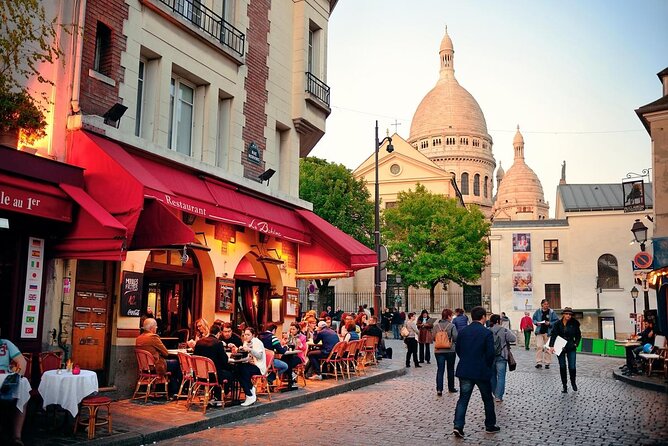
- A compact introduction: The 90-minute route gives you a useful first look at Montmartre without taking half a day.
- Art history with a local angle: Hear about Picasso, Modigliani, Braque, Renoir, Van Gogh, and Dalida in the places tied to their lives and work.
- More than Sacré-Cœur: The walk includes the I Love You Wall, Bateau-Lavoir, Moulin de la Galette, La Maison Rose, the vineyard, and Place du Tertre.
- Views without a basilica ticket: The route passes Sacré-Cœur from outside, and your guide explains what to see if you enter independently.
- English-speaking guides: Guide assignments vary, with Laura, Denise, Sylvia, David, Linda, and others praised for clear storytelling and local suggestions.
- A few physical demands: The route avoids stairs but includes hills and narrow streets. Arrive 15 minutes early because the group leaves on time.
Why this Montmartre walk works well
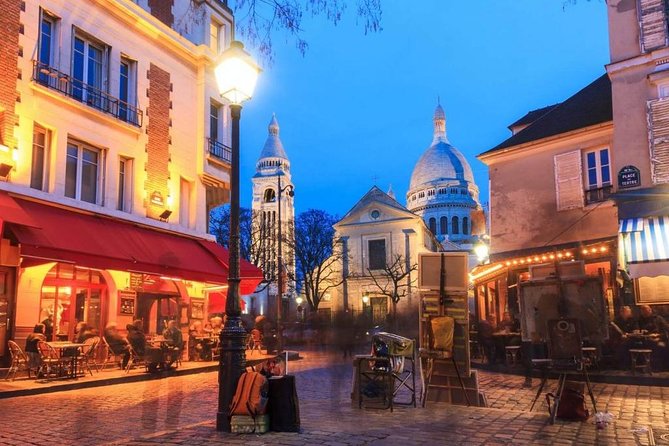
Montmartre can feel confusing on a first visit. One minute you are among souvenir shops and portrait artists, and a few turns later you are beside a quiet vineyard or a small square with a story attached. A guide helps you connect those pieces.
This tour begins at 19 Rue des Abbesses, a convenient starting point in the lower part of Montmartre. From there, you work uphill through the neighborhood and finish at La Bonne Franquette on Rue Saint-Rustique, near the Sacré-Cœur area.
I see this as an orientation walk rather than a full museum tour or a detailed architectural study. You get the broad character of Montmartre, along with enough history to make your later wandering more rewarding. The route is short, but it covers a good number of stops.
The guides are an important part of the experience. Laura is praised for mixing humor with history. Denise is often noted for her friendly manner and clear explanations. Sylvia is described as engaging and helpful with questions. David brings a strong interest in art and keeps an eye on the group. Linda is particularly good at telling amusing stories about the artists.
That variety matters because the route itself is fixed, but the feel can change with the person leading it. Some guides may focus more on art, while others may lean into local life, neighborhood change, or restaurant advice.
More City Highlights Walking Tours in France
- Paris: Montmartre Highlights Walking Tour with a Local Guide
★ 4.9 · 2,318 reviews - Paris in a Day: Louvre or Orsay, Eiffel Tower, City Walk & Cruise
★ 5.0 · 1,956 reviews - Paris: Montmartre Must-See Walking Tour with a Local Guide
★ 4.9 · 661 reviews
From the I Love You Wall to Rue des Abbesses
The first stop is the I Love You Wall, an art installation with the phrase I love you written in more than 300 languages. It is a simple idea, but it works well as a first pause. You get a quick photograph, a small piece of modern Montmartre, and a reminder that this neighborhood has always attracted artists working in different forms.
The walk then moves through one of Montmartre’s old streets. Cafés, small shops, and historic buildings give the area its village-like feel, though the street can be busy. Your guide places the surroundings in context, explaining how Montmartre changed from a cheaper, bohemian quarter into one of Paris’s most expensive addresses.
That change is one of the tour’s more useful themes. Montmartre is often sold as an untouched artists’ village, but it is also a popular and costly part of Paris. Hearing how the neighborhood evolved gives you a more honest picture than a postcard view alone.
The streets are narrow in places, so stay close to the guide. A group of up to 25 people is allowed, and larger groups can make it harder to hear, especially beside busy roads. The best guides manage this by stopping often and checking that everyone is together.
Bateau-Lavoir and Montmartre’s modern artists

At the Bateau-Lavoir, you hear about the artists who worked and lived in this former artists’ residence. Picasso, Modigliani, and Braque are among the names linked to the building, which became an important setting for the changes that shaped modern art.
You will not get a museum visit here. The value is in understanding the place as part of the neighborhood. Montmartre was not simply a backdrop for artists. It was a working district where painters lived close together, exchanged ideas, and helped create the reputation that still draws people uphill today.
This is where a strong guide can make a major difference. A dry list of names will pass quickly. A guide who explains how artists, cafés, studios, and low rents fed the area’s creative life gives the stop some meaning.
The tour’s art focus will appeal to you if you enjoy stories about people and place. It may disappoint you if you want a fast march from monument to monument. One unhappy participant expected more major sights in less time and felt the discussion of street art took too long. That is a useful warning: this walk allows time for explanation, not just photographs.
Moulin de la Galette and the neighborhood’s rural past
The Moulin de la Galette is one of Montmartre’s familiar symbols. Renoir and Van Gogh included the windmill in their work, and it once served as a dance hall. The stop connects the hill’s rural past with the artistic Montmartre most people recognize.
The windmill is viewed from outside, so keep your expectations in check. You are not entering a working mill or touring a large attraction. Instead, you pause to hear why this small structure mattered and how it became part of the neighborhood’s image.
This is also a good example of why walking helps. From a bus, you might register a windmill and move on. On foot, you get a sense of how it sits among residential streets, cafés, and old buildings. The surrounding area helps explain why artists found Montmartre so appealing.
More Hidden Gems Walks in Paris:
- Dublin Highlights and Hidden Gems Guided Walking Tour
★ 5.0 · 6,020 reviews - Explore Berlin: See All The Iconic Sights & Some Hidden Gems
★ 5.0 · 4,429 reviews - Venice: San Marco to Rialto Walk & Spritz Like a Local
★ 4.2 · 3,651 reviews - Kyoto Geisha Walking Tour: Gion District & Hidden Gems
★ 4.7 · 3,273 reviews
The man through the wall and Dalida’s square
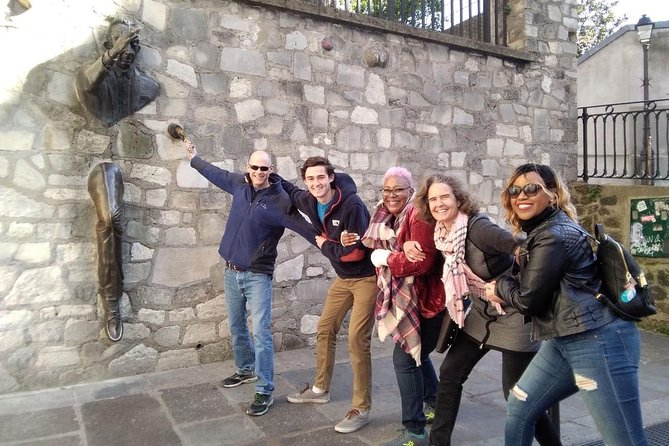
Near the former home of writer Marcel Aymé, Le Passe-Muraille depicts a man walking through a wall. The sculpture is based on one of Aymé’s stories and adds a playful, slightly surreal touch to the route.
It is an easy stop to overlook on your own. The sculpture is not a grand monument, but it rewards a guide who can explain the literary connection. It also breaks up the art-history material with something lighter and more whimsical.
The walk continues to the bronze bust of Dalida, the French singer who lived in Montmartre for many years. Her connection to the neighborhood gives the tour a different tone. Montmartre is not only about painters from the early 20th century. It has also been home to performers and public figures whose fans still come to pay their respects.
The square around the bust offers a calmer pause. If you are interested in French music, this may be one of the more personal stops. If you know little about Dalida, the guide’s explanation helps place her in the story of the neighborhood.
La Maison Rose and the Montmartre vineyard
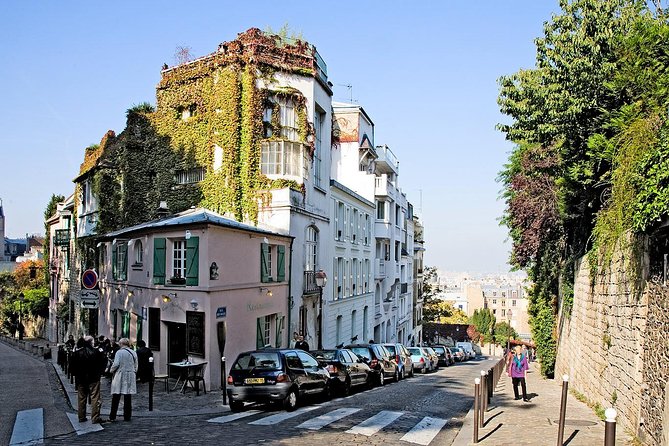
La Maison Rose is one of the most photographed buildings in Montmartre. Its pink exterior makes an obvious picture, but the place also has artistic connections. Picasso and Utrillo were among the artists associated with the area, and the building now operates as a café serving French food.
Your guide can point out how to enjoy the stop without treating it as a quick photo only. You might choose to return for a meal later, though the tour itself does not include food. The nearby streets also make a good place to continue exploring after the formal walk ends.
The Montmartre vineyard offers a different view of the hill. Established in 1933 to preserve the area’s winemaking tradition, it keeps a small piece of Montmartre’s rural identity alive. You should not expect a winery visit or tasting as part of this tour. The point is the story and the glimpse of vines in a district better known for art and city views.
Together, La Maison Rose and the vineyard show why Montmartre feels unlike many other Paris neighborhoods. The area has cafés and tourist traffic, but it also holds traces of village life, farming, local legends, and old residents.
Sacré-Cœur and the final view over Paris
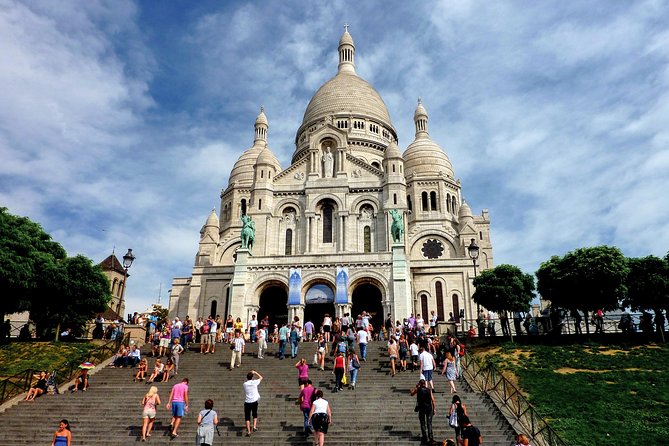
The walk finishes near Sacré-Cœur Basilica, built in the late 19th century and known for its white domes and interior mosaics. The basilica sits at the highest point in Paris, so the approach brings some of the best city views on the route.
The tour passes the basilica from outside. Entry is not included, though the church is free to enter when open. Your guide gives advice about what to see inside, allowing you to return on your own after the walk.
This arrangement suits some people better than a guided interior visit. You get the neighborhood tour first, then decide how much time to spend inside the basilica. If your priority is the mosaics or prayer, plan extra time after the tour. If your priority is Montmartre’s streets and stories, the exterior stop may be enough.
The final stop is Place du Tertre, the square associated with painters, caricaturists, cafés, and street performers. It can be crowded and commercial, but it remains an important part of Montmartre’s artistic identity. Your guide can help you understand the difference between the square’s long connection to artists and the modern tourist activity around it.
The advertised ending is La Bonne Franquette at 18 Rue Saint-Rustique. That is useful for planning lunch, a drink, or more independent wandering nearby.
What the $38.70 price gets you
At $38.70 per person, the value depends on what you want from Montmartre. You are paying for an English-speaking local guide, a planned route, and the stories that link scattered sights together. There are no admission fees bundled into the price, since the basilica interior is not part of the guided visit.
For a first afternoon in Paris, I think the price is fair if you want a focused introduction and useful orientation. The tour can save you from walking past the vineyard, Bateau-Lavoir, or Le Passe-Muraille without knowing why they matter.
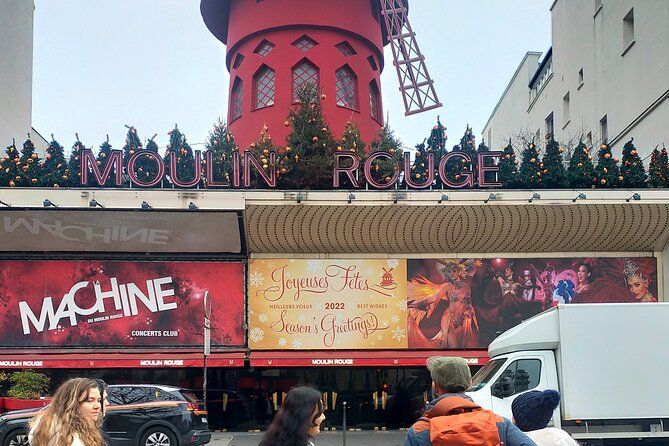
It is less compelling if you already know Montmartre well or prefer to wander without a schedule. You can see the exterior sights independently, and the tour does not include a meal, transport, Sacré-Cœur entry, or a Moulin Rouge visit.
The strongest value comes from the guide. Several highly praised guides are singled out for humor, clear English, art knowledge, answers to questions, and restaurant suggestions. Those practical recommendations can help you use the rest of your time in the neighborhood.
Timing, group size, and the physical effort
The tour lasts about one hour and 30 minutes, which makes it a useful choice when your Paris schedule is tight. One early start is especially smart because Montmartre becomes busy quickly. An early walk can make it easier to hear the guide and take photographs before the narrow streets fill up.
The group can include as many as 25 people. That is not enormous, but it is large enough for hearing to become an issue in noisy spots. Stay near the guide, and do not hesitate to move closer when the group stops.
The route does not include stairs, but it does include hills. The streets can be narrow, crowded, and uneven, with cobblestones in parts of the neighborhood. Anyone using a wheelchair or dealing with limited strength should take the terrain seriously. Even without stairs, steep grades and rough surfaces can make the walk difficult.
Wear shoes suited to uneven pavement and bring clothing for the weather. The tour runs in rain or shine. Arrive 15 minutes early at 19 Rue des Abbesses, since the group starts on time and catching up later may not be possible.
Who should book this walk
I would choose this tour for a first visit to Montmartre, especially if you want history without committing to a long half-day program. It suits couples, families with adults, and solo visitors who prefer a guide to set the route.
It is also a good fit if you like artist stories, neighborhood change, unusual sculptures, and food suggestions. The walk gives you enough information to return later for lunch at La Maison Rose or La Bonne Franquette, enter Sacré-Cœur, explore Place du Tertre, or seek out the Moulin Rouge independently.
I would choose another plan if your main goal is the Moulin Rouge, the funicular, a long visit inside Sacré-Cœur, or a stair-heavy climb through every corner of the hill. Those are not the focus here.
Should you book the Montmartre Hidden Gems and Scenic Highlights Walking Tour?
Book it if you want a friendly, compact introduction to Montmartre that goes beyond the basilica and the obvious photographs. The route has a good spread of art, music, literature, old village life, and city views, and the best guides make the neighborhood feel personal.
Skip it if you want a private tour, a museum-style art lecture, or a faster walk with many major monuments. Also think carefully about the hills and cobblestones if mobility is a concern.
For most first-time visitors with 90 minutes to spare, this is a sensible way to get oriented. Choose an early time if possible, arrive early, stay close to the guide, and keep an extra hour afterward for Sacré-Cœur and lunch.
FAQ
How long is the Montmartre walking tour?
The tour lasts approximately 90 minutes.
What language is the tour offered in?
The guided visit is offered in English.
Where does the tour start?
The meeting point is 19 Rue des Abbesses, 75018 Paris, France.
Where does the tour finish?
The tour ends at La Bonne Franquette, 18 Rue Saint-Rustique, 75018 Paris, France.
Is entry to Sacré-Cœur included?
No. The tour passes the exterior of Sacré-Cœur Basilica. Entry is free when the basilica is open, and the guide shares suggestions for a self-guided visit.
Does the route include stairs?
The listed route does not include stairs, but it does include hills, narrow streets, and sometimes busy areas.
How large can the group be?
The activity can have a maximum of 25 people.
What happens if I need to cancel?
You can receive a full refund if you cancel at least 24 hours before the start time. Cancellations or changes made within 24 hours are not refunded.
More City Highlights Walks in Paris
- Berlin City walk Government District and Places of Democracy
★ 4.7 · 8,467 reviews - Historic Charleston Guided Sightseeing Walking Tour
★ 5.0 · 6,216 reviews - Quebec City Walking Tour
★ 5.0 · 4,716 reviews - Florence: Highlights Walking Tour with Expert Guide
★ 4.6 · 4,662 reviews
Just added around Paris
- Paris: Early Access Notre Dame Cathedral Walking Tour★ 4.2 · 80 reviews
- Paris Private Walking Tour with a Personal Photographer★ 5.0 · 262 reviews
- Paris: Private Walking Tour with a Local★ 4.6 · 506 reviews
- Paris City of Fashion History Private Guided Walking Tour★ 5.0 · 221 reviews
- Authentic Parisian Gourmet Food Tour with 10 Local Dishes & Wines★ 5.0 · 4,754 reviews
- Paris: Île de la Cité and Notre-Dame Walking Tour With Crypt★ 4.2 · 614 reviews
- Notre Dame Outdoor Walking Tour and Entrance to Sainte Chapelle★ 5.0 · 625 reviews
- Paris: Montmartre Guided Walking Tour★ 4.8 · 661 reviews
Hidden Gems Walking Tours, compared.
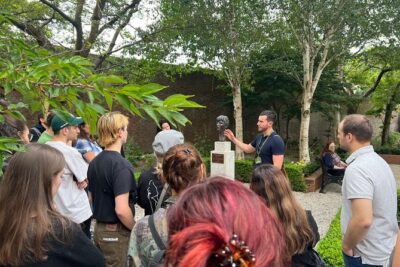
Dublin Highlights and Hidden Gems Guided Walking Tour
Read our review →
Explore Berlin: See All The Iconic Sights & Some Hidden Gems
Read our review →
San Marco to Rialto Walk & Spritz Like a Local
Read our review →
Kyoto Geisha Walking Tour: Gion District & Hidden Gems
Read our review →
Eat Like a Local: Venice 3-Hour Small-Group Food Tasting Tour
Read our review →
Guided Walking Tour of City Highlights & Hidden Gems
Read our review →

Secrets of Grand Central Station Walking Tour New York City
Read our review →Browse the lists this tour appears in