
REVIEW · VIENNA
Vienna: Guided Walking Tour of City Highlights & Hidden Gems
Vienna reveals its story in grand public spaces, and this two-hour walking tour connects many of the city center’s best-known sights in one efficient route. You begin at the Minoriten Church and finish at St. Stephen’s Cathedral, passing imperial squares, the Spanish Riding School, the Albertina, and the Vienna State Opera along the way.
I like the clear historical thread, from Habsburg power at the Hofburg to Vienna’s musical life at the Opera. I also like the practical finish at St. Stephen’s, where you can easily continue sightseeing or stop for food. The main tradeoff is simple: this is an exterior tour, so you will not enter the palace, museums, riding school, Opera, or cathedral.
Key points to know
- The route covers Vienna’s central sights efficiently, making it useful on your first full day.
- The Minoriten Church includes a Last Supper mosaic, an unusual opening stop.
- Guides such as Michael, Celine, Max, Petra, and Ivo are praised for lively storytelling and clear explanations.
- Listening equipment may be provided, which helps in larger groups and on busy streets.
- The tour costs $27 per person, a fair price for two hours of guided orientation.
- You need comfortable shoes and weather protection, since the walk runs in all conditions.
Why this two-hour route works well in central Vienna
Vienna’s first district is compact, but its landmarks can feel scattered when you are seeing them for the first time. This walk gives you a useful framework. Instead of visiting one sight in isolation, you move through the political, religious, artistic, and musical center of the city in a logical sequence.
The route is especially useful if you have only a short stay. In two hours, you see the outside of several major buildings and hear how they connect to Vienna’s imperial past. You will not come away with a full museum visit or a detailed look inside each landmark, but you will know what deserves more of your time later.
I would book this near the start of a Vienna visit. Several guides, including Max and Michael, are praised for offering suggestions about what to see and do afterward. That makes the walk more than a sightseeing checklist. It can help you plan the rest of your stay.
The pace is active but manageable for most people who are comfortable walking for two hours. You cover a lot of ground, and there is no scheduled meal or restroom stop. One person specifically noted that a break would have been useful, so plan accordingly before you meet the guide.
More Hidden Gems Walks in Vienna:
- Dublin Highlights and Hidden Gems Guided Walking Tour
★ 5.0 · 6,020 reviews - Explore Berlin: See All The Iconic Sights & Some Hidden Gems
★ 5.0 · 4,429 reviews - Venice: San Marco to Rialto Walk & Spritz Like a Local
★ 4.2 · 3,651 reviews
Starting at the Leopold-Figl statue
The meeting point is in Minoritenplatz, in front of the Leopold-Figl statue. It is about a ten-minute walk from Stephansplatz, or you can take the U3 subway to Herrengasse and follow signs toward Minoritenplatz.
This is a practical starting point because it places you just outside the most historic part of the city. Give yourself enough time to find the statue. The guide may be easy to spot, but a late arrival can be treated as a no-show, so I would not cut it close.
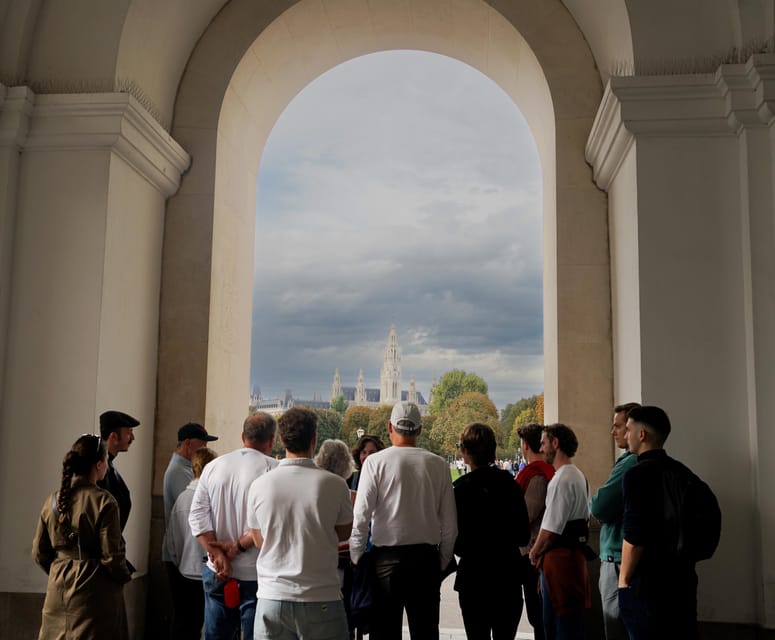
The tour is offered in English, German, and Italian. A private group option is also available. Group size can vary. One participant described a group of about 30 people, while other groups may feel smaller. Listening devices are sometimes supplied, and that detail matters. Celine and Petra were praised for using earpieces or audio equipment so people could hear without the guide shouting across the street.
Minoriten Church and the Last Supper mosaic
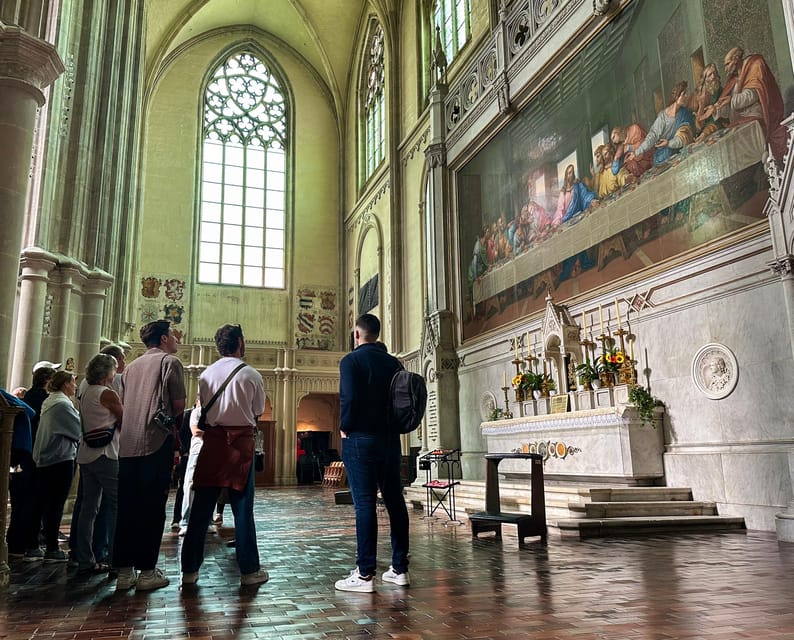
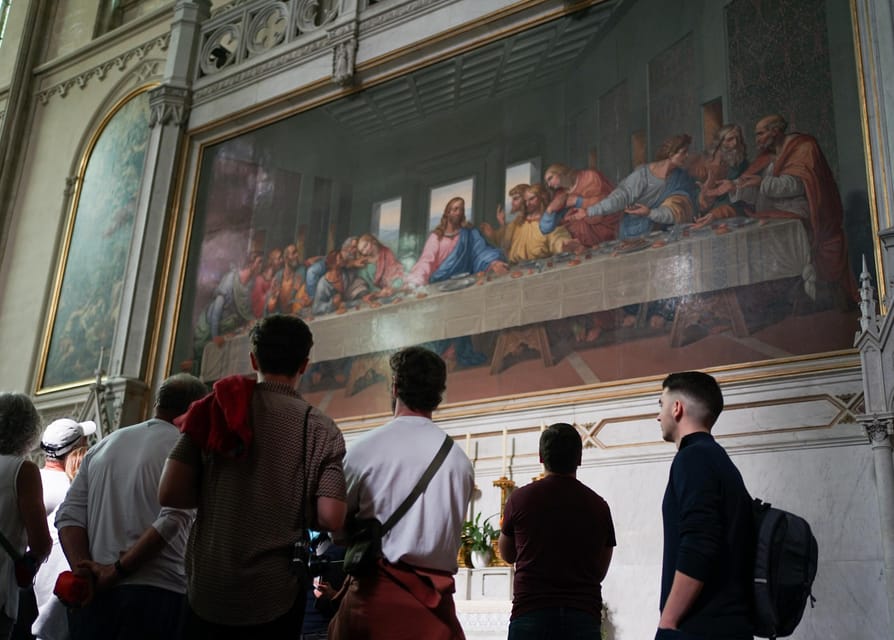
The first stop is the Church of the Minorities, also known as Minoritenkirche. The main feature here is a mosaic reproduction of Leonardo da Vinci’s The Last Supper. It gives the tour an unusual opening because you begin with art and religious history rather than a palace facade.
The church also provides an early reminder that Vienna is not only a city of imperial buildings. Its historic center has layers of religious, artistic, and civic life packed close together. Your guide can explain the setting before leading you onward.
There is one important limitation. If Mass is taking place, the group cannot visit the church. Since the tour includes no interior admission, you should think of this as a possible brief visit rather than a guaranteed church tour. The exterior route continues even if access is restricted.
Michaelerplatz and the Hofburg entrance
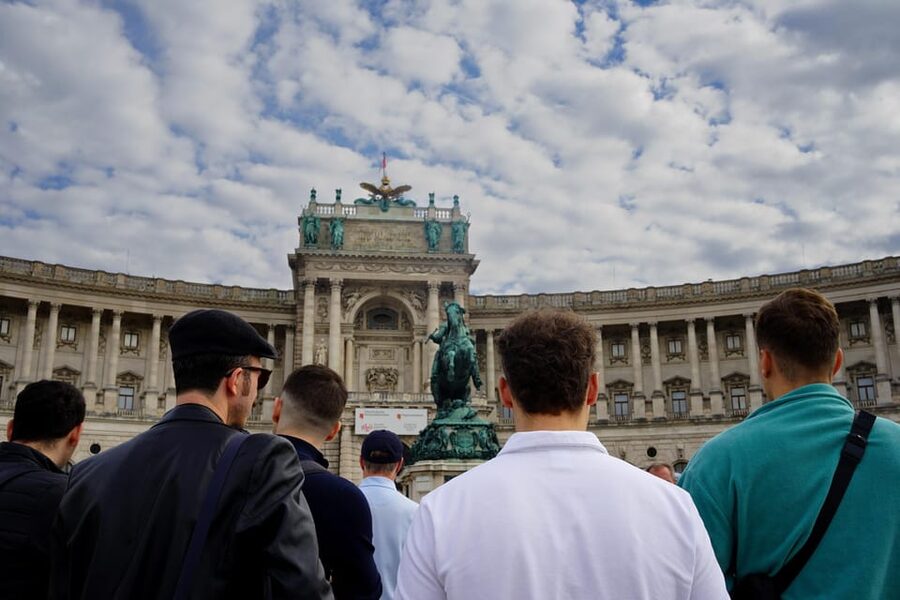
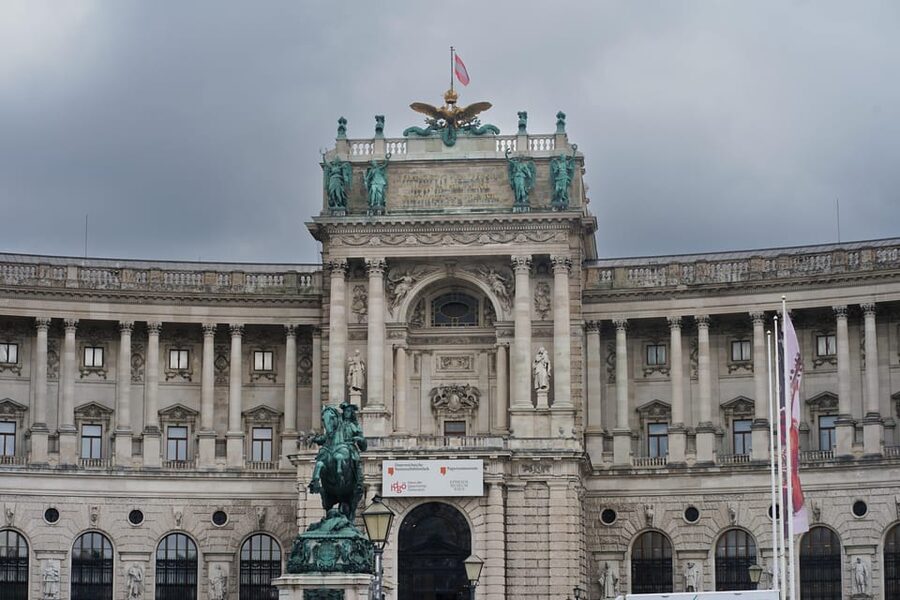
From Minoritenplatz, the walk continues toward Michaelerplatz, one of the most impressive urban spaces in the center. Here you see the grand entrance to the Hofburg Palace, the former center of Habsburg power.
The value of this stop is not an interior tour. It is the setting and the scale. The Hofburg complex spreads across several parts of central Vienna, and Michaelerplatz gives you a strong sense of how the imperial residence shaped the city around it.
Your guide will place the building in its political context and explain why this entrance matters. I find that useful because the Hofburg can seem like a collection of separate wings when you first encounter it. A short explanation helps turn the palace into a coherent part of Vienna’s story.
Do not expect to see the Imperial Apartments, museums, or treasury on this outing. If you want those, you will need separate admission and extra time. This tour is best used as an introduction before deciding which interiors deserve your attention.
More City Highlights Walks in Vienna:
- Berlin City walk Government District and Places of Democracy
★ 4.7 · 8,467 reviews - Historic Charleston Guided Sightseeing Walking Tour
★ 5.0 · 6,216 reviews - Quebec City Walking Tour
★ 5.0 · 4,716 reviews - Florence: Highlights Walking Tour with Expert Guide
★ 4.6 · 4,662 reviews
Heldenplatz and Vienna’s imperial stage
The route then reaches Heldenplatz, a broad square associated with Austria’s rulers and public ceremonies. It offers room to step back from the tight streets and see the scale of the Hofburg area.
This is where the guide’s storytelling matters most. The square is more than an open space beside a palace. It connects Vienna’s monarchy, military displays, politics, and modern memory. The tour provides the context while you look at the buildings and surrounding spaces from outside.
You will likely spend only part of the two hours at each stop, so expect highlights rather than long lectures. The strongest guides use short stories and clear connections. Max is praised for combining personal memories of growing up in Vienna with historical explanations, while Michael is repeatedly described as energetic and well informed. The exact guide varies, but the tour format depends on a guide who can make quick stops meaningful.
The Spanish Riding School and Vienna’s traditions
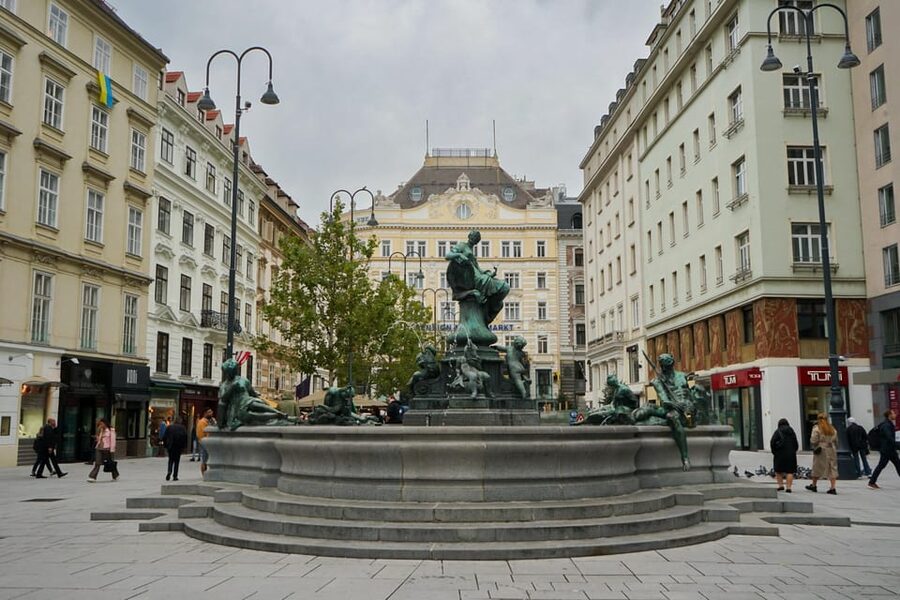
Near the Hofburg, you stop at the Spanish Riding School. This is a key place to hear about Vienna’s imperial traditions and the institution’s place in the city’s identity.
The tour explains the riding school from the outside. You do not attend a performance, watch training, or enter the facility. That distinction matters if the Lipizzaner horses are your main reason for visiting. You would need a separate ticket for an interior experience.
Still, the exterior stop has value. It places the riding school within the Hofburg complex and shows how court life extended beyond government and residence. The guide can connect the school to Vienna’s ceremonial traditions, making the building more meaningful than it would be as a quick photo stop.
Albertina and Vienna’s artistic center
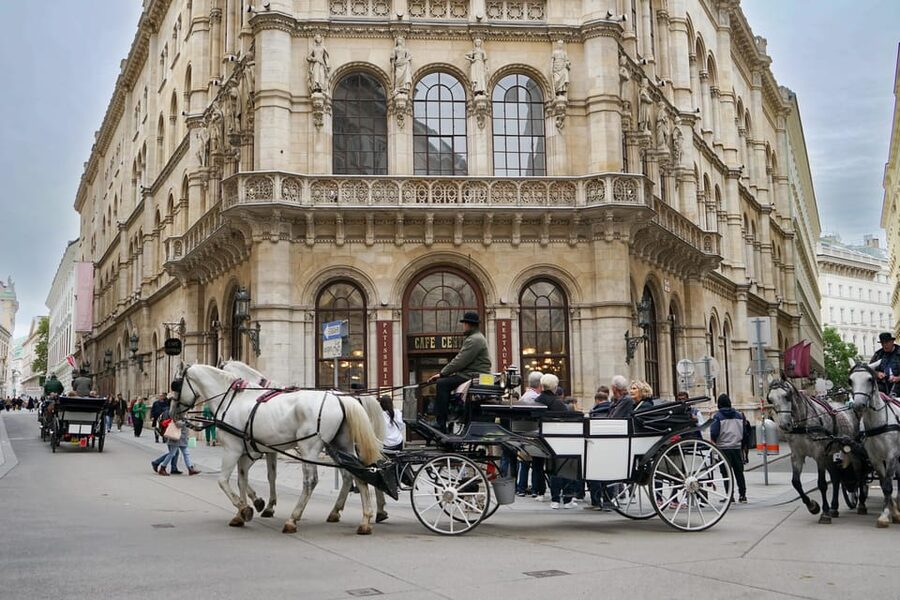
The Albertina Museum is the next major landmark. The building is known for its prominent position above the Opera area, and the walk gives you time to appreciate its exterior and setting.
You do not enter the museum, so art lovers should treat this as a planning stop. The Albertina has its own exhibitions and admission requirements, neither of which is included here. The benefit is that you can learn where it is and decide later if its collections fit your interests.
The route also shows how close Vienna’s cultural institutions are to the imperial center. In a short walk, you move from palace history to art and then toward music. That variety is one of the best reasons to choose this tour instead of a walk limited to one subject.
Vienna State Opera and the city’s musical identity
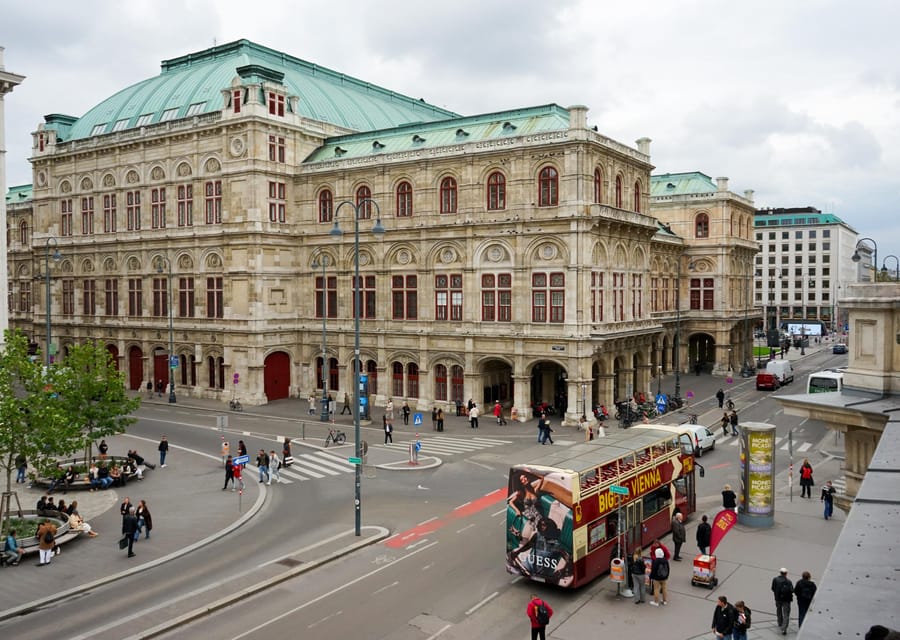
The Vienna State Opera is one of the route’s major visual highlights. Its exterior reflects the city’s long connection with opera and classical music, and the guide explains its place in Vienna’s cultural life.
Again, this is an outside visit. You will not tour the auditorium, backstage areas, or attend a performance as part of the $27 booking. If you are interested in opera, use the stop to understand the building’s location and then make a separate plan.
I like the way the Opera fits into the route. It gives the walk a change of tone after the palace and riding school. Vienna is presented not only as a former imperial capital, but also as a city shaped by concerts, opera, composers, and public performance.
Finishing at St. Stephen’s Cathedral
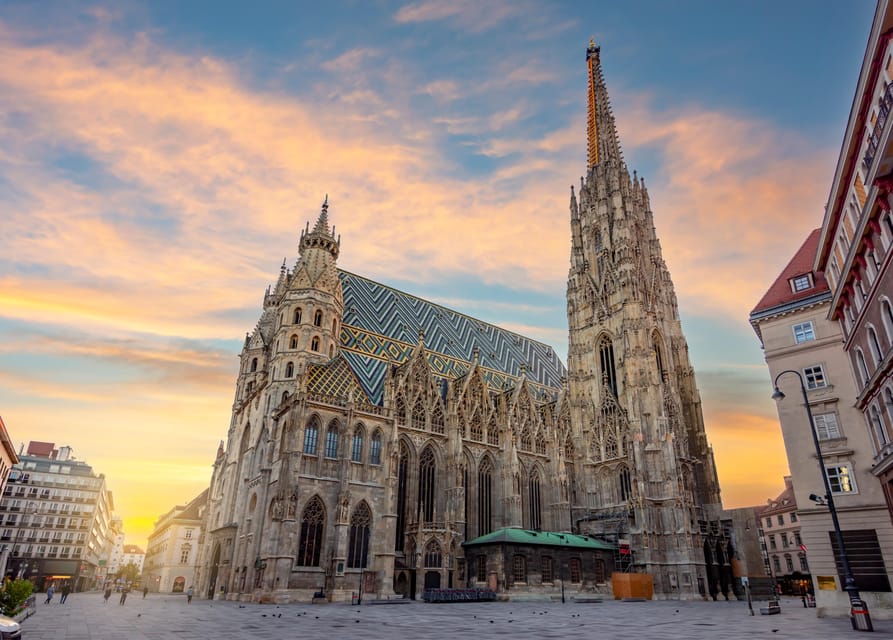
The walk ends at St. Stephen’s Cathedral, Vienna’s most recognizable Gothic landmark. Its roof, towers, and scale give the final stop a strong visual finish.
The cathedral is a useful ending for practical reasons as well. You are close to Stephansplatz, one of the easiest places in the center to continue exploring. You can arrange a separate cathedral visit, look for food, or use the nearby subway connections.
Do not assume that the cathedral interior is included. The stated format is exterior-only, so the guide’s role is to explain what you are seeing from outside. That still gives you a useful first look, especially if you plan to return for a closer visit.
The final stop also helps with orientation. After two hours, you will have crossed much of the central sightseeing area and should have a clearer sense of how the Hofburg, Opera, Albertina, and Stephansplatz relate to one another.
What the guiding is really like
The strongest feature of this experience is the guide. Names that appear repeatedly in the available feedback include Michael, Celine, Max, Petra, Ivo, Marlene, and Karl. The praise is consistent in a few specific areas: clear history, humor, enthusiasm, and useful suggestions for the rest of a Vienna stay.
That does not mean every guide will have the same style. Some are more focused on historical facts, while others use personal stories and jokes. The common goal is to keep the information moving while you walk.
Audio equipment can make a real difference. In a large group, it prevents you from losing the explanation when traffic, crowds, or distance separate you from the guide. It also allows the guide to speak normally instead of raising their voice.
The tour is conducted in all weather. Several people completed it in cold conditions and still found the pace comfortable, but winter visitors should not underestimate the exposure. Wear a warm coat, shoes with good support, and clothing suited to rain or wind. Summer visitors should still bring water, since food and drinks are not included.
Is $27 a fair price?
At $27 per person, this is a reasonable purchase if you want a guided introduction to Vienna’s center. You are paying for two hours of structure, local explanation, and route planning rather than admissions or transportation.
The price works best for a first visit. If you walked the same route alone, you could see the buildings, but you would miss much of the context connecting them. A guide also keeps you moving, which is useful when your time in Vienna is limited.
The value drops if you already know the first district well or want interior access. You will still need separate tickets for museums, the riding school, the Opera, and any cathedral visit beyond the exterior. Think of this as a city orientation walk, not a complete sightseeing package.
Free cancellation up to 24 hours before the start and reserve-now, pay-later booking add flexibility. The important practical rule is to arrive on time, since latecomers can be treated as no-shows.
Who should book this walk?
I would recommend it to first-time visitors, short-stay visitors, solo visitors who want an easy way to get oriented, and anyone who enjoys history explained while walking. It also suits people who want a list of good follow-up stops without spending half a day inside one museum.
Families with older children may appreciate the short format, though the amount of historical explanation depends on the guide and the child’s interest. The group option is social, while a private group may offer a more personal pace.
This is not a good choice for wheelchair users or people with mobility impairments, according to the stated suitability information. It is also a poor fit if you want a seated tour, guaranteed church access, or admission to Vienna’s major interiors.
My recommendation
Book this tour if you want to get your bearings quickly and understand why Vienna’s central buildings matter. The route is well chosen, the price is fair, and guides such as Michael, Celine, Max, and Petra have a strong record of making the history easy to follow.
Skip it if your priority is entering museums or spending extended time inside the Hofburg, Opera, Albertina, or cathedral. For most first-time visitors, though, the walk offers a useful two-hour foundation, with St. Stephen’s Cathedral placing you in exactly the right spot to continue your own exploration.
FAQ
How long does the Vienna walking tour last?
The tour lasts two hours.
What landmarks are included?
The route includes the Minoriten Church, Michaelerplatz, Hofburg Palace, Heldenplatz, the Spanish Riding School, the Albertina Museum, the Vienna State Opera, and St. Stephen’s Cathedral.
Does the tour enter the museums and palaces?
No. The tour focuses on exterior visits, and museum entrance fees are not included.
Is the Last Supper mosaic included?
Yes. A visit to the Last Supper mosaic at the Minoriten Church is included, unless Mass prevents access to the church.
Where does the tour begin?
The meeting point is in front of the Leopold-Figl statue at Minoritenplatz.
How can I reach Minoritenplatz?
You can walk about ten minutes from Stephansplatz or take the U3 subway to Herrengasse station and follow the signs to Minoritenplatz.
What languages are available?
The live tour guide may conduct the tour in English, German, or Italian.
Does the tour operate in bad weather?
Yes. The tour operates in all weather conditions, so you should bring weather-appropriate clothing and comfortable shoes.
Is the tour suitable for wheelchair users?
No. The activity is not suitable for wheelchair users or people with mobility impairments.
Just added around Vienna
- Vienna: City Center Guided Walking Tour★ 4.8 · 99 reviews
- Vienna: Essential History Walking Tour★ 4.9 · 633 reviews
- Historical Hitler Walking Tour of Vienna★ 5.0 · 887 reviews
- Vienna: Private Walking Tour with a Guide★ 4.7 · 962 reviews
- Vienna for Food Lovers: Cafés, Markets & Austrian Cuisine★ 5.0 · 1,063 reviews
- Vienna: Ghosts and Legends Guided Nighttime Walking Tour★ 4.4 · 1,088 reviews
- Vienna: 1.5-Hour Underground Walking Tour★ 4.9 · 1,146 reviews
- Vienna: Private Walking Tour with a Local★ 4.6 · 1,446 reviews
Hidden Gems Walking Tours, compared.
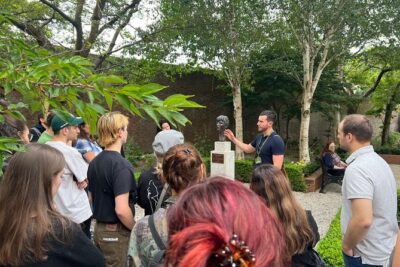
Dublin Highlights and Hidden Gems Guided Walking Tour
Read our review →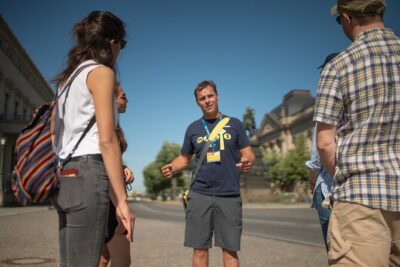
Explore Berlin: See All The Iconic Sights & Some Hidden Gems
Read our review →
San Marco to Rialto Walk & Spritz Like a Local
Read our review →
Kyoto Geisha Walking Tour: Gion District & Hidden Gems
Read our review →
Eat Like a Local: Venice 3-Hour Small-Group Food Tasting Tour
Read our review →
Montmartre Hidden Gems and Scenic Highlights Walking Tour
Read our review →
Secrets of Grand Central Station Walking Tour New York City
Read our review →Browse the lists this tour appears in