
REVIEW · PARIS
Paris: Montmartre Highlights Walking Tour with a Local Guide
Montmartre is more than Sacré-Cœur and a few pretty streets. This 140-minute walk follows the neighborhood’s artistic and rebellious side, from the Wall of Love to Picasso’s old studio, then through vineyards, courtyards, cabaret corners, and the famous Place du Tertre. The stories give familiar sights a much sharper edge.
I like the way the tour uses art, music, and old photographs to make the past feel close. I also like the small-group limit of 16 people, which gives you a fair chance to hear the guide and ask questions. The main drawback is the hill: you start below the basilica and finish near the top, so comfortable shoes are essential.
The guide is usually Yazid, whose lively style and personal enthusiasm have earned especially strong praise, though Zoe, Sylvia, and Marcela have also led tours. At $23, this is a modest price for nearly two and a half hours of local context, but it is not a quiet stroll. Expect cobblestones, outdoor stops, and plenty of walking.
Key points at a glance
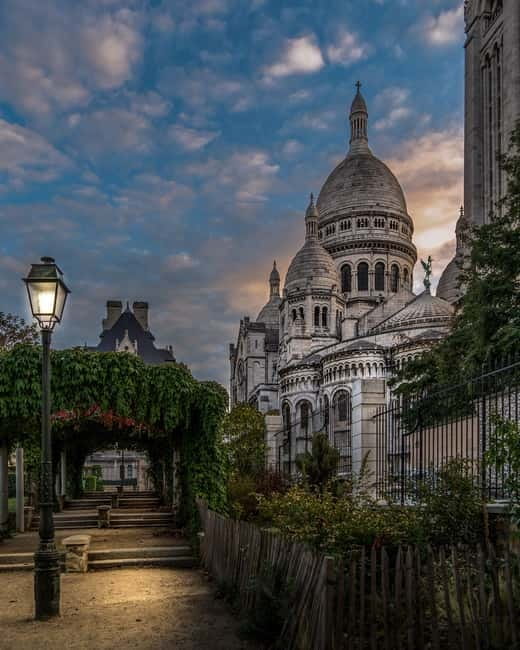
- Start beneath Sacré-Cœur: Meet at Place Saint-Pierre, near the carrousel, and begin with wide views over Paris.
- See Picasso’s Bateau-Lavoir: Learn why this former artists’ residence mattered to modern art.
- Hear more than standard sightseeing facts: Guides connect artists, singers, rebels, resistance stories, and neighborhood characters.
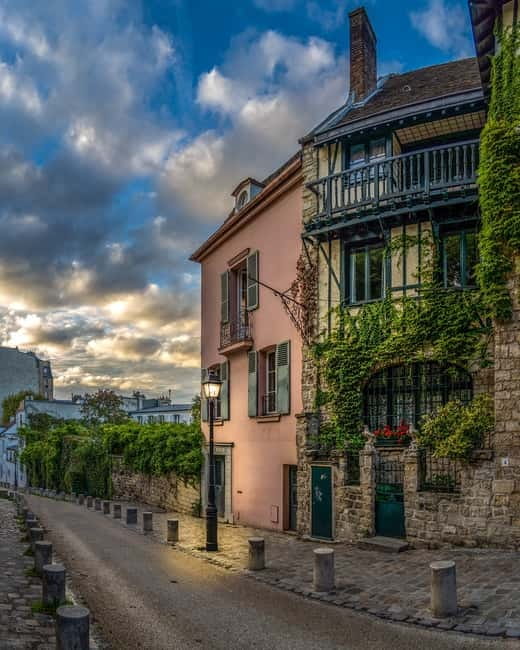
- Visit Montmartre’s most photographed corners: The Wall of Love, Moulin de la Galette, Maison Rose, and Place du Tertre all appear.
- Small groups keep it personal: Numbers are capped at 16, with time for questions and guide-taken family photos.
- Finish well placed for Sacré-Cœur: The walk ends at Place du Tertre, a short distance from the basilica.
Starting below Sacré-Cœur at Place Saint-Pierre
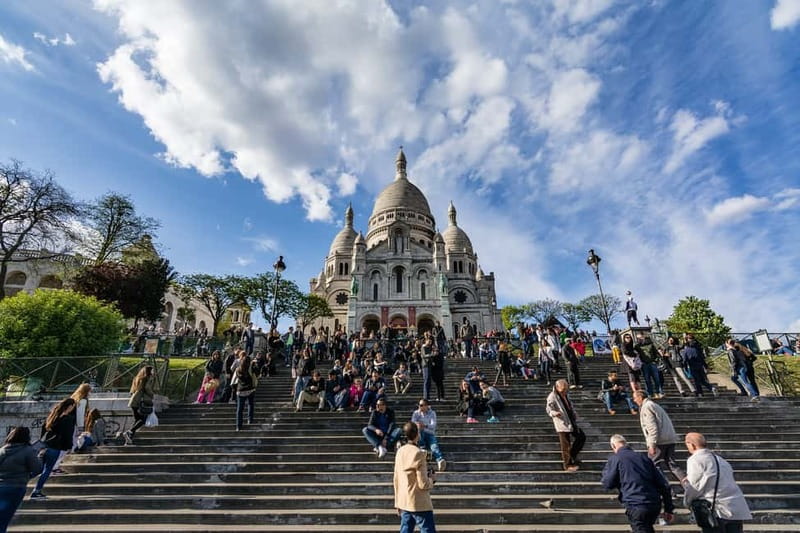
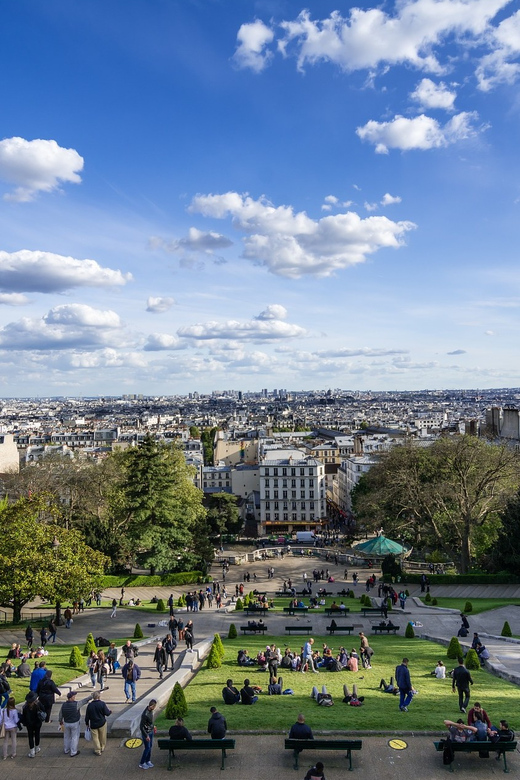
The meeting point is near the carrousel at Place Saint-Pierre. Look for the Paris Tours Experiences sign and the guide nearby. This is a useful starting place because you are at the foot of Montmartre rather than already lost among its steep lanes.
Your first reward is the view toward central Paris. The guide uses this opening to explain how Montmartre developed and why it became such a magnet for artists, outsiders, and people who wanted to live beyond the formal center of the city.
You will walk uphill, but the route is broken into stops. One guide described the pace as easy, with frequent pauses rather than a forced climb. Still, Montmartre is not flat, and the ground can be uneven. Wear shoes that can handle cobblestones, and bring an extra layer in cold or windy weather.
The setting also helps you get your bearings. If you plan to visit Sacré-Cœur afterward, you already know where you are and how the upper part of the district fits together.
More City Highlights Walking Tours in France
- Montmartre Hidden Gems and Scenic Highlights Walking Tour
★ 5.0 · 2,684 reviews - Paris in a Day: Louvre or Orsay, Eiffel Tower, City Walk & Cruise
★ 5.0 · 1,956 reviews - Paris: Montmartre Must-See Walking Tour with a Local Guide
★ 4.9 · 661 reviews
The Wall of Love and Montmartre’s softer side
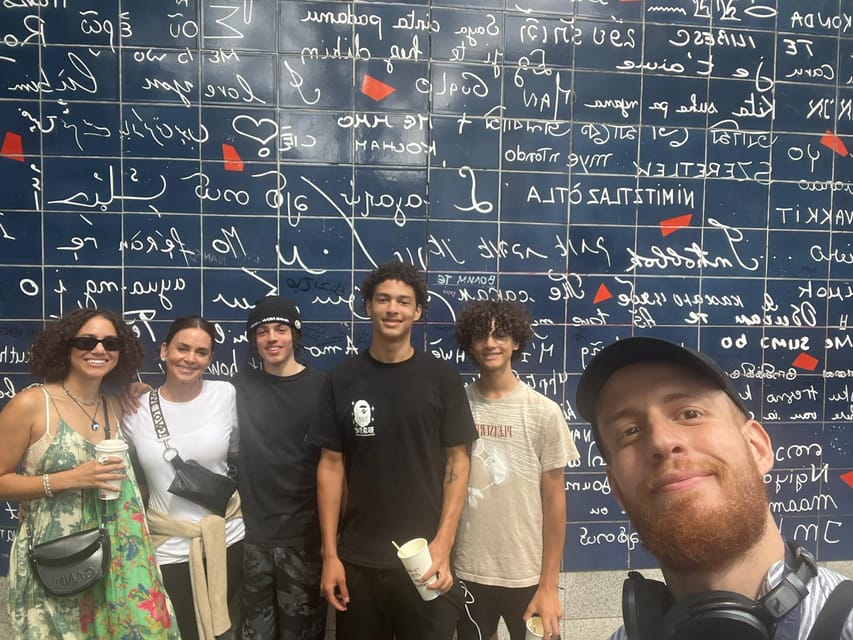
The first main stop is the Wall of Love, a public artwork covered with the words I love you in 311 languages. You get about 30 minutes here, including an explanation from the guide and time for photographs.
This stop is not about old painters or political drama. That is part of its value. It gives the tour a gentler opening and shows a modern Montmartre that is playful, romantic, and popular with couples and families.
The wall can be crowded, so do not expect a long private look at every inscription. The guide’s job here is to explain the idea, point out details, and keep the group moving. If you want a careful set of photographs, use the time well and stay aware of the rest of the group.
Families should find this part easy to enjoy. The tour is specifically suitable for children, and the mix of visual stops and short stories works better for younger visitors than a long lecture on art history.
Bateau-Lavoir, where modern art changed direction

The Bateau-Lavoir is the most important stop for anyone interested in painting. This former artists’ residence is tied to Picasso, Modigliani, and other major figures who lived and worked in Montmartre.
The building itself is not a grand museum, and you should not expect a large interior visit. The value comes from standing in the place and hearing what happened there. The guide explains how artists worked, lived, argued, and shaped one another’s ideas in a neighborhood where rent and company were more accessible than in the polished parts of Paris.
This is where a strong guide matters. A list of names would be dull. Yazid often uses images of artworks and plays music connected with local figures, turning the stop into something you can see and hear rather than simply memorize. His approach has been especially effective for people who arrived knowing little about Montmartre’s art scene.
The stories reach beyond Picasso. Van Gogh, Dalida, Aznavour, Dali, and other artists and performers enter the picture. You get a sense that Montmartre was not defined by one movement or one generation. Its character came from painters, singers, writers, eccentrics, and political outsiders sharing the same streets.
Moulin de la Galette and the view behind the painting
The route continues to the Moulin de la Galette, now an icon of impressionist painting. It was once a working windmill, and its image helped define the rural, pleasure-seeking side of old Montmartre.
This is mainly a photo stop, with another explanation from the guide. The attraction is not just the mill itself. It is the contrast between the quiet village feeling suggested by old paintings and the busy city around you today.
A good guide helps you read the scene. You learn why the windmill mattered, how artists turned ordinary neighborhood life into art, and how Montmartre’s reputation grew. The stop also gives you a natural pause during the uphill walk.
Do not expect a museum visit or a long period inside a building. This tour focuses on streets and stories. If you want to study impressionist paintings in detail, you will need a separate museum visit. If you want to understand where those scenes came from, this stop does the job nicely.
More City Highlights Walks in Paris:
- Berlin City walk Government District and Places of Democracy
★ 4.7 · 8,467 reviews - Historic Charleston Guided Sightseeing Walking Tour
★ 5.0 · 6,216 reviews - Quebec City Walking Tour
★ 5.0 · 4,716 reviews - Florence: Highlights Walking Tour with Expert Guide
★ 4.6 · 4,662 reviews
Maison Rose and the quieter lanes
Maison Rose is one of Montmartre’s best-known photo spots, with its pink facade and corner position. The tour gives you time for photographs and a short break, which is welcome after several walking stops.
This is also a good example of the tour’s balance. You see a famous image that appears on countless Paris postcards, but you do not spend the entire outing chasing only the obvious sights. From here, the guide leads the group toward less familiar corners, including vineyards, old cabarets, peaceful courtyards, and passageways.
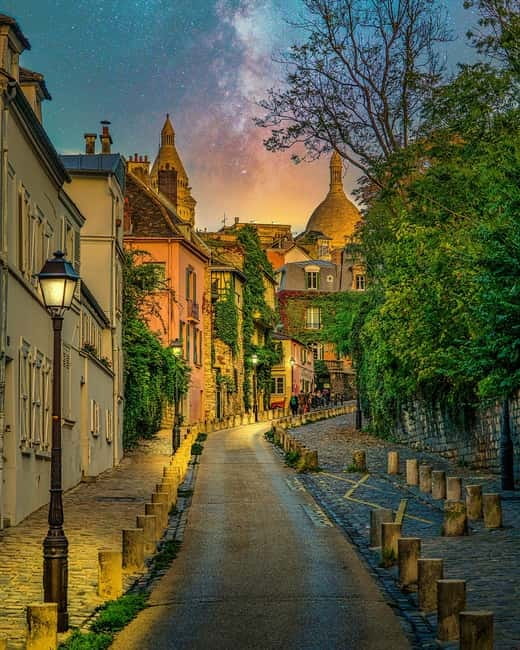
The quieter lanes are where a guided walk earns its price. You can certainly walk past them alone, but you may not know which doorway, wall, or narrow route carries a story. The guide points out details that are easy to miss and explains how the neighborhood changed over time.
There is a practical limit, of course. These are public streets, not private attractions, and the tour does not promise entry into every courtyard or cabaret. The experience is about seeing the setting and hearing its connections, not collecting indoor admissions.
Stories of singers, rebels, and local characters
Montmartre’s past is not just a parade of famous painters. The tour also covers revolution, resistance, music, cabaret culture, and the eccentric people who gave the area its reputation.
That broader focus is one of the strongest reasons to choose this walk. You are not simply told that an artist lived at a particular address. You hear how the district shaped the people who came there, and how those people helped create Montmartre’s public image.
Yazid has a particularly animated way of presenting this material. He is known for bringing photographs, artwork, music, and humor into the walk. The result is more interactive than a standard talk, and it helps the group stay engaged during the longer stretches between major sights.
Other guides can lead the tour, including Zoe, Sylvia, and Marcela. Their styles may differ, so you should not book on the assumption that Yazid will always be the guide. The common thread is an English-language walking tour with strong attention to local art and neighborhood stories.
The material suits adults who want context, but it also works for teenagers and older children. One family found the pace and subject matter suitable for children aged 10 and 13, while another said a 15-year-old stayed interested throughout. That depends partly on your child, but the visual aids and stories help.
Place du Tertre and the best ending point
The tour finishes at Place du Tertre, where artists still work in the open air. This is one of the most recognizable parts of Montmartre, and it can feel crowded and commercial, especially compared with the smaller lanes earlier in the walk.
That contrast is useful. You see the neighborhood’s present-day art market after hearing about the artists who made Montmartre famous. The square is a good place to continue on your own, browse the artwork, or simply watch the activity for a few minutes.
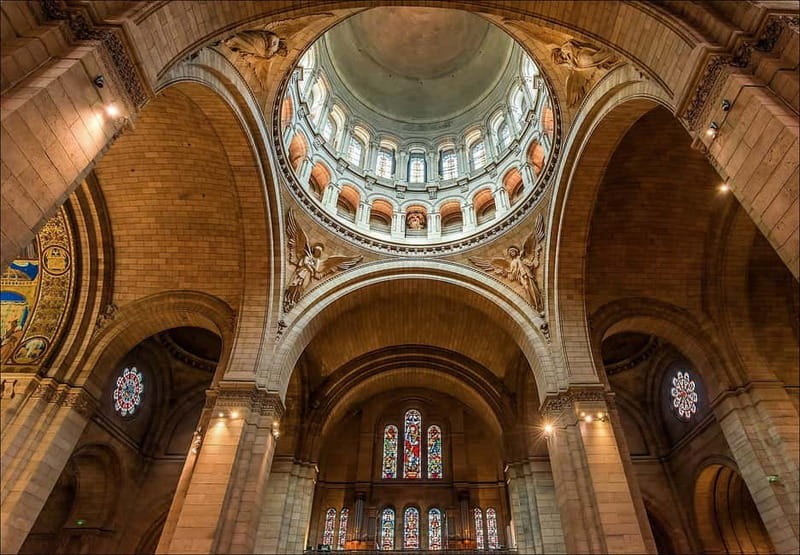
The ending is practical. You are only steps from Sacré-Cœur, and the guide gives you tips for visiting the basilica independently. The timing makes sense: you can continue inside after the walk instead of crossing Paris for another appointment.
Remember that the walking tour does not include food. If you want a snack or meal afterward, Place du Tertre and the surrounding streets give you options, but this experience itself is focused on the neighborhood and its stories.
What the $23 price really buys you
At $23 per person, the tour is inexpensive for a 140-minute guided walk in Paris. You are paying for a local guide, a small group, route planning, storytelling, and family pictures taken by the guide at different points.
The value is strongest if you are visiting Montmartre for the first time or if you want more than photographs. A solo walk can cover the same streets, but it will not automatically explain the connection between the Bateau-Lavoir, the windmill, the cabarets, the singers, and the political past.
The price is less compelling if you prefer to wander alone, stop for long meals, or spend hours inside museums. This is a structured experience, and the group needs to keep moving. You also need to bring cash, along with comfortable clothes and shoes.
The small-group limit helps. Sixteen people is not a private tour, but it is far easier to hear a guide in that setting than in a large crowd. It also gives you a better chance to ask questions and get help with family photos.
Free cancellation up to 24 hours ahead and the option to reserve now and pay later make it easier to fit into a changing Paris schedule. Those policies are useful, but the bigger question is simple: do you want a guided interpretation of Montmartre or just time to roam?
Who should book this Montmartre walk?
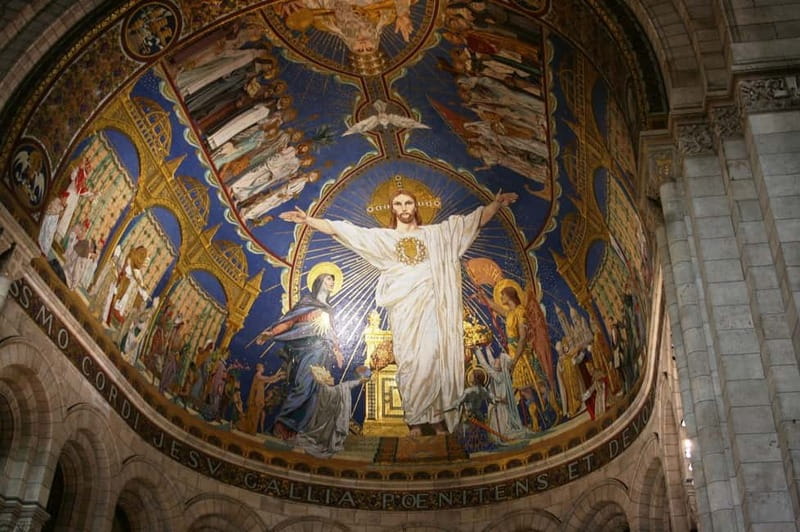
I would recommend it to first-time Paris visitors, culture lovers, photographers, families with school-age children, and anyone who wants the neighborhood explained rather than merely photographed.
It is also a good choice for repeat visitors. Several people who had been to Montmartre before still found new details, especially around the artists, old music, and less obvious streets. A strong guide changes the experience of a familiar district.
You may want to skip it if you have difficulty walking uphill or have a mobility impairment. The tour is not suitable for wheelchair users, and Montmartre’s cobblestones and incline remain part of the experience even with frequent stops.
Plan around the weather. The walk runs outdoors, and cold wind or rain can make the route less pleasant. In winter, wear warm layers. In any season, leave oversize luggage behind because it is not allowed.
My verdict on the Montmartre Highlights Walking Tour
Book this tour if you want stories with your sightseeing. The route covers the expected icons, but its real strength is the material between them: artists at work, singers and rebels, old cabarets, vineyards, hidden passages, and the personal energy of guides such as Yazid.
At $23, it offers good value, especially when you consider the length and small group size. Just come prepared for a hill, uneven streets, outdoor weather, and a fairly active pace.
If you want a quiet, self-directed morning, choose your own route. If you want Montmartre to make sense, with Sacré-Cœur waiting at the finish, this is an easy tour to recommend.
FAQ
How long is the Montmartre walking tour?
The tour lasts 140 minutes, or about two hours and 20 minutes.
Where does the tour begin?
It begins at Place Saint-Pierre, beneath the Sacré-Cœur basilica. Look for Paris Tours Experiences near the carrousel.
Where does the tour finish?
The walk ends at Place du Tertre, close to Sacré-Cœur.
What language is the tour conducted in?
The live guided tour is conducted in English.
Which sights are included?
The route includes the Wall of Love, Bateau-Lavoir, Moulin de la Galette, Maison Rose, Place du Tertre, vineyards, old cabarets, courtyards, and passageways.
Is Sacré-Cœur included inside the tour?
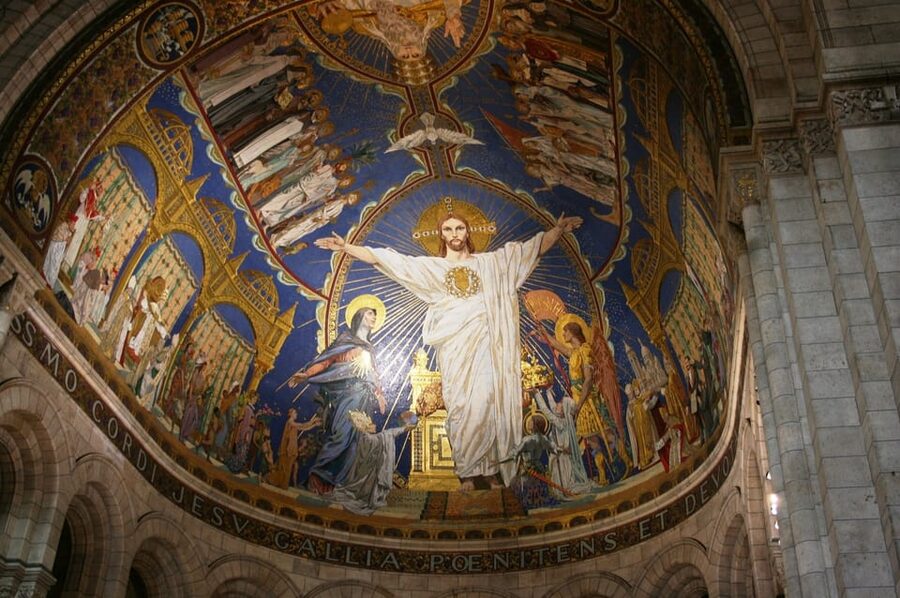
The tour ends near Sacré-Cœur and provides tips for visiting it on your own. Entry inside the basilica is not listed as part of the walking tour.
Who guides the tour?
Yazid is a frequently featured guide, and Zoe, Sylvia, and Marcela have also led tours. The guide can vary by date.
How large is the group?
Groups are limited to a maximum of 16 people.
Is the tour suitable for children?
Yes. The walk is adapted for children, and the route and storytelling have worked well for families with children and teenagers.
Is the tour accessible for wheelchair users?
No. The tour is not suitable for wheelchair users or people with mobility impairments. Comfortable shoes are recommended, and the route includes uphill walking and cobbled streets.
Just added around Paris
- Paris: Early Access Notre Dame Cathedral Walking Tour★ 4.2 · 80 reviews
- Paris Private Walking Tour with a Personal Photographer★ 5.0 · 262 reviews
- Paris: Private Walking Tour with a Local★ 4.6 · 506 reviews
- Paris City of Fashion History Private Guided Walking Tour★ 5.0 · 221 reviews
- Authentic Parisian Gourmet Food Tour with 10 Local Dishes & Wines★ 5.0 · 4,754 reviews
- Paris: Île de la Cité and Notre-Dame Walking Tour With Crypt★ 4.2 · 614 reviews
- Notre Dame Outdoor Walking Tour and Entrance to Sainte Chapelle★ 5.0 · 625 reviews
- Paris: Montmartre Guided Walking Tour★ 4.8 · 661 reviews
City Highlights Walking Tours, compared.

Berlin City walk Government District and Places of Democracy
Read our review →
Historic Charleston Guided Sightseeing Walking Tour
Read our review →


Oxford: University and City Walking Tour with Alumni Guide
Read our review →
City Highlights Temple and Market Walking Tour
Read our review →
A History of Terror – Belfast City Centre Walking Tour
Read our review →Browse the lists this tour appears in