
REVIEW · PARIS
Paris: Montmartre Must-See Walking Tour with a Local Guide
Montmartre is best understood on foot, one sloping street and odd little story at a time. This $29 walking tour links Sacré-Cœur with the old artists’ quarter, the vineyard, cabarets, windmills, and the places where Picasso, Dalí, Modigliani, and Dalida left their mark.
I like the route’s mix of famous sights and quieter corners, especially the Clos Montmartre vineyard and Square Suzanne Buisson. I also like the guides’ personal style. Jean-Baptiste, often called JB or Ratatouille, is funny, caring, and full of local stories. The main drawback is the hill: expect stairs, cobblestones, and uphill walking in rain or shine.
Key points at a glance
- A 150-minute route with real variety: You see Sacré-Cœur, artists’ studios, cafés, a vineyard, a cabaret, and the Wall of Love.
- Jean-Baptiste is the guide to hope for: He is lively, attentive, and especially good at mixing facts with playful stories.
- The walk costs $29: That is strong value if you want context and local recommendations rather than a quick photo stop.
- Montmartre’s slopes are part of the deal: Comfortable shoes and water are essential, and the route is not suitable for wheelchair users.
- The tour ends at Place des Abbesses: That leaves you well placed for more exploring, food, or the nearby Abbesses Metro station.
- Small groups keep it personal: Guides have taken photos, adjusted the pace, and continued warmly even in cold or wet weather.
Why this Montmartre walk works so well
Many first visits to Montmartre follow the same short pattern: climb to Sacré-Cœur, take a few photographs, pass through Place du Tertre, and leave. This tour gives the neighborhood time to unfold.
You still get the postcard views and famous landmarks, but you also hear how Montmartre changed from a village outside Paris into an artists’ quarter and then into one of the city’s most visited districts. The walk brings together painters, singers, illustrators, cabaret performers, local food, and religious history without treating the area like an open-air museum.
The guides are a major part of the experience. Jean-Baptiste receives the strongest praise, and his approach seems clear: keep moving, keep the group together, explain the setting, and add a joke when the hill starts to test everyone. Marcella has also led the walk, adjusting the pace and taking breaks when needed.
That makes this a good choice for a first morning in Paris. You get your bearings, learn which streets deserve a second look, and finish with recommendations for cafés, restaurants, bakeries, and other parts of the city.
More City Highlights Walking Tours in France
- Montmartre Hidden Gems and Scenic Highlights Walking Tour
★ 5.0 · 2,684 reviews - Paris: Montmartre Highlights Walking Tour with a Local Guide
★ 4.9 · 2,318 reviews - Paris in a Day: Louvre or Orsay, Eiffel Tower, City Walk & Cruise
★ 5.0 · 1,956 reviews
Starting below Square Louise Michel
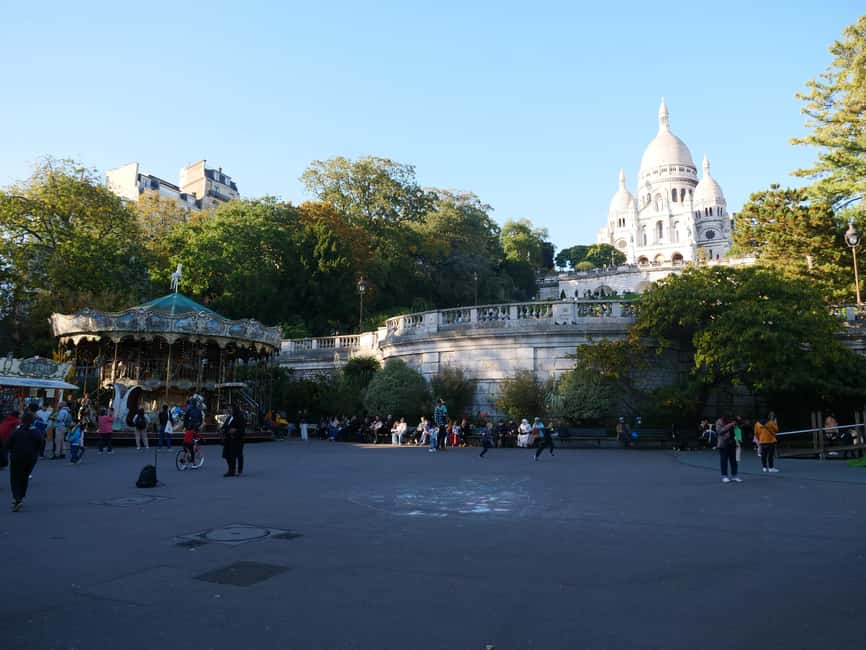
Meet at Place Saint-Pierre, beside the Carrousel de Saint-Pierre and directly in front of Café Le Ronsard, which has a red storefront. The guide carries a French Tales sign and a stick with Disney’s Ratatouille character, so the meeting point should be easy to spot.
Arrive 15 minutes early. Anvers Metro station on Line 2 is about a five-minute walk away. Abbesses on Line 12 takes about seven to ten minutes, but use the elevator rather than the stairs if you arrive there.
The opening stop at the carousel and Square Louise Michel helps you see Montmartre’s basic geography. The gardens rise toward the basilica, and the route gives you a fine early view up the hill. It also gives the guide room to explain the neighborhood before the climbing begins in earnest.
Sacré-Cœur and the first big view
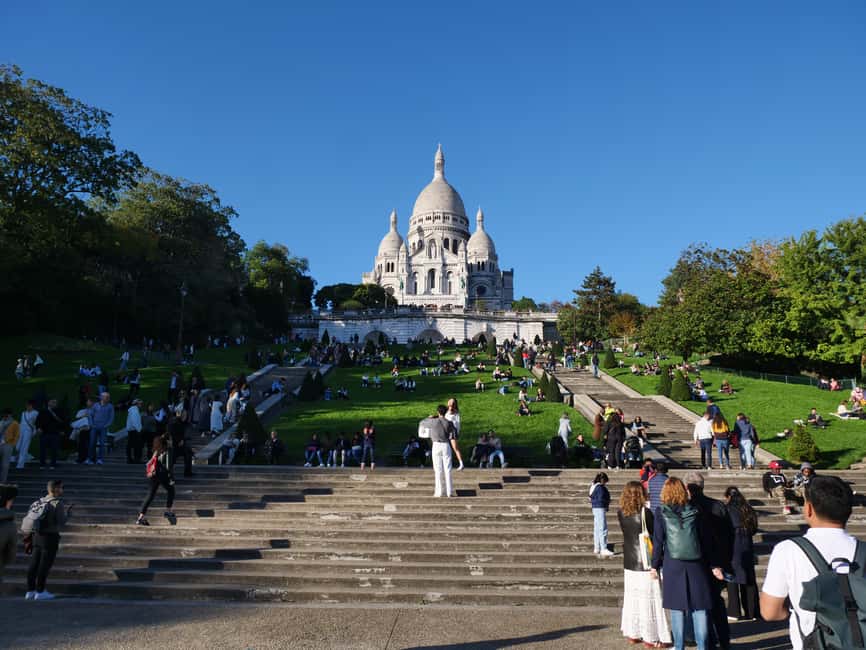
The route climbs to the parvis of Sacré-Cœur Basilica. This is the tour’s most obvious landmark, but it earns its place. From the steps and terrace, Paris spreads below you in a broad panorama.
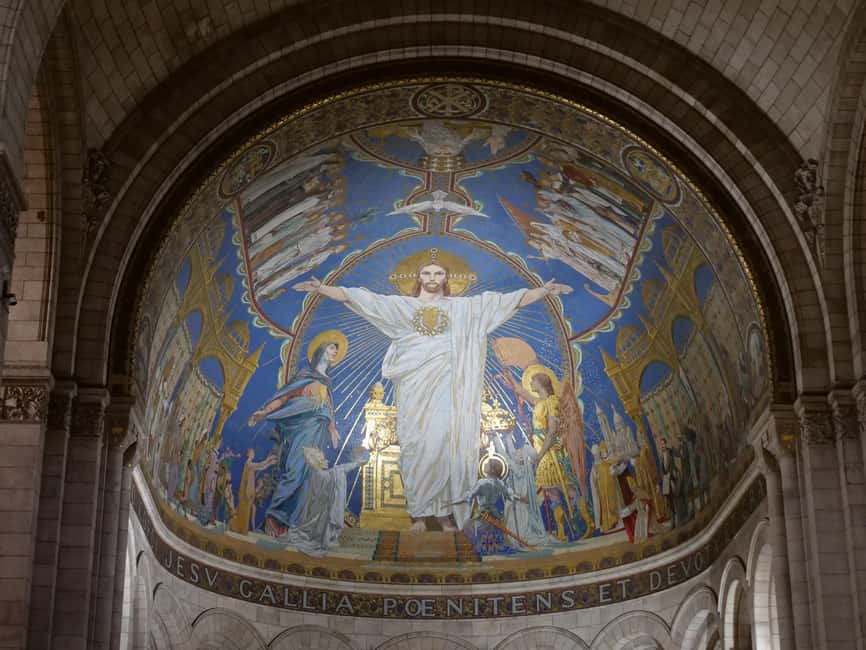
The guide explains the basilica and its place in Montmartre’s story, then takes you inside to see the mosaics. That is an important difference from a walk that treats Sacré-Cœur as only a photo background. You get time to look at the building, the interior decoration, and the view without rushing straight on.
The climb is manageable for many people, but it is not effortless. The route includes stairs, slopes, and uneven paving. If you tire easily, tell the guide early. Guides have been attentive about keeping the group together and stopping when people need a breath.
This is also the point where shoes matter most. Wear something with a firm sole, and carry water. Paris style is welcome, but delicate footwear is not.
Place du Tertre and Montmartre’s artistic image
From Sacré-Cœur, the walk reaches Place du Tertre, the square most closely linked with Montmartre’s artist identity. Painters and caricaturists work here, with cafés filling the surrounding streets.
It can feel crowded and commercial, especially compared with the quieter lanes later in the tour. That is part of the point. Your guide can help separate the modern tourist scene from the older artistic reputation of the district.
The tour continues past Le Poulbot, a restaurant named for the illustrator known for drawings of Montmartre’s street children. This stop connects food, illustration, and neighborhood memory in a simple way. It is also useful later, since the guides offer restaurant suggestions and several people have returned to Le Poulbot for dishes such as duck confit and crème brûlée.
You are not paying for food on this tour, so treat these restaurant stops as recommendations rather than included tastings.
More City Highlights Walks in Paris:
- Berlin City walk Government District and Places of Democracy
★ 4.7 · 8,467 reviews - Historic Charleston Guided Sightseeing Walking Tour
★ 5.0 · 6,216 reviews - Quebec City Walking Tour
★ 5.0 · 4,716 reviews - Florence: Highlights Walking Tour with Expert Guide
★ 4.6 · 4,662 reviews
A vineyard, La Maison Rose, and the quieter side of the hill
One of the most appealing parts of the walk is the Vignes du Clos Montmartre. Paris is not the first city you associate with vineyards, yet this small urban patch preserves a piece of Montmartre’s rural past.
The vineyard is not a grand wine estate, and it should not be treated as one. Its value is the surprise. It helps explain why Montmartre once felt separate from central Paris and why the district’s village character lasted so long.
Next comes La Maison Rose, the pastel-pink building that has become one of Montmartre’s most photographed corners. Your guide can help you frame the stop within the neighborhood rather than simply sending you away with another photograph. It is a quick pause, but a memorable one.
The route also includes Square Nadar, named for the famous photographer, along with quieter garden spaces such as Square Suzanne Buisson. These pauses are welcome after the busier lanes. Square Suzanne Buisson offers a calmer setting and a sense of how small gardens interrupt Montmartre’s steep streets.
Dalí, Dalida, and the people who shaped Montmartre
Montmartre’s story is not limited to painters. The walk passes the Dalí Museum and shares details about Salvador Dalí’s place in the neighborhood’s art scene. A memorable fact used on the tour is that Dalí designed the Chupa Chups logo, a small example of how his work reached far beyond gallery walls.
The stops connected with Dalida add a different tone. At Place Dalida and near her former home, the focus shifts to the French-Italian singer and the affection she still inspires. Her statue is one of the district’s popular photo stops, but the guide gives it more meaning by connecting the person to the neighborhood.
These sections are where a strong guide matters most. A list of names can become tiring. Jean-Baptiste’s style is more animated, with stories, jokes, and quick details that keep the artists and performers from blurring together.
Moulin de la Galette and Bateau-Lavoir
Moulin de la Galette is one of Montmartre’s most important reminders that this hill was once a village of mills, farms, and dance halls. The guide explains its social and artistic role, helping you understand why artists were drawn to the area.
This stop is not simply about a windmill. It shows the kind of place Montmartre once was, where ordinary local life and creative work shared the same streets. You will get more from it if you have already heard the opening explanation about the district’s change from village to Paris neighborhood.
Bateau-Lavoir takes you into the world of modern art. The workshop was associated with artists including Picasso and Modigliani, and the guide explains why this modest building became linked with major changes in art.
You should not expect to enter every site on the route. Many stops are viewed from outside, with the guide providing the story in the street. That is normal for a walking tour and keeps the price low, but it also means the experience is about setting and interpretation rather than museum admission.
Cabaret Au Lapin Agile and Montmartre after dark
The tour also reaches Cabaret Au Lapin Agile, one of Montmartre’s legendary performance venues. Its history brings writers, artists, singers, and nightlife into the picture.
This is one reason I prefer the full route to a simple Sacré-Cœur visit. You begin to see Montmartre as a working neighborhood with cafés, gardens, restaurants, music, and local characters, not just as a hilltop basilica.
The route’s many short stops help maintain the pace. Most are planned for about ten minutes, while Square Louise Michel receives longer attention and Sacré-Cœur about 30 minutes. That balance gives the major sight room to breathe while keeping the rest of the walk from dragging.
Ending at the Wall of Love and Place des Abbesses
The final major stop is Le Mur des Je T’aime, or Wall of Love. The phrase I love you appears in more than 250 languages, making it an easy place to enjoy without needing a long explanation.
It is a fitting finish because the tone is lighter after the art and political history of the hill. From there, the tour finishes at Place des Abbesses, another useful location for continuing your day.
You might stop for a café, look for lunch, or take the Metro from Abbesses. The ending also makes it easy to revisit a favorite street without having to climb all the way back to Sacré-Cœur.
Guide style and group experience
The strongest part of this tour is the human element. Jean-Baptiste is repeatedly described as energetic, funny, considerate, and highly informed about Montmartre. He takes photographs, watches for safety, offers local advice, and keeps children involved with games and small surprises.
He has also continued the tour with only one person booked, which suggests a genuine effort to keep the experience personal. Marcella has been praised for setting a comfortable pace and filling rest stops with stories rather than leaving people standing around.
The Ratatouille sign gives the guide a playful identity, and some people refer to Jean-Baptiste as Ratatouille or JB. Families may appreciate his ability to keep younger visitors involved, though children under 12 must be accompanied by an adult.
The tour is in English, with an English audio guide included. Since the route depends heavily on spoken stories, stay near the guide and avoid drifting toward the back of the group.
Is $29 good value?
At $29 per person, this is good value if you want a guided introduction to Montmartre. You receive 150 minutes of walking, a long list of meaningful stops, a live guide, an audio guide, and practical suggestions for eating and exploring afterward.
The price does not include food, drinks, or transportation. That keeps the cost clear, but you should budget for a café or meal if the restaurant stops make you hungry.
A private guide would cost far more, while an unguided walk would cost less but leave you to research the artists, identify the right streets, and work out the neighborhood’s story yourself. For a first visit, the tour’s price is justified by the amount of ground covered and the guide’s local advice.
Free cancellation up to 24 hours before the start and reserve-now, pay-later booking also make it easier to fit into a changing Paris schedule.
Who should book this walk?
I would recommend it to first-time visitors, solo visitors who want company, families with older children, art fans, and anyone who likes to understand a neighborhood rather than simply photograph it.
It is also useful for returning visitors. Montmartre has enough small streets and side stories to reward a second look, especially if your earlier visit stopped at Sacré-Cœur and Place du Tertre.
I would be cautious if you have mobility limits. The route is not wheelchair accessible and is not suitable for people with mobility impairments. Uneven ground, stairs, steep sections, and cobblestones are unavoidable. The activity also lists people over 95 as unsuitable, so consider your walking comfort honestly before booking.
The tour runs in all weather. In winter, bring layers and rain protection. A cold, wet day can still work, but good clothing makes a large difference.
Should you book the Montmartre Must-See Walking Tour?
Book it if you want Montmartre explained by a lively local guide, not just marked off your sightseeing list. The combination of Sacré-Cœur, art history, Dalida, the vineyard, Moulin de la Galette, Bateau-Lavoir, and the Wall of Love gives you a full picture of the district.
Choose this tour especially if Jean-Baptiste is listed for your date. His humor, personal attention, restaurant advice, and ability to keep the group engaged are central to the experience. If you need a flat route, private transport, or lots of indoor time, choose something else.
For most fit visitors, $29 is a fair price for a two-and-a-half-hour introduction to one of Paris’s most distinctive neighborhoods. Wear good shoes, arrive early, bring water, and leave room in your day for a meal near Place des Abbesses.
FAQ
How long is the Montmartre walking tour?
The tour lasts 150 minutes, or two and a half hours.
How much does the tour cost?
The listed price is $29 per person.
Where does the tour begin?
It begins at Place Saint-Pierre, at the bottom of Square Louise Michel, near the Carrousel de Saint-Pierre and Café Le Ronsard.
How do I identify the guide?
The guide carries a French Tales sign and a stick featuring Disney’s Ratatouille character.
Where does the tour finish?
The walk finishes at Place des Abbesses.
Which languages are available?
The live tour guide speaks English, and an English audio guide is included.
Is Sacré-Cœur included?
Yes. The tour reaches the parvis, includes a guided visit, and allows you to go inside the basilica to see its mosaics.
Is food included?
No. Food and drinks are not included, but the guide provides recommendations for local cafés and restaurants.
Is the route suitable for wheelchair users?
No. The route is not wheelchair accessible because it includes uneven terrain and stairs.
What should I bring?
Bring comfortable walking shoes and a bottle of water. Dress for the weather because the tour operates rain or shine.
Just added around Paris
- Paris: Early Access Notre Dame Cathedral Walking Tour★ 4.2 · 80 reviews
- Paris Private Walking Tour with a Personal Photographer★ 5.0 · 262 reviews
- Paris: Private Walking Tour with a Local★ 4.6 · 506 reviews
- Paris City of Fashion History Private Guided Walking Tour★ 5.0 · 221 reviews
- Authentic Parisian Gourmet Food Tour with 10 Local Dishes & Wines★ 5.0 · 4,754 reviews
- Paris: Île de la Cité and Notre-Dame Walking Tour With Crypt★ 4.2 · 614 reviews
- Notre Dame Outdoor Walking Tour and Entrance to Sainte Chapelle★ 5.0 · 625 reviews
- Paris: Montmartre Guided Walking Tour★ 4.8 · 661 reviews
City Highlights Walking Tours, compared.

Berlin City walk Government District and Places of Democracy
Read our review →
Historic Charleston Guided Sightseeing Walking Tour
Read our review →
Oxford: University and City Walking Tour with Alumni Guide
Read our review →
City Highlights Temple and Market Walking Tour
Read our review →
A History of Terror – Belfast City Centre Walking Tour
Read our review →Browse the lists this tour appears in