
REVIEW · QUEBEC CITY
Quebec City Walking Tour
Québec City’s story is packed into a remarkably compact walk. In two hours, you move from the heights of Upper Town down through old squares, church courtyards, defensive walls, and the narrow streets of Petit-Champlain, while a local guide connects French settlement, British rule, military power, and modern Québec.
I like the small group limit of 15, which makes it easier to hear the guide and ask questions. I also like the downhill route, the useful orientation for a first day, and the chance to get practical restaurant and sightseeing tips from guides such as Louise, Mark, Robert, Christian, and Stefan.
The main drawback is weather. The tour runs in rain, snow, and bitter winter cold, and two hours outdoors can be a long time at 10 or 12 degrees Fahrenheit. One person was also separated from the group and missed several stops, so stay close to your guide.
Key points to know before booking
- A downhill route through both historic districts: Begin in Upper Town and finish near the Old Québec Funicular in Petit-Champlain.
- A compact introduction to four centuries: The commentary covers Québec City from its founding in 1608 through present-day life and culture.
- Major sights without admission fees: See the fortifications, Citadelle area, Château Frontenac, Place Royale, churches, courtyards, and city squares from the outside, with possible interior visits when open.
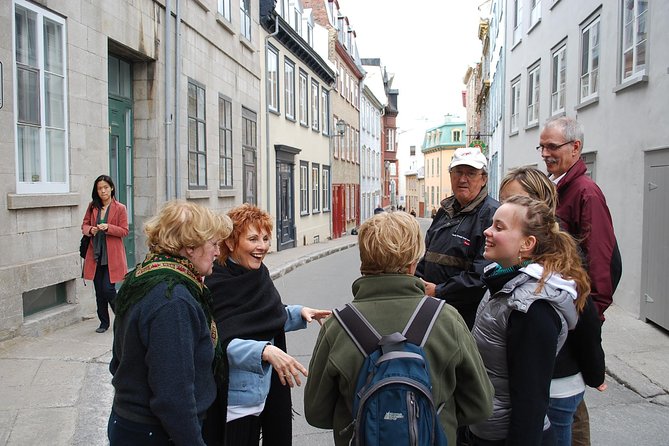
- Small groups capped at 15 people: This helps with hearing the guide and keeping the walk personal.
- Strong guide-led experience: Guides including Mark, Louise, Robert, Christian, Stefan, Francis, and Philippe are praised for humor, local insight, and helpful advice.
- Winter demands serious clothing: Warm layers, insulated footwear, and hand or toe warmers can make the difference between an enjoyable walk and a miserable one.
Why this is a smart first look at Old Québec
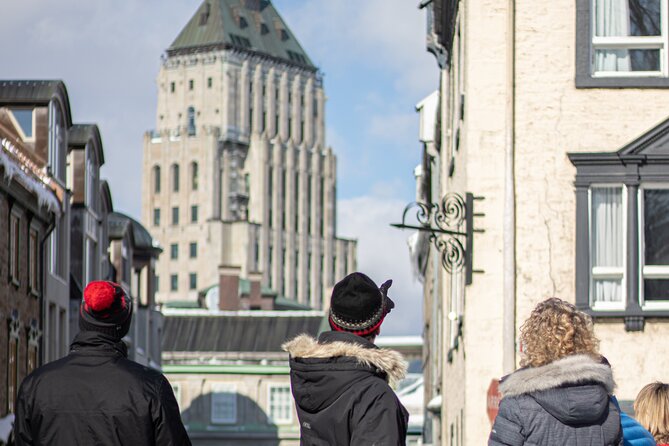
Old Québec can seem easy to understand at first. The streets are compact, the stone buildings are handsome, and the Château Frontenac points you toward the center of town. Yet without context, you may miss why the city walls matter, why Place Royale carries such weight, or how the Upper and Lower Towns grew into two very different districts.
This walk gives you that framework before you set off on your own. You learn where Québec began, how the city defended itself, how religious communities shaped daily life, and how French and British power changed the city over time.
I especially like taking this tour early in a stay. Afterward, the streets have labels in your mind rather than just attractive façades. You know where the main squares are, how to reach Petit-Champlain, and which areas deserve a second look at your own pace.
At $30.29 per person, the value is good if you want a guided introduction rather than a long museum visit. The fee covers a licensed guide, local taxes, and two hours of walking. You are paying mainly for the explanation and the route, not for admission to a series of attractions. That matters because several important sights are viewed from public spaces.
More City Highlights Walking Tours in Canada
- Private Tour: Quebec City Walking Tour
★ 5.0 · 596 reviews - Calgary City Highlights 3 Hour Walking Tour | Gratuity-Based
★ 4.5 · 378 reviews - Gratuity-Based Vancouver City Highlights 3 Hour Walking Tour
★ 4.5 · 320 reviews
Starting beside Château Frontenac
The meeting point is the Tours Voir Québec sales desk inside the Québec Tourist Information Centre at 12 Rue Sainte-Anne. It is across from the highly visible Château Frontenac, so the location is relatively easy to find once you are in the old city.
The first stop is near the Monument Samuel de Champlain, honoring the founder of Québec City. This is a useful opening because it puts the city’s beginning in the foreground rather than treating Old Québec as a collection of pretty streets.
Your guide sets the tone here. The strongest guides use humor as well as dates, and that helps keep the early history from feeling like a school lecture. Mark is praised for his depth of local history and his willingness to answer questions after the formal walk. Louise is known for adding restaurant suggestions and ideas for the rest of your stay.
The group can include up to 15 people. That is not a private tour, but it is small enough for the guide to project clearly and keep an eye on the group. Still, pay attention at crossings and corners. One unfortunate experience involved a participant falling behind and losing the group, which meant missing several later stops.
Château Frontenac and the views from Terrasse Dufferin
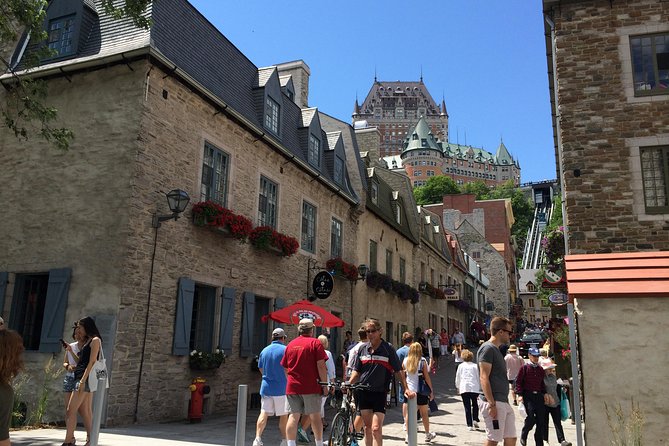
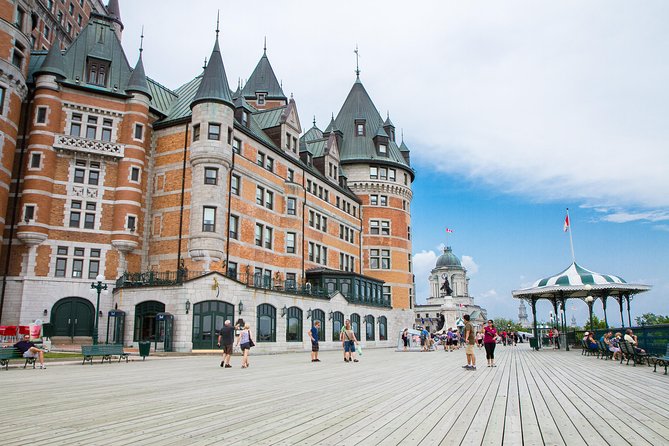
The walk continues to Terrasse Dufferin, the broad promenade beside Château Frontenac. This is one of the best places to get your bearings. From the terrace, the guide explains what you are seeing across the river and around the old city, while also giving the château its proper place in Québec’s story.
The hotel is more than a landmark for photographs. Its location helps explain the importance of Upper Town and the way political and commercial power gathered around this high ground. You get time to take in the architecture and views, but this is still a walking tour, not a long photo stop.
The route is described as leisurely and downhill from beginning to end. That is a real advantage. Québec’s old streets include slopes and stone surfaces, but you are not being asked to climb continuously for two hours. Wear shoes with good grip, especially if the weather is wet or icy.
The terrace can also be exposed to wind. In winter, the cold may shorten how long the guide can comfortably speak outdoors. Several guides adapt by moving the group along or finding indoor places to warm up, but proper clothing remains your responsibility.
Ursuline history and the city’s religious foundations
At the Ursuline monastery, you pass a community that has been part of Québec City since 1639. If the chapel is open, the tour may include a visit inside. This possibility is worth noting because the exact indoor experience depends on opening conditions.
The stop adds an important layer to the city’s story. Québec was not shaped only by governors, soldiers, and merchants. Religious communities played a major role in education, care, and daily life, and the Ursulines are one of the clearest examples.
The walk does not turn into a long museum tour, so you should expect an overview rather than an exhaustive visit. That is useful for most people who want a sense of the city before exploring specific sites independently.
More City Highlights Walks in Canada:
- Toronto: City Highlights Walking Tour | 3-Hour
★ 4.6 · 306 reviews - Calgary: City Highlights Walking Tour | 3-Hour
★ 4.6 · 271 reviews - Berlin City walk Government District and Places of Democracy
★ 4.7 · 8,467 reviews - Historic Charleston Guided Sightseeing Walking Tour
★ 5.0 · 6,216 reviews
Cathedral of the Holy Trinity and Québec’s changing rulers
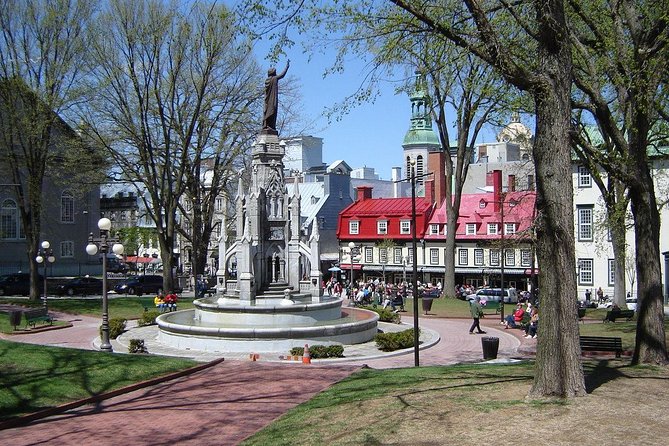
The courtyard of the Cathedral of the Holy Trinity offers another small but meaningful pause. It was the first Anglican cathedral built outside the British Isles, a detail that points to the political shift that followed the British conquest.
This is one of the tour’s strengths: you keep seeing how different communities left their mark on the same compact area. French Catholic institutions, British Anglican power, military defenses, and modern Canadian identity all appear within a short walk.
Your guide explains the setting rather than simply pointing at the building. That makes the architecture easier to read. You begin to notice how churches, courtyards, public squares, and government buildings reflect the city’s changing rulers and population.
City Hall and the Basilica area
Around Québec City Hall, the group pauses at the main landmarks of the square. This is a good place to connect the old city with its current civic life. The tour also includes the Basilica Notre-Dame area, giving you a look at one of the city’s key religious landmarks.
Expect short stops, often about five minutes each. The pace keeps the tour moving, but it means you will not have time to study every façade or enter every building. If you find a church or courtyard especially appealing, make a note and return later.
That division of labor works well for a first visit. The guide provides the broad story and points out places worth a longer visit. You can then decide where to spend your own time instead of committing to a lengthy indoor schedule.
The Seminary courtyard and a step back in time
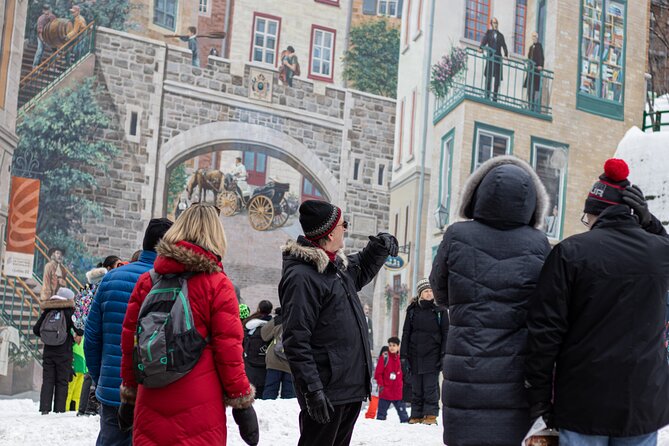
The Seminary of Québec provides one of the more atmospheric pauses. The tour enters its courtyard, where the architecture can feel removed from the streets outside. The setting gives you a stronger sense of how old Québec institutions functioned and how enclosed courtyards offered order and quiet within a fortified city.
This is also the kind of stop where a good guide matters most. The courtyard itself may not explain its full importance. A guide such as Christian, praised for connecting the city’s past with modern Québec culture, can help you see why the institution still matters beyond its appearance.
The tour’s commentary covers daily life as well as grand events. That is valuable because military victories and political changes are only part of the story. You also get a sense of how people lived, worshiped, worked, and moved through the city over the centuries.
Place Royale, the birthplace of French America
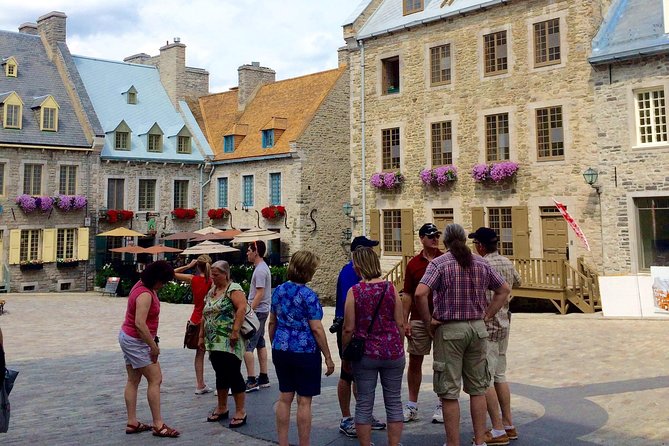
The route then heads toward Place Royale, one of Québec City’s most important historic centers. This is where the city’s French origins feel especially close at hand. The square and its surrounding buildings help you picture an early settlement that grew into the capital of Québec.
Notre-Dame-des-Victoires Church is part of the wider story here. It is one of Canada’s oldest stone churches and occupies the site associated with the beginning of Québec. The stop is brief, so you should not expect a full architectural or religious tour, but the historical setting gives the church extra weight.
Place Royale is also a good example of why a walking tour helps. On your own, you may photograph the square and move on. With context, you understand why this small space matters to French North American history and why the Lower Town developed around it.
Petit-Champlain and the final descent
The tour ends on Petit-Champlain Street, near the Old Québec Funicular at 16 Rue du Petit Champlain. This is a practical finish. You are close to one of the city’s prettiest pedestrian areas, and the funicular can help if you do not want to walk back uphill later.
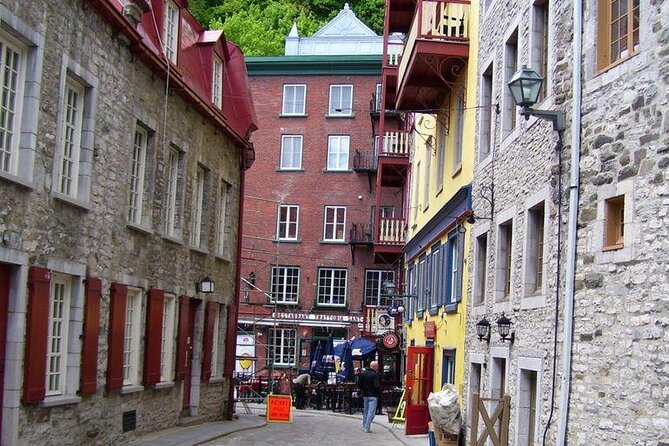
Petit-Champlain has narrow streets, stone buildings, shops, and a strong European feel. It is a pleasant place to continue wandering after the guide leaves. You can also use the ending point as a launch pad for lunch, shopping, or a return ride to Upper Town.
The ending is one of the route’s best design choices. You begin near the château and finish in the Lower Town, so the tour feels like a journey through the city rather than a loop around one square. Just remember that the tour does not include hotel pickup or drop-off.
What the guides add to the experience
The guide makes or breaks a history walk, and this one depends heavily on the person leading your group. The most praised qualities are clear speaking, humor, local pride, and the ability to explain how old events still shape Québec culture.
Mark is singled out for his command of city history and for staying after the scheduled time to answer questions. Louise combines local facts with restaurant and activity suggestions. Robert is described as warm and enthusiastic, while Christian is praised for linking historic events to modern life.
Other named guides include Stefan, Francis, and Philippe. Francis is described as energetic and generous with his time, while Philippe is noted for historical explanation, humor, indoor visits, and food advice. Your guide will vary, so do not book with the expectation of one specific person unless the provider confirms it.
The licensed guide requirement adds useful structure. You are not simply following someone through attractive streets. You have a local person explaining the city’s political, religious, military, and social story in real time.
Cold weather, footwear, and keeping comfortable
Québec City can be very cold in winter. Some walks have begun around 10 or 12 degrees Fahrenheit, and even a well-run tour can become uncomfortable at those temperatures. One group found the cold made it hard to enjoy the information, while others appreciated guides who used indoor stops when possible.
Dress for standing outdoors, not just walking between heated buildings. Use warm layers, a proper coat, a hat, gloves, and insulated boots. Hand and toe warmers are available for purchase at the check-in desk and can last up to five hours.
The tour operates in all weather, so you should check the forecast before booking. Spring and summer will likely make it easier to linger at viewpoints and listen without rushing, while winter offers a different atmosphere but demands more preparation.
A moderate level of fitness is required. The route lasts about two hours and includes walking on historic streets, slopes, and possibly uneven surfaces. The downhill direction helps, but this is not a ride or a seated sightseeing experience.
Who should book this walk?
I would choose this tour for a first visit, especially if you want a clear introduction before exploring independently. It suits couples, families, solo visitors, and anyone who enjoys history but prefers stories delivered in short, lively sections.
It is also a good fit if you want practical advice. Guides may suggest restaurants, later activities, and places worth returning to, which can save you time during a short stay.
I would think twice if you dislike outdoor tours, have trouble walking for two hours, or are visiting during severe winter weather without proper clothing. The tour offers no guarantee of long indoor stops, and admission to major attractions is not generally part of the price.
Book at least 24 hours ahead if your plans may change. Cancellation is free up to that point, but changes or cancellations inside 24 hours are not refunded. The tour also requires a minimum number of participants, so a cancellation for low enrollment is possible, with an alternative or full refund offered.
Should you book the Québec City Walking Tour?
Yes, if you want a practical and affordable introduction to Old Québec. The route covers Upper and Lower Town, includes major landmarks such as Terrasse Dufferin, the fortifications, Place Royale, the Ursuline site, and Petit-Champlain, and gives you the historical frame needed to appreciate them.
The best reason to book is the combination of route and guide. You get a downhill orientation, a group capped at 15, and local explanation that can turn attractive streets into meaningful places.
Book it early in your stay, dress carefully, stay close to the group, and treat the tour as an introduction rather than a complete visit to every attraction. If you do that, $30.29 buys a useful two-hour foundation for the rest of your time in Québec City.
FAQ
How long is the Québec City Walking Tour?
The guided walk lasts approximately two hours.
Where does the tour begin?
It begins at the Tours Voir Québec sales desk inside the Québec Tourist Information Centre at 12 Rue Sainte-Anne, across from Château Frontenac.
Where does the tour end?
The walk ends near the Old Québec Funicular at 16 Rue du Petit Champlain in Petit-Champlain.
Is the tour conducted in English?
Yes. The experience is offered in English.
How many people can join the group?
The group has a maximum of 15 participants.
Does the tour operate in bad weather?
Yes. The tour operates in all weather conditions, so you should dress appropriately for rain, snow, wind, or cold.
What happens if the tour is canceled because there are not enough participants?
You will be offered an alternative date or experience, or you can receive a full refund.
Just added around Canada
- Prince Edward Island: Small Group Charlottetown Walking Tour★ 4.4 · 147 reviews
- Calgary: City Highlights Walking Tour | 3-Hour★ 4.6 · 271 reviews
- Calgary Downtown: 2-Hour Introductory Walking Tour★ 4.6 · 216 reviews
- Banff: Guided Sunset and Stargazing Tour★ 4.9 · 262 reviews
- Old Town Toronto Highlights 3 Hour Walking Tour | Gratuity-Based★ 4.5 · 290 reviews
- Toronto Distillery District Walking Tour★ 5.0 · 327 reviews
- Toronto: City Highlights Walking Tour | 3-Hour★ 4.6 · 306 reviews
- Vancouver: Gastown Historical Walking Food Tour★ 4.8 · 539 reviews
City Highlights Walking Tours, compared.
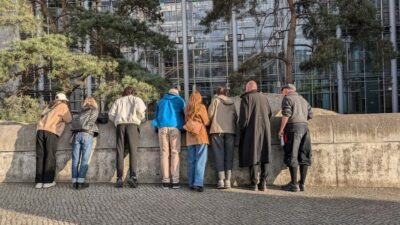
Berlin City walk Government District and Places of Democracy
Read our review →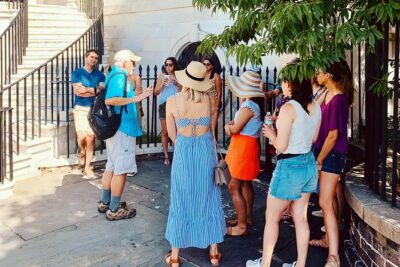
Historic Charleston Guided Sightseeing Walking Tour
Read our review →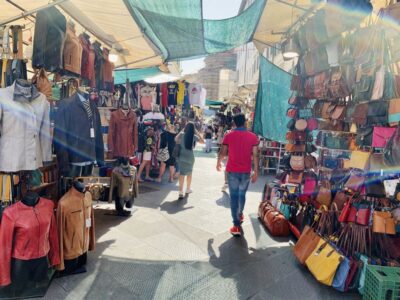
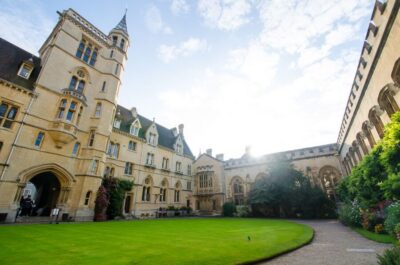
Oxford: University and City Walking Tour with Alumni Guide
Read our review →
City Highlights Temple and Market Walking Tour
Read our review →
A History of Terror – Belfast City Centre Walking Tour
Read our review →
Montmartre Hidden Gems and Scenic Highlights Walking Tour
Read our review →Browse the lists this tour appears in