
REVIEW · PARIS
Paris: Walking Tour of Montmartre
Montmartre is best understood on foot, one sloping street at a time. This two-hour walk takes you from the Moulin Rouge up to Sacré-Cœur, mixing famous sights with quieter corners, artist stories, and curious details about ordinary Paris life. The hill gives you a workout, but the route breaks it into manageable pieces.
I like the gradual climb, which lets you see Montmartre change as you go, and I like the guides’ story-led approach. Vera, Nadine, Solene, and Christin have each been praised for warmth, humor, clear English, and the ability to answer questions. The main drawback is practical: the meeting point can be confusing, and one poor experience occurred when the English guide failed to appear.
Key points at a glance
- Start beside the Moulin Rouge: Meet outside Blanche Metro station on the traffic island in front of the cabaret.
- Climb through old artist territory: The route reaches Moulin de la Galette, La Maison Rose, and Place du Tertre.
- Expect stories, not just photo stops: Guides explain Montmartre’s artists, residents, and everyday Parisian life.
- Finish at Sacré-Cœur: The basilica provides a memorable high point, both culturally and physically.
- Choose your language carefully: English tours run Monday, Wednesday, and Saturday. German tours run Tuesday, Thursday, Saturday, and Sunday.
- Allow for hills and uneven streets: This is not suitable for wheelchair users, and public holidays may bring larger groups.
From the Moulin Rouge into Montmartre
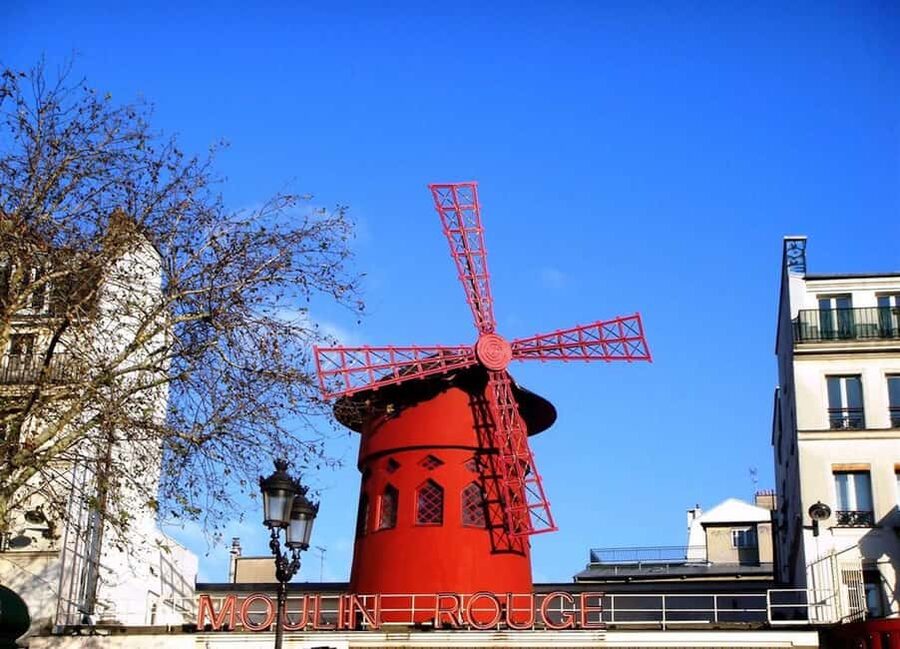
The tour begins outside Blanche Metro station, at the traffic island in front of the Moulin Rouge. Look for a guide carrying a HelpTourists bag and wearing a pink base cap. That visual marker matters because the area has more than one traffic circle, and one participant found the meeting point hard to identify.
The Moulin Rouge is a fitting place to start. Its bright façade and famous red windmill introduce the theatrical side of Montmartre, but the tour does not stop there. You get time for photos and hear stories about the cabaret’s place in Parisian culture before turning uphill into the neighborhood.
This opening section can feel busy, with traffic, pedestrians, and people gathering for evening shows. The guide helps you move from the noisy boulevard toward the smaller streets above it. I like that contrast. You begin with one of Paris’s most recognizable attractions, then quickly see why Montmartre cannot be reduced to a single cabaret or postcard view.
The route is a walk rather than a formal indoor sightseeing program. Food and drinks are not included, so plan to eat before or after the tour. The two-hour length works well if you want an introduction without giving up a full afternoon.
A few more walking tours around Paris worth a look
- Paris Top Sights Half Day Walking Tour with a Fun Guide
★ 5.0 · 2,893 reviews - Montmartre Hidden Gems and Scenic Highlights Walking Tour
★ 5.0 · 2,684 reviews - Montmartre Hill French Gourmet Food and Wine Tasting Walking Tour
★ 5.0 · 2,588 reviews
Moulin de la Galette and Montmartre’s artistic past
As the group climbs, the streets become more residential and less showy. One important stop is Moulin de la Galette, a surviving reminder of the windmills that once marked this hill. The stop connects the neighborhood’s rural past with its later life as a gathering place for artists and writers.
Here, your guide supplies the context that a quick walk alone cannot. You hear about the people who lived and worked in Montmartre, along with the stories and small details that shaped its bohemian reputation. The focus is not simply on listing famous names. It is on showing how the neighborhood became associated with painters, poets, performers, and dreamers.
This is where the quality of the guide makes the largest difference. Nadine has been praised for funny, detailed explanations and for taking time with questions. Vera has also been described as lively and full of stories, making the uphill walk feel less like a history lesson and more like a conversation.
You should still keep your expectations sensible. A two-hour walk cannot cover every artist, building, or period in Montmartre. Instead, it gives you a useful framework. Afterward, you can return to the streets that caught your interest and explore at your own pace.
La Maison Rose and the quieter streets
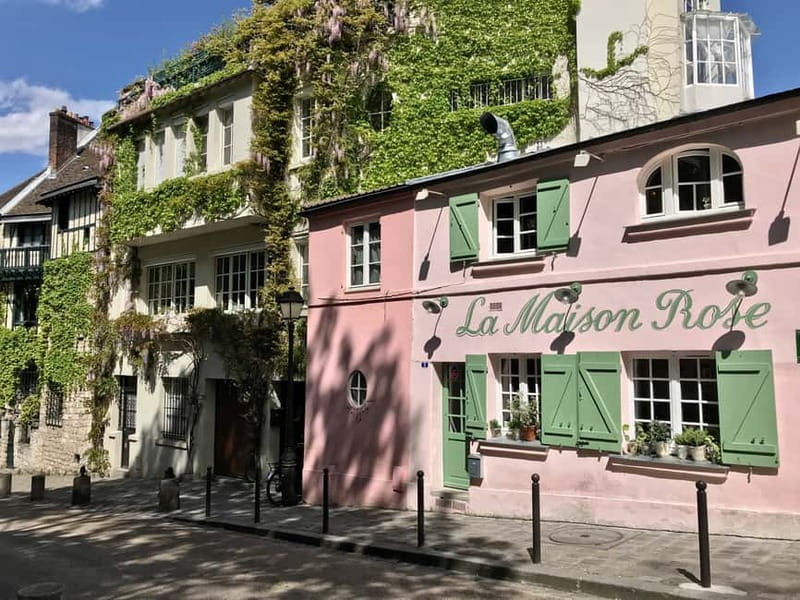
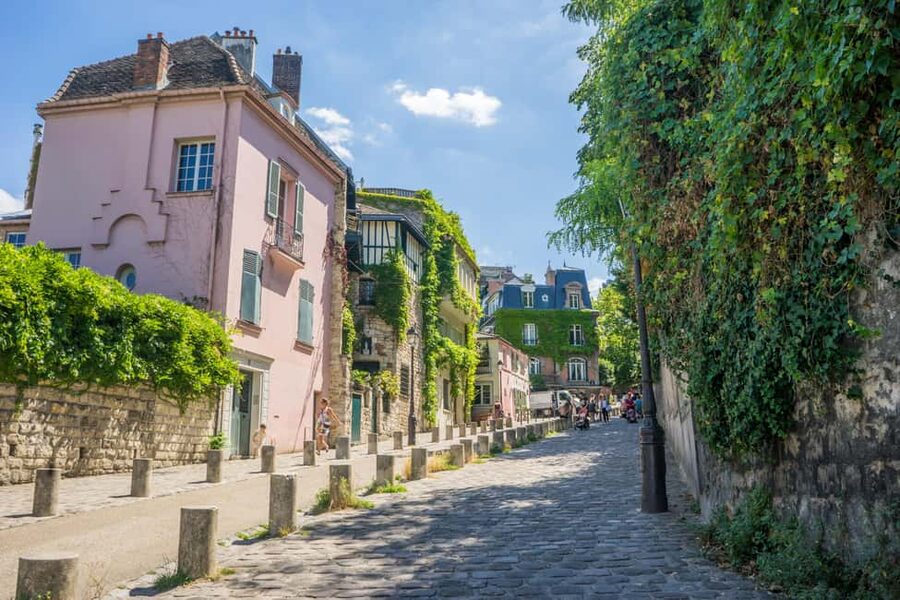
La Maison Rose is one of Montmartre’s most photographed buildings, with its pink walls and charming corner setting. It is an easy place to pause, take pictures, and listen to the guide explain why this part of the hill has attracted so much attention.
The value of the stop is not only the photo. The route around La Maison Rose lets you see a more intimate side of Montmartre, away from the broad crowds around the main monuments. One participant especially appreciated being shown quieter, less commercial streets. That is useful if you have already seen the standard Paris sights and want a better sense of the neighborhood itself.
Do not expect every street to be empty. Montmartre is one of Paris’s most popular areas, and La Maison Rose is well known. Still, the walking route can take you through corners that many independent visitors miss when they go directly from the Metro to Sacré-Cœur.
The pace is intended for a mixed group. One guide was praised for keeping people together and responding to the group’s needs. The route remains uphill, though, with cobbled or uneven sections. Wear shoes that can handle two hours of walking and several changes in slope.
Place du Tertre and the working artist tradition
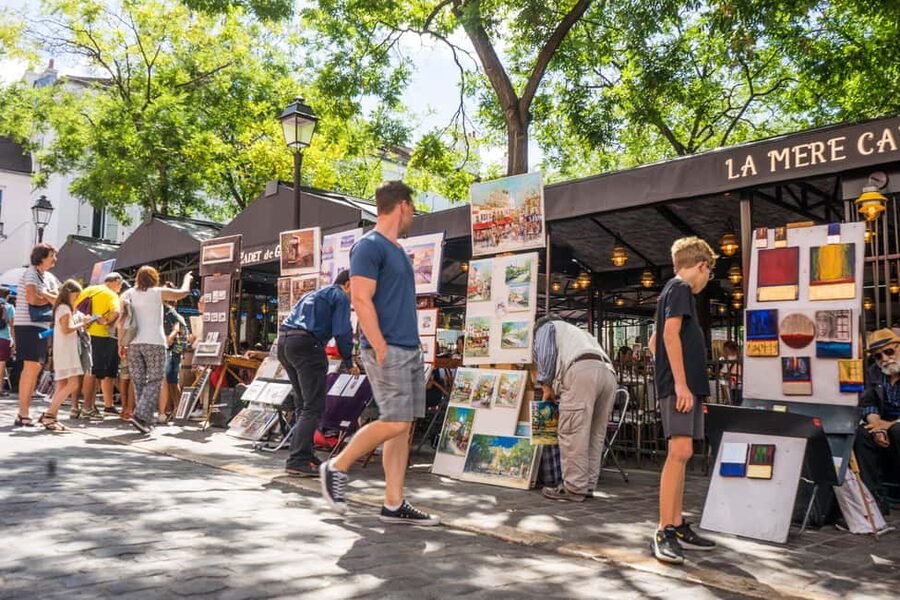
Place du Tertre is the tour’s liveliest central stop. Artists work outdoors here, continuing a tradition that gives the square its distinctive character. You can look at paintings, watch artists at work, and consider buying a piece if something catches your eye.
The square can also be crowded and commercial. That is part of the experience, but it may not match the quiet image of old Montmartre you have in mind. Your guide helps by explaining the connection between the present-day artists and the district’s earlier creative life.
I like the way this stop gives you a chance to do more than take a picture. You can ask about the people who have shaped Montmartre and the way the area functions today. One participant bought art during the outing, while another used the tour as a way to understand a neighborhood they already knew from living in Paris.
That last point is worth noting. You do not need to be a first-time visitor to benefit from this walk. A local guide can point out details you have walked past without noticing. The experience works especially well early in a Paris stay, when you want orientation, or later, when you want more context for a district you have already visited.
Same streets, a different route:
- Authentic Parisian Gourmet Food Tour with 10 Local Dishes & Wines
★ 5.0 · 4,754 reviews - Paris: Montmartre Highlights Walking Tour with a Local Guide
★ 4.9 · 2,318 reviews - Paris Île de la Cité and Notre-Dame Walking Tour With Crypt
★ 5.0 · 2,272 reviews - Paris: Montmartre Cheese, Wine & Pastry Guided Walking Tour
★ 4.8 · 2,255 reviews
Sacré-Cœur as the final high point
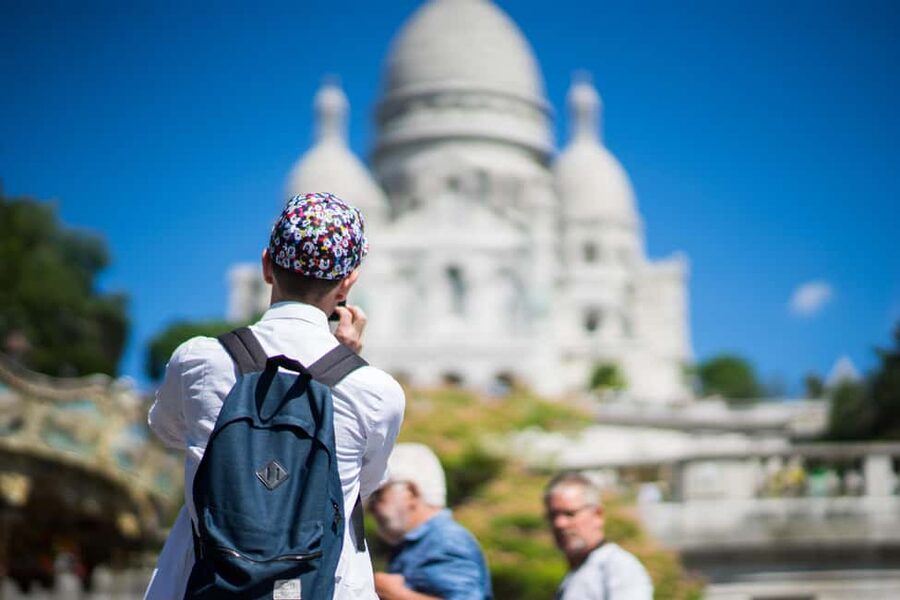
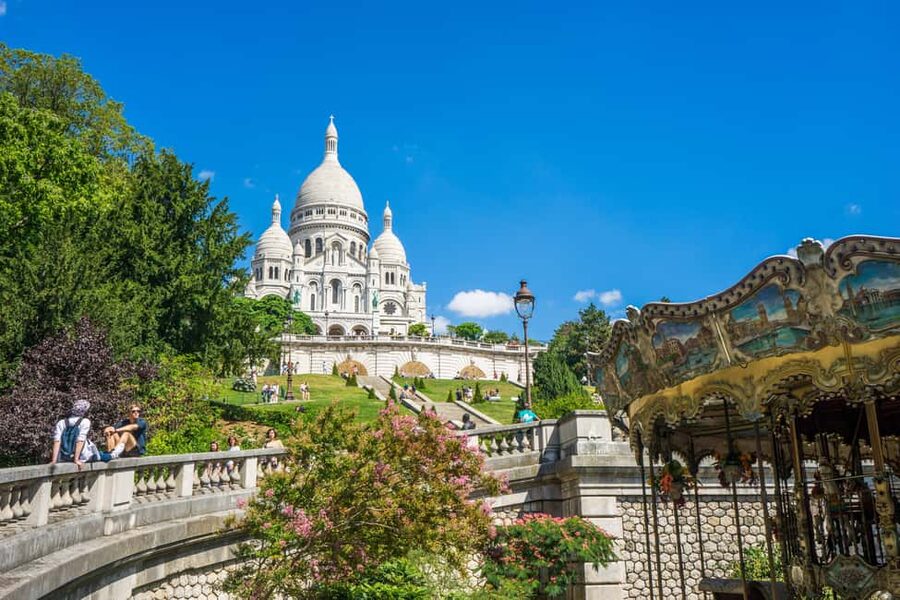
The route ends at the Basilica of Sacré-Cœur, the white-domed church that crowns Montmartre. The basilica is both a major landmark and a natural ending for a walk up the hill. You get time for a photo and a visit, with the guide explaining the place within Montmartre and Paris.
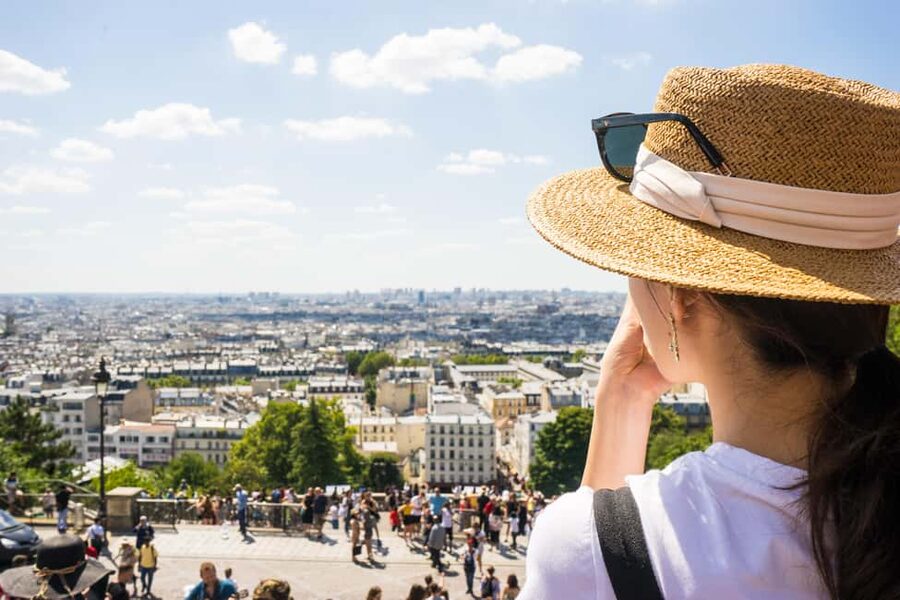
The setting is one of the strongest parts of the tour. From the area around Sacré-Cœur, you can appreciate the hilltop position and the broad city views. After the smaller streets and close-set buildings below, the open space around the basilica feels like a clear finish.
The basilica itself can be busy, so the experience is not a private visit. The tour also does not turn into a long architectural lecture. Its strength is the way the church completes the story of the neighborhood: cabaret below, artists and old streets in the middle, then a major Paris monument above.
There is a small uncertainty in the supplied meeting information. The route details identify Sacré-Cœur as the finish, while another instruction says the activity ends back at the meeting point. Confirm the end point with your guide at the start, especially if you have a restaurant reservation or timed ticket afterward.
What the guides add to the walk
This tour depends heavily on the person leading it. The most praised guides are Vera, Nadine, Solene, and Christin, each described as friendly, funny, attentive, and generous with information. Solene was singled out for clear English and an engaging manner. Christin was appreciated for showing quieter parts of Montmartre and patiently answering questions.
That pattern tells you what to look for. The best version of this experience is not a checklist of monuments. It is a guided conversation that adds meaning to places you could otherwise photograph in a few minutes.
You can expect stories about famous artists, but also anecdotes about residents and daily life in the French capital. That mix gives the walk a human scale. Montmartre becomes more than a district associated with paintings and cabarets. You see it as a living neighborhood with changing uses, local routines, and layers of memory.
Language planning is important. English tours take place on Mondays, Wednesdays, and Saturdays. German tours run on Tuesdays, Thursdays, Saturdays, and Sundays. On Saturdays, both languages are offered at different times. Check the selected departure carefully when booking.
One language problem did occur when the English guide did not appear, leaving the French guide to speak mostly German and provide only brief English recaps to two people. This seems to be an exception, not the normal arrangement, but it is a useful reason to confirm your language at the meeting point before the walk begins.
Is $34 a fair price?
At $34 per person, this is a reasonable price for a two-hour small-group walking tour in one of Paris’s most visited districts. You are paying for a live guide, local interpretation, and a planned route that links several places instead of leaving you to connect them yourself.
The value is strongest if you want stories and orientation. If you already know Montmartre well, you may prefer to wander independently and spend the money on lunch, art, or a museum. But if you want to understand why these particular streets matter, the guide can save you time and give the visit a clearer shape.
There is no food, drink, transport, or special admission included. That keeps the price straightforward, but you should budget separately for anything you buy at Place du Tertre or along the route.
Free cancellation is available up to 24 hours before the tour, and you can reserve now and pay later. Those terms help if your Paris schedule is still shifting. On public or national holidays, the group may be larger than usual, so choose an ordinary weekday if a smaller group is your priority.
Who will enjoy this Montmartre walk?

I would recommend it to first-time Paris visitors who want a clear introduction to Montmartre without spending half a day on a formal tour. It also suits returning visitors who want more local stories and less time on the main tourist paths.
The walk is a good match for people who enjoy:
- Famous sights paired with neighborhood details
- Art and cultural history presented through anecdotes
- A steady uphill walk rather than a bus tour
- Small-group conversation and questions
- A guide who can point out less obvious streets
- Two hours of sightseeing followed by independent exploration
It may be less suitable if you have difficulty with hills, cobbles, or standing for long periods. The activity is not suitable for wheelchair users. It is also not ideal if you want a long, detailed visit inside Sacré-Cœur or a formal art-history lecture. The emphasis is on the district as a whole.
Practical advice before you go
Meet early enough to find the traffic island in front of the Moulin Rouge. The area can be confusing, so do not rely on simply locating Blanche station and assuming the guide will be directly at the entrance. Look for the HelpTourists bag and pink cap.
Wear comfortable shoes and bring water. The route climbs steadily, and the streets can be uneven. You may want to leave space in your schedule after the tour, since Place du Tertre and the area around Sacré-Cœur are worth exploring once the group walk ends.
If you hope to buy art, carry a payment method that works for you, but remember that food and drinks are not included. Also check the language and departure time closely. English is offered only on Monday, Wednesday, and Saturday, while German has a different schedule.
Finally, ask at the beginning where the group will finish. The stated route points to Sacré-Cœur, but the meeting information also refers to a return to the starting point. Clear this up before you set your next appointment.
Should you book the Montmartre walking tour?
Book it if you want a friendly, story-filled introduction to Montmartre and like the idea of climbing from the Moulin Rouge to Sacré-Cœur through a mix of famous and quieter streets. At $34, the tour offers good value when the guide is lively and attentive, which is exactly where Vera, Nadine, Solene, and Christin have made a strong impression.
Skip it if you prefer total independence, dislike hills, or already have a detailed understanding of Montmartre. For most visitors, though, the route gives the neighborhood a useful shape. You see the sights, hear the stories, and finish with one of Paris’s finest hilltop views.
FAQ
How long does the Montmartre walking tour last?
The tour lasts two hours.
How much does the tour cost?
The price is $34 per person.
Where does the tour start?
Meet outside Blanche Metro station, at the traffic island in front of the Moulin Rouge.
How do I find the guide?
Look for a guide carrying a HelpTourists bag and wearing a pink base cap.
Which languages are available?
The tour is available in English and German.
When are English tours offered?
English tours take place on Mondays, Wednesdays, and Saturdays.
When are German tours offered?
German tours take place on Tuesdays, Thursdays, Saturdays, and Sundays.
What sights are included on the route?
The route includes the Moulin Rouge, Moulin de la Galette, La Maison Rose, Place du Tertre, and Sacré-Cœur Basilica.
Is the tour suitable for wheelchair users?
No. The activity is not suitable for wheelchair users.
Just added around Paris
- The Official Emily in Paris Locations Walking Tour★ 4.9 · 383 reviews
- Paris: Montmartre Food Tasting Walking Tour with Secret Dish★ 4.8 · 107 reviews
- Paris: Emily Inspired Walking Tour★ 4.9 · 312 reviews
- Saint-Germain: Gourmet Chocolate & Pastry Walking Food Tour★ 4.8 · 495 reviews
- Paris Uncovered: Unique Guided Walking Tours with a Twist★ 4.8 · 582 reviews
- Paris Top Sights Half Day Walking Tour with a Fun Guide★ 4.9 · 92 reviews
- Paris: Walking Tour with Notre Dame or Ste-Chapelle Access★ 4.4 · 198 reviews
- Paris: Saint Germain des Prés Guided Foodie Walking Tour★ 4.8 · 146 reviews
Walking Tours, compared.

Magical London: Harry Potter Guided Walking Tour
Read our review →
Reykjavik Food Walk – Local Foodie Adventure in Iceland
Read our review →
History and Hauntings of Salem Guided Walking Tour
Read our review →
New Orleans Premier Ghost, Voodoo and Vampire Walking Tour
Read our review →
Amsterdam Anne Frank: Small-Group Walking Tour & Local Guide
Read our review →

Edinburgh Castle: Guided Walking Tour with Entry Ticket
Read our review →
Anne Frank’s Story – Guided Walking Tour through Amsterdam
Read our review →Browse the lists this tour appears in