
REVIEW · BERLIN
East Berlin and the Berlin Wall 2-Hour Walking Tour
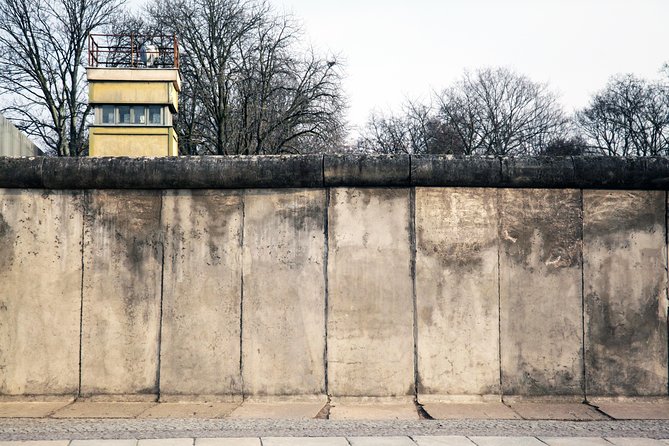
The most powerful part of this tour is standing beside a preserved stretch of the Berlin Wall, with the former Death Strip laid out before you. This is not just a city walk past famous sights. It connects the concrete, guard towers, escape attempts, and family separations to the political decisions that split Berlin.
I like two things especially: the guide-led storytelling makes a complicated Cold War easier to follow, and the tour focuses on ordinary East Berlin life rather than only on presidents and military strategy. The chance to touch surviving Wall remains is also unusually direct. The main drawback is time. Two hours is brisk, and the route includes public transport, so poor communication about train tickets or meeting points could make the experience feel rushed.
Key points at a glance
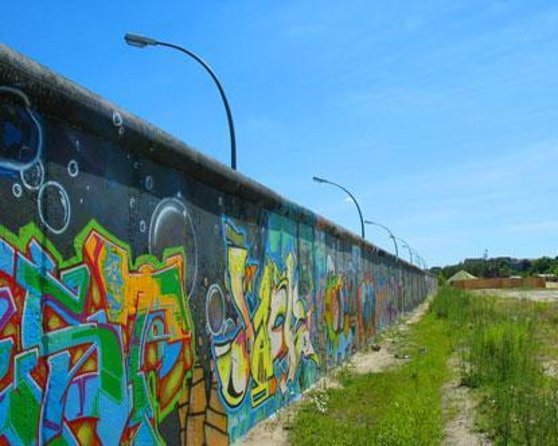
- See the Berlin Wall in its original setting: The Berlin Wall Memorial preserves a section of Wall, the Death Strip, a watchtower, and other border structures.
- Learn how the Wall fell: At Bornholmer Strasse, your guide explains how a confused announcement helped trigger the opening on November 9, 1989.
- Visit the Palace of Tears: This former crossing at Friedrichstrasse station recalls the painful goodbyes between East German families and visitors from the West.
- Hear the human story: Escape plans, blocked windows, surveillance, and daily restrictions give the Cold War a personal scale.
- Expect an English-language walking tour: The group can include up to 20 people, with a professional guide and mobile ticket.
- Budget for public transport: A Berlin AB Zone pass costs about 10.60 euros and is not included.
Why this short walk matters in Berlin
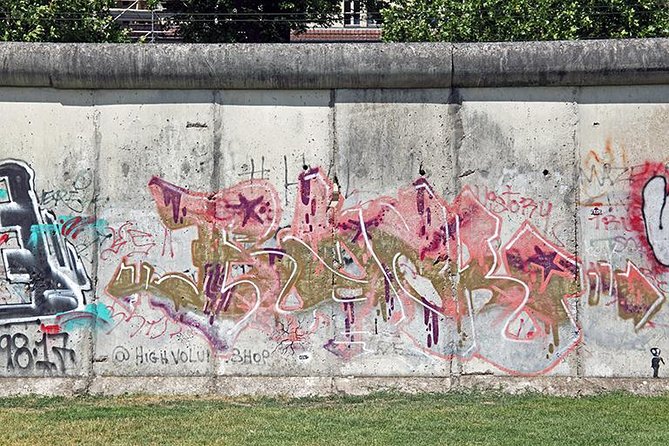
Berlin offers plenty of museums about the Cold War, but this tour gives you something a museum cannot: the physical distance between the two sides. You see where walls, fences, guard posts, and open ground once controlled the movement of an entire population.
The tour begins near Hackescher Markt, a useful starting point in the former East Berlin. From here, the guide sets up the larger story: how the United States and the Soviet Union moved from wartime allies to Cold War rivals, and why Berlin became the most visible pressure point between them.
That opening matters. Without it, the Wall can seem like an isolated structure from a vanished era. With the political background in place, you understand why Berlin was divided, why East Germany restricted movement, and why a concrete barrier became such a potent symbol around the world.
The tour is especially useful if you have only a basic grasp of German history. Guides such as Tom, Georgia, Dylan, Pip, Jasper, Heidi, Nathan, and Jimmy have been singled out for clear explanations, strong storytelling, and an ability to answer questions. Guide assignments can change, but the best sessions share the same quality: they explain events through people, not just dates.
More History Walking Tours in Berlin
- Berlin: Third Reich & Cold War Guided Walking Tour
★ 4.9 · 8,378 reviews - Berlin’s Best: 2 Hour Walking Tour Third Reich and the Cold War
★ 5.0 · 5,486 reviews - Third Reich Berlin: Hitler and WWII Walking Tour
★ 5.0 · 3,301 reviews
From Hackescher Markt to Friedrichstrasse
Meet at Neue Promenade 3, beside Hackescher Markt station, for the 10:00 a.m. start. This is a busy central location with public transport nearby, but give yourself time to find the exact meeting point. A city map and mobile ticket are useful here.
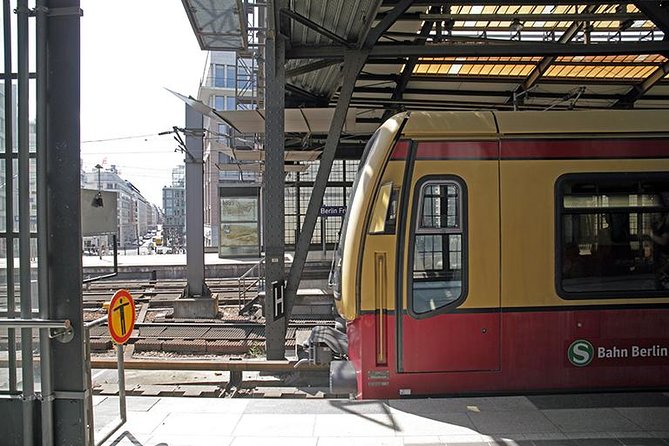
The first stops near Friedrichstrasse help explain how divided Berlin operated. Friedrichstrasse was a major street and transport hub, and its railway station included a border crossing between East and West.
The Palace of Tears, the old border station at Friedrichstrasse, is one of the most affecting places on the route. East Germans said goodbye there to relatives and visitors returning to West Germany. The name comes from those repeated farewells, not from an elaborate monument.
You may spend only a few minutes at this point, so do not expect a long indoor museum visit. Its value is in the explanation. The guide turns an ordinary railway station into a place where political borders entered family life.
This is also where the route may require attention to transport arrangements. The supplied tour information says a Berlin AB Zone pass is not included, and one review describes a problem when part of a group needed to buy train tickets. Keep your ticket ready before the tour and listen carefully when the guide explains the next move. The tour provider should also make the meeting and boarding plan clear.
The Berlin Wall Memorial and the Death Strip
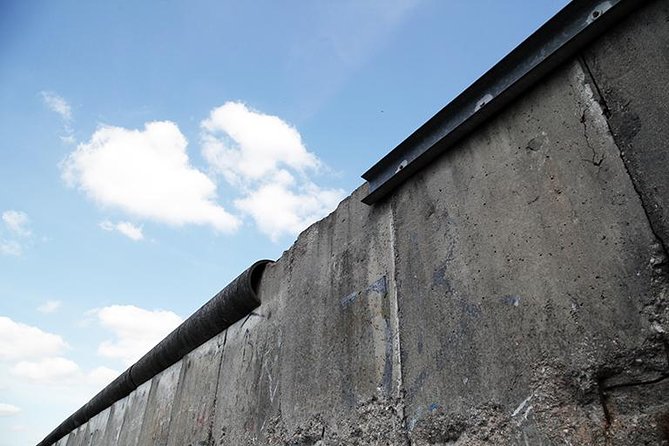
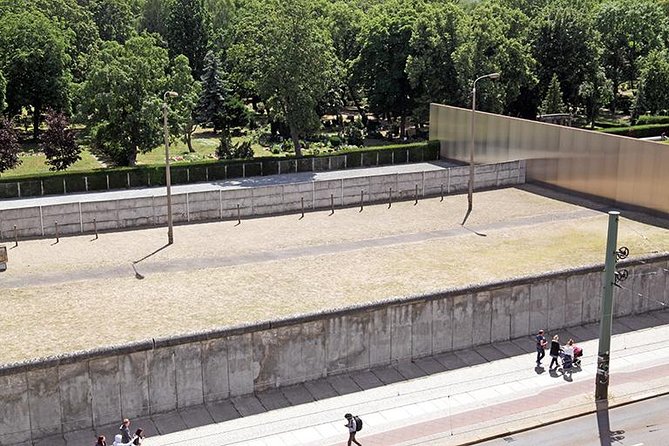
The main portion of the experience is the Berlin Wall Memorial, where you see a section preserved in its original state. This is the tour’s strongest stop and the place where the story becomes physical.
The memorial lets you understand that the Wall was not one simple slab of concrete. The border system included multiple barriers, open ground, watch positions, and controlled access points. From a viewing position, you can look down over the former Death Strip, the area where East German guards enforced shoot-to-kill orders against people trying to escape.
That view is sobering because the space can appear ordinary today. You are looking at a city district, not an obvious battlefield. The guide’s job is to explain what once occupied that open area and how the system worked.
The preserved Wall section also gives you the chance to touch the remains. That small physical contact can make the history feel less distant, especially after hearing about people who planned escapes through tunnels, across rooftops, or by other dangerous methods. Some succeeded. Others died.
Photographs and memorial displays help put names and faces to those who did not make it across. The strongest guides use these details with restraint. The tour is emotional, but it is not presented as a spectacle.
Plan on roughly an hour in and around the memorial area. Wear comfortable shoes, since you will be outdoors and moving between several points. The tour runs in all weather, so rain protection, warm layers, or sun protection can make a real difference.
Chapel of Reconciliation and the old watchtower
The Chapel of Reconciliation sits within the former Wall zone and adds a quieter note to the visit. Your guide explains the history of the site, including its place within an area once cut apart by the border.
You then see the GDR Watch Tower, described as the oldest surviving relic of the Berlin Wall. It is a modest structure compared with the famous Wall sections, but that is part of its value. The tower shows the practical machinery of control: observation, surveillance, and the effort to prevent escape.
At Ackerstrasse, the guide continues explaining the former border area. These short stops are not major attractions on their own. Their purpose is to help you read the city around you and notice traces that are easy to miss when walking independently.
This is where a good guide makes a major difference. A static sign can tell you that a tower or Wall section existed. A strong explanation can connect it to the people who lived beside it, the buildings altered to prevent escapes, and the rules that shaped daily life in East Berlin.
More History Walking Tours in Germany
- Berlin: Third Reich, Hitler, and WWII Walking Tour
★ 4.9 · 1,757 reviews - Berlin: Cold War Walking Tour on Berlin Wall Route
★ 4.8 · 437 reviews - Private Walking Tour Berlin Third Reich Hitler and World War II
★ 5.0 · 360 reviews - Berlin: Berlin Wall & East Side Gallery Walking Tour
★ 4.9 · 264 reviews
Bornholmer Strasse and the night the Wall opened
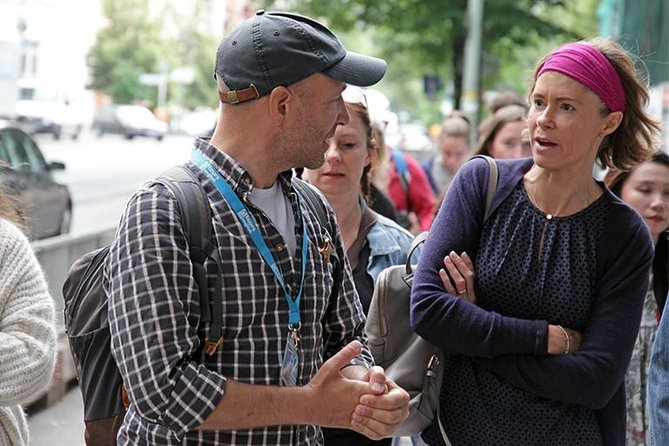
Bornholmer Strasse is tied to one of the most remarkable moments in modern European history: the opening of the Berlin Wall on November 9, 1989.
The guide explains how an East German politician’s mistaken or poorly communicated announcement helped set events in motion. Crowds gathered at the crossing, border guards faced a situation they were not prepared to manage, and the barrier opened.
This episode is valuable because it shows how history can turn on confusion as well as grand political planning. The Wall did not come down through one neat, carefully staged act. A system already under pressure began to fail in public view.
You also get a better sense of how quickly the atmosphere changed. For decades, crossing the border could mean interrogation, refusal, or severe punishment. Then, on one extraordinary night, the checkpoints could no longer hold back the people.
The stop works best when you remember that the Wall’s fall was not only a television image from 1989. It was a sudden change in what ordinary people could do with their own lives.
What East Berlin life felt like
The tour’s strongest subject is not concrete. It is control.
Your guide discusses how the East German state increasingly watched its own population through the Stasi, the secret police. Surveillance affected neighbors, coworkers, families, artists, and anyone suspected of opposing the government. The goal was not merely to catch spies. It was to create fear and obedience through constant monitoring.
The former Stasi headquarters is included as a key site. The stop gives the political story a local address and helps explain how government control operated beyond the border itself.
You also hear about daily life in East Berlin. The tour can cover restrictions on movement, the closing or blocking of homes near the Wall, and the many plans people developed to escape. These details help you understand why the Wall was more than a border between two political systems. It entered homes, workplaces, friendships, and family routines.
Several guides have been praised for making this human side clear. Pip, for example, has been described as especially good at explaining individual experiences. Ariel has been noted for combining large amounts of historical information with humor. Dylan has been appreciated for conversational answers and suggestions for other places to visit in Berlin.
Do not expect every guide to tell the same story in the same style. That is normal on a walking tour. The quality depends heavily on who leads your group, though the consistently high rating suggests that the guide is one of the main reasons people book this experience.
Finishing near Alexanderplatz
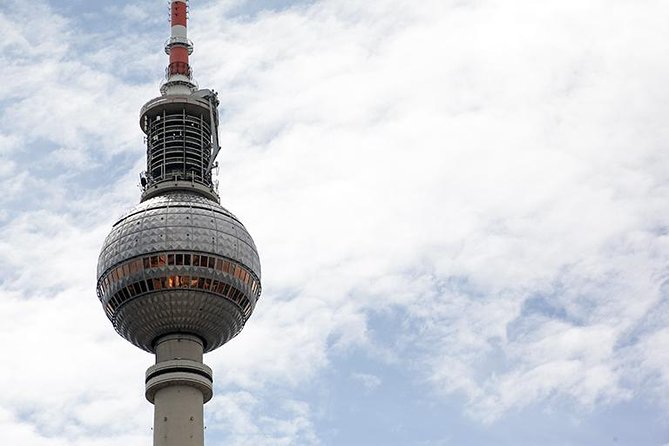
The stated route finishes at Alexanderplatz, beside the Berlin TV Tower in the center of the former East German capital. The tower is not included as an admission stop, so you will view the area from outside unless you arrange a separate visit.
Alexanderplatz is a practical place to finish. You can continue sightseeing, find food, or connect with the city’s transport network. It also gives you a final reminder that former East Berlin is not an open-air museum. Modern city life continues around the old political center.
There is one important detail to check before booking: the supplied meeting information gives the end point as the Berlin Wall Memorial near Nordbahnhof, while the itinerary describes the tour ending at Alexanderplatz. Those locations are not the same. Confirm the final stop with the operator before you go, especially if you have a timed reservation or another tour afterward.
Price, timing, and group size
At $21.78 per person, this is a strong-value introduction to Berlin’s Cold War story. You are paying for a professional guide and two hours of interpretation, not for admission to a museum or tower.
That distinction matters. If you only want to see the Wall and take photographs, you can visit memorial sites independently. But the guide adds the sequence and context that make the places meaningful. You learn why you are looking at a watchtower, what the Death Strip was designed to do, and how the border affected ordinary people.
The tour allows up to 20 people. That is small enough to hear the guide in most situations, though it is not a private walk. Some sessions have been much smaller, around 10 people, which can make questions and conversation easier.
Two hours is enough for an introduction, not a complete study of Berlin during the Cold War. One guide-led walk could easily leave you wanting more time at the Wall Memorial or Stasi sites. I see that as a useful feature if you are building a first day in Berlin, but a limitation if you want a slow, detailed visit.
The 10:00 a.m. start gives you time to use the afternoon for museums, the East Side Gallery, or another neighborhood. The route is outdoors and operates in all weather, so check the forecast and dress for walking. Service animals are allowed, and the activity is near public transport. Most people can take part, but the route still calls for steady walking and attention when moving between stops.
Free cancellation is available up to 24 hours before the start time. Changes or cancellations inside that window are not accepted for a refund.
Who should take this tour
I would choose this walk if you want a clear introduction to the Wall, Cold War Berlin, and East German life without giving up an entire day. It suits first-time visitors, families with older children, and anyone who prefers history explained on location.
It is also a good choice if you are unsure how the Wall Memorial fits with places such as Friedrichstrasse and Alexanderplatz. The route links them into one story.
You may want something longer if you already know the basic history or want extended time inside museums. Two hours moves quickly, and the route cannot cover every escape story, political turning point, or Stasi detail.
Bring comfortable shoes, a charged phone, weather protection, and a Berlin AB Zone ticket or the funds to buy one. Most importantly, arrive early enough to find the meeting point and clarify the transport plan.
Should you book the East Berlin and Berlin Wall tour?
Book it if you want human stories and clear historical context more than a simple photo stop. The Wall Memorial, Death Strip viewpoint, Palace of Tears, Bornholmer Strasse, and Stasi history give you a strong foundation for understanding Berlin’s divided past.
I would hesitate only if you need a slow pace, a guaranteed private guide, or a full museum visit. The route is short, the final location needs confirmation, and public transport is not included.
For about $22, this is a sensible first look at East Berlin. Go in ready to listen, keep an eye on the clock, and follow up afterward at the memorial or another Cold War site. The concrete is what you see, but the everyday stories are what you remember.
FAQ
Where does the tour begin?
The tour begins at Neue Promenade 3, 10178 Berlin, Germany, next to Hackescher Markt station.
What time does the tour start?
The scheduled start time is 10:00 a.m.
How long does the walking tour last?
The tour lasts approximately two hours.
Is the tour offered in English?
Yes. The experience is offered in English.
Is public transport included in the price?
No. A Berlin Transport AB Zone pass, listed at approximately 10.60 euros, is not included.
Does the tour visit the original Berlin Wall?
Yes. The route includes the Berlin Wall Memorial, where you see a preserved section of the Wall in its original setting and view the former Death Strip.
What other historical sites are included?
The route includes Friedrichstrasse and the Palace of Tears, the Berlin Wall Memorial, the Chapel of Reconciliation, a GDR watchtower, Ackerstrasse, Bornholmer Strasse, the former Stasi headquarters area, and Alexanderplatz with the Berlin TV Tower.
What happens if it rains?
The tour operates in all weather conditions, so dress appropriately. Service animals are allowed, and most people can participate.
More Two-Hour Tours in Berlin
- Berlin Highlights in 2 Hours: Express Walking Tour
★ 5.0 · 120 reviews - Budapest City Landmarks Walking Tour in 2 Hours
★ 5.0 · 2,048 reviews - Leipzig: 2-Hour Guided Walking Tour in German
★ 4.8 · 1,612 reviews - Lucca: 2-Hour City Center Walking Tour
★ 4.7 · 1,314 reviews
Just added around Berlin
- Berlin Walking Tour★ 4.5 · 378 reviews
- East Meets West: Berlin Food Culture & Street Art★ 5.0 · 157 reviews
- Small Group Walking Tour of East Berlin with a French Guide★ 5.0 · 176 reviews
- Berlin Street Art Walking Tour – Off The Grid★ 5.0 · 270 reviews
- Berlin Highlights Private Guided Walking Tour★ 4.5 · 89 reviews
- Private Berlin: Iconic Sights and Hidden Gems Walking Tour★ 5.0 · 292 reviews
- Gruseltour Berlin Haunted Ghost Walk 90-minute at Berlin Mitte city center★ 5.0 · 75 reviews
- Berlin Private Complete History All Day Walking Tour★ 5.0 · 474 reviews
History Walking Tours, compared.


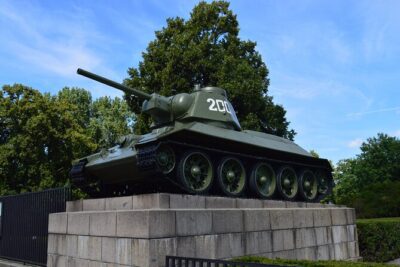
Berlin’s Best: 2 Hour Walking Tour Third Reich and the Cold War
Read our review →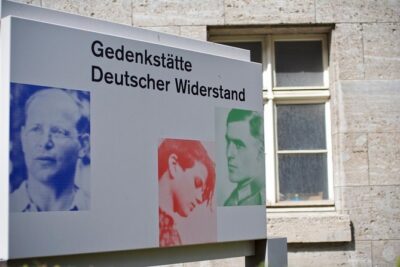
Third Reich Berlin: Hitler and WWII Walking Tour
Read our review →
New Orleans Garden District History Walking Tour
Read our review →
Cartagena: Historic Center and Getsemaní Shared Walking Tour
Read our review →
Imperial Palace and Shogun Historical Walking Tour
Read our review →Browse the lists this tour appears in