
REVIEW · LISBON
Lisbon: Street Art Walk
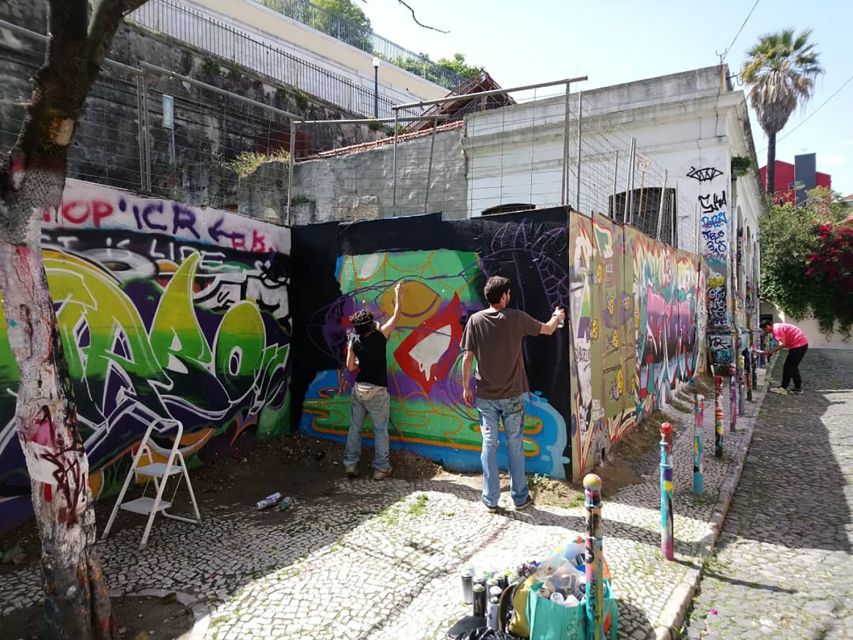
Lisbon’s street art is not confined to one gallery. It appears on stairways, old walls, side streets, and corners you could easily miss. This three-hour walk with artist-guide Igor, also known as Mr. Red, takes you through Graça, Mouraria, and the old Alfama area while explaining the people, methods, and rules behind the work. I like the personal angle, and I like that the route includes freshly painted spots rather than only famous murals.
You get two things that are hard to find on your own: access to lesser-known artistic places and a guide who works in the art world himself. The main concern is the terrain. Lisbon goes up and down, and this walk is not suited to anyone with mobility limits. At three hours, it may also feel long if your interest in street art is only casual.
Key points at a glance
- Artist-led insight: Igor, known as Mr. Red, explains artists, techniques, meanings, and street-art etiquette from a working artist’s point of view.
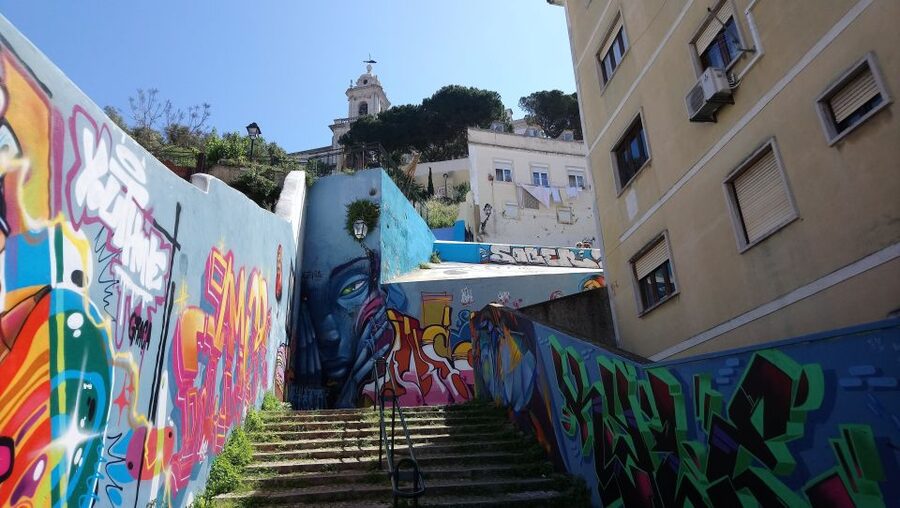
- Graça and Alfama on foot: The route gives you an overview of old Lisbon neighborhoods as well as their public art.
- Major names on the walls: Look for work connected with Obey Giant, Vhils, Bordalo II, Add Fuel, Mário Belem, Aka Corleone, Ozearv, and Daniel Eime.
- Fresh art, not only famous pieces: Caracol da Graça and Rua Josefa de Obidos may reveal newer work, and you might see artists painting.
- Small groups: Private or small-group options, with groups of up to 10 people, make it easier to ask questions and stop for photos.
- A practical hill walk: Wear comfortable shoes, bring sun protection, and arrive at Largo da Graça 10 minutes early.
Starting at Largo da Graça with an artist as your guide
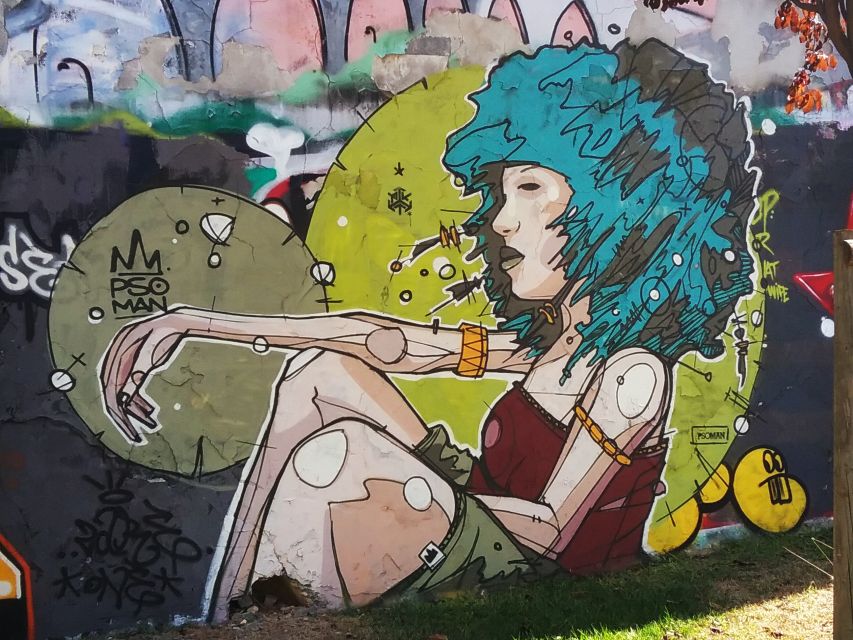
The meeting point is the Coreto da Graça, the bandstand at Largo da Graça, in front of Desgraça Restaurant. This is in the Graça neighborhood, not at a monument entrance or hotel, so plan to arrive early and find the bandstand before your start time.
The guide for this experience is identified as Mr. Red, while several bookings have been led by Igor. Other feedback names Iwan, so the exact guide may depend on the date. The important point is that the guide is presented as an artist, not simply as someone reading prepared facts from a clipboard.
That distinction matters. Street art can look like decoration if you only stop for a quick photograph. A working artist can explain why a wall was chosen, how a piece was made, how artists deal with tagging, and why a work may disappear under a new coat of paint. Igor has been praised for explaining the difference between art and graffiti, the customs of the scene, and the lack of ownership artists may feel once a piece is placed outdoors.
The group size is capped at 10, with private bookings and small groups available. That is a useful middle ground. You get more room for questions than on a large city walk, but you are not paying the cost of a one-person art consultation unless you choose a private format.
More Street Art Walks in Lisbon:
- Lisbon: Kickstart Street Art Walking Tour
★ 4.9 · 717 reviews - London: Street Art and Graffiti Guided Walking Tour
★ 4.9 · 1,354 reviews - Berlin: City Street Art Guided Walking Tour
★ 4.8 · 1,051 reviews
Graça: Lisbon’s open-air art room
Graça is a smart place to begin because the streets combine old residential buildings, steep lanes, public viewpoints, and a steady supply of wall art. You will not simply walk from one postcard mural to the next. The guide asks you to keep looking up and down, since art may appear above eye level, near the pavement, or tucked into a side passage.
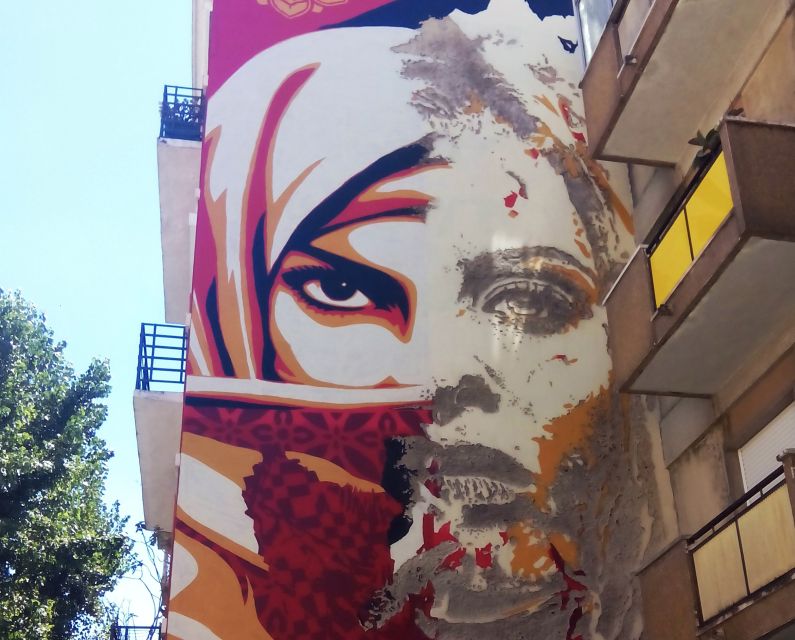
The route includes work linked with well-known names such as Obey Giant, Vhils, Bordalo II, Ozearv, and Daniel Eime. These artists give you a useful introduction to the range of Lisbon’s public art. One piece may rely on a bold political image, another on carved or damaged wall surfaces, and another on large-scale painted forms. The value of the walk is in making those differences clear.
Obey Giant pieces are especially useful for understanding how a recognizable graphic language can carry a social or political message. Vhils gives you a different lesson, with art associated with cutting, removing, or working into walls rather than simply adding paint. The route may also include pieces by Add Fuel, Mário Belem, and Aka Corleone, giving you more styles to compare.
I would not treat the listed artists as a guaranteed checklist. Street art changes. Walls are painted over, damaged, removed, or altered, and the exact route can shift according to what is fresh and accessible. That uncertainty is part of the subject, but it is worth knowing if you want one specific mural.
Caracol da Graça and the pleasure of seeing what is new

One of the most appealing parts of this walk is the focus on freshly painted places. Caracol da Graça is highlighted as a spot where new work may appear, and you might even see artists working if the timing is right.
That possibility gives the tour a sense of the present rather than turning it into a museum visit. You see street art as an active process. A wall can change from one visit to the next, and an artist may be making decisions in front of you rather than presenting a finished object behind glass.
The tradeoff is simple: fresh art is unpredictable. You cannot count on a particular artist being there, and a newly painted wall may not remain in the same form for long. If you enjoy discovery, this is a strength. If you need a fixed list of guaranteed stops, it may test your patience.
The guide also points out places such as Rua Josefa de Obidos. These less obvious streets are part of the reason to book instead of wandering alone. You could find the bigger murals independently, but it is harder to know which side streets matter, which pieces are current, and what you are looking at once you arrive.
Mouraria and Alfama: art beside old Lisbon
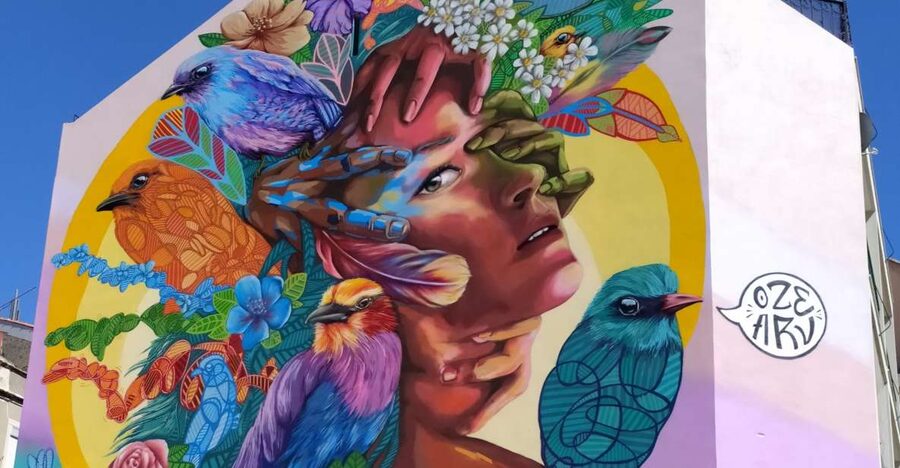
The walk also gives you an overview of Mouraria and the historical Alfama area. These neighborhoods add context to the art because the walls are part of lived-in streets, old buildings, stairways, and working districts rather than a purpose-built art park.
The experience does not include entrance to monuments or galleries. Instead, the surroundings are the setting. You are using the walk to understand how public art fits into the older city, where a painted wall may sit close to a weathered façade or a narrow lane.
This wider view is one of the tour’s strongest features. You are not only learning the names of artists. You are seeing how public art interacts with a city that has layers of age, change, and daily life. One booking described the tour as a way to connect the art with Lisbon’s larger story, and that is the right way to think about it.
Expect streets that rise and fall. Lisbon’s hills are not a minor detail here. The walk is listed as unsuitable for people with mobility impairments, and that warning should be taken seriously. Comfortable shoes are essential, and anyone bothered by steep streets should consider a different art experience.
A few more walking tours around Lisbon worth a look
- Lisbon: History, Stories and Lifestyle Walking Tour
★ 4.8 · 10,902 reviews - Best of Lisbon Small-Group Guided Walking Tour
★ 5.0 · 4,869 reviews - Lisbon: Food and Wine Small Group Walking Tour
★ 4.9 · 4,082 reviews - Best of Lisbon Walking Tour: Rossio, Chiado & Alfama
★ 4.9 · 2,700 reviews
The International Women’s Day street-art gallery
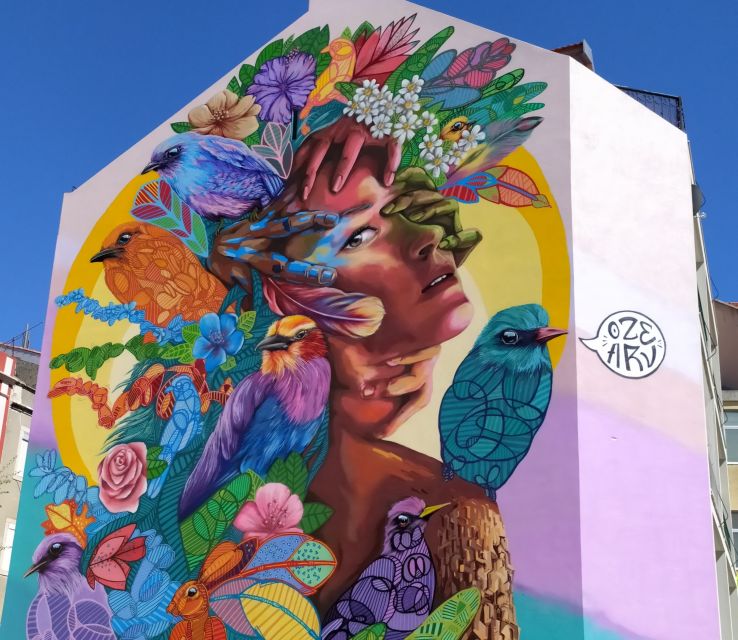
The route may include a street-art gallery created for International Women’s Day 2025. This is a particularly useful stop because it shows how street art can be organized around a shared subject rather than a single artist’s wall.
The date matters. Public art is temporary, and a project tied to a specific event may change or disappear. Treat it as a possible current feature rather than a permanent museum collection. The guide can explain the work in its setting, which is more useful than seeing an isolated photograph online.
This stop also broadens the tour beyond the most familiar male names in street art. You can ask about the artists, the project, and how public walls are assigned or organized. As always, the exact presentation may change with time, but the idea gives the route added social and cultural range.
What three hours feels like on this walk
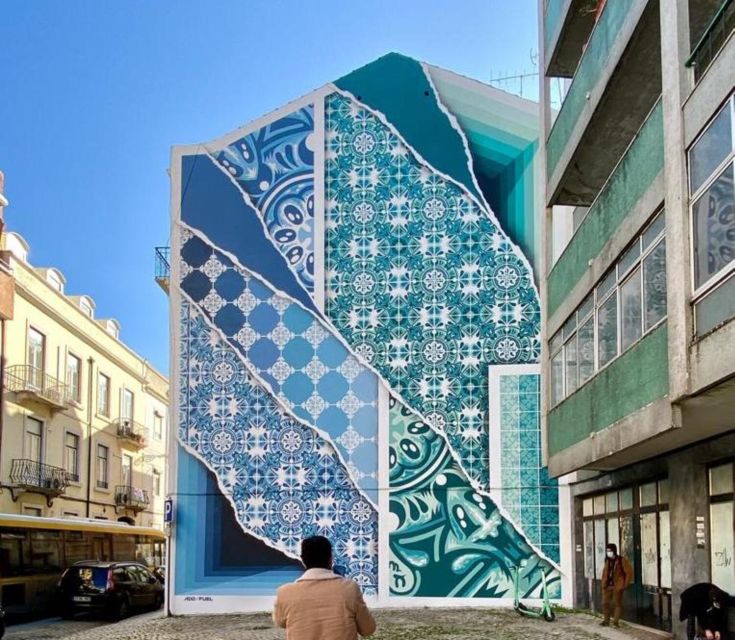
Three hours is enough time to cover several neighborhoods without rushing from wall to wall. You have time to stop, look closely, ask questions, and hear stories about artists and techniques. Several participants found that the time passed quickly because the guide kept adding background about the work and the people behind it.
Still, three hours on Lisbon’s hills is not a light stroll. One person felt that two hours would have been enough. I can understand that view if you want a quick introduction or if your group includes people who tire easily. The length works best for someone who wants street art to be a main activity for part of the day.
Do not schedule a major timed attraction immediately afterward. The walk may finish on time, but hills, stops, and photos can make the outing feel fuller than the clock suggests. Keep the rest of the afternoon flexible if you want to continue exploring Graça or Alfama.
The walk is in English. Its private or small-group format lets you ask about a particular artist, a technique, or a wall you have noticed elsewhere in Lisbon. That personal exchange is more valuable here than a long speech delivered to a crowd.
The guide’s stories are the main value
At $40 per person, this is not the cheapest way to look at walls in Lisbon. You can see public art without paying anything. The fee makes sense if you want someone to lead you to less obvious places and explain what you are seeing.
The strongest value comes from the guide’s direct connection with the scene. Igor is repeatedly described as an artist with strong knowledge of Lisbon’s street art. He has been praised for explaining the stories behind pieces, the artists’ motives, the techniques, and the rules and no-go areas of the scene.
That last part is important. Street art is not simply a matter of finding a blank wall and painting it. Permission, reputation, timing, and respect for another artist’s work all matter. A guide who can explain those boundaries helps you see why one piece is celebrated while another may be treated as tagging.
You also receive an exclusive street-art souvenir. The details of the item are not specified, so do not book for a particular type of gift. Think of it as a small reminder of the walk rather than a major part of the price.
Who will enjoy it most
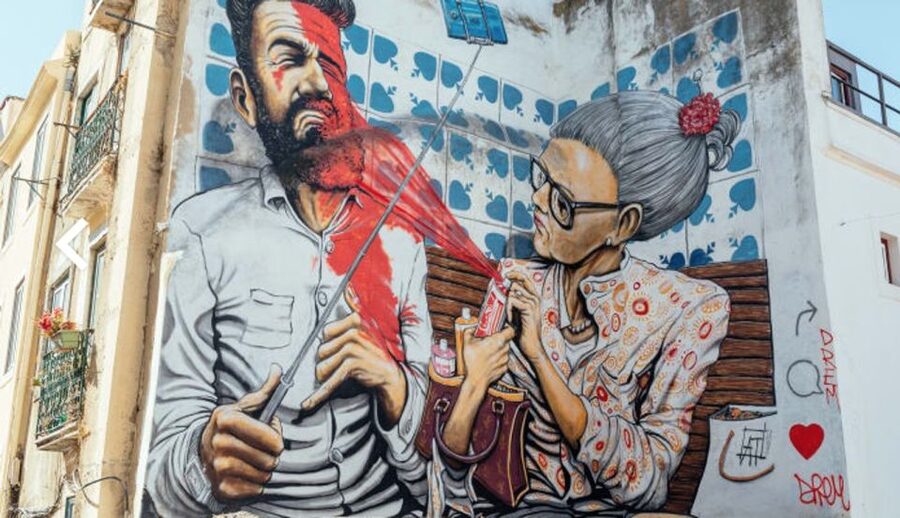
I would choose this experience if you like visual art, city neighborhoods, photography, or the social side of public space. It is also a good fit if you have already seen Lisbon’s main sights and want a different way to read the city.
It suits people who enjoy asking questions. The guide’s value increases when you want to know why a work is placed in one spot, how it was made, or what happened to older pieces. If you only want a list of Instagram backgrounds, the three-hour format may feel excessive.
Families and mixed-age groups should think about the hills and the three-hour duration. The tour is not recommended for people with mobility impairments, and large bags or luggage are not allowed. Wear comfortable clothes, use sunscreen, and bring sunglasses. Hand sanitizer is included.
The walk does not include hotel pickup or drop-off, monument admission, or art-gallery entrance fees. You meet at Largo da Graça, so you are responsible for getting to the starting point and continuing on your own after the walk.
Booking flexibility and timing
You can cancel up to 24 hours before the activity for a full refund. You can also reserve now and pay later, which helps if you are still arranging a Lisbon schedule.
Check the available starting times when booking because the listed duration is three hours, not a fixed daily departure. Arrive 10 minutes early at the Coreto da Graça. Missing the start could be awkward because the group will be moving through side streets rather than waiting at a large ticket office.
Since street art changes, an early booking does not guarantee every named artist will be on the route. The guide’s choice of fresh walls is part of the experience. Go with the expectation of learning how Lisbon’s art scene works, not collecting a rigid set of wall photographs.
Should you book the Lisbon Street Art Walk?
Book it if you want insider context, lesser-known walls, and a guide who is an artist. The $40 price is fair for a three-hour small-group walk, especially if you would otherwise spend your time hunting for pieces without knowing their stories.
Skip it if hills are a serious problem, if you prefer a short two-hour outing, or if you only want guaranteed stops at famous murals. For everyone else, this is a strong way to connect Graça, Mouraria, and Alfama with the people and ideas painted across their walls. Bring good shoes, leave your large bag behind, and pay attention to the corners you might normally pass.
FAQ
How long does the Lisbon Street Art Walk last?
The walk lasts three hours.
What is the price?
The listed price is $40 per person.
Where does the tour meet?
Meet in front of the Coreto da Graça at Largo da Graça, in front of Desgraça Restaurant in the Graça neighborhood.
Which language is the tour conducted in?
The live tour guide speaks English.
Is the tour private or shared?
Private and small-group options are available. Groups can include up to 10 people.
Which neighborhoods does the walk visit?
The experience includes Graça, Mouraria, and an overview of the historical Alfama area.
Which artists might I see?
The route may include work by Obey Giant, Vhils, Add Fuel, Mário Belem, Aka Corleone, Ozearv, Bordalo II, and Daniel Eime.
Is the walk suitable for someone with mobility impairments?
No. The walk involves Lisbon’s steep and uneven streets and is not recommended for people with mobility impairments.
What should I bring?
Bring comfortable shoes, sunglasses, sunscreen, and comfortable clothes. Large bags and luggage are not allowed.
Just added around Lisbon
- Small Group Walking Tour of Belém★ 4.9 · 80 reviews
- Lisbon Through the Eyes of a Local – Food and Walking Tour★ 4.9 · 141 reviews
- Lisbon: Private Boat Trip, Guided Walking Tour, Bike & Tram★ 4.8 · 116 reviews
- Lisbon: Jewish Walking Tour★ 4.9 · 96 reviews
- Lisbon: Food and Culture 3-Hour Walking Tour★ 4.7 · 95 reviews
- Lisbon: Helicopter Ride, Boat Trip, & Old Town Walking Tour★ 4.7 · 480 reviews
- Lisbon: Food & Wine Walking Tour Through Baixa★ 4.9 · 287 reviews
- Lisbon: City Highlights Guided Walking Tour★ 4.7 · 168 reviews
Street Art Walking Tours, compared.



Naples Spanish Quarters Walking Tour Street Art, Folklore & Sweet
Read our review →


NYC: Brooklyn Graffiti & Street Art Walking Tour in Bushwick
Read our review →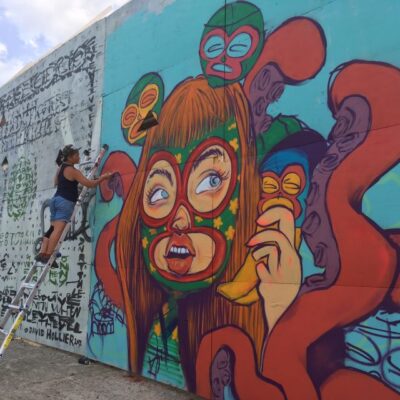

Browse the lists this tour appears in