
REVIEW · LISBON
Lisbon: City Highlights Guided Walking Tour
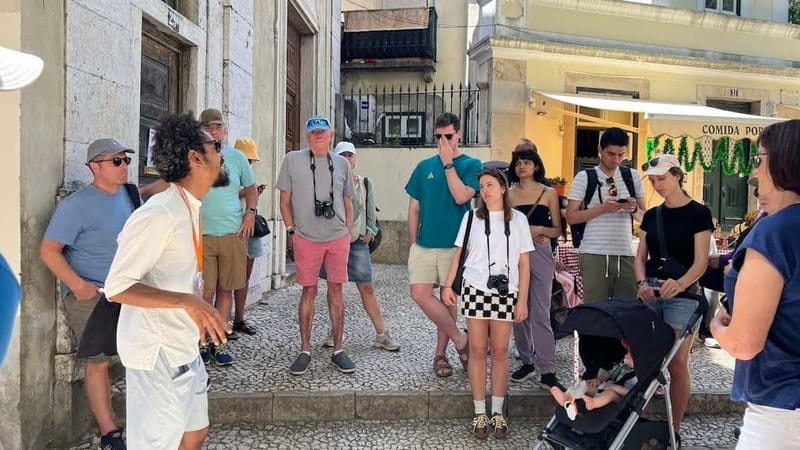
Lisbon’s story comes alive on this 2.5-hour walk from Praça do Comércio to Chiado, where a guide connects grand squares, churches, cafés, and political upheaval. You’ll see the 1755 earthquake’s mark on the city, hear about Portugal’s dictatorship and revolution, and pick up useful ideas for the rest of your stay.
I like the route’s strong first-day value and its mix of famous sights with small local details, such as the original Ginjinha shop and Casa do Alentejo. I also like the guides’ practical advice. Tiago, Claudia, Walter, Kate, Samuel, and others are praised for clear storytelling, restaurant suggestions, transport help, and good pacing.
The main caution is group size. Some people expected a small paid tour but found themselves in a larger free walking tour, with groups reported as large as 30. Confirm the format before booking if a quiet, intimate walk matters to you.
Key points to know before you book
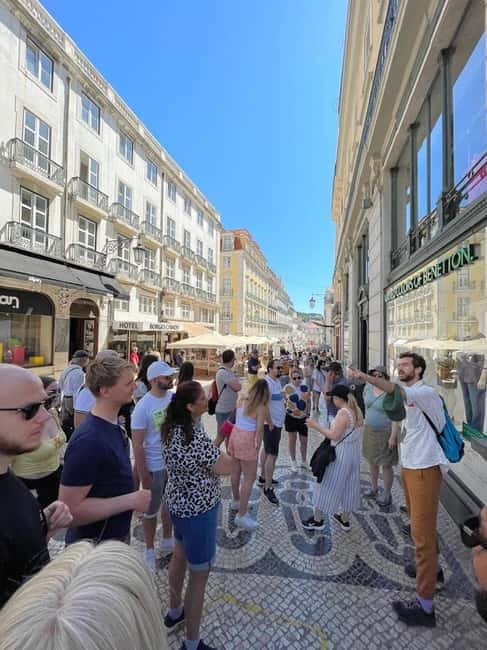
- Praça do Comércio is the starting point: Meet between the large arch and the statue in the middle of the square, looking for the orange umbrella.
- The route covers Lisbon’s central core: Expect Baixa Pombalina, Chiado, Rossio, Carmo, Camões Square, and several major monuments.
- The history goes beyond buildings: The guide discusses the 1755 earthquake, the end of the monarchy, the Jewish massacre, dictatorship, revolution, and Portuguese customs.
- The walk is generally manageable: You’ll encounter a few uphill sections, but the pace is described as comfortable and the route is not highly strenuous.
- Local advice is part of the value: Guides often suggest places to eat, ways to get around, free viewpoints, the oldest bookstore, galleries, and Portuguese foods to try.
- Check the group arrangement: The paid booking costs $17 per person, but some departures may operate like a tip-based free walk.
Starting beneath Lisbon’s great arch
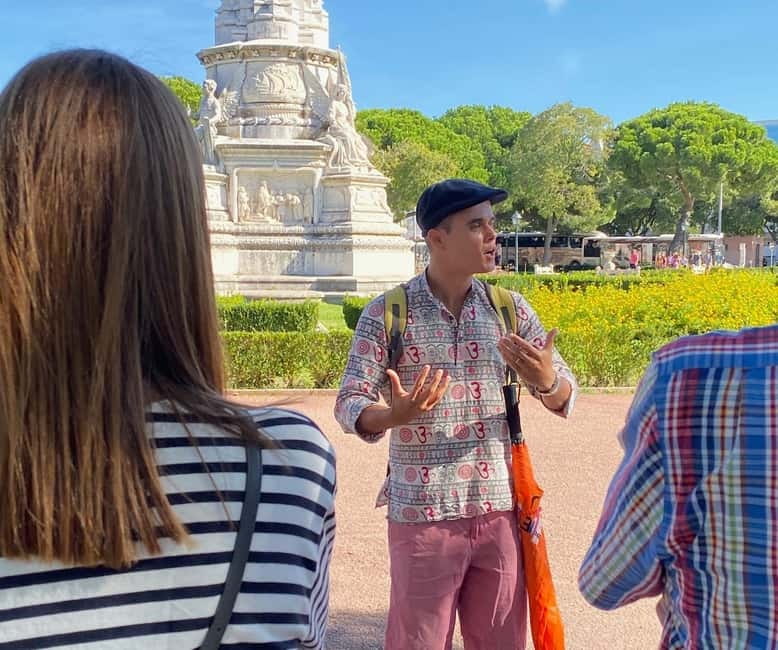
Praça do Comércio gives this tour a fine opening. The broad waterfront square is framed by yellow buildings and dominated by the statue of King José I. The meeting point is easy to describe but easy to miss in a crowded square: stand between the Arco da Rua Augusta and the statue, then look for the guide carrying an orange umbrella.
That meeting detail matters. One person missed the walk after going to the wrong location, although the company tried to help with directions. I’d arrive a little early and keep the meeting instructions open on your phone.
From the square, the tour moves into Baixa, the orderly central district rebuilt after the earthquake of 1755. Lisbon had to recover from an earthquake, tsunami, and fires that destroyed much of the lower city. The rebuilt streets were planned in a grid, with buildings designed to offer better protection from future earthquakes.
This is a useful place to hear the basic story of modern Lisbon. Instead of treating the disaster as a distant date, the guide can show you how it changed the city’s streets, buildings, politics, and public life. The square also helps you understand Lisbon’s connection to the Tagus River and its long role as Portugal’s main gateway.
More City Highlights Walks in Lisbon:
- Berlin City walk Government District and Places of Democracy
★ 4.7 · 8,467 reviews - Historic Charleston Guided Sightseeing Walking Tour
★ 5.0 · 6,216 reviews - Quebec City Walking Tour
★ 5.0 · 4,716 reviews
Baixa Pombalina and the city rebuilt after 1755
Baixa Pombalina is the most structured part of central Lisbon. Its straight streets and regular façades contrast with the crooked lanes found in older districts. As you walk along Augusta Street, the guide points out how the rebuilt center was designed after the earthquake.
Augusta Street leads toward the famous arch, one of the city’s best-known architectural markers. The arch frames Praça do Comércio and creates a strong visual link between the waterfront and the heart of Baixa. You may not go up for a view on this walking tour, but the guide’s explanation gives the monument more meaning than a quick photograph would.
The route also passes Lisbon City Hall. This is a good stop for understanding the civic side of the city, especially as the discussion moves through the end of the monarchy and the political changes that shaped modern Portugal.
You should expect to pause on public streets rather than enter every building. That is both a strength and a limit. You see a broad range of places in a short time, but this is an orientation walk, not a series of long indoor visits.
Rossio Square, the station, and Lisbon’s public life
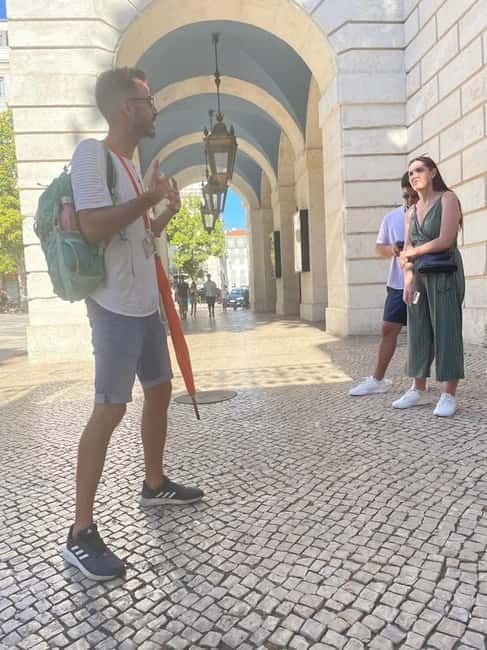
Rossio Square is one of the city’s main gathering points. Its patterned pavement, central monument, and surrounding buildings make it a natural place to discuss Lisbon’s public life. The guide may also point out Rossio Train Station, whose ornate façade gives the square one of its most memorable buildings.
The station is more than a transport stop. It reflects the grand style used for important public buildings in the nineteenth century and remains a useful reference point if you plan to take a train during your stay. The tour helps you connect the city’s sightseeing map with its practical transport network.
Nearby, you’ll visit São Domingos Church, sometimes described as one of the world’s most unusual churches. Its interior carries visible scars from fire and earthquake damage, with darkened walls and a solemn atmosphere. This is one of the route’s most effective stops because it does not look polished or freshly restored. The damage tells part of Lisbon’s story in a direct way.
Guides such as Walter have used the church to tell particularly memorable stories. The stop rewards a few quiet minutes of looking around, even if the group is large. Stay near the guide, since a church visit can make it harder to hear in a busy tour.
Difficult chapters in Lisbon’s story
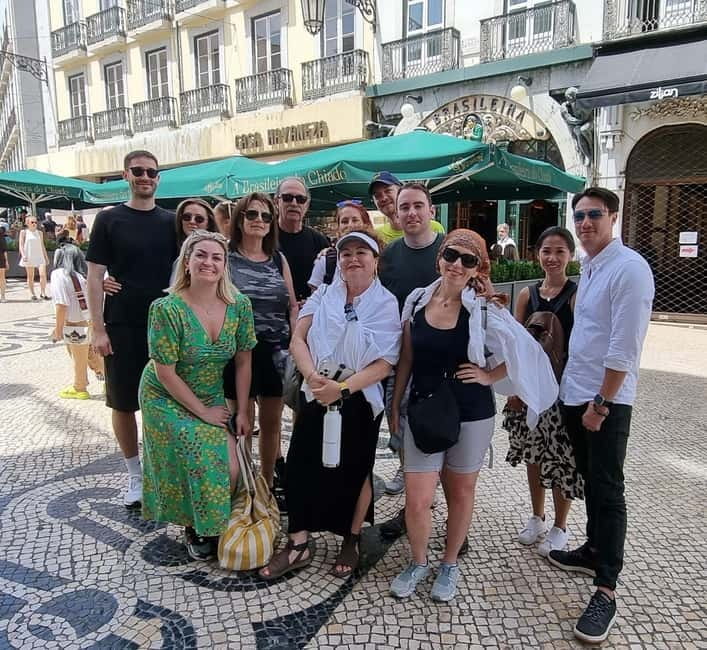
This walk does not limit itself to kings, architecture, and pretty squares. You’ll hear about the Jewish massacre memorial and some of the darker chapters in Portugal’s past. That material gives needed balance to the sightseeing.
The discussion also covers Portugal’s longest dictatorship and the revolution that changed the country. Those subjects help explain the modern city you see today, including its political culture and changing public spaces. The guides are praised for presenting serious subjects with humor and clear explanations rather than turning the walk into a lecture.
The quality of the storytelling matters here. Tiago is often described as funny and engaging, while James is praised for combining sad, amusing, and surprising anecdotes with key political facts. Walter, Claudia, Samuel, Jose, Beatriz, and Kate are also singled out for making the material easy to follow.
You won’t receive an academic history course in 150 minutes. Instead, you get a useful framework. Afterward, dates, monuments, and neighborhoods have a place in the larger story, which makes independent sightseeing more rewarding.
More Guided Tours in Lisbon:
- Best of Lisbon Small-Group Guided Walking Tour
★ 5.0 · 4,869 reviews - Lisbon: Award-Winning Guided Walking Food Tour with Local Drinks
★ 5.0 · 374 reviews - Lisbon: Private Boat Trip, Guided Walking Tour, Bike & Tram
★ 4.8 · 116 reviews - Lisbon by Night: Guided Walking Tour – The Unholy Secrets
★ 4.8 · 93 reviews
Carmo, the elevator, and the upper edge of Baixa
The Santa Justa Elevator is another major stop. Its tall iron structure links the lower Baixa area with the higher streets around Carmo. It is one of Lisbon’s most recognizable sights and a good example of how the city’s steep terrain shaped transport and daily life.
The elevator can draw a crowd, and a walking tour does not guarantee a ride. That is worth knowing if using the elevator is a priority. You’ll still learn why it matters and see how it fits into the city’s network of slopes, stairways, and elevated neighborhoods.
The route continues toward the Carmo area, including Carmo Square and the Carmo Monastery. The monastery’s open roof and ruined arches recall the destruction caused by the 1755 earthquake. It is one of Lisbon’s most powerful visual reminders of the disaster.
Depending on the exact stop pattern and pace, you may see the area from outside rather than spend a long time inside the museum. The advantage is that the tour keeps moving through several districts. The tradeoff is less time for detailed exploration at individual attractions.
There are a few uphill stretches around this part of the walk. One person described the route as easy overall with only a handful of climbs. Still, good shoes are sensible, especially on Lisbon’s stone pavements. Rain and bright sun can both affect your comfort, so check the forecast.
Chiado, cafés, poets, and Portuguese habits
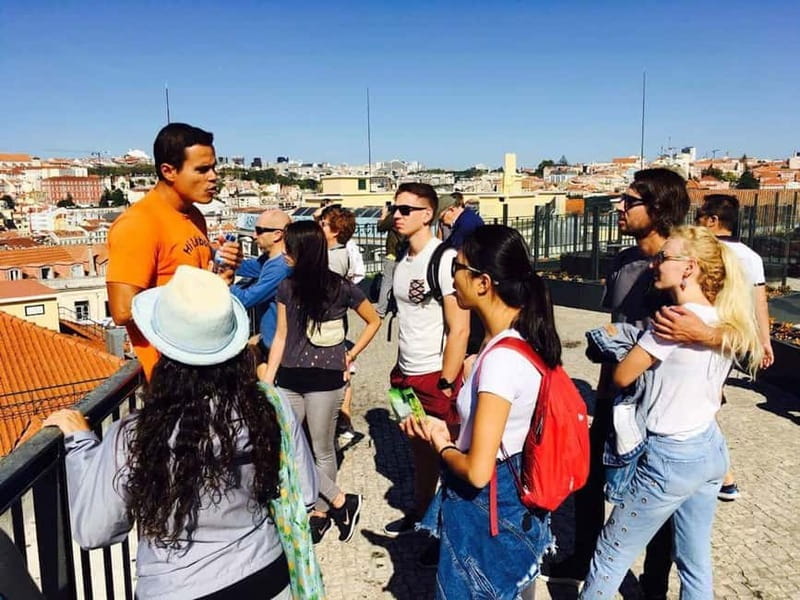
Chiado brings a different mood. This district has long been linked with writers, artists, poets, and politicians. Its shops, cafés, theaters, and elegant streets make it one of the city’s most cosmopolitan areas.
A Brasileira Café is among the well-known stops. The café is connected with literary Lisbon and is a natural place to discuss the city’s café culture. The tour may not include a sit-down coffee, so treat it as a place to notice and return to later if you want more time.
Camões Square marks the transition between Chiado and the routes leading toward Bairro Alto. The statue of Luís de Camões gives the square a strong literary connection, while the surrounding streets are useful for understanding how central Lisbon links its shopping, nightlife, and cultural districts.
This is also where practical recommendations can be especially helpful. Guides have suggested restaurants, food shops, galleries, free ways to reach good views, and places such as the world’s oldest bookstore. Those tips can save you from spending your first evening in a random restaurant near the main square.
The best guides adjust these suggestions to the group. Jose is praised for a lunch recommendation, while Claudia has helped people with gallery ideas. Walter has introduced participants to Portuguese treats along the route, including ginjinha and pastéis de nata. These extras are not guaranteed, but the local advice is a meaningful part of the experience.
Ginjinha, Casa do Alentejo, and smaller discoveries
The original Ginjinha shop is included among the route’s notable stops. Ginjinha is Portugal’s sour-cherry liqueur, usually served in a small glass. A tasting is not included in the price, so budget separately if you want to try it.
That small detail reflects the tour’s general approach. You see the place, learn why it matters, and receive suggestions for experiencing it independently. It is not a food tour, and you should not book it expecting a series of included tastings.
Casa do Alentejo is another appealing stop. The building offers a connection to the Alentejo region and adds variety to a route otherwise focused on Lisbon’s central streets. Details about the exact visit can vary, so you may view it from outside or hear about it as you pass.
The tour’s lesser-known stops help prevent the walk from becoming a simple checklist of the Santa Justa Elevator, Rossio, and Praça do Comércio. You still see the headline sights, but the smaller details give you more ideas for the rest of your visit.
Guide quality and the importance of group size
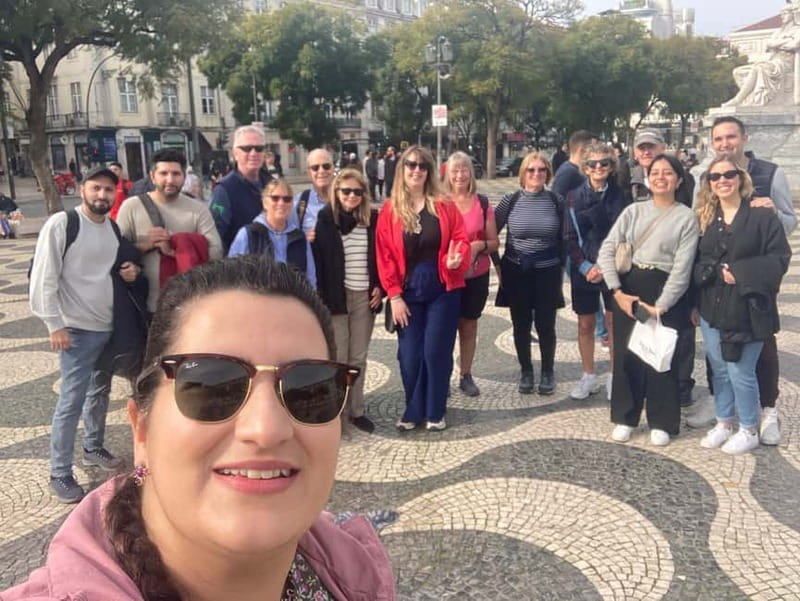
The strongest feature here is the guiding. The English-language guides are consistently praised for clear speech, humor, warmth, and a strong grasp of Lisbon’s past and present. Names that receive particular praise include Tiago, Walter, Kate, Claudia, Jose, Samuel, Beatriz, James, and Sophie.
A good guide makes a large amount of information manageable. Rather than listing dates, the better guides use stories. São Domingos Church becomes memorable because of the tale attached to it. The revolution becomes easier to understand through personal and political details. Food and transport advice gives the history a practical use.
Audio equipment is not provided. One person found it difficult to hear the guide clearly and suggested earphones or an audio system. This matters most in a noisy square or if you are toward the back of the group.
The advertised price is $17 per person, which is reasonable for 150 minutes with a live guide and a broad central route. Yet you should pay close attention to how the departure is presented. Some bookings were expected to be small, while the actual walk operated as a free tour supported by tips. Group sizes varied, with one report of around 30 people and another of about 15.
That does not erase the value of a good guide, but it changes the experience. A larger group may make hearing harder and can slow movement through narrow streets. If you want a private or small-group feel, ask for current group-size information before paying.
Who will get the most from this Lisbon walk?
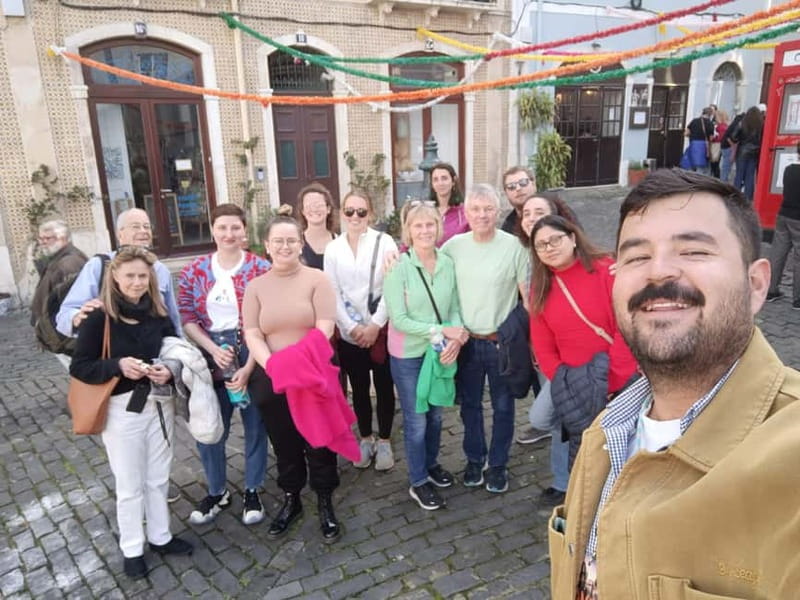
I’d choose this tour for a first visit, especially if you want a clear map of central Lisbon before exploring alone. The route introduces the main districts and gives you the political and cultural background that guidebooks often scatter across many pages.
It also suits people who prefer history told through stories rather than a formal museum lecture. The guides’ humor and local suggestions make the 2.5 hours pass quickly, while the pace leaves room to look around.
Families with older children may appreciate the variety of stops, although the amount of historical discussion depends on the child’s interest. It can also work well for solo visitors who want an easy introduction to the city and a list of places to try afterward.
I would be more cautious if you have limited mobility, dislike uneven streets, or need guaranteed access to every interior. Lisbon’s central streets include slopes and stone paving, and the tour focuses on moving between sights rather than sitting indoors.
Bring comfortable shoes, water, and a way to hear the guide clearly. Arrive early at the arch and statue, stay near the orange umbrella, and keep some time afterward for a meal, café stop, church visit, or viewpoint recommended during the walk.
Should you book the Praça do Comércio walking tour?
Book it if you want a useful first look at central Lisbon, strong storytelling, and practical ideas for food, transport, and sightseeing. At $17, the price is fair when the group stays manageable and the guide delivers the engaging style associated with Tiago, Walter, Kate, Claudia, Jose, Samuel, and the other praised guides.
Think twice if you are specifically paying for a small group. The conflicting group expectations are the one serious concern. Ask before booking if the departure is a fixed paid group or a tip-based free walk, and confirm how gratuities work.
For most first-time visitors, the route offers a solid introduction to Baixa and Chiado. It gives you enough background to appreciate the monuments, enough local advice to improve the rest of your stay, and enough flexibility to return later to the places that catch your eye.
FAQ
How long does the Lisbon City Highlights Guided Walking Tour last?
The tour lasts approximately 150 minutes, or 2.5 hours.
Where does the tour meet?
Meet at Praça do Comércio, between the large arch and the statue in the middle of the square. Look for the guide with an orange umbrella.
What language is the tour in?
The tour is conducted in English by a live guide.
How much does the tour cost?
The listed price is $17 per person.
What sights are included on the route?
The route includes Praça do Comércio, Lisbon City Hall, Augusta Street and its arch, the Santa Justa Elevator, Rossio Square and Train Station, São Domingos Church, the Jewish memorial, the original Ginjinha shop, Casa do Alentejo, Carmo Square and Monastery, A Brasileira Café, and Camões Square.
Is a ginjinha tasting included?
No. Ginjinha is not included in the tour price.
Are gratuities included?
No. Gratuities are not included.
Can I cancel the booking?
You can cancel up to 24 hours in advance for a full refund. Reserve now and pay later options are also available.
Just added around Lisbon
- Small Group Walking Tour of Belém★ 4.9 · 80 reviews
- Lisbon Through the Eyes of a Local – Food and Walking Tour★ 4.9 · 141 reviews
- Lisbon: Jewish Walking Tour★ 4.9 · 96 reviews
- Lisbon: Private Boat Trip, Guided Walking Tour, Bike & Tram★ 4.8 · 116 reviews
- Lisbon: Food and Culture 3-Hour Walking Tour★ 4.7 · 95 reviews
- Lisbon: Street Art Walk★ 5.0 · 79 reviews
- Lisbon: Helicopter Ride, Boat Trip, & Old Town Walking Tour★ 4.7 · 480 reviews
- Lisbon: Food & Wine Walking Tour Through Baixa★ 4.9 · 287 reviews
City Highlights Walking Tours, compared.

Berlin City walk Government District and Places of Democracy
Read our review →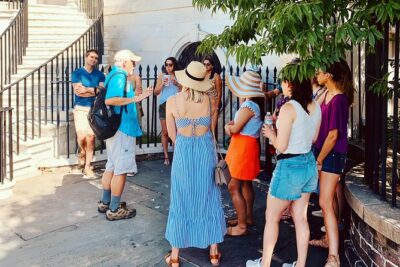
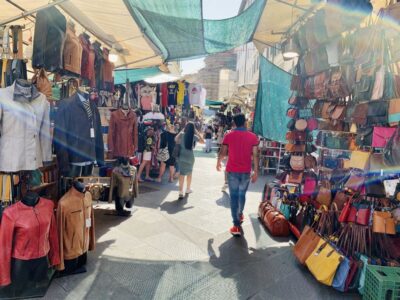
Historic Charleston Guided Sightseeing Walking Tour
Read our review →
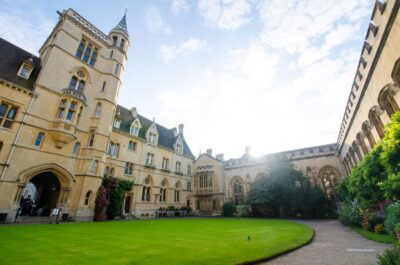
Oxford: University and City Walking Tour with Alumni Guide
Read our review →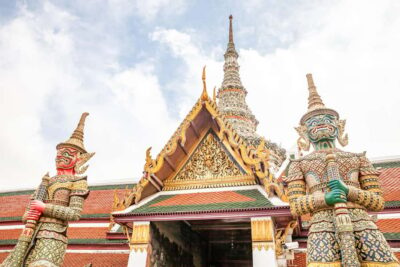
City Highlights Temple and Market Walking Tour
Read our review →
A History of Terror – Belfast City Centre Walking Tour
Read our review →Browse the lists this tour appears in