
REVIEW · LISBON
Best of Lisbon Small-Group Guided Walking Tour
Lisbon reveals itself best on foot, one tiled square, steep lane, and sweeping viewpoint at a time. This half-day walk links Rossio, Chiado, Baixa, and Alfama, giving you a useful first look at the city before you tackle it on your own.
I like the small maximum of 14 people and the mix of big sights with simple local treats. I also like the guides’ practical approach: Felipe, Maria, Jose, Joana, and others are praised for clear English, good pacing, history that sticks, and restaurant tips. The main drawback is the hills and uneven streets, plus the tour gives only brief outside views of several landmarks rather than museum visits.
Key points to know before booking
- A four-hour orientation on foot: The route covers central Lisbon from Rossio Square to the Tagus River.
- A true small-group format: The maximum is 14 people, allowing time for questions and personal attention.
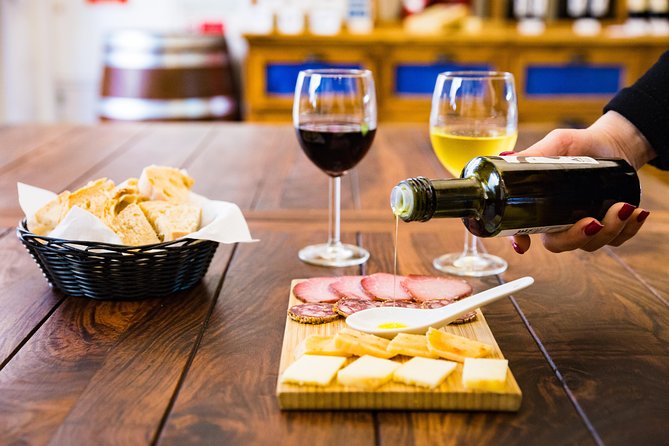
- Three edible Lisbon moments: You receive a pastel de nata, a wine tasting, and a tapa.
- History with a wide range: The walk covers the 1755 earthquake, Portuguese independence, the Carnation Revolution, Moorish Alfama, and fado.
- A moderately active route: Baixa is fairly flat, but Alfama brings narrow streets, slopes, and stone paving.
- A strong first-day choice: The tour helps you decide where to return, eat, explore, and spend more time.
Why this walk works well as your first Lisbon outing
At $23.94 per person, this is a low-cost way to get a working map of central Lisbon. You are not paying for museum admission or a long meal, but you are getting a local guide, a pastry, wine, tapas, and roughly three to four hours of explanation and orientation.
That matters in Lisbon. The city center looks compact on a map, yet the streets rise and twist quickly. A guide can explain how Rossio connects to Baixa, why Carmo is important, how Alfama differs from the rebuilt downtown, and where the best views fit into the city’s layout.
I would book it near the start of your stay. Pay attention to the guide’s suggestions, then use the rest of your visit to return to the places that caught your interest. One person praised the tour as a way to plan the rest of a short stay, and that is exactly the smart use of this experience.
The 4.9 rating from 4,869 ratings, along with a 99 percent recommendation rate, points to a reliably well-liked tour. The strongest praise centers on the guides, not just the route. Names that come up often include Felipe, Maria, Jose, Joana, Filipa, Flavia, Catarina, Carlos, Franco, Daniel, and Guillermo. You may not receive a particular guide, but the pattern is clear: the human side of the tour is a major part of its value.
More Guided Tours in Lisbon:
- Lisbon: Award-Winning Guided Walking Food Tour with Local Drinks
★ 5.0 · 374 reviews - Magical London: Harry Potter Guided Walking Tour
★ 4.7 · 22,044 reviews - History and Hauntings of Salem Guided Walking Tour
★ 5.0 · 14,564 reviews
Rossio Square and the start of Lisbon’s story
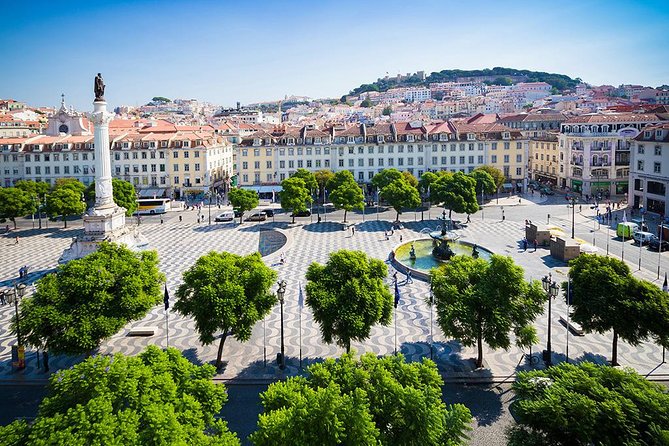
Meet at Praça Dom Pedro IV, usually called Rossio Square, in central Lisbon. This is a practical starting point because it puts you at the heart of Baixa, close to public transportation and surrounded by major sights.
The square’s patterned Portuguese pavement is one of the first details to notice. The stonework is arranged to suggest ocean waves, a fitting design for a city shaped by the Atlantic. Your guide uses this first stop to introduce Lisbon’s look, layout, and connection to the sea.
The stop is short, about 10 minutes, so expect an explanation rather than a long break. That is useful early in the morning, when you want context but also need to keep moving.
Nearby, you visit São Domingos Church for about five minutes. The church sits beside São Domingos Square and adds a quieter, more solemn note after the open space of Rossio. The route then passes a grand central avenue associated with Lisbon’s fashionable side before reaching Restauradores Square.
Restauradores and the Rossio railway station
Restauradores Square is marked by a tall obelisk honoring Portugal’s restoration of independence from Spain in 1640. Your guide explains the 60 years of Spanish rule and the battles connected with the Portuguese Restoration War.
This is a good example of the tour’s approach. You see a monument, but you also get the political story behind it. The stop takes about five minutes, so do not expect a detailed military lecture. Instead, you get enough background to understand why the square matters.
The nearby Rossio railway station is one of Lisbon’s most memorable old buildings. Its facade borrows from Manueline architecture, the ornate style linked with Portugal’s age of exploration. You may also hear a train heading toward the tunnel to Sintra, an excellent reminder that this is still a working transport center, not a frozen historic district.
The station stop lasts around five minutes. You will admire the exterior rather than take a train or tour the interior. If you plan to visit Sintra later, this is a useful moment to ask your guide about the route and practical planning.
Carmo Square and the Carnation Revolution
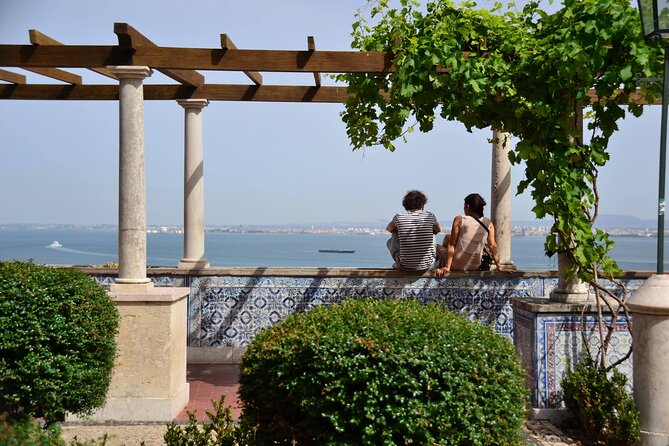
Largo do Carmo brings the tour into one of Lisbon’s most important modern history locations. The square is linked both to the old Carmelite convent and to the Carnation Revolution of 1974.
Here, Portugal’s 48-year dictatorship ended in a largely peaceful military coup. Your guide explains how the regime fell and why the revolution remains such an important part of Portugal’s identity. This gives the walk a modern political dimension, rather than limiting it to royal monuments and old churches.
The square is small, which makes it easy to pause and listen. It also has a different mood from Rossio and Restauradores. I like this change of pace because it shows how Lisbon’s history is layered: medieval religious life, royal power, dictatorship, and democracy can all appear within a short walk.
A few more walking tours around Lisbon worth a look
- Lisbon: History, Stories and Lifestyle Walking Tour
★ 4.8 · 10,902 reviews - Lisbon: Food and Wine Small Group Walking Tour
★ 4.9 · 4,082 reviews - Best of Lisbon Walking Tour: Rossio, Chiado & Alfama
★ 4.9 · 2,700 reviews - Age of Discoveries Walking Tour in Belém
★ 5.0 · 1,513 reviews
Santa Justa and the climb toward Chiado

The Santa Justa Lift is one of the city center’s most recognizable structures. It links the lower streets with the higher levels near Carmo and Chiado, and its iron design makes it look almost like a piece of industrial sculpture.
The tour allows about 10 minutes here. You should expect an explanation and a chance to admire the structure and views, not a guaranteed ride to the top or a full visit inside. Admission to monuments is not included, and the tour does not promise entry.
The walk then continues into Chiado, an elegant district associated with 19th-century writers, artists, shopkeepers, and wealthy residents. The area is known for boutiques, theaters, bookstores, and old cafes. Look up at the facades as you walk. This is one part of Lisbon where the details are easy to miss if you hurry toward the next major square.
The route’s physical demands begin to show here. Some streets are easier than others, and Lisbon’s stone pavements can be tiring in thin or slippery shoes. Comfortable footwear is not a minor suggestion. It will make the difference between enjoying the stories and thinking about your feet.
Rua Augusta and the rebuilt Baixa

Rua Augusta leads you through the main commercial spine of central Lisbon. It connects the upper parts of the downtown area with Commerce Square and the river.
The route spends about 15 minutes in Baixa, the district rebuilt after the catastrophic 1755 earthquake. The rebuilding followed strict urban rules, with straighter streets, ordered blocks, and construction methods meant to reduce earthquake damage.
This is one of the most valuable history lessons on the walk because it explains why central Lisbon feels different from Alfama. Baixa was planned and rebuilt. Alfama survived with a maze of older lanes. Once you understand that contrast, the city becomes easier to read.
Baixa is mostly flat, and several people praised the reasonable pace through this section. Some guides also make use of public elevators and escalators when available, helping reduce unnecessary strain. Still, this remains a walking tour, not a sightseeing ride. Plan on being active for several hours.
Chão do Loureiro and the city from above
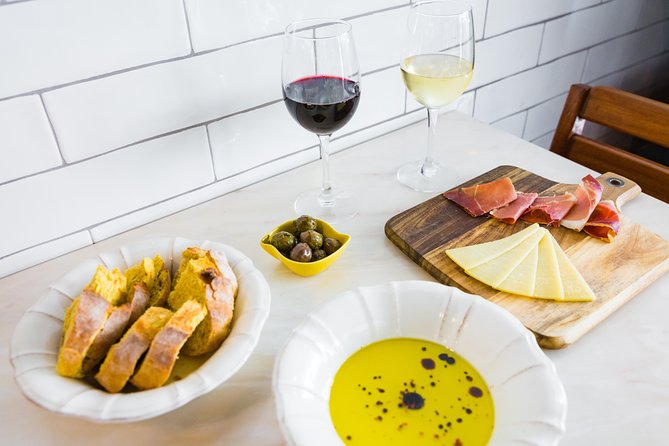
Miradouro Chão do Loureiro provides a short panoramic stop. The viewpoint lets you pause, look across the city, and connect the streets you have just walked with the hills beyond them.
The stop is only about five minutes, but it has real value. Lisbon is easier to understand from above. You can see why the city feels hilly, why the river shaped its development, and why neighborhoods that seem close on a map can require effort to reach.
Do not expect a long photo session or a private viewing platform. The group keeps moving, and the stop is part of a larger route. Still, it is a welcome break before Alfama’s narrower lanes.
Alfama, fado, and the city’s oldest streets
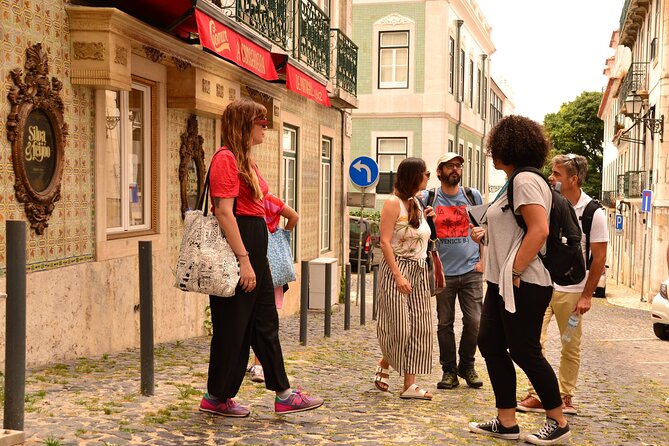
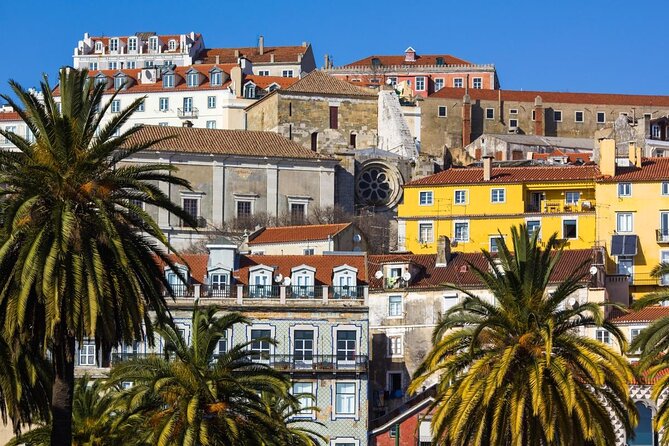
Alfama is the most atmospheric part of the walk. Its narrow streets, winding passages, and Moorish influence create a sharp contrast with the straight lines of Baixa.
The tour spends about 20 minutes here, though the actual walking time through the neighborhood makes this section feel longer. Your guide explains the district’s connection with fado, Portugal’s famously mournful music. You pass fado restaurants tucked into the lanes and hear how the music fits Alfama’s mood and history.
This is also where the route can feel most demanding. Expect slopes, uneven pavement, and tight streets. The overall pace is described as manageable, with timed breaks, but you need a moderate level of fitness. If you have trouble with hills, ask yourself if several hours of city walking will be comfortable.
The food stop adds a pleasant local touch. The tour includes a classic pastel de nata, Portugal’s small custard tart, along with a wine tasting and tapa. These are samples, not a full meal, so eat breakfast first. The food and drink also help turn the walk into more than a sequence of monuments. You get a small taste of how Lisbon’s cafe and wine culture fits into daily life.
One useful detail is the attention given to different types of participants. A solo visitor noted feeling included, and another person with vegetarian needs received accommodation at the food stop. Specific arrangements can vary, so mention dietary needs when booking or at the start, but the tour appears accustomed to making reasonable adjustments when possible.
Commerce Square and the final view of the Tagus
The route finishes at Praça do Comércio, the huge riverfront square also known as Terreiro do Paço. Before the 1755 earthquake, the Royal Ribeira Palace occupied this area. After the disaster, the square was rebuilt as part of the planned Pombaline downtown.
This final stop ties together the whole walk. You have seen old Alfama, rebuilt Baixa, commercial Rua Augusta, and the city’s connection to the river. The square once welcomed people arriving from the Atlantic, and it remains one of Lisbon’s grandest open spaces.
The tour ends here, rather than returning you to Rossio or your hotel. That is worth planning for. Commerce Square is a good place to continue toward the river, find lunch, or take public transportation, but you will need to arrange your own way back.
The end point also gives you freedom. You can stay for photos, walk along the waterfront, or return to a neighborhood that interested you. The guide’s final recommendations may be especially useful here, since several guides are praised for restaurant ideas and suggestions for things to do later in the visit.
What the small group changes
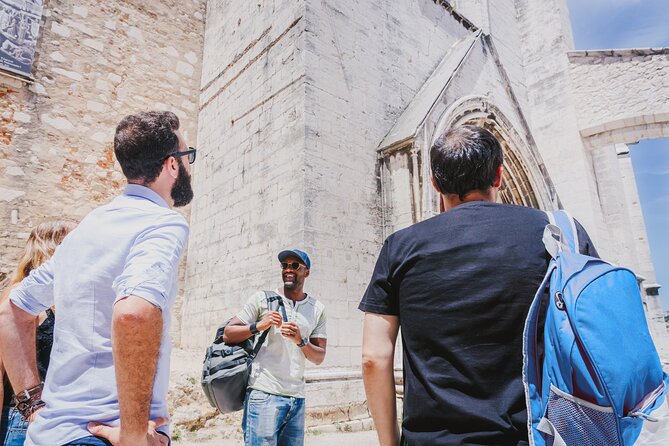
A maximum of 14 people is small enough to make questions practical. You are not likely to be lost in a large crowd, and a guide can keep an eye on the group as it moves through narrow streets.
The best guides use that format well. Felipe is praised for patient answers and for using elevators or escalators when possible. Maria is described as funny and enthusiastic, while Jose receives repeated praise for history, humor, and care toward solo participants. Filipa, Flavia, Joana, and others are also praised for practical advice and clear storytelling.
Of course, a small group does not guarantee a perfect personal match. Much depends on your assigned guide and the group’s pace. One person wanted more walking and felt the tour focused on familiar sights. That is a fair criticism if you already know Lisbon. This experience is designed as an introduction, not as an obscure-corners tour for repeat visitors.
Practical details and who should book
The tour is offered in English and uses a mobile ticket. It starts at Praça Dom Pedro IV and ends at Praça do Comércio. Hotel pickup and drop-off are not included, and entry to museums and monuments is not included.
The walk is suitable for people with moderate physical fitness. Wear supportive shoes, bring water, and allow for changes in weather. A guide continued the route in heavy rain, but poor weather will still affect comfort and views.
Service animals are allowed, and the meeting point is near public transportation. Free cancellation is available up to 24 hours before the start time. Cancellations or changes made within 24 hours are not refunded, and the tour can be canceled if its minimum number is not reached.
I would choose this tour if you are visiting Lisbon for the first time, have only a few days, or want a clear introduction before exploring alone. It is also useful if you enjoy history explained through streets and buildings rather than through a museum lecture.
I would skip it if you already know central Lisbon well, dislike hills, or want long visits inside churches, museums, and monuments. The route covers many sights, but most stops are brief and admission is not part of the price.
Should you book the Best of Lisbon walking tour?
Book it if you want a friendly, active orientation at a modest price. You will cover a surprising amount of central Lisbon, sample a few local foods, and finish with a better sense of how the neighborhoods fit together.
The tour is at its best on your first or second day. Let the guide’s advice shape the rest of your visit, then return to Alfama, Chiado, Baixa, or Commerce Square at your own pace. Bring good shoes, arrive ready for hills, and treat the included food as a snack rather than lunch.
For first-time visitors, the value is clear. For experienced Lisbon hands, the route may feel familiar. That distinction should make your booking decision easy.
FAQ
How long does the walking tour last?
The tour lasts approximately three to four hours.
Where does the tour start and finish?
It starts at Praça Dom Pedro IV in central Lisbon and ends at Praça do Comércio.
How many people can join the tour?
The tour has a maximum of 14 participants.
Is food and drink included?
A pastel de nata, a wine tasting, and a tapa are included. Other food and drinks are not included unless specified.
Does the tour include museum or monument entry?
No. Entry to museums and monuments is not included.
What happens if I need to cancel?
You can cancel at least 24 hours before the start time for a full refund. Cancellations or changes made less than 24 hours before the start time are not refunded.
Just added around Lisbon
- Fado: Musical Walking Tour with Food & Live Show★ 5.0 · 121 reviews
- Eat & Walk Through Lisbon: A Local Food & Wine Experience★ 4.9 · 458 reviews
- Best of Lisbon Private Walking Tour★ 5.0 · 370 reviews
- Lisbon: Private Dark History Walking Tour with Drinks★ 4.8 · 387 reviews
- Lisbon: Award-Winning Guided Walking Food Tour with Local Drinks★ 5.0 · 374 reviews
- Lisbon: Best of City Private Walking Tour★ 4.9 · 601 reviews
- Lisbon: Belém Walking Tour with Jerónimos Monastery Ticket★ 4.9 · 637 reviews
- Lisbon: Kickstart Street Art Walking Tour★ 4.9 · 717 reviews
Walking Tours, compared.

Magical London: Harry Potter Guided Walking Tour
Read our review →
Reykjavik Food Walk – Local Foodie Adventure in Iceland
Read our review →
History and Hauntings of Salem Guided Walking Tour
Read our review →
New Orleans Premier Ghost, Voodoo and Vampire Walking Tour
Read our review →
Amsterdam Anne Frank: Small-Group Walking Tour & Local Guide
Read our review →

Edinburgh Castle: Guided Walking Tour with Entry Ticket
Read our review →
Anne Frank’s Story – Guided Walking Tour through Amsterdam
Read our review →Browse the lists this tour appears in