
REVIEW · LISBON
Lisbon: Jewish Walking Tour
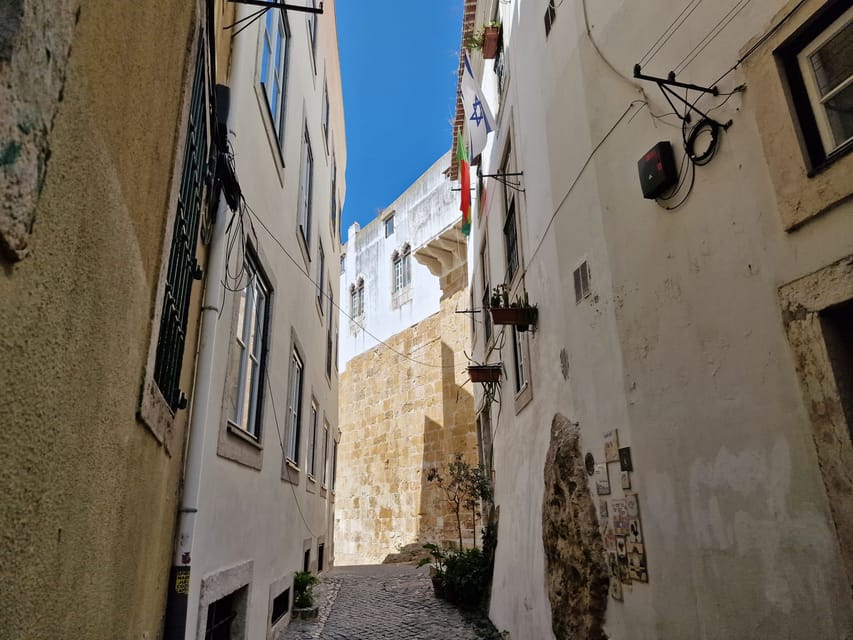
Lisbon’s Jewish past is easy to miss. Much of the physical evidence disappeared, yet this three-hour walk brings the story back through old streets, archaeological traces, vanished neighborhoods, and places tied to Portuguese Judaism. Guide Luciano Waldman, an archaeologist and active supporter of Jewish life in Lisbon, connects the city’s past with its present.
I like the tour’s strong sense of place. It begins above Alfama at Portas do Sol, uses Lisbon’s streets as the classroom, and ends at Largo de São Domingos, a site of great importance to the city’s Jewish story. I also like that your fee supports a local cultural institute and work connected with preserving Jewish memory.
The main drawback is simple: you will not see a long line of intact synagogues or grand Jewish monuments. Many were destroyed or changed beyond recognition. The tour depends on explanation, imagination, and careful attention, and a slight accent may make English harder to follow for some people.
Key points to know before booking
- Start at Portas do Sol: Meet by the statue of Saint Vicente, with wide views over the Tagus and Alfama.
- Follow a scholar through the Old Town: Luciano Waldman is an archaeologist who explains both Jewish and general Lisbon history.
- See what has vanished: Former Jewish quarters, archaeological remains, and altered streets reveal a past that is often no longer marked.
- Connect history with the present: The route includes the Jewish Cultural Center and the effort to renew Jewish life in Lisbon.
- Expect a serious walking tour: Wear comfortable shoes, carry water, and prepare for heavy tourist traffic and uneven city streets.
- Best for curious history-minded visitors: The tour suits people who value context more than a long list of surviving buildings.
Starting above Alfama at Portas do Sol
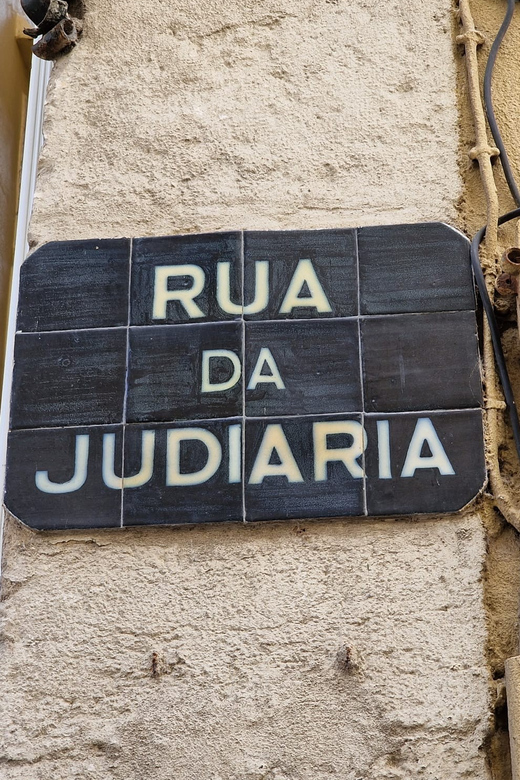
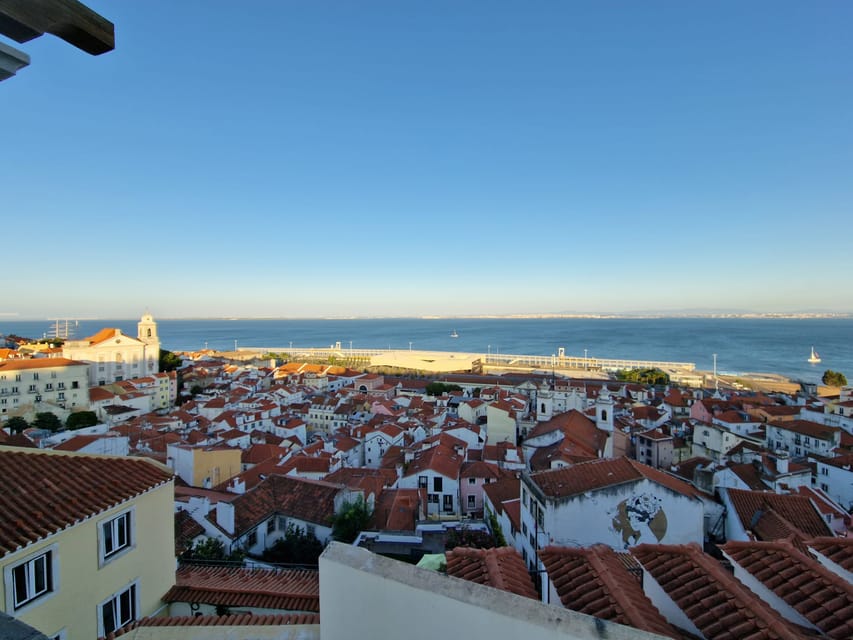
The meeting point is Largo Portas do Sol, one of Lisbon’s most rewarding viewpoints. Look for the statue of Saint Vicente, where you meet the guide. Give yourself enough time to arrive, since this part of Lisbon can be crowded and confusing, especially during the busiest sightseeing hours.
The opening view helps set the tone. You look across the Tagus and over Alfama, Lisbon’s old hillside district, before turning toward the less visible story beneath the modern city. This is not a tour that treats Jewish history as a separate footnote. The guide places it within Lisbon’s wider political, religious, and urban past.
Luciano is a native speaker of Portuguese and Hebrew. He speaks English on the standard group tour and may have a slight accent. That is worth knowing in advance. The content is presented with care, but people with hearing difficulties may find the tour hard to follow in crowded areas, where street noise and passing groups compete with the guide’s voice.
More Jewish Heritage Walks in Lisbon:
- Amsterdam Anne Frank: Small-Group Walking Tour & Local Guide
★ 4.8 · 12,789 reviews - Anne Frank’s Story – Guided Walking Tour through Amsterdam
★ 5.0 · 11,619 reviews - Prague: Jewish Quarter Walking Tour with Admission Tickets
★ 4.7 · 3,729 reviews
Why the missing buildings matter
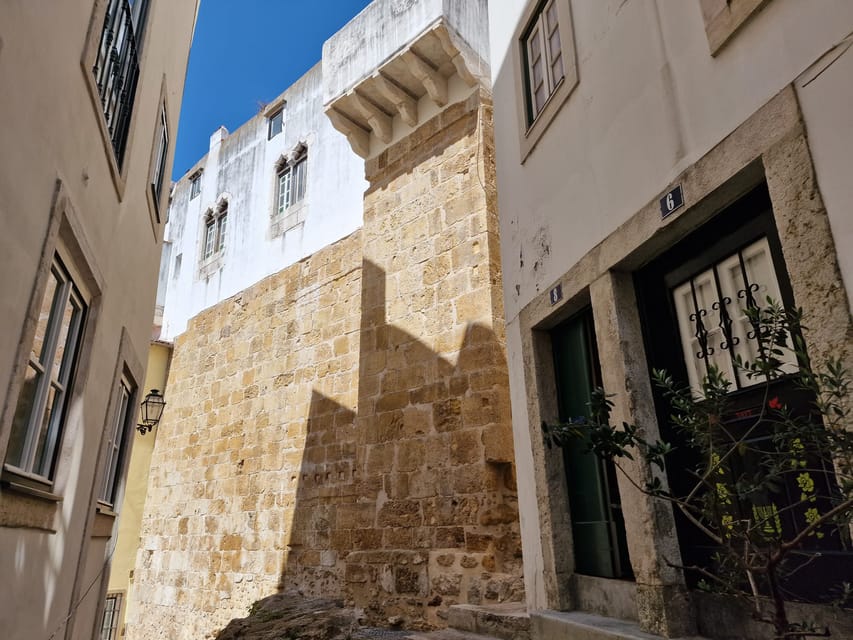
One of the tour’s most useful lessons is that absence can be historical evidence. Lisbon’s Jewish monuments were largely destroyed, converted, or absorbed into the surrounding city. You will not spend three hours moving from one perfectly preserved site to the next.
Instead, Luciano explains where Jewish neighborhoods once stood and how the city changed around them. A street that looks ordinary can carry a much larger story. An archaeological excavation can offer more than a pretty view because it helps show how earlier layers of Lisbon were built over, damaged, or forgotten.
This approach asks more from you than a standard monument tour. You need to listen and picture what is no longer visible. In return, you gain a better sense of how persecution, forced conversion, urban change, and the passage of time can erase a community from the public view without erasing its importance.
The guide’s archaeological training is especially useful here. He can point out details that are easy to pass without context, then explain how those clues fit into the Jewish story of Lisbon and Portugal. His own connection to Jewish life gives the subject a present-day dimension, not just a historical one.
Walking through Lisbon’s former Jewish quarters
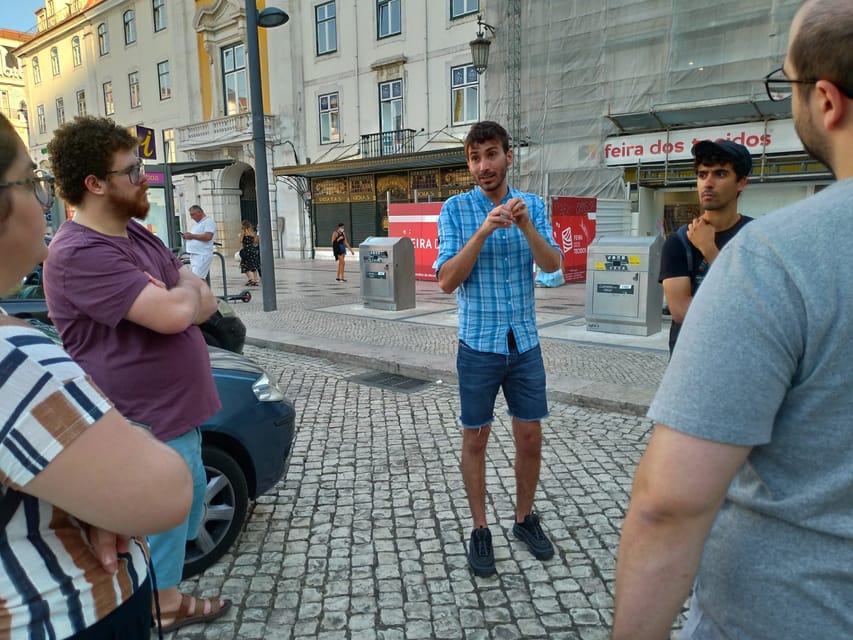
The route passes through areas where Jewish quarters once existed. These neighborhoods were not isolated from the rest of Lisbon’s life. They were part of the city’s commercial, social, and religious fabric, and the tour explains that wider role.
You will hear about Jewish life in Portugal over a long span of time, with the discussion reaching back roughly 2,500 years. The exact emphasis can shift with the group and its questions, but the walk covers more than one period or one famous event. It places Portugal in a broader story involving Spain, North Africa, and the movement of Jewish communities across the western Mediterranean.
That wider frame is important. Lisbon’s Jewish past cannot be understood only by looking at a single street or neighborhood. Political borders changed, religious pressure grew, and families moved between regions. The tour uses Lisbon as its base while showing how events beyond Portugal shaped life in the city.
I would expect the walk to be most rewarding if you pause often, look up, and compare the present street with Luciano’s explanation of the past. You are not simply collecting photographs. You are learning how to read an old city when its original signs have been removed.
Archaeological excavations and clues beneath the city
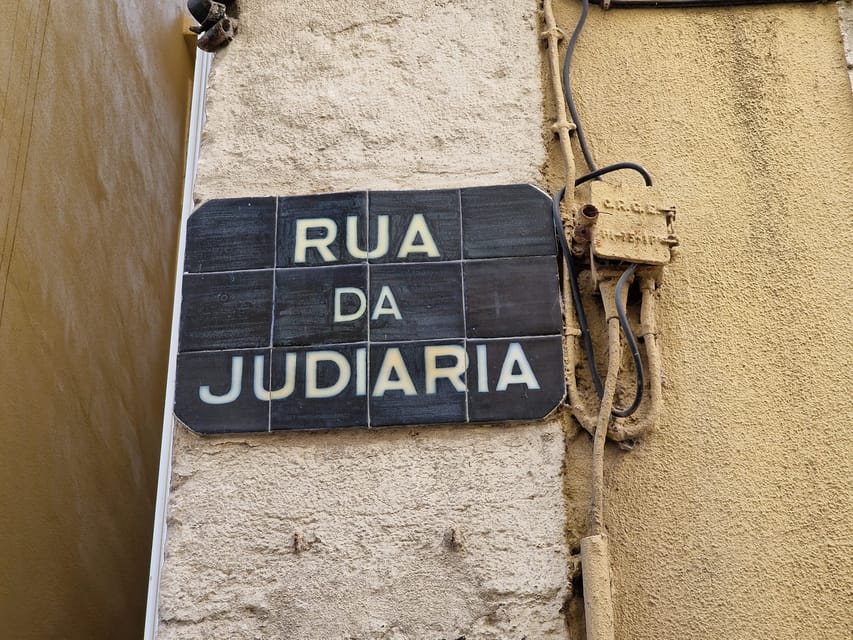
The archaeological stops give the tour a physical anchor. They cannot replace intact buildings, but they help you connect the spoken story to material remains. Luciano’s work as an archaeologist adds useful detail about what can be learned from excavation and urban layers.
This is also where the tour differs from a purely commemorative walk. You are not only hearing about names and dates. You are considering how evidence is found, interpreted, and preserved. For anyone interested in archaeology, this is a major reason to choose this experience over a general Lisbon walking tour.
Do not expect a large museum visit or an indoor collection of objects. The activity is a walking tour, and food and drinks are not included. The archaeological material is part of the route rather than a separate exhibition with long viewing time.
A few more walking tours around Lisbon worth a look
- Lisbon: History, Stories and Lifestyle Walking Tour
★ 4.8 · 10,902 reviews - Best of Lisbon Small-Group Guided Walking Tour
★ 5.0 · 4,869 reviews - Lisbon: Food and Wine Small Group Walking Tour
★ 4.9 · 4,082 reviews - Best of Lisbon Walking Tour: Rossio, Chiado & Alfama
★ 4.9 · 2,700 reviews
The Jewish Cultural Center and Jewish Lisbon today
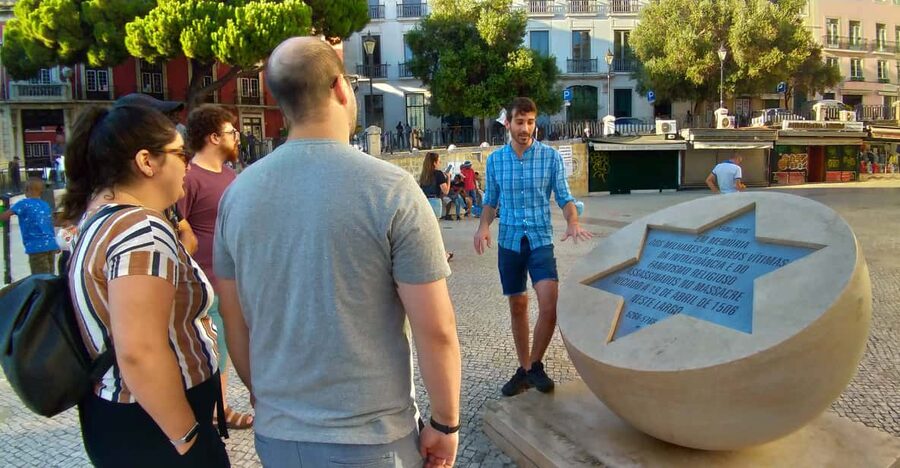
The Jewish Cultural Center adds a modern point to the route. The tour provider, Jewish Cultural Center Rua da Judiaria, is connected with efforts to preserve Jewish memory and support a renewed Jewish presence in Lisbon.
That gives your ticket a practical purpose beyond sightseeing. The tour is designed to support local cultural work, so you are helping an institute that wants Jewish history to remain visible and relevant in the city. Several guests found this connection to present-day community work especially meaningful, particularly because the route deals so openly with loss and disappearance.
The contrast is powerful. You may spend part of the walk learning why so little remains, then hear about attempts to build Jewish life again. The story does not end with expulsion, destruction, or silence. It includes preservation, education, and the work of making a community visible once more.
This section will appeal to you if you want history linked to current cultural questions. It may feel less satisfying if you are looking only for old buildings, religious interiors, or a conventional list of monuments.
Ending at Largo de São Domingos
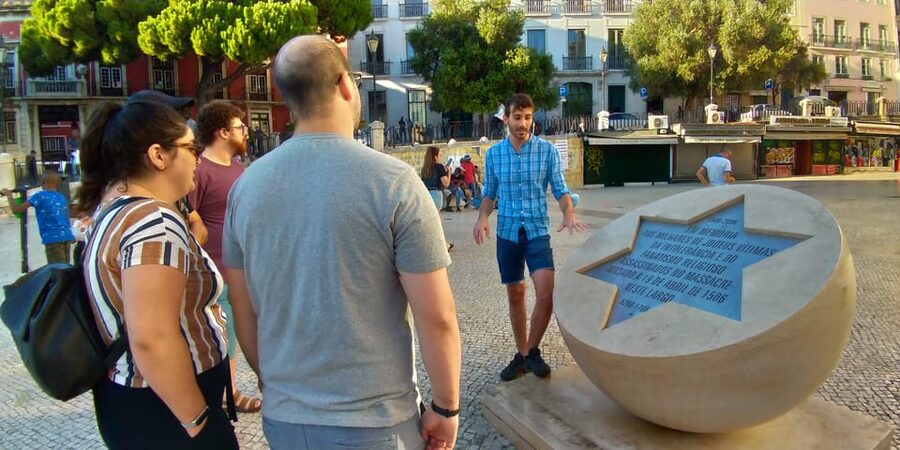
The tour ends at Largo de São Domingos, a place of major importance to Portuguese Judaism. Finishing here gives the walk a clear emotional and historical destination rather than simply stopping when the three hours are over.
By this point, the earlier stops should have given you enough context to understand why the square matters. The ending also reinforces one of the tour’s central ideas: Lisbon’s Jewish past is present in locations that may not announce their connection without a guide.
The route is described as passing through busy tourist areas and the Old Town. One useful point from the route is that much of the walk can be downhill, which may help older walkers, though the tour is not suitable for people with mobility impairments. Lisbon’s paving, slopes, crowds, and historic streets still require steady footing.
Luciano’s guiding style
Luciano Waldman receives particularly strong praise for his warmth, clarity, and personal connection to the subject. He is described as friendly, funny, relaxed, and willing to answer questions. He also brings his own family background and involvement in Lisbon’s Jewish community into the conversation when relevant.
That personal element matters, but the tour is not presented as a private family story. Luciano covers Jewish history in Lisbon and Portugal, while also explaining the larger European context. He can adapt the discussion to a small group, and one booking even became a one-person tour when no one else had reserved.
Small groups should be especially rewarding here. You have more room to ask about archaeology, family origins, forced conversion, community renewal, or the meaning of a particular site. Even in a larger group, the three-hour length gives the subject enough time to develop instead of rushing through a few quick stops.
The one recurring caution is language. Most people should manage the English presentation without trouble, but the guide’s Portuguese and Hebrew background gives his English a slight accent. If you rely heavily on lip-reading or need a very quiet setting, keep the traffic warning in mind.
Is $90 a fair price?
At $90 per person, this is not the cheapest way to walk around Lisbon. You are paying for a three-hour guided experience led by an archaeologist, not for transportation, meals, entrance tickets, or a short orientation stroll.
The value depends on your interests. If you want a self-guided route with visible monuments and plenty of free time, the price may feel high. You could walk through Alfama and the Old Town on your own, but you would probably miss the Jewish connections hidden in ordinary streets and would have no specialist to explain the archaeological evidence.
I see better value if you care about Jewish heritage, archaeology, memory, or the social history of Lisbon. The fee also supports local cultural work tied to preserving Jewish history and rebuilding Jewish life. That makes the cost easier to justify for someone who wants their sightseeing money to support a community project.
The tour includes a guide, the walking route, and liability and personal accident insurance. Hotel pickup and drop-off are not included, so you need to reach Portas do Sol yourself and arrange your own way onward from Largo de São Domingos.
Who should book this walk?
I would choose this tour if you:
- Want a serious introduction to Jewish history in Lisbon and Portugal
- Prefer a guide with archaeological training
- Enjoy learning from streets, excavations, and vanished neighborhoods
- Want to support local cultural preservation
- Are comfortable walking for three hours in Lisbon’s Old Town
- Appreciate a tour that discusses both historical loss and present-day renewal
It is also a strong choice early in your Lisbon visit. The route gives you a broad view of the Old Town and may help you understand places you later pass on your own.
I would hesitate if you need step-free access, dislike long stretches of explanation, or expect a large collection of surviving Jewish buildings. The physical remains are limited, and the experience relies on storytelling and interpretation.
The guide can provide tours in Hebrew, Spanish, or Portuguese if requested in advance, but the regular group tour is conducted in English. Bring water and comfortable shoes. A small notebook may also be useful if you want to remember names, locations, and historical terms.
Final recommendation
You should book this tour if you want to understand the Jewish presence that shaped Lisbon, even though much of its built evidence has disappeared. Luciano’s archaeological background, personal connection, and clear commitment to preserving memory give the walk unusual purpose.
You should skip it if you are looking for intact synagogues, elaborate interiors, or a light sightseeing stroll. For the right visitor, though, this is a thoughtful way to see Lisbon’s Old Town differently and to support a local effort to keep Jewish history part of the city’s future.
FAQ
Where does the Lisbon Jewish Walking Tour begin?
The tour begins at the viewpoint Largo Portas do Sol. Meet by the statue of Saint Vicente.
Where does the tour end?
The route ends at Largo de São Domingos, a site of major historical importance to Portuguese Judaism.
How long does the tour last?
The walking tour lasts three hours. Some individual tours may run slightly longer depending on the group and discussion.
What language is the tour conducted in?
The regular group tour is conducted in English. Hebrew, Spanish, or Portuguese tours can be requested in advance.
Who guides the tour?
The guide is Luciano Waldman, an archaeologist and a native speaker of Portuguese and Hebrew. His work also connects with efforts to preserve Jewish memory and support Jewish life in Lisbon.
What should I bring?
Bring water and comfortable shoes. The route passes through Lisbon’s Old Town and includes walking in areas with heavy tourist traffic.
Is the tour suitable for people with mobility impairments?
No. The activity is not suitable for people with mobility impairments.
Are hotel pickup and drop-off included?
No. You need to make your own way to Portas do Sol and arrange your own transportation after the tour ends at Largo de São Domingos.
Are food and drinks included?
No. Food and drinks are not included in the tour price.
Can I cancel for a full refund?
Yes. You can cancel up to 24 hours in advance for a full refund. You can also reserve now and pay later, which keeps your plans flexible.
Just added around Lisbon
- Small Group Walking Tour of Belém★ 4.9 · 80 reviews
- Lisbon Through the Eyes of a Local – Food and Walking Tour★ 4.9 · 141 reviews
- Lisbon: Private Boat Trip, Guided Walking Tour, Bike & Tram★ 4.8 · 116 reviews
- Lisbon: Street Art Walk★ 5.0 · 79 reviews
- Lisbon: Food and Culture 3-Hour Walking Tour★ 4.7 · 95 reviews
- Lisbon: Helicopter Ride, Boat Trip, & Old Town Walking Tour★ 4.7 · 480 reviews
- Lisbon: Food & Wine Walking Tour Through Baixa★ 4.9 · 287 reviews
- Lisbon: City Highlights Guided Walking Tour★ 4.7 · 168 reviews
Jewish Heritage Walking Tours, compared.

Amsterdam Anne Frank: Small-Group Walking Tour & Local Guide
Read our review →
Anne Frank’s Story – Guided Walking Tour through Amsterdam
Read our review →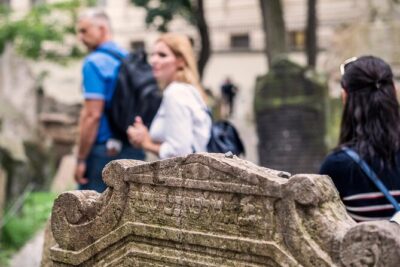
Jewish Quarter Walking Tour with Admission Tickets
Read our review →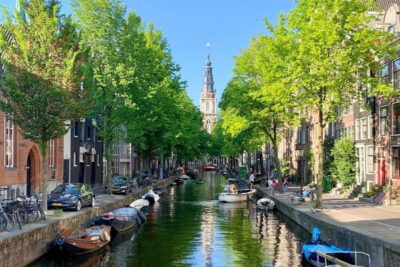
Anne Frank Guided Walking Tour in DE/EN/IT/ES
Read our review →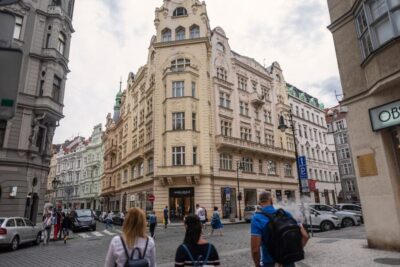
Old Town and Jewish Quarter Guided Walking Tour
Read our review →

Anne Frank Walking Tour Amsterdam Including Jewish Cultural Quarter
Read our review →
Anne Frank’s Last Walk & See Anne Frank House in Virtual Reality
Read our review →Browse the lists this tour appears in