
REVIEW · FLORENCE
Florence: LGBTQ Renaissance Walking Tour with Mila
Florence’s famous streets reveal a different story on this LGBTQ Renaissance walking tour. With Mila, you follow queer lives through punishment records, Medici politics, public meeting places, and the art-filled center. I like that the route uses real landmarks rather than treating LGBTQ history as a separate museum subject, and I like Mila’s habit of explaining the sources behind her stories. The main drawback is that the tour focuses heavily on gay men, since surviving records from the period mostly concern them. Women and lesbians receive less attention.
At $29, this is a fair price for two hours with a local guide, a headset, and a carefully researched route. You will walk outdoors in all weather, and the tour does not include museum or church entry. Book it early in your Florence stay if you want Mila’s suggestions for other places to see, eat, and explore.
Key points to know before you book
- Medieval Florence gets a queer point of view: Learn how accusations of sodomy could lead to fines and punishments, and how the law changed over time.
- Mila is the heart of the experience: She brings warmth, humor, and careful research to serious material.
- The route links major sights: Piazza della Repubblica, Santa Trinita, Pitti Palace Square, Ponte Vecchio, Piazza della Signoria, and Orsanmichele all appear along the way.
- The Ponte Vecchio has a surprising past: You hear how the bridge was connected with same-sex cruising in medieval and Renaissance Florence.
- The tour stays outside: It is a two-hour walking experience, with no admission tickets included.
- It suits a wide range of ages and abilities: The tour is listed as wheelchair accessible, and Mila has helped participants with limited movement.
Why this Florence tour feels different
Most first walks through Florence focus on the Duomo, Michelangelo, the Medici, and the usual parade of Renaissance masterpieces. This tour includes several of those same sights, but asks you to read them through another lens.
That change matters. Florence was not only a city of painters, bankers, churches, and powerful families. It was also a place where queer people formed relationships, found meeting places, faced public suspicion, and tried to live within laws that could be harsh and changeable.
Mila presents this past without turning it into a simple tale of progress. You hear about pleasure and connection, but also about fines, denunciations, and the risks of being accused. She is serious when the subject calls for it, yet keeps the walk human with humor and personal warmth. That balance is one of the strongest reasons to choose this particular tour.
The tour is in English and lasts two hours. A headset is included, which is useful on busy streets where a group can easily spread out. You meet Mila at Piazza della Repubblica, beside the Hard Rock Café under the Loggia. She carries a sign, so the meeting point should be easy to identify.
More History Walking Tours in Florence:
- Florence: Renaissance and Medici Tales Guided Walking Tour
★ 4.8 · 1,549 reviews - Medici Legends & Renaissance Wonders: Florence Small Group Tour
★ 5.0 · 205 reviews - Renaissance & Medieval Florence Guided Walking Tour plus mobile App
★ 4.0 · 140 reviews
Piazza della Repubblica and the rules of public life
The tour begins in Piazza della Repubblica, one of central Florence’s broadest and most recognizable squares. Cafés and shops now fill the area, but the square also carries the weight of the city’s long civic history.
Here, Mila explains how people judged guilty of sodomy could face fines and other punishments. The subject is difficult, but it gives you a clear sense of the gap between modern identity language and older legal categories. The people discussed in historical records were not always described in terms that match present-day LGBTQ identities, so careful explanation is important. Mila’s approach is to give context rather than force the past into modern labels.
You also hear how laws shifted as Florence and Italy changed politically and socially. This is one of the most useful parts of the walk because it shows that public attitudes were never fixed. Rules, enforcement, and social tolerance could vary across time.
The square is a practical starting point. It is central, open, and easy to reach, but it can also be noisy and busy. Wear shoes suited to stone streets, stay close enough to hear through the headset, and expect the walk to continue outdoors in rain or sun.
Across Santa Trinita to Pitti Palace Square
From the city center, the route crosses the Santa Trinita Bridge. This gives you a pleasant change of scene and a chance to look back toward Florence’s historic core.
The bridge is more than a crossing point. It helps Mila connect the political center on one side of the Arno with the grander world of palaces and court life on the other. You are not just moving between attractions. You are following how power, money, movement, and private life shaped one another.
At Pitti Palace Square, the focus turns to the Medici family. You hear about Gian Gastone de’ Medici, the last male member of the main Medici line, and why his life made him one of the more controversial figures in European history.
This section is useful even if you have already heard plenty about the Medici. Standard Florence tours often present the family as patrons of art and political operators. Mila adds a personal and queer perspective, while still giving you enough wider context to understand where Gian Gastone fits.
Pitti Palace Square itself is an outdoor stop, not a palace visit. Entrance fees are not included, so you should not expect time inside the building during this tour. That keeps the walk moving, though anyone wanting a full palace visit will need to arrange that separately.
Ponte Vecchio and the old cruising routes
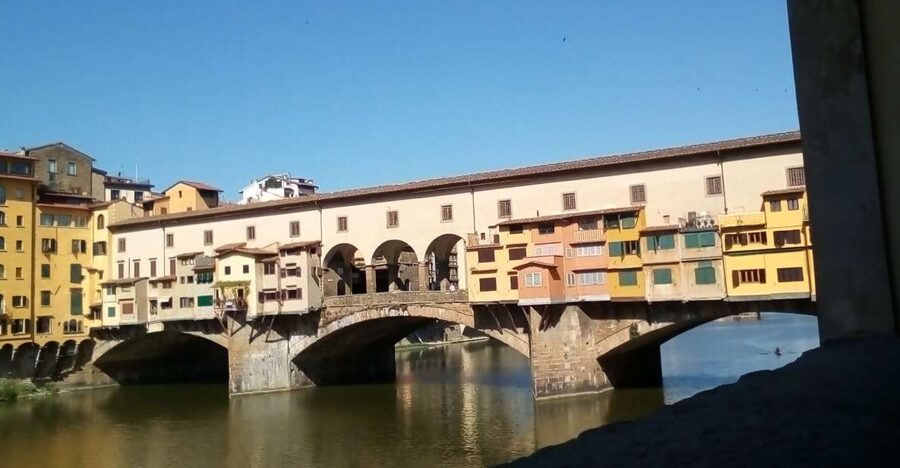
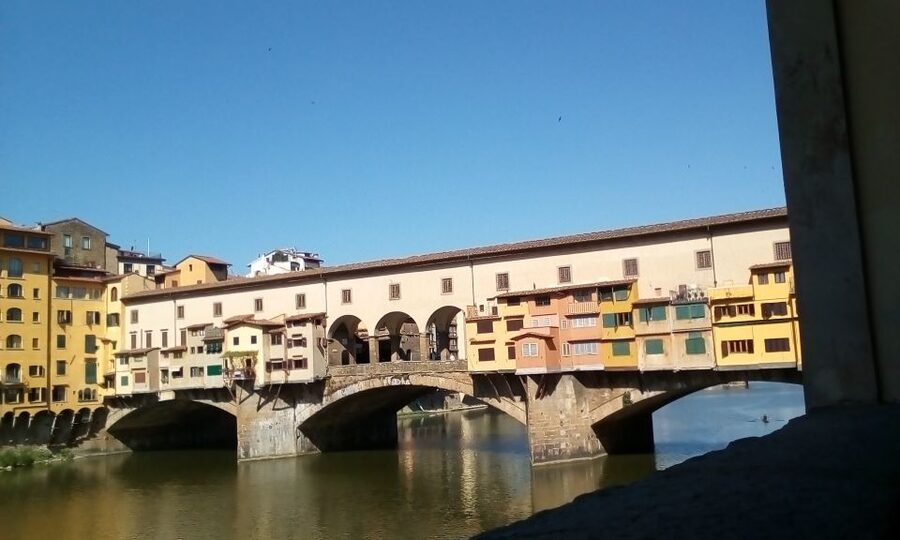
The Ponte Vecchio is one of Florence’s essential sights, but it can feel almost too familiar. You cross it with a different question in mind: how did people use this space before it became one of Italy’s most photographed bridges?
Mila explains the bridge’s connection with same-sex cruising in the medieval and Renaissance periods. The point is not that every person on the bridge shared one identity or purpose. Rather, public places could offer chances for recognition, flirtation, and secret meetings in a society where privacy was limited and discovery could be dangerous.
That story gives the bridge a human scale. You notice its narrow passage, its position over the river, and the constant flow of people in a new way. A landmark that can seem fixed and decorative becomes part of a living city.
This is also where the tour’s subject can be handled with a light touch without becoming trivial. Historical queer life was not only about persecution. It included desire, wit, social codes, and the practical search for connection. Mila’s humor helps keep the walk from becoming a list of grim legal facts.
The bridge can be crowded, and it is not a place where a group can spread out comfortably. The included headset helps, but you will still need to pay attention to where you are walking. If you dislike busy pedestrian areas, this part may feel hectic.
More LGBTQ-Friendly Tours in Florence:
- San Francisco LGBTQ Walking Tour with Local Guide
★ 5.0 · 600 reviews - Berlin: Gay Berlin Out in Schöneberg Walking Tour
★ 4.8 · 281 reviews - Dublin LGBTQ Pride Historical and Cultural Walking Tour
★ 5.0 · 91 reviews - San Francisco: Castro LGBTQ Walking Tour
★ 5.0 · 90 reviews
Piazza della Signoria and Cellini’s Perseus
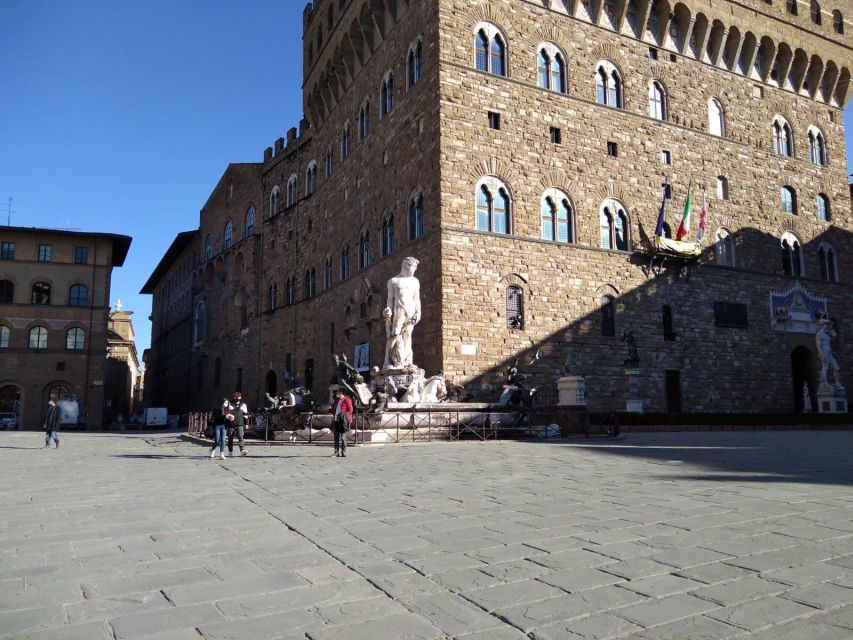
The route continues toward Piazza della Signoria and the former gay district near the square. This is one of the most rewarding sections for anyone who wants art and social history in the same frame.
You see a copy of Michelangelo’s David and Benvenuto Cellini’s Perseus with the Head of Medusa. Cellini’s bronze sculpture is especially important here because Mila connects the artwork and its maker to the wider queer history of Florence.
You do not enter a gallery to see these works. The sculptures are encountered in the public setting of the square, where art, politics, and civic theater have long shared the same space. That makes the stop accessible and efficient, though art lovers who want close technical analysis or museum context may want a separate guided visit.
The ancient gay district was not a modern LGBTQ neighborhood in the current sense. Mila’s explanation helps you understand it as a historic area associated with male same-sex encounters and social patterns. That distinction is worth keeping in mind. The tour is not claiming that Renaissance Florence had modern gay bars or a present-day queer district. It is tracing places and behavior through the evidence that survives.
This is also where the tour’s focus becomes clearest. The central stories concern men, especially because the written record was shaped by male-dominated institutions and legal systems. Mila does make room for women and lesbians, but that part is less extensive. If you want a tour centered mainly on women’s queer history, this will not fully meet that need.
Orsanmichele and the darker side of public accusation
At Orsanmichele Church, Mila explains how special boxes were used for denunciations, including accusations aimed at LGBTQ people, especially gay men. This stop shows how social control could be built into everyday city life.
It is easy to imagine medieval and Renaissance Florence only through its churches and statues. The denunciation boxes add another layer. They show how private suspicion could become a public charge, and how institutions could encourage people to report one another.
This part may be uncomfortable, and it should be. Mila does not use difficult history for shock value. She puts the practice into the larger story of law, religion, reputation, and civic order. You leave with a clearer sense of why secrecy mattered and why the same city could offer opportunities for connection while also creating serious risks.
The church is an exterior stop on this walk. Entrance fees are not included, and the itinerary does not promise an interior visit. That is worth knowing if you are expecting a standard church tour.
Mila’s guiding style and the value of her research
Mila is the reason this tour feels more personal than a standard audio walk. She is warm, funny, patient, and willing to answer questions. Her delivery is lively, but she does not turn painful subjects into entertainment.
One especially useful habit is her practice of explaining which sources she used to check her stories. That gives you a better sense of the difference between documented facts, historical interpretation, and colorful local anecdote. It also helps when the surviving evidence is incomplete.
Her style works well for people who enjoy conversation. Several comments about the experience describe Mila as responsive to questions, caring with participants, and able to adjust her tone to the group. She has also been praised for taking care with people during hot weather and for assisting someone with limited movement.
The tour is not only for LGBTQ visitors. You can book it as a queer history experience, but you can also treat it as an alternative introduction to Florence. You see major landmarks and learn about the Medici, the Renaissance, the legal system, and the city’s public spaces along the way.
It has also worked well for younger visitors. One family found the material appropriate for a 15-year-old. Still, the tour covers punishment, discrimination, and sexual history, so parents should decide if that subject matter suits their child.
How much value do you get for $29?
At $29 per person, the tour costs about what you might pay for a short specialty walk in a major European city. The value comes from the research and the point of view, not from admission to a famous monument.
You receive two hours with Mila, an English-speaking local guide, a headset, and a route that combines several important parts of Florence. You do not pay separately for the outdoor landmarks, but you also do not get entry to Pitti Palace, Orsanmichele, or any other attraction.
I consider the price reasonable if you want more than a general introduction. A standard city walk may explain what you are looking at. This tour asks why certain places mattered to queer people and how the city treated them. That extra layer is hard to recreate by simply walking the route with a guidebook.
The tour may be especially good value early in your visit. Mila can suggest other places to see and things to do, and you will already have a better sense of the city’s streets and major squares. If your Florence schedule is packed with museum reservations, though, you should decide if two outdoor hours fit comfortably.
Practical details that affect the experience
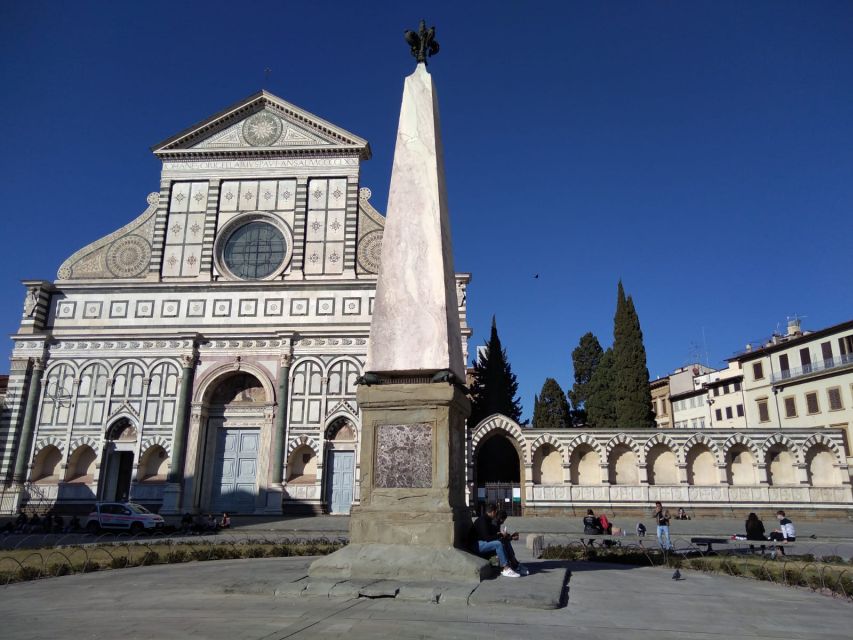
The walk takes place rain or shine, so check the forecast and dress for the conditions. Since the tour is outdoors, comfortable footwear is more important than dressing up.
You meet at Piazza della Repubblica, next to the Hard Rock Café under the Loggia. Mila will have a sign. Hotel pickup and drop-off are not included, so you need to reach the meeting point yourself.
The tour is listed as wheelchair accessible. That is helpful, but the route still passes through historic public spaces and streets, so you may want to confirm any specific mobility needs before booking. Mila has been accommodating with participants who had limited movement.
You can cancel up to 24 hours ahead for a full refund, and the reserve-now, pay-later option gives you some flexibility. These policies matter in Florence, where weather and museum plans can change quickly.
Who should book this walk?
I would choose this tour if you are interested in LGBTQ history, Renaissance Florence, the Medici, or the social life behind famous monuments. It is also a strong pick if you have already seen the main sights and want a new way to understand them.
Solo visitors may appreciate the chance to meet other queer people in a structured, welcoming setting. Couples, friends, and families with older children can also find plenty to discuss. The tour does not require you to identify as LGBTQ. Curiosity is enough.
I would hesitate only if you want an art-history tour with long stops inside museums, or if you prefer a route with very little walking. The tour is also not an equal survey of every part of LGBTQ history. Its strongest material concerns gay men in medieval and Renaissance Florence, with less detail about lesbians and other identities.
Should you book Mila’s Florence LGBTQ walking tour?
Yes, if you want a focused, thoughtful way to see Florence beyond the usual Renaissance checklist. Mila’s warmth, humor, source-based storytelling, and willingness to answer questions give the tour real substance.
Book it near the start of your stay if possible. You will pass major sights, gain useful city context, and come away with ideas for the rest of your visit. Just remember that it is an outdoor walking tour, not a museum ticket, and that its historical focus leans toward male same-sex life.
For $29 and two hours, it offers a strong mix of place, history, and human stories. That makes it a worthwhile choice for anyone who wants Florence to feel less like a row of monuments and more like a city where real people lived complicated lives.
FAQ
How long is the Florence LGBTQ walking tour?
The tour lasts two hours.
What language is the tour conducted in?
The live tour guide speaks English.
Where does the tour meet?
Meet Mila at Piazza della Repubblica, next to the Hard Rock Café under the Loggia. She will have a sign.
What places are included on the walking route?
The route includes Piazza della Repubblica, Santa Trinita Bridge, Pitti Palace Square, Ponte Vecchio, Piazza della Signoria, the old gay district, and Orsanmichele Church.
Does the tour include entrance tickets?
No. Entrance fees are not included. The tour visits the listed places as part of an outdoor walking route.
Is the tour wheelchair accessible?
The activity is listed as wheelchair accessible. Mila has also assisted a participant with limited movement.
Can I cancel the booking?
Yes. You can cancel up to 24 hours in advance for a full refund. You can also reserve now and pay later.
Just added around Florence
- Tasty Florence Street Food with Guided Walking of the City★ 5.0 · 174 reviews
- Medici Legends & Renaissance Wonders: Florence Small Group Tour★ 5.0 · 205 reviews
- Florence Food Tour of 10+ Authentic Tastings with Cheeses & Wines★ 5.0 · 155 reviews
- Florence Private Walking tour with Skip-the-line to Accademia★ 4.5 · 236 reviews
- Florence: Whispers of the Renaissance walking tour★ 4.5 · 78 reviews
- Private Florence Tour: 3-Hour Walking Tour with a Licenced Guide★ 5.0 · 233 reviews
- The Best of Florence Walking Tour in a Small Group★ 5.0 · 503 reviews
- Private Skip-the-Line Florence Highlights and David Walking Tour★ 4.5 · 78 reviews
History Walking Tours, compared.



Berlin’s Best: 2 Hour Walking Tour Third Reich and the Cold War
Read our review →
Third Reich Berlin: Hitler and WWII Walking Tour
Read our review →
New Orleans Garden District History Walking Tour
Read our review →
Cartagena: Historic Center and Getsemaní Shared Walking Tour
Read our review →
Imperial Palace and Shogun Historical Walking Tour
Read our review →Browse the lists this tour appears in