
REVIEW · NUREMBERG
“Rotes Bier” and “Blaue Zipfel”. A historical-culinary walk
Nuremberg’s food traditions make more sense when you meet them in the old town where they developed. This two-hour walk links stories about small Nuremberg bratwurst, gingerbread, ravioli, and beer with tastings along the way, finishing at the Altstadthof Brewery.
I like the route’s compact design and the way it mixes food with local history instead of treating lunch as a separate event. I also like that guides such as Sonja explain the subject with humor and leave room for questions. The main drawback is that the small snacks may feel modest for anyone expecting a full meal, and the tour is held in German.
Key points to know before booking
- The food is part of the history: You taste red beer, Nuremberg bratwurst, gingerbread, and other small samples while hearing why they matter.
- The route stays in central Nuremberg: Stops include the Old Town Hall, Bratwurst Röslein, Hauptmarkt, St. Sebaldus Church, and Altstadthof Brewery.
- The tour answers wonderfully odd food questions: You learn why bratwurst has its name, why Nuremberg sausages are small, and what the Devil’s Kitchen means.
- This is a German-language experience: The live guide speaks German, so it suits fluent speakers or anyone comfortable following a tour in German.
- The $29 price is fair for the format: You get a guide, a two-hour walking tour, several tastings, and beer, but not a complete meal.
- Wear practical shoes: The walk continues in rain or shine and includes several short walks between stops.
Why Nuremberg food makes a good walking tour

This experience uses food as a way into Nuremberg’s past. That is a smart choice because the city’s culinary customs are not just recipes. They connect to trade, religious life, local rules, public markets, brewing, and daily habits.
You are not simply led from one restaurant to another. At each point, the guide adds a question or story. Why are Nuremberg bratwurst so small? What makes the city’s gingerbread different? Since when did cooks here know something like ravioli? How much meat did ordinary citizens eat?
Those questions give the walk a clear theme. You can listen to a short explanation, then taste something related to it. That makes the information easier to remember than a string of dates and names.
The tour is run by Geschichte Für Alle e.V., an organization focused on local history. The guides are praised for clear explanations, humor, and a willingness to answer questions. Sonja, in particular, has been singled out for her lively and well-spoken presentation. You should still book this only if German works for you, since the tour is not offered in English.
More Food Walking Tours in Germany:
- Berlin Center Food Tour with 8+ Authentic Local Tastings
★ 5.0 · 1,227 reviews - Cologne: Südstadt Guided Foodie Walking Tour
★ 4.6 · 624 reviews - Munich: Guided Food Walking Tour with Beer Tasting
★ 4.7 · 183 reviews
Starting at the Old Town Hall
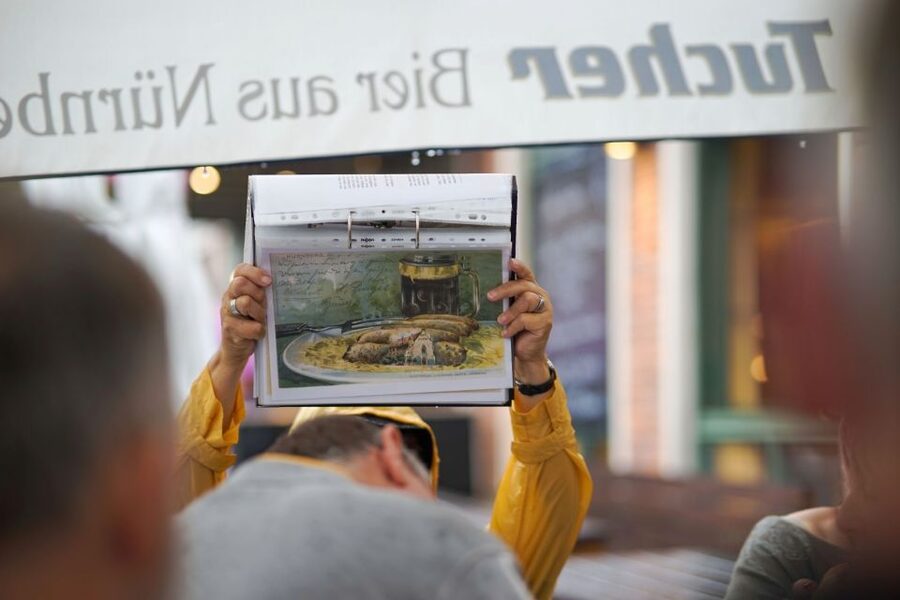
Meet in front of the main entrance of the Altes Rathaus, or Old Town Hall, at Rathausplatz 5. Look for the guide carrying a picture folder and wearing the green logo of Geschichte Für Alle e.V.
This is a useful starting point because you are immediately in the historic center, rather than spending the first part of the tour finding a restaurant or waiting for transport. The opening stop is devoted to a guided introduction, so expect the food stories to begin in their urban setting.
The exact starting time depends on availability. The tour lasts two hours, and the route is done on foot. You do not need to arrange transport between stops, but you do need to make your own way to the Old Town Hall.
From here, the group walks about five minutes to Bratwurst Röslein. That short distance helps keep the pace easy, though the tour does include several separate walking sections later on.
Bratwurst Röslein and the mystery of the small sausage
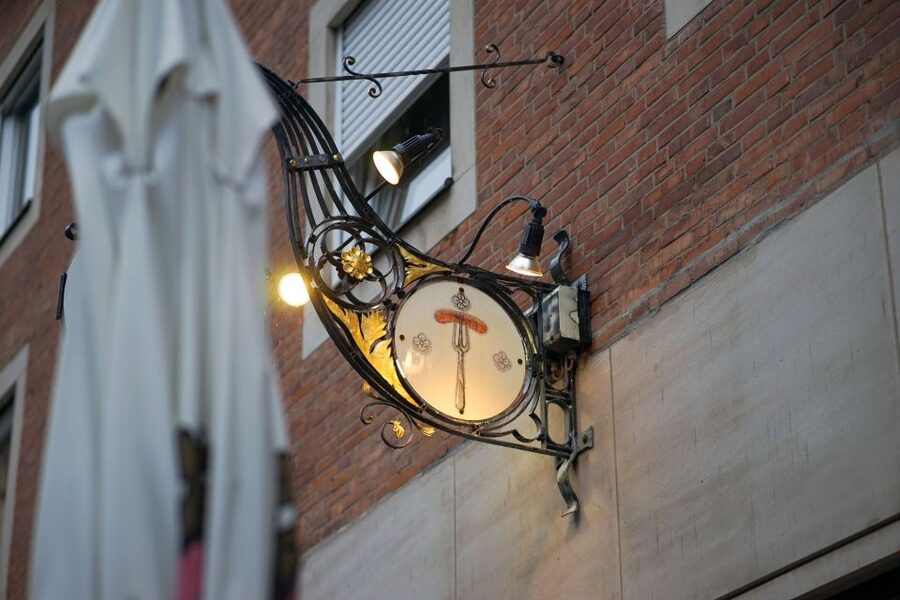
Bratwurst Röslein is the first major food stop. Here, the guide connects Nuremberg’s famous sausage with the city’s culinary rules and customs. You get to taste a genuine Nuremberg bratwurst while hearing why it is much smaller than many other German sausages.
The tour also asks why the word bratwurst is called bratwurst. You will not just hear the name repeated as a food label. The guide uses it as a starting point for a broader look at how Nuremberg cooks prepared and sold food.
This is one of the strongest parts of the experience because the tasting has a clear purpose. You can compare the small sausage with what you may have eaten elsewhere in Germany, then understand that its size and shape are part of Nuremberg’s identity.
The practical point is important: this is a tasting, not a sit-down sausage lunch. If you arrive hungry, you may want to plan a separate meal before or after the tour. The small samples let the group keep moving, but they are not meant to replace a full plate.
Hauptmarkt, gingerbread, and market food
After roughly three minutes on foot, the route reaches Hauptmarkt, Nuremberg’s central market square. The guide continues the food story here with another guided stop and a tasting.
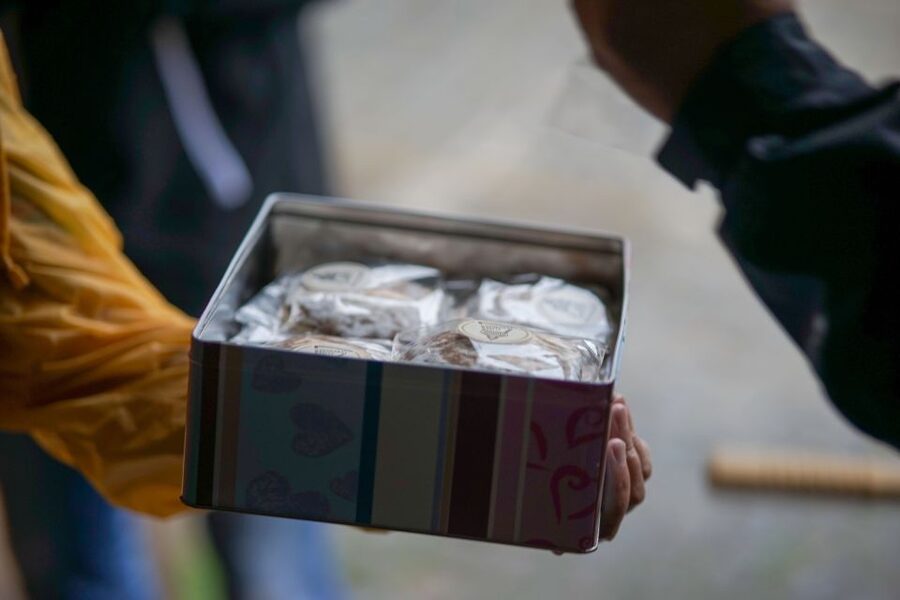
Gingerbread is one of the headline treats. The tour explores what makes Nuremberg gingerbread special and presents it as some of the finest in the world. You can try it while learning why this particular sweet became associated with the city.
This is a good example of the tour’s method. Instead of describing gingerbread only as a souvenir, the guide places it inside the city’s food culture. The result is more useful when you later see tins of gingerbread in shops, because you understand that the product has a local story behind it.
The route includes another stop at Hauptmarkt 2, again with a guided explanation and food tasting. The supplied details do not specify every sample, so you should expect small culinary surprises rather than a fixed restaurant menu. That uncertainty can be fun, but anyone with strict dietary needs should ask the provider before booking.
A few more walking tours around Germany worth a look
- Discover Berlin Half-Day Walking Tour
★ 5.0 · 9,624 reviews - Berlin City walk Government District and Places of Democracy
★ 4.7 · 8,467 reviews - Berlin: Third Reich & Cold War Guided Walking Tour
★ 4.9 · 8,378 reviews - Munich: Third Reich & WWII Walking Tour
★ 4.6 · 6,181 reviews
From market square to the Devil’s Kitchen
The next stops continue through the old town, with walks of about five minutes between them. At Trödelmarkt 13, the guide adds another historical and culinary explanation, followed by a tasting.
One of the unusual questions covered during the tour is the meaning of Devil’s Kitchen. That subject gives the walk a little character. Food history is not always neat and respectable, and this story appears to open a window onto the less polished side of old cooking traditions.
The tour also deals with how much meat Nuremberg citizens ate. That question helps you think beyond famous dishes. A city may be known for sausages today, but that does not automatically tell you how often ordinary people ate meat in the past.
You should expect the guide to connect place, ingredients, and daily life rather than offer a formal lecture. If you enjoy asking follow-up questions, this is a useful part of the tour. Guides are encouraged to take time with questions, and that can make the experience feel more like a conversation than a fixed script.
Unschlitthaus and the city’s food rules
The walk then reaches Unschlitthaus, another guided stop with a tasting. The supplied route does not give a full explanation of the building, so I would not book this expecting a long architectural visit inside. Instead, treat it as one of several historic settings where the food story unfolds.
This stop matters because the tour is not confined to the obvious sausage and beer names. It uses different corners of the old town to show how food was made, sold, controlled, and discussed.
The guide also raises the subject of Nuremberg cooks knowing ravioli. That is an engaging reminder that culinary ideas traveled. The question is not simply whether a modern dish exists in the city. It asks how older cooks understood filled pasta and how food traditions moved between places.
You will get the most from this section if you listen for the connections between local food and outside influence. The walk does not present Nuremberg cuisine as isolated. It shows a city with cooks, markets, and visitors who shaped what appeared in the cooking pot.
St. Sebaldus Church and the social side of food
St. Sebaldus Church is the next major landmark, reached after about ten minutes on foot. This is the longest walking section listed in the route, so comfortable shoes matter.
The stop includes guided commentary and another food sample. The church setting broadens the tour beyond eating and drinking. Nuremberg’s religious buildings, public spaces, and civic life all formed part of the environment in which food customs developed.
The route gives you a chance to see how closely the old town’s sights sit together. You move from a market setting to a church, then on to a brewery without needing a bus or taxi. That saves time and keeps the focus on the city center.
If you use a wheelchair, the activity is listed as wheelchair accessible. Still, the tour takes place outdoors and involves walking between several stops, so it is sensible to confirm current route details if you have particular mobility needs.
Red beer at Altstadthof Brewery
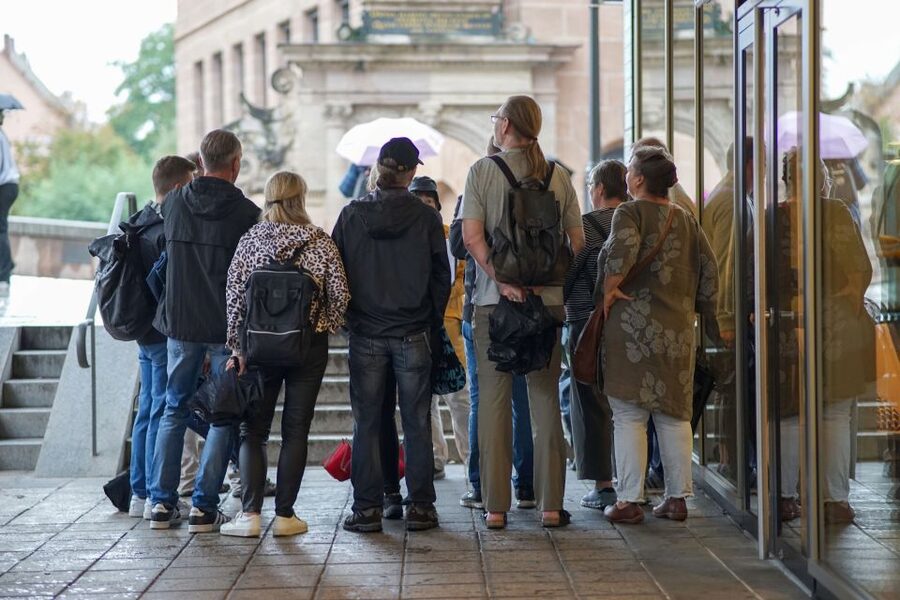
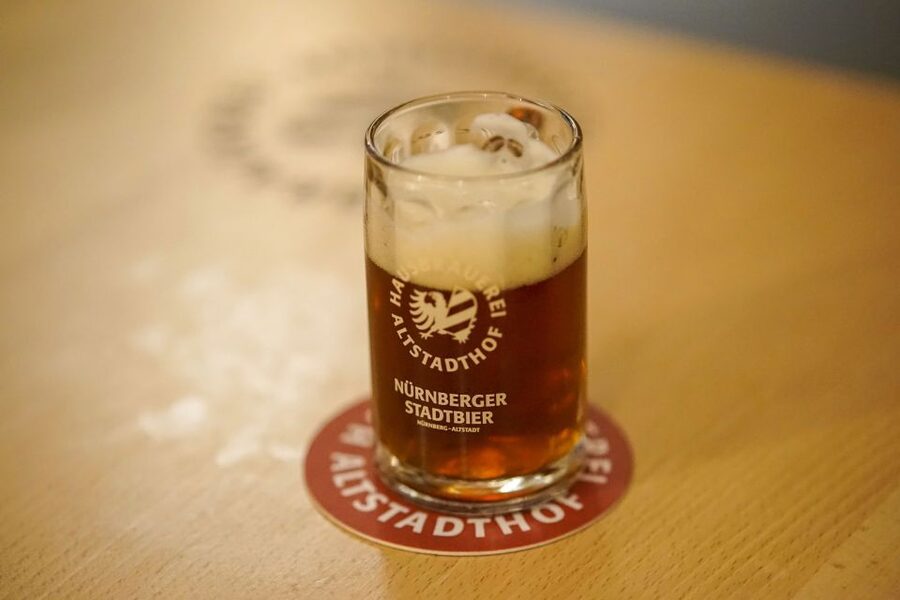
The final stop is Hausbrauerei Altstadthof, home of the Rotbierstüberl, brewery, and whiskey distillery. This is where the tour’s red beer theme comes fully into focus.
You get to taste the distinctive local red beer and hear more about Nuremberg brewing. The finish works well because the group has already sampled foods associated with the city. Beer becomes the last part of the meal story rather than a random drink at the end.
The brewery is also the end point, not the meeting point. Plan your onward route from there, or stay in the area if you want to continue eating and drinking on your own. The tour does not include transportation back to your hotel or to another part of Nuremberg.
Ending at a brewery gives the experience a relaxed final note, but remember that the included beer is a tasting element. The $29 fee does not promise a full brewery meal, a long drinking session, or a complete dinner.
What the $29 price really covers
At $29 per person, this is a reasonably priced short experience if you value guided context as much as food. You receive a two-hour walking tour, a live guide, several snacks, and beer. You also see a useful set of central landmarks without paying for separate sightseeing admissions.
The best value comes from the combination. A sausage tasting alone would be easy to arrange. A gingerbread sample alone would not require a guide. What you are paying for is the explanation linking these foods to Nuremberg’s old town.
The limitation is quantity. One direct assessment of the experience noted that the snacks could feel more substantial or higher quality, even while praising the bratwurst, gingerbread, and beer. I would treat the tastings as samples that add flavor to the tour, not as lunch.
For a full meal, schedule a restaurant before or after the walk. That approach lets you enjoy the tasting without expecting it to satisfy a large appetite.
Language, pace, and practical comfort
The live tour is in German. This is the most important booking consideration. If you understand German well, the tour offers a focused way to hear local food history from a guide who can respond to questions. If you do not, you may miss much of the value because the explanations are central to the experience.
The route is designed for walking, with short sections of about three, five, and ten minutes between stops. The walking itself is not described as strenuous, but you should wear comfortable shoes and dress for the weather.
The tour runs rain or shine. Bring weather-appropriate clothing, especially if the forecast is poor, because the route moves through outdoor streets and squares. There is no promise of indoor shelter for every part of the experience.
Wheelchair accessibility is listed as available. Because this is a moving old-town route, confirm any details that matter to you before booking, particularly if uneven surfaces or tight spaces affect your comfort.
Free cancellation is available up to 24 hours before the start for a full refund. You can also reserve and pay later, which helps if your Nuremberg plans are still shifting. If you book through GetYourGuide, the booking confirmation serves as proof of payment, and an invoice cannot be issued through that booking route.
Who should book this Nuremberg food walk?
I would recommend it most strongly to German-speaking visitors who want more than a list of restaurants. You get a compact orientation to the old town and a set of food stories that are hard to pick up from a menu alone.
It also suits anyone who likes guided walks with a clear theme. The questions about bratwurst, gingerbread, ravioli, meat consumption, and the Devil’s Kitchen give the tour a sense of purpose.
It is less suitable if you want a long, leisurely meal, a beer-focused tasting session, or an English-language tour. Families and older visitors may appreciate the short route and central stops, but the group still walks outdoors in all weather.
The experience has a 4.4 rating from 190 reviews, with especially strong praise for clear explanations, humor, interesting locations, and guides who take questions seriously. Sonja is one guide named in the feedback, but the guide assigned to your departure may be different.
Should you book it?
Book this tour if you want Nuremberg’s food traditions explained in the places where the old town’s daily life took shape. The bratwurst, gingerbread, and red beer are the obvious attractions, but the odd questions and local stories are what give the walk its value.
Skip it if you need English, expect a full meal, or prefer to explore entirely at your own pace. For everyone else, $29 is a fair price for two hours of guided history, several tastings, and a finish at Altstadthof Brewery. Arrive ready to walk, listen, and treat the food as part of the story rather than the whole meal.
FAQ
How long does the tour last?
The tour lasts two hours.
What language is the tour in?
The live tour guide speaks German.
Where does the tour begin?
Meet in front of the main entrance of the Altes Rathaus at Rathausplatz 5 in Nuremberg.
How do I recognize the guide?
Look for a guide with a picture folder and the green Geschichte Für Alle e.V. logo.
Where does the tour end?
The tour ends at Hausbrauerei Altstadthof, specifically the Rotbierstüberl, brewery, and whiskey distillery.
What food and drink are included?
The experience includes snacks, red beer, Nuremberg bratwurst, and gingerbread, along with other samples served during the walk.
Is transportation included?
No. Transportation to and from the meeting point is not included, and the route between stops is walked.
Is the tour wheelchair accessible?
Yes, the activity is listed as wheelchair accessible.
What happens if it rains?
The tour takes place rain or shine, so bring weather-appropriate clothing and wear comfortable shoes.
Just added around Germany
- Private 2-Hour Hamburg Highlights Walking Tour★ 5.0 · 105 reviews
- Sightseeing Tour – Free Tour – Historic Center-Hamburg On Foot★ 5.0 · 112 reviews
- Discover Hamburg Walking Tour★ 5.0 · 77 reviews
- Historic Dresden Small-Group Walking Tour in English★ 5.0 · 160 reviews
- Walking Through Dresden’s Past with Dr. Fraser Macdonald★ 5.0 · 72 reviews
- Guided Brewhouse Walking Tour in Cologne★ 5.0 · 482 reviews
- Walking tour of Cologne: The essential and unmissable★ 5.0 · 121 reviews
- Berlin Walking Tour★ 4.5 · 378 reviews
Food Walking Tours, compared.

Reykjavik Food Walk – Local Foodie Adventure in Iceland
Read our review →
Ho Chi Minh City Street Food Tour & Sightseeing By Motorbike
Read our review →
New Orleans Food Walking Tour of the French Quarter with Small-Group Option
Read our review →
Authentic Parisian Gourmet Food Tour with 10 Local Dishes & Wines
Read our review →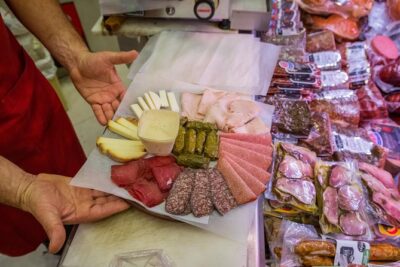
Savannah First Squares Culinary & Cultural Walking Food Tour
Read our review →Browse the lists this tour appears in