
REVIEW · HAMBURG
Discover Hamburg Walking Tour
Hamburg’s story comes into focus on foot, from the handsome neo-Renaissance Town Hall to the narrow lanes of Deichstrasse and the brick warehouses of Speicherstadt. I like the route because it links the city’s wealth, destruction, trade, and modern revival in one clear walk. I also like the finish at the Elbphilharmonie, which gives you a memorable final view of the harbor district.
The main drawback is simple: this is a 2.5-hour walk in all weather, and Hamburg can be wet, windy, or cold. The route covers several districts, so good shoes and suitable clothing matter. The tour can include up to 30 people, though some departures are much smaller.
Key points at a glance
- Hamburg’s story unfolds in one walk: See the Old Town, Deichstrasse, St. Nikolai Memorial, Speicherstadt, and Elbphilharmonie.
- The route connects past and present: Move from medieval buildings and wartime ruins to Hamburg’s modern concert hall.
- Guides add the real value: Bob, Axel, and Jason have each led tours praised for clear storytelling, humor, and helpful local context.
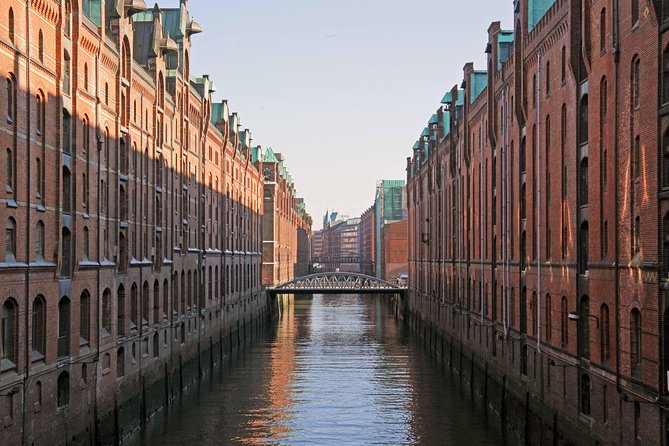
- Speicherstadt is the visual highlight: Red-brick warehouses, canals, and old trading spaces make this the best part of the route for photographs.
- A good first look at Hamburg: The walk gives you a useful sense of the city before you explore on your own.
- Practical timing and price: At $24.14 for about two and a half hours, the cost is modest for a guided introduction.
Why this Hamburg walk works so well

I like tours that explain a city instead of simply pointing at its monuments. This one has a strong thread: Hamburg grew wealthy through trade, suffered major fires and wartime destruction, then rebuilt with a confident eye toward the future.
You begin near Barkhof 3 at 10:30 in the morning. That timing gives you a useful start to the day, especially if Hamburg is your first stop in Germany or your first visit to the city. The route ends at Elbphilharmonie Platz, so you can continue exploring HafenCity after the guide finishes.
The tour is offered in English, although the guide may be multilingual. The guide is the part that can make or break a walking tour, and the named guides connected with this experience, including Bob, Axel, and Jason, are praised for explaining the backstory behind each place rather than delivering a string of dates.
Bob is especially good at making the city’s past easy to follow, with a warm style and plenty of detail. Axel has adjusted the pace for a group in very cold weather, taking time to warm up in a traditional cafe and extending the tour so the main sights were still covered. Jason has been praised for mixing humor with an explanation of how Hamburg was founded and rebuilt several times.
That range matters. You are not just paying for a route. You are paying for someone to help you read the streets.
A few more walking tours around Hamburg worth a look
- Hamburg: Guided Walking Tour for Magic Fans
★ 4.8 · 1,992 reviews - Reeperbahn Walking Tour with St. Pauli Local
★ 4.8 · 577 reviews - Hamburg: Speicherstadt Walking Tour with Coffee Tasting
★ 4.6 · 360 reviews
From Town Hall to Deichstrasse
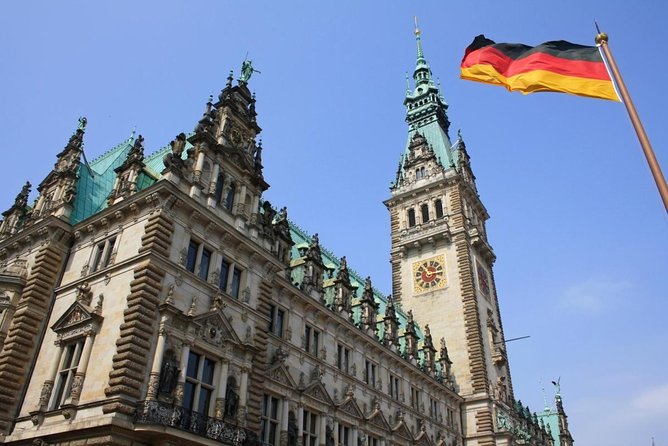
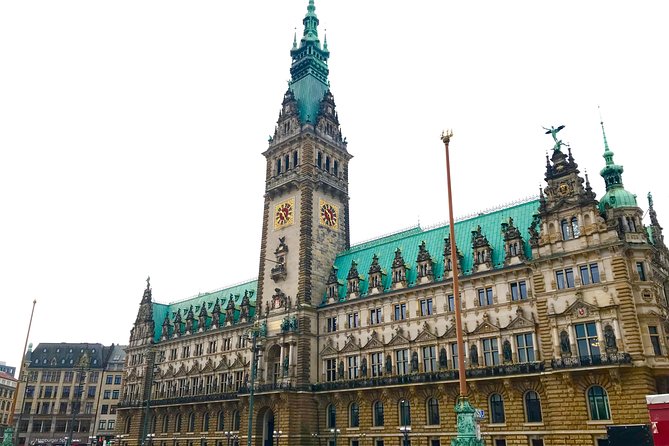
The walk begins in Hamburg’s historic center, where the impressive Town Hall provides an immediate lesson in the city’s former power. Built in the 19th century at the height of Hamburg’s fortune, its neo-Renaissance design reflects a wealthy trading city that wanted an official building to match its status.
From there, the route moves toward Deichstrasse. This is one of the most atmospheric parts of the walk, with historic buildings gathered along a narrow street near the old harbor area. The setting helps you picture Hamburg before modern office blocks and broad roads changed the center.
Deichstrasse also gives the guide a chance to explain the Great Fire that ravaged the Old Town. That event is not a minor footnote. It helps explain why so much of central Hamburg is a mix of surviving historic structures and later rebuilding.
I appreciate this stop because the guide can connect architecture to ordinary city life. The old buildings are not just pretty facades. They show how Hamburg once worked, where people lived, stored goods, and moved through a city shaped by water and commerce.
The stop is listed at about 10 minutes, so do not expect a long interior visit. This is an outdoor explanation and photo pause. If you want detailed access to historic buildings, you will need to add that on your own.
St. Nikolai Memorial and the cost of war
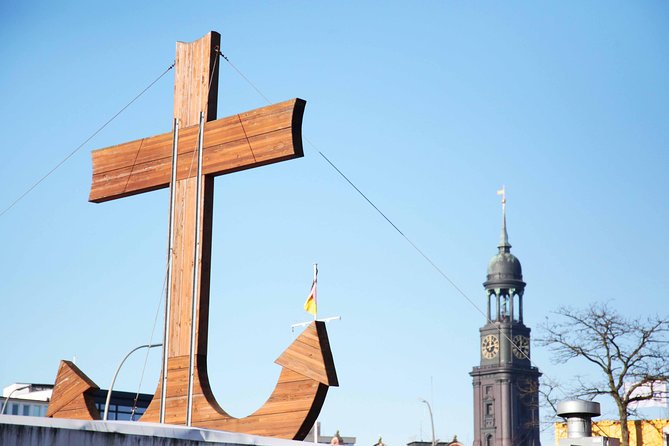
The next major stop is St. Nikolai Memorial. Its tower is the surviving part of what was once one of Europe’s finest neo-Gothic churches. Today, it serves as a memorial to the tens of thousands of people killed in Allied air raids during the Second World War.
This is one of the most important pauses on the route because it changes the tone of the tour. Hamburg’s story is not only about trade, grand buildings, and waterfront success. The city was also badly damaged, and the memorial gives you a direct reminder of the human cost.
The tower’s ruined appearance makes the point without much decoration. You can expect the guide to explain what the church once was and why the remains have been preserved. Admission to the stop is free, but the tour information does not include a separate ticket for paid access to any interior or exhibit.
I find this kind of stop valuable early in a visit. It gives context to the city’s architecture and helps you understand why Hamburg can feel both historic and surprisingly modern. Some buildings survived. Others were rebuilt. Some places were intentionally left as reminders.
Because this is an outdoor walking tour, the amount of time here may depend on the group and the guide. If you want a longer museum-style visit, plan extra time after the tour.
Speicherstadt, Hamburg’s brick warehouse district
Speicherstadt is likely to be the visual high point of the morning. The district is known for its tall red-brick warehouses, canals, and old storage buildings. Hamburg’s first UNESCO World Heritage site, it once held tea, coffee, sugar, spices, and other goods arriving through the port.
This is where Hamburg’s role as a trading city becomes easy to see. The warehouses were built for commerce, but they also create one of the city’s most distinctive scenes. Water, brick, bridges, and narrow passages give the district a strong sense of place.
The guide’s explanation adds useful scale to the view. You begin to understand that Speicherstadt was not built simply as a picturesque quarter. It was working storage space, tied to the movement of goods through Hamburg.
The stop lasts about 10 minutes in the stated plan. That is enough for an introduction and photographs, but not enough for a full exploration of the district. I would return here later if you want to wander slowly, take more pictures, or visit nearby attractions.
Bring a camera, but do not spend the entire stop looking through it. The best value here comes from listening to how the warehouses fit into the city’s economic story. The red brick is attractive, but the reason it matters is what happened inside these buildings.
Same streets, a different route:
- Hamburg Reeperbahn Small-Group Walking Tour
★ 4.0 · 269 reviews - Hamburg: Crimes of St. Pauli Guided Walking Tour
★ 4.6 · 265 reviews - English Hamburg City Center Pay-What-You-Want Walking Tour
★ 4.9 · 262 reviews - Hamburg: Private Tour Red Light District Walking Tour
★ 4.7 · 227 reviews
Finishing at the Elbphilharmonie

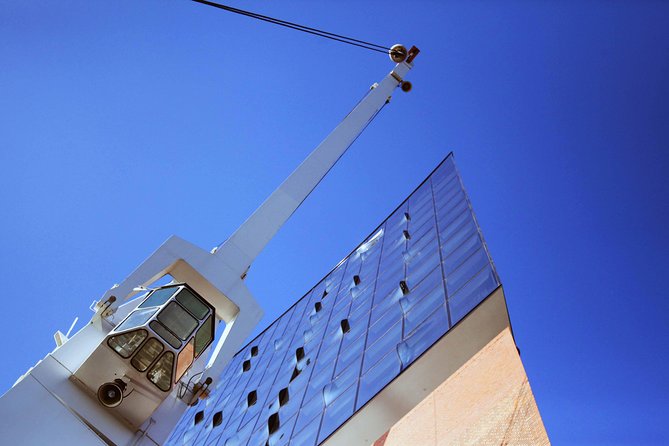
The tour ends at the Elbphilharmonie, Hamburg’s striking modern concert hall. Its location near the water and its contemporary design make it a dramatic contrast to Deichstrasse and Speicherstadt.
That contrast is the smart closing move. You have walked through older Hamburg, learned how trade shaped the city, considered its wartime losses, and then arrived at a symbol of modern Hamburg. The tour gives the city a beginning, a crisis, and a new chapter.
The building is also a practical place to finish. Elbphilharmonie Platz puts you in HafenCity, where you can continue on foot or make your own plans. The tour does not include admission to the concert hall, so do not expect a full interior visit or a ticketed concert experience as part of the price.
You should treat this stop as an exterior orientation and a chance to understand the building’s place in the city. If you want to go inside, check the separate admission arrangements yourself.
What the guide adds
The strongest part of this experience is the guide’s storytelling. The route itself is easy to follow, but the facts only become useful when someone explains how the places connect.
The best guide style here seems to be conversational rather than theatrical. One German-language review praised the fact that the guide did not shout through a microphone or rely on headphones. Instead, the group walked together and listened in a close circle.
That can make a real difference. You can ask a question, hear the answer clearly, and keep moving without feeling like part of a large procession. Still, the maximum group size is 30, so the exact feel depends on the departure.
Bob has been praised for his detailed explanations and attention to the group. Axel adapted the walk during very cold weather and offered suggestions for other things to do in Hamburg. Jason combined historical detail with humor, which can help keep a long history lesson from becoming heavy.
The tour may be operated by a multilingual guide, so English is offered but the specific guide and presentation style can vary. I would book this for the subject matter and route, while remembering that the guide is an important variable.
Is $24.14 a fair price?
At $24.14 per person, the tour offers good value if you want a guided introduction rather than a self-guided walk. You get about two and a half hours, a professional guide, and a route that covers several of Hamburg’s most important central sights.
The price is especially reasonable if you are new to Hamburg. A good guide can save you time, explain the city’s repeated destruction and rebuilding, and point out why places such as Deichstrasse and Speicherstadt matter.
The value is lower if you already know the Old Town well or prefer to move at your own speed. The listed stops are mostly outdoor sights, and admission to the Elbphilharmonie is not included. You are paying for interpretation and company, not for attraction tickets.
The tour also has a strong practical benefit: it ends somewhere useful. Afterward, you can remain around HafenCity and the concert hall, return toward the center, or continue exploring the warehouse district.
Weather, walking, and group size
The walk operates in all weather. That means you should take the forecast seriously. Hamburg’s weather can change quickly, and a wet two-and-a-half-hour walk is a different experience from a cool, clear morning.
Wear comfortable shoes and bring a waterproof layer. If the day is cold, gloves and a hat will help, especially during the longer outdoor explanations. The guide may be able to adjust the pace, but you should not count on a warm indoor stop unless the conditions require it.
Most people can take part, and service animals are allowed. The tour is near public transportation, which makes reaching the starting point easier. The start is at Barkhof 3, and the finish is at Elbphilharmonie Platz, so remember that this is a point-to-point walk rather than a loop.
The maximum group size is 30. Some departures may be much smaller. One group had only five people, which allowed for a relaxed atmosphere and plenty of personal attention. That smaller format is not guaranteed, but it shows the tour can feel intimate on quieter dates.
Who should book this experience?
I would choose this tour for a first visit to Hamburg, especially if you want the city’s history explained in plain language. It suits you if you enjoy walking, outdoor sights, architecture, and stories about how trade shaped a city.
It also works well for families. A guide has adapted the walk to the needs of a group that included a wheelchair user, and the route is designed for most people to join. Still, because the tour covers several streets and lasts 2.5 hours, you should consider your own comfort with extended walking.
History fans will appreciate St. Nikolai Memorial and the explanations of the Great Fire and wartime destruction. Architecture fans will enjoy the shift from neo-Renaissance Town Hall to red-brick Speicherstadt and the modern Elbphilharmonie.
I would be less likely to recommend it if you want extensive interior visits, a food-focused tour, or a harbor cruise. This experience is about walking through the city and understanding what you see.
Should you book the Hamburg Walking Tour?
Book it if you want a compact, well-priced introduction to Hamburg with a guide who can connect the city’s trade, disasters, wartime history, and modern revival. The route is varied, the finish at the Elbphilharmonie is memorable, and the guide adds far more value than a simple map-based walk.
Skip it if you dislike walking outdoors in uncertain weather or want to explore every stop at your own pace. For most first-time visitors, though, this is a sensible way to get your bearings before spending the rest of the day around Speicherstadt, HafenCity, or the Old Town.
A 95 percent recommendation rate and a 4.8 rating from 77 ratings point to a consistently strong experience. The most useful detail is not the score, but the pattern behind it: clear explanations, personal attention, and guides who can adjust to the group. Cancel at least 24 hours before the 10:30 start for a full refund.
FAQ
How long is the Discover Hamburg Walking Tour?
The tour lasts approximately 2 hours and 30 minutes.
What time does the tour start?
The tour starts at 10:30 am.
Where does the tour begin?
The meeting point is Barkhof 3, 20095 Hamburg, Germany.
Where does the tour end?
The tour ends at Elbphilharmonie Platz, Platz der Deutschen Einheit, 20457 Hamburg, Germany.
What language is the tour offered in?
The tour is offered in English. It may be operated by a multilingual guide.
What sights are included?
The route includes Hamburg’s Old Town, Deichstrasse, St. Nikolai Memorial, Speicherstadt, and the Elbphilharmonie area.
Is admission to the attractions included?
The walking tour and professional guide are included. Admission to the Elbphilharmonie is not included.
How much does the tour cost?
The listed price is $24.14 per person.
Does the tour operate in bad weather?
Yes. The tour operates in all weather conditions, so you should dress appropriately.
How many people can join the tour?
The maximum group size is 30 people.
Just added around Hamburg
- Private 2-Hour Hamburg Highlights Walking Tour★ 5.0 · 105 reviews
- Sightseeing Tour – Free Tour – Historic Center-Hamburg On Foot★ 5.0 · 112 reviews
- Hamburg: Private Tour Red Light District Walking Tour★ 4.7 · 227 reviews
- Mystical Hamburg – Walking Tour in German★ 4.6 · 168 reviews
- Hamburg: St. Pauli Breweries Walking Tour with Tastings★ 4.7 · 205 reviews
- Hamburg Old Town on Foot – The Tour with Heart★ 4.8 · 139 reviews
- Hamburg: Private Couples’ Photoshoot and Walking Tour★ 4.9 · 212 reviews
- English Harbor&St. Pauli Pay-What-You-Want Walking Tour★ 4.8 · 197 reviews
Walking Tours, compared.

Magical London: Harry Potter Guided Walking Tour
Read our review →
Reykjavik Food Walk – Local Foodie Adventure in Iceland
Read our review →
History and Hauntings of Salem Guided Walking Tour
Read our review →
New Orleans Premier Ghost, Voodoo and Vampire Walking Tour
Read our review →
Amsterdam Anne Frank: Small-Group Walking Tour & Local Guide
Read our review →

Edinburgh Castle: Guided Walking Tour with Entry Ticket
Read our review →
Anne Frank’s Story – Guided Walking Tour through Amsterdam
Read our review →Browse the lists this tour appears in