
REVIEW · LISBON
Lisbon: 3-Hour The Slave Trade – An Historical Walking Tour
Lisbon’s prettiest streets carry a difficult story. This three-hour walk with Rui Fernandes connects Alfama, public squares, churches, and grand city buildings with Portugal’s central role in the Atlantic slave trade, a subject many standard sightseeing tours skip.
I like two things right away: the small group, limited to six participants according to the tour details, and Rui’s ability to connect economics, politics, religion, and everyday life. The walk is also mostly flat or gently sloped, with a coffee break built in. The main consideration is the amount of information. You need to be ready for a serious, sometimes painful history rather than a light city stroll.
Key points to know before you book

- Lisbon’s famous sights gain a harder context: Streets, churches, squares, and monuments are tied to Portugal’s role in slavery and empire.
- Rui Fernandes leads the walk: He is an African guide with training in history, political science, and economics, and he uses pictures to clarify parts of the story.
- The subject goes beyond the Atlantic crossing: You’ll discuss Iberian slavery, Brazil, African colonies, abolition, and liberation movements.
- The group is intimate: The stated maximum is six people, though some activity information also mentions groups of up to eight, so check the booking details for your date.
- The pace is manageable: The route is described as mostly flat or only mildly uphill, with shade and a café break worked into the outing.
- The price is fair for a specialist tour: At $35 per person, you are paying for three hours of focused interpretation, not transport or entry tickets.
Why this history changes the way you see Lisbon

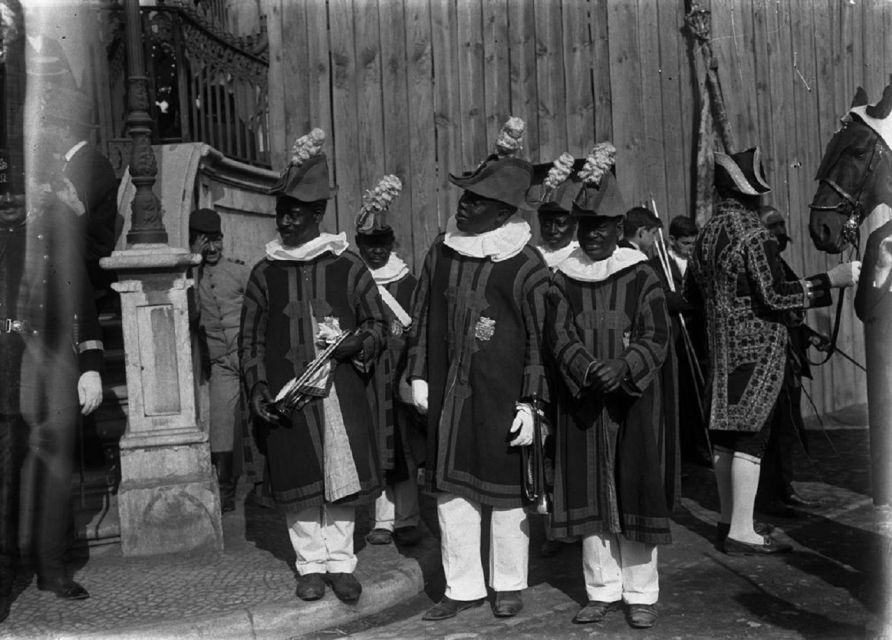
Many visitors first meet Lisbon through tiled façades, steep lanes, polished squares, and monuments celebrating the Age of Discovery. Those sights are real, but they tell only one side of the city’s rise.
Portugal helped begin the Atlantic slave trade in the first half of the 15th century, during the period linked with Prince Henry the Navigator. Over the following four centuries, an estimated 12 to 14 million Africans were sold into slavery and carried across the Atlantic to the Americas.
This tour asks you to look at Lisbon’s growth through that human cost. The point is not simply to memorize dates or condemn the past from a comfortable distance. It is to understand how trade in human beings shaped wealth, institutions, religion, colonial policy, and daily life.
I value this kind of city tour because it puts difficult history in the places where it happened. A lecture in a classroom can explain a system. A street corner, church, or square can help you picture how that system entered ordinary life.
The experience also reaches into the present. You’ll consider the role of African communities in Lisbon, the legacy of Portuguese colonial rule, and the long struggle for liberation in Africa. That makes the walk useful for anyone who wants more than a postcard view of the capital.
More History Walking Tours in Portugal
- Lisbon: Private Dark History Walking Tour with Drinks
★ 4.8 · 387 reviews - Porto: Historical Center Walking Tour
★ 4.8 · 898 reviews - 3-Hour Porto Jewish Heritage Walking Tour with Local Guide
★ 4.5 · 396 reviews
Starting in Alfama at Largo do Chafariz de Dentro
The meeting point is Largo do Chafariz de Dentro, a square in Alfama, Lisbon’s oldest district. This is a practical starting place because Alfama lets you see how layers of history sit close together.
You begin among old streets, buildings, and public spaces rather than in a museum gallery. Rui uses these surroundings to explain the origins of slavery in the Iberian Peninsula and the shift toward the Atlantic trade. That early context matters. Portugal’s role did not appear out of nowhere in the 15th century, and the walk sets up the older systems and ideas that helped make later expansion possible.
Alfama also gives the tour a strong sense of place. You are not being asked to imagine Lisbon as an abstract port or imperial capital. You are looking at the city’s actual streets while hearing how people, goods, money, and power moved through it.
The route includes back streets as well as major avenues. That mix is important. Grand buildings reveal how authority and wealth were displayed, while smaller streets help bring the daily experience of enslaved people into view.
From exploration to a system built on human lives
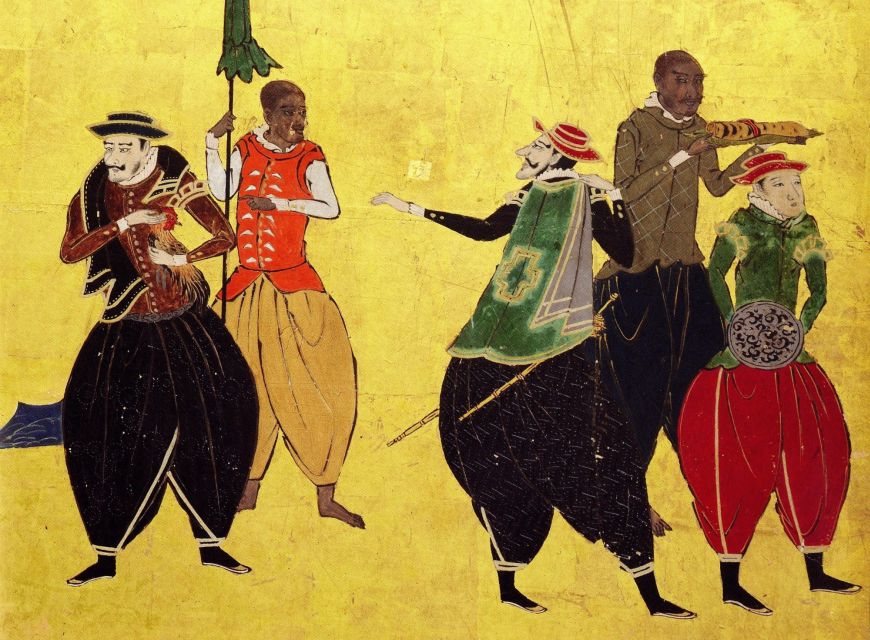
The first half of the tour places Portugal’s maritime expansion in its wider setting. Rui covers the Age of Discovery, the birth of the Atlantic slave trade, and Portugal’s connection with Brazil.
The phrase Age of Discovery can sound heroic when it appears on a monument or in a tourist brochure. This walk adds the missing accounting. Exploration created new routes and commercial links, but it also enabled the forced removal, sale, and exploitation of millions of Africans.
You’ll look at slavery through several lenses:
- Economic: How labor, trade, and colonial production helped create wealth.
- Political: How governments and institutions supported or regulated the trade.
- Religious: How belief and religious authority interacted with enslavement.
- Social: How enslaved Africans lived and worked in historical Lisbon.
- Colonial: How Brazil and Portugal’s African territories fit into the larger system.
This broad approach is one of the tour’s strengths. Rui’s background in history, political science, and economics allows him to move beyond a simple list of events. You can ask how a policy worked, who benefited, how people justified it, and what happened when the system began to face opposition.
The subject is heavy, but the guide’s calm, clear delivery helps. The walk is described as paced slowly enough to absorb the material, and Rui makes room for questions rather than rushing from one stop to the next.
Churches, squares, and buildings with a second story
The route does not rely on a single memorial or museum display. Instead, Rui points out connections in the built city: churches, monuments, squares, street names, building features, and the former uses of impressive structures.
Some of the places you pass may look familiar if you have already spent time in central Lisbon. That is part of the value. A building you might otherwise admire only for its architecture becomes evidence of the people, labor, money, and institutions behind the city’s growth.
The route uses visual material as well. Rui has shown relevant pictures during the walk to help you understand people and settings that are difficult to picture from modern streets alone. This is especially useful when the surviving city gives you only fragments.
You should not expect every stop to be a formal memorial site. The experience is interpretive. Rui connects locations to the larger story, helping you see how slavery could be present in ordinary urban life even when no large plaque announces it.
That approach also has a limitation. If you want a tightly mapped procession of named monuments, you may find the walk less concrete than a conventional landmark tour. One useful improvement would be a takeaway map showing the stops and their significance. Bring a note on your phone if you want to remember the route later.
More History Walking Tours in Lisbon:
- Berlin: Third Reich & Cold War Guided Walking Tour
★ 4.9 · 8,378 reviews - Munich: Third Reich & WWII Walking Tour
★ 4.6 · 6,181 reviews - Berlin’s Best: 2 Hour Walking Tour Third Reich and the Cold War
★ 5.0 · 5,486 reviews - Third Reich Berlin: Hitler and WWII Walking Tour
★ 5.0 · 3,301 reviews
What daily life could look like for an enslaved person
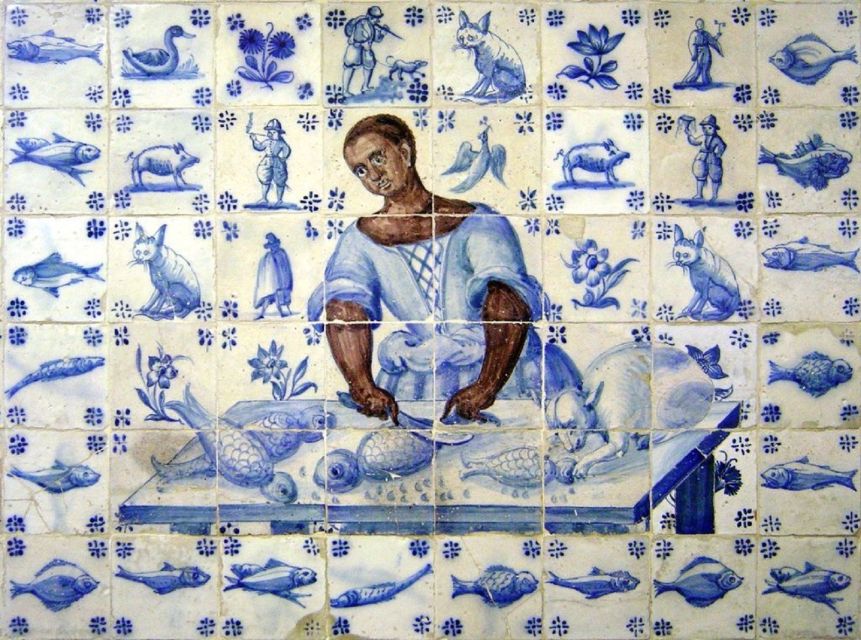
The tour does not stop at shipping routes and royal policy. It also addresses the day-to-day experience of enslaved people living in Lisbon.
That shift from institutions to individual lives is essential. Numbers show the size of the crime, but ordinary details help you grasp how slavery worked within a city. The walk considers the presence of enslaved Africans, the work they performed, and the ways slavery shaped social relations and public life.
Rui’s use of personal and family connections adds a human dimension to the subject. This is not presented as a detached history lesson. At the same time, the tour keeps its focus on research, context, and the historical record rather than turning the experience into a personal performance.
The setting helps here. You continue through streets where modern life carries on around you. That contrast can be uncomfortable, but it is also the point. Lisbon’s past is not sealed away in a distant plantation or battlefield. It is part of the history of the capital itself.
Expect direct discussion of racism and the long effects of slavery. The tone is respectful and inclusive, including for people whose families have a direct connection to slavery. If you are looking for a cheerful break between major attractions, choose another activity. If you want to understand the city honestly, this section is central.
Brazil, abolition, and Portugal’s African colonies
The middle and later portions widen the lens again. Portugal’s relationship with Brazil receives particular attention because Brazil was a major part of the Portuguese colonial world and the Atlantic slave economy.
You’ll also cover the abolition of the slave trade in Portugal. That subject needs careful handling. Ending the trade did not instantly erase slavery, racism, or colonial control, and the tour follows those longer consequences rather than treating abolition as a neat endpoint.
The walk then turns toward Portugal’s colonies in Africa and the struggle for liberation by African nationalists. This gives the experience a longer timeline, linking the early Atlantic trade with later colonial politics.
That connection is valuable for your Lisbon visit. A tour focused only on the 15th and 16th centuries could leave you thinking of slavery as a closed chapter. By including colonial rule and liberation movements, Rui shows how Portuguese involvement in Africa continued into the modern era.
You may also find this part especially useful if you plan to visit other Portuguese-speaking places or museums during your trip. The tour gives you a framework for understanding why Portuguese history appears differently in Portugal, Brazil, and African countries.
Rui Fernandes as guide and teacher
Rui Fernandes is the key to the experience. He leads in English and brings training in history, political science, and economics to a specialized subject.
His style is patient and measured. He explains difficult material clearly, pauses for questions, and adjusts the pace to the group. He also makes an effort to remember participants’ names, which matters in a small group discussing personal and painful subjects.
You can ask questions about the historical material, modern Portugal, food, shops, and public transportation. Rui also gives practical advice for getting around Lisbon and reaching other parts of the city. That extra help is most useful early in your stay, when you can still use his suggestions.
The visual aids are another plus. Pictures can make a major difference when the subject involves vanished buildings, historical figures, or scenes far removed from the modern city.
No guide can cover four centuries, the Iberian background, Brazil, Africa, abolition, and present-day consequences in three hours without moving quickly. Rui’s broad knowledge means you may want to ask him to slow down or return to a point. The good news is that the format leaves room for questions, and the small group makes that realistic.
Pace, comfort, and the coffee break
The tour lasts three hours, though it may run closer to three and a half depending on questions and the group’s pace. Wear comfortable shoes. Lisbon’s historic districts use cobblestones, even when the route avoids the steepest hills.
The walk is described as mostly flat or only mildly uphill, making it suitable for many ages. Still, this remains a walking tour, not a seated presentation. Hot weather can make the time outdoors tiring, so bring water and be ready to use shade when available.
One coffee and one WC break are included. The café stop may include a pastel de nata, giving you a short reset before the second half. It is a small detail, but it makes a long, serious walk easier.
Pets are not allowed. Hotel pickup and drop-off are not included, so you need to reach Largo do Chafariz de Dentro on your own.
The small group is especially helpful here. A maximum of six people allows you to hear Rui on narrow streets and ask questions without speaking over a crowd. The activity information also mentions a limit of eight, so confirm the exact group size when booking if that matters to you.
Is $35 a fair price?
At $35 per person, this is good value if you want a focused history experience rather than a general orientation walk. You receive three hours with a live licensed guide, a specialist subject, a short café break, and the chance to ask detailed questions.
The price does not include transportation, hotel transfers, or admission to attractions. That is not a serious drawback because the experience is built around the streets themselves, and no separate entry ticket is listed as part of the walk.
You are paying mainly for interpretation. A standard free walk may point out the same squares and churches, but it is unlikely to spend sustained time on Portugal’s role in the Atlantic slave trade, the daily life of enslaved people in Lisbon, Brazil, African colonies, and liberation movements.
The value is strongest for history-minded visitors, educators, students, families with older children, and anyone who wants to understand the forces behind Lisbon’s wealth. It may feel too dense if you prefer quick facts, photo stops, and broad sightseeing.
Free cancellation up to 24 hours before the start and reserve-now, pay-later booking add useful flexibility. Still, the real decision is not the policy. It is whether you want to give three hours of your Lisbon visit to a serious subject.
Who should book this Lisbon walking tour?
Book it if you want to:
- Understand Portugal’s role in the Atlantic slave trade.
- See Alfama and central Lisbon through a different historical frame.
- Ask questions in a group small enough for real conversation.
- Learn about Brazil, African colonies, abolition, and liberation movements.
- Hear an African guide address a subject that is often left out of standard tourism.
- Add context to museums, monuments, and city walks you may already have planned.
Think twice if you want a relaxed, purely scenic stroll. The route may be manageable physically, but the material demands attention. You will hear about forced migration, exploitation, racism, and colonial violence.
I would schedule this early in your Lisbon stay. Rui’s advice about public transportation, nearby food, shops, and other places to visit can help shape the rest of your trip. More importantly, the tour can change how you read the city’s monuments and older neighborhoods afterward.
Should you book it?
Yes, if you want a fuller understanding of Lisbon and can give serious history your attention. Rui Fernandes brings clarity, patience, and personal commitment to a difficult subject, while the small group keeps the experience open to questions.
The best reason to book is simple: Lisbon’s past cannot be understood through its grand discoveries alone. This walk adds the people and systems that paid the price for that prosperity. At $35, it offers a focused, thoughtful way to see the city with fewer blind spots.
FAQ
How long does the Lisbon slave trade walking tour last?
The advertised duration is three hours. Depending on questions and the group’s pace, the walk may last about three to three and a half hours.
Where does the tour meet?
Meet your guide at Largo do Chafariz de Dentro, a square in Lisbon’s Alfama district.
Who leads the walking tour?
The tour is led in English by Rui Fernandes, an African guide with a background in history, political science, and economics.
What subjects does the tour cover?
It covers slavery in the Iberian Peninsula, the birth of the Atlantic slave trade, the Age of Discovery, daily life for enslaved people in Lisbon, Brazil, abolition in Portugal, Portuguese colonies in Africa, and African nationalist liberation movements.
How large is the group?
The tour is described as a small-group experience limited to six participants. Other activity information mentions groups of up to eight, so check the specific booking details for your date.
Is the walking route difficult?
The route is described as mostly flat or with minimal inclines. Comfortable shoes are recommended because the tour takes place on city streets and historic lanes.
Is a break included?
Yes. The tour includes one coffee break and one WC break.
Are hotel pickup and drop-off included?
No. You need to make your own way to the meeting point, and hotel pickup and drop-off are not included.
Can I cancel the tour?
Yes. You can cancel up to 24 hours in advance for a full refund. Reserve-now, pay-later booking is also available.
More Three-Hour Tours in Lisbon
- Lisbon: Food and Culture 3-Hour Walking Tour
★ 4.7 · 95 reviews - Prague: 3-Hour Walking Tour of Old Town & Prague Castle
★ 4.7 · 5,696 reviews - Eat Like a Local: Venice 3-Hour Small-Group Food Tasting Tour
★ 5.0 · 3,137 reviews - Experience Porto’s Charm: 3-Hour Guided Walking Tour
★ 5.0 · 2,432 reviews
Just added around Lisbon
- Small Group Walking Tour of Belém★ 4.9 · 80 reviews
- Lisbon Through the Eyes of a Local – Food and Walking Tour★ 4.9 · 141 reviews
- Lisbon: Jewish Walking Tour★ 4.9 · 96 reviews
- Lisbon: Private Boat Trip, Guided Walking Tour, Bike & Tram★ 4.8 · 116 reviews
- Lisbon: Food and Culture 3-Hour Walking Tour★ 4.7 · 95 reviews
- Lisbon: Street Art Walk★ 5.0 · 79 reviews
- Lisbon: Helicopter Ride, Boat Trip, & Old Town Walking Tour★ 4.7 · 480 reviews
- Lisbon: Food & Wine Walking Tour Through Baixa★ 4.9 · 287 reviews
History Walking Tours, compared.



Berlin’s Best: 2 Hour Walking Tour Third Reich and the Cold War
Read our review →
Third Reich Berlin: Hitler and WWII Walking Tour
Read our review →
New Orleans Garden District History Walking Tour
Read our review →
Cartagena: Historic Center and Getsemaní Shared Walking Tour
Read our review →
Imperial Palace and Shogun Historical Walking Tour
Read our review →Browse the lists this tour appears in