
REVIEW · PORTO
Porto: Historical Center Walking Tour
Porto reveals itself best on foot, especially in the steep lanes around Sé, where medieval alleys, church towers, tiled façades, and ordinary city life all crowd together. This three-hour walk links the main sights with the stories that make them easier to understand, from Portugal’s rulers to Salazar-era politics and local legends.
I like the guides’ storytelling, particularly the way Pedro and Gregorio connect separate places into one clear account of Porto. I also like the ending: a glass of Port, bread, and olive oil gives the group time to relax instead of simply scattering after the last viewpoint. The main drawback is the hills. This is not a gentle stroll, and hot weather can make the route tiring.
Key points at a glance
- Medieval Sé lanes: Walk through Porto’s oldest-feeling quarter, with plenty of narrow streets and uphill sections.
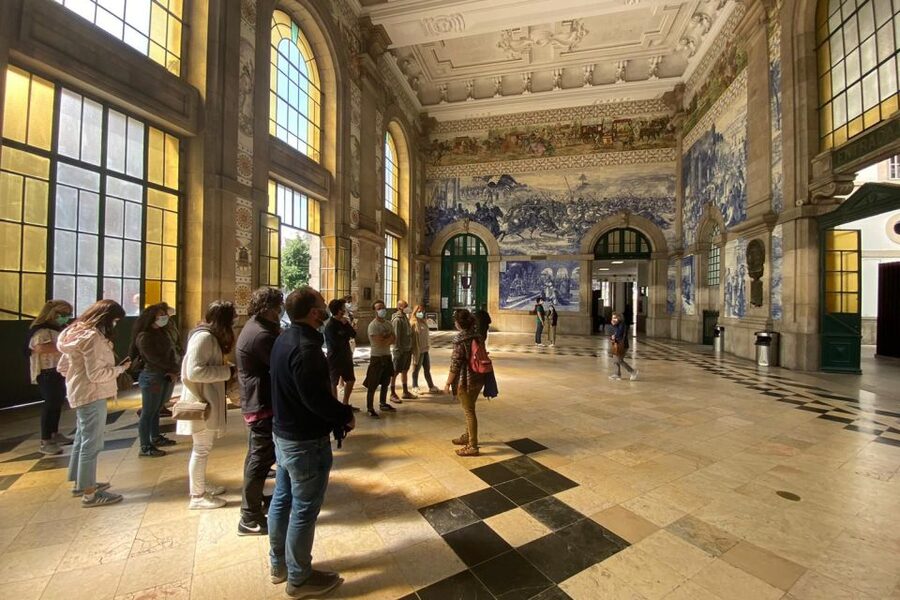
- São Bento Station: See one of Portugal’s most celebrated railway interiors as part of the route.
- Lello and Clérigos: Pass two of central Porto’s best-known landmarks without turning the tour into a long museum visit.
- Story-led guiding: Pedro, Gregorio, and other English-speaking guides use humor, local details, and questions to keep the history moving.
- Port and olive oil finish: End with wine, bread, and olive oil, with a picnic option at Virtudes Gardens.
- Three hours on foot: Bring good shoes, water, sun protection, and enough energy for Porto’s slopes.
Starting near Mouzinho da Silveira
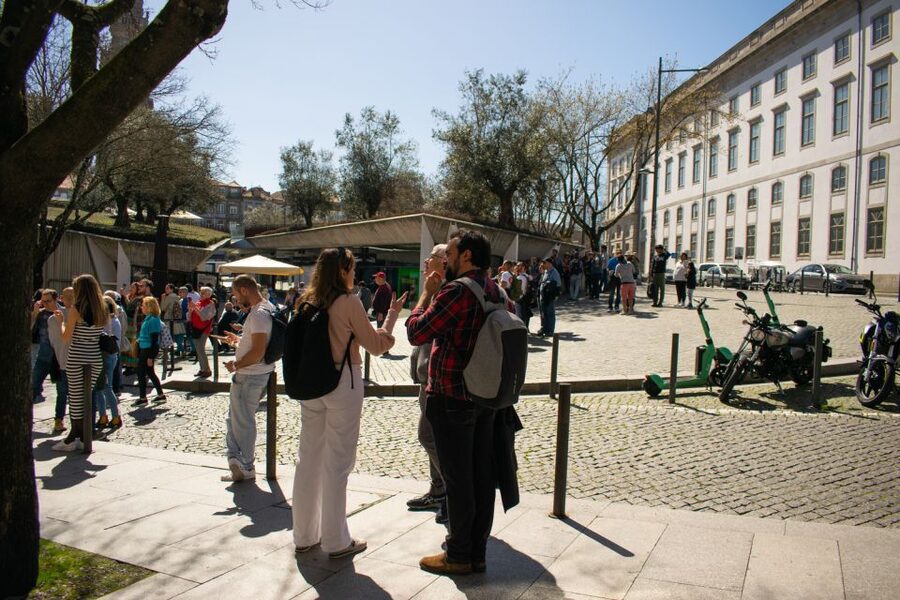
The tour begins at the activity provider’s office at Rua de Mouzinho da Silveira 34. That location puts you close to the historic core, so you move into Porto’s older streets almost at once rather than spending the opening half-hour on transport.
The route is divided into two walking sections of about 80 minutes each, with a 10-minute break between them. The final 20 minutes are set aside for wine and food tasting. That structure matters in Porto, where a route that looks short on a map can feel much longer once stairs, cobbles, and slopes enter the picture.
Your guide speaks English, and the guiding style appears to be a major part of the experience. Pedro is often praised for combining facts with humor and for adjusting his pace to the group. Gregorio is also noted for clear English, warmth, and an ability to make Portugal’s past understandable without turning the walk into a lecture. Guide assignments can vary, so you should not book expecting one specific person.
More History Walking Tours in Portugal
- 3-Hour Porto Jewish Heritage Walking Tour with Local Guide
★ 4.5 · 396 reviews - Porto: Jewish Heritage Walking Tour
★ 4.7 · 266 reviews - Lisbon: Private Dark History Walking Tour with Drinks
★ 4.8 · 387 reviews
Sé and Porto’s medieval streets
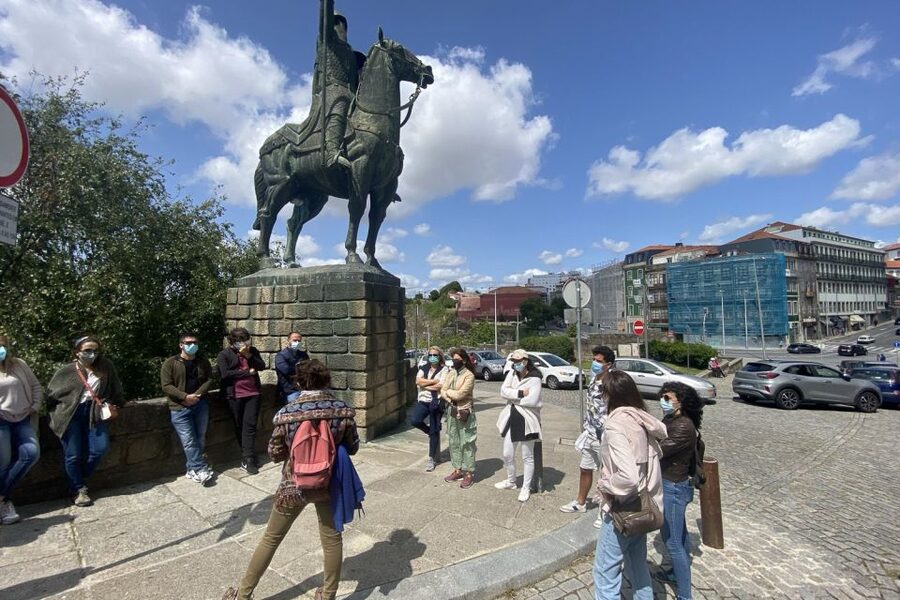
The first substantial section focuses on the Sé neighborhood and the narrow streets of medieval Porto. This is the part of the walk where you begin to see why Porto rewards slow exploration. The streets are not arranged like a neat open-air museum. They twist, climb, narrow suddenly, and open into small views of rooftops, churches, and the river.
Your guide helps give order to that maze. Instead of merely pointing out old buildings, the tour places the neighborhood within Porto’s wider story. You hear about the city’s rulers, religion, political changes, and the people who shaped daily life. Questions are welcome, and several guides have been praised for handling everything from the revolution against Salazar to present-day housing pressures.
I particularly value this kind of context early in a trip. Once you understand the role of the old center, later walks through Porto feel less random. You can return to the lanes on your own and notice details that might otherwise pass by as attractive but unexplained stonework.
Expect a genuine workout here. Porto’s center is hilly, and some of the streets are uneven. The pace is generally described as sensible, with short pauses for stories and breathing room, but this is still a walking tour for people comfortable spending three hours on their feet.
São Bento Station and the city’s changing face
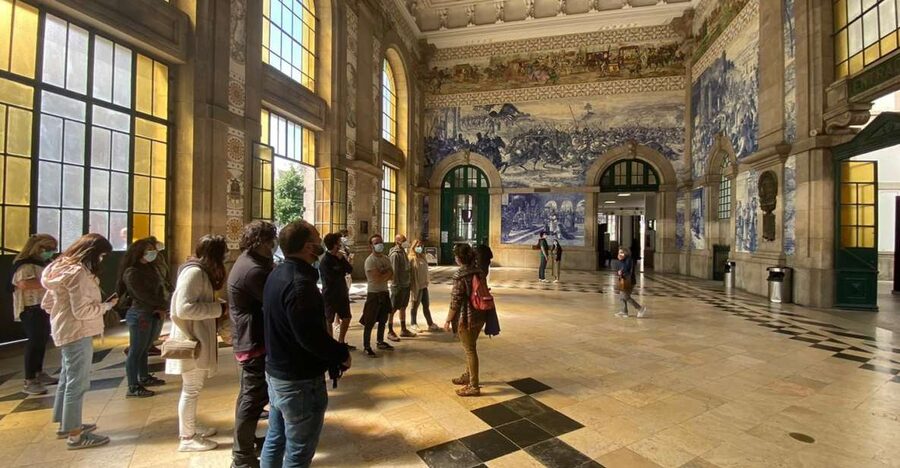
The route continues toward São Bento Station, widely regarded as one of Portugal’s most beautiful railway stations. The station is not simply a transport stop on this walk. It is one of the clearest places to see how public buildings in Porto can combine everyday use with art and national history.
The tour also takes you near areas associated with Porto’s nightlife. That shift is useful because it shows the city changing from a historic center in daylight to a social district after dark. You get a quick sense of how close the old lanes, bars, restaurants, and modern city life are to one another.
After the medieval quarter, the change in setting helps keep the walk varied. You are not looking at one church after another. The route moves through streets used for work, transport, evenings out, and sightseeing, giving you a broader sense of central Porto.
The ten-minute break comes at a useful point. Use it to drink water, catch your breath, and ask your guide about places you might want to revisit. The tour covers a fair amount of ground, so this pause is more than a courtesy.
Art Nouveau façades and Lello Bookshop
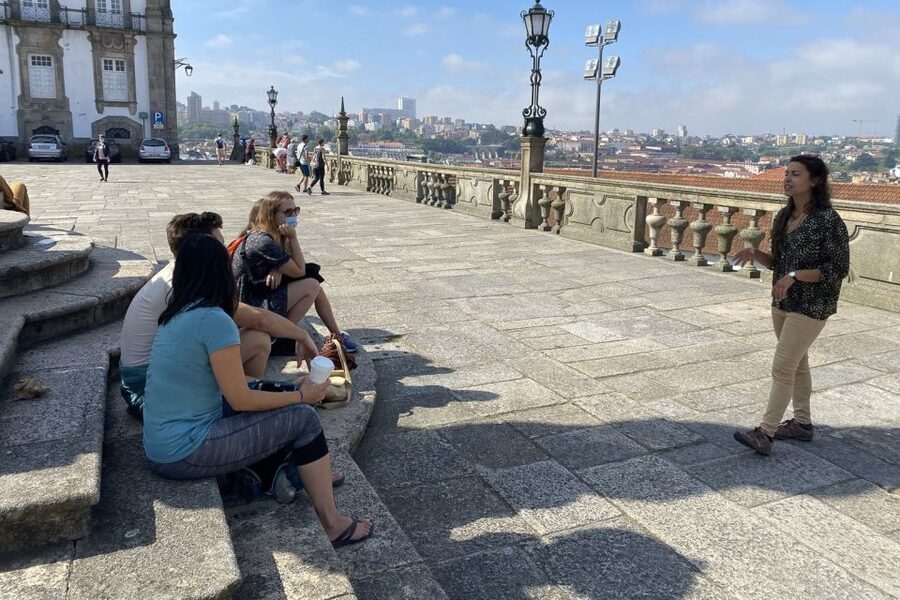
The next section brings you past several Art Nouveau buildings before reaching Livraria Lello, or Lello Bookshop. This is one of Porto’s most famous stops, and its worldwide reputation means the surrounding streets can be busy.
The tour lets you understand where the bookshop fits into the city rather than treating it as an isolated photo stop. You learn that it is one of Portugal’s oldest bookstores and that it has gained international attention for its design and atmosphere. The walk focuses on seeing and explaining the exterior and surrounding area, so you should not assume that an admission ticket or extended interior visit is part of the three-hour program.
That distinction matters if Lello is high on your list. You may want to arrange a separate visit, depending on your schedule and the access rules in place when you go. The walking tour is better viewed as an orientation to the landmark and its neighborhood, not as a dedicated bookstore tour.
The Art Nouveau façades add another layer to the route. They show that Porto is not only medieval stone and religious architecture. The center also carries the marks of later commercial and urban growth, and a good guide can help you see those changes without interrupting the walk every few steps.
More History Walking Tours in Porto:
- Berlin: Third Reich & Cold War Guided Walking Tour
★ 4.9 · 8,378 reviews - Munich: Third Reich & WWII Walking Tour
★ 4.6 · 6,181 reviews - Berlin’s Best: 2 Hour Walking Tour Third Reich and the Cold War
★ 5.0 · 5,486 reviews - Third Reich Berlin: Hitler and WWII Walking Tour
★ 5.0 · 3,301 reviews
Clérigos Tower and the final city view
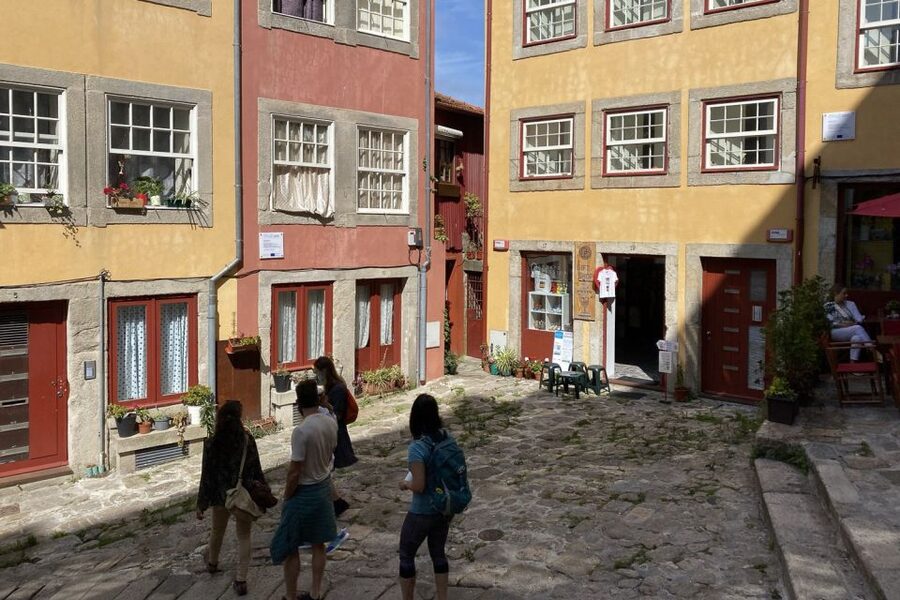
Clérigos Tower is one of Porto’s most familiar symbols. You can spot it from many parts of the city, and seeing it within the street plan gives you a better idea of how Porto’s high points and steep drops shape the city.
The tour passes by the church and tower rather than promising a climb. If you want to go up the tower, treat that as a separate plan. The value here is the explanation of the landmark and its place in Porto, plus the chance to connect it with the other sights you have already seen.
The route finishes with a panoramic view over downtown, the Douro River, and Vila Nova de Gaia. This is a strong ending because the earlier streets can feel enclosed and confusing. From a higher viewpoint, the city’s slopes and river setting finally make sense.
The view is also where you should take a moment to judge the walk honestly. You have covered a lot of ground in three hours, and the final outlook rewards that effort. If you have a low fitness level or difficulty with hills, the route may feel demanding well before this point.
Port wine, olive oil, and the optional picnic
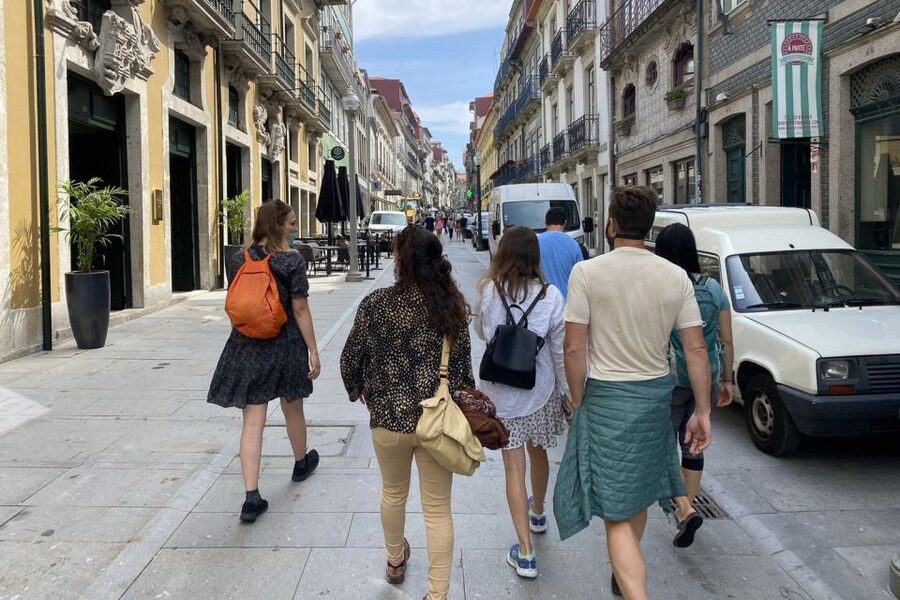
The last 20 minutes are set aside for a small tasting. You receive Port wine, bread, and olive oil, creating an easygoing finish after the walking and commentary. It is a modest tasting rather than a full wine tour, but it adds a distinctly Portuguese touch and gives you time to talk with the group.
The olive oil is especially useful as a small introduction to local food culture. Bread, oil, and Port are simple ingredients, yet they turn the ending into something social rather than purely informational. Several guide styles also include restaurant, bar, Fado, and evening suggestions, so this is a good time to ask for practical advice.
An optional picnic at Virtudes Gardens adds more food and a scenic setting. The picnic box includes bread, cheese, hams, fruit, one bottle of wine, Portuguese pastries, and a traditional Portuguese picnic blanket. Choose it if you want the tour to finish as a relaxed meal outdoors rather than a short tasting.
The picnic option is not necessary for the main sightseeing route. If your priority is seeing Porto’s landmarks and getting orientation, the standard walk and tasting should be enough. If you have a free afternoon and like a slower finish, the gardens and picnic make the experience feel more leisurely.
What the guides do especially well
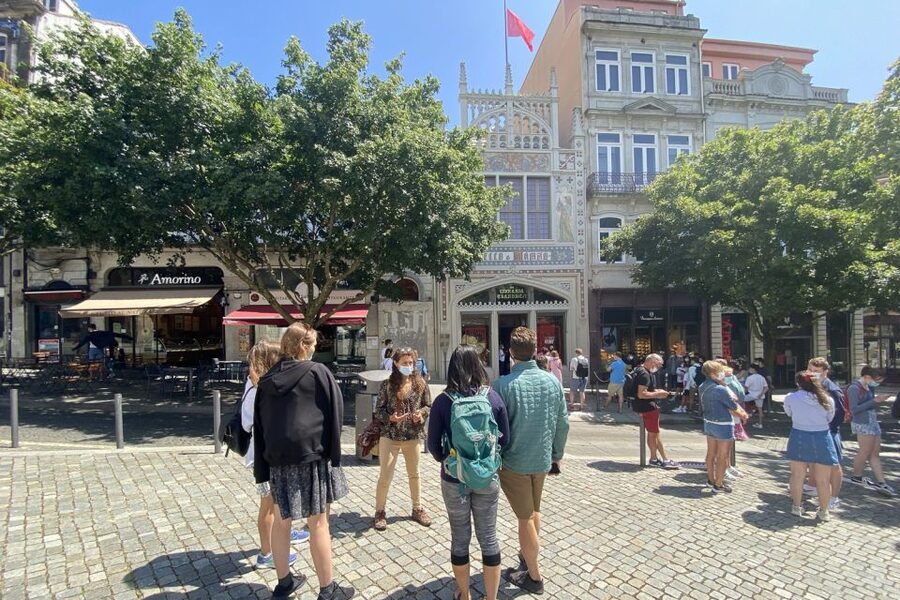
The strongest part of this tour is the human delivery. Pedro is repeatedly described as a gifted storyteller who can link different periods of Porto’s past into one understandable account. He has also been praised for adjusting the route and pace to suit a mixed-age group, from children and younger adults to people in their seventies.
Gregorio receives similar praise for humor, clear English, and an ability to answer questions without losing the thread of the walk. Other guides have been described as friendly, thoughtful, and willing to offer personal suggestions for eating and evening entertainment.
That matters because three hours is a long time to listen while walking uphill. A guide who simply lists dates would make the route feel heavy. Here, the better approach appears to be story first, facts attached to the story, and enough humor to keep the group alert.
You should also expect personal touches. One guide has used family stories and local anecdotes to give the final part of the walk extra warmth. Another has been remembered for ghost stories around Halloween. These details are not guaranteed, but they show the kind of flexible, personality-led guiding you may receive.
Is $41 a fair price?
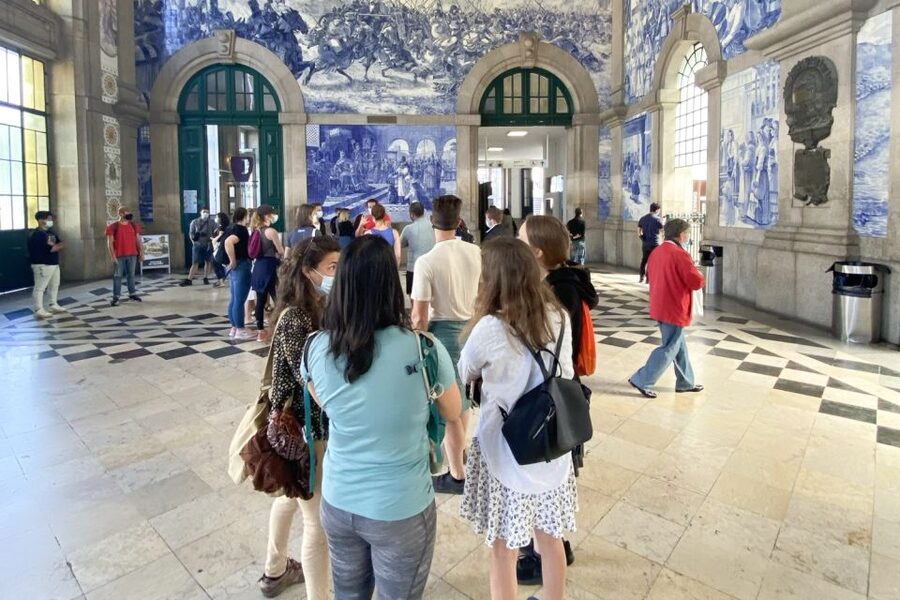
At $41 per person, this is not the cheapest free-style walking option, but the price is reasonable if you want a structured introduction to Porto. You are paying for three hours of live English guiding, a planned route through the main historic areas, and the Port, bread, and olive oil tasting.
The value improves if you have only one day in Porto. You see the Sé neighborhood, São Bento Station, nightlife streets, Art Nouveau buildings, Lello Bookshop, Clérigos Tower, and a major viewpoint in one organized outing. You also gain practical suggestions for what to do afterward.
The price is less compelling if you prefer to move slowly, enter every landmark, or stop often for photographs. This tour keeps moving because it has a lot to cover. You should also remember that the route does not replace separate visits inside attractions such as Lello Bookshop or Clérigos Tower.
The optional picnic changes the calculation. If you enjoy a supplied outdoor meal and want a social finish, it can add value. If you already have restaurant plans or prefer to choose your own food, keep the standard tasting.
Who should book this Porto walk?
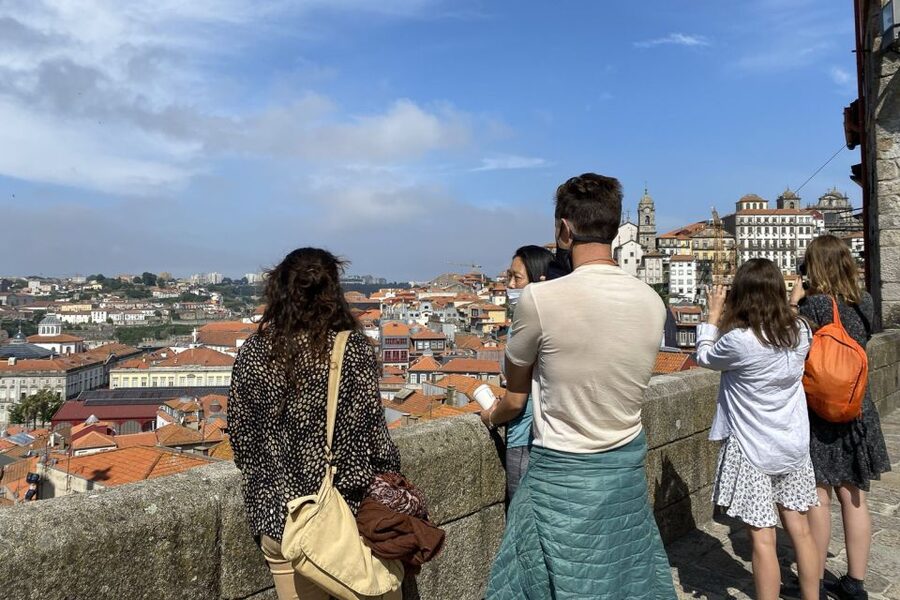
I would choose this tour early in a Porto visit, especially if you have limited time or want the city explained before exploring alone. The route gives you a practical map of the center and helps you decide which places deserve a return visit.
It suits people who enjoy history, architecture, local anecdotes, and a guide who can answer questions. It also works well for solo visitors. One solo participant was offered the chance to reschedule when the group was very small, then received a comfortable and personal experience with the guide.
Families and mixed-age groups can fit in, provided everyone is ready for hills and cobbles. The guides appear willing to slow down, add breaks, and keep the group together. Still, people with mobility impairments or a low level of fitness should choose another format.
Wear comfortable shoes and clothes. Sunglasses, a sun hat, and sunscreen are sensible, particularly in warm weather. Do not bring luggage or a large bag, and plan to carry only what you need for several hours outside.
The tour offers free cancellation up to 24 hours before the start, and you can reserve now and pay later. Check the available starting times before booking, since the activity is valid for three hours but does not list one fixed daily departure.
My verdict on this three-hour experience
Book it if you want Porto’s central sights tied together by a lively local guide rather than a checklist of monuments. The best reason to go is the storytelling, especially when Pedro or Gregorio is leading, but the route itself is strong: medieval Sé, São Bento, Art Nouveau streets, Lello, Clérigos, and a view over the river.
Skip it if steep streets are a serious problem, if you dislike group walks, or if you want long indoor visits at each landmark. For most first-time visitors who can manage the hills, $41 buys a useful orientation, a good amount of local context, and a pleasant Port and olive oil ending.
FAQ
How long does the Porto Historical Center Walking Tour last?
The experience lasts three hours. It includes two walking sections of about 80 minutes each, a 10-minute break, and a final 20-minute wine and food tasting.
Where does the tour begin and end?
It begins and returns to the activity provider’s office at R. de Mouzinho da Silveira 34 in Porto.
What language is the tour offered in?
The live guided tour is offered in English.
What sights are included?
The route includes the Sé neighborhood, medieval streets, São Bento Station, nightlife areas, Art Nouveau buildings, Lello Bookshop, Clérigos Tower, and panoramic views of downtown, the river, and Vila Nova de Gaia.
Is Port wine included?
Yes. Port wine is included, along with bread and olive oil.
Is the picnic included with every booking?
No. The picnic is available only if you select that option. It includes bread, cheese, hams, fruit, one bottle of wine, Portuguese pastries, and a traditional picnic blanket at Virtudes Gardens.
Is the tour suitable for people with mobility impairments?
No. The experience is not suitable for people with mobility impairments or people with a low level of fitness because you must walk through Porto’s hilly historic center.
What should I bring?
Bring comfortable shoes, comfortable clothes, sunglasses, a sun hat, and sunscreen. Large bags and luggage are not allowed.
Just added around Porto
- Essential Porto Walking Tour★ 4.6 · 129 reviews
- Porto: Private Guided Walking Tour★ 5.0 · 387 reviews
- 3-hour private guided walking tour of the BEST of Porto★ 5.0 · 290 reviews
- Porto: Jewish Heritage Walking Tour★ 4.7 · 266 reviews
- 3-Hour Porto Jewish Heritage Walking Tour with Local Guide★ 4.5 · 396 reviews
- Porto Walking Tour – The Perfect Introduction to the City★ 5.0 · 733 reviews
- Porto: Guided Walking Tour and Lello Bookshop★ 4.8 · 895 reviews
- Porto: Port and Douro Wine Walking Tour with 9 Tastings★ 4.7 · 926 reviews
History Walking Tours, compared.

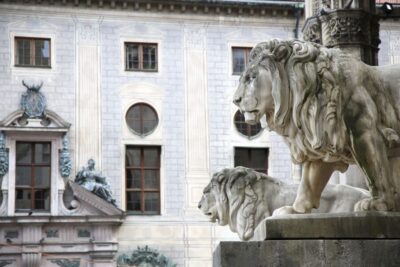

Berlin’s Best: 2 Hour Walking Tour Third Reich and the Cold War
Read our review →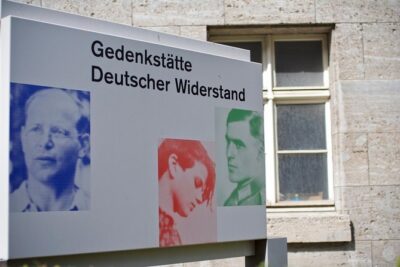
Third Reich Berlin: Hitler and WWII Walking Tour
Read our review →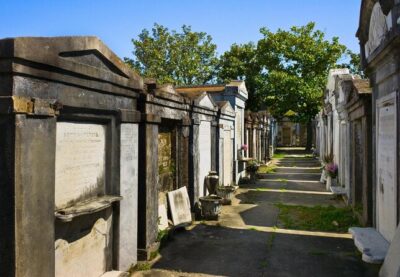
New Orleans Garden District History Walking Tour
Read our review →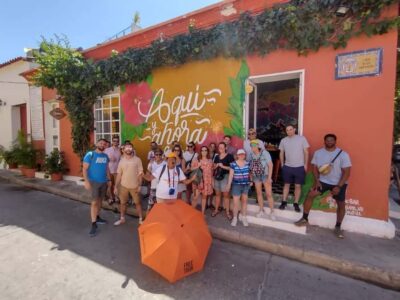
Cartagena: Historic Center and Getsemaní Shared Walking Tour
Read our review →
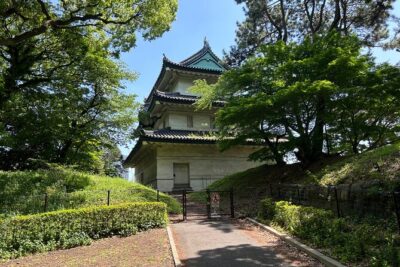
Imperial Palace and Shogun Historical Walking Tour
Read our review →Browse the lists this tour appears in