
REVIEW · DUBLIN
Dublin: Highlights and Hidden Corners Walking Tour
Dublin’s best introduction may be found in its contrasts: a Viking and medieval quarter, grand Georgian streets, rebel history, a former church turned café, and a tram from Lisbon now serving coffee. This 2.5-hour walking tour links those pieces across both sides of the River Liffey, while guides such as Joe Brennan, John O’Flynn, Jacob, Katie, and Dave add the human stories that make the streets easier to understand.
I like the small group size, capped at 16 and often smaller, because you can hear the guide and ask questions without fighting through a crowd. I also like the mix of major sights and odd corners, from the General Post Office to a wobbly bridge and a bare representation of a famous composer. The main drawback is pace: one person found the walk faster than preferred, so this may not suit you if you need frequent pauses.
Key points at a glance
- Dublin in one connected walk: Start on Dame Street, cross the medieval quarter and Temple Bar, then continue north of the Liffey to O’Connell Street and Trinity College.
- Small groups capped at 16: The limited size should make it easier to hear stories and speak with your guide.
- History told through people: Expect political stories, local characters, odd city details, and tales linked to independence.
- Plenty beyond the standard sights: Look for a former cinema, a church that is no longer a church, a Lisbon tram café, and an unusual post-box.
- English-speaking local guides: Joe Brennan, John O’Flynn, Jacob, Katie, and Dave have all led this walk.
- Good first-day value: At $31 per person, the tour gives you a broad orientation before you return to selected sights on your own.
Why this Dublin walk works as a first introduction
This is not a tour built around one museum or one grand building. It is a moving lesson in how Dublin fits together.
You begin at the Tree of Gold statue, known in Irish as Crann an Óir, on Dame Street at the corner of Fownes Street Upper. From there, the route moves through central Dublin rather than keeping you in one small district. You see the old core, cross the river, follow O’Connell Street, and finish near Trinity College and the former Houses of Parliament.
That route matters. Dublin’s character changes from one block to the next, and the walk lets you notice those shifts on foot. You do not simply tick off a castle, cathedral, post office, and college. You see how political events, religion, trade, architecture, and daily city life overlap.
The tour is conducted in English with a live guide. Several guides are named in the experience information, including Joe Brennan, John O’Flynn, Jacob, Katie, and Dave. The strongest qualities to expect are a clear pace, local stories, humor, and the ability to answer questions. Joe was singled out for a well-judged walking speed, while Jacob was noted for patience with questions and practical help with directions after the walk.
More Hidden Gems Walks in Dublin:
- Dublin Highlights and Hidden Gems Guided Walking Tour
★ 5.0 · 6,020 reviews - Dublin: Highlights and Hidden Gems Walking Tour
★ 4.9 · 2,140 reviews - Explore Berlin: See All The Iconic Sights & Some Hidden Gems
★ 5.0 · 4,429 reviews
From Dame Street into medieval Dublin
Dame Street is a handy starting point because it puts you close to several important parts of central Dublin. The Tree of Gold statue gives you a clear meeting landmark, and the route then turns toward the former Viking and medieval quarter.
The first major stop is City Hall, followed by the grounds and gardens of Dublin Castle. The tour keeps these visits external, so you should not expect a guided interior visit or included admission. That is a limitation if your main goal is to explore rooms, exhibitions, or historic interiors, but it keeps the walk focused and prevents entry times from controlling the day.
Dublin Castle is especially useful as an early stop because it helps explain the city’s political center. Your guide can place later events, including the 1916 Rising and Ireland’s move toward independence, against this older setting. You get context before reaching the General Post Office, where those events become more immediate.
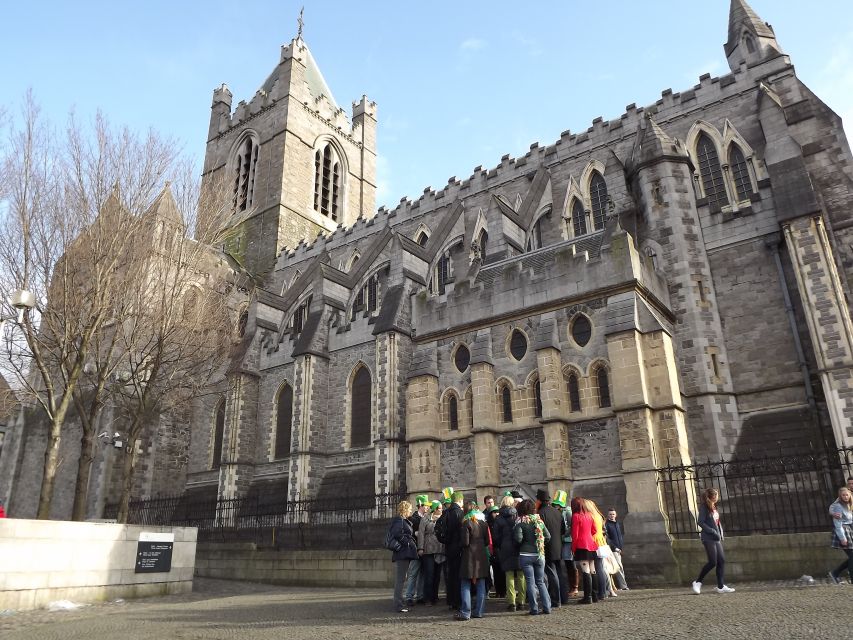
Christ Church Cathedral follows. Again, the visit is external, but the building gives this part of Dublin a strong sense of age and continuity. The walk is not trying to replace a full cathedral visit. Instead, it shows you where the cathedral sits in relation to the old city streets, Dublin Castle, and the entertainment district nearby.
Fishamble Street and the Temple Bar side streets
Fishamble Street and Smock Alley bring you into one of the tour’s more useful parts. These names can be easy to pass over when you explore alone, yet they help reveal older layers of Dublin that are not always obvious from the main roads.
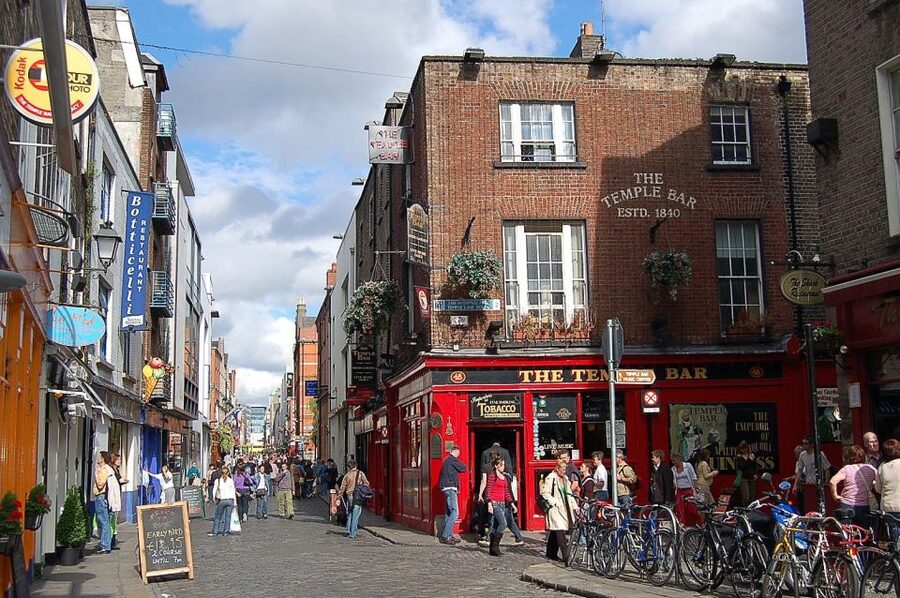
The route continues to Meeting House Square in Temple Bar. Temple Bar is famous, easy to reach, and often crowded, so the value here comes from the guide’s explanation rather than simply arriving in the district. You get a look beyond the familiar pubs and photographs, with stories that give the area more shape.
One reason I like this section is the attention to things you might otherwise miss. You may hear about Dublin’s first full-time cinema, now defunct, and see a church that no longer functions as a church. The experience also points out a former Lisbon tram now serving as a café. These are small details, but they make a walk feel local rather than like a parade of famous façades.
You should expect some time standing on streets and squares while the guide talks. Comfortable shoes matter more than dressy clothes, and you will want to keep an eye on the group when moving through busy central areas.
Crossing the Liffey and reading Dublin from the Northside
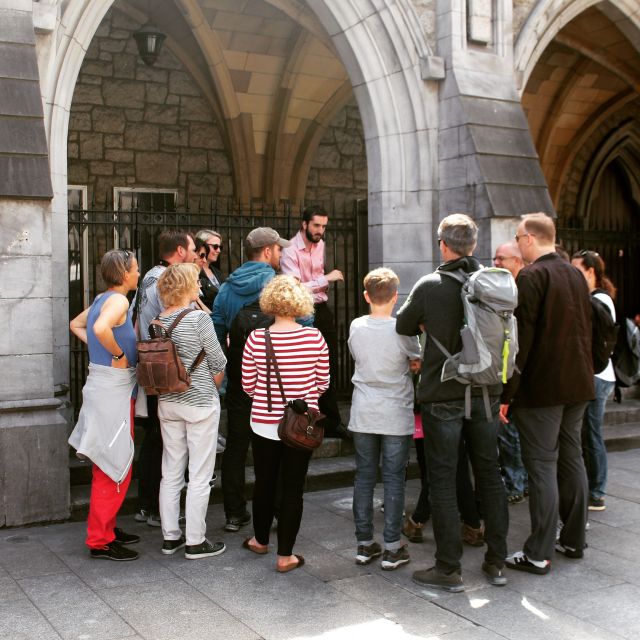
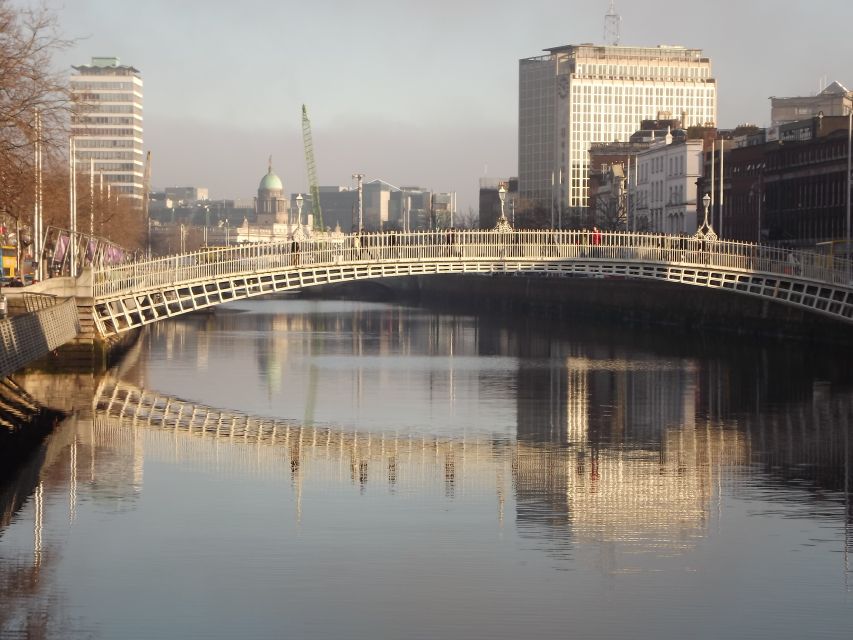
The route reaches the Millennium Bridge and the River Liffey before moving into the Italian Quarter. The river crossing is more than a scenic pause. It gives you a useful view of how Dublin’s two central sides connect, and it marks the shift from the older southern districts to the Northside.
The bridge itself has a playful feature: you may feel a slight bounce as you cross. That kind of detail captures the tone of the walk. The guide deals with serious subjects, but the tour also makes room for odd facts and small surprises.
The Italian Quarter adds another change of mood. You will not spend the entire walk among landmark buildings. Instead, you get a sense of how central Dublin contains restaurants, shops, old structures, public art, and traces of earlier uses in a compact area.
St Mary’s Church is another memorable stop. It is now a well-known café and bar, which makes it a good example of Dublin’s habit of giving old buildings new lives. Since the tour visits sites externally, you should treat this as an orientation point rather than a guaranteed chance to sit inside.
A few more walking tours around Dublin worth a look
- 1916 Rebellion Walking Tour
★ 5.0 · 1,605 reviews - 90 Minute Dublin Walking tour and Sightseeing tips
★ 5.0 · 916 reviews - 2-Hour Historical Walking Tour from Dublin
★ 5.0 · 875 reviews - Historical 2-Hour Guided Walking Tour of Dublin
★ 4.7 · 865 reviews
Henry and Moore Streets, then O’Connell Street
Henry Street and Moore Street lead you toward O’Connell Street and show a more active shopping and street-life side of central Dublin. This section helps balance the earlier medieval and architectural material with streets that feel tied to everyday city use.
O’Connell Street is one of the key historic avenues on the route. The guide brings you to the General Post Office, the O’Connell Monument, and the surrounding area. The General Post Office is particularly important because it served as the headquarters of the rebels during the 1916 Rising.
The rising caused the destruction of the building and much of the surrounding street. Hearing that story while standing outside the GPO gives the event a clear physical setting. You can see why the building matters as more than a post office, and why O’Connell Street carries such weight in Ireland’s political memory.
The walk also includes a story about a post-box that reflects Ireland’s transition to independence. This is exactly the sort of detail you may walk past without help. It turns a small piece of street furniture into a clue about changing national identity.
This section may be the most rewarding part for anyone interested in politics and modern Irish history. If you prefer quiet lanes and old architecture, it may feel more urban and busy than the first part of the route.
Trinity College and the former Parliament House
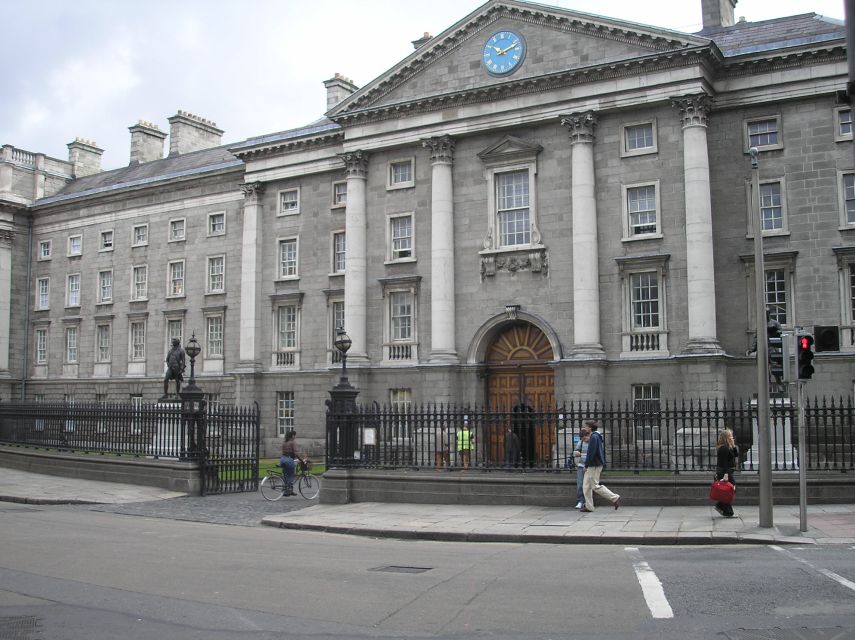
The walk finishes around Trinity College, with the famed Book of Kells as the natural next subject. The tour does not include entry, and the Book of Kells is presented as a place to visit after the walk if you choose.
That arrangement works well. By the time you reach Trinity, you have enough background to understand why the college matters, but you are free to decide if an interior visit fits your schedule and budget. The final area also includes the former 18th-century Houses of Parliament, now the Bank of Ireland.
This is a strong ending because it brings together education, government, architecture, and national history. You can continue your own sightseeing from here, or use the guide’s suggestions for the rest of your stay. Katie was especially useful for practical recommendations beyond the route, while Jacob was willing to help with directions after the tour.
There is one point to check before booking. The route description says the walk finishes outside Trinity College, while the meeting information says the activity ends back at the meeting point. Since those details do not match perfectly, confirm the final drop-off point when you book or ask the guide at the start.
What the guides add to the walk
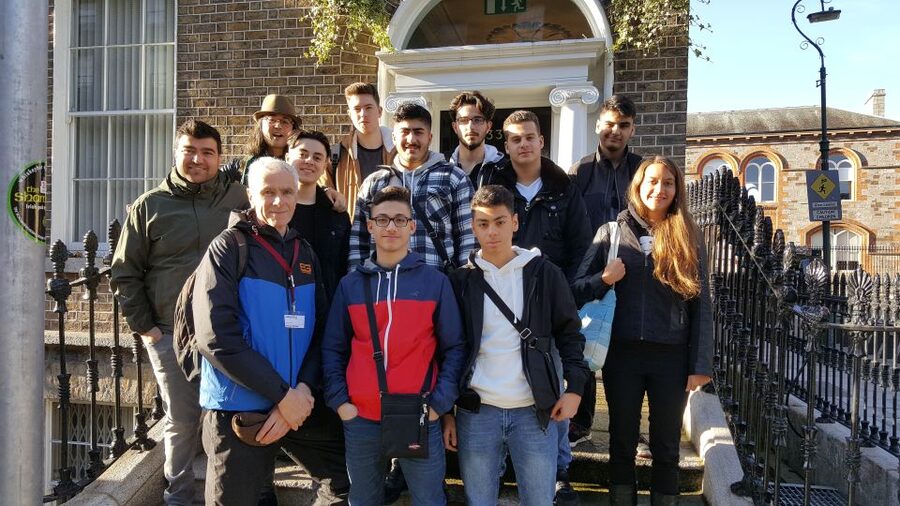
The guide makes or breaks a city walk, and this experience puts strong emphasis on personal delivery. The named guides have different styles, but the qualities described are consistent: friendly manners, clear explanations, humor, and a good command of local history.
Joe Brennan is associated with a particularly comfortable pace and polished delivery. John O’Flynn brings architectural and political material to life in a welcoming way. Jacob is a good fit if you enjoy asking questions, since patience and help with directions are part of his appeal.
Katie combines information with humor and offers recommendations for the rest of your time in Dublin. Dave is described as friendly, funny, and attentive to the group. You cannot normally select a particular guide when booking, so consider the names as examples of the range of people who may lead your walk rather than a promise of assignment.
The group limit of 16 is important. Dublin’s streets can be crowded, and a very large group would make the quieter details hard to catch. Additional guides are provided when needed, so the group should remain within the stated limit.
Pace, access, and practical comfort
The walk lasts 2.5 hours, though one comment refers to a three-hour tour. Use 2.5 hours as the official planning figure, and leave extra time afterward if you want to enter the Book of Kells, revisit Dublin Castle, or stop for food.
The route is listed as wheelchair accessible. It passes through public streets, squares, bridges, and central districts, but the walking pace and street conditions can still affect comfort. If you use a wheelchair or have limited mobility, confirm the current route details before setting out, especially around crowded streets and any uneven surfaces.
Wear shoes you can walk in for several hours. Bring a rain layer, since the experience is outside and visits are external. A small group helps, but it does not remove normal city noise, traffic, or pedestrian congestion.
The walk is in English only. If you want a tour in another language, this is not the right choice.
Is $31 a fair price?
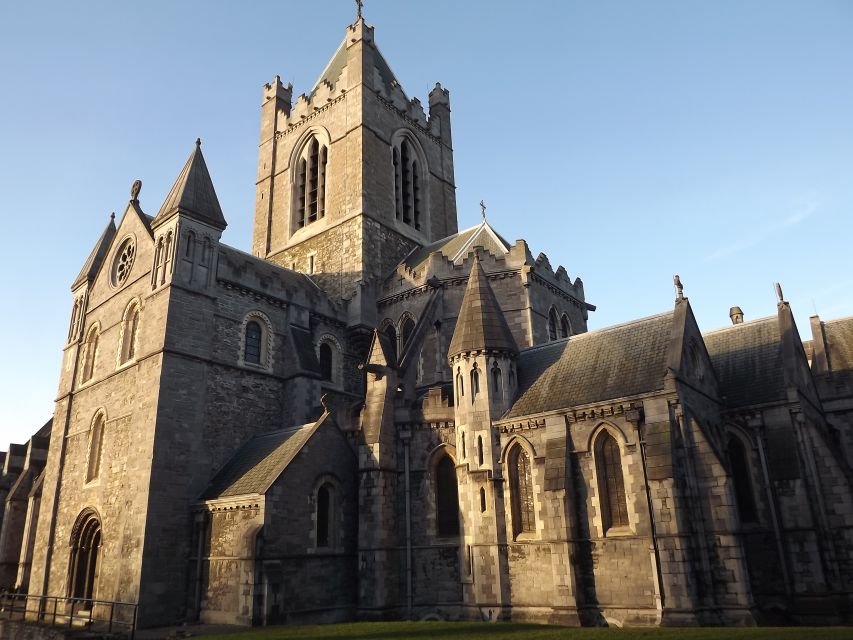
At $31 per person, the value is strongest if you want a broad introduction to central Dublin in one sitting. You cover a large portion of the city center, hear stories at the places where they happened, and get suggestions for what to do next.
The price does not include interior admissions, food, drinks, or gratuity. That keeps the base cost fairly clear, but you should budget separately if you plan to enter the Book of Kells, Christ Church Cathedral, or Dublin Castle after the walk.
I see this as a good use of money on your first day, especially if you are staying in central Dublin for a short visit. The tour helps you decide which places deserve more of your own time. If you already know the city well, you may find the major stops familiar, though the unusual street details and guide stories can still add something new.
Cancellation is flexible: you can cancel up to 24 hours in advance for a full refund. You can also reserve now and pay later, which is useful when your schedule is still shifting.
Who should book this walking tour?
I would choose this for a first visit, a short stay, or a traveler who wants a city overview without committing to a full-day tour. It also suits history fans who enjoy political stories, architecture, and small urban curiosities in equal measure.
Families with older children may appreciate the variety. The tour moves from castles and cathedrals to bridges, cafés, post-boxes, and street stories, so it is not one long lecture.
You may want another option if you need a very slow pace, dislike outdoor touring in uncertain weather, or mainly want interior access. This walk is about seeing Dublin in context, not spending long periods inside each landmark.
Should you book it?
Book it if you want Dublin explained through a connected route rather than a checklist of buildings. The combination of City Hall, Dublin Castle, Christ Church, Temple Bar, the Liffey, O’Connell Street, the GPO, and Trinity gives you a strong first map of the city.
The best reason to go is the detail between the headline sights: the former cinema, the re-purposed church, the Lisbon tram café, the bouncy bridge, the independence-era post-box, and the curious statue of a naked 18th-century composer. At $31, with a group capped at 16, that is a fair exchange for two and a half hours of orientation and stories.
Skip it only if you want a slower specialist tour or guaranteed interior visits. For most first-time visitors, this is a practical, friendly way to get your bearings before exploring Dublin on your own.
FAQ
Where does the tour start?
It starts at the Tree of Gold statue, or Crann an Óir, on Central Plaza, Dame Street, Dublin 2, at the corner of Dame Street and Fownes Street Upper.
How long does the walking tour last?
The stated duration is 2.5 hours. Starting times vary, so check availability when booking.
Where does the tour finish?
The route description says it finishes outside Trinity College near the Book of Kells. The meeting information also says the activity ends back at the meeting point, so confirm the final location with the provider.
Is the Book of Kells included?
No. The walk finishes around Trinity College and introduces you to the Book of Kells, but all visits are external and admission is not included.
Are the attractions visited inside?
No. The tour visits the listed places externally, with opportunities to return for interior visits afterward.
How large is the group?
The maximum group size is 16 people, and groups are often smaller. Additional guides may be used when needed.
What language is the tour conducted in?
The live tour is conducted in English.
Can I cancel or pay later?
You can cancel up to 24 hours in advance for a full refund. You can also reserve your place and pay later.
Just added around Dublin
- Dublin: Macabre History Walking Tour★ 4.9 · 95 reviews
- Dublin: Traditional Pub Walking Tour★ 4.6 · 295 reviews
- Dublin: Traditional Pubs Walking Tour with Local Guide★ 4.9 · 112 reviews
- Dublin’s Haunted History Walking Tour★ 4.3 · 345 reviews
- Dublin: Irish Music Walking Tour with Live Performance★ 4.8 · 137 reviews
- Dublin: Delicious Walking Food Tour★ 4.9 · 137 reviews
- Dublin Highlights: 2.45-Hour Walking Tour in Italian★ 4.7 · 460 reviews
- Dublin: Sightseeing Walking Tour in German★ 4.7 · 231 reviews
Hidden Gems Walking Tours, compared.
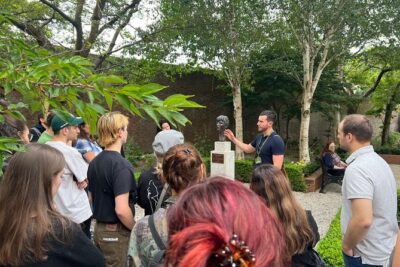
Dublin Highlights and Hidden Gems Guided Walking Tour
Read our review →
Explore Berlin: See All The Iconic Sights & Some Hidden Gems
Read our review →
San Marco to Rialto Walk & Spritz Like a Local
Read our review →
Kyoto Geisha Walking Tour: Gion District & Hidden Gems
Read our review →
Eat Like a Local: Venice 3-Hour Small-Group Food Tasting Tour
Read our review →
Montmartre Hidden Gems and Scenic Highlights Walking Tour
Read our review →
Guided Walking Tour of City Highlights & Hidden Gems
Read our review →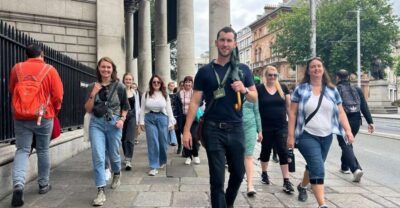
Browse the lists this tour appears in