

REVIEW · DUBLIN
DayTripper Dublin: A Guided City Walking Tour
Dublin’s story is written into its streets, statues, courtyards, and old churchyards, and this walking tour gives you a useful way to read it. In about two and a half hours, you move from St Stephen’s Green through Grafton Street, Dublin Castle, Temple Bar, O’Connell Street, and Trinity College while your guide links Irish culture to the places around you.
I like the central meeting point, which makes this an easy first-day activity, and I like the local, conversational guiding style. Guides including Ciarán, Keiron, and Kyron have been praised for explaining centuries of Irish history in clear terms, answering questions, and offering practical ideas for the rest of your stay. The main consideration is that this is an outside walking tour: you do not enter St Patrick’s Cathedral, Dublin Castle, Christ Church Cathedral, or Trinity College, and the route calls for a moderate level of fitness.
Key points to know before you book
- A strong first look at Dublin: The route covers major central sights without asking you to spend a full day on your feet.
- Irish history connects each stop: Independence, the Famine, Viking Dublin, working-class life, and twentieth-century politics all enter the story.
- The guide can shape the experience: Past tours with Ciarán, Keiron, and Kyron included personal questions, local advice, and special interest topics such as women’s history.
- You see the exteriors, not the interiors: Entry to the major cathedrals, Dublin Castle, and Trinity College is not included.
- The finish is convenient: College Green is two minutes from Grafton Street and about a 15-minute walk from Tara or Pearse Station.
- The group can reach 25 people: That keeps the price low, but it may feel less personal than a private tour.
Why this route works well on your first day
Dublin is compact in the center, but its story can feel scattered. One square may point to Viking origins, the next to British rule, and the next to the Irish fight for independence. A guide gives you the links between those places instead of leaving you with a series of attractive buildings and statues.
The tour begins at the Wolfe Tone sculpture near St Stephen’s Green and ends at College Green. That path makes practical sense. You start beside one of Dublin’s best-known parks, then work through major shopping and historic streets before finishing near Grafton Street, Trinity College, and several transport options.
I would book this near the start of your stay. You get a basic map of central Dublin, then receive suggestions for food, sights, and places to visit later. The guides also invite questions, so you can steer part of the talk toward your interests. One guide adapted a tour around women’s history, while another helped a guest plan the rest of a day in port.
The price, $27.82 per person, is reasonable for a guided city walk of this length. You are paying for an in-person guide rather than admission to attractions. That makes the value depend on what you want: if you need orientation and context, it is a good use of money. If you mainly want interior visits, you will need to add those separately.
More City Highlights Walks in Dublin:
- Dublin City Center Walking Tour
★ 5.0 · 552 reviews - Dublin: Sightseeing Walking Tour in German
★ 4.7 · 231 reviews - Berlin City walk Government District and Places of Democracy
★ 4.7 · 8,467 reviews
St Stephen’s Green and the opening chapter
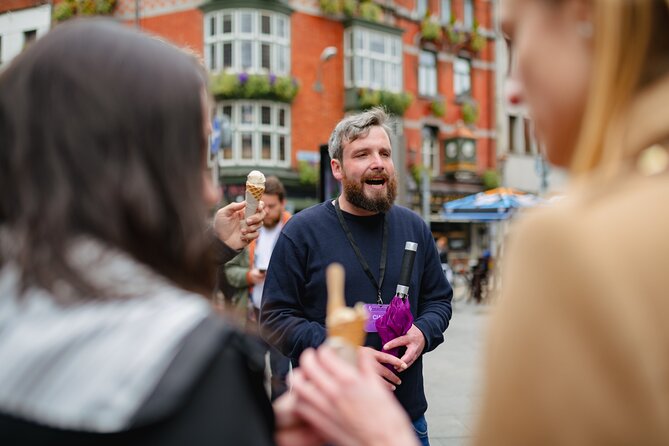
At St Stephen’s Green, the guide introduces Irish history and culture in a park setting. This is a pleasant way to begin because you are not immediately pushed into a noisy street. The green space gives the group room to gather while the guide lays out the basic story of Dublin.
Expect a broad introduction rather than a long stop devoted to one monument. The aim is to help you understand how Irish identity developed and how the city’s public places reflect that past. This early context makes the later stops easier to follow.
The tour also includes discussion of Irish dance and music. That matters because the experience is not limited to political events or old buildings. You get a sense of cultural traditions that continue to shape daily life and public performance.
The exact timing is worth noting. The tour is advertised at about two hours and 30 minutes, while one itinerary note refers to a three-hour, history-filled walk. Guides may adjust the pace, question time, or amount of discussion. Leave room in your schedule rather than planning a tight appointment immediately afterward.
Grafton Street and Molly Malone
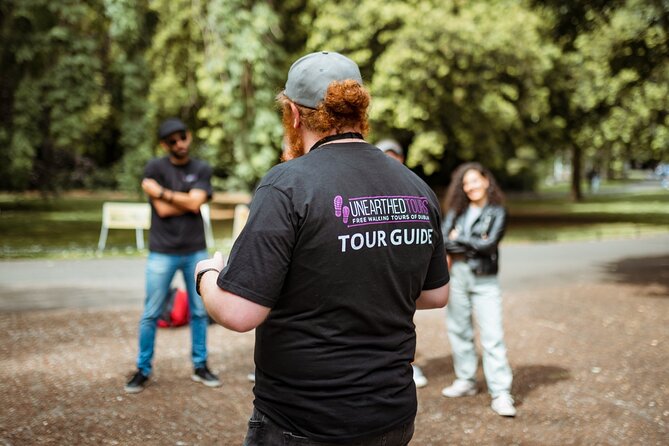
Grafton Street brings you into one of Dublin’s busiest high streets. Here, the guide talks while you walk, showing how a major shopping street fits into the city’s modern life. It is not a long stop, with about 10 minutes listed, so expect orientation and stories rather than a detailed shopping visit.
Next comes the Molly Malone statue. The guide uses Molly Malone to introduce working-class Dublin and the stories attached to one of the city’s familiar symbols. This is a useful change of scale. Instead of hearing only about leaders and national events, you get a look at ordinary people and the folklore that grew around them.
The statue is also a natural point for questions about Dublin’s popular culture. Your guide may connect the figure to how the city presents itself today, though the amount of detail will depend on the group and the guide’s pacing.
St Patrick’s Cathedral and the Dubh Linn Gardens
At St Patrick’s Cathedral, you meet in the gardens and hear about the origins of Dublin. The tour does not enter the cathedral, and admission is not included. That limitation is important if you want to see the interior, stained glass, or memorials. You can return on your own with a separate ticket if you choose.
The outside stop still has value because it places the cathedral in the story of the city. The guide can explain why this site matters and how Dublin developed around religious, political, and civic centers. Ten minutes is enough for an introduction, but not for a full architectural tour.
The route then moves to the Dubh Linn Gardens. This picturesque spot is tied to Dublin’s Viking past, and the name itself points to the city’s older origins. The guide uses the gardens to connect present-day Dublin with the settlement that came before the modern capital.
I like this pairing because it moves from a major Christian landmark to a place associated with the city’s Viking beginnings. You see how different eras overlap in a small area. The stop is free, and there is no extra ticket to worry about.
More Guided Tours in Dublin:
- Dublin Highlights and Hidden Gems Guided Walking Tour
★ 5.0 · 6,020 reviews - Historical 2-Hour Guided Walking Tour of Dublin
★ 4.7 · 865 reviews - Food on Foot: Dublin Street Food Tour with Local Guide
★ 5.0 · 490 reviews - Dublin to Wicklow, Glendalough Small Group Tour with Guided Walk
★ 4.5 · 282 reviews
Dublin Castle and the story of political struggle
The tour continues into the courtyards of Dublin Castle, but it does not enter the castle buildings. The guide discusses Ireland’s political struggles and includes the history of Northern Ireland. This is one of the stops where the quality of explanation matters most, since the subject can become confusing when reduced to dates and slogans.
A good guide can show how power was held, challenged, and remembered in Ireland. The tour’s approach links the castle to wider national events instead of treating it as a decorative landmark. You should expect an introduction, not a full treatment of every period in Irish politics.
Admission to Dublin Castle is not included. If the castle interior is a priority, plan a separate visit. The walking tour gives you a useful first pass, but it cannot replace time inside the complex.
Christ Church Cathedral and Viking Dublin
At Christ Church Cathedral, the guide takes you around the courtyard and explains the cathedral’s origins and its connection to Viking Dublin. Again, you do not enter the cathedral, and admission is not part of the tour.
This stop works well after Dubh Linn Gardens and Dublin Castle because the route keeps returning to the city’s layered past. You are not simply ticking off churches. You are hearing how religious institutions, Viking settlement, and later political power occupied the same central part of Dublin.
Ten minutes is a short introduction. You will learn why the cathedral matters and have a chance to look at the exterior, but you will not get an extended architectural visit. If you want the interior, organ, chapels, or detailed monuments, budget for a separate entry.
Temple Bar, with a short look at a famous district
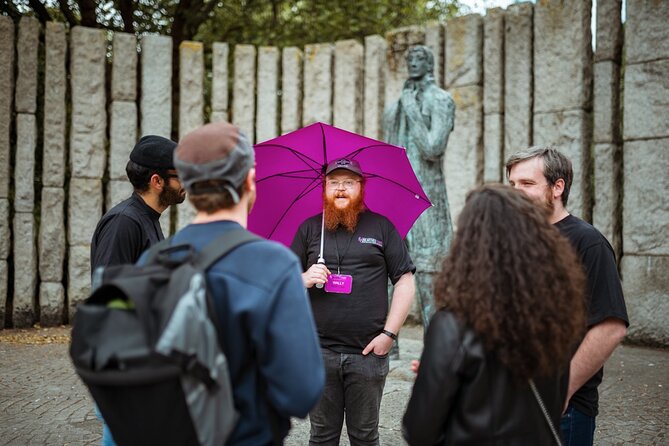
The Temple Bar stop lasts about five minutes, so keep your expectations modest. The guide walks through the neighborhood and gives you a quick sense of its place in central Dublin.
This is useful for orientation, especially if you plan to return later for food, music, or an evening walk. It is not a food tour, pub tour, or extended cultural program. The brief stop helps you recognize the area without letting it take over a route that already covers much of the city.
That restraint is sensible. Temple Bar is well known, but Dublin has more to offer than this one district. The tour gives it a place in the route while spending more time on Irish history and civic life.
O’Connell Street and Trinity College
On O’Connell Street, the guide turns to Ireland’s political story in the twentieth century. Statues along the street help make the subject concrete. You are walking through a major public avenue while learning how national figures and political memory appear in the city.
This part may appeal to you if you want more than a list of pretty streets. The guide’s role is to explain the people and events represented around you, and past guests have especially valued the clear way the guides present several centuries of history without making the talk difficult to follow.
The final stop is outside Trinity College and the Central Bank of Ireland. The guide discusses the Great Irish Hunger, also known as the Famine, as well as Trinity’s history. You do not enter Trinity College, and admission is not included.
The setting gives the discussion a useful contrast. Trinity represents one part of Ireland’s educational and institutional story, while the Famine points to a national crisis with lasting effects. You will not get a full Trinity campus tour or access to the Book of Kells through this walk, but you do get context for why the college and the surrounding area matter.
The tour ends at College Green. From there, Grafton Street is about two minutes away, and Tara or Pearse Station is roughly a 15-minute walk. That makes the finish handy for continuing your sightseeing, finding lunch, or heading back toward your accommodation.
The guide makes the biggest difference
The route is strong, but the guide is the main reason to book it rather than simply walk these streets with a map. Names connected with the experience include Ciarán, Keiron, and Kyron. The strongest guiding traits described in the feedback are clear storytelling, local knowledge, enthusiasm for Ireland’s past and present struggles, and a willingness to answer questions.
You should feel free to ask for advice during the walk. Guides have helped people plan the rest of a day, suggested places to eat, and pointed out details that are easy to miss. One guide adjusted the subject matter around women’s history, which shows how the tour can become more personal when the group is small.
The group limit is 25 people. That is not a private tour, and a full group may make questions or movement a little less flexible. On the other hand, the limit is still much more manageable than a huge city walk. In some cases, low attendance has turned the outing into something close to a private tour, though you should not book expecting that result.
The tour is offered in English. Confirmation arrives when you book, service animals are allowed, and the route is near public transportation. Wear comfortable shoes and be ready to walk and stand for most of the session. Lunch is not included.
Who should book this Dublin walk?
I would choose this experience if you are visiting Dublin for the first time, want the city explained in plain language, or prefer a local guide to a bus tour. It also suits anyone who wants to understand Ireland’s political and cultural story before visiting museums, cathedrals, or historic buildings on their own.
It is a good fit for a short stay because the route covers many central sights in one outing. It can also help if you are in Dublin for a day in port and need a clear introduction before deciding how to spend the remaining hours.
You may want something else if you strongly prefer indoor attractions, detailed architecture, or a slow visit at each site. This tour does not include lunch or admission to the main paid sights. It gives you context and orientation, then leaves you to choose which interiors deserve your time and money.
The cancellation terms are useful if your plans may change: you can receive a full refund by canceling at least 24 hours before the start time. Changes or cancellations inside that window are not accepted for a refund.
My booking verdict
I would book DayTripper Dublin as an opening activity, not as a replacement for Dublin’s major museums and interiors. Its value comes from the connections between places: Viking Dublin beside later religious sites, political power beside public memory, and modern streets layered over older stories.
The price is fair, the central route is practical, and the guide’s local advice can improve the rest of your stay. Book it if you want a human introduction to Dublin and are happy to see the main landmarks from outside. Skip it only if your priority is entry tickets and extended time inside each attraction.
FAQ
How long does the Dublin walking tour last?
The listed duration is approximately two hours and 30 minutes. One tour note refers to a three-hour history-focused walk, so allow a little extra time in case the guide spends longer on questions or discussion.
Where does the tour begin?
The tour begins at the Wolfe Tone Sculpture near St Stephen’s Green in Dublin.
Where does the tour end?
The tour ends at College Green. It is about a two-minute walk from Grafton Street and roughly a 15-minute walk from Tara or Pearse Station.
Is the tour offered in English?
Yes. The tour is offered in English.
Does the tour enter St Patrick’s Cathedral?
No. The guide meets you in the gardens and discusses the cathedral and Dublin’s origins, but cathedral admission is not included.
Does the tour enter Dublin Castle?
No. The route visits the courtyards, while entry to Dublin Castle is not included.
Does the tour enter Christ Church Cathedral or Trinity College?
No. The guide visits the outside areas of Christ Church Cathedral and stops outside Trinity College. Admission to both is not included.
Is lunch included?
No. Lunch is not included in the tour price.
Just added around Dublin
- Dublin (Dun Laoghaire) Top-Rated Coastal Walking Tour★ 5.0 · 80 reviews
- Food on Foot: Dublin Street Food Tour with Local Guide★ 5.0 · 490 reviews
- Dublin to Wicklow, Glendalough Small Group Tour with Guided Walk★ 4.5 · 282 reviews
- Private Fantastic Tour of Dublin (Walking Tour)★ 5.0 · 141 reviews
- Walking Tour of Dublin’s Viking/Medieval Quarter with a Viking★ 5.0 · 171 reviews
- A Silent Disco Walking Tour★ 5.0 · 118 reviews
- Trinity Trails: Guided Walking Tour of Trinity College★ 4.5 · 203 reviews
- Dublin City Center Walking Tour★ 5.0 · 552 reviews
City Highlights Walking Tours, compared.

Berlin City walk Government District and Places of Democracy
Read our review →
Historic Charleston Guided Sightseeing Walking Tour
Read our review →

Oxford: University and City Walking Tour with Alumni Guide
Read our review →
City Highlights Temple and Market Walking Tour
Read our review →
A History of Terror – Belfast City Centre Walking Tour
Read our review →Browse the lists this tour appears in