
REVIEW · DUBLIN
2-Hour Historical Walking Tour from Dublin
Dublin’s story comes into sharp focus on this compact walk from Trinity College to Dublin Castle. In two hours, you move through Viking Dublin, British rule, Catholic emancipation, the War of Independence, and the Irish Civil War. This is not just a photo stop tour. It is a history lesson delivered on the streets where the events happened.
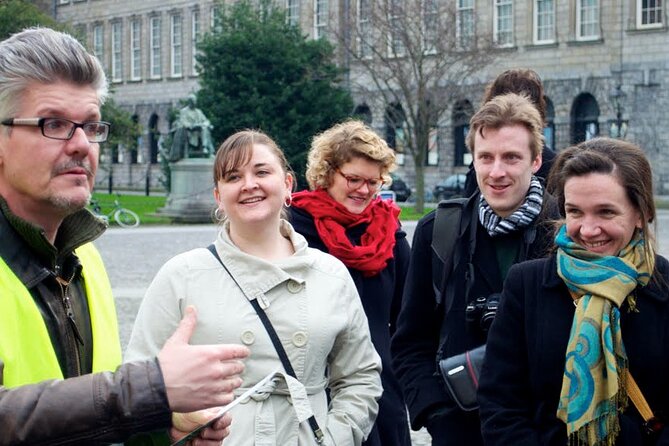
I like the low price, $22.98, and the small maximum group of 25. I also like the guides’ academic background. They are history postgraduates, and guides such as Jody, Eoin, John, Caolan, Daragh, and Colm bring different strengths, from clear storytelling to humor, songs, and political context. The main drawback is that the material can be dense. If you prefer light sightseeing with only a few facts, two hours of Irish politics may feel like a long sitting, especially if the guide runs over the advertised time.
Key points to know before you book
- A serious history walk: Expect Ireland’s political, religious, and social story, not just a tour of attractive buildings.
- Strong starting point: Meeting by the Henry Grattan Monument opposite Trinity College makes this a useful first activity in Dublin.
- Book of Kells context included: You learn why the manuscript matters, but entry to see it is not part of the tour.
- Central Dublin route: The walk covers Trinity College, Temple Bar, Wood Quay, Four Courts, Christ Church Cathedral, City Hall, and Dublin Castle.
- Good value for a short tour: At $22.98, you get about two hours with a specialist guide and no added admission fees along the route.
- Prepare for Irish weather: Wear comfortable shoes and bring rain protection. The walk continues in cold, wind, and rain.
Why this walk works best at the start of your Dublin stay
I like taking a city history walk early in a visit, and this one is especially suited to that plan. It gives you a working map of central Dublin while explaining why the city looks and feels the way it does.
You will hear about Viking settlement, English rule, Protestant political power, Catholic emancipation, the War of Independence, the Treaty of 1921, and the Civil War that followed. That background helps you read later sights with more care. A statue, government building, or church is no longer just an old building. It becomes part of an argument about power, religion, identity, or independence.
The route is also practical. It links several major sights in the city center, so you can return to places that catch your interest. One useful approach is to book this walk near the beginning of your stay, then revisit Trinity College, Dublin Castle, or Christ Church Cathedral on your own.
The group can include up to 25 people. That is not an intimate private tour, but it is small enough for a guide with a clear voice to keep the group together. Several guides, including Eoin and John, have been praised for being easy to hear and for handling questions well.
More History Walking Tours in Dublin:
- Dublin’s Haunted History Walking Tour
★ 4.3 · 345 reviews - Dublin: Macabre History Walking Tour
★ 4.9 · 95 reviews - Berlin: Third Reich & Cold War Guided Walking Tour
★ 4.9 · 8,378 reviews
Trinity College and the Book of Kells
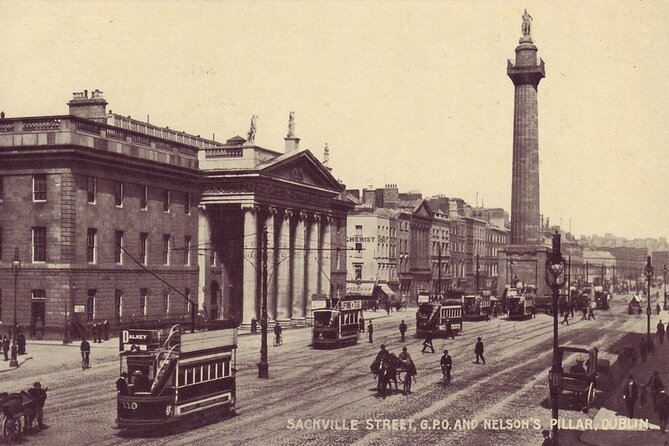
The walk begins at the Henry Grattan Monument on College Green, opposite Trinity College’s front gate. Be precise here. The meeting point is the Grattan statue, not simply the college gates. One missed meeting resulted from confusion over this location, so arrive early and look for the monument.
Inside the campus, the guide explains Trinity’s founding in 1592 and its place as Ireland’s oldest university. The focus then turns to the Book of Kells, an eighth-century manuscript containing the four Gospels in Latin.
You do not enter the Book of Kells exhibition as part of this experience. That is an important cost detail. The tour gives you the setting and the story, but if you want to see the manuscript itself, you need to arrange admission separately.
The 20-minute stop is a good example of the tour’s approach. You get the historical meaning behind a famous sight, not a long visit inside it. If you already plan to see the Book of Kells, this introduction will give that visit more context. If you are not interested in manuscripts or university history, this may be one of the slower sections.
The Bank of Ireland and Protestant political power
From Trinity, the group heads toward the Bank of Ireland. The building was originally Ireland’s colonial parliament, constructed in 1729. Its political role ended with the Act of Union in 1800, when the Irish Parliament was abolished.
The guide uses the building to explain Protestant Ascendancy, the system in which political and economic power was held largely by the Protestant ruling class. The architecture also matters. Its neoclassical design reflects the confidence and authority of that period.
This is one of the tour’s more useful stops because it connects a handsome public building with the unequal society that produced it. You are not only told when it was built. You are asked to consider who had power, who did not, and how that imbalance shaped Ireland’s later political struggles.
Temple Bar, from demolition plan to cultural quarter
Temple Bar may be Dublin’s most familiar tourist district, but the guide gives you a less obvious version of its story. The narrow streets were once marked for demolition. Instead, the area was repurposed in the 1990s as Dublin’s Cultural Quarter.
The stop lasts about 10 minutes, so do not expect a full tour of the neighborhood. You get a quick explanation of how urban planning and cultural policy changed the area’s future.
I appreciate this stop because it shows that cities are not fixed. Temple Bar’s current role was a choice, not an inevitable result of its old streets. The guide can also help you distinguish the area’s historical importance from its modern restaurant and nightlife reputation.
More Two-Hour Tours in Dublin:
- Historical 2-Hour Guided Walking Tour of Dublin
★ 4.7 · 865 reviews - Berlin’s Best: 2 Hour Walking Tour Third Reich and the Cold War
★ 5.0 · 5,486 reviews - Budapest City Landmarks Walking Tour in 2 Hours
★ 5.0 · 2,048 reviews - Leipzig: 2-Hour Guided Walking Tour in German
★ 4.8 · 1,612 reviews
Wood Quay and Dublin’s Viking beginnings
At the Wood Quay Amphitheatre, the story reaches back to the Viking city founded around AD 840. Extensive archaeological excavation took place here in the 1980s, revealing evidence of Dublin’s early settlement.
This is a short stop, around 10 minutes, and the physical setting may require imagination. Archaeological remains are not always visible in the way a cathedral or castle is. The guide’s explanation supplies the missing picture, helping you understand that medieval Dublin was built around the river and developed through trade and settlement.
For me, this is where the tour’s timeline begins to make sense. Dublin was not created by one group at one moment. Viking settlement, English involvement, religious institutions, colonial government, and Irish independence all form part of the city’s story.
Four Courts and the start of the Civil War
The 20-minute stop at Four Courts is one of the most politically important parts of the route. Today, it is Ireland’s legal headquarters. In June 1922, it became the site where the Civil War began between those who supported the Treaty of December 1921 and those who opposed it.
That treaty had ended the War of Independence from 1919 to 1921, but it also divided the independence movement. The dispute was not a simple fight between Irish and British forces. It became a conflict among people who had recently fought for Irish freedom but disagreed about the treaty’s terms and future direction.
This section may be challenging if you arrive without any background. The guide is likely to discuss several people, factions, and political choices in a short space of time. Take notes if you care about modern Irish history, and do not hesitate to ask for clarification.
The setting makes the topic feel immediate. Four Courts is not just another government building. It is tied to the moment when a political disagreement became armed conflict.
Christ Church Cathedral and the English invasion
Christ Church Cathedral is Dublin’s oldest cathedral, dating to 1030. It was rebuilt in stone in the 1170s by Strongbow, the Anglo-Norman leader associated with the original English invasion of that period.
The stop lasts about 10 minutes. You receive the key historical links, but this is not an interior cathedral visit. If you want to explore the building in detail, allow separate time for that later.
The cathedral is a useful bridge between religious history and military conquest. Strongbow’s role shows how church building, political authority, and invasion overlapped in medieval Ireland. The guide’s explanation can also help you see why Christ Church matters beyond its age or appearance.
The stated end point is Christ Church Cathedral, but the listed route also includes City Hall and Dublin Castle after this stop. Because the sequence and end point do not line up perfectly, confirm the exact finish with the guide on the day.
City Hall and the story of Daniel O’Connell
Inside City Hall, the tour focuses on a statue of Daniel O’Connell, Dublin’s first Catholic Lord Mayor, elected in 1840. O’Connell led the successful campaign for Catholic Emancipation in 1829, ending anti-Catholic laws. That achievement earned him the title The Liberator.
This stop adds a person-centered story to the larger political timeline. Instead of hearing only about institutions, you learn about an individual who used political campaigning to change the law.
The 10-minute visit is brief, but it gives you an important key to understanding nineteenth-century Ireland. Religion was not merely a private matter. It shaped who could vote, hold office, own property, and take part in public life.
Dublin Castle and the Dubh Linn
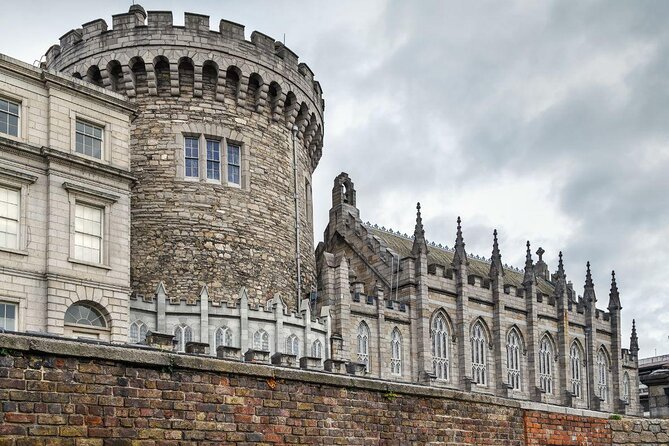
The final major sight is Dublin Castle, originally built by King John in 1204. It served as the center of British administration in Ireland until 1922.
The guide also points out the Dubh Linn, or Black Pool, from which Dublin gets its name. This is the sort of small detail that makes the city easier to remember. You can connect the modern name Dublin with the older landscape and settlement around the pool.
The castle stop brings together many of the tour’s themes: monarchy, administration, colonial control, and the transition to an independent Irish state. You will not tour every room of the castle on this walk, so plan a separate visit if you want its interiors.
The guides and their teaching style
The strongest feature of this experience is the guide’s command of the subject. The guides are all history postgraduates, and the named guides have different styles.
Jody is described as an animated storyteller with a strong grasp of Irish politics, from Celtic settlement through modern events and Brexit. Eoin is praised for clear explanations, humor, and a voice that carries well outdoors. John has been noted for giving a useful overview of Dublin and for keeping a long tour engaging. Other guides, including Colm and Owen, add storytelling, songs, or a lively presentation.
You should expect more than dates and architectural labels. The guide may explain how events affected Irish identity, religion, government, and daily life. That is valuable if you want to understand Ireland rather than simply photograph it.
It also means you need to pay attention. One guide reportedly covered 5,000 years of Dublin history in five minutes before returning to greater detail at each stop. That kind of fast overview can help you see the whole story, but it may be too much for younger children or anyone hoping for a relaxed stroll.
Price, pace, and practical value
At $22.98 per person, this is an inexpensive way to get two hours of guided context in central Dublin. The tour does not include admission charges along the route, and the major extra cost to remember is entry to the Book of Kells.
The value depends on how much you want interpretation. If you simply want to see the buildings, you can walk between them on your own. The fee pays for the connections between them, especially the difficult parts involving Protestant rule, Catholic emancipation, the Treaty, and the Civil War.
The walk requires moderate physical fitness. It is not described as strenuous, but you are on your feet for around two hours, and some tours have lasted closer to two and a half hours. Wear comfortable shoes. Dublin weather can be cold, wet, and windy even when the forecast looks manageable, so bring suitable clothing.
Service animals are allowed, and the meeting area is near public transportation. Confirmation is provided at booking. You can cancel for a full refund up to 24 hours before the start time, but changes or cancellations inside that window are not accepted.
Who should book this Dublin walk
I would choose this tour if you want a strong historical framework for Dublin, especially on your first day or two. It suits adults, older children, and teenagers who can stay focused through political explanation and a steady amount of walking.
It is also a good fit for anyone who wants more than a standard city introduction. You will hear about Viking Dublin, medieval invasion, colonial government, religious discrimination, independence, and civil conflict in one connected story.
I would be cautious if your ideal tour is mostly atmosphere, food, local shopping, or entertaining legends. The focus is Ireland’s history, and the guide may spend considerable time on politics. Younger children may lose interest, and even adults who enjoy sightseeing more than history could find the presentation dense.
Should you book it?
Book this walk if you want to understand the forces behind Dublin’s famous buildings and if a history postgraduate guide sounds like the right companion. At $22.98, it is a good-value orientation to central Dublin, especially when taken early in your stay.
Skip it if you want interior visits, a casual pace, or a tour centered on modern culture. The best way to use it is as a foundation: take the walk, note the places you want to revisit, then return to Trinity College, Christ Church Cathedral, or Dublin Castle at your own pace.
FAQ
How long does the historical walking tour last?
The advertised duration is approximately two hours. Some tours have lasted longer, including around two and a half hours, so allow extra time if your schedule is tight.
How much does the tour cost?
The listed price is $22.98 per person.
Where does the tour meet?
The meeting point is the Henry Grattan Monument on College Green, opposite the front gate of Trinity College Dublin. Do not rely on the college gates alone, since the specific meeting point is the Grattan statue.
Where does the tour finish?
The stated end point is Christ Church Cathedral at Christchurch Place, Wood Quay, Dublin. The listed sightseeing route also includes City Hall and Dublin Castle, so confirm the exact finishing point with the guide.
Is admission to the Book of Kells included?
No. The tour explains the history and importance of the Book of Kells, but admission to see it is not included.
How large is the group?
The tour accepts a maximum of 25 people.
Can I cancel for a refund?
Yes. You can cancel at least 24 hours before the experience start time for a full refund. Cancellations or changes made less than 24 hours before the start time are not accepted.
Just added around Dublin
- Dublin: Macabre History Walking Tour★ 4.9 · 95 reviews
- Dublin: Traditional Pub Walking Tour★ 4.6 · 295 reviews
- Dublin: Traditional Pubs Walking Tour with Local Guide★ 4.9 · 112 reviews
- Dublin’s Haunted History Walking Tour★ 4.3 · 345 reviews
- Dublin: Irish Music Walking Tour with Live Performance★ 4.8 · 137 reviews
- Dublin: Highlights and Hidden Corners Walking Tour★ 4.8 · 79 reviews
- Dublin: Delicious Walking Food Tour★ 4.9 · 137 reviews
- Dublin Highlights: 2.45-Hour Walking Tour in Italian★ 4.7 · 460 reviews
History Walking Tours, compared.



Berlin’s Best: 2 Hour Walking Tour Third Reich and the Cold War
Read our review →
Third Reich Berlin: Hitler and WWII Walking Tour
Read our review →
New Orleans Garden District History Walking Tour
Read our review →
Cartagena: Historic Center and Getsemaní Shared Walking Tour
Read our review →

Imperial Palace and Shogun Historical Walking Tour
Read our review →Browse the lists this tour appears in