
REVIEW · BOLOGNA
Bologna historical art walking tour with hidden gems and tastings
Bologna’s best sights are not all grand churches or famous towers. Some are a wooden anatomical theater, a medieval canal glimpsed through a small window, a terracotta sculpture filled with raw emotion, or a horse staircase hidden inside a civic palace. This tour connects those details into one lively walk led by local guide Riccardo Bacchi, whose specialty is Bologna’s art and history.
I like two things right away. First, the route gives you a strong introduction to the city in one morning or afternoon, from Roman and medieval remains to Renaissance and Baroque art. Second, Riccardo adjusts his explanations to the group and can point you toward more places to see afterward. The main drawback is pace: with so many stops packed into three to four hours, you will see a lot, but you may want to return later for a slower look.
Key points to know before booking
- A full historical sweep: The route links medieval Bologna with its university, churches, civic buildings, canals, markets, and food traditions.
- Excellent art stops: San Petronio, Santa Maria della Vita, Santo Stefano, and the Archiginnasio each offer a different view of Italian art.
- Riccardo’s local focus: He explains politics, architecture, science, religion, and daily life rather than simply naming buildings.
- A brisk central-city walk: The group can include up to 25 people, and the tour lasts about 3 to 4 hours.
- Food is part of the story: The Quadrilatero introduces Bologna’s market culture, with tastings associated with the experience.
- Good first-day choice: The meeting point is on Piazza Maggiore, and the walk ends back there, making it easy to continue exploring on your own.
Why this Bologna walk is different
Many city walks give you a string of landmarks. This one tries to explain how Bologna worked. You move from the city’s central square to its university, from medieval trade to silk manufacture, and from grand public art to the small signs left by guilds and craftspeople.
That approach suits me because Bologna can seem modest at first glance. Its porticoes and warm-colored buildings are pleasant, but the city’s more surprising stories often sit behind ordinary doors or above eye level. The guide draws attention to those details and explains why they matter.
The tour is conducted in English and usually takes three to four hours. The group limit is 25 people, so this is not a private walk, but the size remains manageable for a central-city route. It is also offered with group discounts, which can help if you are booking for several people.
At $175.36 per person, this is not a budget stroll. The value depends on how much context you want. If you only want an orientation walk and a few photographs, the price may feel high. If you want a long, art-focused explanation of Bologna’s history, admission to several major interiors, and practical suggestions for the rest of your stay, it makes more sense.
More Hidden Gems Walks in Italy:
- Venice: San Marco to Rialto Walk & Spritz Like a Local
★ 4.2 · 3,651 reviews - Eat Like a Local: Venice 3-Hour Small-Group Food Tasting Tour
★ 5.0 · 3,137 reviews - Verona: History and Hidden Gems Guided Walking Tour
★ 5.0 · 1,379 reviews
Piazza Maggiore: start with Bologna’s public face
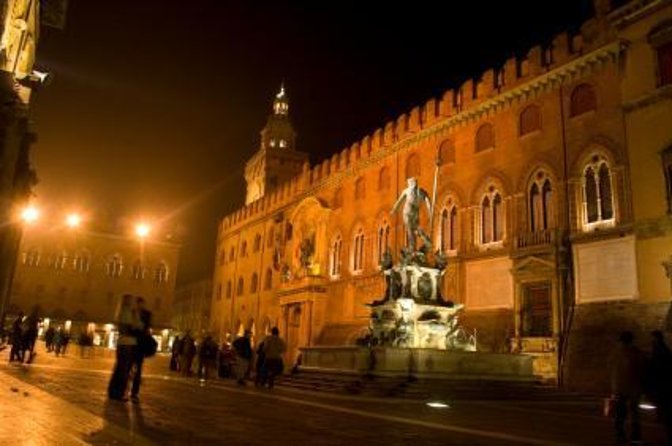
Meet at Bar Vittorio Emanuele on Piazza Maggiore, the natural stage for Bologna’s civic life. The opening section looks at the square’s medieval buildings, the Renaissance Fountain of Neptune, and the old clock façade of the Council Palace.
The most unusual detail here is the four speaking corners. These corners carry stories about the old textile market and the ways information, trade, and power once moved through the square. You are not just looking at façades. You are learning how the city used public space.
The square is also a useful place to get your bearings. The tour returns here at the end, so you can easily revisit the buildings, sit with a coffee, or continue toward another part of the center.
Palazzo d’Accursio: politics, frescoes, and a staircase for horses
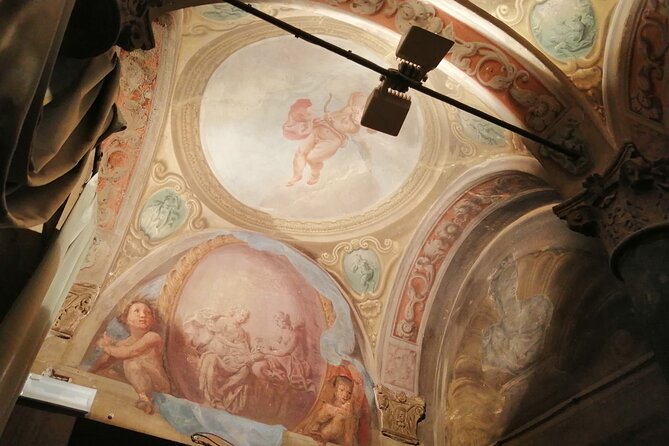
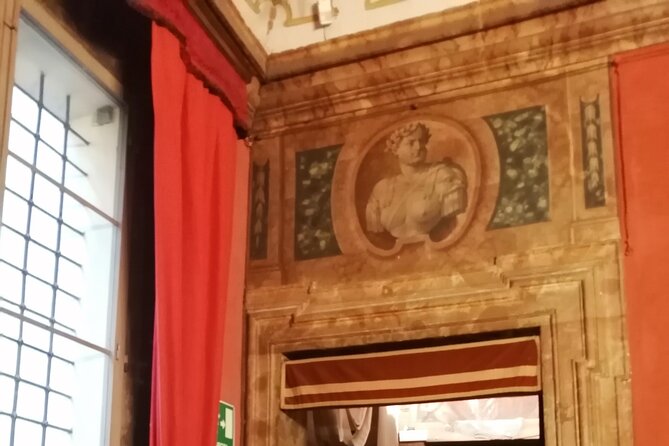
The next section enters Palazzo d’Accursio, Bologna’s civic palace. The noble rooms on the first and second floors contain frescoes, chapels, decorative ceilings, and evidence of the city’s political power.
One especially memorable feature is the broad staircase designed for horses and associated with Bramante. It tells you something about the ceremonial world of the palace. This was not just an office building. It was a place where officials, churchmen, and important visitors moved through carefully planned spaces.
The tour also covers the room of the seniors, the private chapel of the bishop, and the earthquake’s Virgin by Francesco Francia. These details help you see Bologna through several lenses at once: government, religion, art, and public memory.
San Petronio: the city’s grandest art lesson
Basilica di San Petronio is one of the tour’s main anchors. Inside, you’ll see the world’s largest sundial, a remarkable piece of scientific design set into the church floor. The guide places it in the larger story of medieval and early modern astronomy.
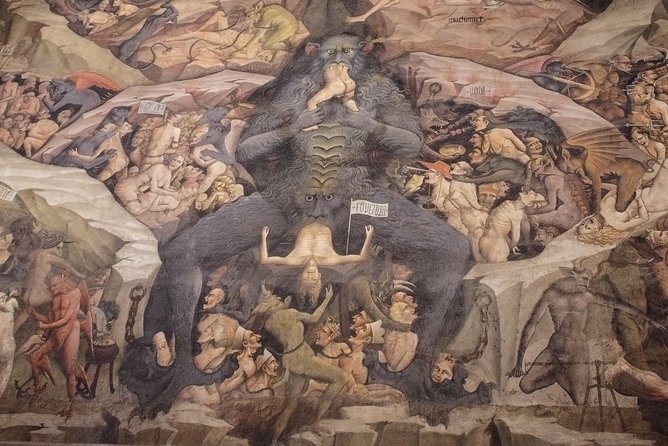
The Cappella Bolognini brings a different mood. Its medieval frescoes are vivid and dramatic, with scenes that reward a patient explanation. You will also see four ancient crosses and paintings connected with artists including Parmigianino and Lorenzo Costa.
This stop can feel dense, especially if you are new to Italian art. That is where Riccardo’s style matters. He explains what you are looking at and connects the artwork to Bologna’s larger religious and civic identity.
San Petronio is one of the stops with an included admission ticket. Since the walk covers several interiors, you should expect occasional pauses while the group gathers or enters a site. Comfortable shoes are a sensible choice.
A few more walking tours around Italy worth a look
- Venice: Doge’s Palace and St Mark’s Basilica Walking Tour
★ 4.4 · 6,291 reviews - Milan: Guided Walking Tour & Last Supper Visit with Ticket
★ 4.7 · 5,409 reviews - Naples: Street Food Walking Tour with Local Guide
★ 4.9 · 4,976 reviews - Florence: Highlights Walking Tour with Expert Guide
★ 4.6 · 4,662 reviews
The Archiginnasio and Bologna’s old university world
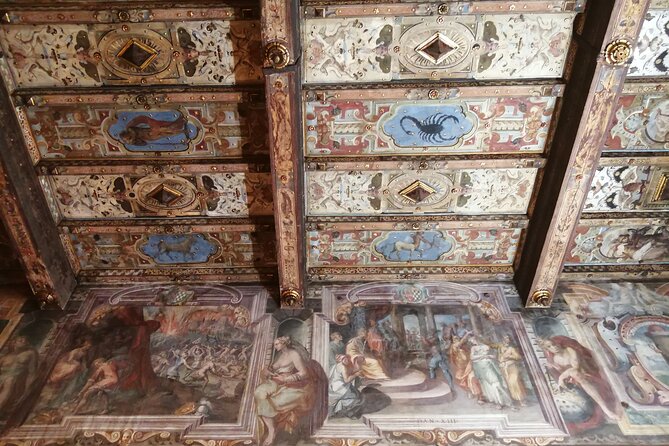
The Archiginnasio was the headquarters of the University of Bologna, described on the tour as the oldest university in Europe. The Renaissance palace is covered with coats of arms, a visual record of the students and institutions tied to the university.
This is one of the most unusual stops because it joins education, medicine, art, and power in one building. You will hear about the secretive side of medical study and enter the wooden anatomical theater, where anatomy lessons were held.
The Stabat Mater room and its old books add another layer. The tour includes references to precious works such as Leonardo da Vinci’s Flights of the Birds, along with a long hall filled with books and ancient codes.
I especially like this stop for anyone interested in how knowledge was taught before modern laboratories and lecture halls. It is also a good reminder that Bologna’s importance was not based only on churches and palaces. Its university shaped the city’s identity for centuries.
The Quadrilatero: food, guilds, and a medieval market maze
After the formal rooms and large churches, the Quadrilatero brings the walk down to street level. This medieval market district is a maze of stalls, old food shops, coats of arms, and signs of the guilds that once controlled trades.
Here, Bologna’s food heritage becomes concrete. You see the places where buying, selling, and making food formed part of ordinary city life. Tastings are part of the experience, and one recorded version included a rice cake made from a medieval recipe as well as local wine.
The exact tasting details can vary, so I would treat the food as a welcome addition rather than the main reason to book. The real value is the way the market connects food with commerce and social history. This is not a separate cooking class or a long meal. It is a short stop within a larger historical walk.
Santo Stefano: several centuries in one church complex
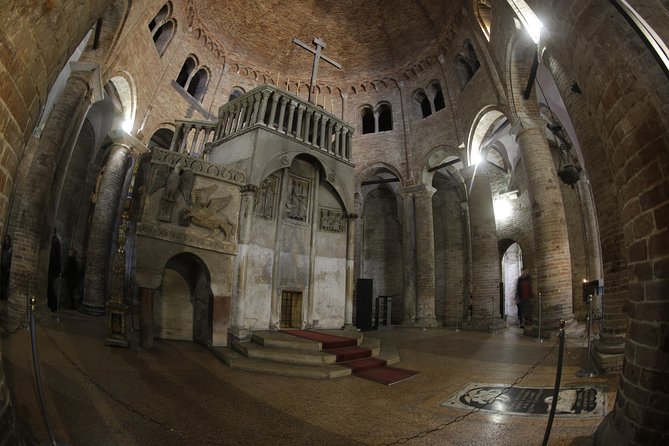
The Basilica and Sanctuary of Santo Stefano is a highlight for anyone who likes layered sites. The complex brings together several churches and traces Bologna’s story from a Roman temple built over a natural spring to later Christian spaces.
The cloister associated with Dante Alighieri is another important feature. You will see monk cells around the cloister and capitals carved with animal faces. These are the sort of details that can disappear when you walk through quickly on your own.
Santo Stefano also helps explain why Bologna feels older than its main squares suggest. Different periods sit on top of one another, and the guide’s job is to make those layers readable without turning the visit into a lecture.
Allow yourself some mental space here. The tour covers a lot, and Santo Stefano comes after several substantial stops. If you are mainly interested in quiet church interiors, this is one place where you may wish to return independently.
Santa Maria della Vita and the force of terracotta
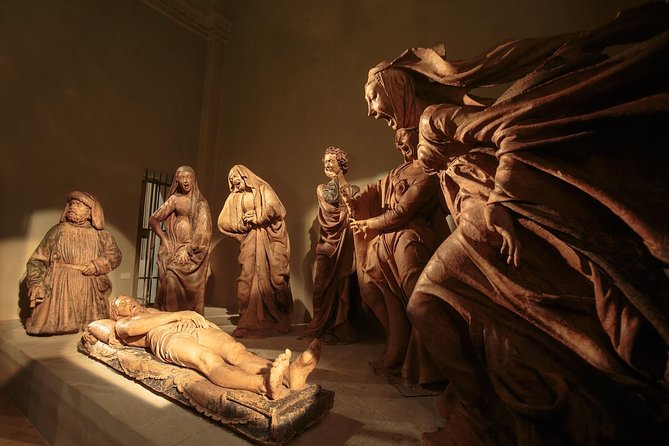
Chiesa di Santa Maria della Vita contains one of the tour’s most powerful works: Niccolò dell’Arca’s terracotta sculpture created around 1470. The figures are known for their intense movement and emotion, which can feel strikingly modern even though the work is from the Renaissance.
This stop is brief, but it carries real weight. The sculpture is not simply a decorative object. Its gestures and expressions make grief physical and immediate. Riccardo’s art-focused explanations help you notice how the figures move, where their attention goes, and why the work feels so forceful.
Admission is included. If you enjoy sculpture, this may be one of the places you remember most clearly after the walk.
Bologna’s towers and the view from street level
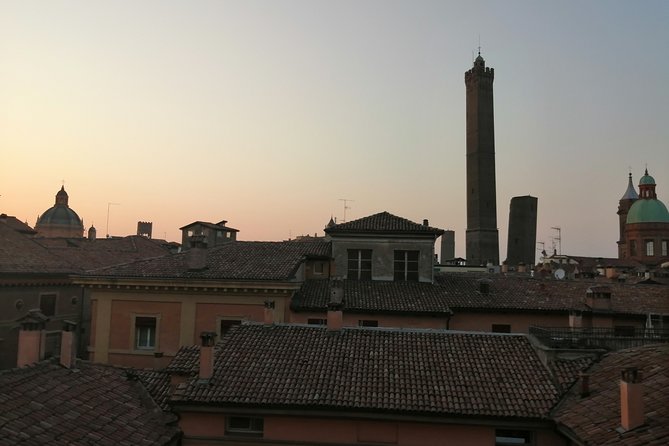
The route gives you a street-level view of Bologna’s best-known pair of towers: the 98-meter Asinelli Tower and the leaning Garisenda Tower. You do not climb them as part of this experience, so this is an orientation and history stop rather than a tower visit.
That distinction matters when comparing tours. If your priority is a climb and a city panorama, you will need a separate plan. If you want to understand the towers as symbols of Bologna’s medieval power and urban shape, this short stop fits well.
Finestrella and the canals behind the streets
At Finestrella, a small opening offers a view of the medieval canals. These waterways were designed to support Bologna’s silk and hemp textile manufacture, and the canal system is identified with UNESCO heritage.
This is one of the tour’s most charming surprises because the water is easy to miss. The city’s trade depended on practical infrastructure that now hides behind walls and streets. The guide helps you picture a working industrial network where today you might see only a narrow glimpse of water.
The stop lasts about ten minutes. That is enough to understand the idea and take a look, but not enough for a long study of the canal system. You may want to return at a quieter time if this corner catches your interest.
A wooden-pillared house and a final civic view
The walk also points out a surviving 13th-century house with its original wooden pillars. It is an excellent example of the tour’s main strength: bringing attention to ordinary buildings that carry old construction methods.
The final civic section includes Palazzo Comunale, with Renaissance and Baroque ceilings, frescoes, sculptures, and another Bramante staircase for horsemen. Ending back near Piazza Maggiore makes practical sense. You finish where you began, with the city center already organized in your mind.
What the pace and group size mean
The tour is listed at roughly three to four hours, and the route covers many sites. I would plan for a brisk walk with frequent stops rather than a slow, leisurely wander. The total distance is not specified, but the number of locations means comfortable footwear is important.
Most people can participate, and the route is near public transportation. The maximum group size is 25. That is large enough that you may not receive the same one-to-one attention as on a private tour, but Riccardo’s ability to tailor the discussion to people’s interests is a useful advantage.
The tour works best early in your Bologna stay. Several people who took it used Riccardo’s follow-up suggestions to plan additional days in the city. That is valuable because the walk gives you a map of subjects, not just streets. You can decide later if you want more churches, art, food, university history, or civic architecture.
Price, timing, and who should book
At $175.36, this experience is best for you if you want a serious introduction to Bologna and prefer explanations to independent sightseeing. It offers a broad route, several included admissions, food-related stops, and a guide with a strong command of local art, architecture, politics, and history.
I would book it if Bologna is an important part of your Italy trip, especially if you are visiting for the first time. I would also choose it if you enjoy medieval, Renaissance, and Baroque art and want to understand how those periods meet in one city.
I might skip it if your main goal is a short orientation, a relaxed food tour, or free time inside each church. The schedule is full, and the information comes quickly. Families with young children or anyone who tires during long walking tours should consider that pace before booking.
Free cancellation is available up to 24 hours before the start time. The tour is offered in English, confirmation arrives at booking, and mobile tickets are accepted.
Should you book this Bologna art and history tour?
Book it if you want Bologna explained through its art, buildings, university, trade, churches, and food culture, rather than reduced to a quick tour of the main square. Riccardo Bacchi’s strongest contribution is the connection between the obvious sights and the overlooked details: the anatomical theater, old canals, guild marks, medieval recipe, and horse staircases.
The best plan is to take it near the start of your stay, keep the rest of that day flexible, and return later to the places that deserve more time. At this price, it is not a casual walk, but for an art-minded visitor who wants a strong historical framework, it offers a useful and unusually broad introduction to Bologna.
FAQ
Where does the Bologna walking tour begin?
It begins at Bar Vittorio Emanuele on Piazza Maggiore, 1, in Bologna.
Where does the tour end?
The activity ends back at the meeting point on Piazza Maggiore.
How long does the tour last?
The tour lasts approximately three to four hours.
What language is the tour offered in?
The tour is offered in English.
How large can the group be?
The maximum group size is 25 people.
Is food included on the tour?
The experience includes tastings connected with Bologna’s food heritage. A documented version included local wine and rice cake made from a medieval recipe.
Which major sites are included?
The route includes Piazza Maggiore, Palazzo d’Accursio, Basilica di San Petronio, the Archiginnasio, the Quadrilatero, Santo Stefano, Santa Maria della Vita, Finestrella, Bologna’s medieval towers from street level, a 13th-century wooden-pillared house, and Palazzo Comunale.
Are admission tickets included?
Admission is included for Basilica di San Petronio, the Archiginnasio, and Chiesa di Santa Maria della Vita. Several other stops are viewed without an admission ticket.
Can I cancel for a full refund?
Yes. You can cancel at least 24 hours before the experience’s start time for a full refund. Cancellations or changes made less than 24 hours before the start time are not accepted for a refund.
Just added around Italy
- Genoa Walking Tour: Explore Top Sights & Hidden Gems★ 4.0 · 138 reviews
- Genoa Food, Wine Tasting & History Walking Tour★ 5.0 · 212 reviews
- Taste Genoa: A Full Meal Walking Food Tour by Do Eat Better★ 5.0 · 509 reviews
- Genoa Walking Tour: Discover Hidden Treasures and Street Food★ 5.0 · 80 reviews
- Tasty Florence Street Food with Guided Walking of the City★ 5.0 · 174 reviews
- Medici Legends & Renaissance Wonders: Florence Small Group Tour★ 5.0 · 205 reviews
- Florence Food Tour of 10+ Authentic Tastings with Cheeses & Wines★ 5.0 · 155 reviews
- Florence Private Walking tour with Skip-the-line to Accademia★ 4.5 · 236 reviews
Hidden Gems Walking Tours, compared.
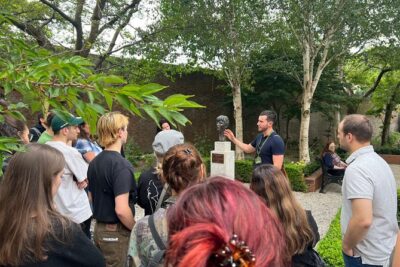
Dublin Highlights and Hidden Gems Guided Walking Tour
Read our review →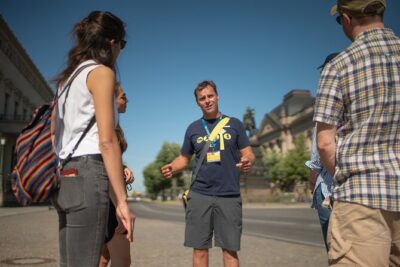
Explore Berlin: See All The Iconic Sights & Some Hidden Gems
Read our review →
San Marco to Rialto Walk & Spritz Like a Local
Read our review →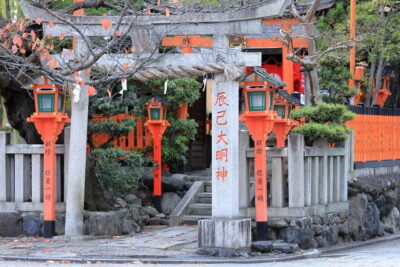
Kyoto Geisha Walking Tour: Gion District & Hidden Gems
Read our review →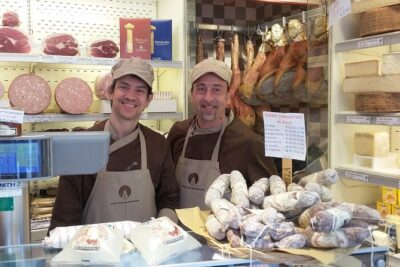
Eat Like a Local: Venice 3-Hour Small-Group Food Tasting Tour
Read our review →
Montmartre Hidden Gems and Scenic Highlights Walking Tour
Read our review →
Guided Walking Tour of City Highlights & Hidden Gems
Read our review →
Browse the lists this tour appears in