
REVIEW · ITALY
Genoa Walking Tour: Explore Top Sights & Hidden Gems
Genoa’s best stories are often tucked behind its grand façades. This two-hour walk links Piazza De Ferrari, Palazzo Ducale, Porta Soprana, and San Lorenzo Cathedral with narrow lanes and less obvious corners that are easy to miss on your own. Antonio is the guide named most often, and his local knowledge gives the walk a personal feel.
I like the short length and small-group format, which make this an easy first activity on arrival day. I also like the mix of famous sights, old alleyways, local legends, and practical food advice, including tips on focaccia and restaurants. The catch is the walking surface: hills, stairs, and cobblestones can make this harder than the two-hour label suggests.
Key points to know before you book
- Piazza De Ferrari is an easy starting point: You meet beside Genoa’s central square, then return there at the end.
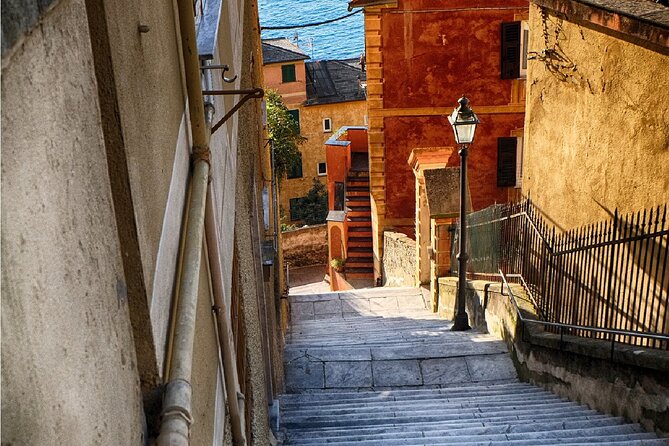
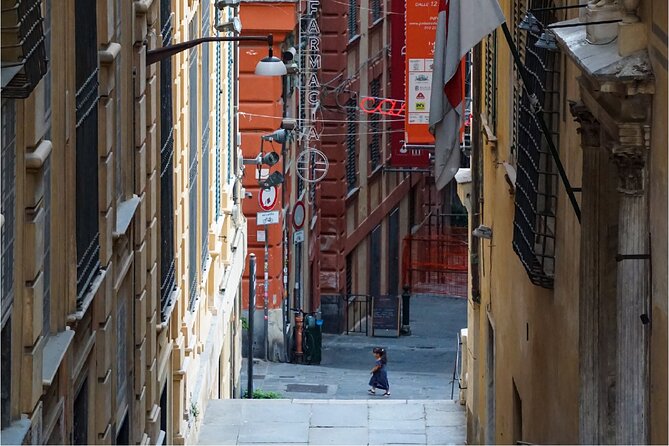
- The route mixes major sights with back streets: You see palaces and churches, then slip into narrow lanes where Genoa feels less polished and more local.
- Antonio is the guide most often named: He is described as a Genoa local who shares history, myths, restaurant suggestions, and food tips.
- Expect a real walking tour: Hills, stairs, and uneven cobblestones are part of the old town experience.
- The group is intended to stay small: Each guide handles up to 15 people, although the overall activity may reach 30 participants.
- The tour offers good orientation for $32: It is most useful early in your visit, before you explore Genoa on your own.
Why this two-hour walk works well in Genoa
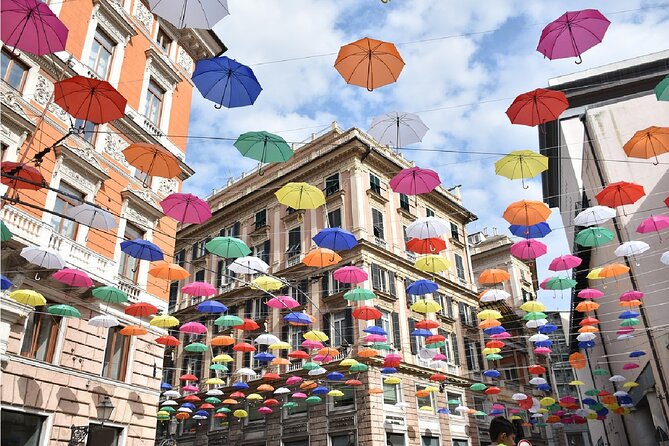
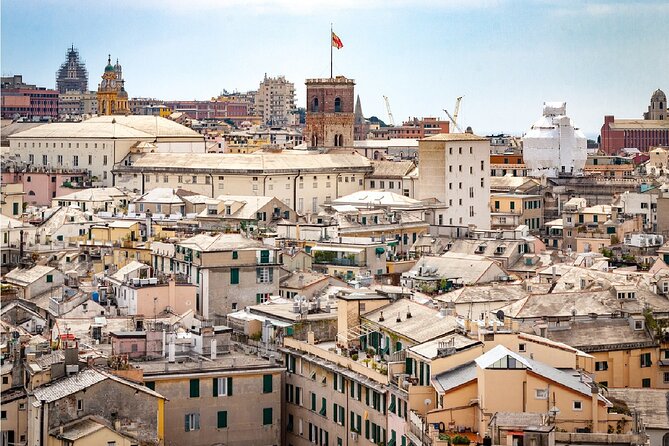
Genoa can be confusing at first. The city center shifts quickly from broad civic squares to cramped medieval streets, and the best route is not always obvious. A guide helps you connect the grand public face of the city with the rougher, more intimate lanes behind it.
That is the main value here. You are not spending half a day inside one museum. Instead, you get a brisk introduction to several central sights, along with the stories that help them make sense.
The walk begins at Piazza Raffaele de Ferrari, usually called Piazza De Ferrari, an easy place to find in central Genoa. Its large bronze fountain, formal buildings, and open space make it a practical meeting point. From here, you can quickly understand the contrast between modern city life and Genoa’s older core.
The advertised price is $32 per person. For two hours with a professional guide, that is a fair price, especially if you use the walk as your orientation on the first day. The value is less about admission savings, since most stops are viewed from outside, and more about finding your way, learning the city’s layout, and getting useful local suggestions for the rest of your stay.
More Hidden Gems Walks in Italy:
- Venice: San Marco to Rialto Walk & Spritz Like a Local
★ 4.2 · 3,651 reviews - Eat Like a Local: Venice 3-Hour Small-Group Food Tasting Tour
★ 5.0 · 3,137 reviews - Verona: History and Hidden Gems Guided Walking Tour
★ 5.0 · 1,379 reviews
Piazza De Ferrari and Palazzo Ducale set the tone
The first stop is Piazza De Ferrari, where you spend about 15 minutes. The square gives you a visual introduction to Genoa’s civic center, with its fountain and formal architecture. It is also a good place to get a sense of direction before entering the tighter streets.
From there, the route moves to Palazzo Ducale, the former Doge’s Palace. The exterior provides an impressive lesson in Genoa’s political past, with ornate details and a grand urban presence. You should not expect a full palace visit on this walk. The scheduled stop is another 15 minutes, and admission is not included.
That limitation is worth understanding. If Palazzo Ducale is a major priority, you may want to return later for a separate visit. The walking tour gives you context and a look at the building, but it is not designed as an indoor art or architecture tour.
Still, this pairing works well. You begin with a public square and then move to a building that reflects Genoa’s former power. The guide can help explain how the city’s wealth and political importance shaped the streets around you.
Porta Soprana and Columbus’s house
The walk continues to Torri di Porta Soprana, the twin-towered medieval gateway that once marked an entrance through Genoa’s walls. This is one of the route’s most visually memorable stops. The stone towers make the city’s medieval defenses easy to picture, especially after you have been walking through the more formal center.
You get about 15 minutes here, with no admission charge included because the stop is primarily an exterior visit. The guide’s storytelling matters more than a long stop. This is where a good explanation can turn an old gate into a scene filled with walls, movement, and city life.
Nearby is Casa di Cristoforo Colombo, or Christopher Columbus’s house. The stop offers a connection to the explorer’s early life in Genoa. Admission is not included, so treat it as a brief outside look unless you choose to arrange a separate visit.
I would keep your expectations measured. The house is important because of the association, but this is not a detailed Columbus museum experience. Its value on the walk is the way it places a famous figure within Genoa’s medieval setting.
Together, Porta Soprana and Columbus’s house give you two useful reference points: one for the city’s old defenses, and one for its role in maritime exploration. The route keeps moving, so you see how these pieces fit into the surrounding streets rather than studying one site in isolation.
Janus, San Giorgio, and the city’s older layers
One of the more unusual stops is Il pozzo e il busto di Giano, connected with the Roman god Janus. This ancient well is wrapped in local mythology and gives the guide a chance to talk about the older beliefs attached to the city.
The stop is brief, about 15 minutes, and admission is free. It may not be a headline attraction, but that is exactly why it can be useful. Genoa is full of small markers and stories that do not announce themselves with a large entrance or ticket booth.
Next comes Piazza San Giorgio, a quieter square associated with the Church of San Giorgio. The surrounding cafés and older buildings create a pause from the city’s main avenues. You may find this one of the more pleasant points for photographs, especially if you like details that show how daily life fits around old architecture.
The route’s strength is its variety. You are not simply moving from one grand façade to another. You get civic buildings, medieval defenses, religious sites, legends, and ordinary lanes. The guide may also take you through shortcuts and back streets that are difficult to identify without local help.
The tradeoff is that the route does not cover every part of Genoa. One person described it as focused mainly on the old town, with limited expansion beyond it. That is a fair criticism if you want a broad city tour. If your priority is the historic center, the focus feels sensible.
A few more walking tours around Italy worth a look
- Venice: Doge’s Palace and St Mark’s Basilica Walking Tour
★ 4.4 · 6,291 reviews - Milan: Guided Walking Tour & Last Supper Visit with Ticket
★ 4.7 · 5,409 reviews - Naples: Street Food Walking Tour with Local Guide
★ 4.9 · 4,976 reviews - Florence: Highlights Walking Tour with Expert Guide
★ 4.6 · 4,662 reviews
San Lorenzo Cathedral and Piazza Banchi
The stop identified as Il Cittadino, linked with the Archdiocese of Genoa, refers to Cattedrale di San Lorenzo. The cathedral’s striped stone façade and mix of Romanesque and Gothic design make it one of the central sights on the route.
You spend about 15 minutes here, with free admission listed for the stop. The visit is not a long guided examination of every chapel or artwork. Instead, you get a chance to see the cathedral, hear about its religious and civic role, and possibly step inside depending on the guide and conditions.
Give the building a proper look before moving on. Genoa’s churches can be easy to pass quickly, but their façades and interiors often reveal the city’s long connection with trade, faith, and art. If you want detailed art explanations, you may need more time than this tour allows.
The walk then reaches Piazza Banchi, another central square with a strong connection to Genoa’s commercial past. The square helps explain how trade shaped the old city. It also places you near the network of lanes that makes Genoa so rewarding and so confusing.
There are additional points along the way that are kept as surprises. That means the exact experience may vary slightly depending on the guide, pace, and group. I like that the route leaves room for discovery, though anyone wanting a precise stop-by-stop schedule should expect some flexibility.
The back lanes are the real reason to go
The old town’s narrow passages are where this experience earns its keep. Genoa’s lanes can feel like a maze, with sudden turns, steep sections, stairs, and glimpses of small courtyards or old façades. A local guide can make these streets feel less like a navigation problem and more like a connected part of the city.
Antonio is praised for knowing these routes well and for pointing out details that are easy to miss. He is also described as patient with questions and willing to adjust the pace. That matters here because the walk can be physically demanding even though it lasts only two hours.
Several accounts describe stops for local tastes, such as focaccia or an aperitif. These food moments are not clearly guaranteed or included in the published price, so you should not book this as a food tour. One important practical point: a sample drink may cost extra, and that charge was not always made clear in advance.
The better way to think about food on this walk is as a local pointer. You may come away knowing where to buy good focaccia or where to eat lunch. Antonio has also been praised for matching restaurant suggestions to personal interests, which is useful when you have just arrived and do not yet know the city.
Pace, fitness, and group size
The experience lasts about two hours, but it is not a flat stroll. You should be comfortable walking on uneven cobblestones and managing stairs and inclines. One older couple in their eighties completed the route comfortably because the pace was adjusted to suit them, but that does not remove the physical demands of the streets.
Wear shoes with a secure sole. Leave large luggage behind, and allow room for pauses if you want photographs. The route is especially suited to people who prefer a steady walk with conversation rather than a fast checklist of monuments.
Each guide is limited to 15 participants, which should allow for questions and a more personal exchange. The overall activity information also allows up to 30 people, so confirm the group arrangement when booking. A smaller group will make the alleyways easier and the guide easier to hear.
The guide quality appears to matter a great deal. Antonio is the name most often associated with the experience, but another guide may lead your departure. Most accounts describe a friendly, well-informed approach, while a few describe a guide who seemed less engaged or offered less historical detail.
There have also been serious scheduling problems on some dates, including late cancellations, missed meetings, and a guide arriving late. The provider has acknowledged communication and system errors in individual cases. I would confirm the meeting details shortly before setting out and keep the operator’s contact information handy.
How to use the tour during your Genoa visit
I would book this for the first day, ideally early in your stay. The route gives you a working map of central Genoa and helps you decide where to return for more time.
After the walk, you can revisit Palazzo Ducale or San Lorenzo Cathedral, explore the lanes at your own pace, or follow the food advice you receive. The tour ends back at the meeting point in Piazza De Ferrari, so you are not left trying to find your way from an unfamiliar neighborhood.
This is also a practical choice before lunch or another scheduled activity because it takes only about two hours. Build in extra time around the tour if you need to move slowly, take photographs, or wait for the group to gather.
The meeting point is near public transportation, and most people can participate. Service animals are allowed. Still, the old town’s stairs and cobbles make this a poor match for anyone who needs a fully smooth, step-free route.
Free cancellation is available up to 24 hours before the local start time. Changes or cancellations inside that window are not accepted for a refund, and the activity requires a minimum number of participants. If the operator cancels for that reason, you are offered another date or experience, or a full refund.
Who should book this walk?
I would choose it if you are visiting Genoa for the first time and want a quick introduction before exploring alone. It is also a good fit if you enjoy local stories, medieval streets, churches, and small details more than long indoor museum visits.
It suits photographers, curious walkers, and people who like to ask questions. The pace can be adjusted, and the guide may offer useful advice on food and later sightseeing.
I would hesitate if you want a full overview of the whole city, a detailed cathedral tour, or a guaranteed tasting menu. I would also think twice if steep streets and uneven surfaces are difficult for you.
Should you book the Genoa walking tour?
At $32, this is a sensible orientation walk with a strong focus on Genoa’s old town. Its best features are the local guide, the back lanes, the mix of major landmarks and small stories, and the chance to get practical restaurant and focaccia advice.
The main risks are guide availability, uneven walking conditions, and occasional communication problems. Confirm the meeting details, plan for stairs, and do not assume any tasting or drink is included.
Book it if you want a lively first look at central Genoa and value local context over a long museum visit. Skip it if you need a perfectly reliable schedule or a completely flat route.
FAQ
Where does the Genoa walking tour begin?
The tour begins at P.zza Raffaele de Ferrari, 1, 16121 Genova GE, Italy, in Piazza De Ferrari.
Where does the tour end?
The activity ends back at the meeting point in Piazza De Ferrari.
How long does the tour last?
The guided walk lasts approximately two hours.
What sights are included?
The route includes Piazza De Ferrari, Palazzo Ducale, Porta Soprana, Casa di Cristoforo Colombo, the well and bust of Janus, Piazza San Giorgio, San Lorenzo Cathedral, Piazza Banchi, and additional surprise stops.
How many people can join the tour?
Each guide handles a maximum of 15 participants. The overall activity may have up to 30 participants.
Can I cancel for a full refund?
Yes. You can cancel at least 24 hours before the local start time for a full refund. Cancellations or changes made less than 24 hours before the start are not accepted for a refund.
Just added around Italy
- Genoa Food, Wine Tasting & History Walking Tour★ 5.0 · 212 reviews
- Taste Genoa: A Full Meal Walking Food Tour by Do Eat Better★ 5.0 · 509 reviews
- Genoa Walking Tour: Discover Hidden Treasures and Street Food★ 5.0 · 80 reviews
- Medici Legends & Renaissance Wonders: Florence Small Group Tour★ 5.0 · 205 reviews
- Tasty Florence Street Food with Guided Walking of the City★ 5.0 · 174 reviews
- Florence Food Tour of 10+ Authentic Tastings with Cheeses & Wines★ 5.0 · 155 reviews
- Florence Private Walking tour with Skip-the-line to Accademia★ 4.5 · 236 reviews
- Florence: Whispers of the Renaissance walking tour★ 4.5 · 78 reviews
Hidden Gems Walking Tours, compared.
Dublin Highlights and Hidden Gems Guided Walking Tour
Read our review →
Explore Berlin: See All The Iconic Sights & Some Hidden Gems
Read our review →
San Marco to Rialto Walk & Spritz Like a Local
Read our review →
Kyoto Geisha Walking Tour: Gion District & Hidden Gems
Read our review →
Eat Like a Local: Venice 3-Hour Small-Group Food Tasting Tour
Read our review →
Montmartre Hidden Gems and Scenic Highlights Walking Tour
Read our review →
Guided Walking Tour of City Highlights & Hidden Gems
Read our review →
Browse the lists this tour appears in