
REVIEW · VERONA
Verona: History and Hidden Gems Guided Walking Tour
Verona reveals itself best in the details: a Roman gate tucked into a busy street, a medieval tower above a quiet square, or an old façade you might pass without a second look. This two-hour walk with Fabio Massimo Rapanà, a licensed guide born and raised in Verona, connects those details into a clear story from Ancient Rome through the Middle Ages. You’ll see the Arena and Juliet’s house, but the real pleasure is learning what lies between them.
I like the small group limit of 10 and the use of headsets, especially in noisy squares or for anyone who does not hear easily. I also like the balance between famous sights and lesser-seen streets, with time for river views, architecture, local stories, and questions.
The main consideration is pace. Two hours covers a lot of ground and includes many short stops, so this is an active walk rather than a slow visit inside major monuments. There are no entry tickets, meals, or transport included.
What makes this Verona walk worthwhile
- A local guide with a personal connection: Fabio was born and raised in Verona and builds the tour around the city he knows firsthand.
- Roman and medieval Verona in one route: You move from the Arena and Porta Borsari to medieval palaces, dynastic tombs, and old market spaces.
- Small groups up to 10 people: This makes it easier to hear explanations, ask questions, and stay together in busy streets.
- Useful headsets: Fabio speaks into a microphone, so you can follow him without standing shoulder to shoulder in every square.
- A practical first look at the city: The route helps you decide which places to revisit later, including Juliet’s house, Piazza delle Erbe, and Castelvecchio.
- Several languages available: Tours are offered in English, German, Italian, and Spanish.
Starting beneath the Italian flag in Piazza Bra
The meeting point is beneath the Italian flag at the Town Hall, Palazzo Barbieri, in Piazza Bra. This is a sensible place to begin because Verona’s grandest Roman monument is right in front of you.
Piazza Bra gives you an immediate sense of the city’s scale. The open square leads your eye toward the Verona Arena, while the surrounding buildings set up the contrast that defines much of the tour: ancient stone beside later civic architecture, busy public space beside quiet side streets.
You spend a short time here before moving toward the Arena. That is useful if you are seeing Verona for the first time, but do not expect an extended architectural examination of the square. The tour’s purpose is to create a citywide story, not to linger at one monument.
More Hidden Gems Walks in Italy:
- Venice: San Marco to Rialto Walk & Spritz Like a Local
★ 4.2 · 3,651 reviews - Eat Like a Local: Venice 3-Hour Small-Group Food Tasting Tour
★ 5.0 · 3,137 reviews - Venice: San Marco to Rialto Walking Tour & Spritz Like a Local
★ 4.5 · 688 reviews
The Arena and Verona’s Roman foundations
At the Verona Arena, Fabio explains the gladiator contests held in this enormous Roman amphitheater. You stop for photographs and take in its arches and curved outer wall, but admission to the interior is not part of the walk.
That distinction matters. If you want to see the Arena from inside, plan a separate visit and budget for an entry ticket. This tour gives you historical context and a strong exterior view, then uses the monument as a starting point for understanding how Roman Verona shaped the city that followed.
The route then traces the foundations of the early medieval walls toward Corso, one of the city’s oldest streets. Along the way, the focus shifts from the obvious monument to the clues that are easy to miss: wall lines, old street patterns, reused stone, and buildings that make more sense once you know what came before them.
Porta Borsari is one of the early highlights. This Roman-era gateway once marked an important entrance to the city. Today it is integrated into an ordinary urban street, which is exactly why it benefits from explanation. Without a guide, you could easily admire the façade for a moment and keep walking without grasping its age or purpose.
Adige views from Riva San Lorenzo and Ponte Scaligero
The walk continues toward Riva San Lorenzo, where you get scenic views toward the Adige River. The river is one of Verona’s great organizers. It curves around the historic center, shaping viewpoints, defenses, bridges, and the city’s sense of enclosure.
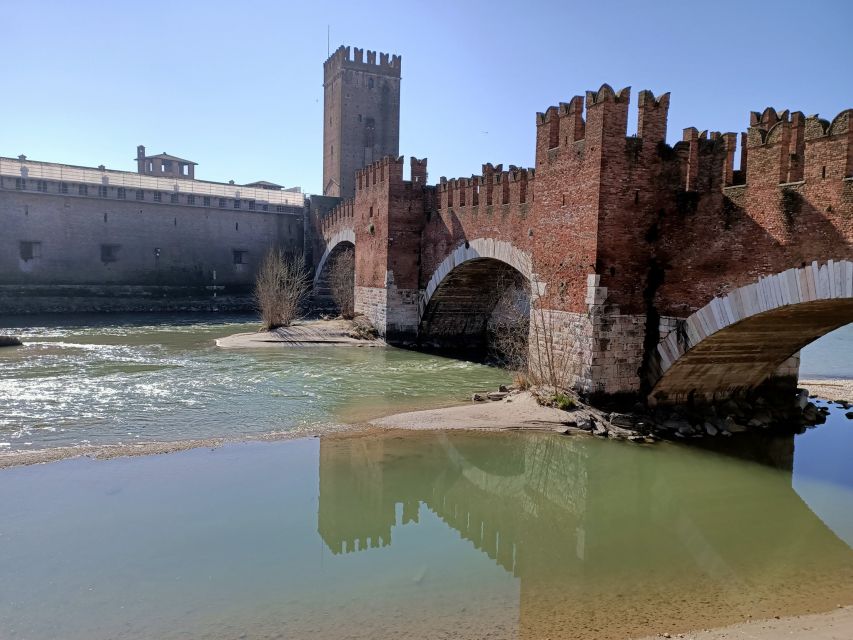
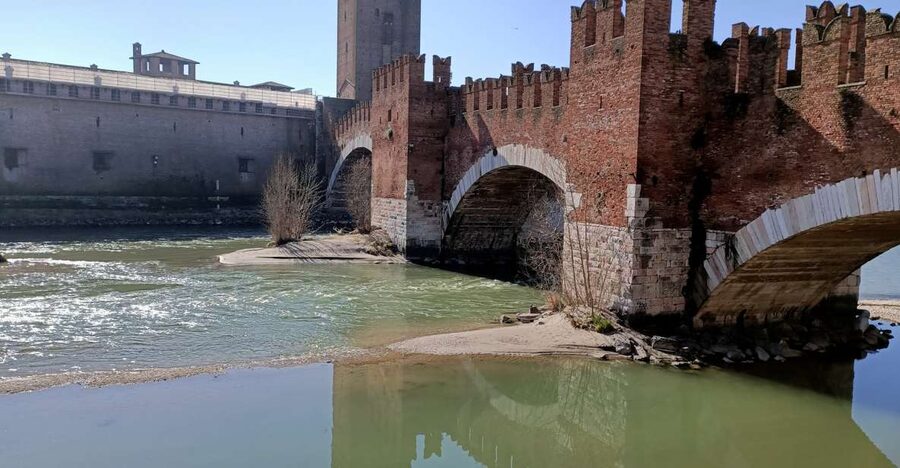
You also see Castelvecchio and the Ponte Scaligero from the river area. The bridge, with its strong medieval lines, is one of Verona’s most memorable outdoor sights. The tour does not include an interior visit to Castelvecchio, so you will need another stop if you want the museum and castle rooms.
I appreciate this section because it gives you a break from tightly packed streets. It also helps explain Verona geographically. A city tour can become a string of unrelated façades, but the river views show how the main districts fit together.
Fabio also makes several brief stops in quieter places along the route. Some are described only as private or secret stops, and they are best understood as small points of interest rather than full attractions. You may pause for a detail, a view, or a short story, then continue. That rhythm keeps the walk moving, though anyone hoping to spend ten minutes at every location may find it brisk.
Piazza delle Erbe and the old market
Piazza delle Erbe is one of the tour’s central stops. It occupies the site of Verona’s Roman forum and remains one of the city’s main public spaces. Fabio explains the history of the local market and points out the historic façades around the square.
You see the city’s oldest fountain here, along with a mix of public buildings, painted façades, and layers of construction from different periods. The square can be busy, and the headsets are helpful when people, traffic, and market activity compete with the guide’s voice.
This is a good example of why the tour works better than simply checking off major sights. You already know Piazza delle Erbe is pretty. The useful part is learning how its role changed over time, why the market mattered, and how the surrounding buildings reflect Verona’s political and commercial life.
The route also passes Chiesa di San Giovanni in Foro and several less obvious corners near the square. These short stops reward close attention. Look up as you walk, and you might notice carved details, old religious buildings, and architectural fragments that would otherwise blend into the street.
More Guided Tours in Italy:
- Milan: Guided Walking Tour & Last Supper Visit with Ticket
★ 4.7 · 5,409 reviews - Naples: Street Food Walking Tour with Local Guide
★ 4.9 · 4,976 reviews - Florence: Highlights Walking Tour with Expert Guide
★ 4.6 · 4,662 reviews - Rome: Guided Food Walking Tour with Wine in Trastevere
★ 4.9 · 3,105 reviews
Piazza dei Signori and the medieval power center
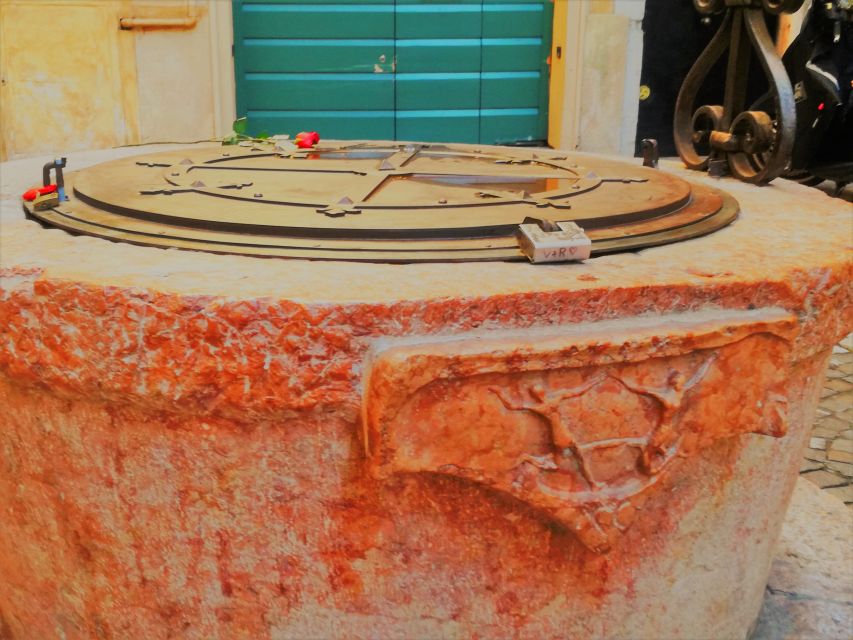
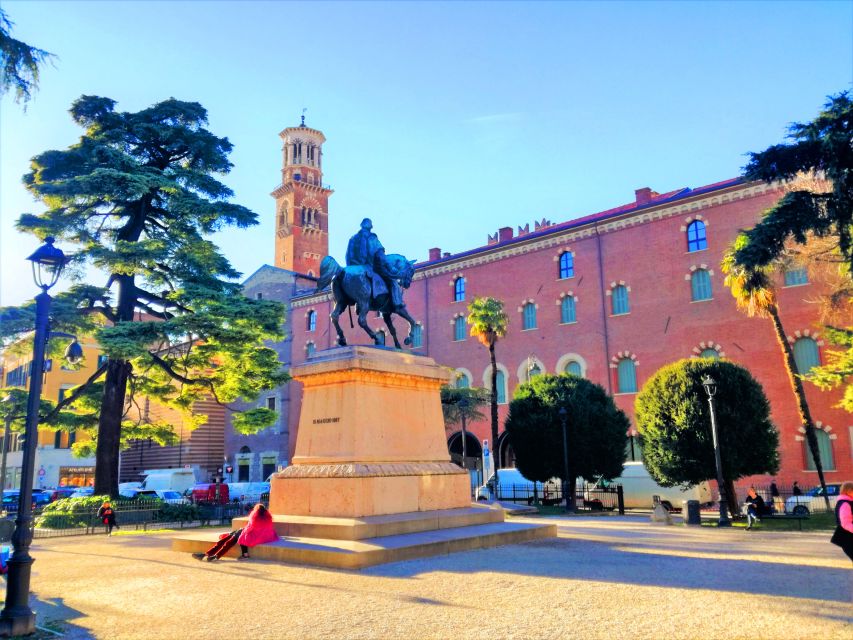
From Piazza delle Erbe, you continue into Piazza dei Signori, a more formal square associated with Verona’s medieval rulers and civic government. Here you see Palazzo della Ragione, Palazzo della Scala, and Palazzo del Capitano.
The square has a different mood from Piazza delle Erbe. It feels more controlled and political, with public buildings arranged around a space that once expressed authority. Fabio uses the architecture to explain the medieval period and the city’s ruling families.
You also learn about Verona’s highest tower. Vertical landmarks matter in this city because towers were practical signs of wealth, power, and family status. From street level, the tower helps you read the old city as a place shaped by rival groups as much as by religion and trade.
The tour moves through the surrounding lanes and smaller squares rather than staying only on the main pedestrian paths. This is where the limited group size pays off. Fabio can stop and answer questions without creating the feel of a large procession.
Basilica di Santa Anastasia and the Scaliger tombs
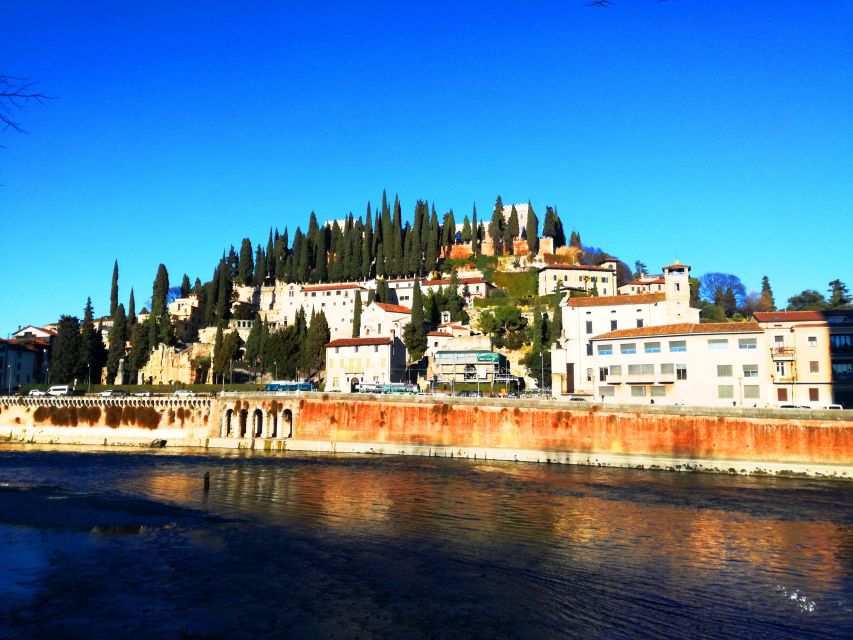
The Basilica di Santa Anastasia is another important exterior stop. You pause to look at the church and its architecture, but entry is not included. If you want to see the interior, including its artwork and decoration, you will need to return independently.
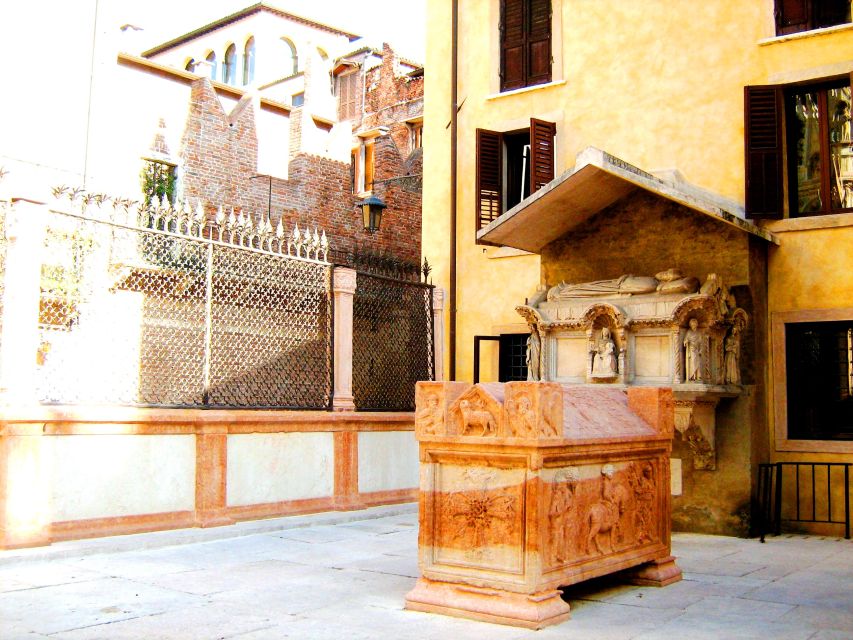
Soon after, the route reaches the Arche Scaligere, the dramatic mausoleums of Verona’s powerful Scaliger family. These Gothic monuments are easy to admire as ornate stonework, but their purpose gives them more weight. They are public displays of status and memory, placed close to the political center of medieval Verona.
I find this part especially useful for travelers who want more than a romance story. Juliet may draw the crowds, but the Scaliger tombs explain the real power structure that shaped the city. Fabio’s approach links the buildings to the people and period behind them.
The walk also passes Casa di Romeo. As with Juliet’s house, the interest here is partly historical and partly literary. The site connects Verona’s streets with the tradition surrounding Shakespeare’s tragedy, while the broader discussion separates medieval Verona from the later romantic story attached to it.
Juliet’s house and the difference between story and history
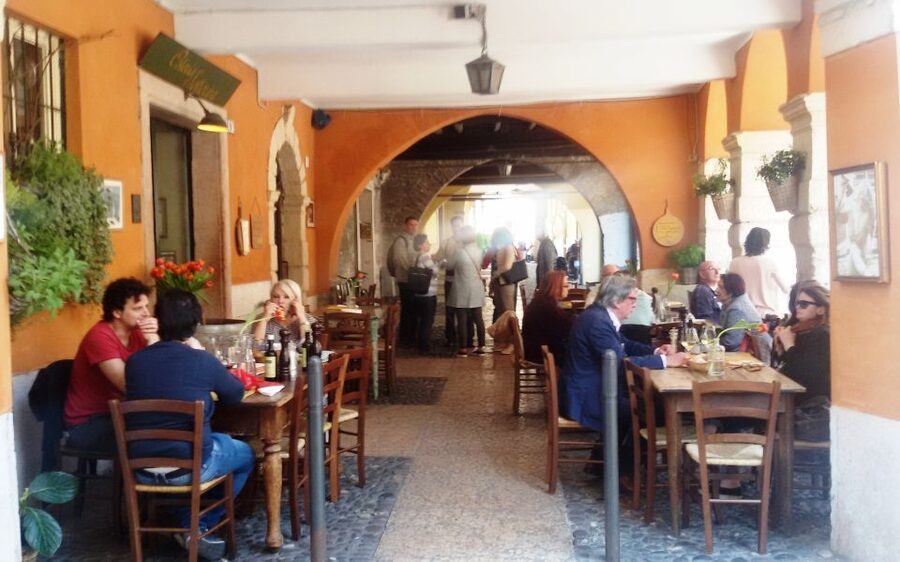
The tour reaches Juliet’s House and its famous balcony near the end. You stop for photographs, but admission is not included and the route does not turn into a full museum visit.
That is a sensible choice for a walking overview. Juliet’s balcony is one of Verona’s best-known sights, but it can dominate a first visit at the expense of the city’s older and less theatrical places. Here, you get the historical inspiration for the Shakespeare story and then continue with a better understanding of the city around it.
The area also includes the old market courtyard, Piazza Indipendenza, and several smaller passages. These provide useful contrast. A few steps away from the balcony crowds, you are back among old streets and civic spaces that tell Verona’s story without relying on the literary connection.
The route passes the Verona synagogue and the former convent of Saint Mary della Scala of the Servants of Mary. These brief exterior views broaden the tour’s scope. Verona is not only an arena, a river, and a famous couple. Its religious and community buildings are part of the city’s long urban story too.
Why the headsets and small group matter
The group is limited to 10 people, with private options also available. That is smaller than the large walks that gather around a guide with a flag, and it changes the feel of the experience. You can ask questions, stay close to the guide, and see small architectural details without fighting for position.
The headsets are a practical advantage, not a gimmick. Fabio uses a microphone and each participant receives an earpiece, allowing you to keep looking at the building while listening. This is especially helpful for anyone with some hearing loss, and it keeps the group from stopping in a tight circle every few minutes.
Several people also valued Fabio’s communication and personal manner. He remembers names, responds carefully to questions, and mixes facts with humor and stories. Families can benefit from that style, too. A 15-year-old was kept engaged during the walk, and one guide’s warmth helped make the history feel less like a lecture.
Timing, cost, and practical comfort
The price is $41 per person for two hours. I consider that fair if you want a strong introduction to Verona rather than a ticketed monument tour. You are paying for a licensed local guide, a carefully arranged route, a small group, and interpretation that would be difficult to reproduce from a map alone.
The value is strongest when you take the walk early in your stay. Afterward, you can return to the Arena, Castelvecchio, Juliet’s house, or a church with a clearer idea of what you are seeing. The tour also includes recommendations for places to eat, which can be useful when you have limited time in the center.
Wear comfortable shoes and carry water. This is a real walking tour, with many stops and several stretches between them. The guide has adapted the route for hot weather by seeking shade and allowing pauses, but conditions can still affect your comfort.
The walk operates rain or shine. Verona’s historic center has plenty to see in poor weather, but you should bring suitable protection because the experience remains outdoors. The route is wheelchair accessible, though the exact comfort of any city walk can depend on crowding and street conditions.
You can cancel up to 24 hours before the start for a full refund, and you can reserve without paying immediately. Those terms are useful if your plans are changing, but the bigger practical point is to choose a starting time that leaves room for your own visits afterward.
Who should book this Verona walking tour?
I would choose this tour if you are visiting Verona for the first time, care about history or architecture, or want a local guide to point out details you would otherwise pass. It is also a good fit for anyone who prefers a small group and clear audio rather than a large crowd gathered around a raised flag.
It suits families, couples, solo visitors, and people making a short stop in Verona. Fabio’s storytelling keeps the route lively, while the historical framework gives the city more meaning after the walk.
You may want something else if your priority is entering monuments, spending long periods inside churches, or focusing mainly on Shakespeare. This is an exterior walking tour with many short stops. It gives you context and orientation, then leaves you to return to the places that catch your interest.
Should you book it?
Book this walk if you want to understand Verona beyond its postcard sights. Fabio’s local knowledge, strong storytelling, small groups, and headsets make the two hours unusually efficient, and the route covers Roman remains, medieval power, river views, market squares, and the Romeo and Juliet tradition.
The best plan is to take it near the start of your visit, wear good shoes, and keep the rest of the day open for revisiting one or two places that Fabio brings to life. At $41, it offers good value for a focused introduction to Verona, especially if you care about the stories behind the stone.
FAQ
Where does the Verona walking tour begin?
The tour begins at Palazzo Barbieri, the Town Hall in Piazza Bra. Meet the guide beneath the Italian flag.
How long does the tour last?
The walking tour lasts two hours.
What languages are available?
The live guide can lead the tour in English, German, Italian, or Spanish.
How large is the group?
The standard group can include up to 10 participants. Private and small-group options are also available.
Are admission tickets included?
No. Entry tickets to places such as the Arena, Juliet’s House, Castelvecchio, and churches are not included.
Is the tour wheelchair accessible?
Yes, the activity is listed as wheelchair accessible.
What should I bring?
Bring comfortable shoes and water. The tour runs rain or shine.
Just added around Italy
- Ferrara: City Highlights Walking Tour with Local Guide★ 4.6 · 219 reviews
- Verona: Romeo and Juliet Guided Walking Tour★ 4.6 · 82 reviews
- Discover Pompeii: French Walking Tour of the Buried City★ 4.8 · 253 reviews
- Naples: Maradona Stadium Guided Exterior Walking Tour★ 4.3 · 113 reviews
- Dark Heart of Rome – Facts, Legend & Mystery Walking Tour★ 4.5 · 329 reviews
- Catania: Street Food Guided Walking Tour★ 4.9 · 326 reviews
- Cefalù: History and Legends Guided Walking Tour★ 4.8 · 132 reviews
- Catania: Guided Street Food Walking Tour★ 4.7 · 300 reviews
Hidden Gems Walking Tours, compared.
Dublin Highlights and Hidden Gems Guided Walking Tour
Read our review →
Explore Berlin: See All The Iconic Sights & Some Hidden Gems
Read our review →
San Marco to Rialto Walk & Spritz Like a Local
Read our review →
Kyoto Geisha Walking Tour: Gion District & Hidden Gems
Read our review →
Eat Like a Local: Venice 3-Hour Small-Group Food Tasting Tour
Read our review →
Montmartre Hidden Gems and Scenic Highlights Walking Tour
Read our review →
Guided Walking Tour of City Highlights & Hidden Gems
Read our review →
Browse the lists this tour appears in