

REVIEW · DUBLIN
Dublin: Macabre History Walking Tour
Dublin’s darker past is tucked into ordinary streets. This two-hour walk brings out the city’s grisly side, from mummified corpses and grave robbers to public executions, medieval quarantine, and the tale of Cuchulainn’s death. Peter and Rob are animated storytellers who add humor without losing the historical thread.
I like the small-group feel, which can turn the tour into something close to a private walk when numbers are low. I also like that it visits less obvious corners of the old center rather than repeating the standard pub-and-monument circuit. The main consideration is tone: one review found it less bloody than expected, so this is more historical storytelling than a full horror show.
Key points to know before booking
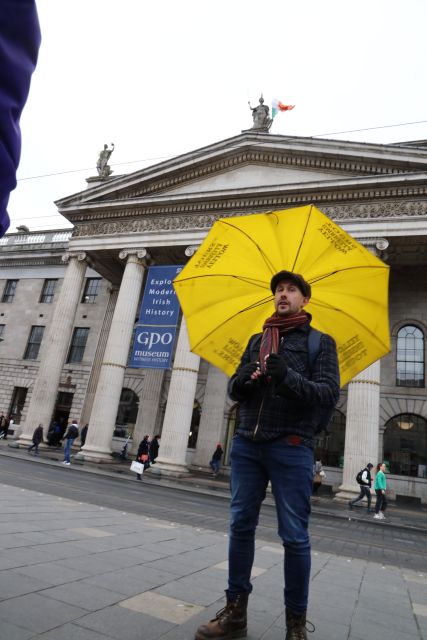
- Cuchulainn’s death opens the darker theme: Hear how the legendary warrior died, with a raven and a grim image of his eyes being pecked out.
- The route crosses both sides of the River Liffey: You see old Dublin as a connected city, not just a string of isolated sights.
- Grave robbing gets a full historical setting: The 19th-century trade is tied to the city mortuary, giving the story a clear place and social context.
- Peter and Rob shape the experience: Both guides are praised for dramatic delivery, humor, local tips, and patient answers.
- It costs $19 for two hours: That is a fair price for a focused walking tour, especially if you want stories absent from the usual sightseeing routes.
- The tour is adults only: It is not suitable for children under 18 and is conducted in English.
Why Dublin’s grim side works so well on foot

Dublin does not need a theatrical haunted house to feel atmospheric. Its old streets, former city walls, riverside paths, and cathedral area already provide the setting. The guide’s job is to point out what you might otherwise walk past and explain what happened there.
That is the real value of this tour. You are not simply shown a statue or a lane. You are given a story that changes the way you see the place. An ordinary stretch of the old center can become a site linked with quarantine, execution, burial, or crime.
The macabre theme also gives the tour a clear shape. You move through different periods of Dublin’s past, from the legendary world of Cuchulainn to medieval disease control and the grim business of body snatching in the 19th century. The subject matter is dark, but the guides use humor and performance to keep the walk from becoming heavy.
I would think of this as a history walk with a sinister filter, not as a scare attraction. You should expect vivid stories, unusual facts, and some gruesome images. You should not expect actors jumping from doorways or a nonstop parade of murders.
More History Walking Tours in Dublin:
- 2-Hour Historical Walking Tour from Dublin
★ 5.0 · 875 reviews - Dublin’s Haunted History Walking Tour
★ 4.3 · 345 reviews - Berlin: Third Reich & Cold War Guided Walking Tour
★ 4.9 · 8,378 reviews
Meeting the yellow umbrella beside the Spire
The meeting point is simple: beside the Spire, the tall needle in the middle of O’Connell Street. Look for the yellow umbrella. That detail matters in a busy city center, though one guest noted that more than one yellow umbrella can sometimes be nearby, so check the exact tour information before setting off.
The location works well for a first Dublin activity. O’Connell Street is central and easy to recognize, and the tour ends back at the same meeting point. You do not need to arrange a taxi or work out a return journey from an unfamiliar neighborhood.
Arrive ready to walk for two hours. No hotel pickup or drop-off is included, and the experience is entirely on foot. The tour is listed as wheelchair accessible, but old-city walking routes can still involve different street surfaces and busy public areas. If access is especially important for you, it is sensible to confirm current route details before booking.
Cuchulainn and the first taste of Dublin’s darker stories
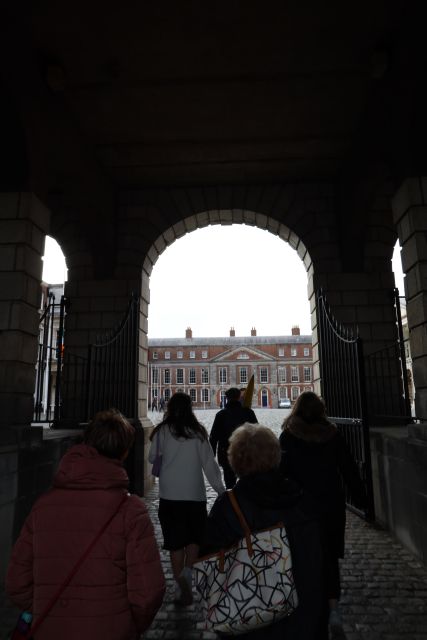
The tour includes the Statue of Cuchulainn’s Death, a strong starting point for the macabre theme. Cuchulainn is presented as a mighty warrior whose final moments involve a raven perched on his shoulder and his eyes being pecked out.
This is not simply a gruesome anecdote. It introduces the way the walk handles Irish history and legend. You get a story that sits somewhere between mythology, national memory, and dramatic oral tradition. The guide can make the scene memorable, while also showing how Dublin’s past is told through tales rather than only through dates and monuments.
This opening should appeal to you if you like history with a strong narrative. If you prefer strictly documented events, remember that a walking tour built around macabre stories may include legend, folklore, and entertaining historical detail alongside established events.
The guide’s delivery makes a real difference here. Peter is repeatedly praised for acting out stories and making the material easy to follow. Rob is also described as personable, funny, and clear. The best moments on this tour seem to come not just from the subject itself, but from how the guide builds the scene.
Medieval quarantine and the cost of disease
The tour then turns toward medieval quarantines, one of the more useful parts for understanding how old Dublin worked. Disease shaped city life in ways that are easy to forget when you are looking at modern streets. Quarantine stories connect public health with fear, isolation, and the rough limits of medieval medicine.
This section adds weight to the tour. The subject is macabre, but it also explains how ordinary people experienced illness and how a city tried to respond. You get more than a tale designed to shock. You get a glimpse of how Dublin’s streets, walls, and institutions affected daily life.
The walk’s route through lesser-known parts of the old city helps here. Instead of treating the past as something kept inside a museum, the guide ties it to the streets around you. That makes the information easier to remember, especially if this is your first visit to Dublin.
You will probably appreciate this section most if you enjoy social history. It is less about famous names and grand architecture, and more about the conditions that shaped life for people who lived in the city centuries ago.
A few more walking tours around Dublin worth a look
- Dublin Highlights and Hidden Gems Guided Walking Tour
★ 5.0 · 6,020 reviews - Dublin: Highlights and Hidden Gems Walking Tour
★ 4.9 · 2,140 reviews - 1916 Rebellion Walking Tour
★ 5.0 · 1,605 reviews - 90 Minute Dublin Walking tour and Sightseeing tips
★ 5.0 · 916 reviews
The 19th-century grave-robber trade
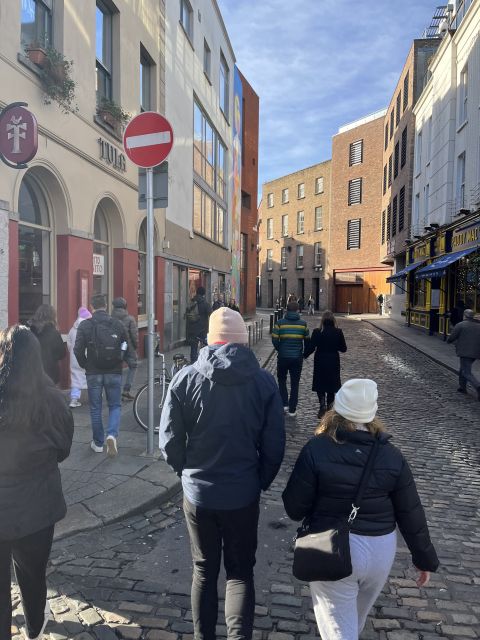
One of the most striking stops concerns grave robbing beside the city mortuary. The 19th century saw a thriving trade in stolen bodies, and the tour places that story close to where the mortuary once stood.
This is a particularly strong example of the tour’s method. Grave robbing can sound like a sensational tale when told without context. Here, its setting beside the mortuary gives it a practical, unsettling edge. You can better understand how bodies became part of a criminal economy and why burial sites were vulnerable.
The subject is unpleasant, but it also reveals the pressure points of the period. Medical interest in human bodies, poverty, crime, and the city’s burial practices all meet in one story. That gives the tale more substance than a simple account of thieves disturbing graves.
If you have already taken a standard Dublin city tour, this is the sort of material that can add a new layer to familiar streets. The tour does not depend on major attractions alone. It finds meaning in places you might otherwise pass without a second glance.
Mummified corpses, walls, and a legless serial killer
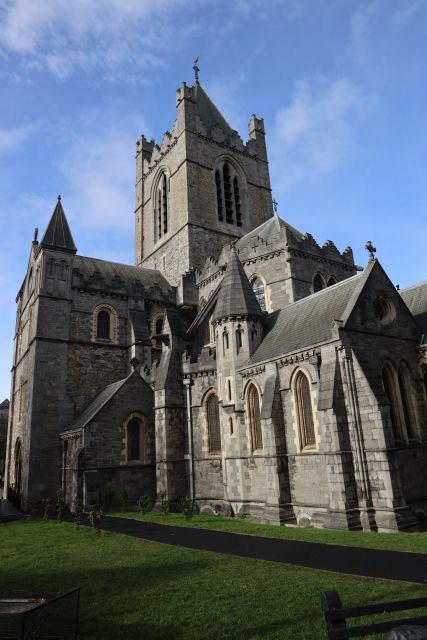
Near the old city walls, the walk takes up stories of mummified corpses and a legless serial killer. These are among the tour’s most unusual subjects, and they show why the route is aimed at people who want more than the standard Dublin highlights.
The mummified corpses bring the physical remains of the past into the story. They also suit the old-city setting, where churches, burial places, and underground spaces have long fed Dublin’s darker reputation. The legless serial killer story is stranger still, with the kind of detail that is likely to stay in your memory after the tour ends.
This is where the guide’s performance matters most. Peter is praised for vivid storytelling and dramatic delivery, while Rob is described as entertaining and easy to listen to. You are not just given a list of disturbing facts. The stories are acted out and shaped for a walking audience.
Still, keep your expectations measured. The tour’s macabre material includes murder, death, bodies, and rats, but it is not presented as a blood-soaked scare experience. One review’s only criticism was that the tour could have been darker. If you want maximum horror, you may find the history and humor soften the effect.
Public executions and Dublin’s most notorious brothel keeper
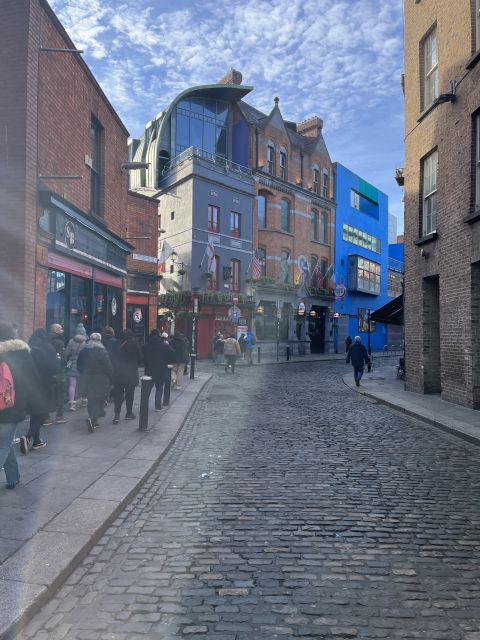
Public executions form another major part of the route. These stories show how punishment was once turned into a public event, with crowds gathering to watch the state impose its most severe sentence.
That subject can be uncomfortable, but it is useful for understanding old cities. Executions were not hidden away as they are today. They were part of public life, civic power, and social control. A good guide can explain not only what happened, but why people gathered and what these scenes said about the society of the time.
The final major story comes beside the cathedral and concerns Dublin’s most famous brothel keeper, including her untimely death by fire at the stake. It is a fitting end to a tour about crime, punishment, sex work, and public spectacle.
Ending near the cathedral also gives the final story a strong sense of place. The setting links religious authority, moral judgment, and the punishments imposed on people seen as outsiders or threats. You finish with a story that brings together several themes from the walk rather than simply stopping after the last grisly anecdote.
Man-eating rats and the role of humor
Man-eating rats are among the listed highlights, and they give the tour a touch of dark absurdity. The idea is memorable, but the larger point is the condition of a historic city before modern sanitation and pest control.
Humor helps make this material manageable. Peter is praised for mixing historical detail with jokes and entertaining side information. Rob is also described as personable and funny. That balance matters because two hours of executions, corpses, disease, and murder could become tiring if every story were told in the same grim tone.
The humor does not mean the tour lacks substance. It simply gives you a break between heavier subjects. You can enjoy the strange detail, ask a question, and then move on to the next period of Dublin’s past.
Guides also appear willing to answer questions and slow down when needed. That is useful in a mixed group, particularly when some people know Irish history well and others are hearing these stories for the first time. English is the only listed tour language.
Peter, Rob, and the small-group advantage
The clearest strength of this experience is the guide. Peter is named in most of the feedback, and he is repeatedly described as passionate, friendly, dramatic, and easy to understand. Rob also receives strong praise for his knowledge of Dublin, his humor, and his approachable style.
The difference between a flat walking tour and a memorable one often comes down to delivery. Here, you can expect the guide to act out stories, invite questions, explain unfamiliar points, and offer local tips. Several groups were very small, with three people or even only one booking party. In those cases, the walk felt close to a private tour.
Group size can change by date, so do not assume you will always have a tiny group. Still, the format allows for personal interaction when numbers are low. That makes this a good choice for solo visitors, couples, and friends who prefer conversation over a large crowd.
The route also gives you a broader sense of Dublin than a bus tour. You walk through the old center, cross both sides of the river, and visit spots you might overlook on your own. The tradeoff is that you must be comfortable walking and listening outdoors for the full two hours.
Is $19 a fair price for two hours?
At $19 per person, this is a reasonable buy for a focused city walk. The price includes the guide and the full two-hour route, with no extra admission fees listed. You are paying for interpretation, local stories, and access to details that are easy to miss without someone pointing them out.
The value is strongest if you have already seen Dublin’s main sights or want a different first look at the city. A standard orientation tour may explain the major monuments and broad history. This one gives you unusual stories, less obvious places, and a sharper sense of how death, crime, disease, and punishment shaped urban life.
It is less useful if you dislike gruesome subjects or want a tour centered on architecture, music, food, or famous political figures. You should also remember that the price does not include transport. Since the activity begins and ends at the Spire, this is not a problem for most people staying in central Dublin, but it is worth planning around your own location.
Free cancellation up to 24 hours before the start gives you some flexibility, and you can reserve now and pay later. Those terms are helpful when your Dublin schedule is still shifting.
Who should book this Dublin walking tour?
I would recommend it to adults who enjoy folklore, crime stories, old city legends, and history told with a bit of theater. It is especially suitable if you like finding details that standard sightseeing routes skip.
Solo visitors should feel comfortable booking. The guide’s conversational style and the possibility of a small group make it easier to ask questions and stay involved. Couples and friends will also find plenty to discuss after the walk, especially the grave robbing, the legless killer, and the cathedral-side execution story.
I would not choose it for children, since the activity is not suitable for anyone under 18. I would also skip it if you want a strictly academic lecture or a full horror production. The tone sits between serious history and dark entertainment.
Should you book the Macabre History Walking Tour?
Book it if you want to see Dublin through its stranger, harsher stories. For $19, you get two hours with an English-speaking guide, a central meeting point, a route across both sides of the river, and a collection of subjects that most ordinary city tours leave out.
The biggest reason to go is the storytelling. Peter and Rob bring personality, humor, and drama to material that could otherwise feel like a list of grim facts. Just know that the tour is more about compelling history than nonstop gore. If that balance sounds right, the yellow umbrella beside the Spire is a good place to begin.
FAQ
Where does the tour start?
The tour starts beside the Spire, the large needle in the middle of O’Connell Street. Look for the yellow umbrella.
Where does the tour end?
The activity ends back at the meeting point beside the Spire.
How long does the tour last?
The walking tour lasts two hours. Starting times vary, so check availability when booking.
What does the tour cost?
The listed price is $19 per person.
What language is the tour conducted in?
The live tour guide conducts the experience in English.
Is the tour suitable for children?
No. The activity is not suitable for children under 18.
Is the walking tour wheelchair accessible?
Yes. The activity is listed as wheelchair accessible.
Can I cancel the booking?
Yes. You can cancel up to 24 hours in advance for a full refund. You can also reserve now and pay later.
Just added around Dublin
- Dublin: Traditional Pub Walking Tour★ 4.6 · 295 reviews
- Dublin: Traditional Pubs Walking Tour with Local Guide★ 4.9 · 112 reviews
- Dublin’s Haunted History Walking Tour★ 4.3 · 345 reviews
- Dublin: Irish Music Walking Tour with Live Performance★ 4.8 · 137 reviews
- Dublin: Highlights and Hidden Corners Walking Tour★ 4.8 · 79 reviews
- Dublin: Delicious Walking Food Tour★ 4.9 · 137 reviews
- Dublin Highlights: 2.45-Hour Walking Tour in Italian★ 4.7 · 460 reviews
- Dublin: Sightseeing Walking Tour in German★ 4.7 · 231 reviews
History Walking Tours, compared.



Berlin’s Best: 2 Hour Walking Tour Third Reich and the Cold War
Read our review →
Third Reich Berlin: Hitler and WWII Walking Tour
Read our review →
New Orleans Garden District History Walking Tour
Read our review →
Cartagena: Historic Center and Getsemaní Shared Walking Tour
Read our review →

Imperial Palace and Shogun Historical Walking Tour
Read our review →Browse the lists this tour appears in